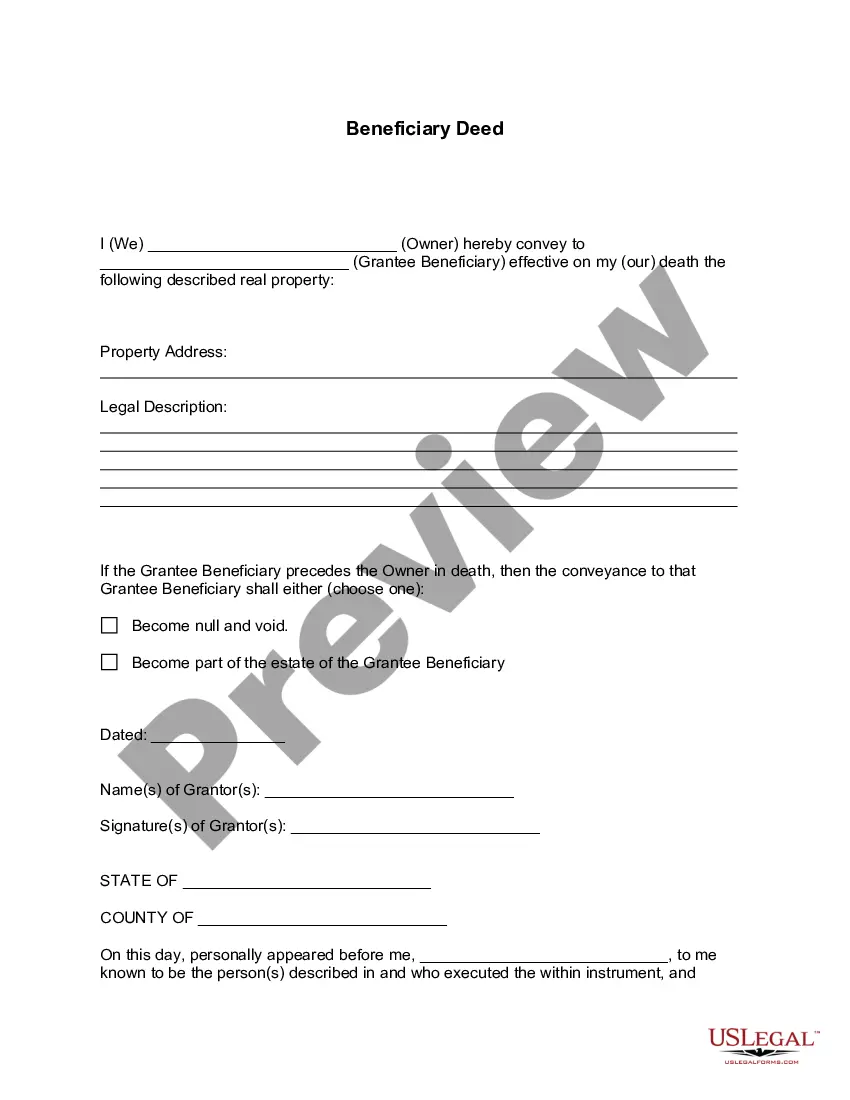
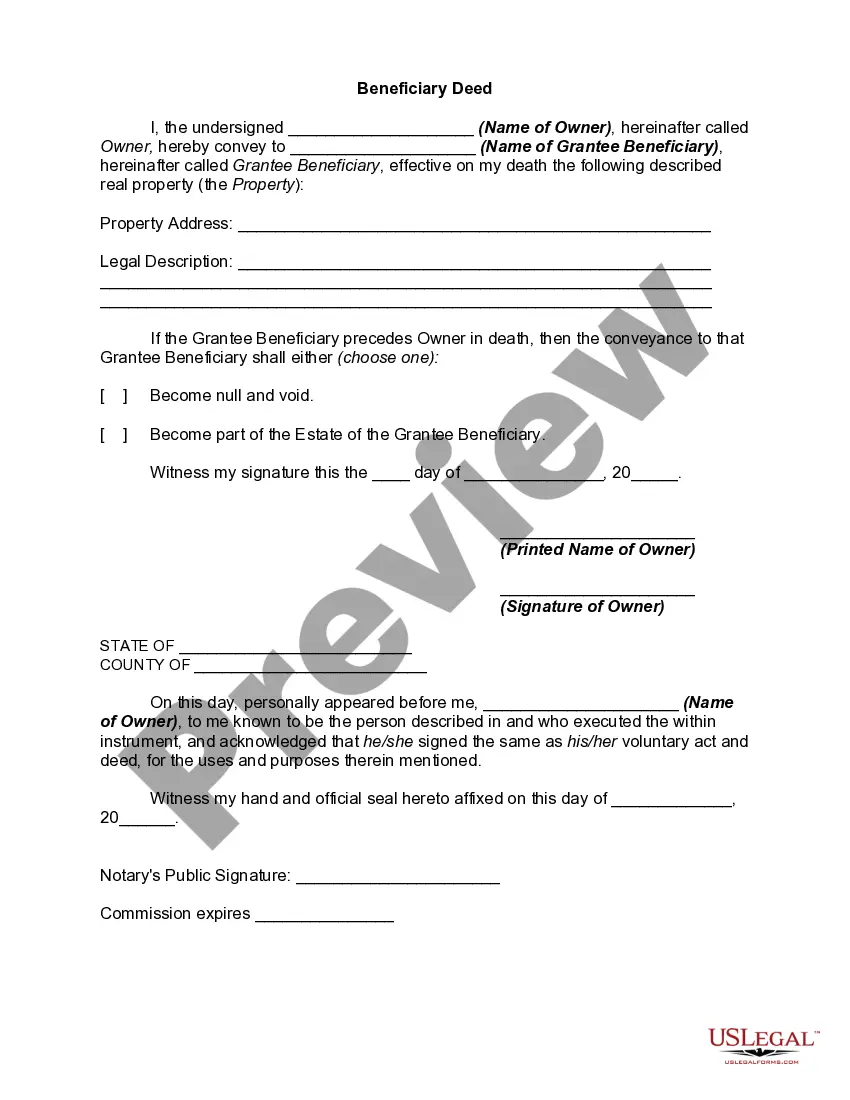
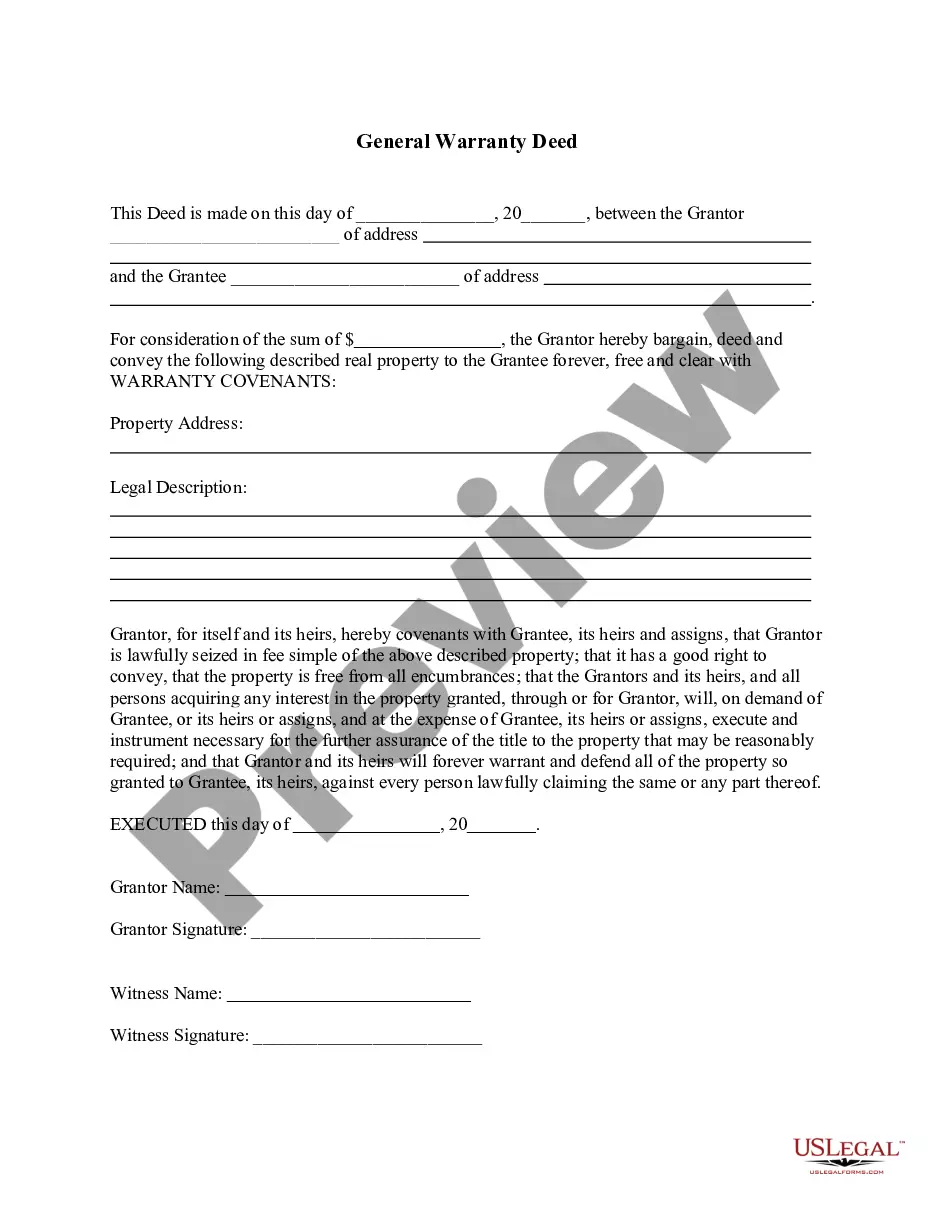
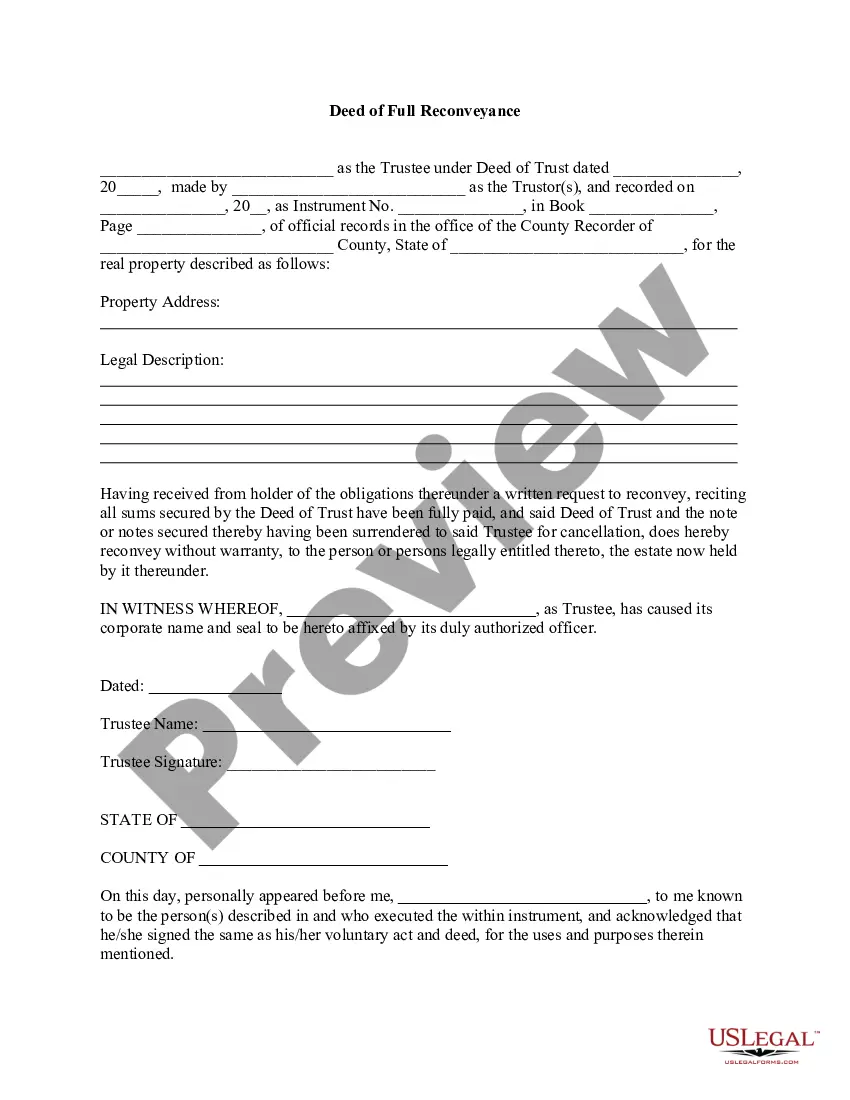
A beneficiary deed is a another type of real property deed used to transfer property. By signing and recording a beneficiary deed, an owner of an interest in real property may cause the owner's interest in the real property to be conveyed to people or entities upon the owner's death. The interest in real property conveyed by a beneficiary deed does not take effect until the death of the owner, at which time that interest transfers automatically by law to the designated grantee named in the beneficiary deed.
This form is a generic example that may be referred to when preparing such a form for your particular state. It is for illustrative purposes only. Local laws should be consulted to determine any specific requirements for such a form in a particular jurisdiction.
Saint Paul Minnesota Basic Beneficiary Deed Related Searches
File police report online St Paul
St Paul Police Department phone number
File a police report St Paul
Saint Paul non emergency number
St Paul Police reports today
File a police report online Minnesota
City of St Paul complaints
File a police report Minneapolis
Interesting Questions
To record a beneficiary deed in Saint Paul, you need to file it with the county recorder’s office where the property is located. It's a bit like getting a stamp of approval to ensure your wishes are on the record!
Not quite! A beneficiary deed is specifically for transferring property, while a will covers all your assets and final wishes. They work hand in hand, but each serves its own purpose in your estate plan.
If your chosen beneficiary passes away before you do, the deed won't go through to them. It's advisable to name an alternate beneficiary to cover all your bases—like having a backup plan for a rainy day.
Generally, a beneficiary deed won’t affect your property taxes while you’re alive. However, when your beneficiary receives the property after your passing, they might deal with tax matters then. Think of it as passing the tax baton!
Absolutely! You can change or revoke your beneficiary deed whenever you want. It's like changing your mind about dinner plans; just make sure to follow the proper steps to keep everything in order.
While you don’t necessarily need an attorney to create a beneficiary deed, having one can help avoid potholes on the road. They can guide you through the legal mumbo jumbo and ensure everything is done right.
A basic beneficiary deed is a way to transfer property to someone after you pass away, without going through probate. It's like passing the baton in a relay race, ensuring your loved ones get what you want them to have.