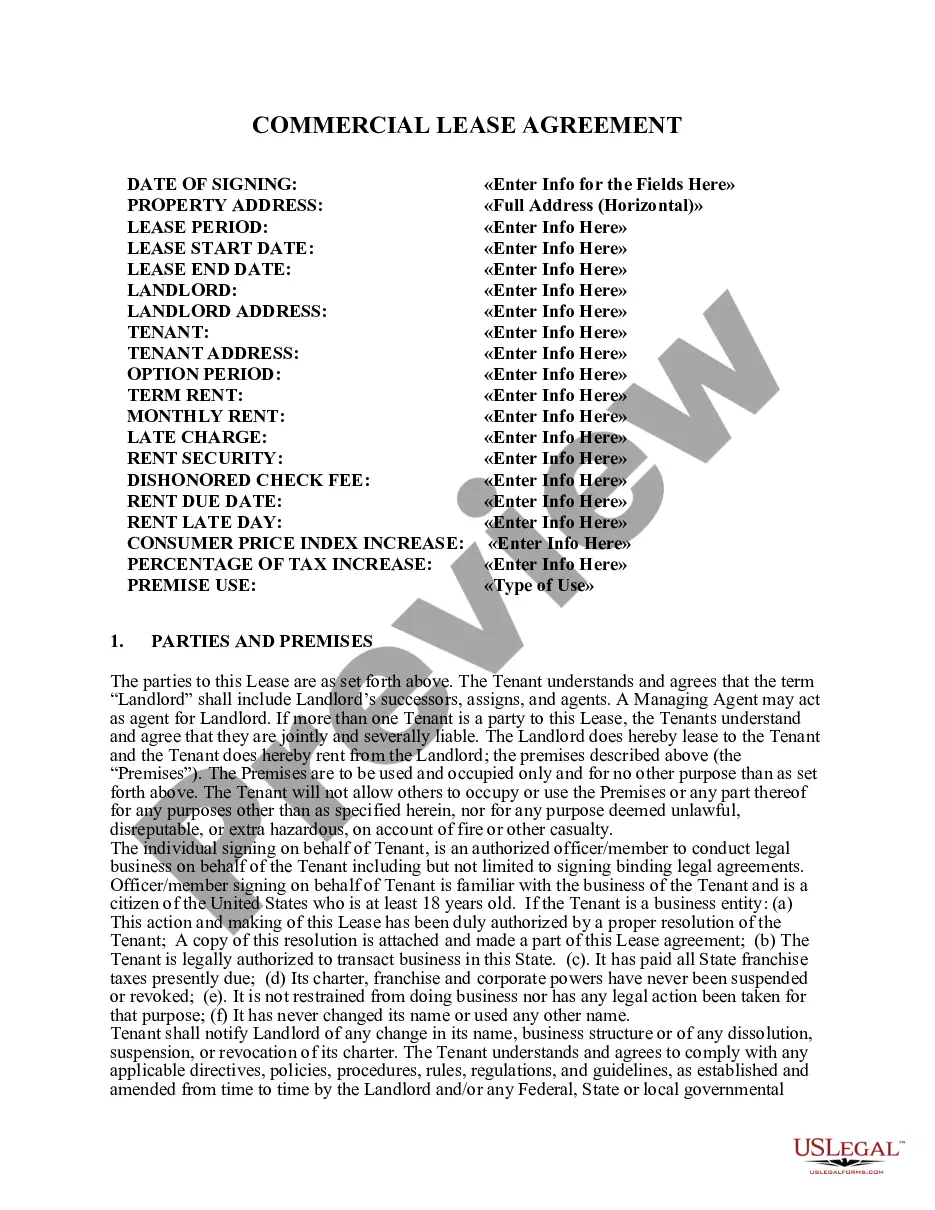
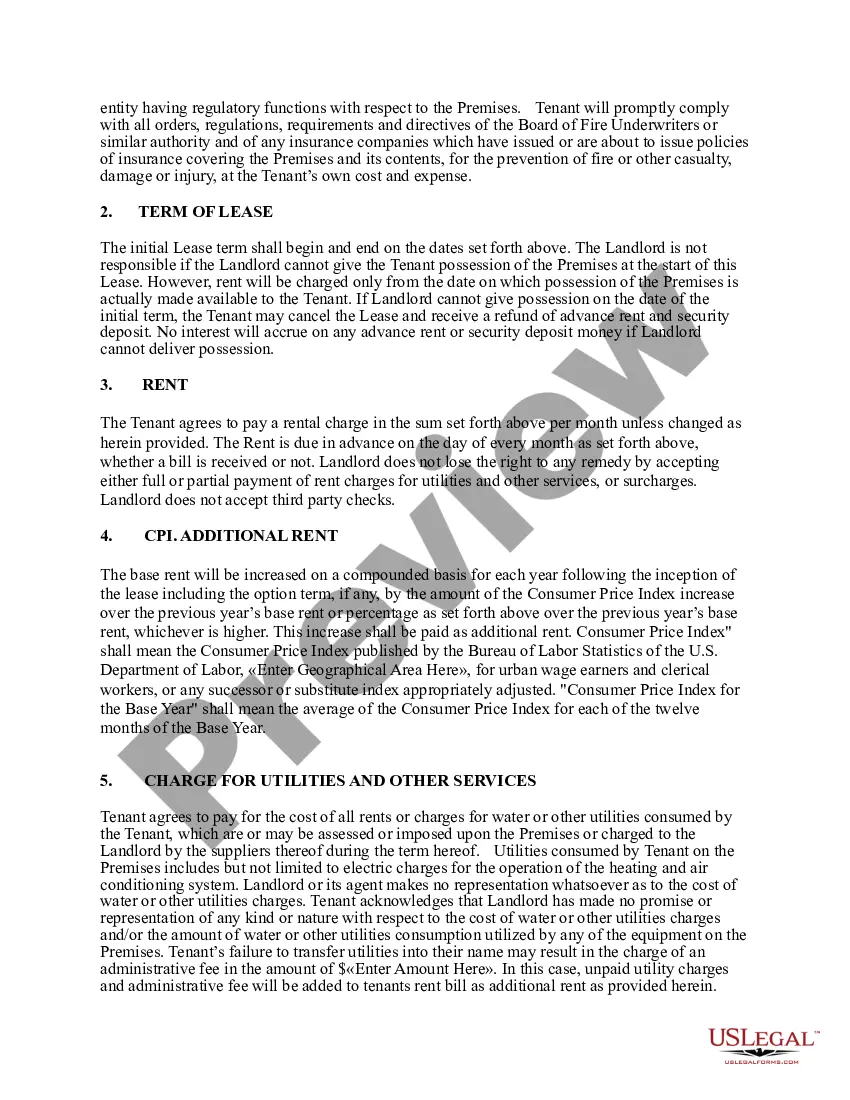
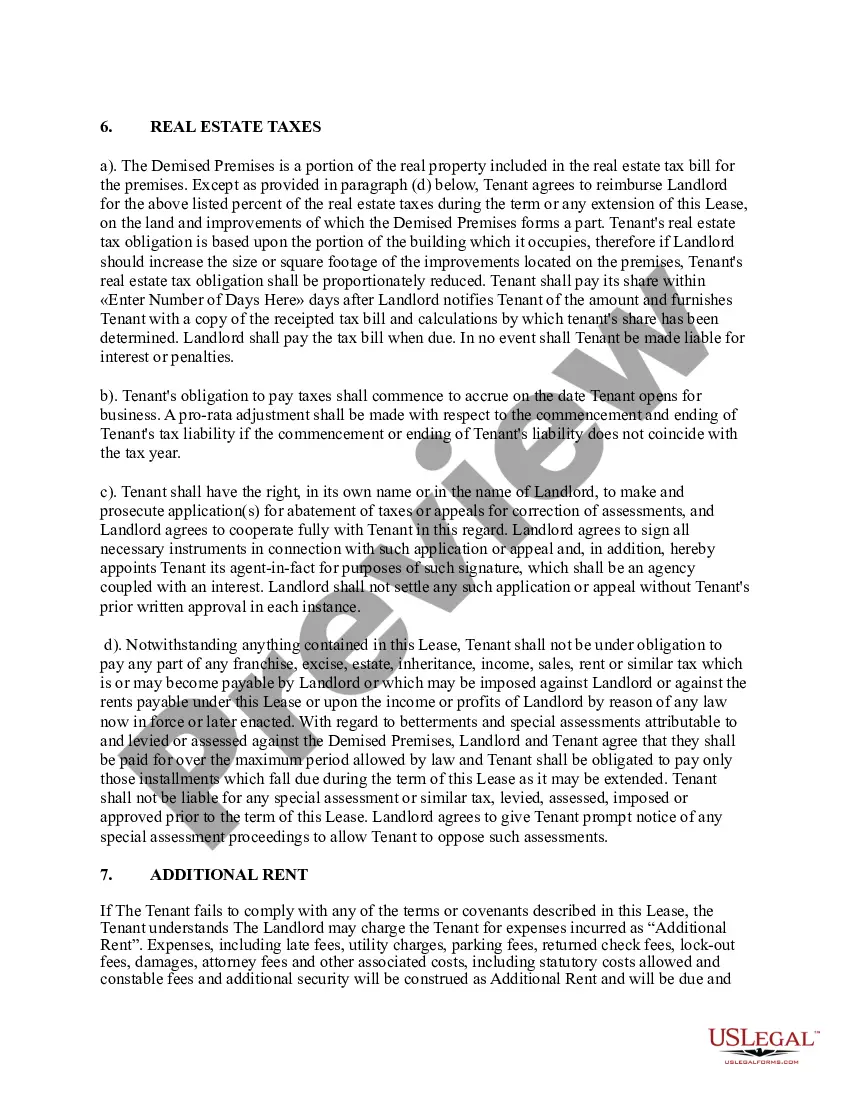
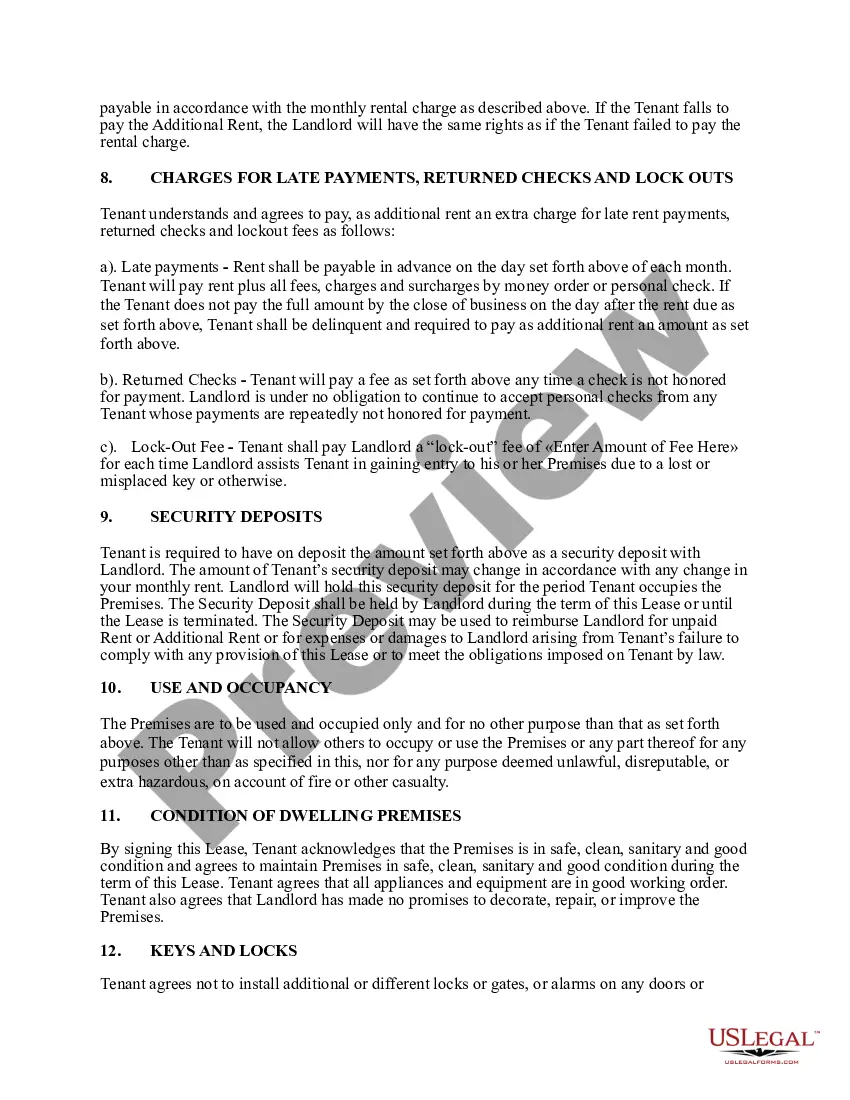
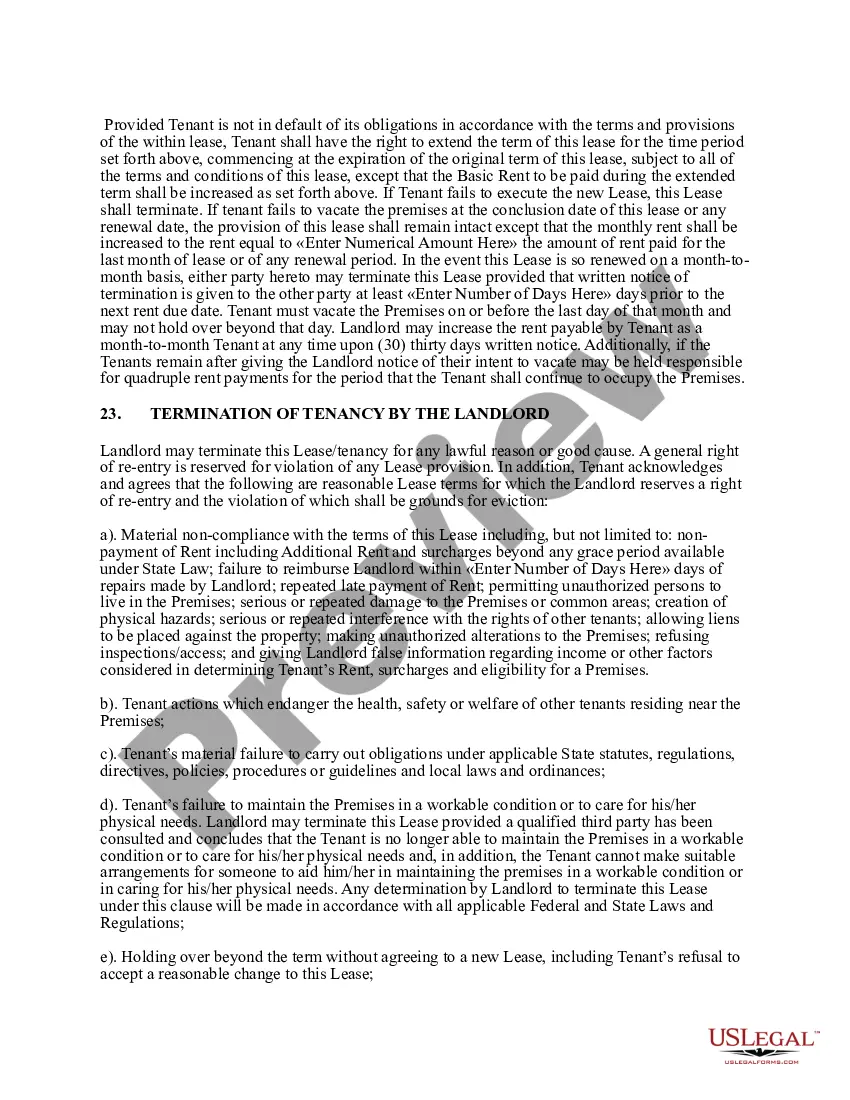
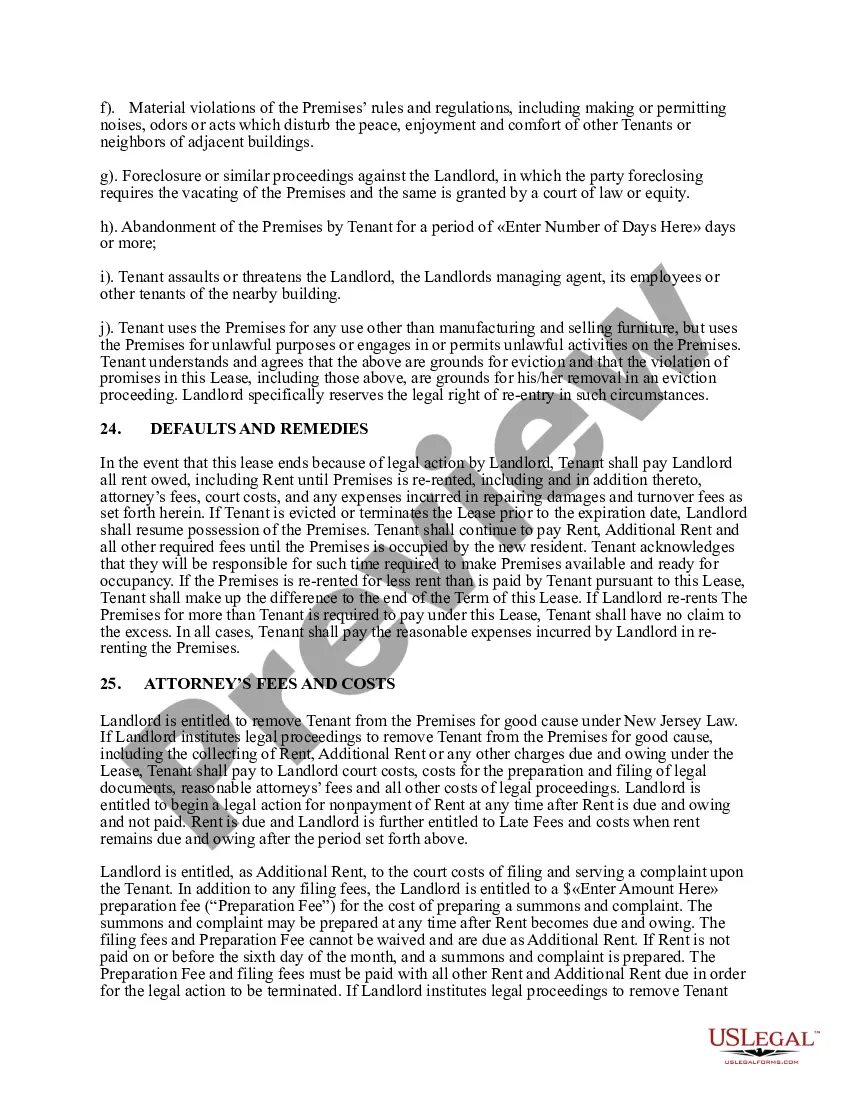
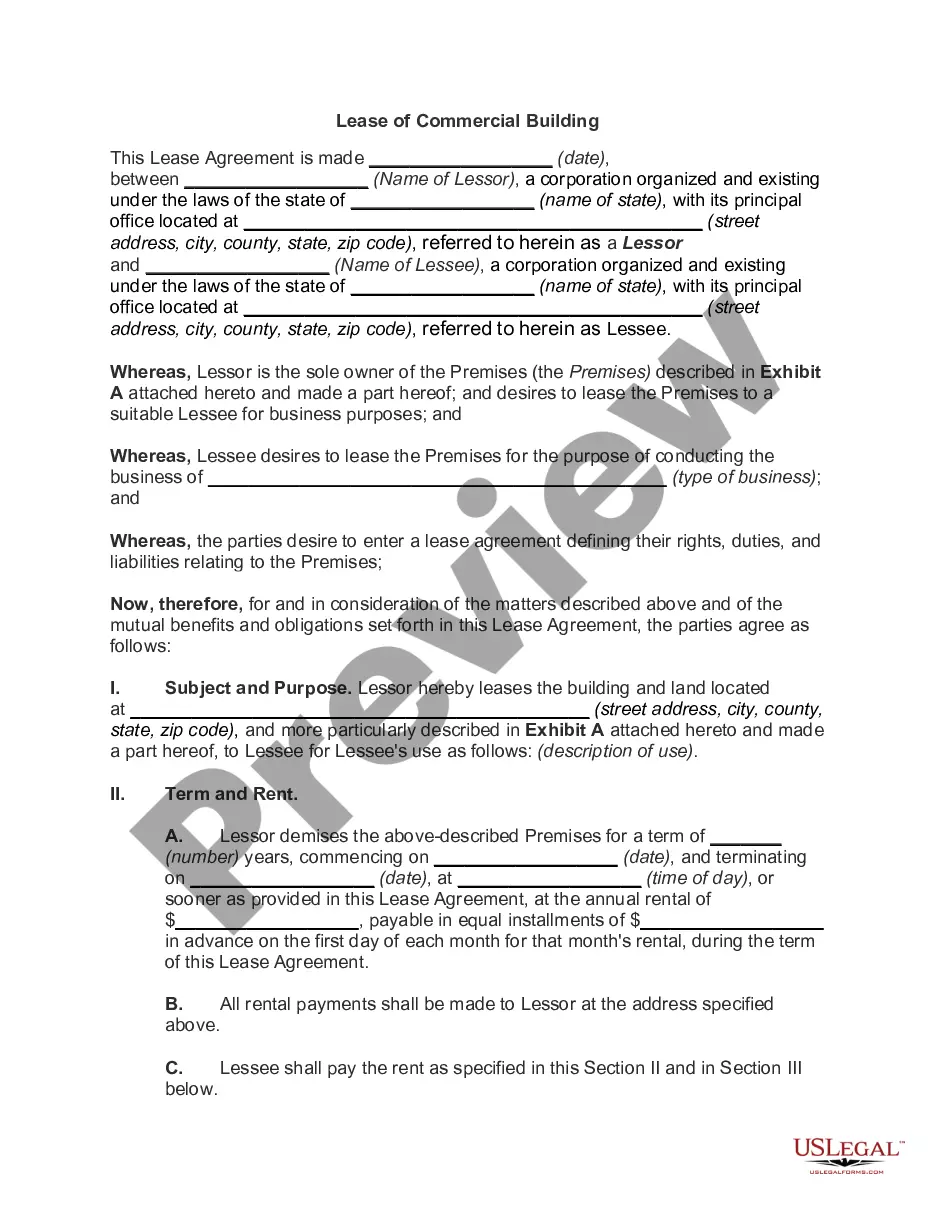
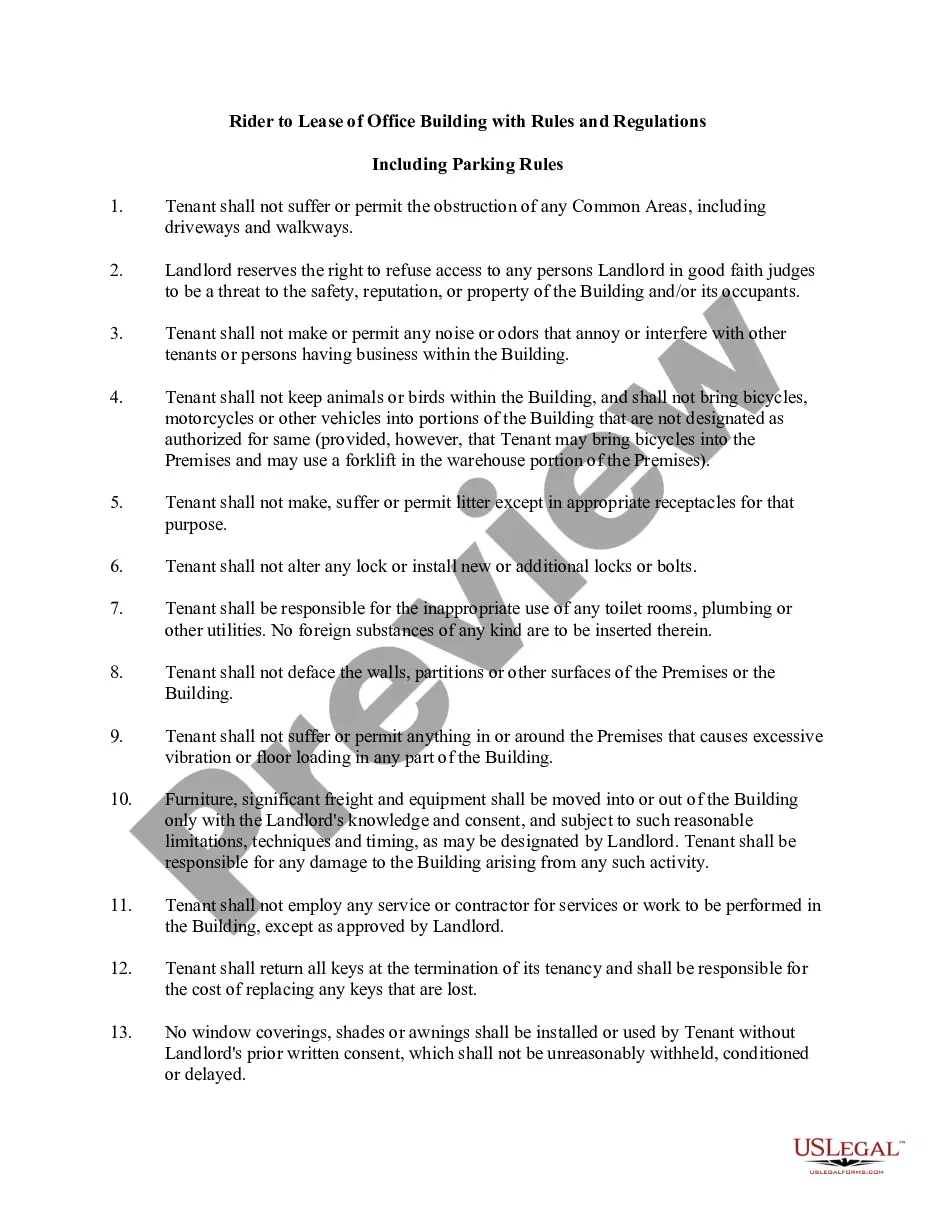
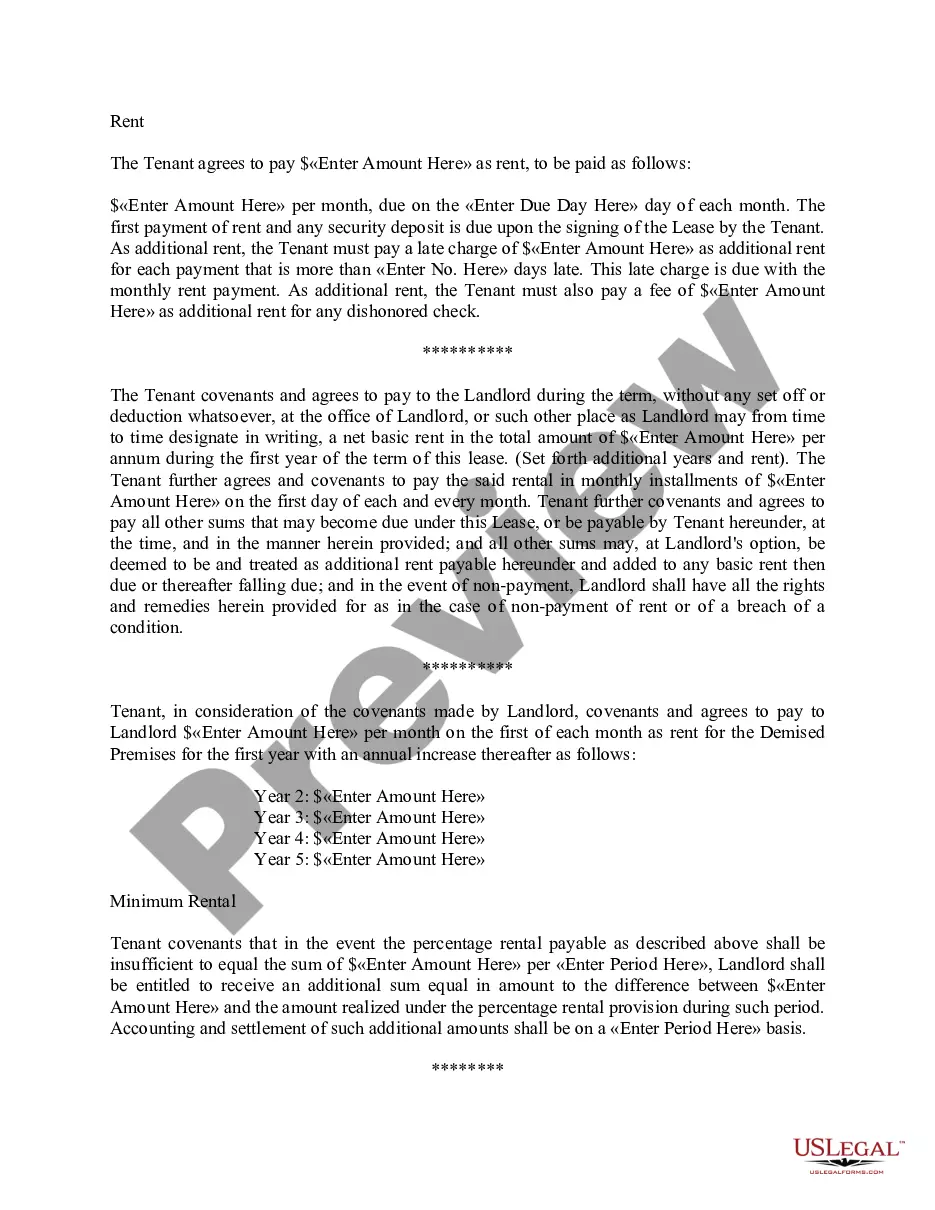
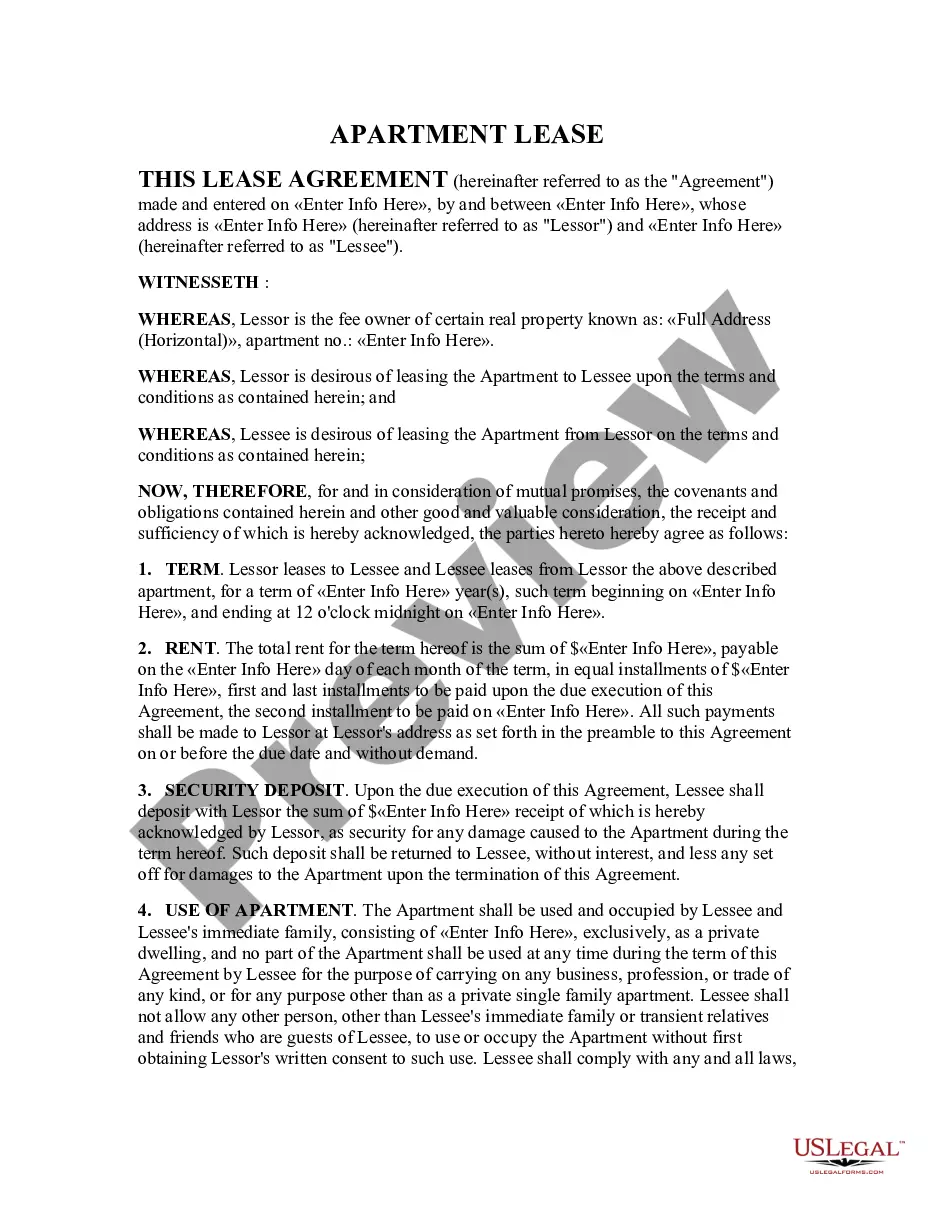
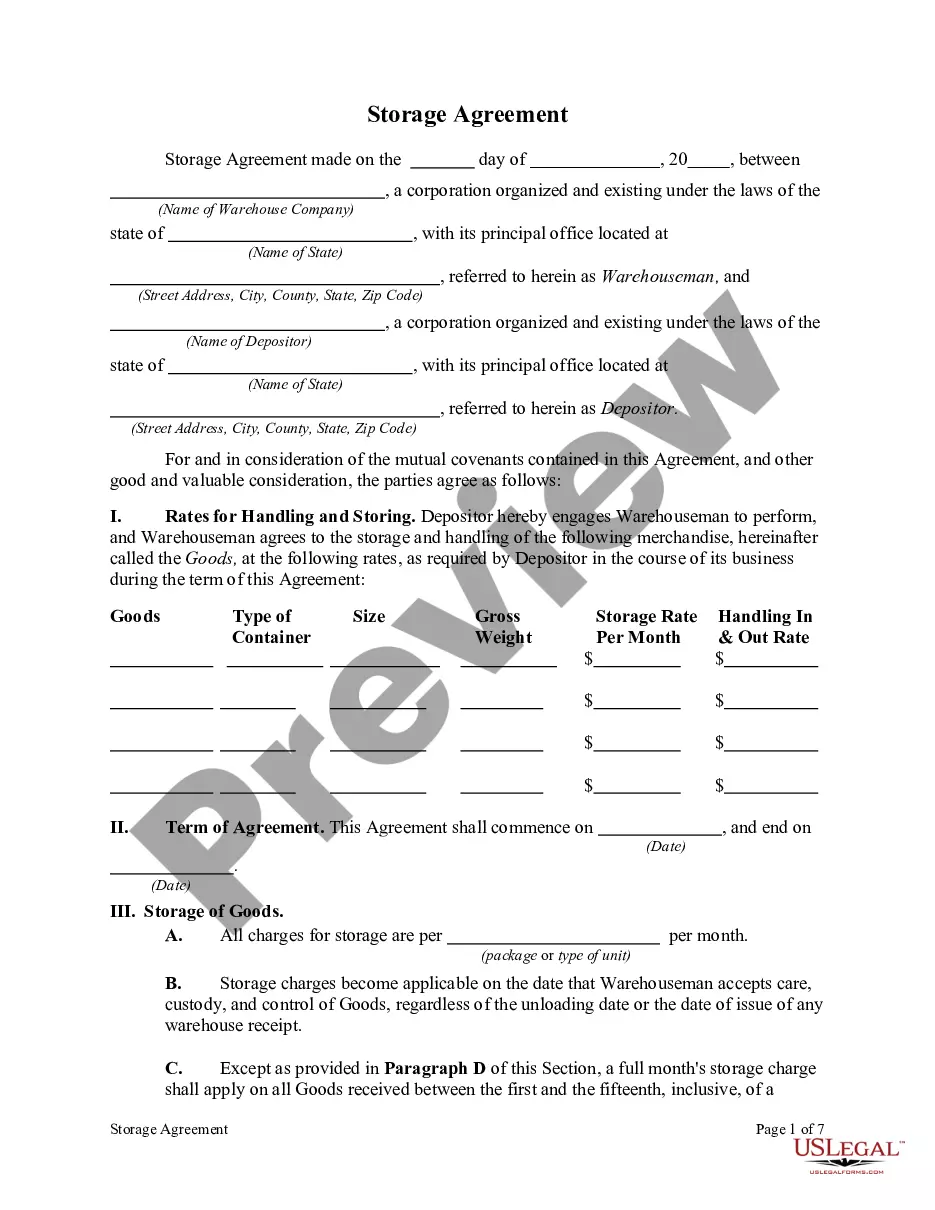
This form is for the lease of commercial property. Commercial property differs from residential property in that the property's primary or only use is commercial (business oriented), rather than serving as a residence. Commercial leases are often more complex than residential leases, have longer lease terms, and may provide for the rental price to be tied to the tenant business's profitability or other factors, rather than a uniform monthly payment (though this is also quite ordinary in commercial leases).
Typically, your lease will specify who’s on the hook for utilities and maintenance. It’s a good idea to clarify this upfront so you’re not left holding the bag later.
Keep the place clean and stick to the lease terms. Document the condition of the property when you move in and out to avoid any disputes over your deposit later.
A lease option gives you the right to buy the property later. It can be a smart move if you’re looking to invest in your space, but just make sure you understand all the terms involved.
Generally, you can't go making changes without asking the landlord first. If you plan to renovate or paint, just be sure to get approval and know what you’re allowed to do.
Most leases will have a clause about breaking the lease. Be aware of any penalties or conditions that might apply, as you don't want to be caught off guard.
Absolutely! Negotiating is part of the game. Don’t hesitate to ask for what you want, whether it's lower rent or more favorable terms on maintenance.
It's crucial to read the fine print, as leases can come with a lot of rules. Look out for details about the lease term, rent, and what happens if you want to break the lease early.