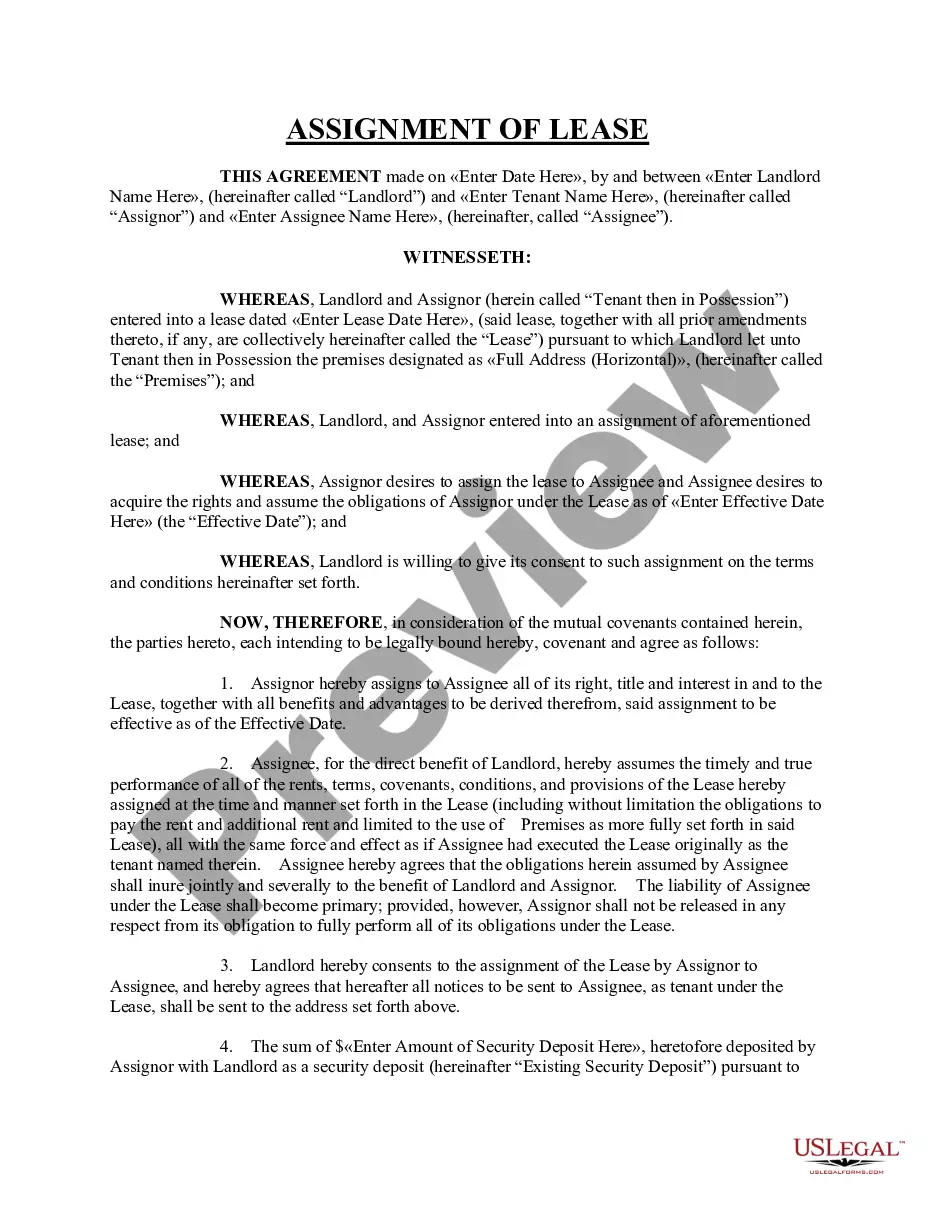
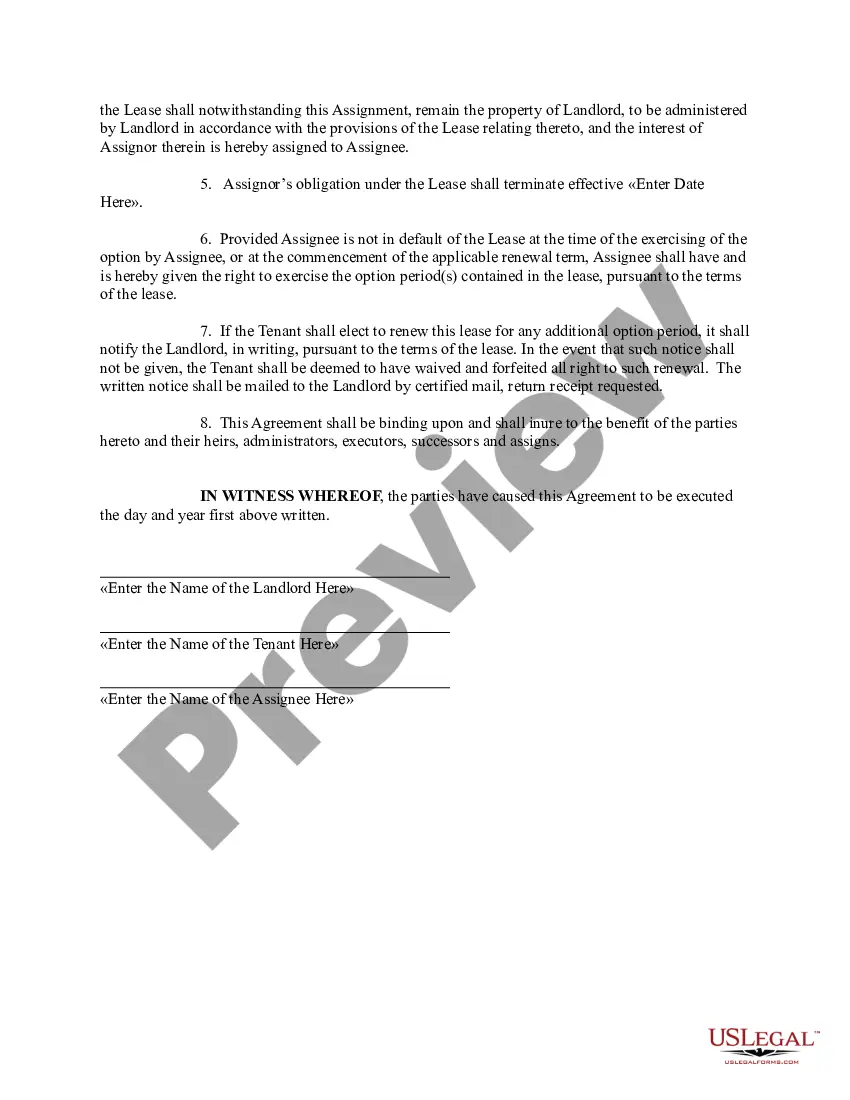
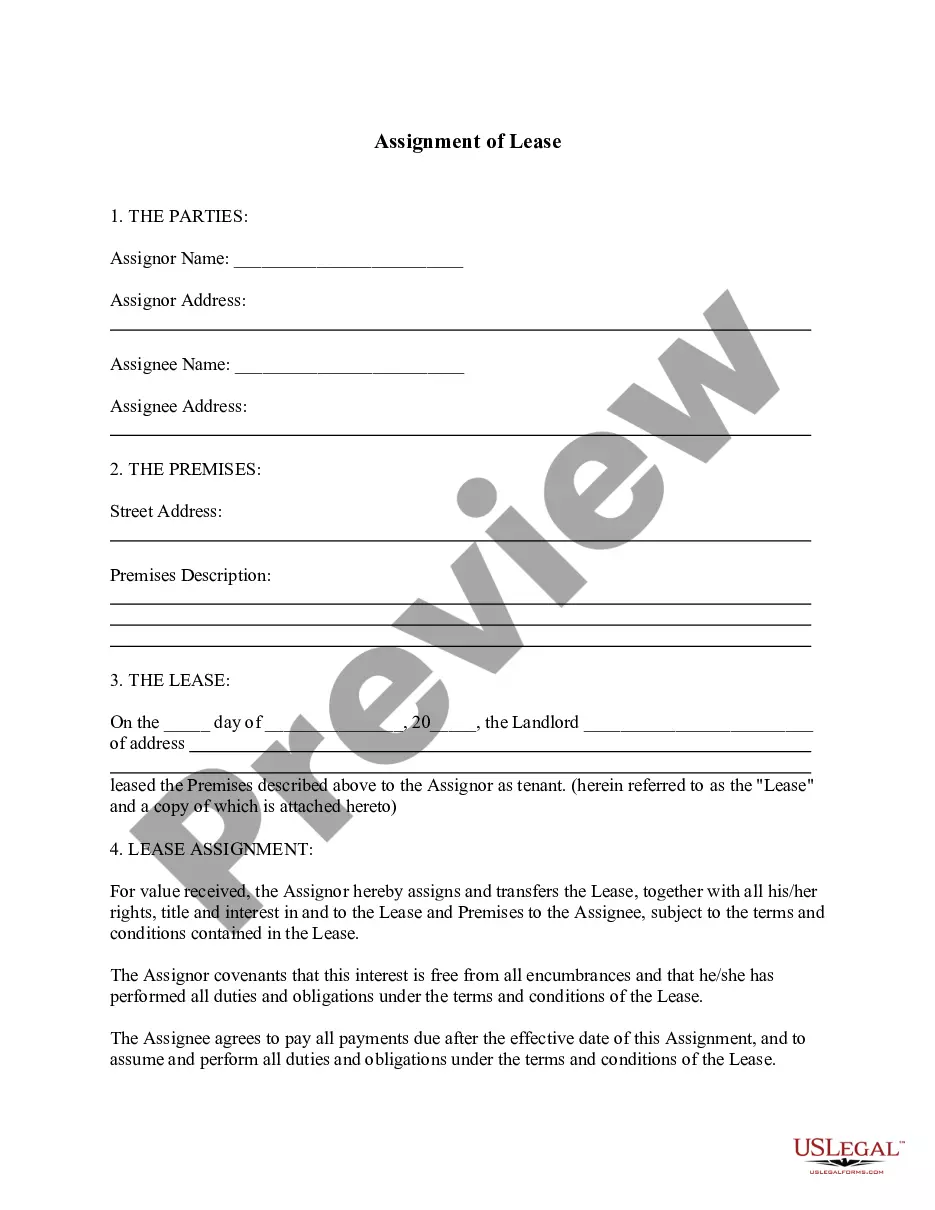
This form is an assignment from an original tenant of his or her leasehold interest in a lease agreement to a new tenant. The new tenant (assignee) agrees that he or she will pay all rent due after the effective date of the assignment, and will assume and perform all duties and obligations required by the terms of the original lease agreement. The right to assign is generally subject to the permission of the landlord, which cannot be unreasonably withheld.
Yes, they’re different! Assigning a lease transfers it entirely to another person, while a sublease allows the original tenant to still hold some responsibility. It’s like renting a room in a house versus selling the whole house.
If your landlord isn’t on board with the lease assignment, it’s a good idea to have a chat with them about their concerns. There might be room for negotiation, or you may have to consider other options.
While you might have someone specific in mind, your landlord usually has to approve the new tenant. It’s like trying to have someone crash your party; they need to be on the guest list.
If you assign your lease without notifying your landlord, you might find yourself in hot water. The landlord could potentially take action against you, so it’s best to keep everything above board.
Yes, you typically need to get your landlord’s okay before you can hand off your lease to someone else. It’s always best to check in with them first to avoid any sticky situations.
An assignment of lease means that the current tenant transfers their lease to someone else. It’s like passing the baton in a relay race, where the new tenant takes on all the rights and responsibilities.
Trusted and secure by over 3 million people of the world’s leading companies