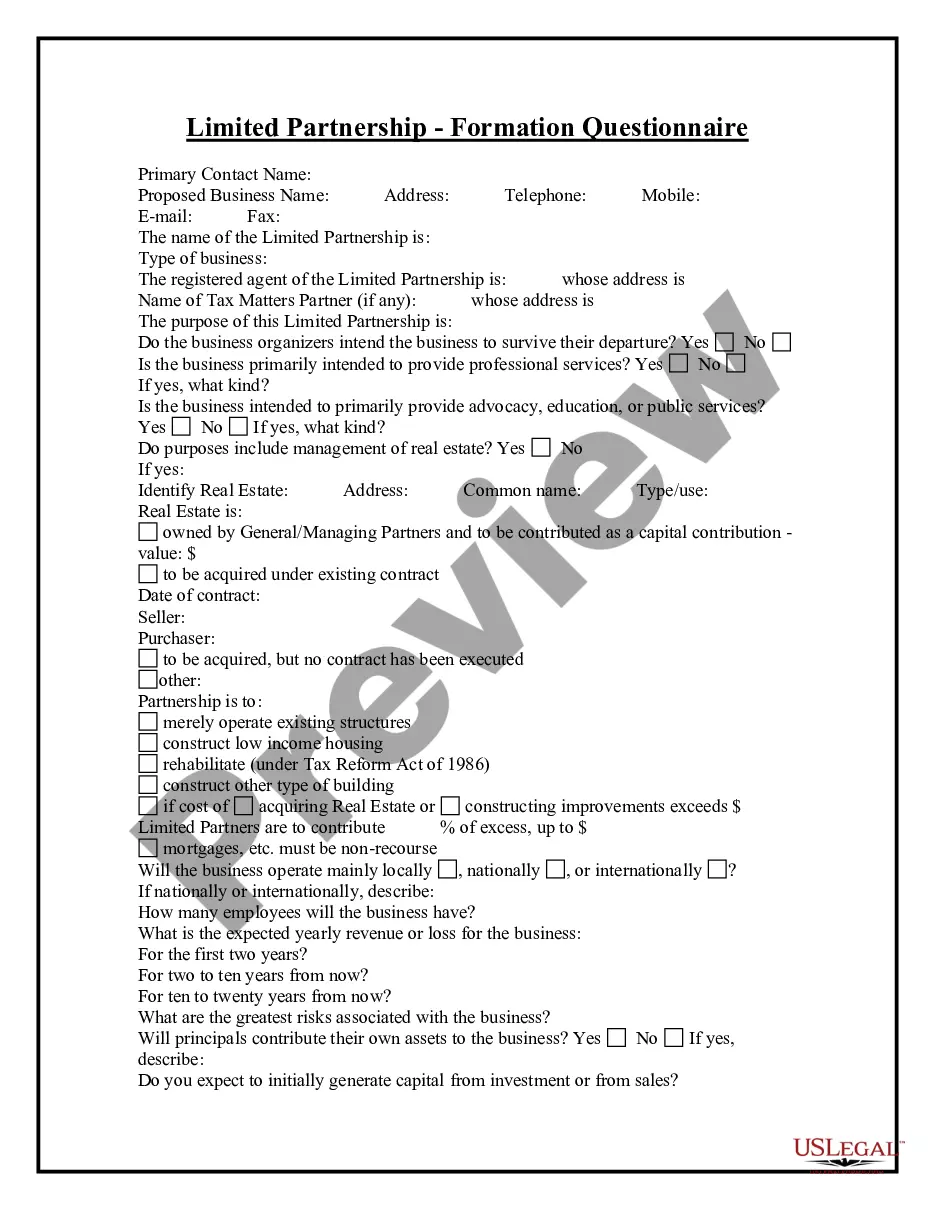
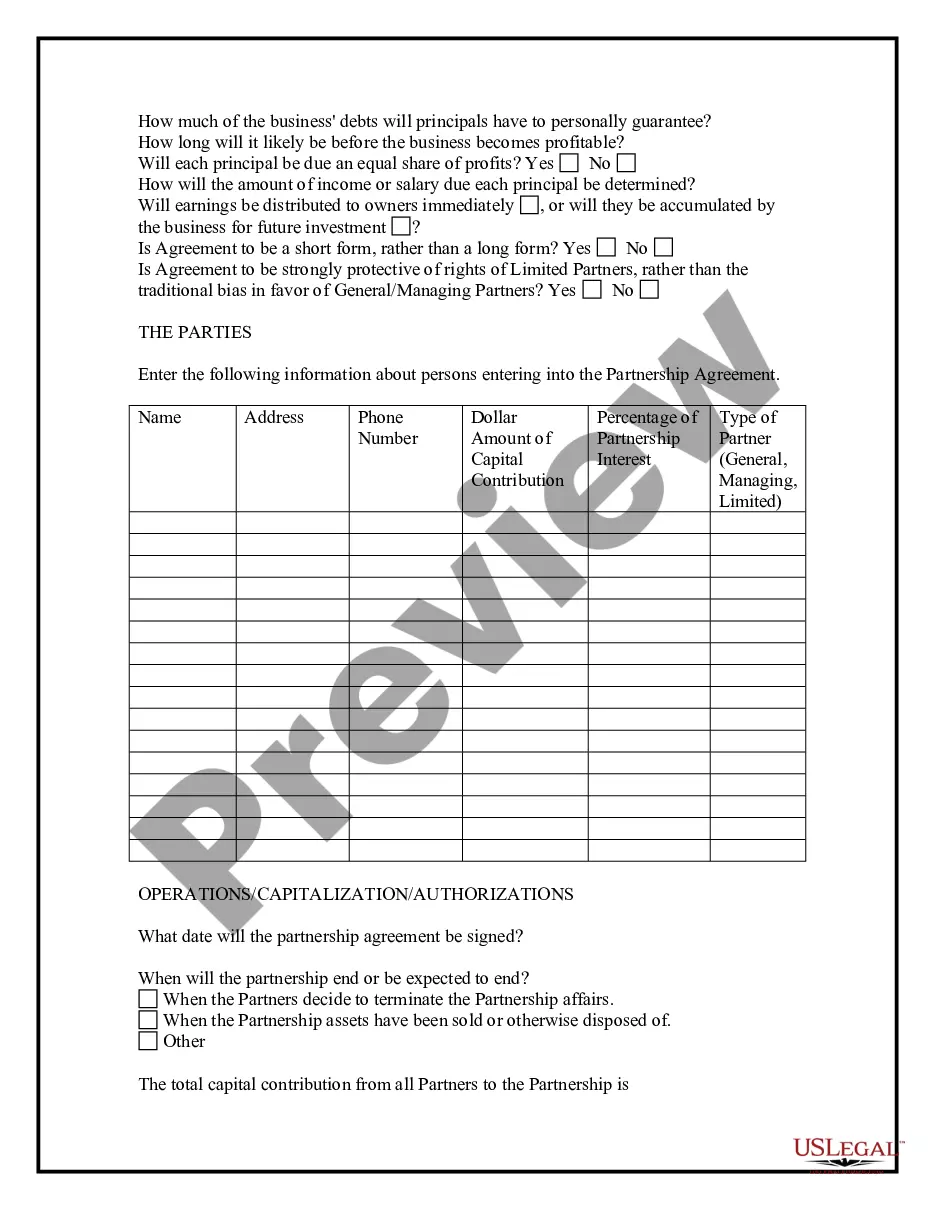
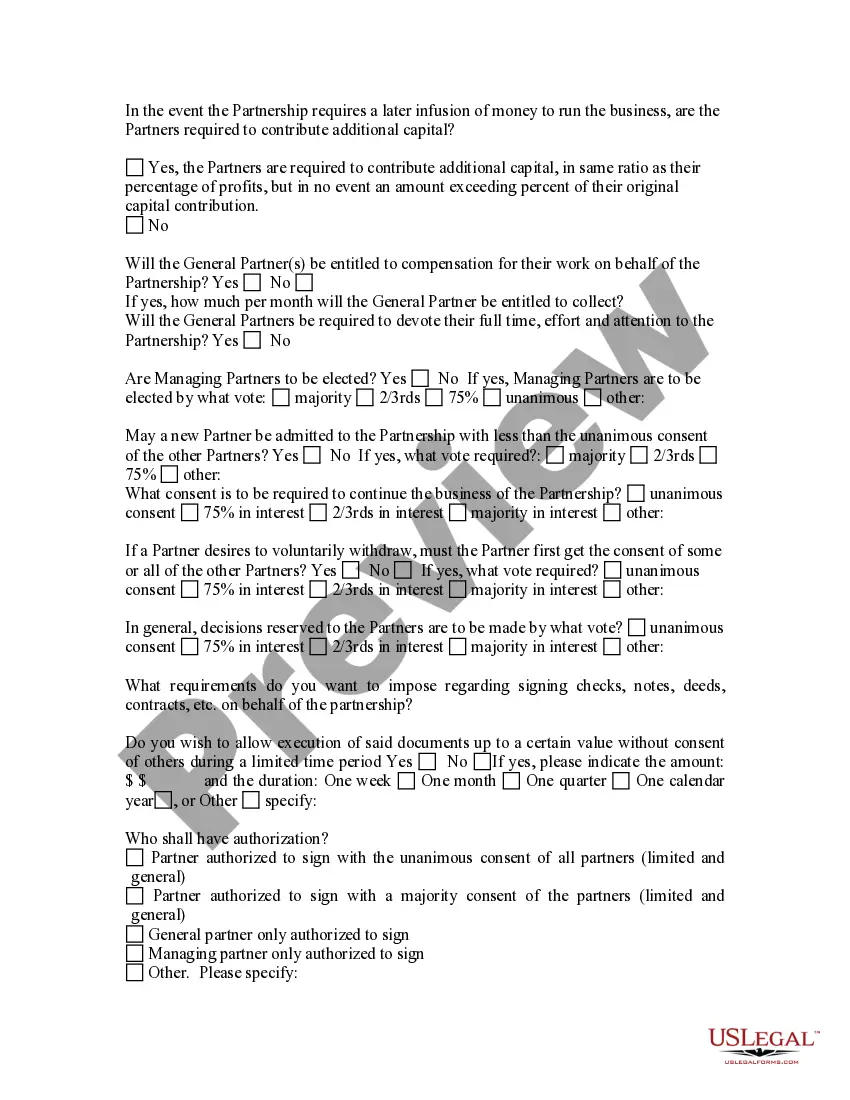
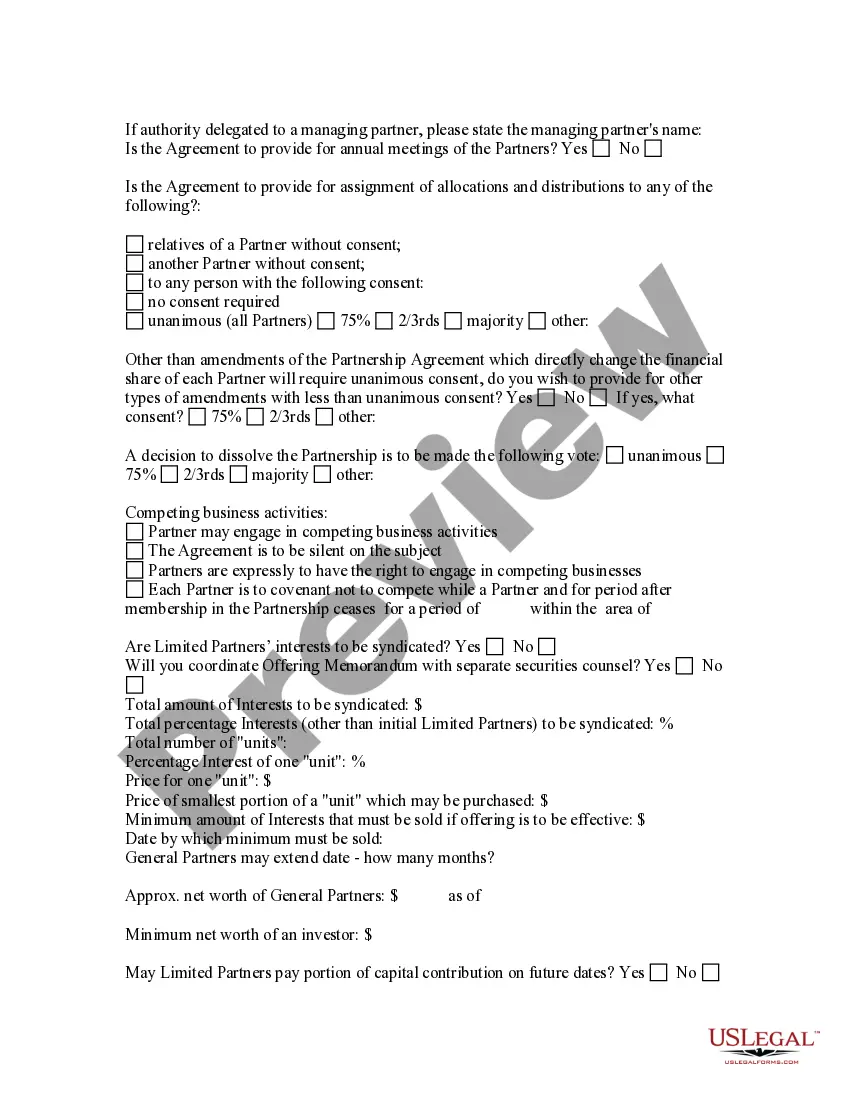
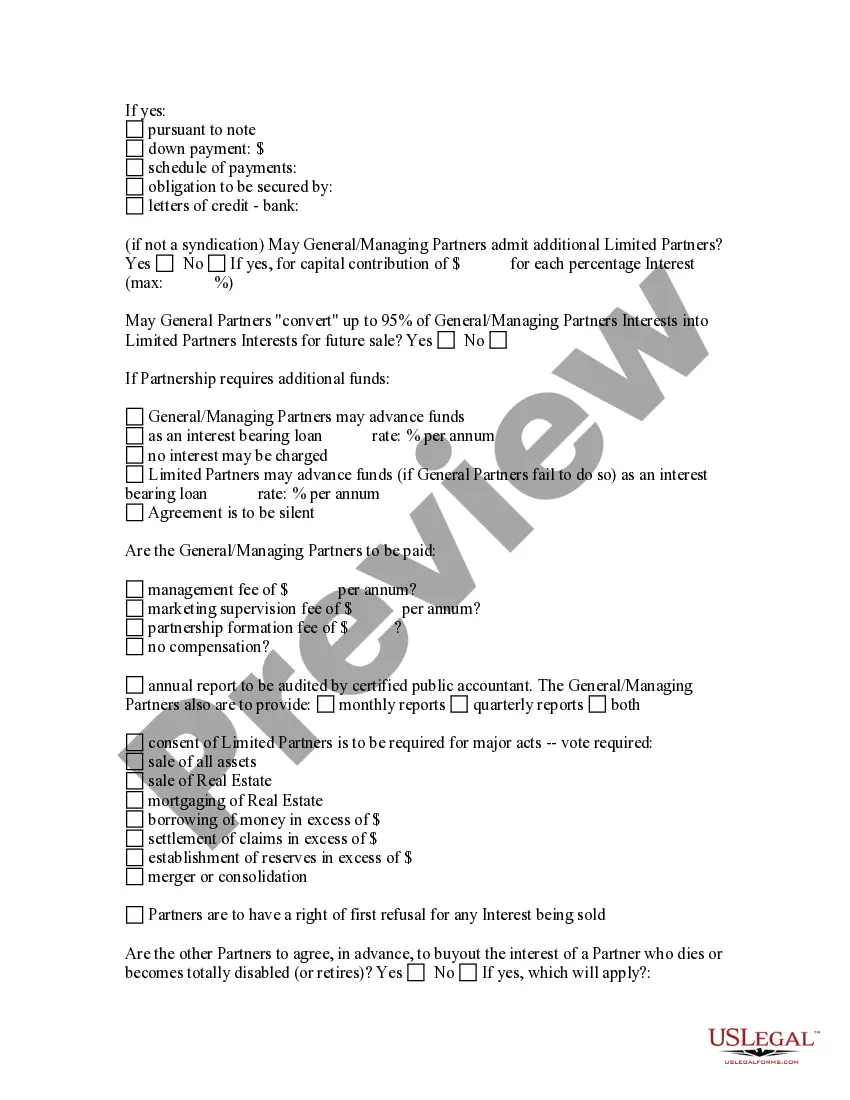
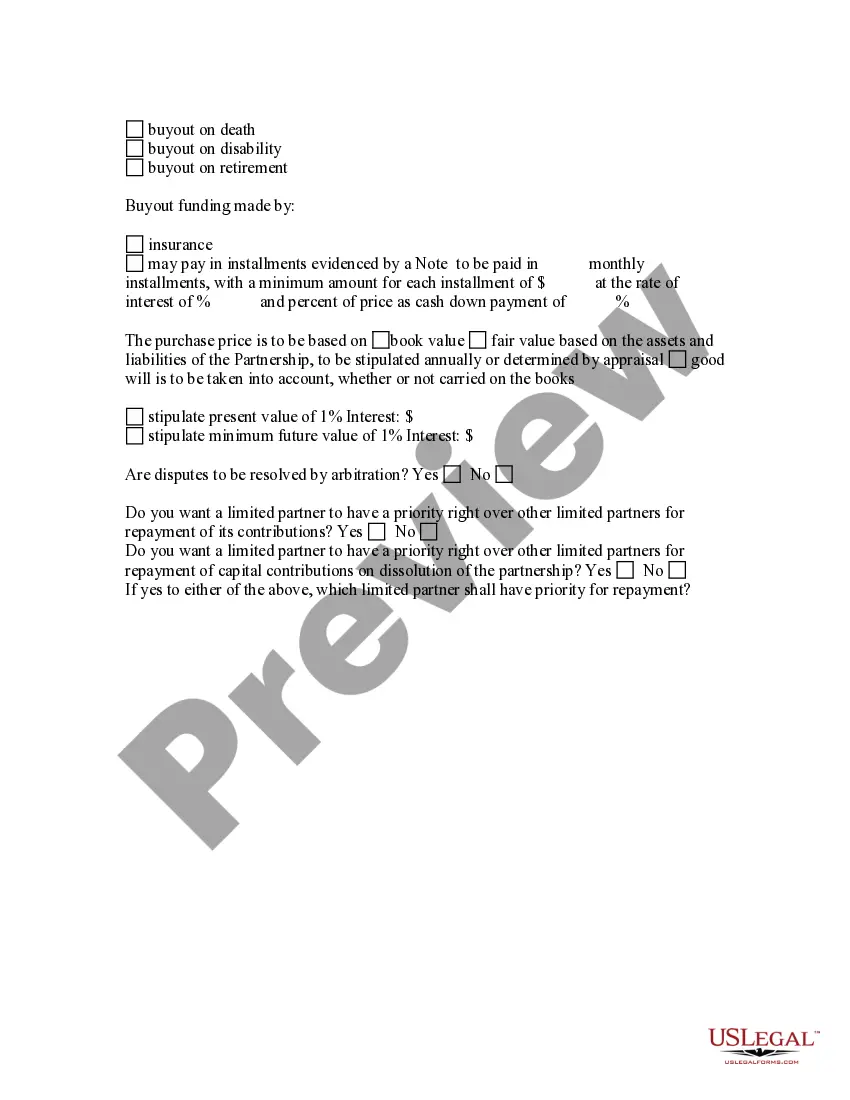
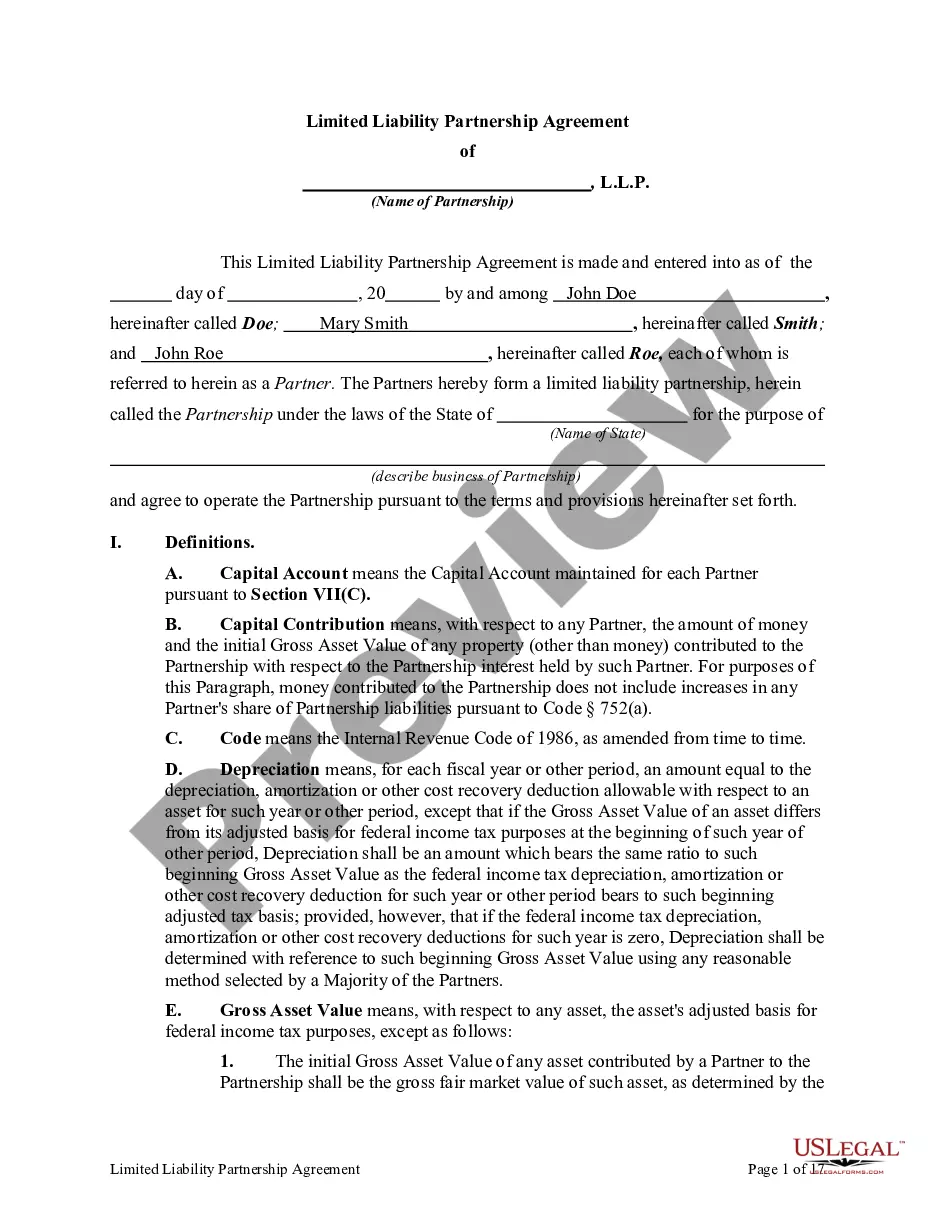
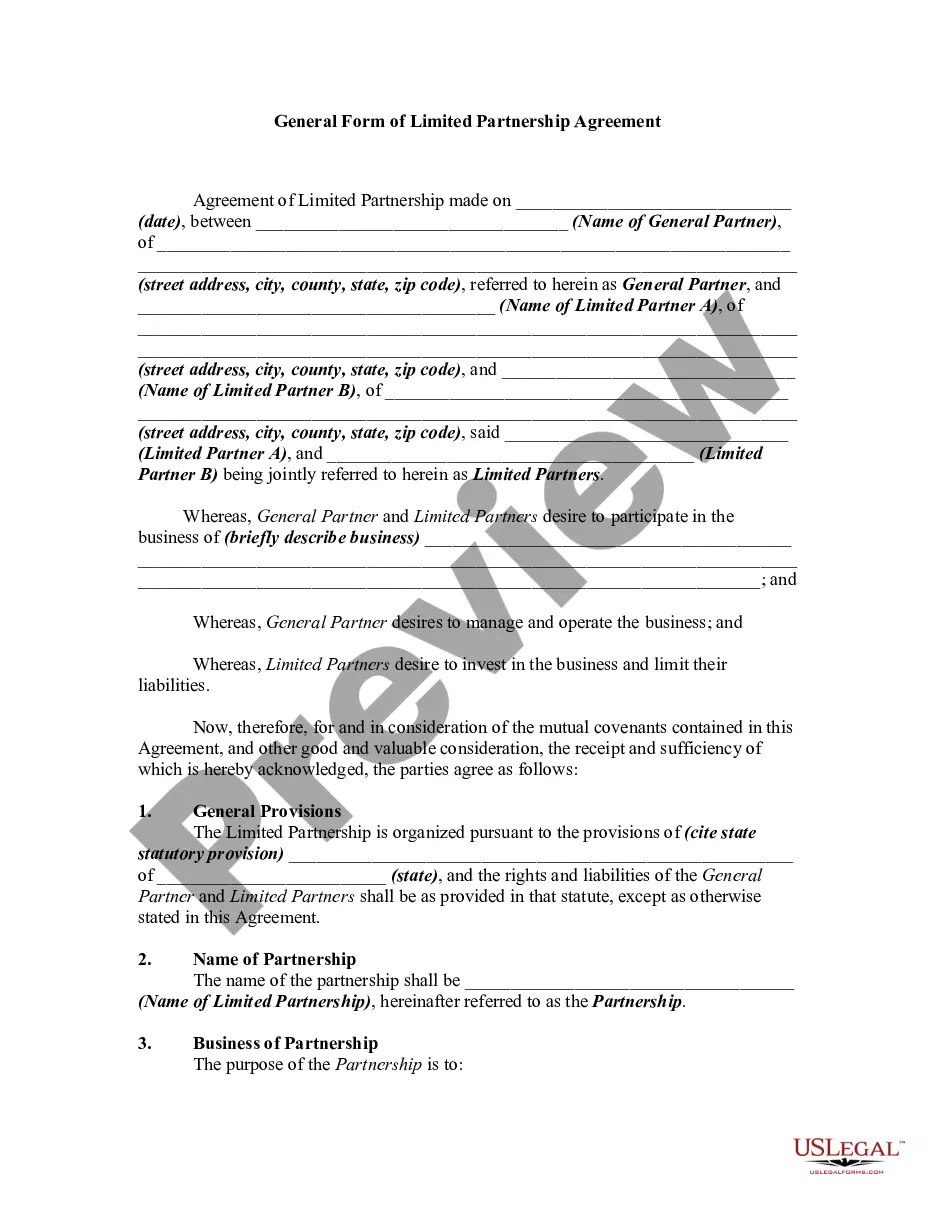
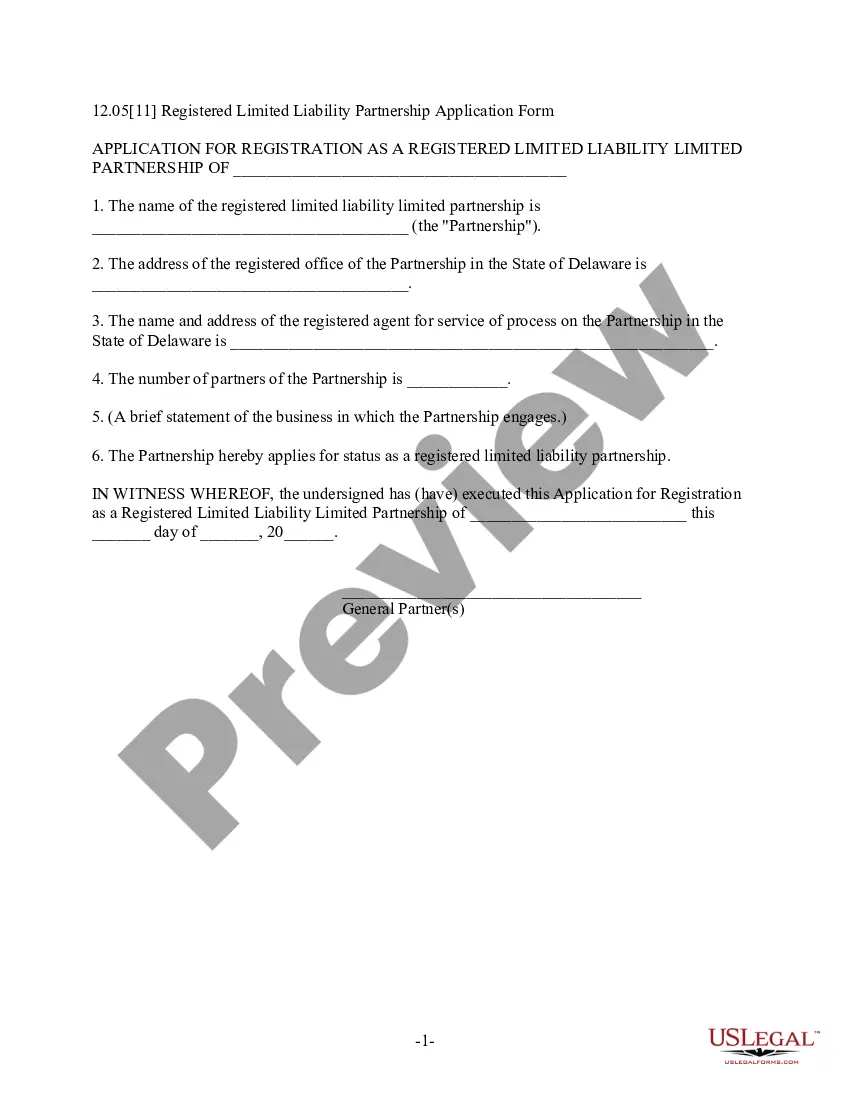
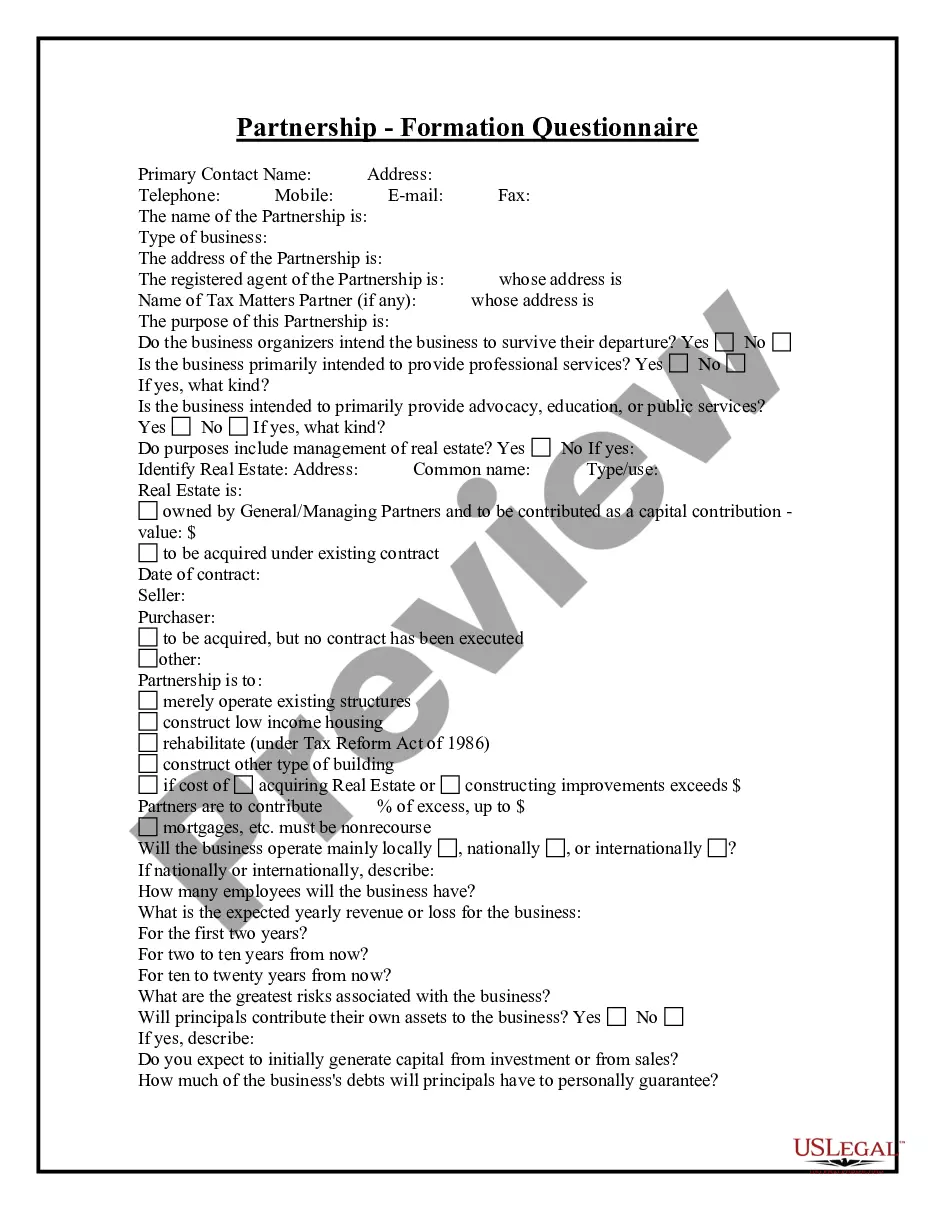
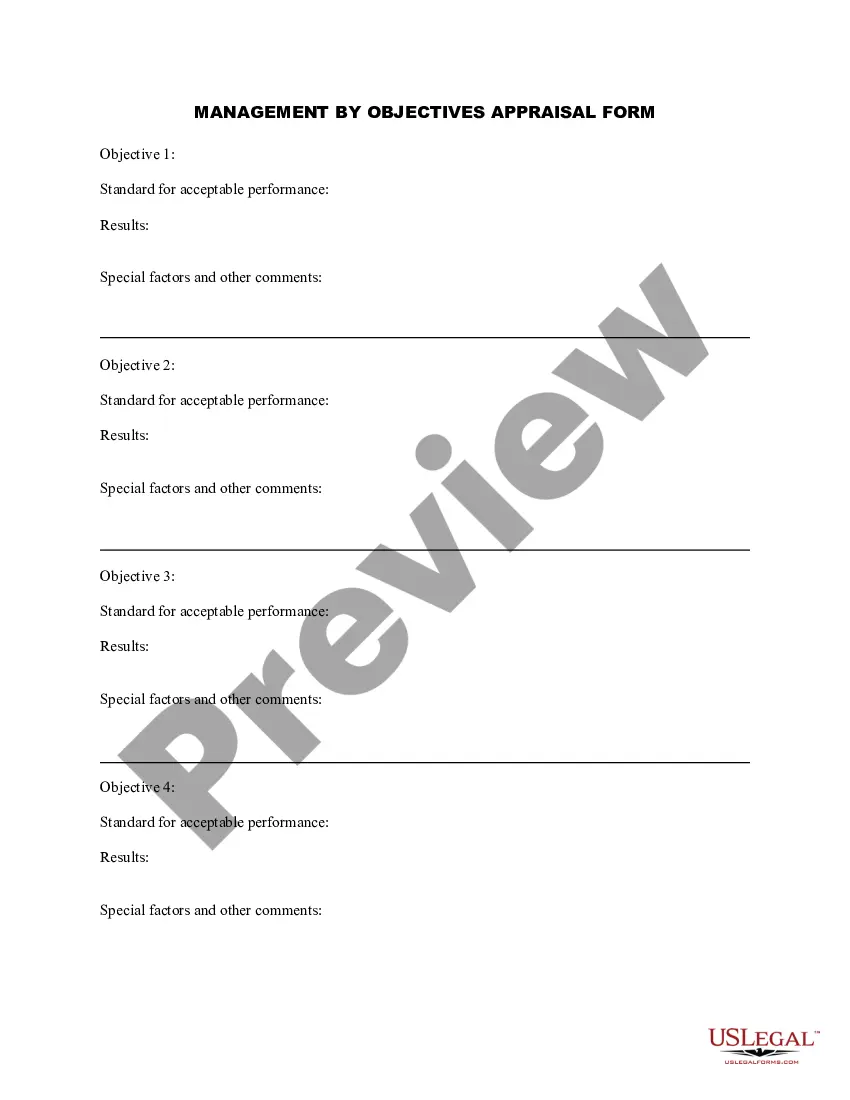
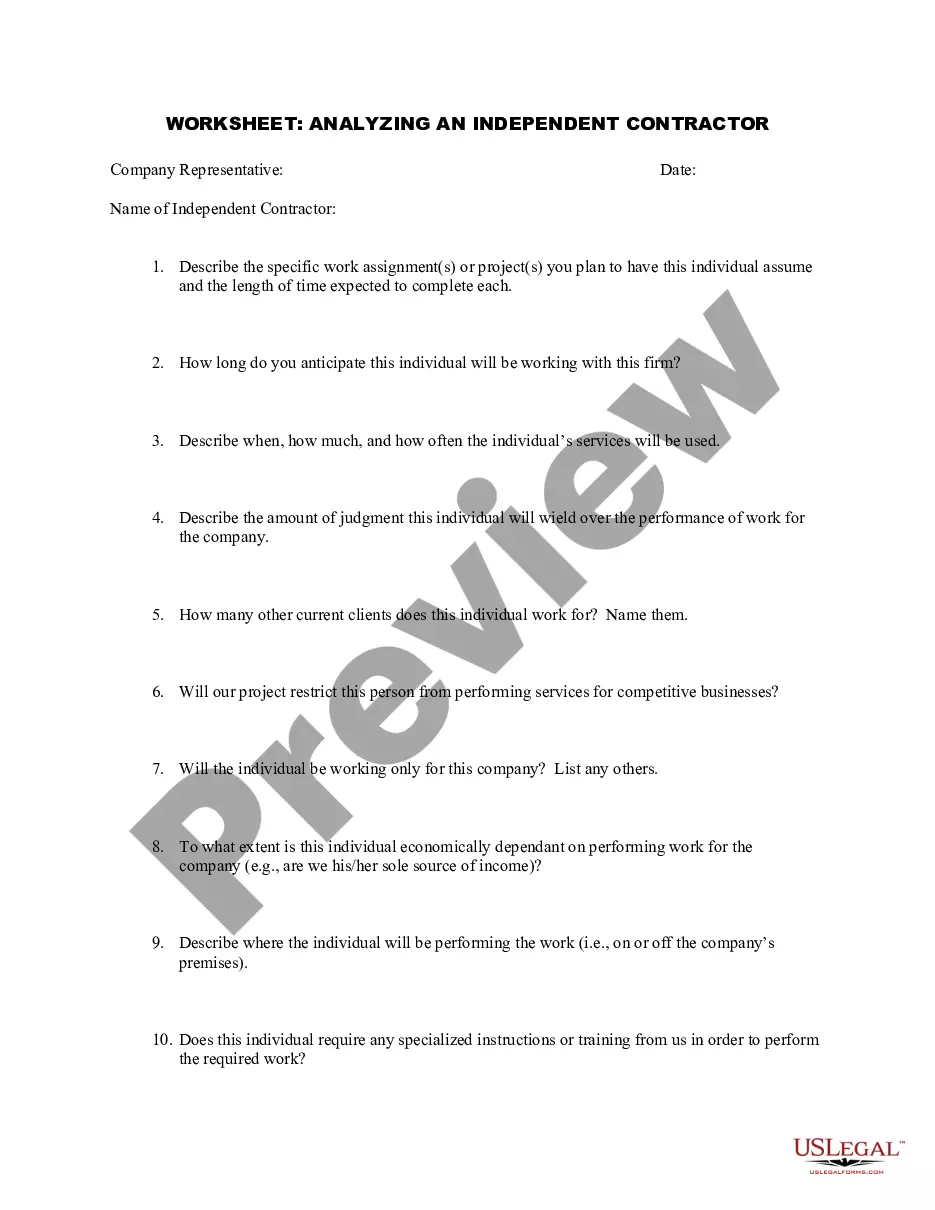
This form addresses important considerations that may effect the legal rights and obligations of the parties in a limited partnership formation. This questionnaire enables those seeking legal help to effectively identify and prepare their issues and problems. Thorough advance preparation enhances the attorney’s case evaluation and can significantly reduce costs associated with case preparation.
This questionnaire may also be used by an attorney as an important information gathering and issue identification tool when forming an attorney-client relationship with a new client. This form helps ensure thorough case preparation and effective evaluation of a new client’s needs. It may be used by an attorney or new client to save on attorney fees related to initial interviews.
Absolutely! Changes can be made, but it’s crucial to update your partnership agreement and any official paperwork to reflect the changes. Consider it akin to reworking your game plan as the season progresses!
Typically, limited partnerships are pass-through entities, meaning profits and losses transfer directly to partners' tax returns. It's as if the business itself is a relay team, passing the baton to each partner for reporting!
Yes, you’ll need to file a Certificate of Limited Partnership with the California Secretary of State. It’s like registering your team to play in the league!
While you’re not required by law to have a lawyer, it’s often wise to seek legal advice. Having a pro on your side can clear up any gray areas and save you trouble later on!
Your partnership agreement should cover things like the roles of each partner, how profits and losses will be shared, and what happens if someone wants out. It's all about spelling things out to avoid misunderstandings down the line!
Starting a limited partnership involves drafting a partnership agreement and filing it with the state. It’s like setting the ground rules before the game begins!
A limited partnership is a business arrangement where one or more partners manage the business, while others contribute capital but are not involved in daily operations. Think of it as a mixed bag of partners, each playing a different role!