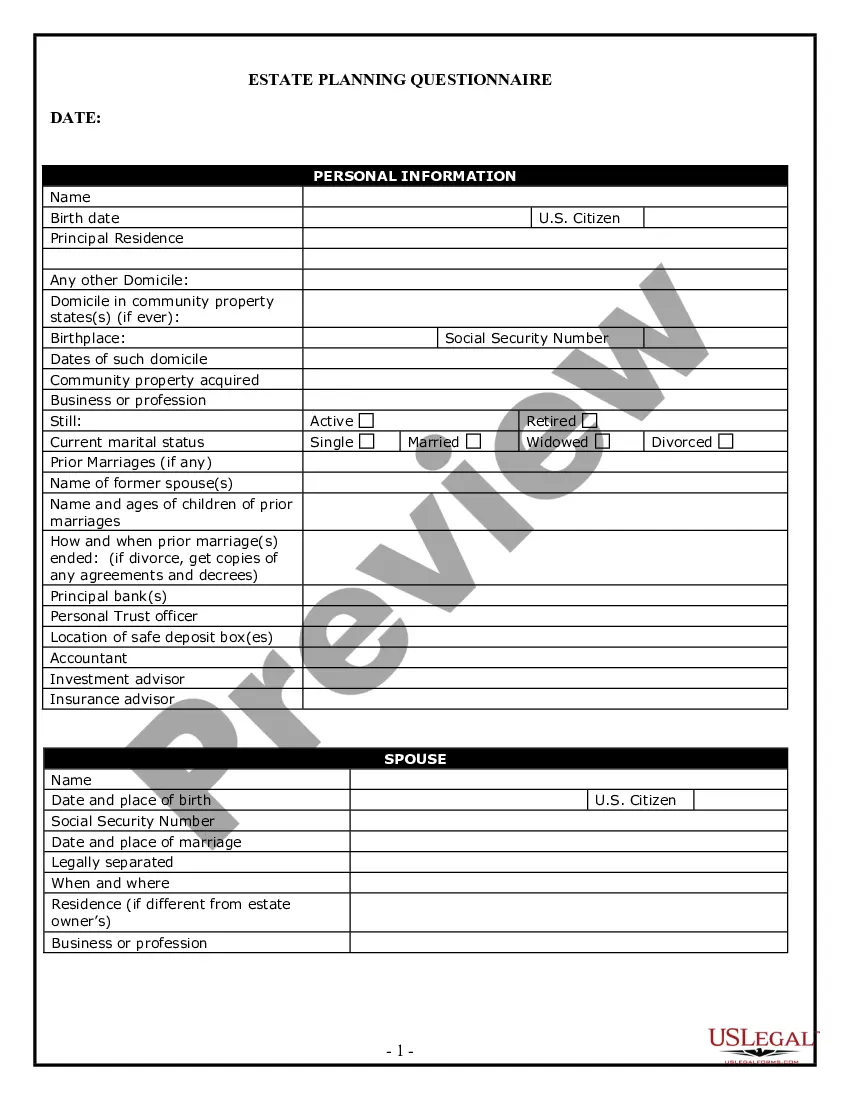
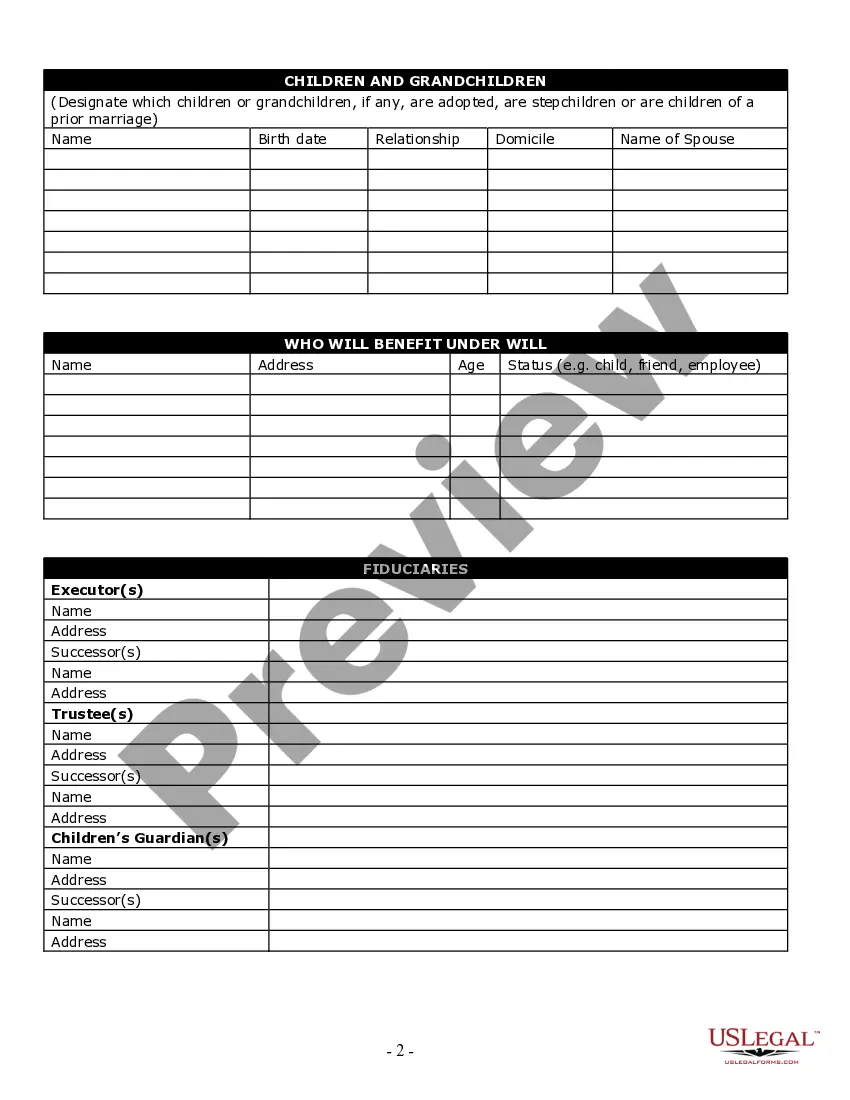
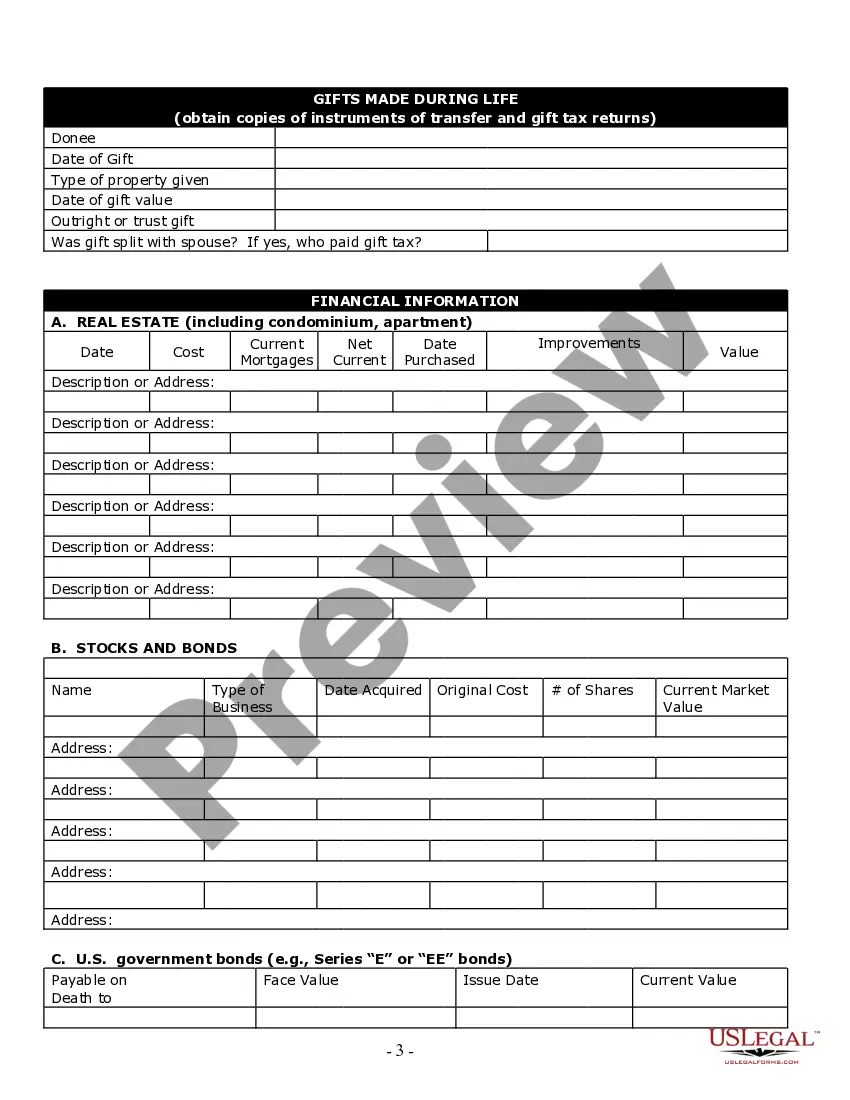
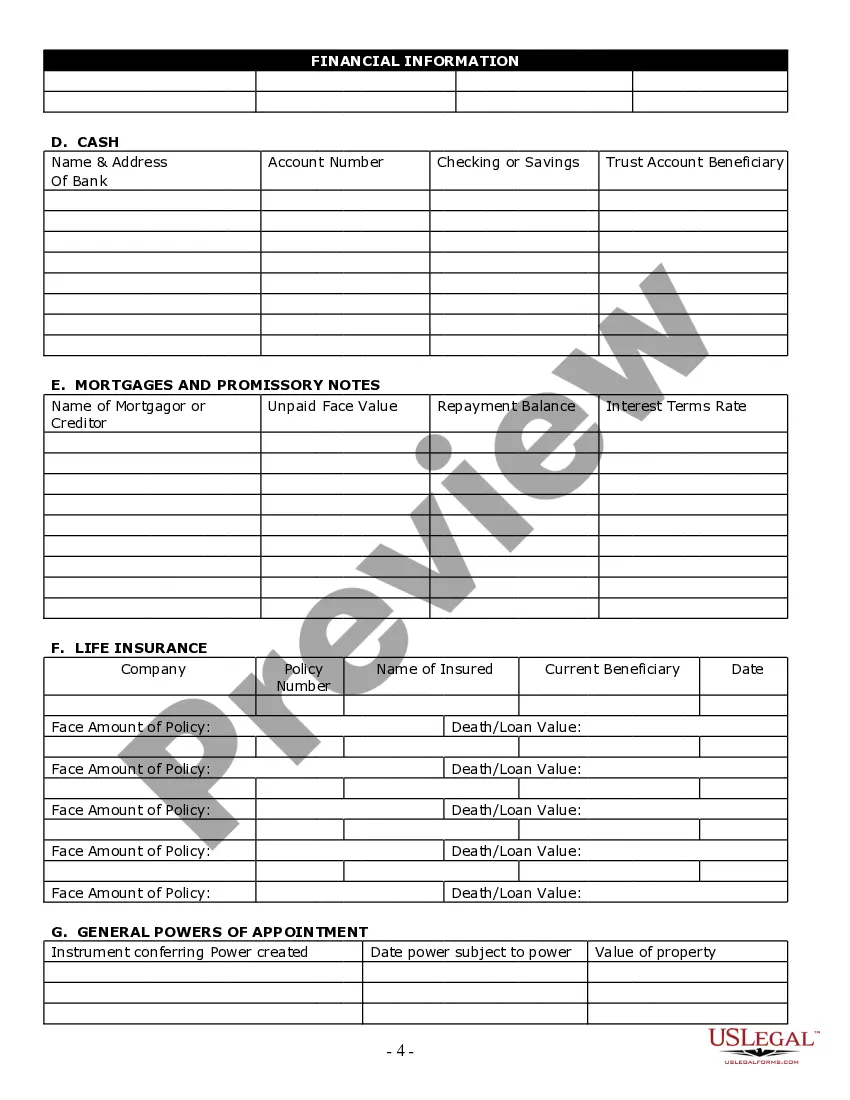
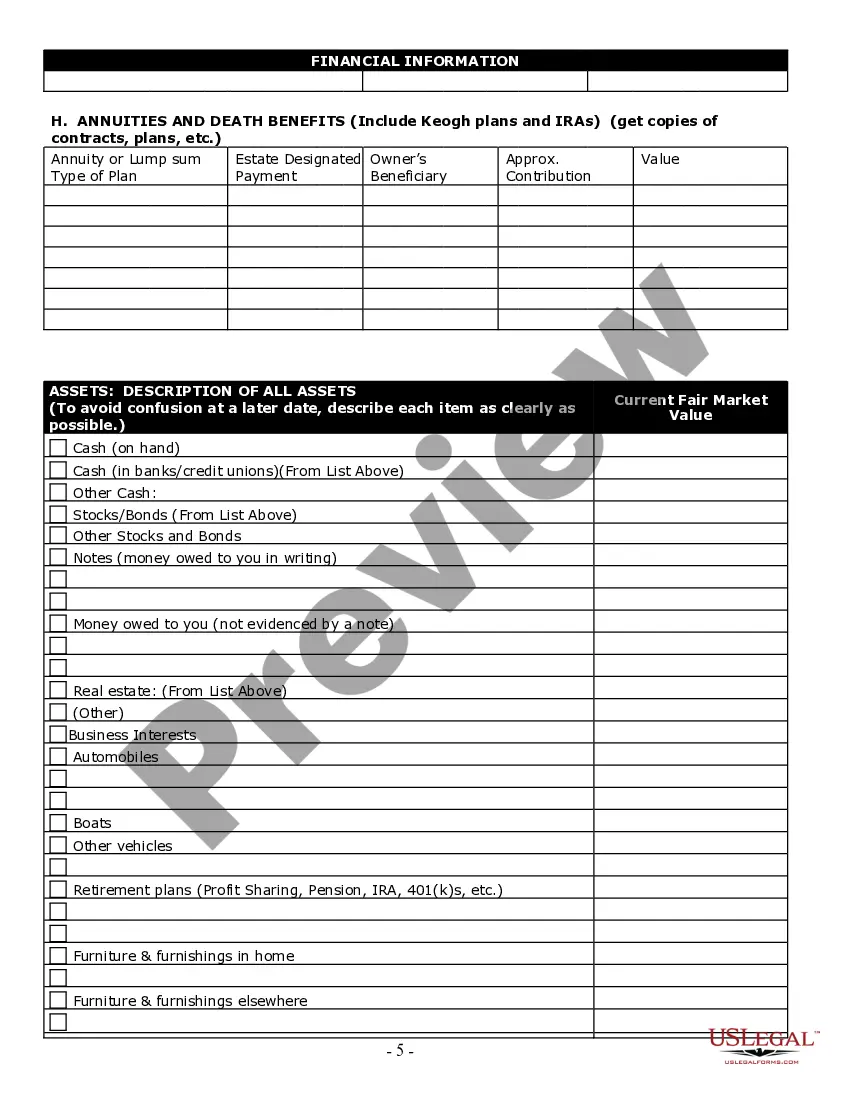
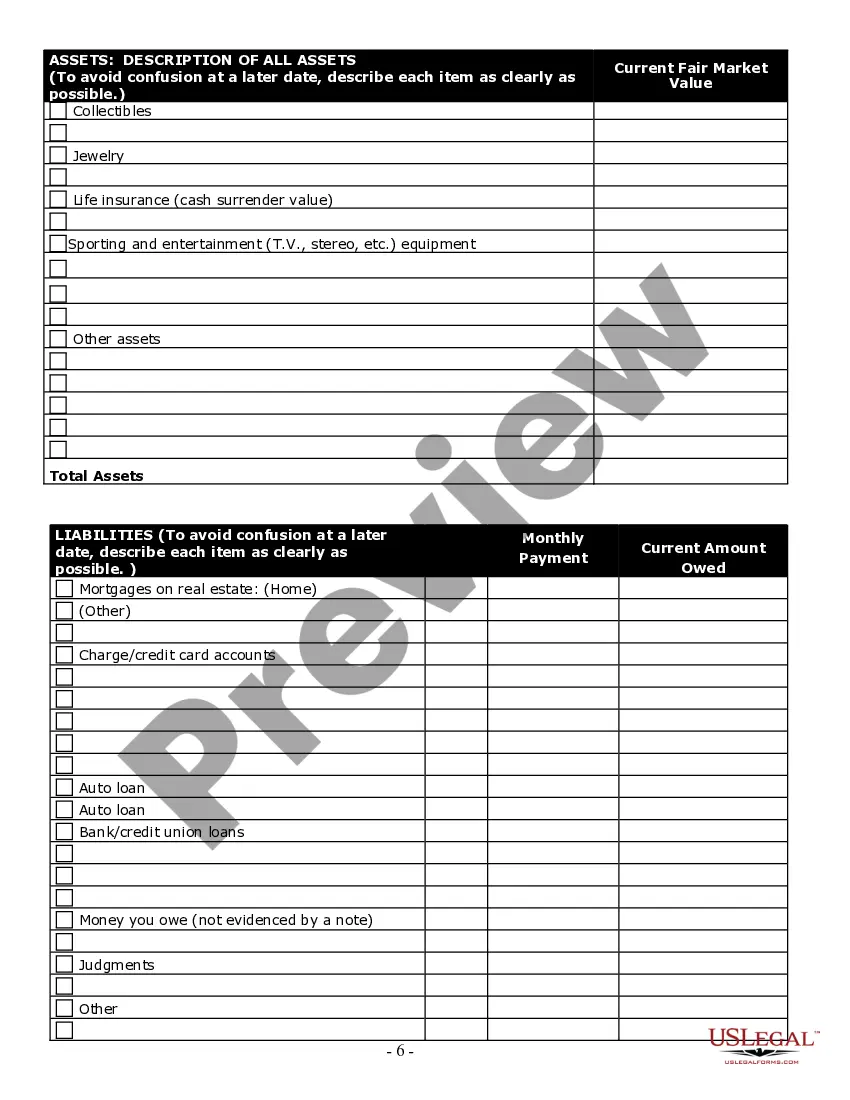
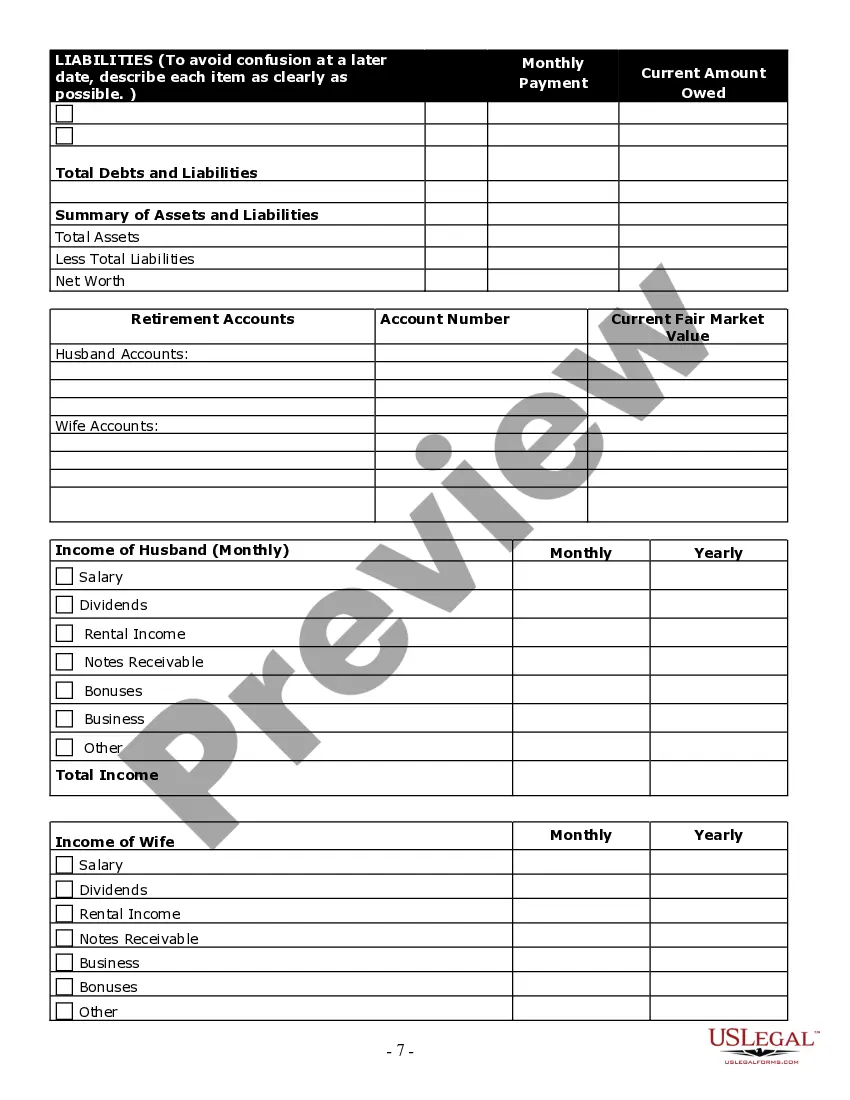
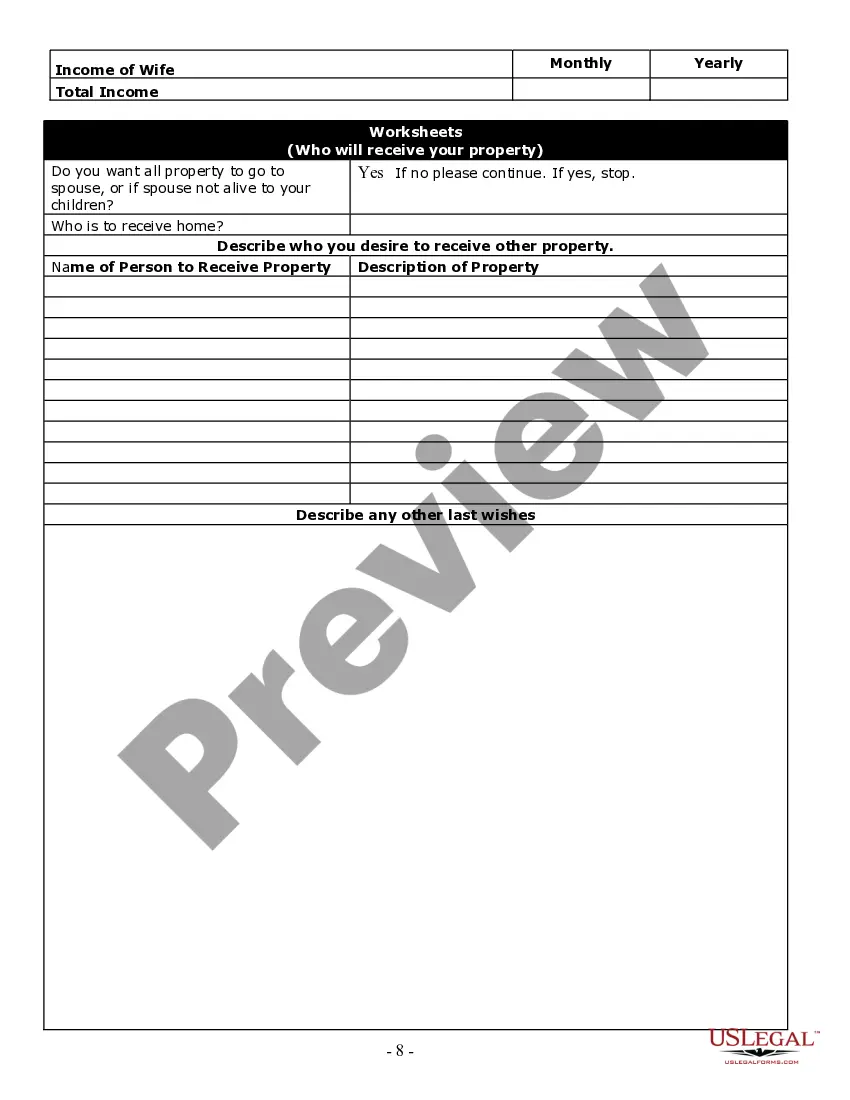
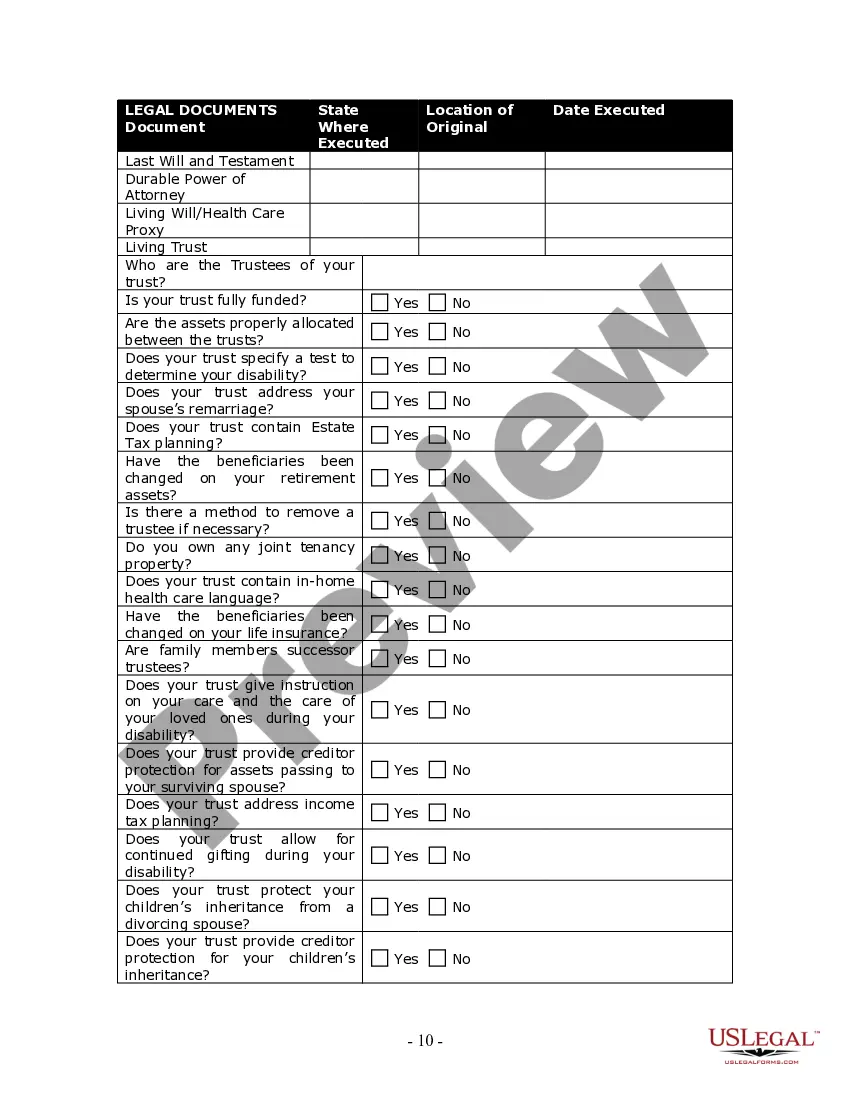
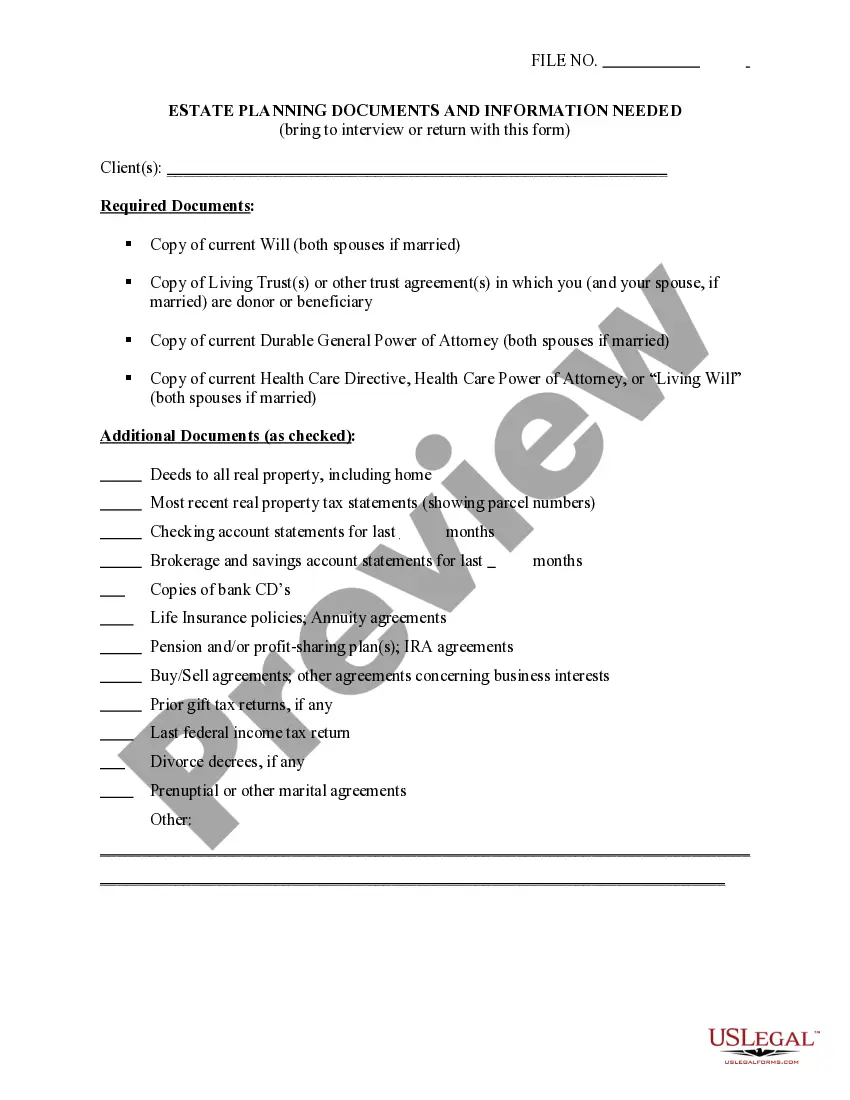
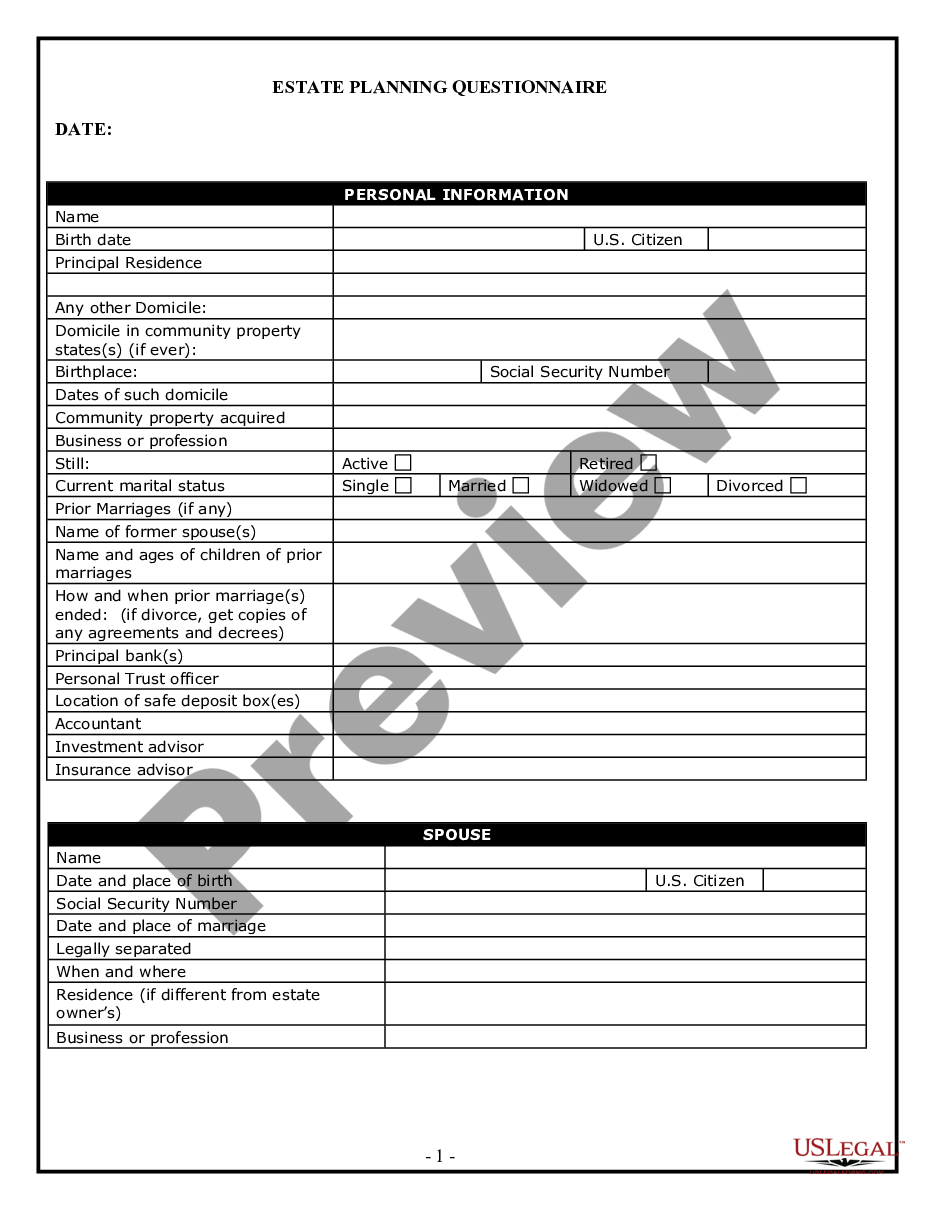
This questionnaire may also be used by an attorney as an important information gathering and issue identification tool when forming an attorney-client relationship with a new estate planning client. This form helps ensure thorough case preparation and effective evaluation of a new client's needs. It may be used by an attorney or new client to save on attorney fees related to initial interviews.
While you can create a basic plan on your own, consulting a lawyer can provide peace of mind. They’ll help you navigate the legalese and ensure everything is in order, so you can sleep easy.
A living trust allows you to place your assets in a trust during your lifetime. This can help avoid probate, making it easier and quicker for your loved ones to access what you've left them.
Designate a guardian for your children in your will. This is one of the most important decisions you’ll make, so choose someone you trust to raise them according to your values.
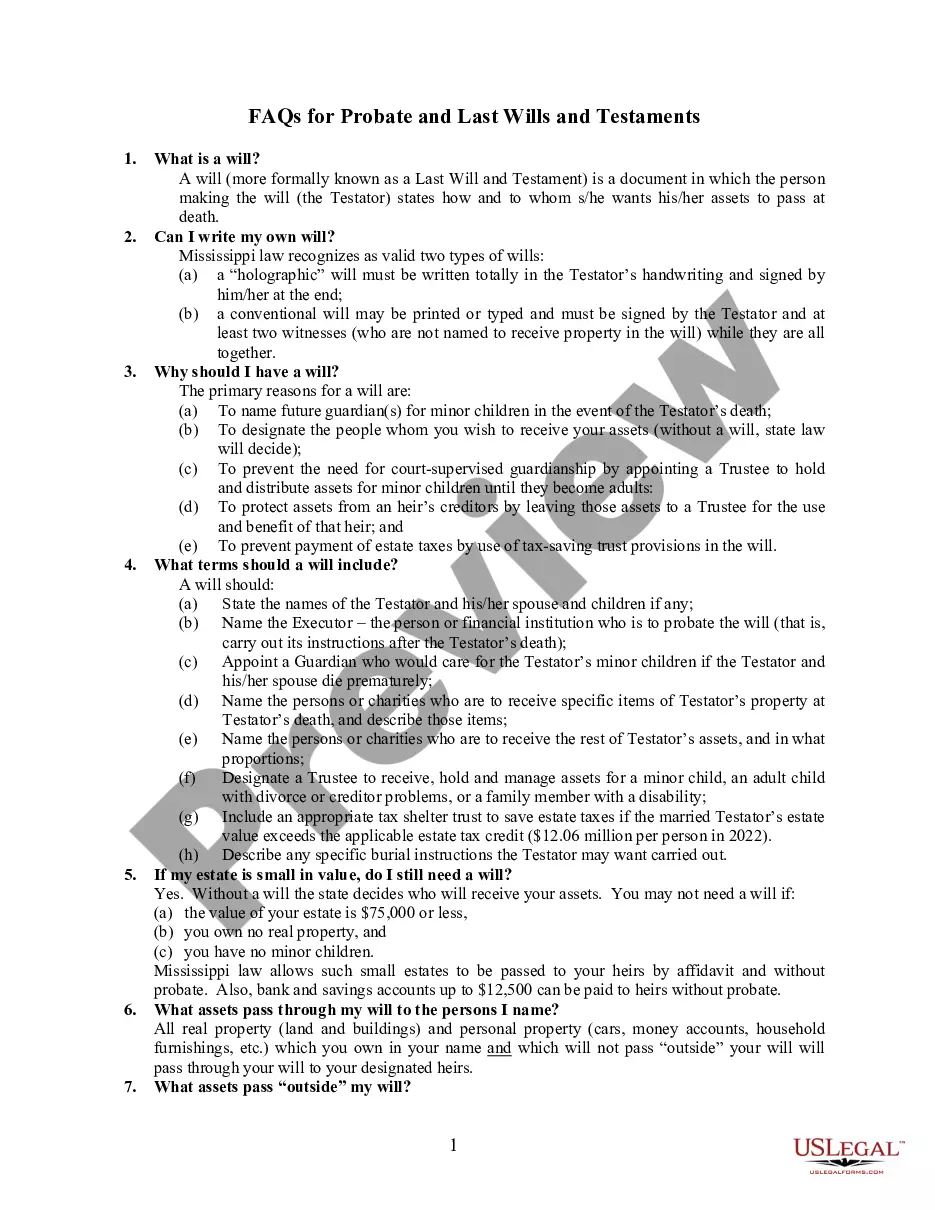
If you pass away without a will, the state decides who gets your assets, which might not align with your wishes. It’s like leaving your fate in someone else’s hands—definitely not ideal!
Absolutely! Life happens. If you have a big life change like a marriage or a new baby, it’s wise to revisit your estate plan and adjust it accordingly.
You'll want a will, possibly a trust, and maybe some powers of attorney. These documents make sure your decisions are respected even when you can't speak for yourself.
Estate planning is all about making sure your wishes are carried out after you pass away. It helps clarify who gets what and can save your loved ones a lot of heartache down the road.