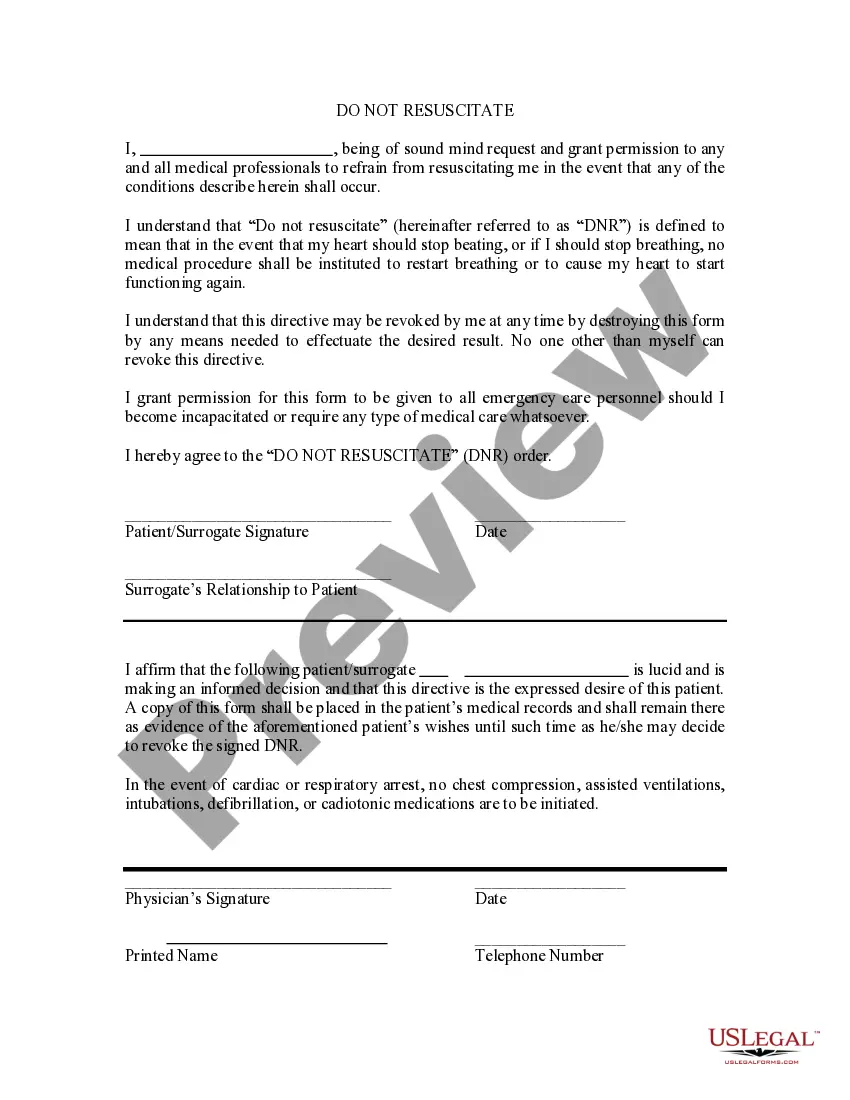
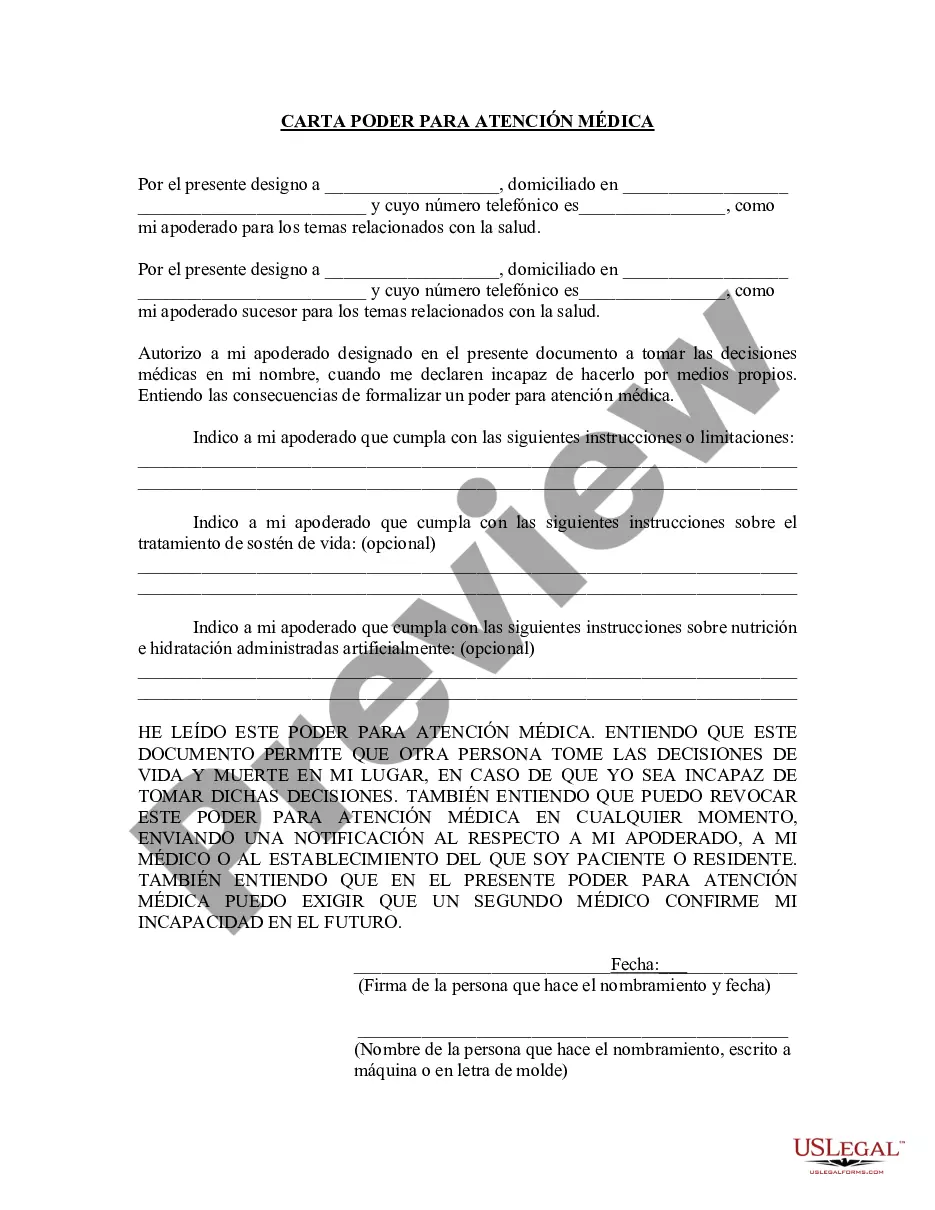
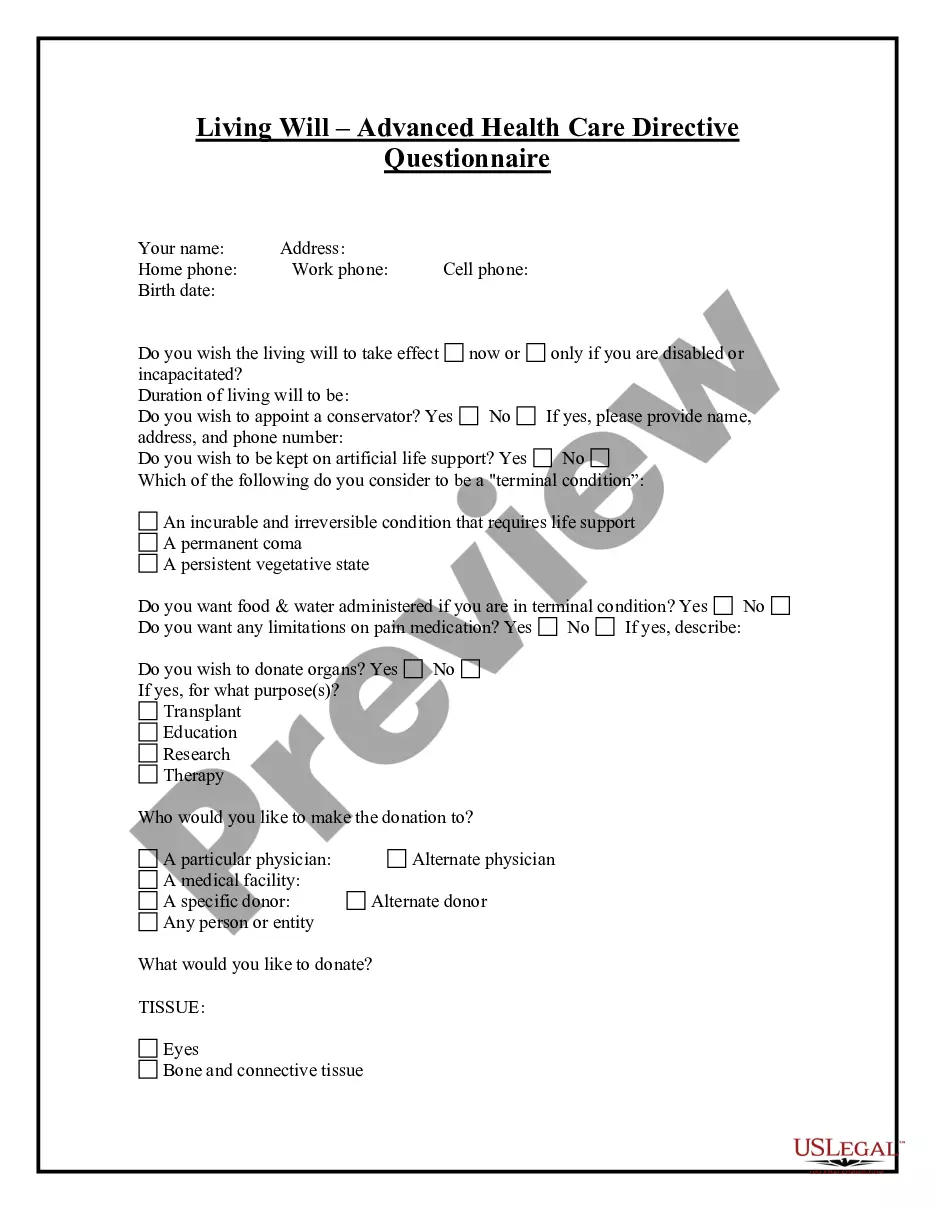
This is a form initiated by a patient requesting that he/she not be resuscitated should he/she stop breathing or should his/her heart stop beating. This form is also to be signed by a physician attesting to patient's wishes and to be placed in the patient's file.
If you change your mind about your DNR, make sure to talk to your doctor and update your medical records so everyone is on the same page.
Having a DNR order won’t affect your overall medical care; you’ll still receive treatment for other medical issues.
Absolutely! You can change or revoke your DNR order anytime you want, just let your healthcare provider know.
No, you don’t need a lawyer to create a DNR. Just discuss it with your healthcare provider who will help you understand the ins and outs.
You can talk to your doctor about creating a DNR order. They'll guide you through the process and make sure it's documented properly.
Typically, a DNR can be requested by a patient themselves if they're able to make decisions, or by a legally authorized representative if the patient is unable.
A DNR order is a legal document that tells medical staff not to perform CPR or other life-saving measures if your heart stops beating or you stop breathing.