First off, take some time to understand the details of the deed. It would be wise to consult a lawyer to fully grasp your rights and responsibilities concerning the subsurface areas.
Yes, there can be risks, such as potential environmental impacts or disturbances to the surface land. It’s crucial to weigh the benefits against possible challenges.
Often, these rights are bought by companies or individuals interested in natural resource extraction, like oil or gas companies. But homeowners can also sell or lease these rights.
Yes, you can still use your land above ground, but you have to keep in mind any rights granted to others below the surface. It can get a bit tricky, so it's best to check the details.
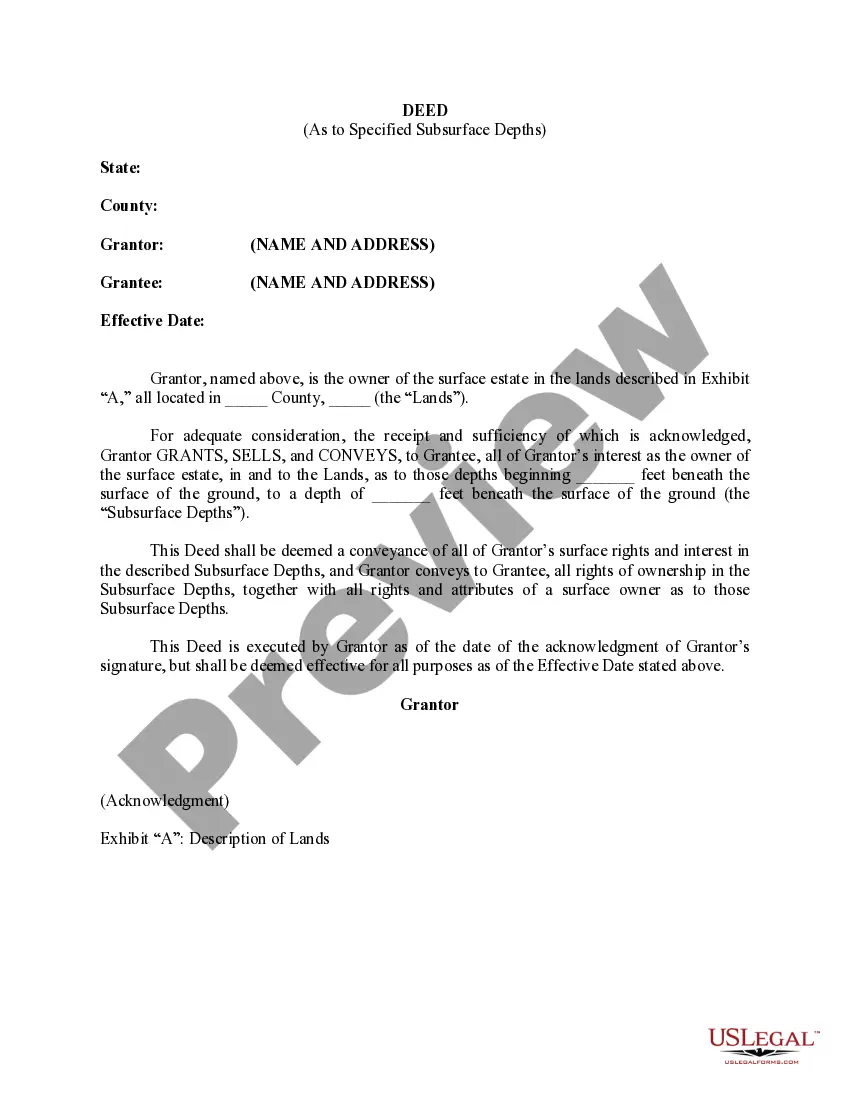
Typically, these deeds specify a certain depth, like 10 feet or even 500 feet deep, depending on what you're dealing with and local regulations. It’s important to find out what's specified in your deed.
You might need this type of deed if you're looking to explore or utilize natural resources lying deep in the ground, and you want to make sure you have legal rights to do so.
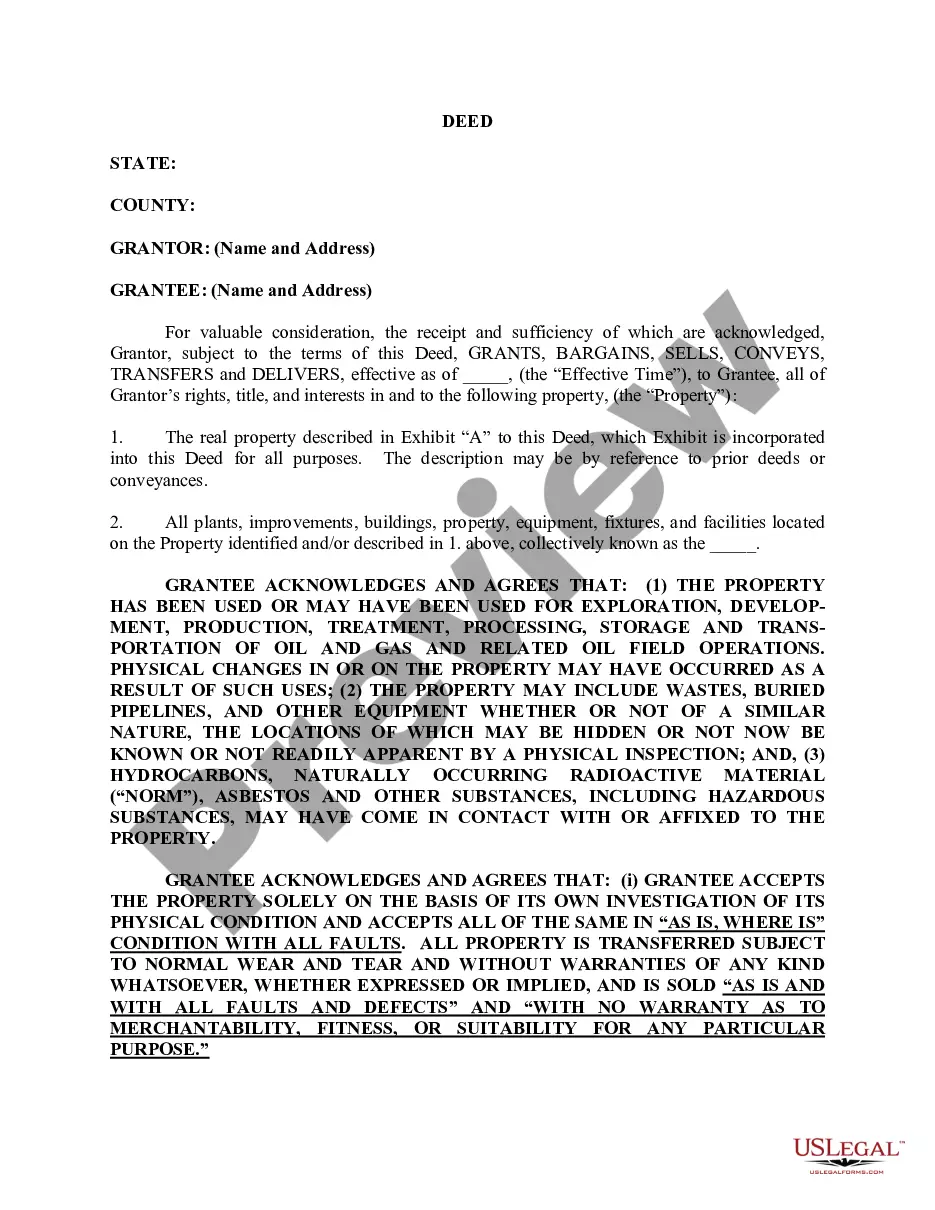
A Deed for Specified Subsurface Depths is basically a legal document that grants rights to the subsurface land beneath a certain depth. It outlines who has access to resources like minerals or natural gas below the surface.