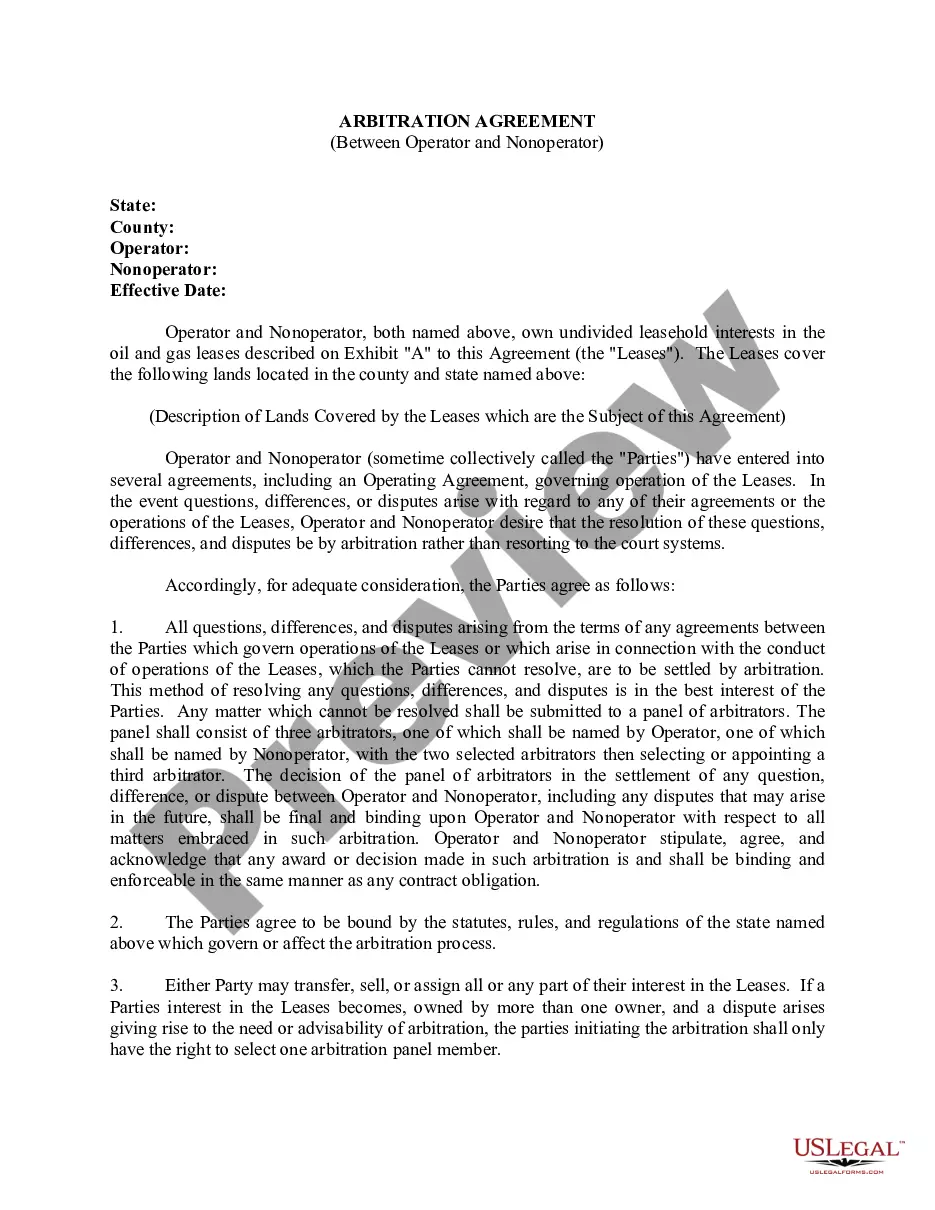
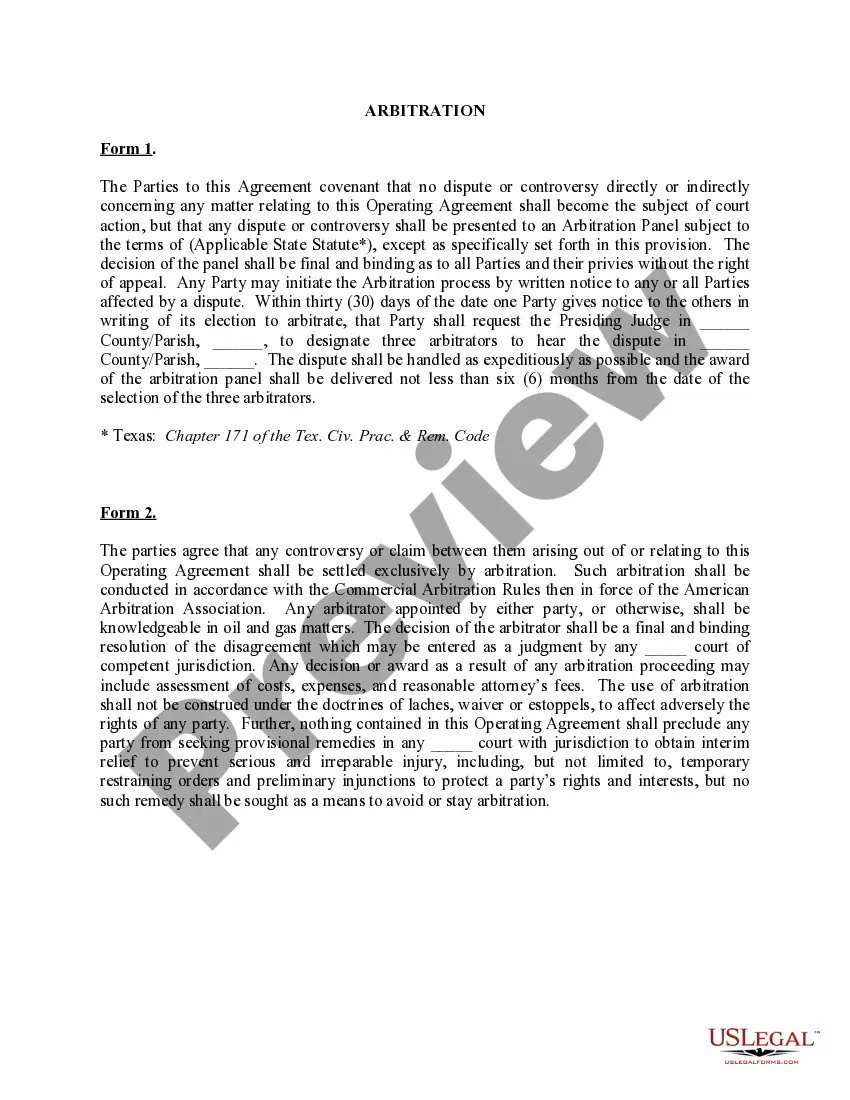
This agreement is used when questions, differences, or disputes arise with regard to any of the Operator and Nonoperator agreements or the operations of the Leases.
If someone doesn't play fair and skips arbitration, the other party can go to court to enforce the agreement. Essentially, you can call in the referees if the game isn’t being played right.
Arbitration is like a fast track ticket at a theme park—faster and typically less formal. Court can be drawn out and full of red tape, while arbitration is more straightforward.
Generally, if there’s a valid agreement, parties can’t refuse. It’s like signing up for a game; once you’re in, you have to play by the rules.
Yes, arbitration is usually binding. That means once it's decided, everyone has to stick to the outcome, like it or not. It's the final word on the matter.
The agreement typically covers any disagreements related to the operation—think issues about costs, performance, or contract terms. It’s your safety net for when things don’t go as planned.
Having an arbitration agreement helps ensure that if disagreements pop up, they can be sorted out quickly and efficiently, without the long waits and headaches of court.
An arbitration agreement is a contract where parties agree to resolve any disputes through arbitration rather than going to court. It’s like settling your differences over coffee instead of in a courtroom.