Riverside California Utility Facilities Easement
Description
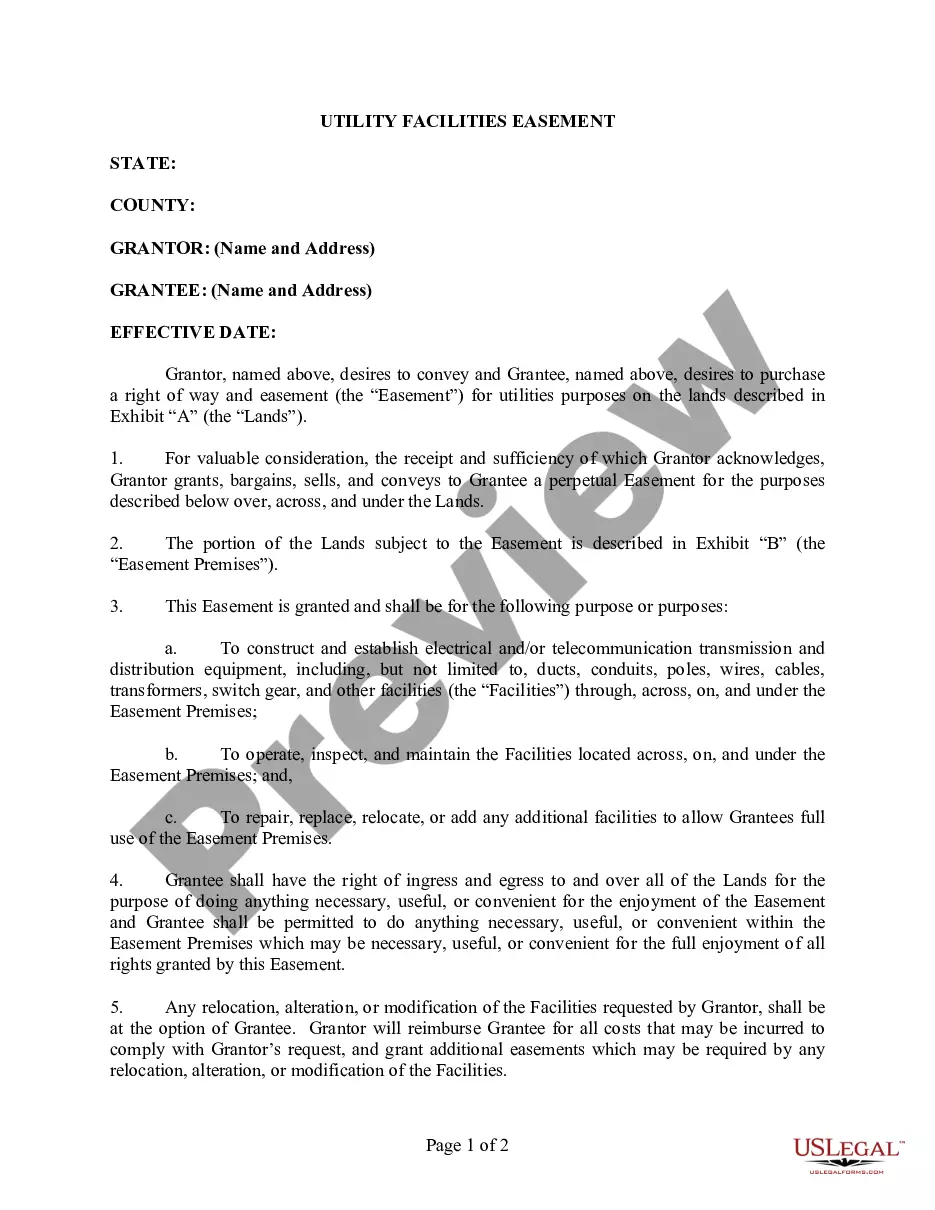
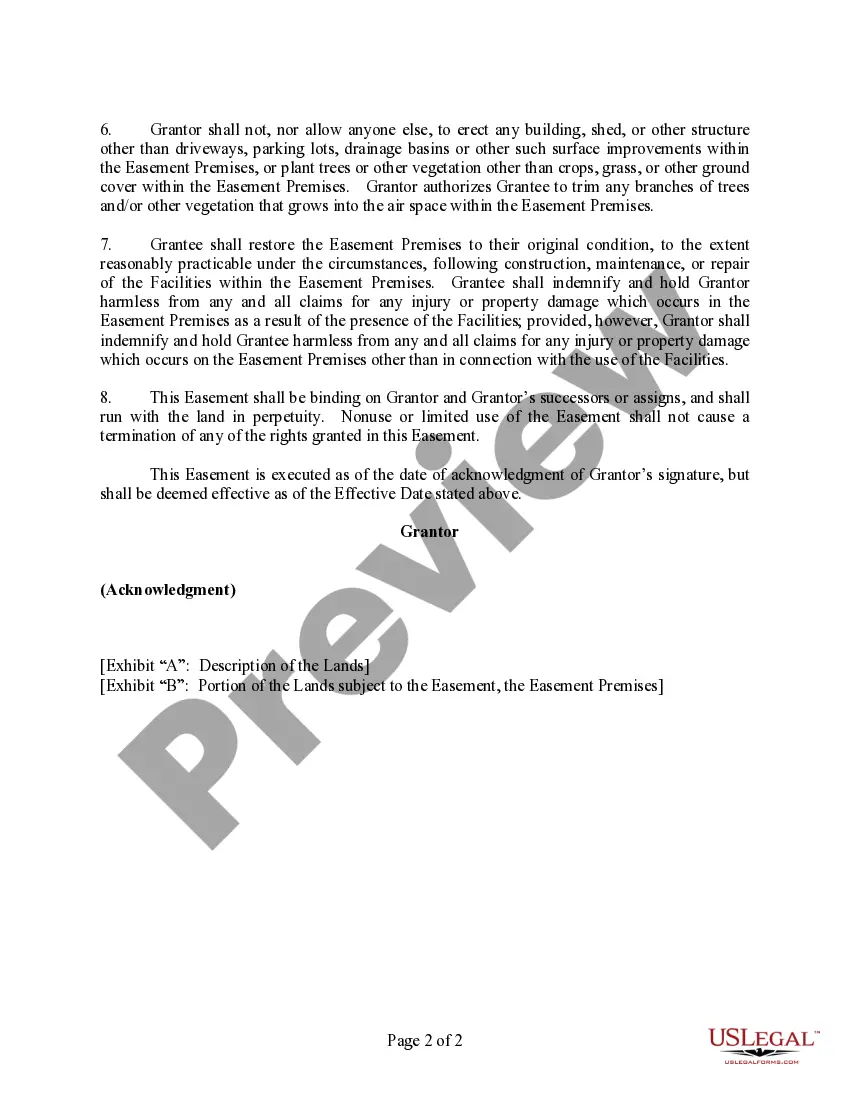
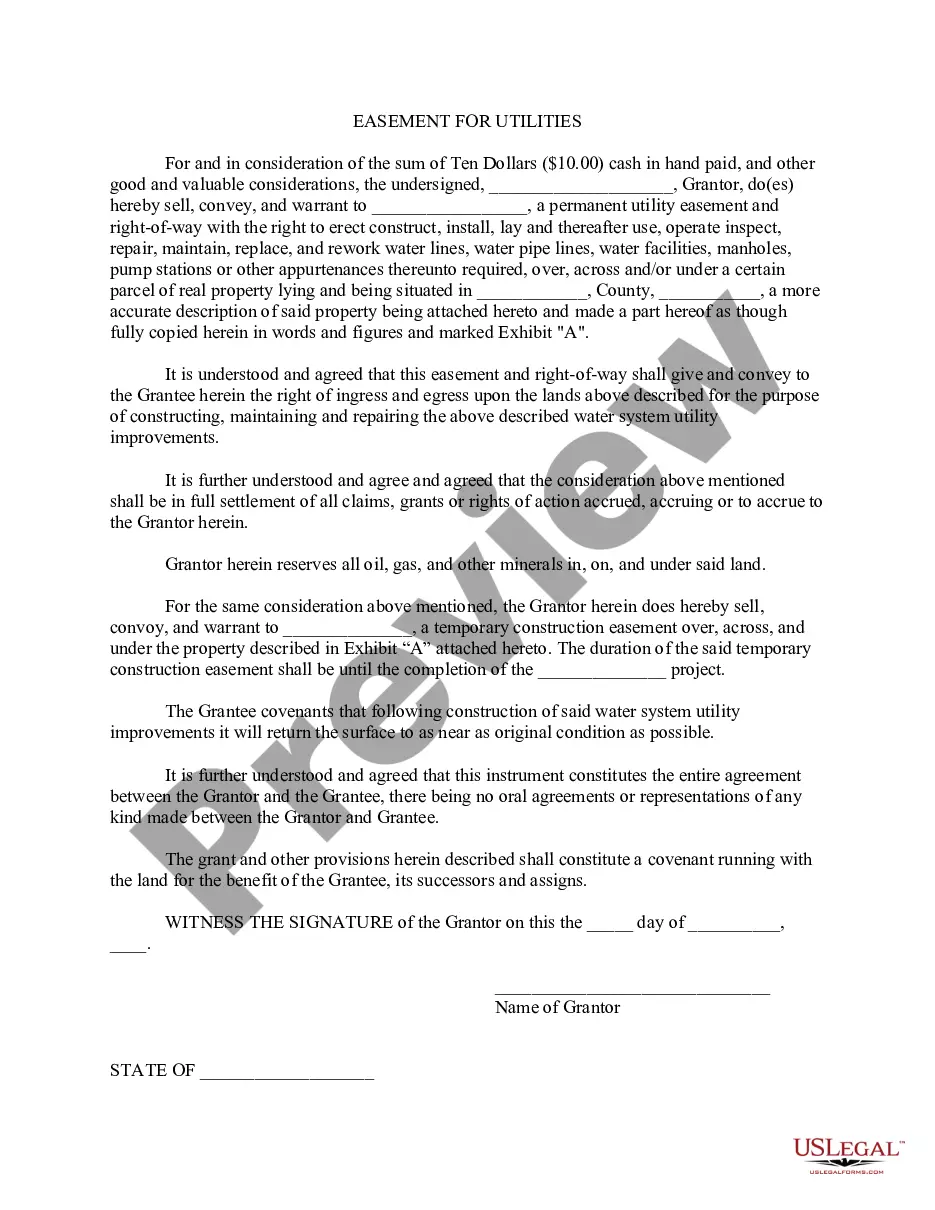
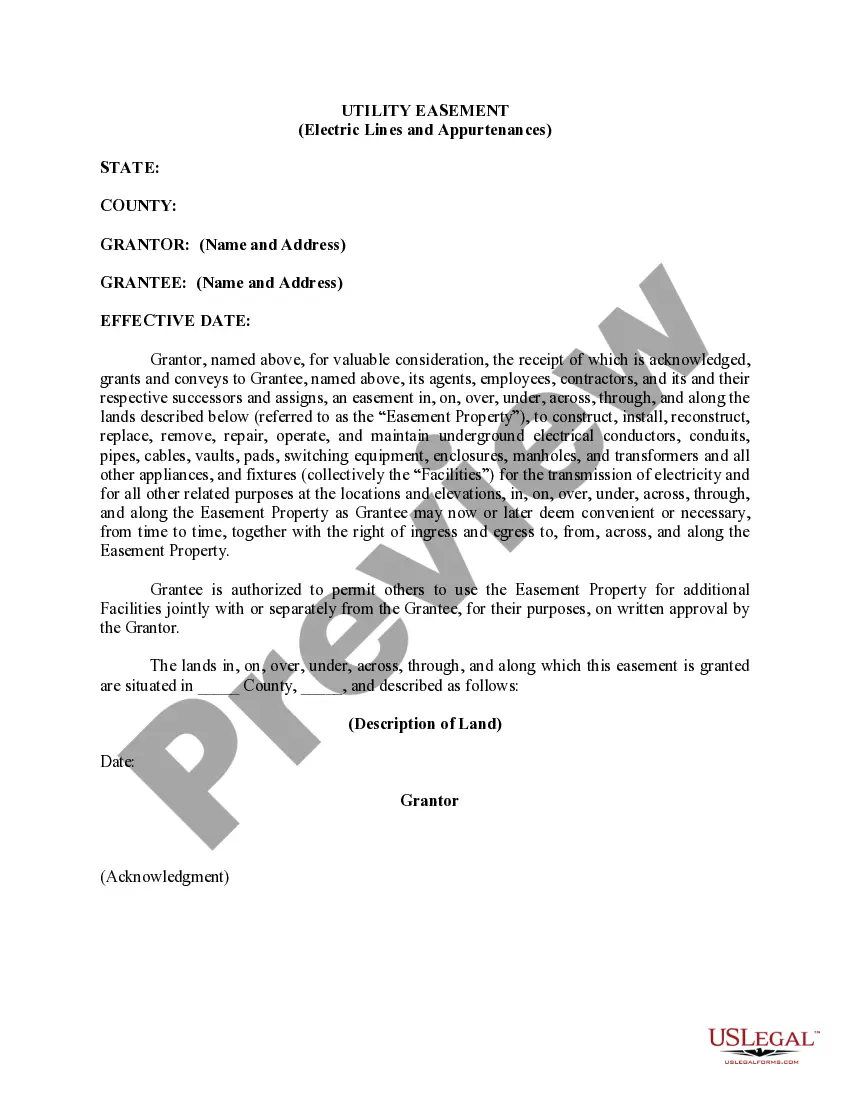
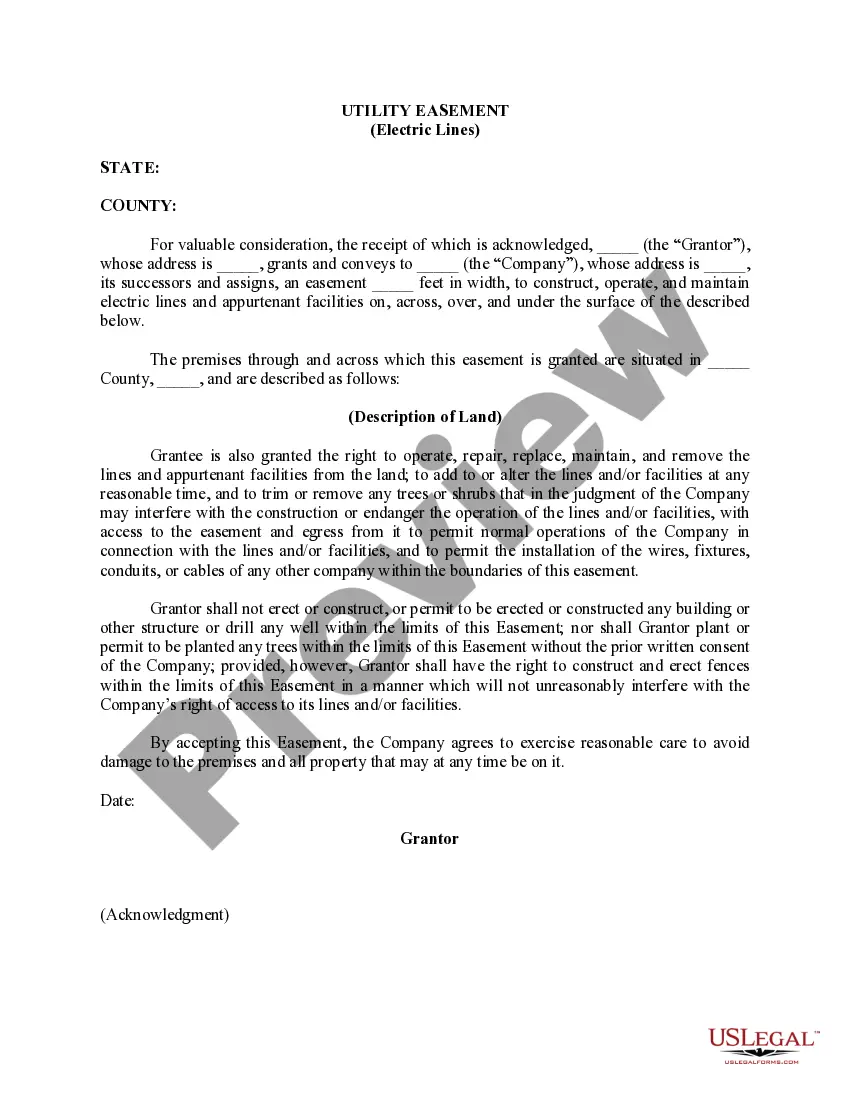
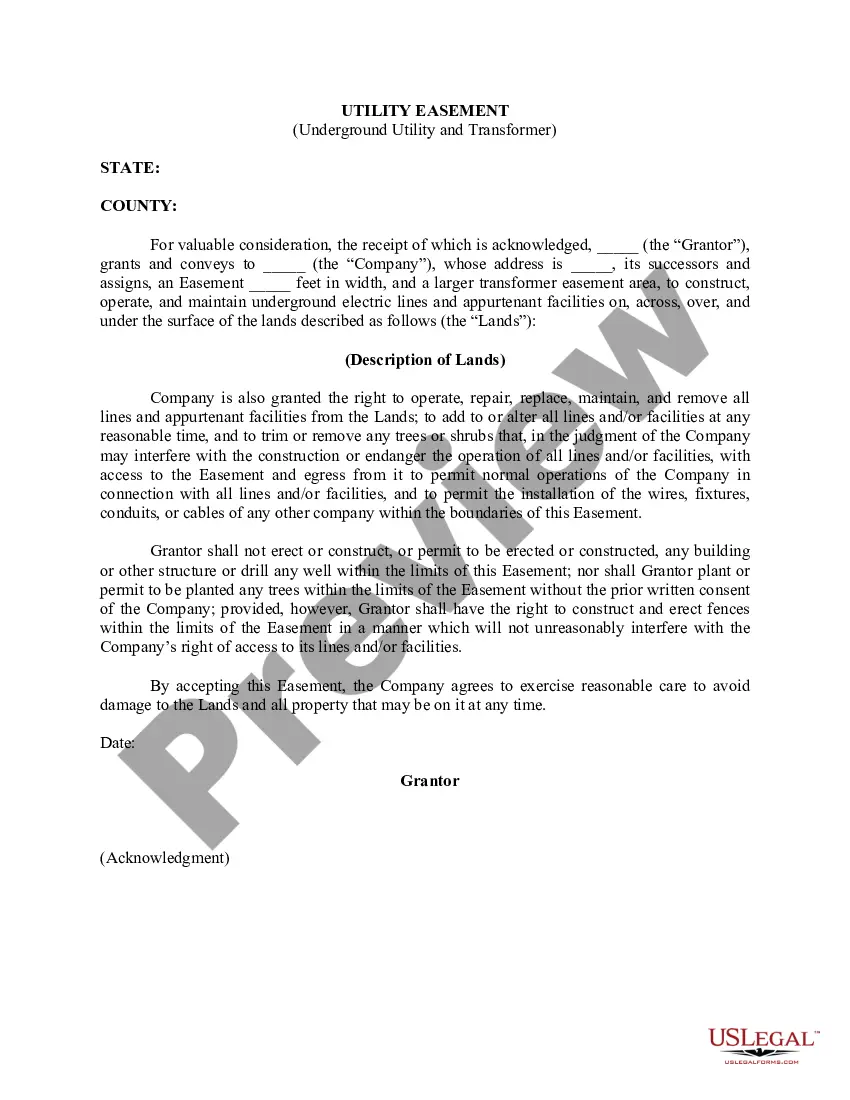
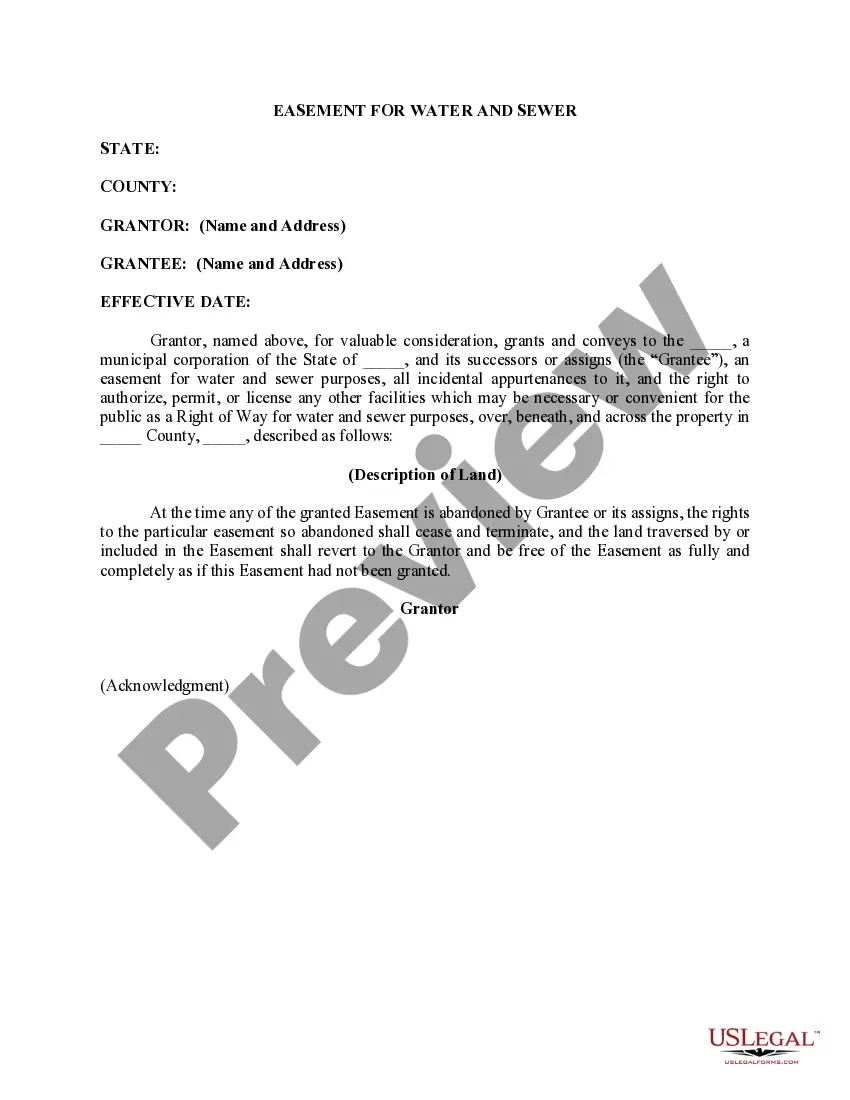






How to fill out Utility Facilities Easement?
A document process consistently accompanies any legal action you undertake.
Starting a business, requesting or accepting a job proposal, transferring property, and numerous other life circumstances necessitate that you organize official paperwork that varies by jurisdiction.
That’s the reason consolidating everything in one location is incredibly beneficial.
US Legal Forms is the largest virtual repository of current federal and state-specific legal documents.
Read the description (if present) to confirm the form fulfills your needs.
- Here, you can conveniently find and download a document for any personal or commercial purpose used in your area, including the Riverside Utility Facilities Easement.
- Finding templates on the platform is exceptionally easy.
- If you already possess a subscription to our library, Log In to your account, search for the template through the search bar, and click Download to store it on your device.
- Subsequently, the Riverside Utility Facilities Easement will be accessible for further use in the My documents section of your profile.
- If you are engaging with US Legal Forms for the first time, follow this brief guide to secure the Riverside Utility Facilities Easement.
- Ensure you have accessed the correct page with your regional form.
- Utilize the Preview mode (if available) and scroll through the sample.
Form popularity
FAQ
An unrecorded easement can still be enforceable in California, but proving its existence may be more challenging. Without public record, disputes can arise when property changes hands. If you are dealing with a Riverside California Utility Facilities Easement, it can be advantageous to consult legal services like USLegalForms to ensure your easement is documented and enforceable.
The first is a utility easement that allows a property owner and utility company to run water pipes, power lines, and other utilities. The second is a private easement agreement between two private parties.
PUE stands for Public Utility Easement. Like other easements, a PUE grants certain rights to the owner of the easement.
Public Utility Easement means any privately owned land, in which the City holds an easement for public utility uses and purposes, without regard to whether any public utility, as defined in California Public Utilities Code section 216(a), has an easement for similar public utility uses and purposes.
The keeping of non-domesticated animals such as horses, cows, roosters/hens, sheep, goats, and pigs are regulated by the Riverside County Land Use Ordinance No. 348. The type and quantity of animals you are allowed to keep is dependent upon the zoning and the acreage of your property.
In Riverside, for example, the zoning code doesn't allow tiny houses, Community and Economic Development Director Rafael Guzman said. But officials are looking into reducing the lot size required to add a second unit or granny flat, as they're also called which could help address a housing shortage, he said.
An easement as defined by the California Department of Real Estate is "a right, privilege or interest limited to a specific purpose which one party has in the land of another." Easements are categorized as an easement appurtenant, a transferable real property interest, such as a driveway across an adjacent parcel, or
In the counties of Alameda, Contra Costa, Lake, Mendocino, Napa, Sacramento, and Sonoma, tiny houses on wheels are allowed as caregiver dwellings. This means that the tiny house has to be in the backyard of someone who needs constant assistance from the owner of the tiny house.
There are several types of easements, including: utility easements. private easements. easements by necessity, and. prescriptive easements (acquired by someone's use of property).
There's no statewide tiny house law in California, so the answer to this question varies from city to city. In some places, it's illegal to use a tiny house as a permanent residence, but in others, tiny houses are legal as long as you follow the zoning and building codes of your city.