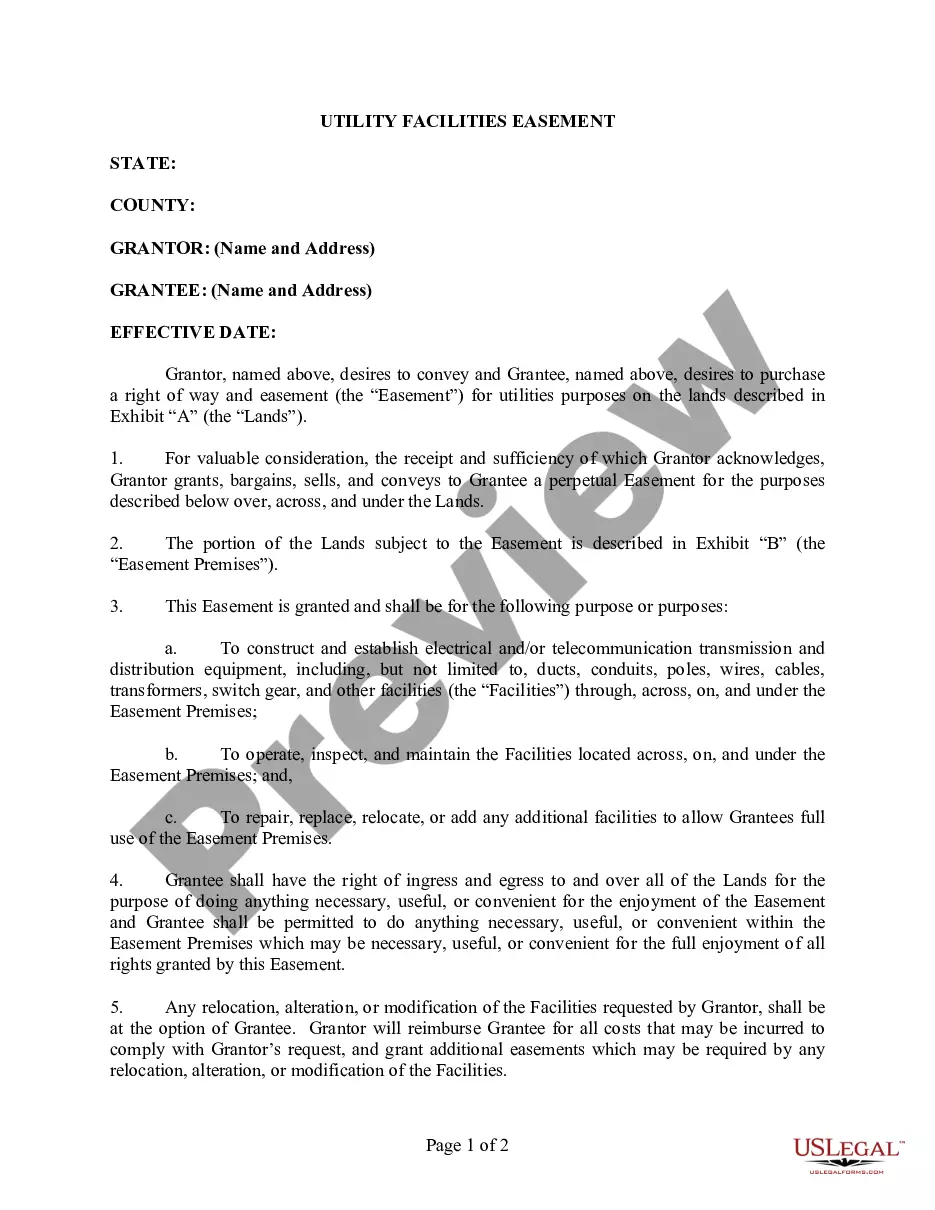
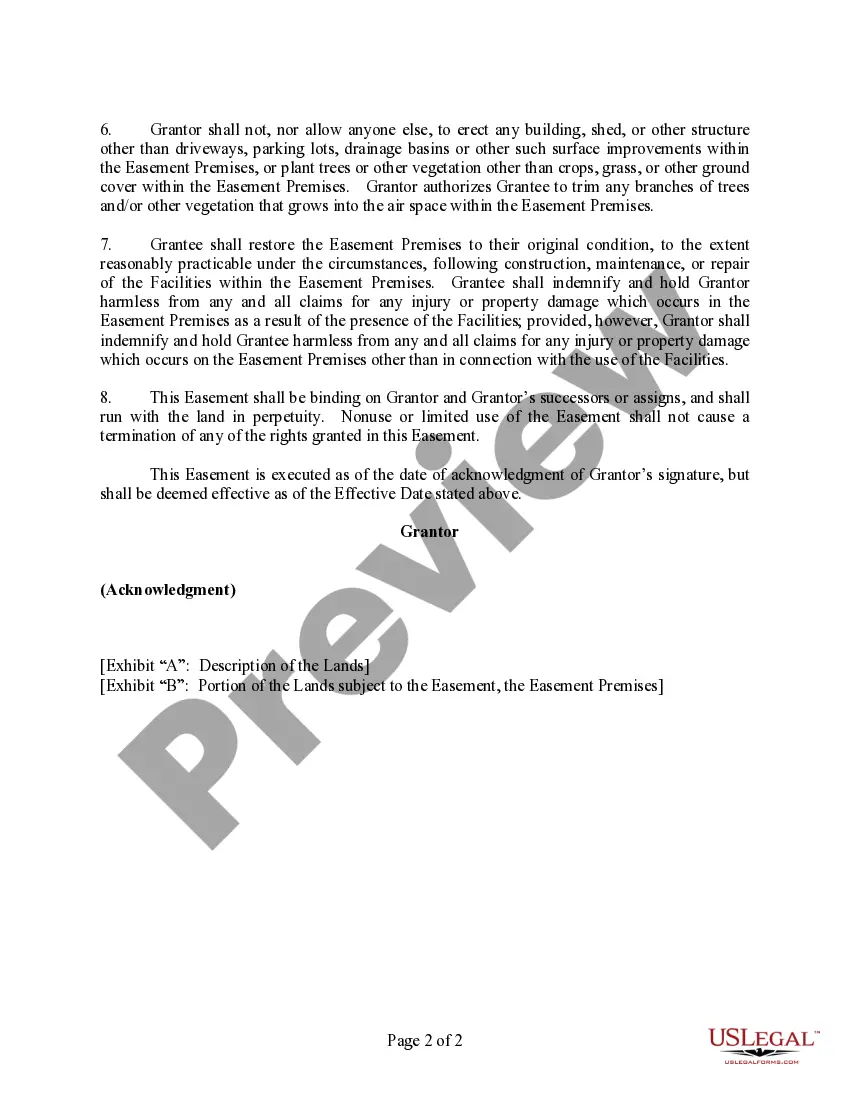
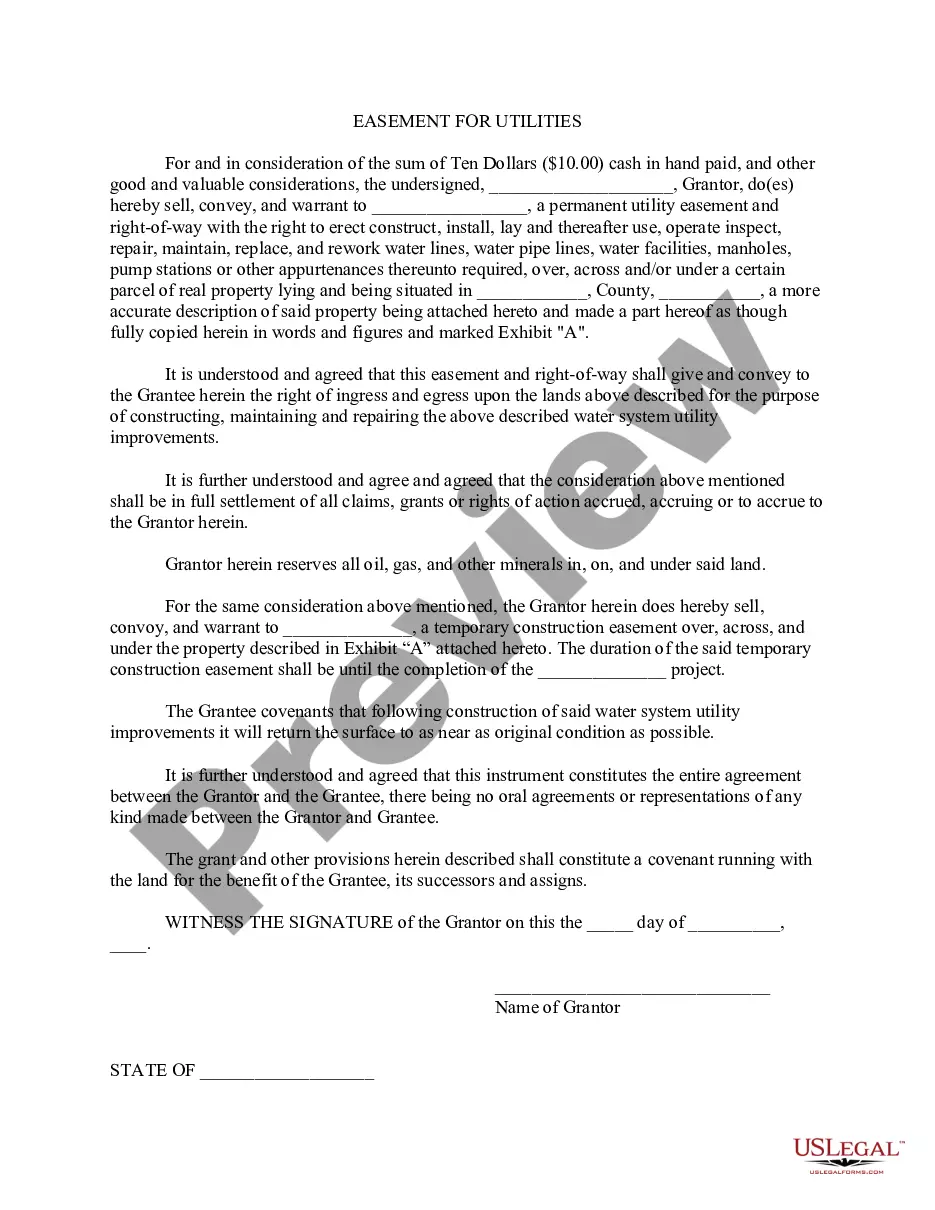
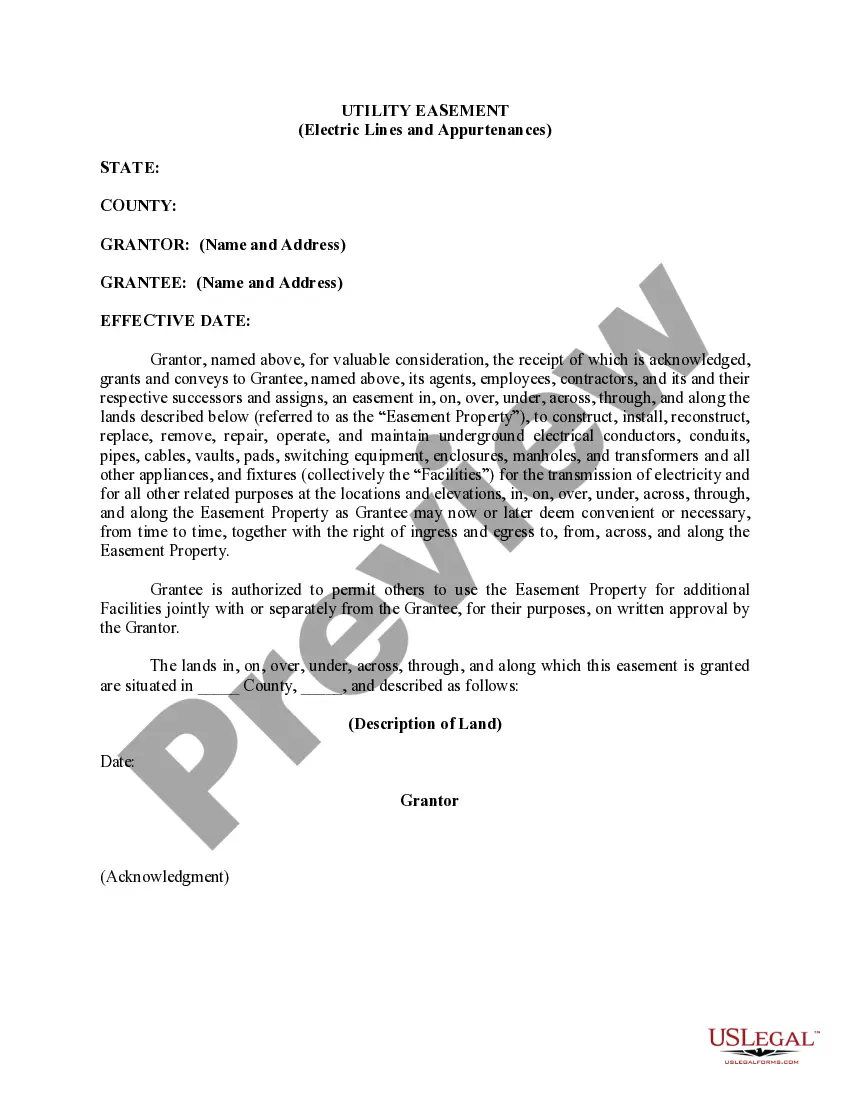
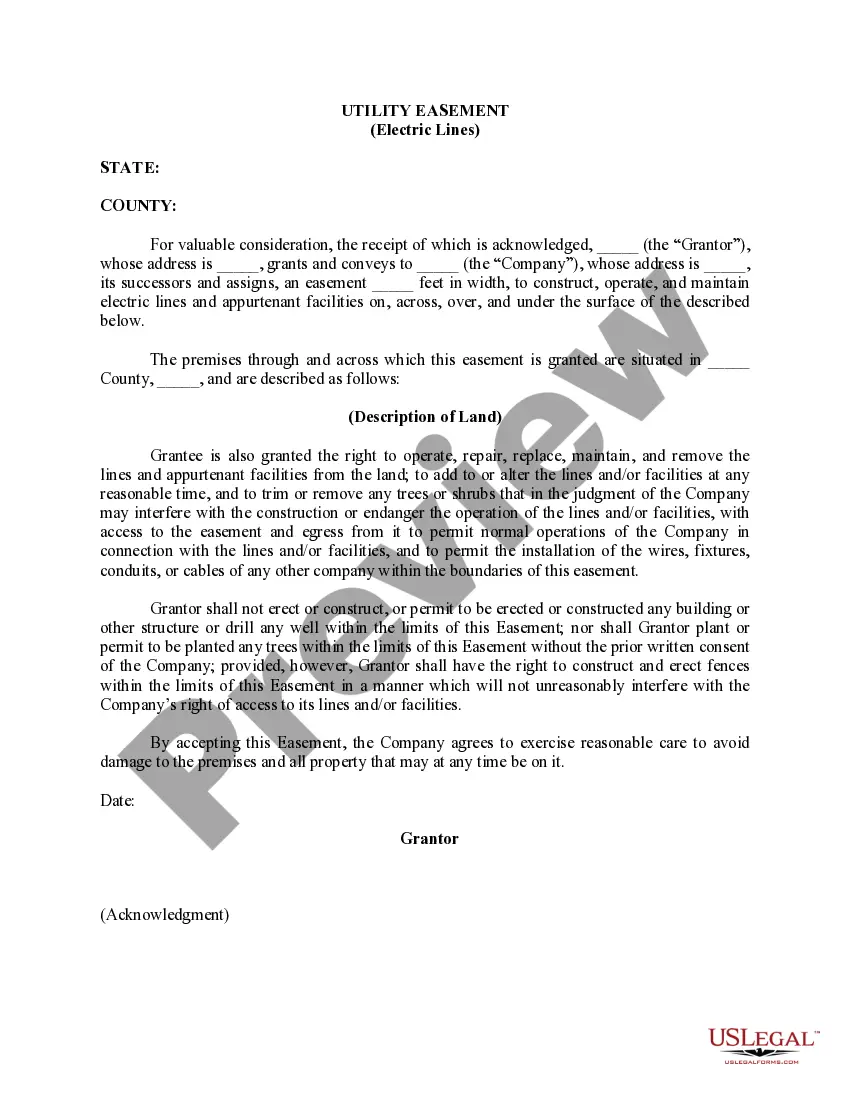
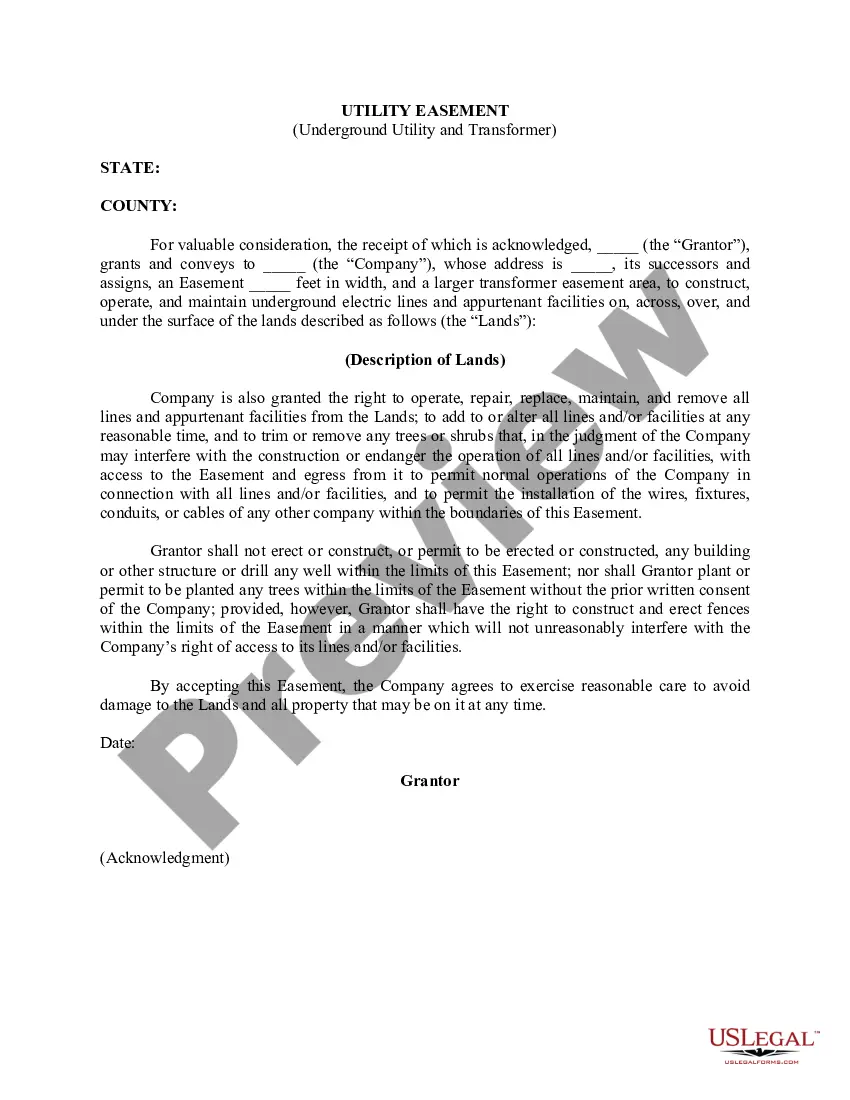
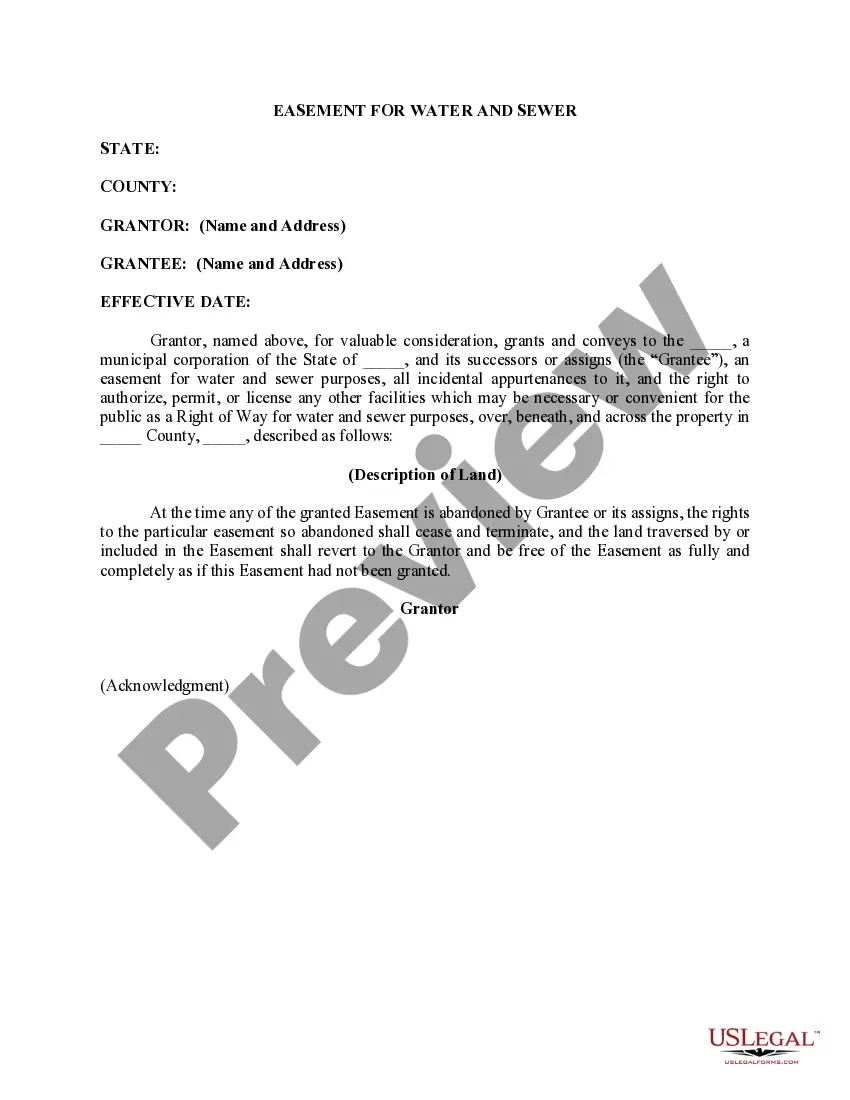
This form is used when Grantor desires to convey and Grantee desires to purchase a right of way and easement for utilities purposes on the lands described within.
They can! Potential buyers might be wary if there are significant easements on the property since it could limit how they can use the land. It's a good idea to be upfront about any easements when selling.
Yes, as a property owner, you should avoid obstructing the easement area, like planting tall trees or building structures that might block access for utility work.
If you see construction happening around easement areas, it's smart to stay informed. You can reach out to the utility company for updates or check their website for scheduled maintenance.
Typically, easements are permanent unless both parties agree to terminate it. You’d need to have a conversation with the utility company and possibly consult a legal expert.
You can check your property deed or look at the city’s property maps, which usually show where easements are located. Your local planning department can be a good resource too.
Easements can affect how you use your land. If there’s an easement, you might face restrictions on building fences or structures in those areas since utility workers will need access.
A utility facilities easement is a legal right that allows utility companies to access and use a specific piece of land to install, maintain, or repair their services like water, electricity, or sewer lines.