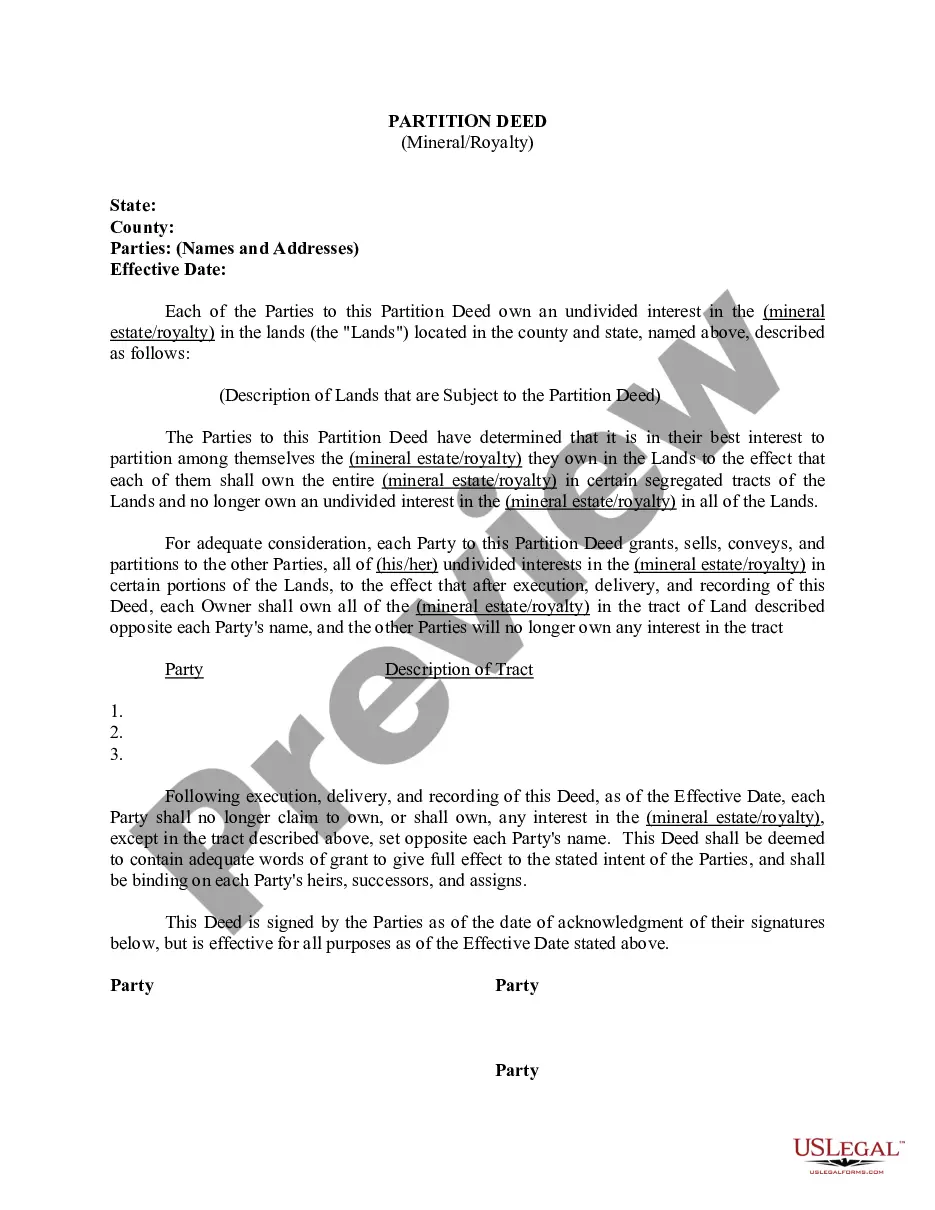
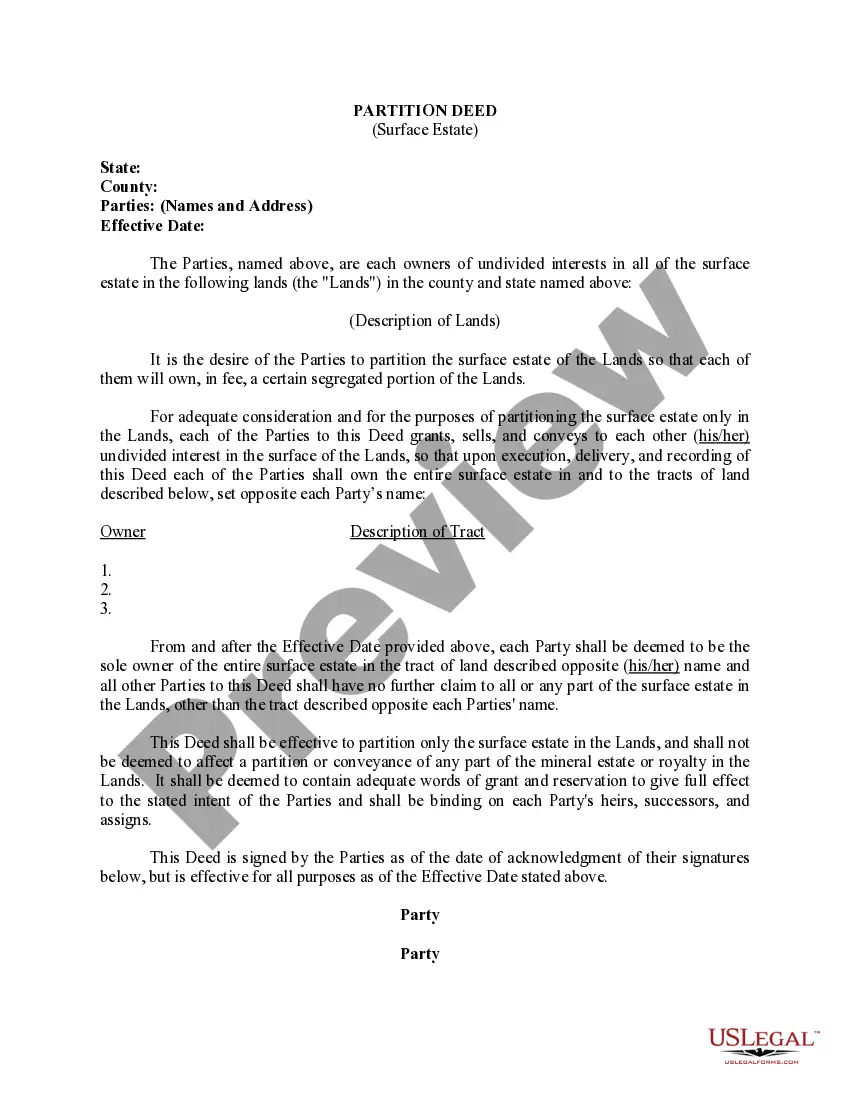
When parties own undivided interest in the surface of lands, if they desire to divide the lands so that each party owns, separately, a particular tract, this can be accomplished by the parties partitioning the lands. Then each will own a separate part of the lands in which all the parties owned an undivided interest. This form of partition deed accomplishes this objective.
Yes, a partition deed can change how property taxes are handled. Once ownership is divided, each owner may become responsible for their own share of taxes, so it's wise to check with a tax professional.
While it's not a must to have a lawyer, it's a good idea. They can help make sure everything's done by the book, avoiding any hiccups down the road. Two heads are often better than one.
In terms of the surface estate, a partition deed outlines how the land is divided above ground. It specifies who gets what piece of the pie and how the land can be used by each owner.
If co-owners can't see eye to eye, they can file for a partition action in court. This way, a judge can step in and make the tough calls, so everyone walks away with what’s rightfully theirs.
Anyone who has a legal share in a property can file for a partition deed. It’s usually co-owners, like family members or business partners, who want to clear up the situation.
People use a partition deed to resolve disputes over jointly-owned property, or when they want to sell their part without having to keep it with others. It’s like saying, 'Let’s split this up and make things clearer.'
A partition deed is a legal document used when co-owners of a property want to divide or sell their interests in the property. It helps folks sort out ownership so everyone gets their fair share.