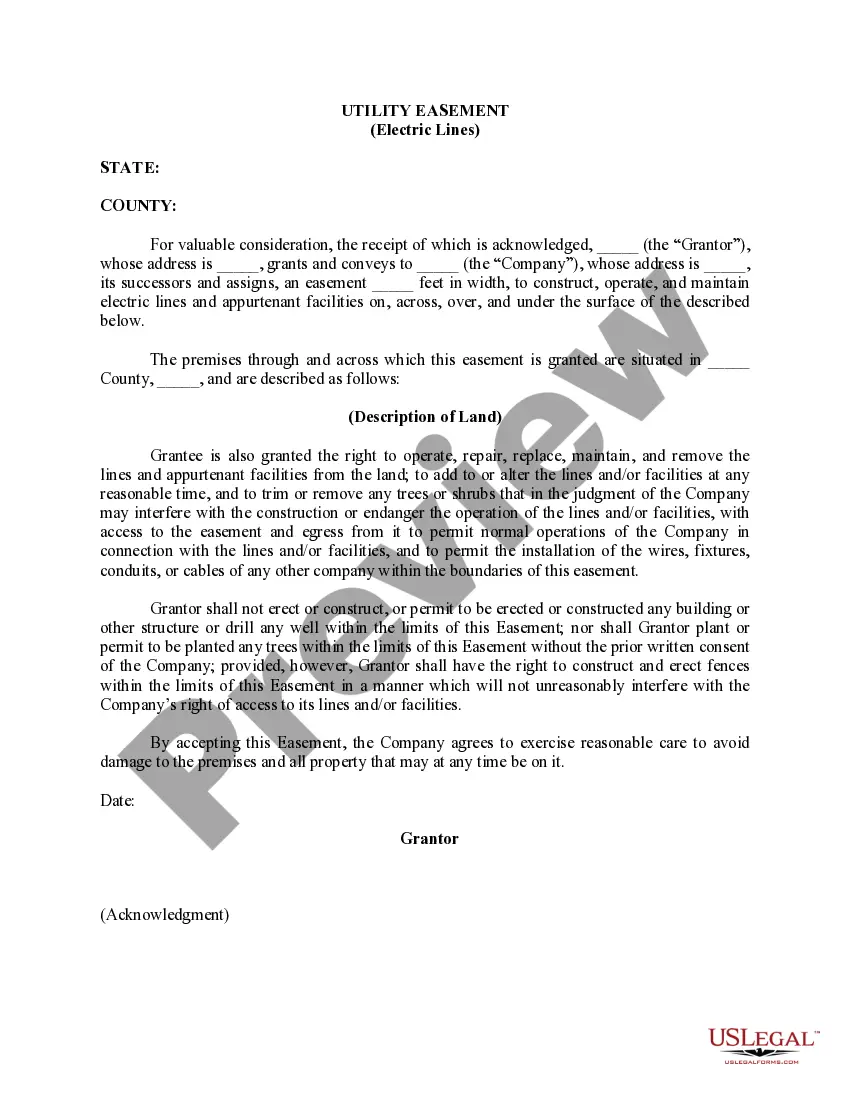
Franklin Ohio Utility Easement (Electric Lines)
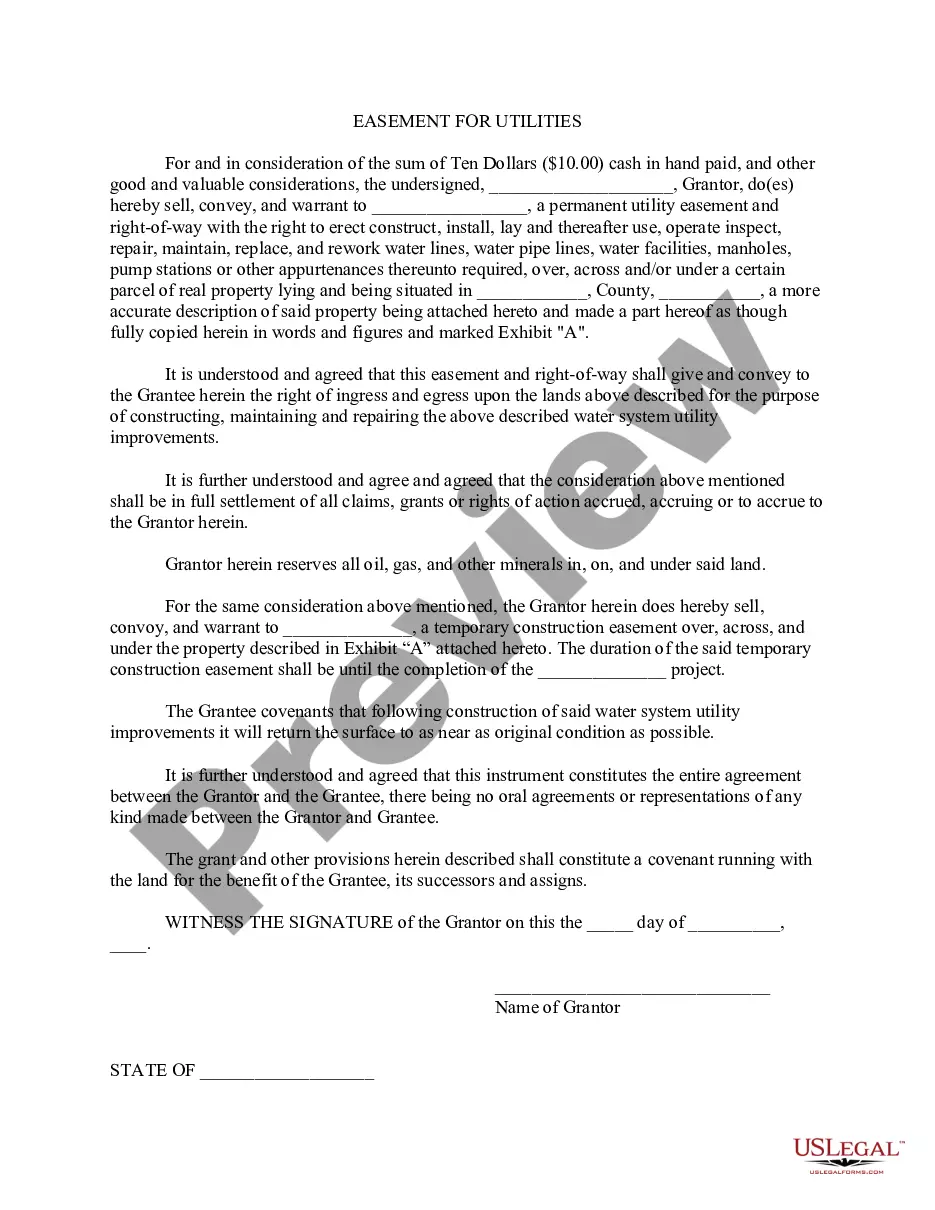
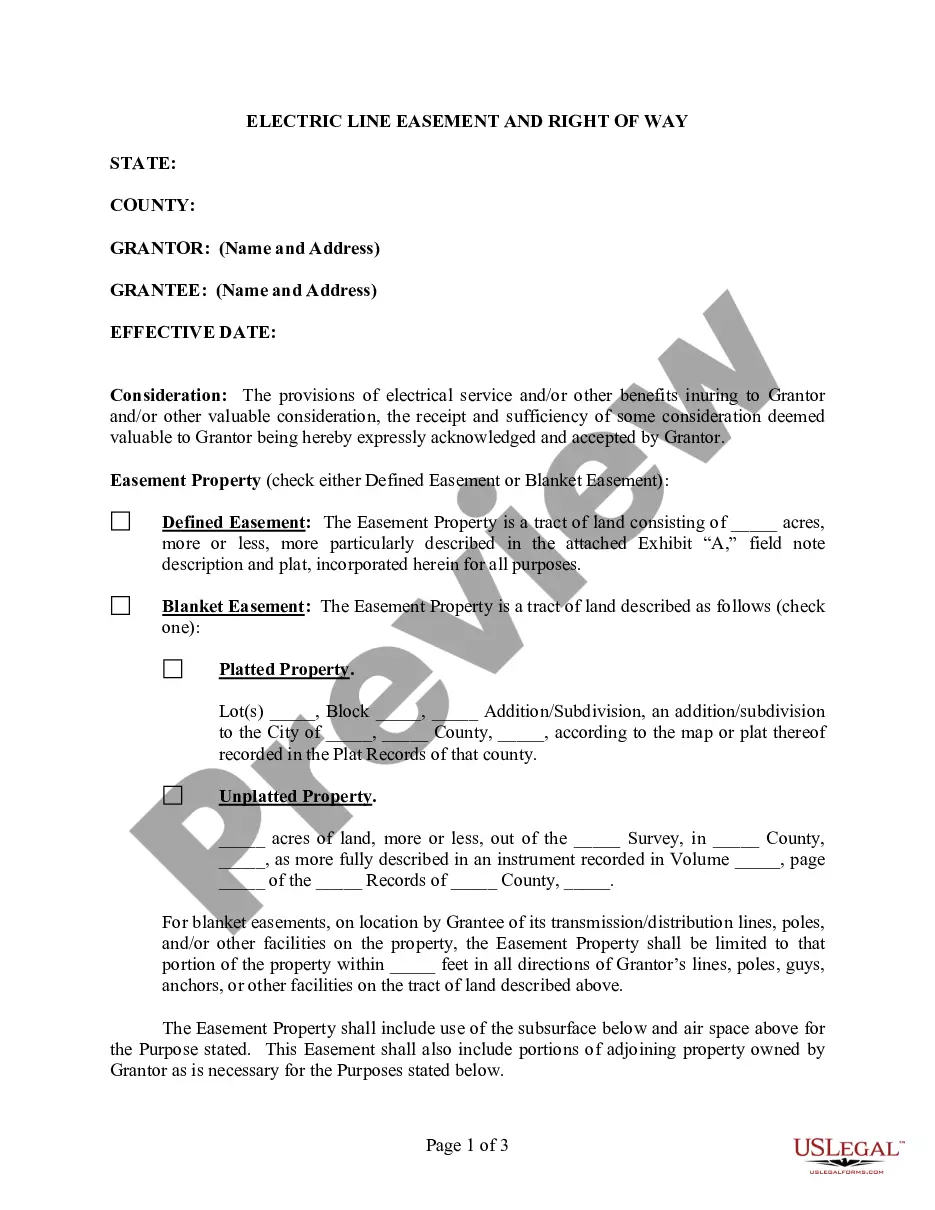
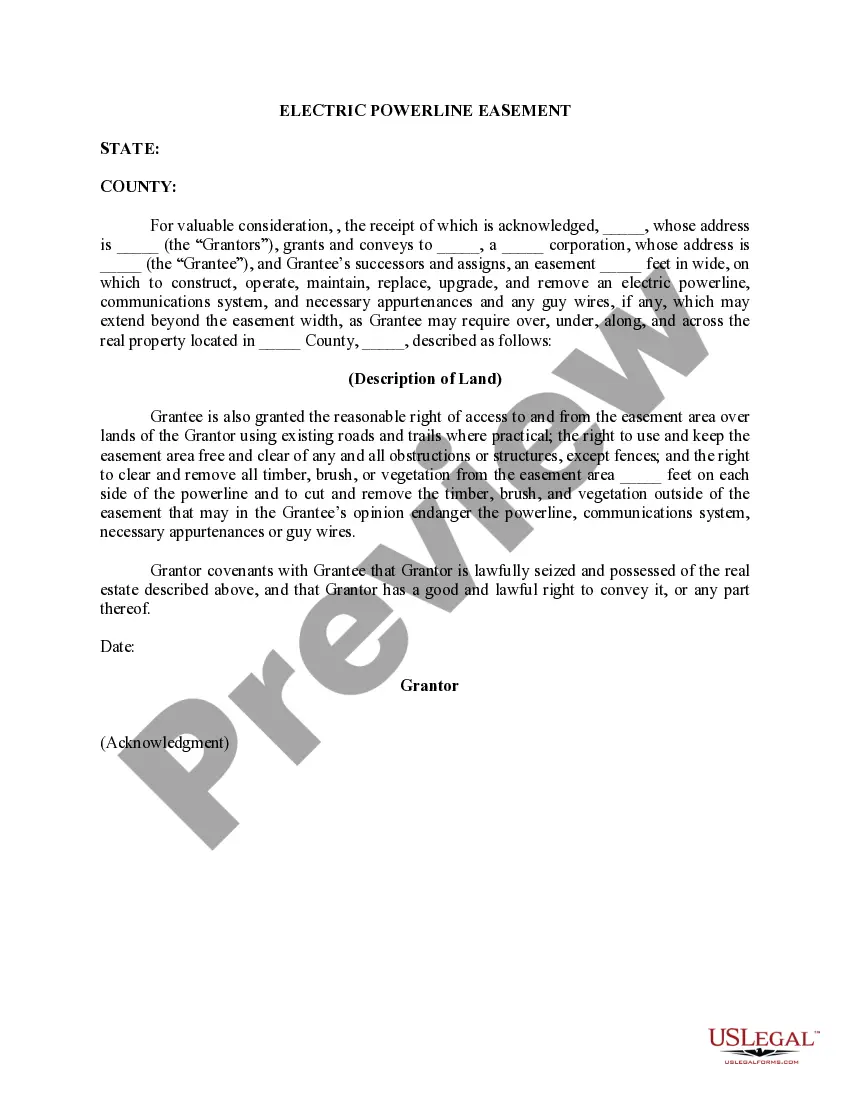
Description
Get your form ready online
Our built-in tools help you complete, sign, share, and store your documents in one place.
Make edits, fill in missing information, and update formatting in US Legal Forms—just like you would in MS Word.
Download a copy, print it, send it by email, or mail it via USPS—whatever works best for your next step.
Sign and collect signatures with our SignNow integration. Send to multiple recipients, set reminders, and more. Go Premium to unlock E-Sign.
If this form requires notarization, complete it online through a secure video call—no need to meet a notary in person or wait for an appointment.
We protect your documents and personal data by following strict security and privacy standards.

Make edits, fill in missing information, and update formatting in US Legal Forms—just like you would in MS Word.

Download a copy, print it, send it by email, or mail it via USPS—whatever works best for your next step.

Sign and collect signatures with our SignNow integration. Send to multiple recipients, set reminders, and more. Go Premium to unlock E-Sign.

If this form requires notarization, complete it online through a secure video call—no need to meet a notary in person or wait for an appointment.

We protect your documents and personal data by following strict security and privacy standards.
Looking for another form?

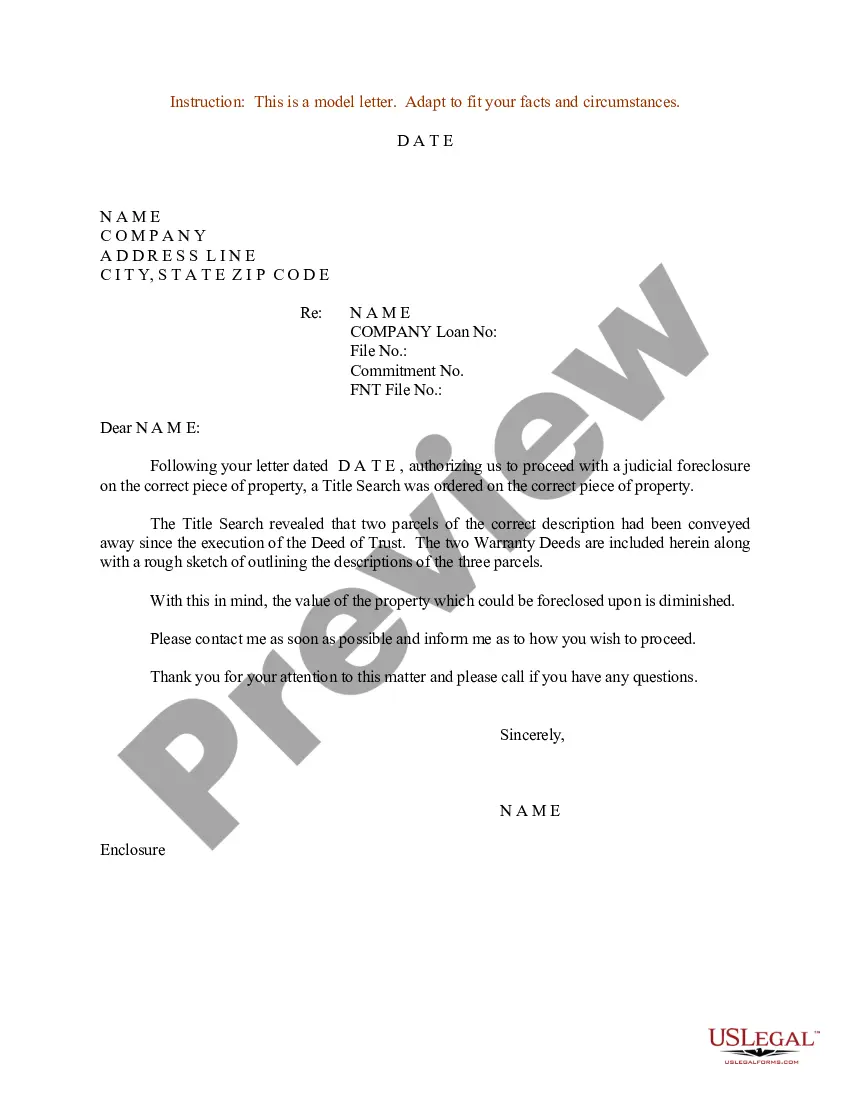

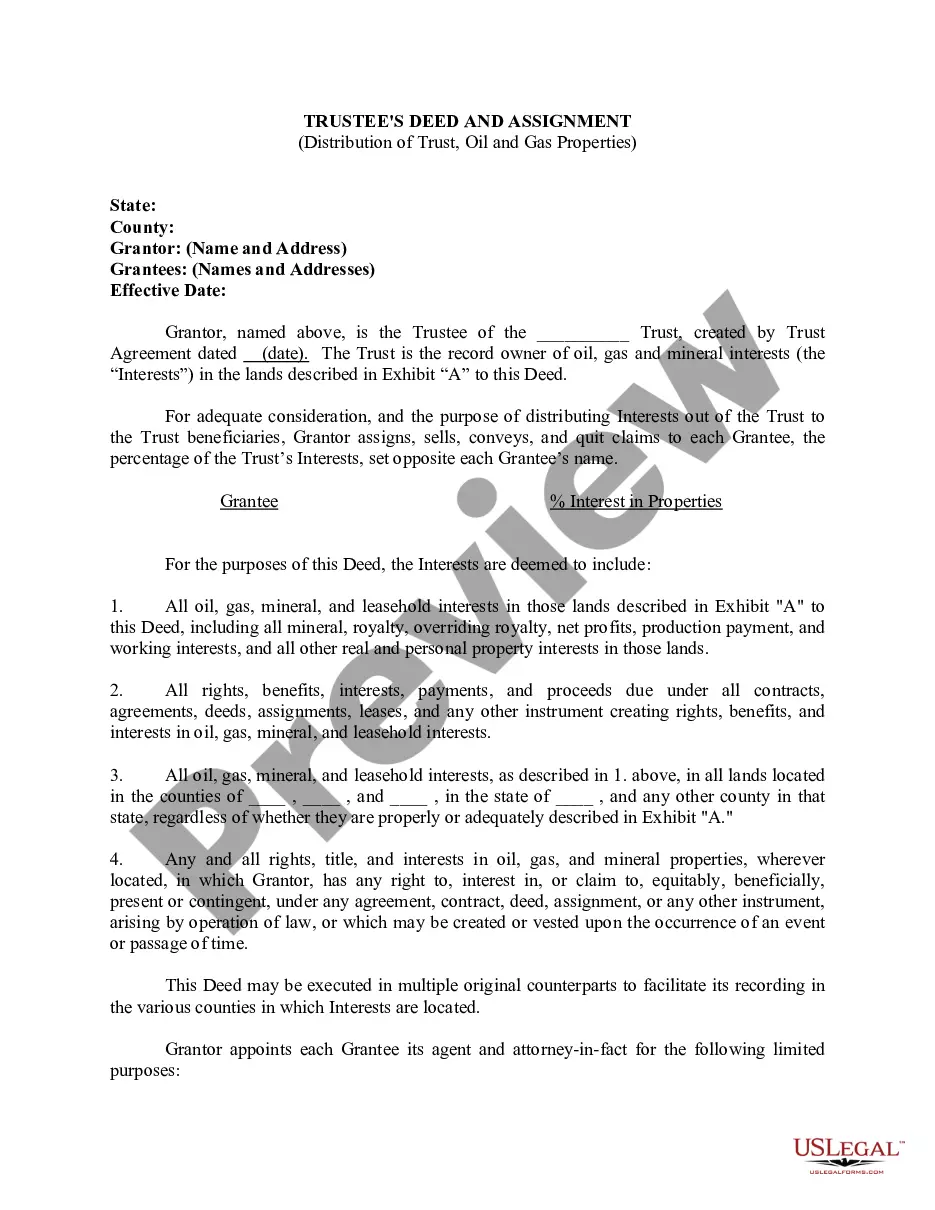
How to fill out Utility Easement (Electric Lines)?
Drafting legal documents can be challenging.
Moreover, if you opt to enlist a lawyer to create a business agreement, documents for asset transfer, prenuptial contract, divorce filings, or the Franklin Utility Easement (Electric Lines), it might lead to significant expenses.
Browse the page and confirm there is a sample for your area.
- So, what is the most effective approach to save both time and money while producing authentic documents that fully adhere to your state and local laws and regulations.
- US Legal Forms serves as an excellent answer, whether you need templates for personal or business purposes.
- US Legal Forms boasts the largest online collection of state-specific legal documents, offering users access to the latest and professionally validated templates for any scenario, all in one convenient location.
- Consequently, if you require the latest edition of the Franklin Utility Easement (Electric Lines), you can effortlessly locate it on our site.
- Acquiring the documents takes minimal time.
- Users who already possess an account should confirm that their subscription is valid, Log In, and select the sample using the Download button.
- If you have not yet subscribed, here’s how to obtain the Franklin Utility Easement (Electric Lines).
Form popularity
FAQ
Duke Energy has a property interest called an easement (or sometimes a right-of-way) in land that you own or are considering purchasing. This easement grants Duke Energy the right to use the easement area for purposes described in the easement document that is filed and recorded in the county's recorder office.
Utility easements are strips of land used by utility companies or village municipalities to construct and maintain electric, telephone and cable television lines, water, and sewer services. Who owns the utility easement? The property owner owns all of the land including the utility easements.
The power lines between the power pole and your home, are owned by you (the homeowner). This means that if there is any problem with the power line between the power pole and your property, you will be responsible for their maintenance.
Different types of easements you may see include: public utility drainage easements (P.U.D.E), utility easements, drainage easements, access easements, sewer/water easements, landscape easements, conservation easements, and green infrastructure easements.
EASEMENTS: AN EXAMINTATION OF THE VARIATIONS RECOGNIZED BY ILLINOIS LAW. An easement is a non-possessory right or privilege in another's real estate. Nationwide Financial, LP v. Pobuda, 2014 IL 116717 at ¶ 29; McMahon v.
PUE stands for Public Utility Easement. Like other easements, a PUE grants certain rights to the owner of the easement.
Duke Energy does not prune trees for light levels or pattern. Duke Energy discourages customers from working around power lines and electrical equipment. It's the responsibility of the property owner to maintain the growth of any trees interfering with the lighting pattern.
Broadly stated, easements allow Duke Energy to use another person's property to construct, operate, maintain, repair, and replace electrical facilities for the transmission of high voltage power.
Homeowners and Easements All types of utility companies are granted easements on the lands over or under which their lines run. Your electric power company, for example, usually has an easement to use the portion of your land on which its towers and lines sit. However, an easement holder doesn't own the land.
Public Utility and Drainage Easement (various locations)