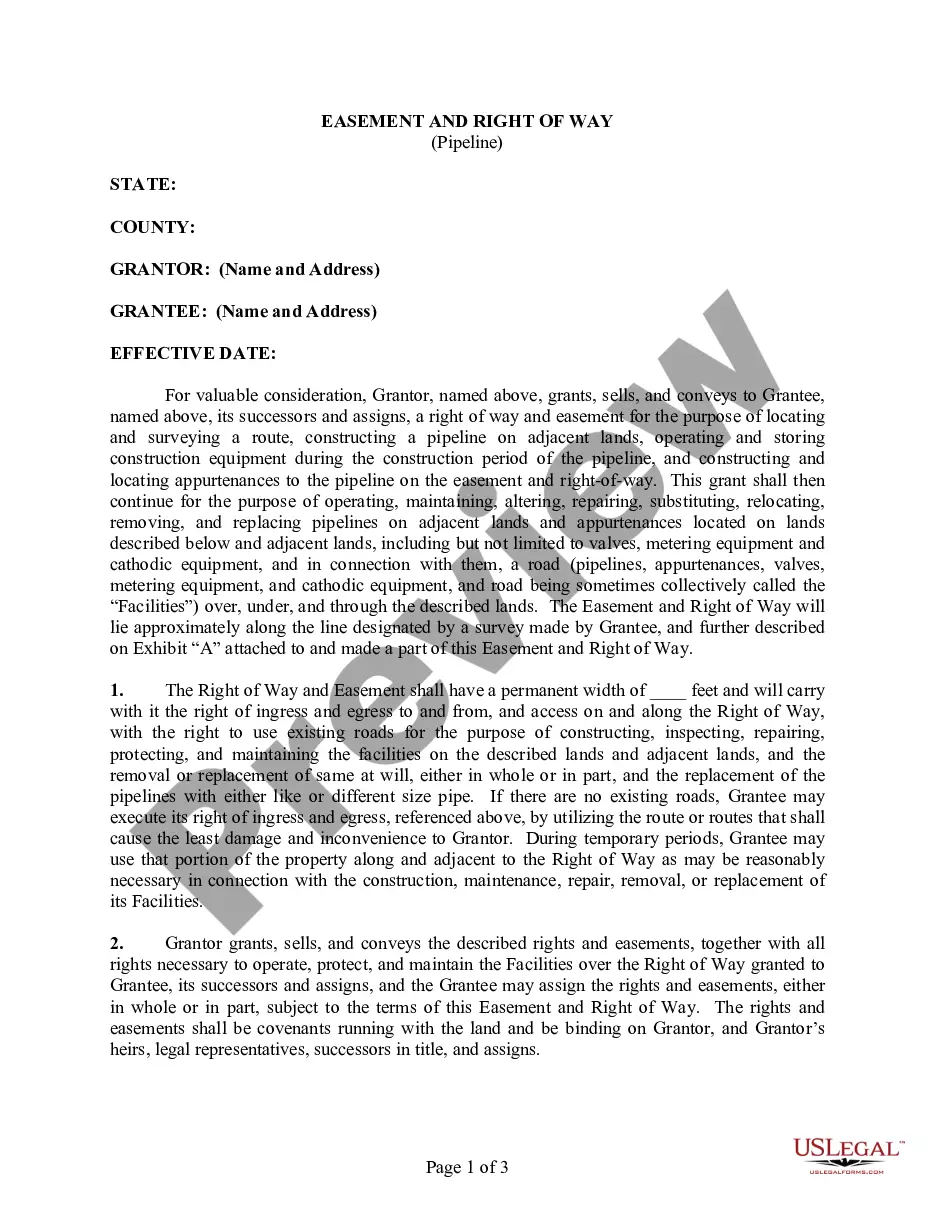
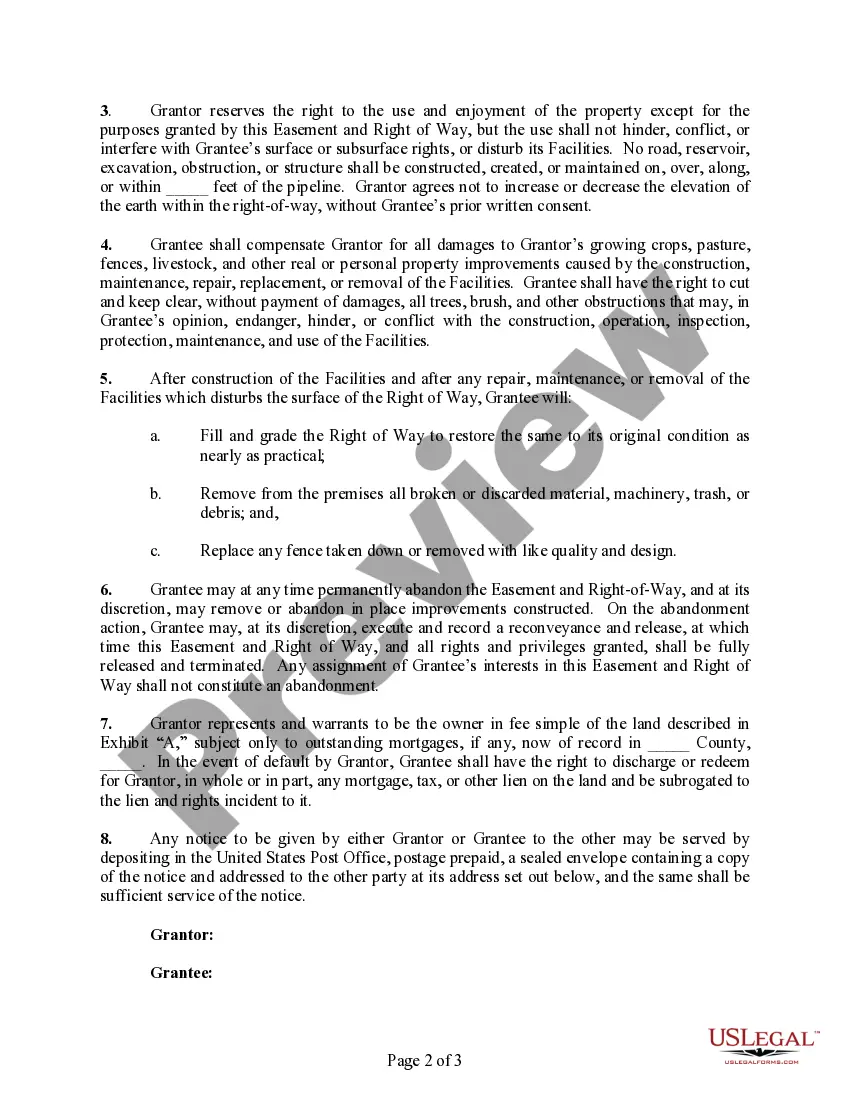
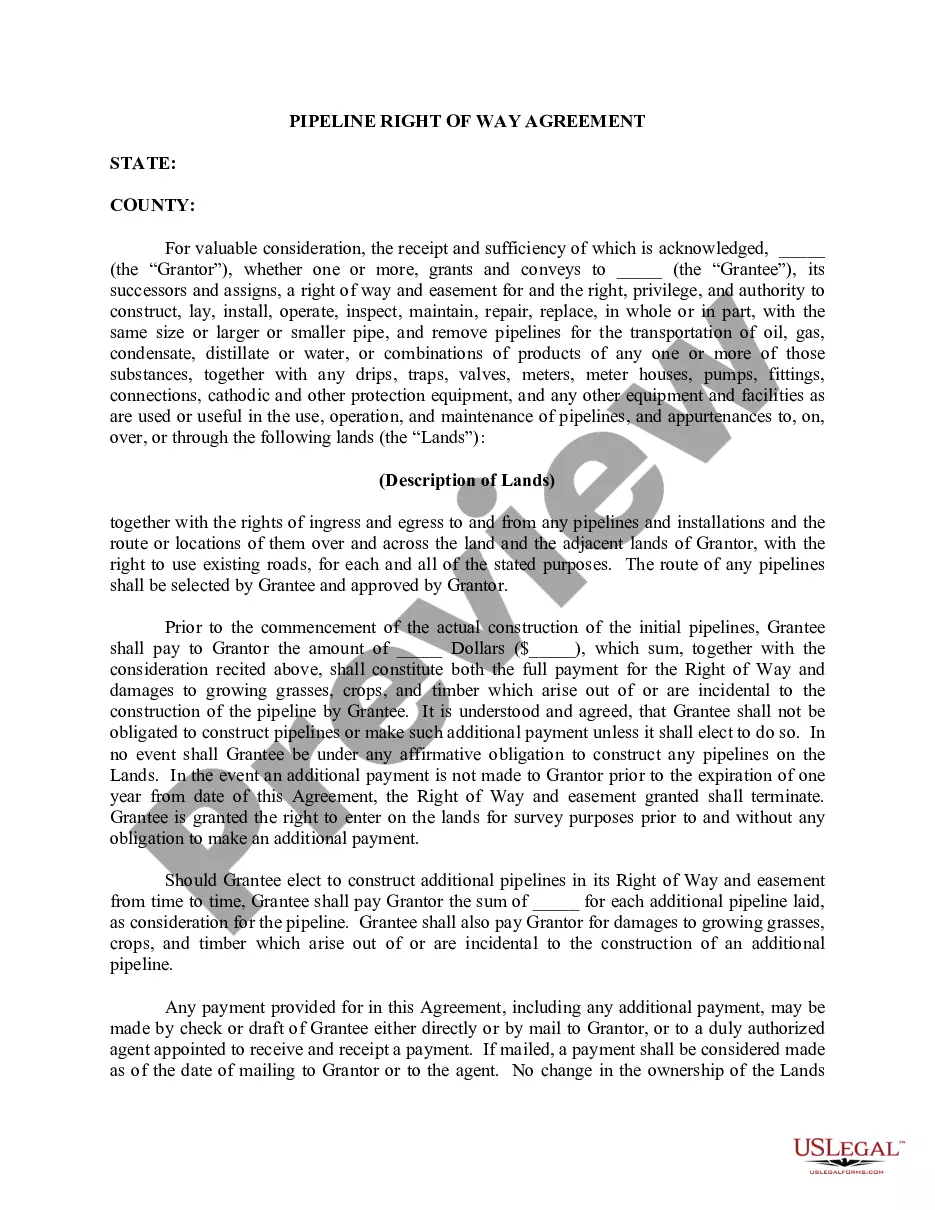
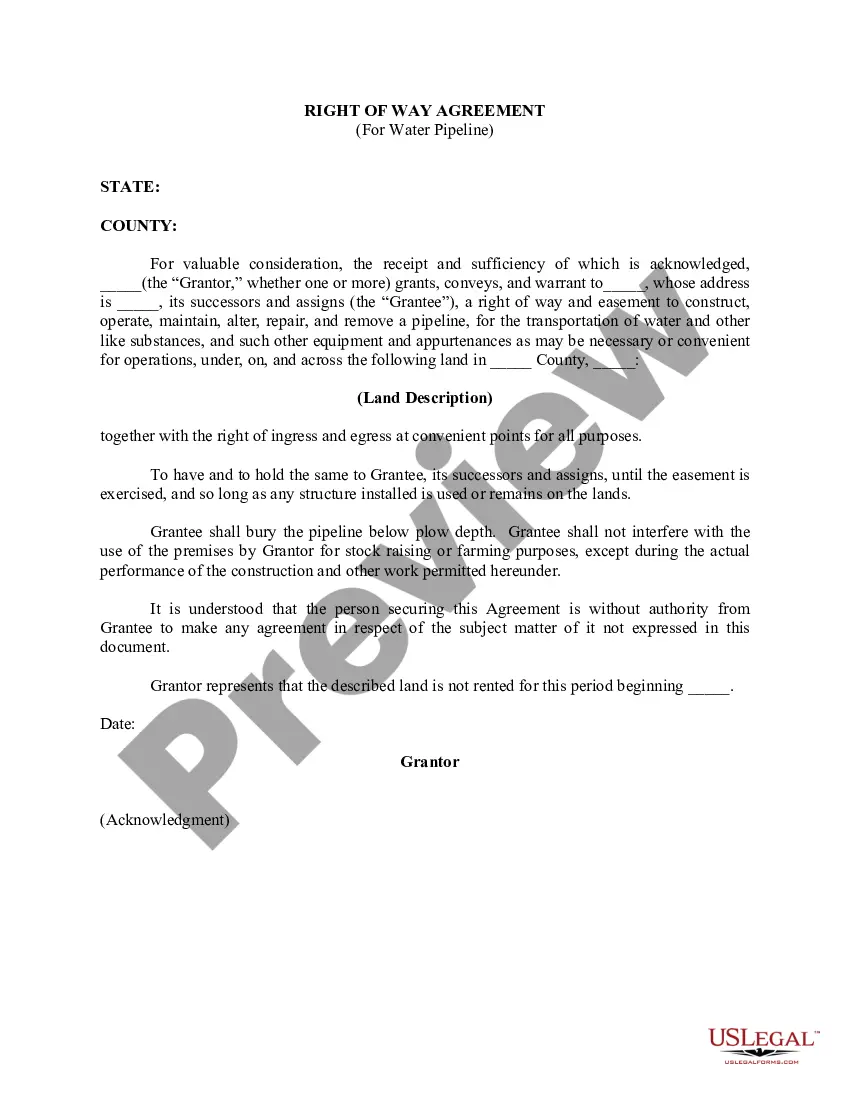
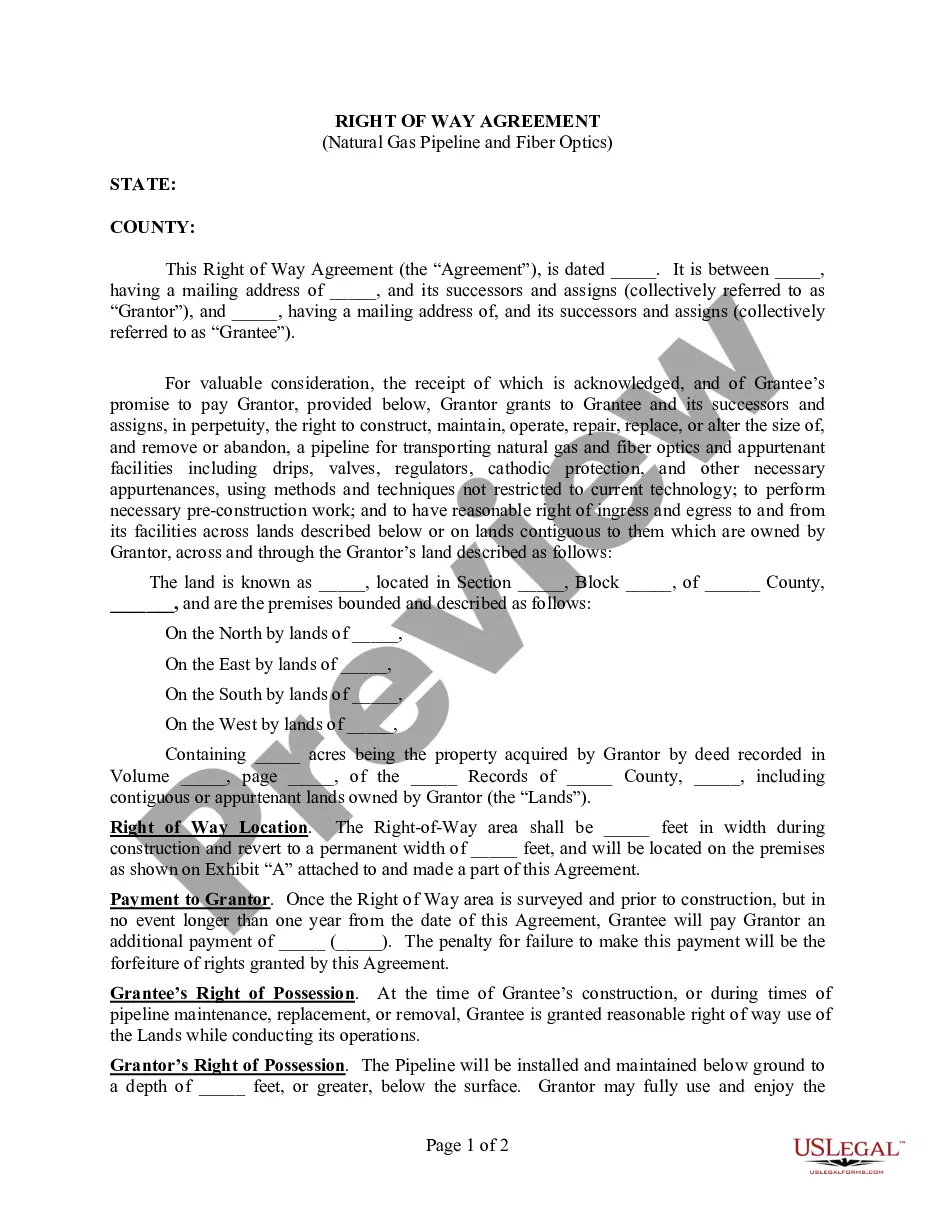
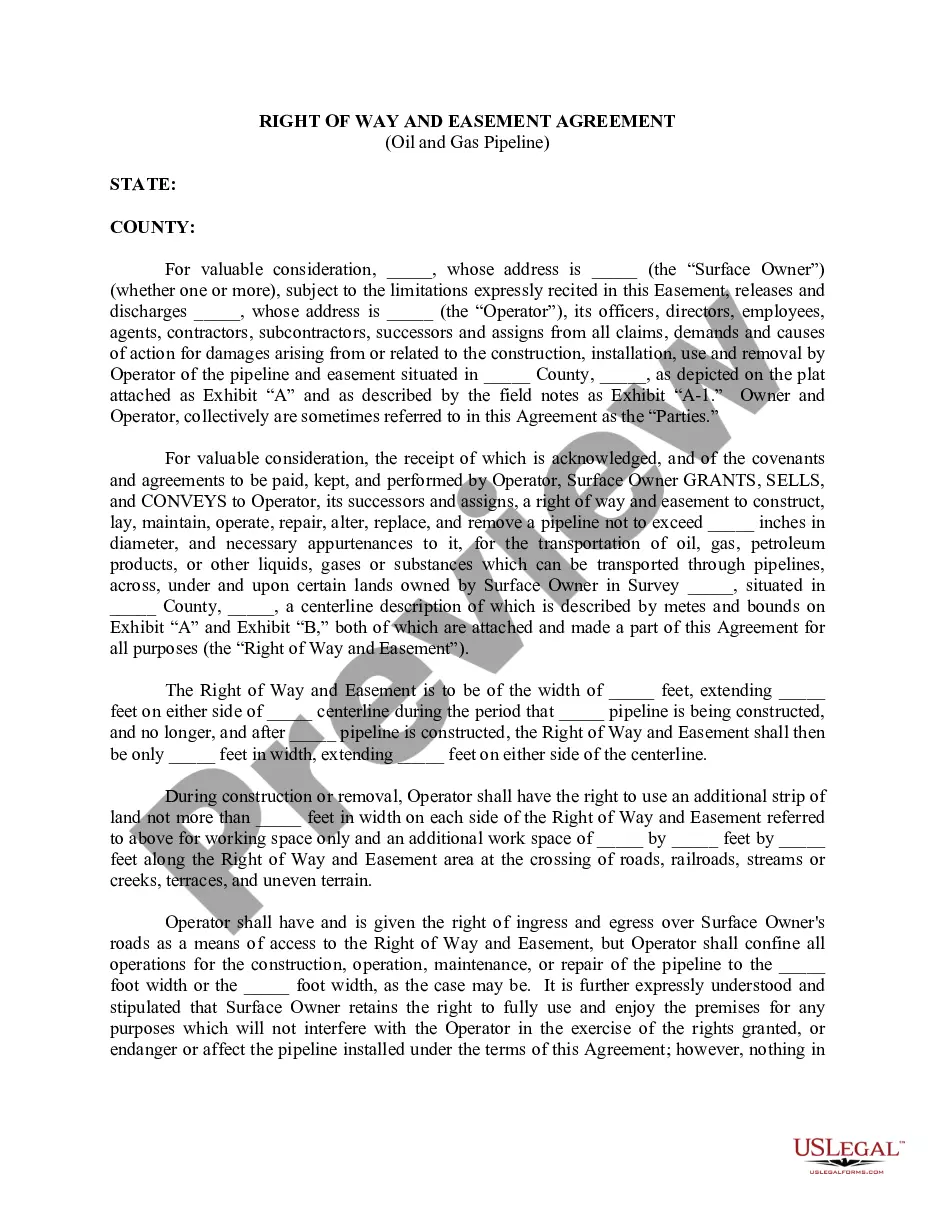
This form is a grant of an easement for pipeline purposes across lands. It does not contain a specific description of the course of the pipeline easement.
If you have concerns, it's important to speak up! You can reach out to community meetings, contact local officials, or even get in touch with the pipeline company to share your thoughts.
That's a bit of a mixed bag. Some folks believe having a pipeline nearby can lower property values, while others see it just as an everyday occurrence. It really depends on the buyer's perspective.
In the unfortunate event of a leak or spill, the pipeline company is usually responsible for cleanup and repairs. They're required to follow safety guidelines to minimize harm to the environment.
Absolutely! Just like in a good ol' game of tug-of-war, both sides can negotiate terms. It's a chance for property owners to discuss things like access, maintenance, and any potential impacts.
Pipeline companies often conduct surveys and studies to find the best route. They look at things like the environment, current land use, and community concerns before laying down pipes.
Typically, property owners whose land the pipeline crosses need to sign the easement agreement. If you're renting, the property owner usually handles this.
A Right of Way and easement agreement is like giving permission for a pipeline company to run their pipes through your property. It means they have legal access to maintain and operate those pipes without owning the land.