A nonprofit corporation is one that is organized for charitable or benevolent purposes. These corporations include certain hospitals, universities, churches, and other religious organizations. A nonprofit entity does not have to be a nonprofit corporation, however. Nonprofit corporations do not have shareholders, but have members or a perpetual board of directors or board of trustees.
Articles Of Incorporation
Category:
State:
Multi-State
Control #:
US-04512BG
Format:
Word;
Rich Text
Instant download
Description Article Of Incorporation
Free preview Church Articles Of Incorporation
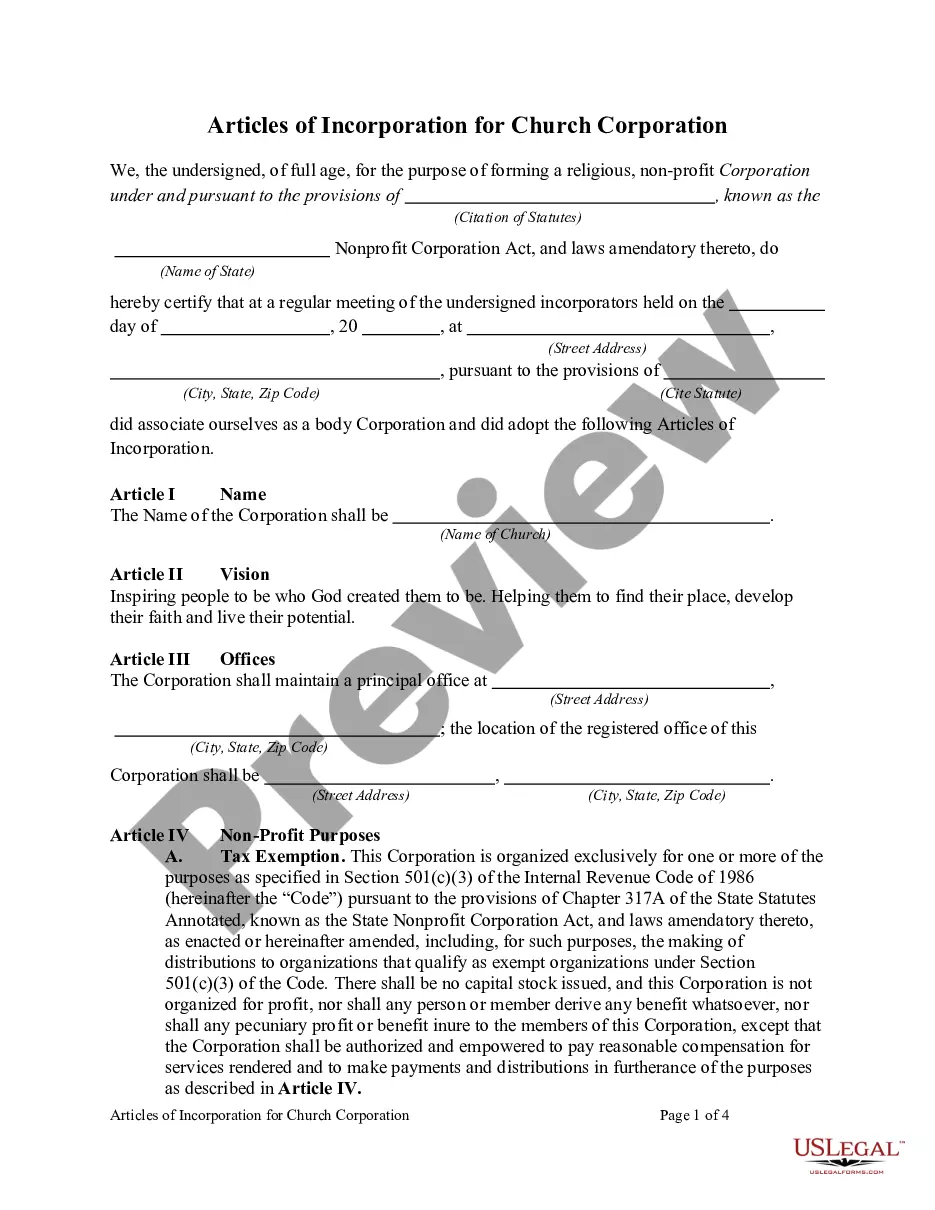
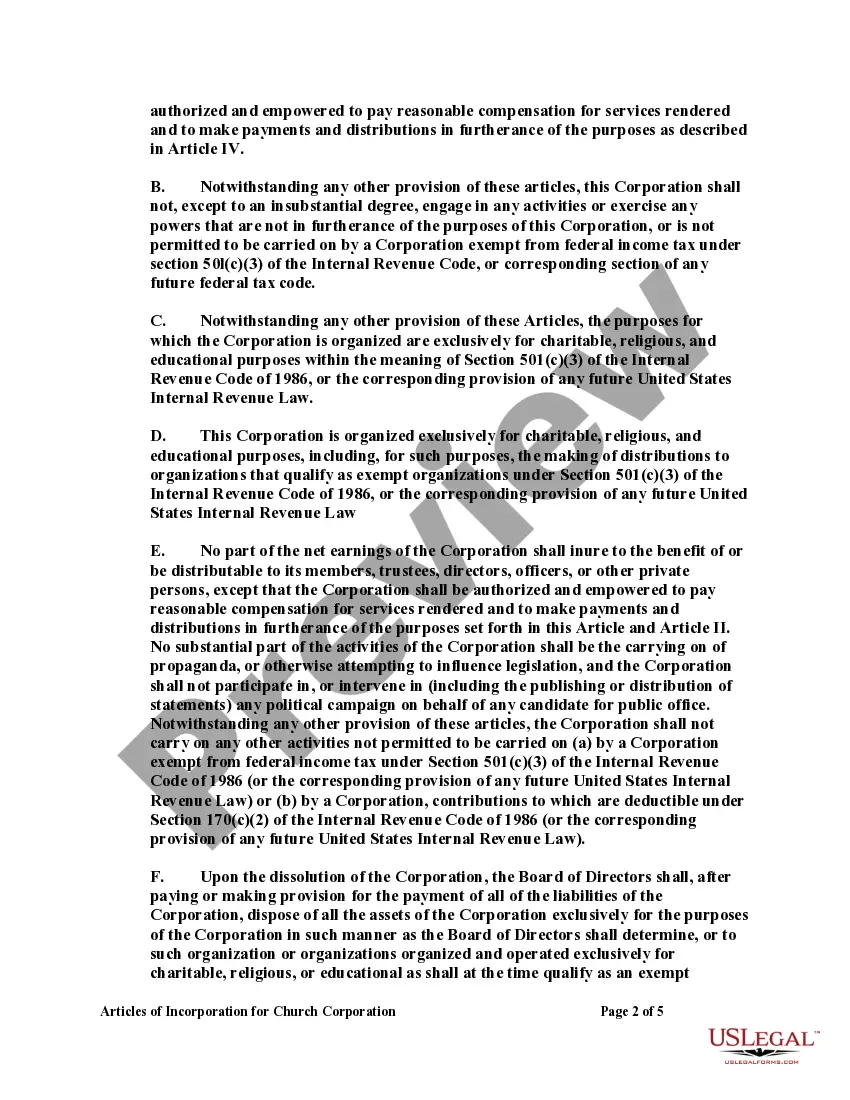
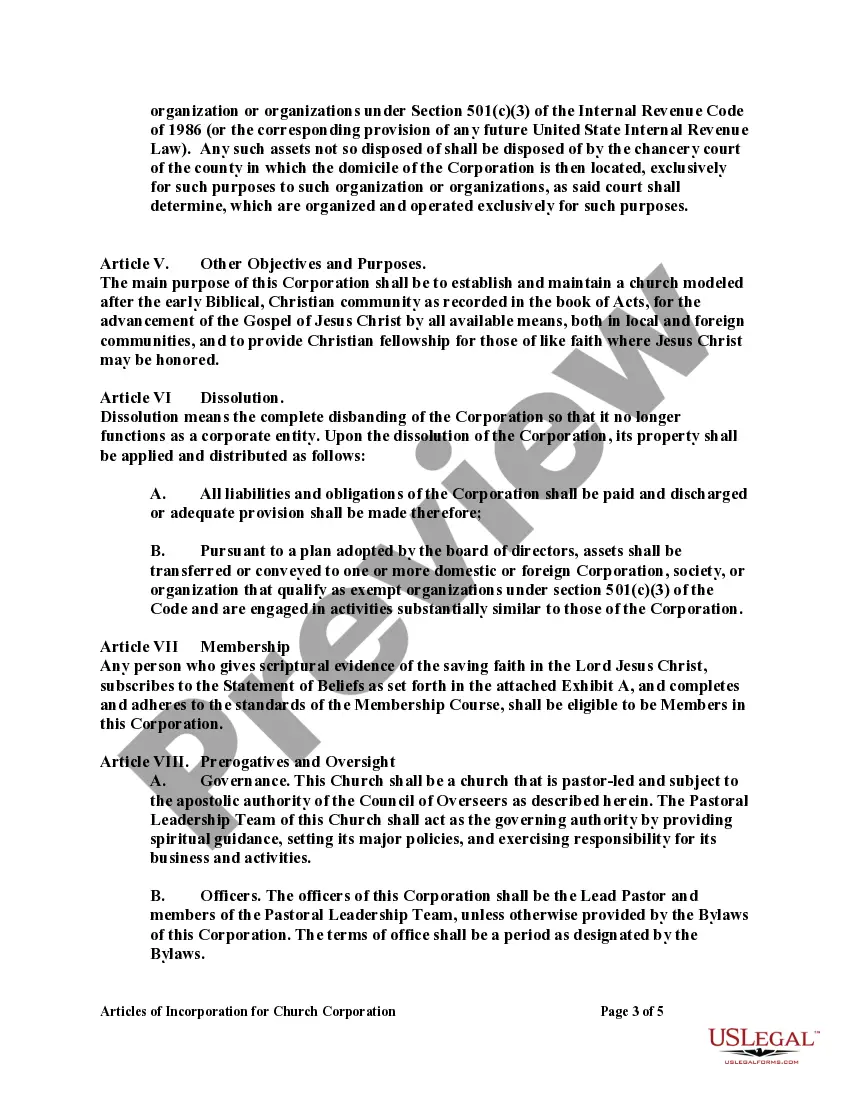
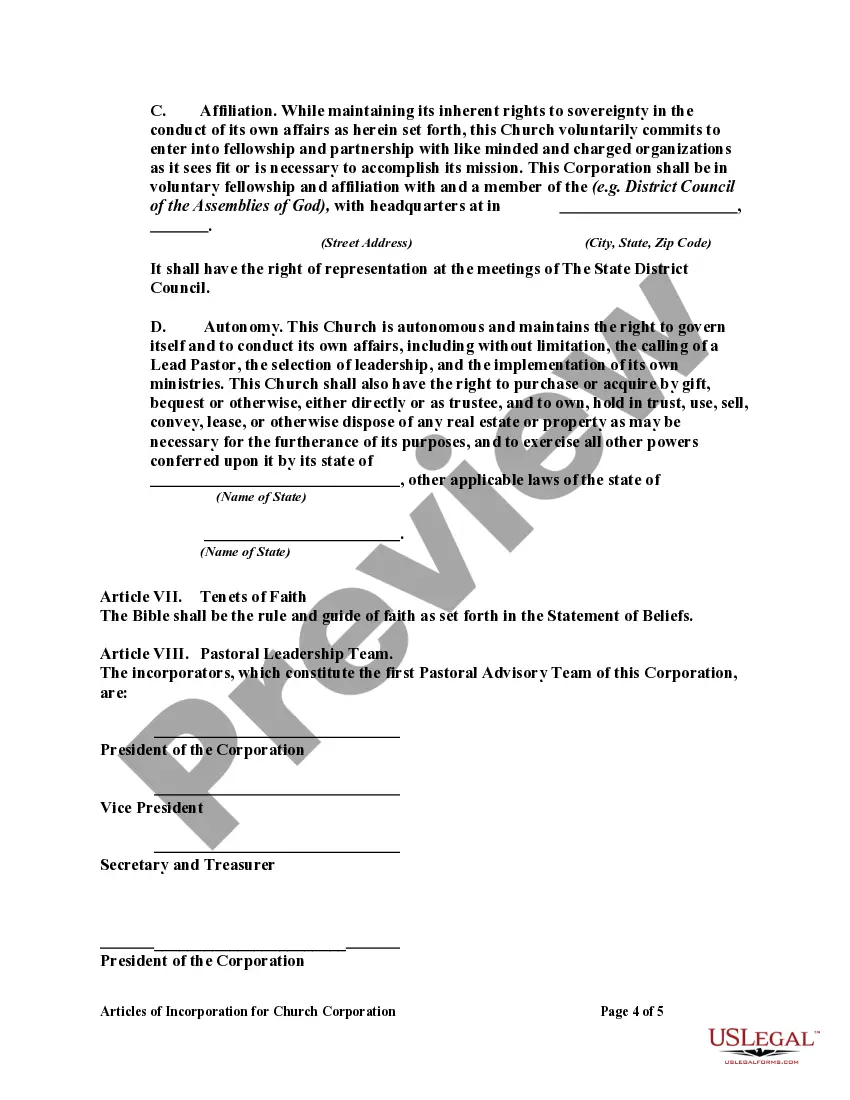
How to fill out Article Of Corporation Sample?
Employ the most complete legal library of forms. US Legal Forms is the best platform for finding updated Articles of Incorporation for Church Corporation templates. Our service provides a large number of legal forms drafted by certified lawyers and grouped by state.
To download a sample from US Legal Forms, users only need to sign up for a free account first. If you’re already registered on our service, log in and select the template you need and buy it. After purchasing templates, users can find them in the My Forms section.
To get a US Legal Forms subscription online, follow the steps below:
- Check if the Form name you have found is state-specific and suits your requirements.
- If the template has a Preview function, use it to check the sample.
- If the sample doesn’t suit you, utilize the search bar to find a better one.
- Hit Buy Now if the sample meets your expections.
- Choose a pricing plan.
- Create an account.
- Pay via PayPal or with the debit/visa or mastercard.
- Select a document format and download the template.
- As soon as it’s downloaded, print it and fill it out.
Save your time and effort using our service to find, download, and fill in the Form name. Join thousands of happy clients who’re already using US Legal Forms!