Colorado Option to Purchase Addendum to Residential Lease - Lease or Rent to Own
About this form
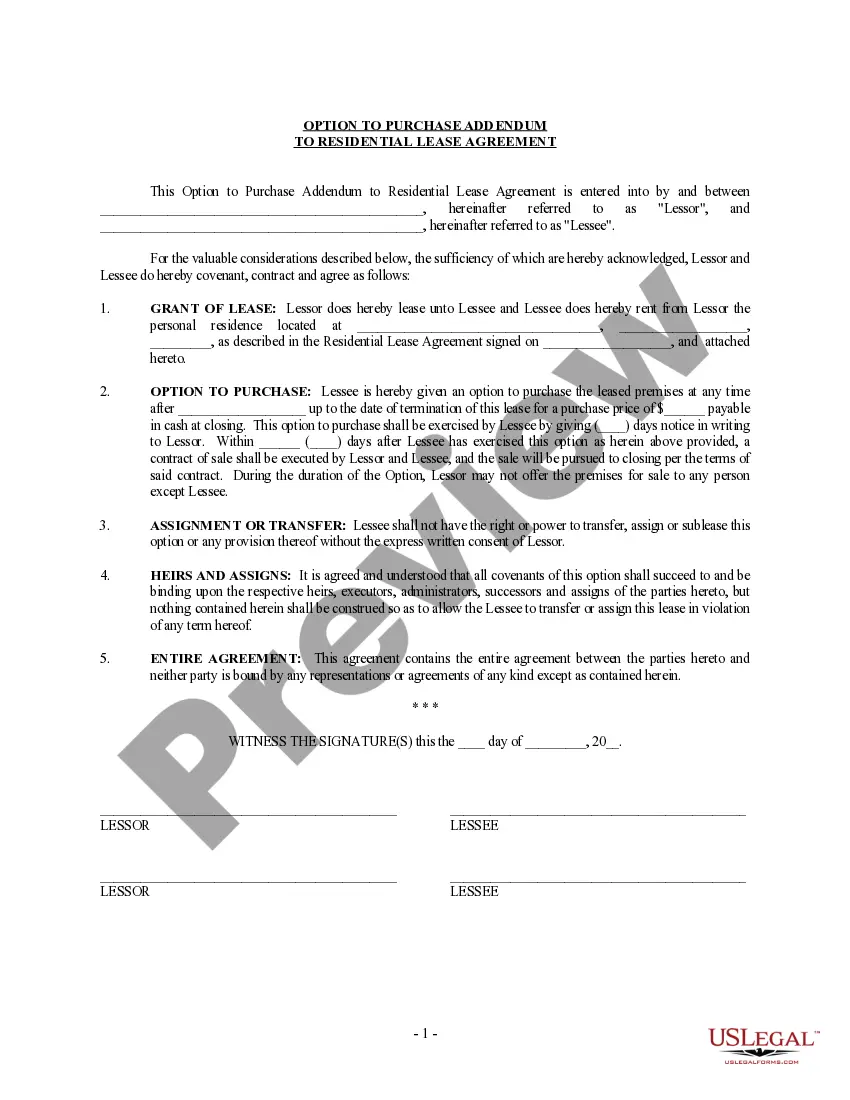
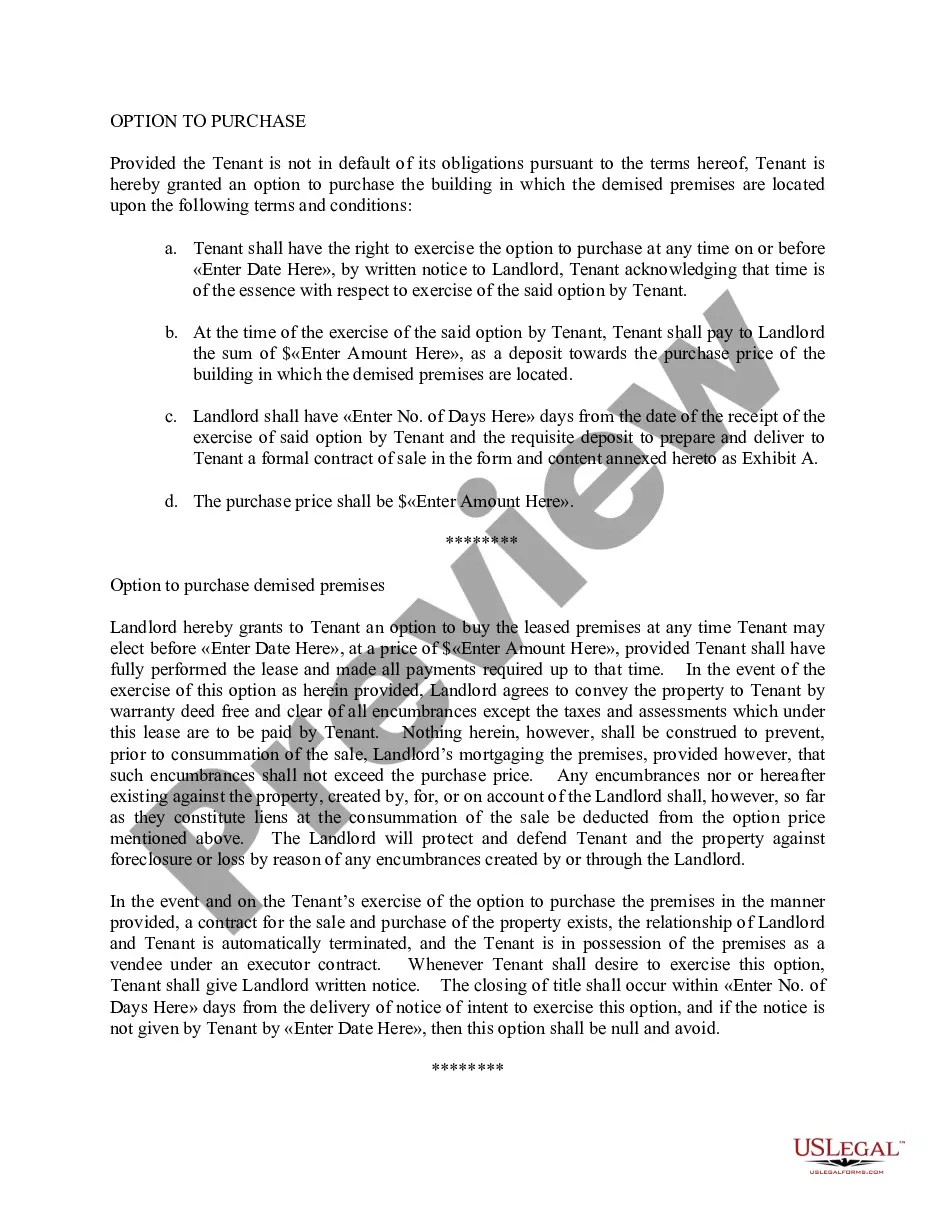
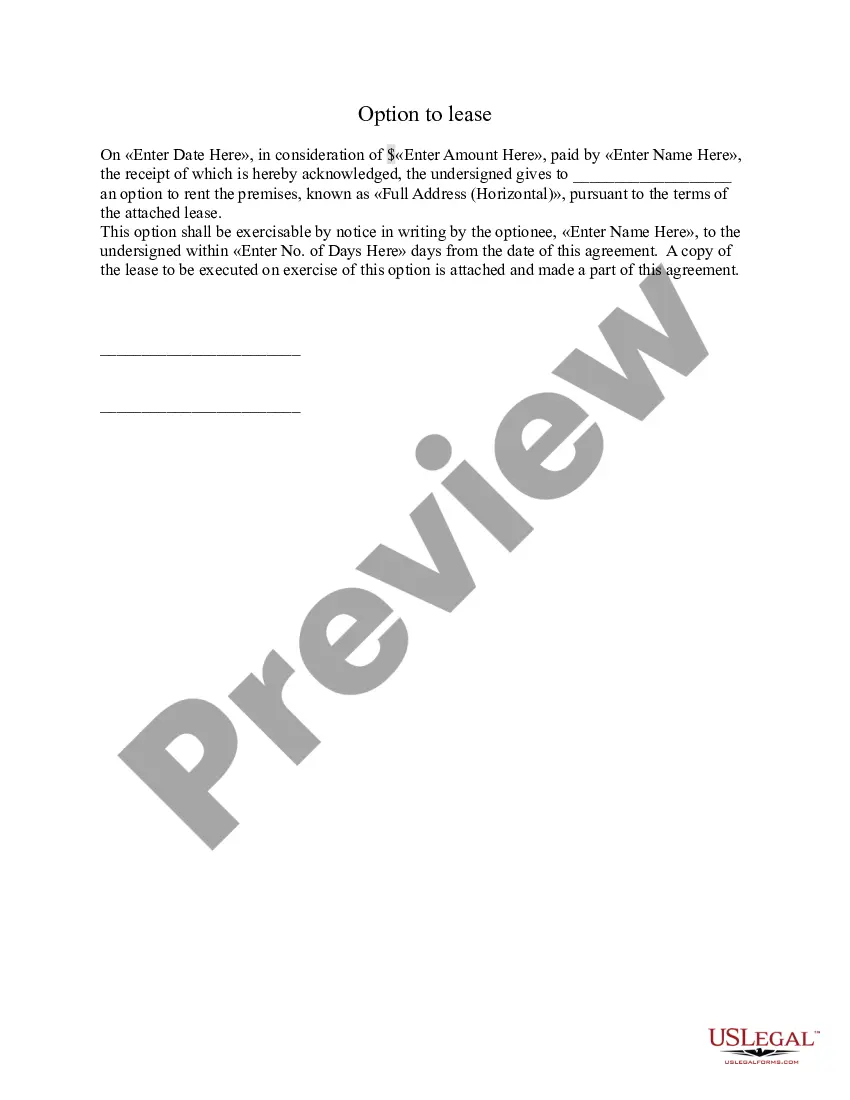
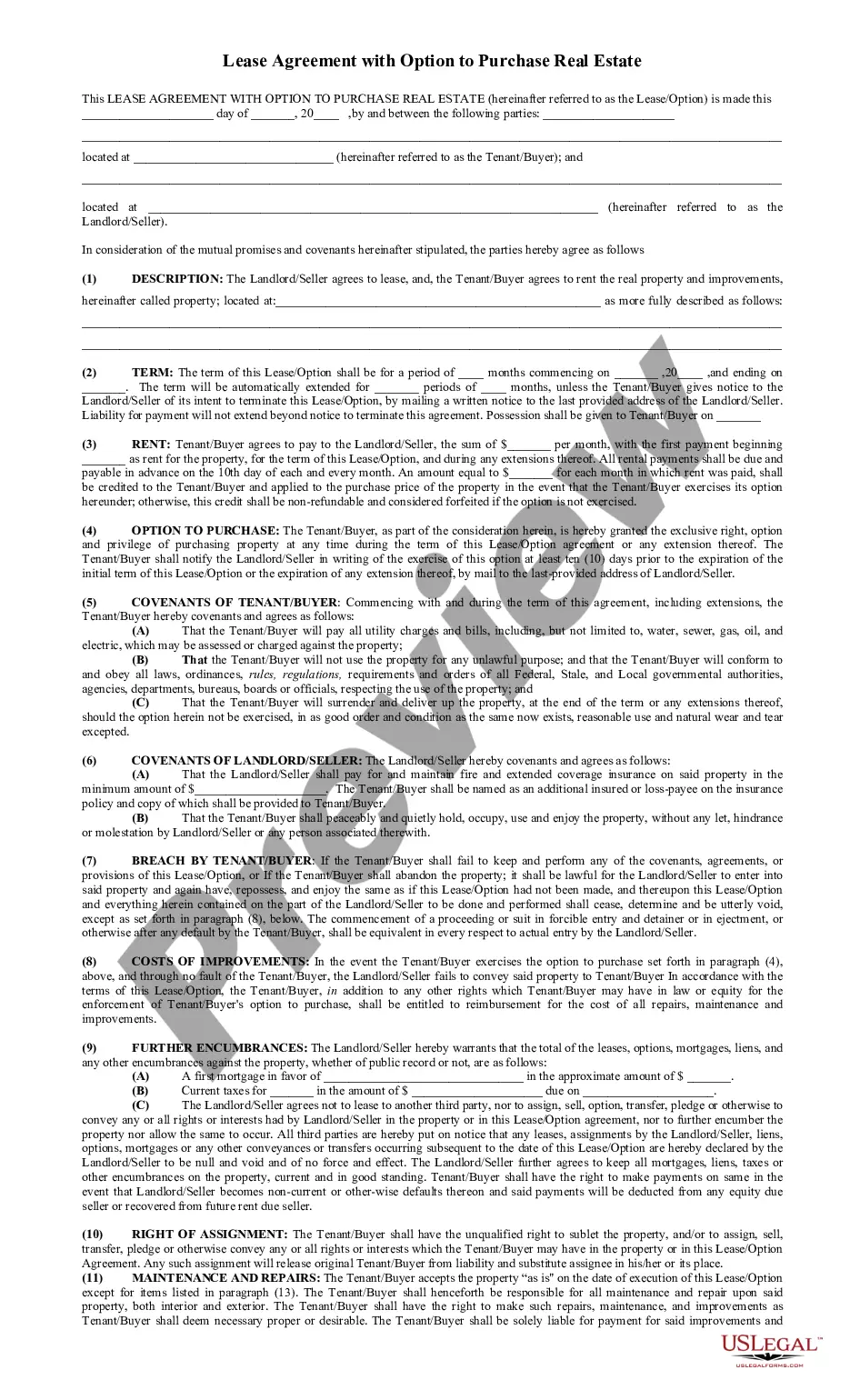
The Option to Purchase Addendum to Residential Lease is a legal document that allows a tenant (lessee) to purchase the rented property at any time before the lease expires. This addendum protects the tenant by ensuring the landlord (lessor) cannot sell the property to anyone else during the lease term. It is important to note that this addendum is not a lease agreement itself; a separate Residential Lease Agreement must be signed and attached to it.
Key components of this form
- Parties Involved: Identifies the lessor (landlord) and lessee (tenant).
- Property Description: Defines the location and details of the leased residential property.
- Option to Purchase: Details the tenant's right to purchase the property, including the purchase price and notice requirements.
- Restrictions on Transfer: Prohibits the tenant from assigning or transferring the option to purchase without the landlord's consent.
- Entire Agreement Clause: States that this addendum represents the complete agreement between the lessor and lessee regarding the purchase option.
When to use this document
This form is used when a tenant wants the opportunity to purchase the property they are renting. It is ideal for tenants who may want to buy the property in the future but are not ready to make a purchase immediately. It secures their right to buy the property while they are still renting it.
Intended users of this form
This addendum is intended for:
- Landlords who wish to offer their tenants a chance to buy the property during their lease term.
- Total home buyers who are renting and want the option to purchase their rental unit.
- Real estate professionals involved in renting or selling residential properties with lease-to-own options.
How to prepare this document
Follow these steps to complete the Option to Purchase Addendum:
- Identify the parties by filling in the names of the lessor and lessee.
- Describe the property being rented, including the address and any specific details from the lease agreement.
- Specify the option to purchase date, indicating when the tenant can begin exercising this option.
- Input the purchase price for the property that the tenant can agree to pay in cash at closing.
- Complete the signature section to finalize the agreement with the date.
Notarization requirements for this form
This form does not typically require notarization unless specified by local law. However, having a notarized document may add an extra layer of validity and help in legal disputes.
Get your form ready online
Our built-in tools help you complete, sign, share, and store your documents in one place.
Make edits, fill in missing information, and update formatting in US Legal Forms—just like you would in MS Word.
Download a copy, print it, send it by email, or mail it via USPS—whatever works best for your next step.
Sign and collect signatures with our SignNow integration. Send to multiple recipients, set reminders, and more. Go Premium to unlock E-Sign.
If this form requires notarization, complete it online through a secure video call—no need to meet a notary in person or wait for an appointment.
We protect your documents and personal data by following strict security and privacy standards.

Make edits, fill in missing information, and update formatting in US Legal Forms—just like you would in MS Word.

Download a copy, print it, send it by email, or mail it via USPS—whatever works best for your next step.

Sign and collect signatures with our SignNow integration. Send to multiple recipients, set reminders, and more. Go Premium to unlock E-Sign.

If this form requires notarization, complete it online through a secure video call—no need to meet a notary in person or wait for an appointment.

We protect your documents and personal data by following strict security and privacy standards.
Typical mistakes to avoid
- Failing to attach the Residential Lease Agreement when using this addendum.
- Not specifying the notice period required for the tenant to exercise their purchase option.
- Overlooking the requirement for signatures from both parties to make the addendum valid.
Benefits of completing this form online
- Convenience of downloading and customizing your document without needing a lawyer.
- Access to templates crafted by licensed attorneys to ensure legality and compliance.
- Easy edits allow you to tailor the form to your specific situation.
- This addendum is enforceable as long as both parties agree to its terms, and it is executed properly.
- Landlords are bound to honor the terms of the addendum once it is signed and attached to the lease.
Main things to remember
- The Option to Purchase Addendum secures a tenant's right to purchase the rental property.
- Ensure a valid Residential Lease Agreement is completed alongside the addendum.
- Note the importance of clear communication and agreement on terms between the landlord and tenant.
Looking for another form?
Form popularity
FAQ
A lease and addendum are esentially the same thing, 'the lease'. The addendum is part of the lease, it does not stand on it's own. If the lease and addendum say different things, but one does not supercede the other, it's ambigious, and the least restrictive clause stands.
Ideally, you should never try to renegotiate the rental amount after your lease is signed.Your tenant might want you to decrease the rent amount, but they are also proposing to increase the length of their lease by one additional year.
An addendum must include the basic elements of any landlord/tenant agreement. You should include the date, the address of the rental property and the names of each party just as you would in the original lease.
When a landlord and tenant sign a lease agreement it forms a legally binding contract. The lease cannot be altered except through another written agreement signed by both parties unless the original lease specifically gives a party the power to change something on their own.
A lease addendum allows a landlord or tenant to make changes to a current residential or commercial lease agreement.Once both parties agree and sign, the addendum should be added to the original lease.
Changing the lease You can negotiate certain changes to the lease, sometimes known as 'varying the lease'. Speak to your landlord first. If you can't agree, you may be able to apply to a tribunal - contact Leasehold Advisory Service for advice.
The lease addendum templates allow a landlord or tenant to make changes to a current residential or commercial lease agreement. Instead of changing the actual lease agreement, an addendum is a document added to a lease agreement outlining the prearranged modifications.
When creating your Lease Amendment, you'll want to include information such as: the names of the landlord(s) and the tenant(s); the effective date of the original lease; the date of the lease amendment; the address and nature of the leased property; whether the original lease was recorded with the county; which