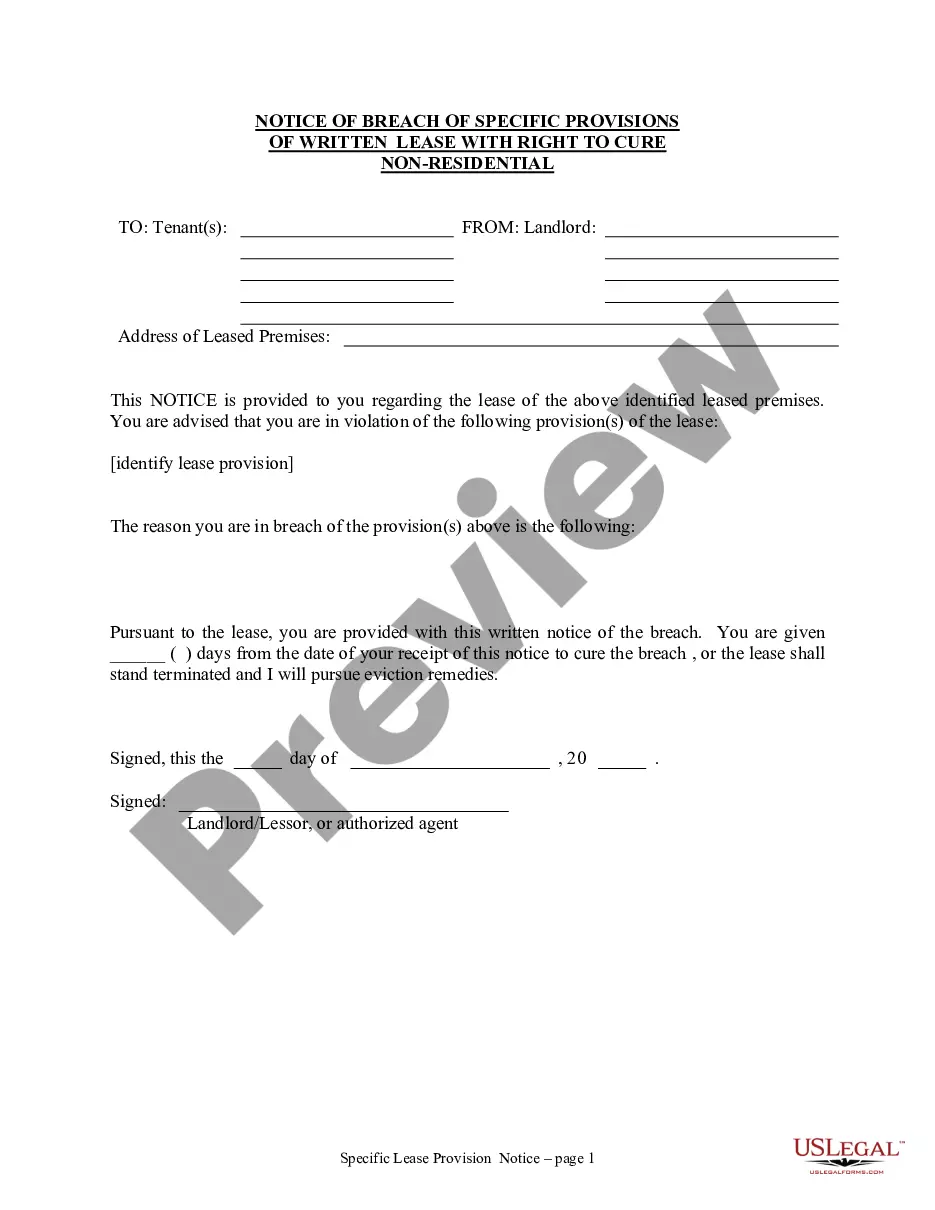
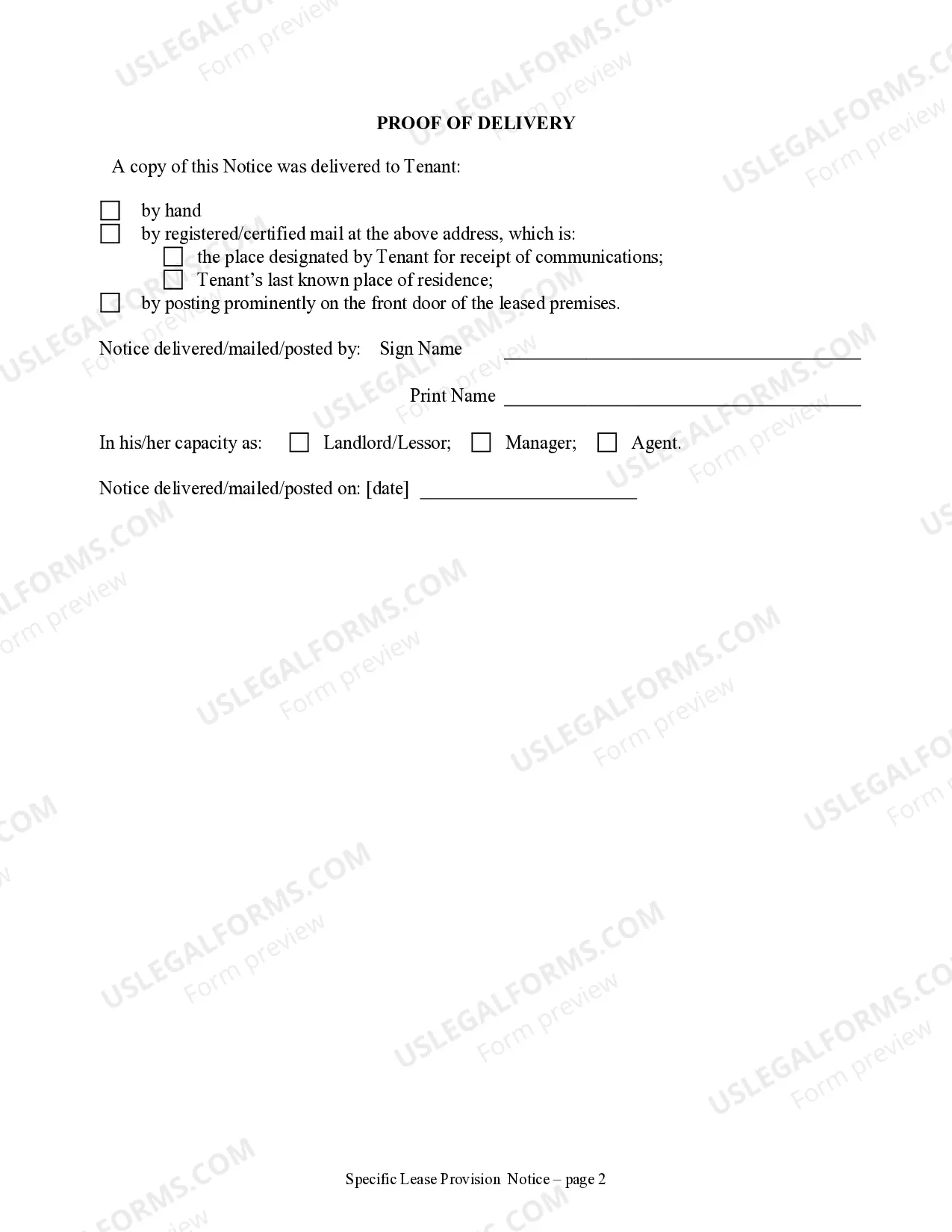
The Notice of Breach of Written Lease for Violating Specific Provisions of Lease with Right to Cure for Non-Residential Property is a legal document used by a landlord to formally notify a tenant of a breach of the lease agreement. This form is specifically designed for non-residential leasing situations, allowing landlords to identify the specific provision violated and outline the steps the tenant may take to cure the breach. It is essential for initiating the process of addressing lease violations while adhering to legal protocols, distinguishing it from general eviction notices or other lease modification requests.
This form should be used when a landlord needs to notify a tenant of a specific violation of the lease terms in a non-residential setting. Common situations include failure to pay rent, unauthorized alterations to the property, or noncompliance with property use regulations. By issuing this notice, landlords provide tenants with an opportunity to remedy the violation before further legal actions are pursued.
Notarization is not commonly needed for this form. However, certain documents or local rules may make it necessary. Our notarization service, powered by Notarize, allows you to finalize it securely online anytime, day or night.
Our built-in tools help you complete, sign, share, and store your documents in one place.
Make edits, fill in missing information, and update formatting in US Legal Forms—just like you would in MS Word.
Download a copy, print it, send it by email, or mail it via USPS—whatever works best for your next step.
Sign and collect signatures with our SignNow integration. Send to multiple recipients, set reminders, and more. Go Premium to unlock E-Sign.
If this form requires notarization, complete it online through a secure video call—no need to meet a notary in person or wait for an appointment.
We protect your documents and personal data by following strict security and privacy standards.

Make edits, fill in missing information, and update formatting in US Legal Forms—just like you would in MS Word.

Download a copy, print it, send it by email, or mail it via USPS—whatever works best for your next step.

Sign and collect signatures with our SignNow integration. Send to multiple recipients, set reminders, and more. Go Premium to unlock E-Sign.

If this form requires notarization, complete it online through a secure video call—no need to meet a notary in person or wait for an appointment.

We protect your documents and personal data by following strict security and privacy standards.
In some circumstances, a tenant can break a fixed-term agreement early without penalty. A tenant can give 14 days' written notice to end an agreement early without penalty if: they have accepted an offer of social housing (e.g. from DCJ Housing)
A landlord must have good cause to evict a tenant.Each cause, except for nonpayment of rent, must be described in detail by the landlord in a written notice to the tenant. A Notice to Quit is required for all good cause evictions, except for an eviction for nonpayment of rent.
If a tenant fails to pay rent, breaks a rule, or significantly damages the property, then it is considered breach of contract and you have grounds for eviction. If there are people living in the unit that are not on the lease, then that is also breach of contract and you have grounds to evict them.
How Breaking a Lease Can Hurt Your Credit. If you pay all outstanding charges before moving, including any back rent and fees, breaking a lease won't hurt your credit score. However, breaking a lease can damage your credit if it results in unpaid debt.Landlords generally don't report unpaid rent to credit bureaus.
Tenants that break a rental lease in New Jersey can lose their security deposit, as well suffer damages for a landlord's lost rental income.
If you think your landlord is violating the Fair Housing Act, you can get that landlord in trouble by filing a complaint at HUD.gov. Your remedy for breach of quiet enjoyment is to terminate the lease and move or sue in small claims court.
Notice to Terminate the Lease A month-to-month tenant must give written notice of lease termination at least one full month prior to moving. Most yearly leases require a 60 to 90 day notice from the tenants in order to terminate the lease.
However, it's important to know that even without a lease your landlord is still required to give you a 30-day notice for ending your lease or for increasing your rent. If you refuse to pay the increase in your rent, the landlord has the right to legally begin the eviction process.
They don't have to give you any reasons why they want to evict you. They have to give you at least 28 days notice, but this could be longer depending on your agreement. If you don't leave by the time your notice ends, your landlord has to go to court to get a court order to make you leave.