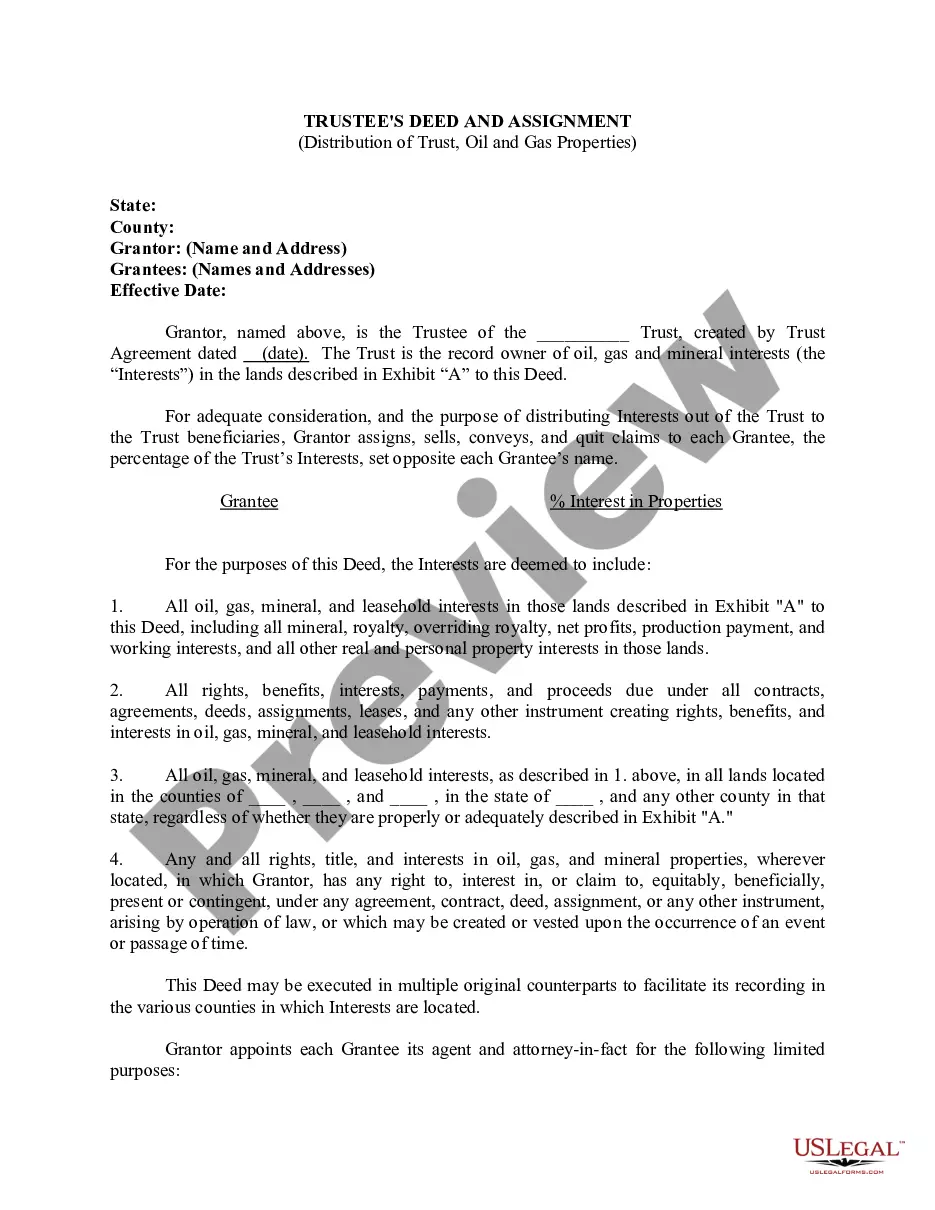
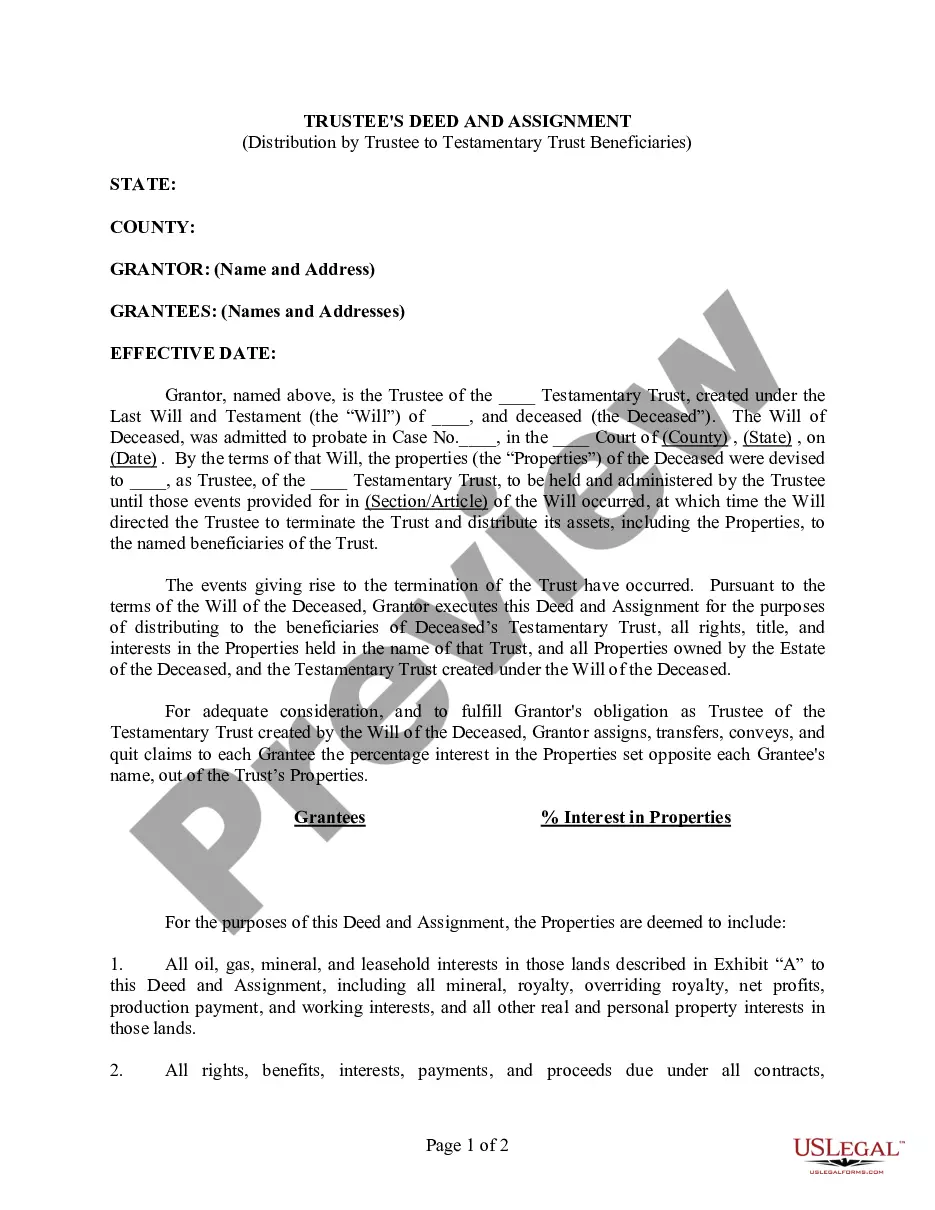
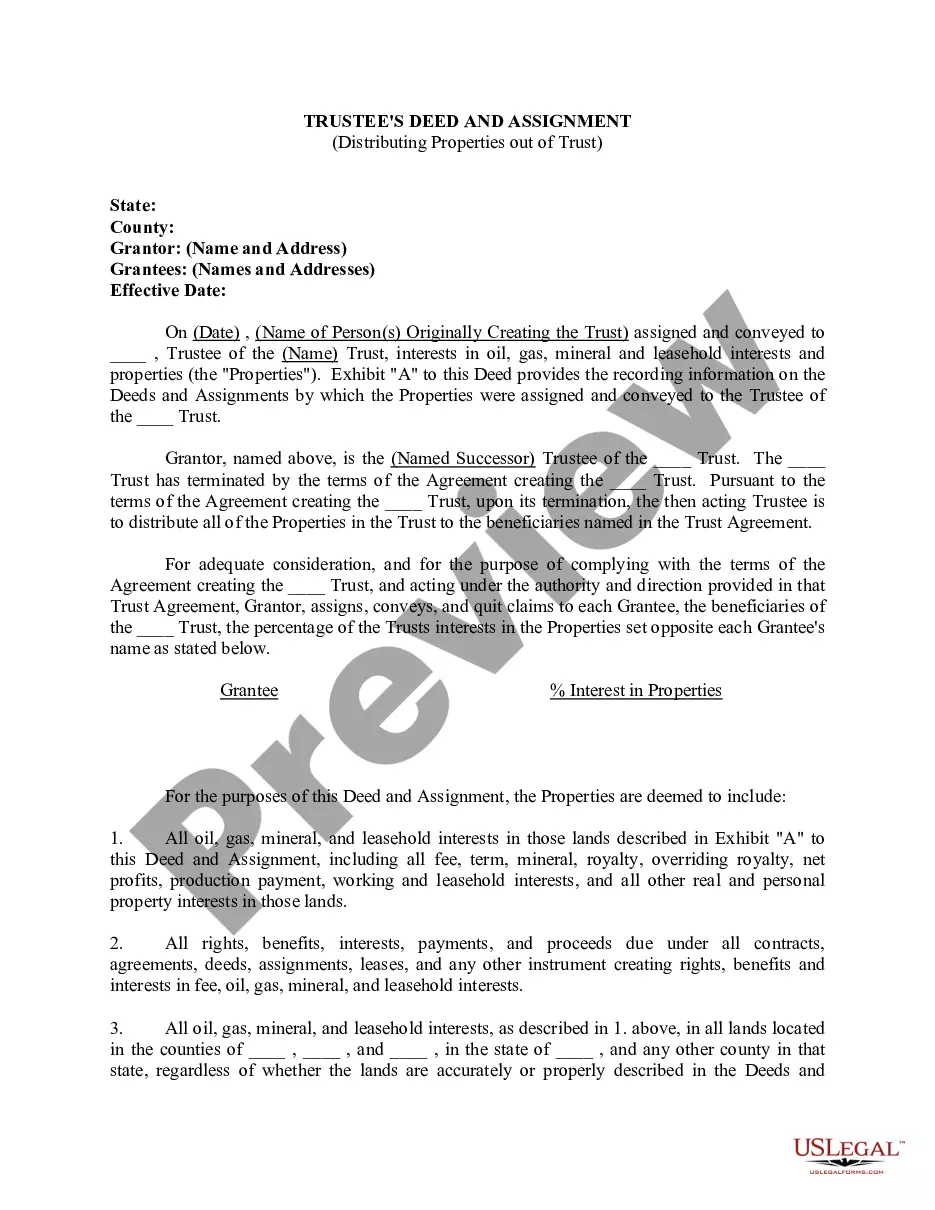
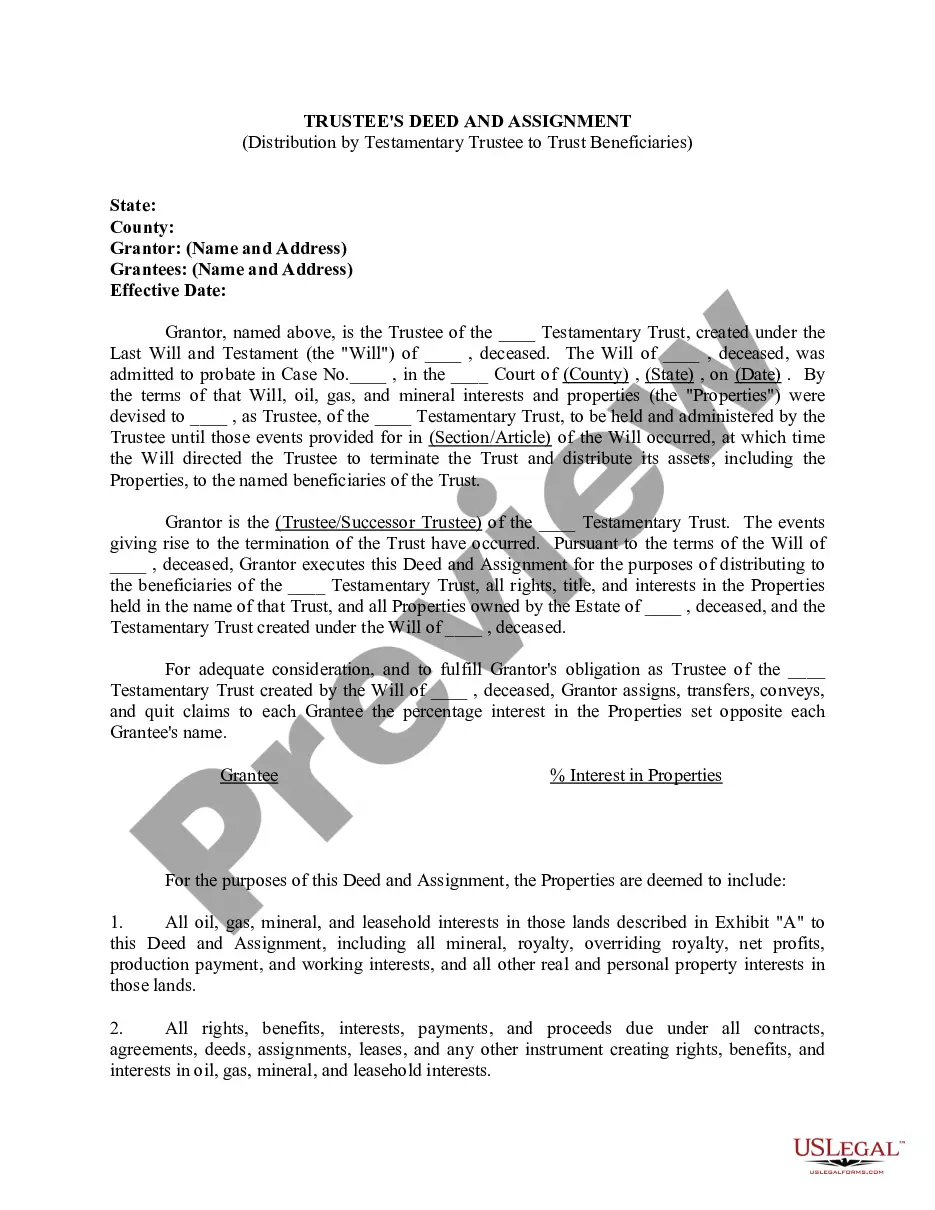
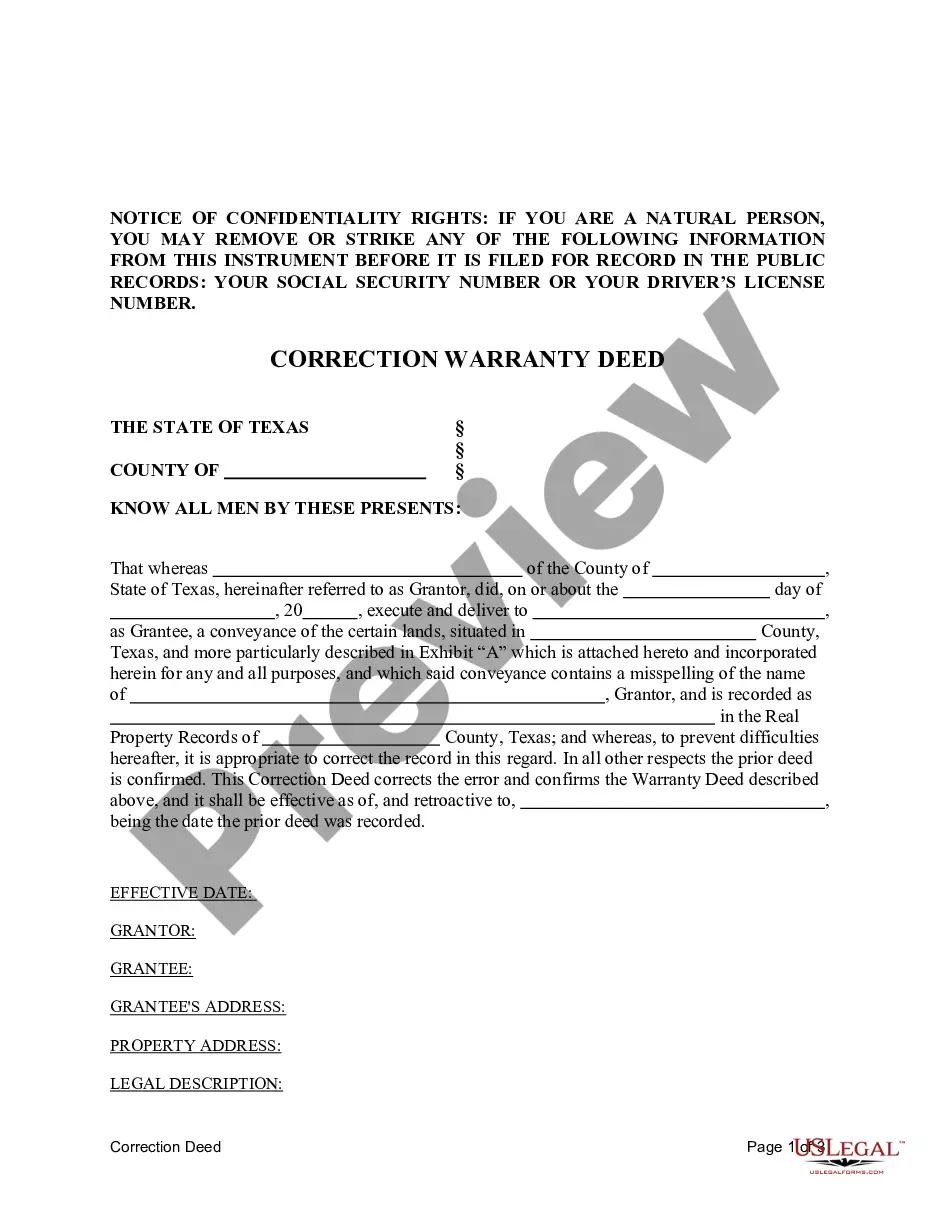
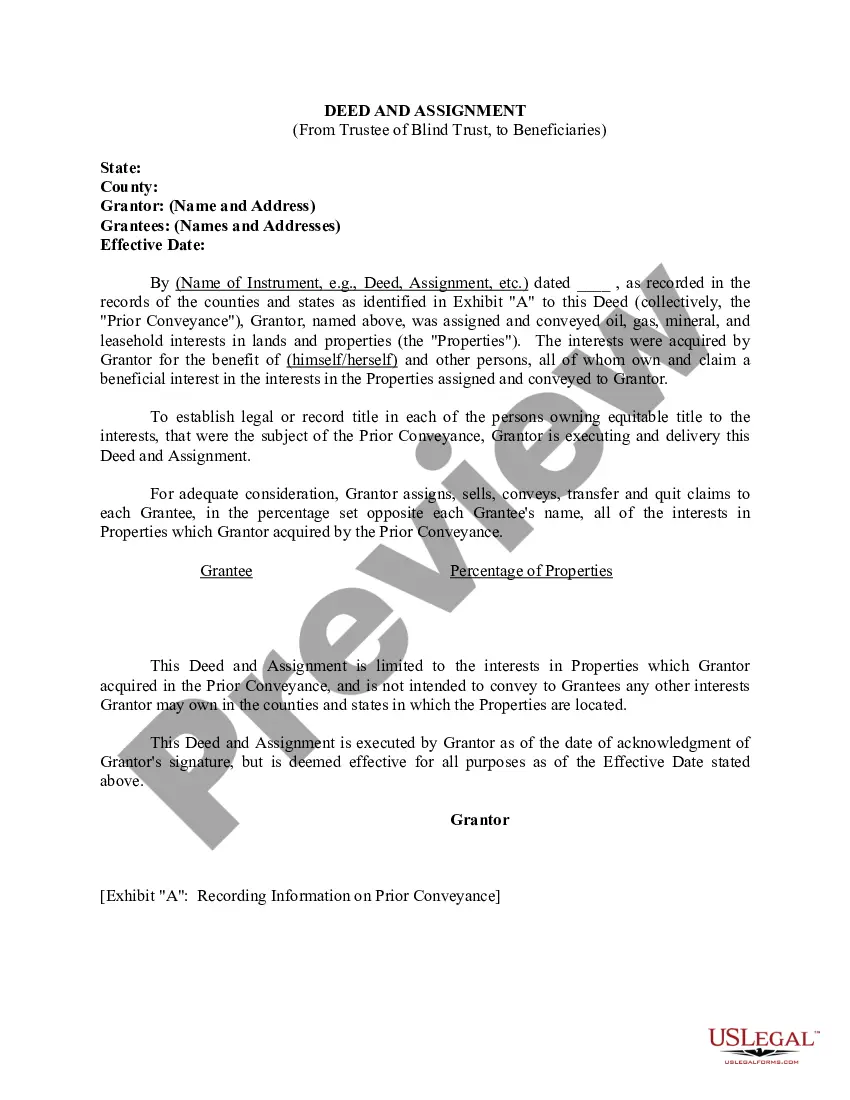
This form addresses the situation where properties are held in trust and the trustee desires to transfer those properties to the beneficiaries named in the trust agreement.

To ensure a deed is valid, check that it has been properly executed and recorded with the county. Think of this step as checking the engine before hitting the road; it ensures everything runs smoothly.
Changing beneficiaries after the deed is transferred can be tricky, as it typically requires additional legal steps. It's like trying to change lanes in heavy traffic – proceed with caution!
Usually, yes! All beneficiaries should be on the same page for a deed transfer. It's best to work together, just like a team rowing in sync.
If a trustee refuses to transfer the deed, it can lead to tension among beneficiaries. In such a case, it may be wise to consult a legal expert to sort things out, like calling in a referee when a game gets heated.
The assignment process involves the trustee completing the deed and then recording it with the county. It's similar to handing over a baton in a relay race – it needs to be done smoothly to keep everything on track.
In Bakersfield, having a deed is crucial because it officially documents the transfer of property and helps avoid any future disputes. Think of it as your ticket to the ride of ownership!
A deed from a trustee to trust beneficiaries is a legal document that transfers property from the trustee, who manages the trust, to the individuals who benefit from it. It's like passing the keys of a house to the rightful owners.