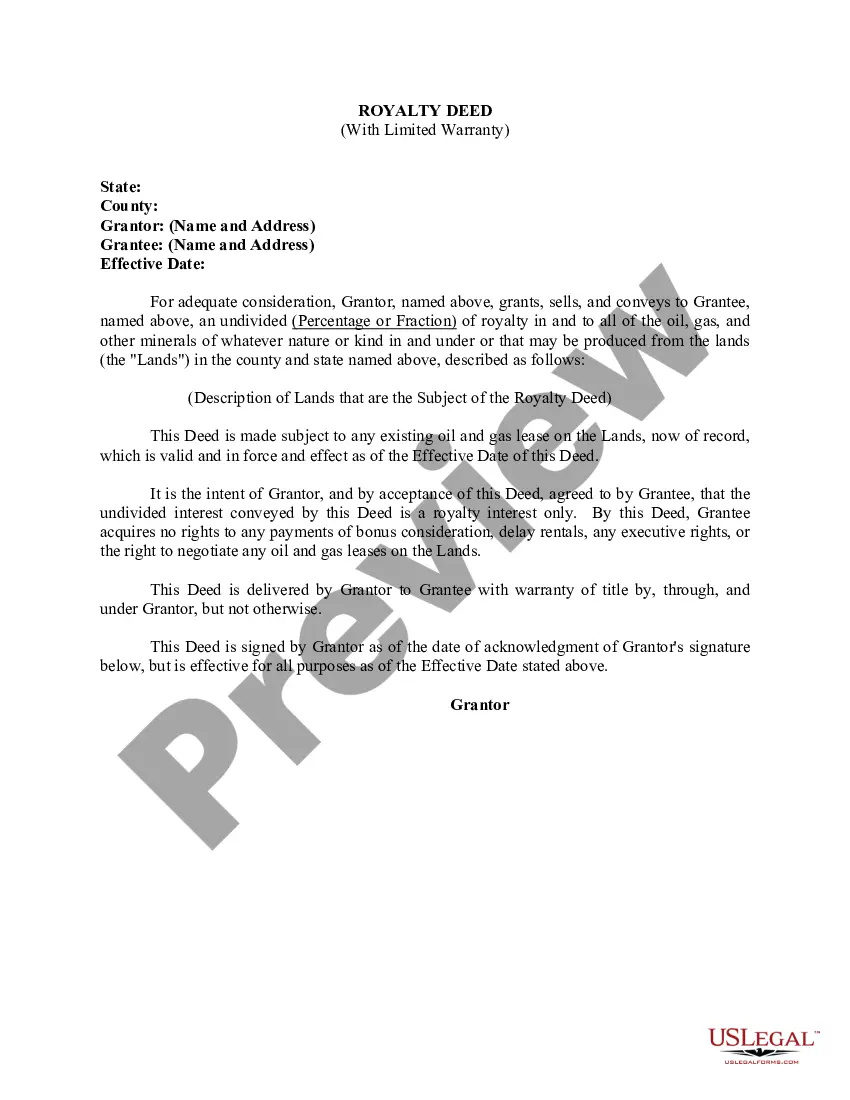
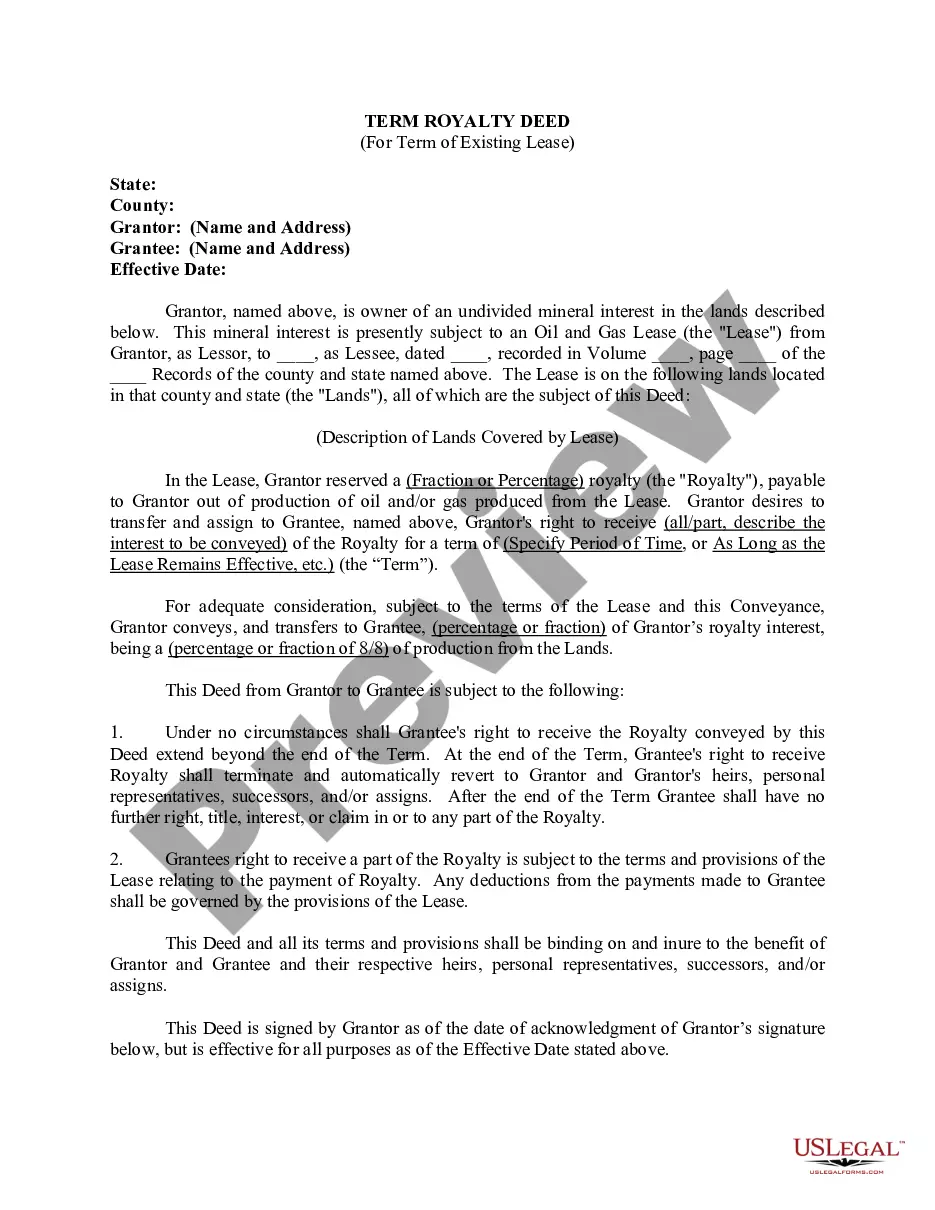
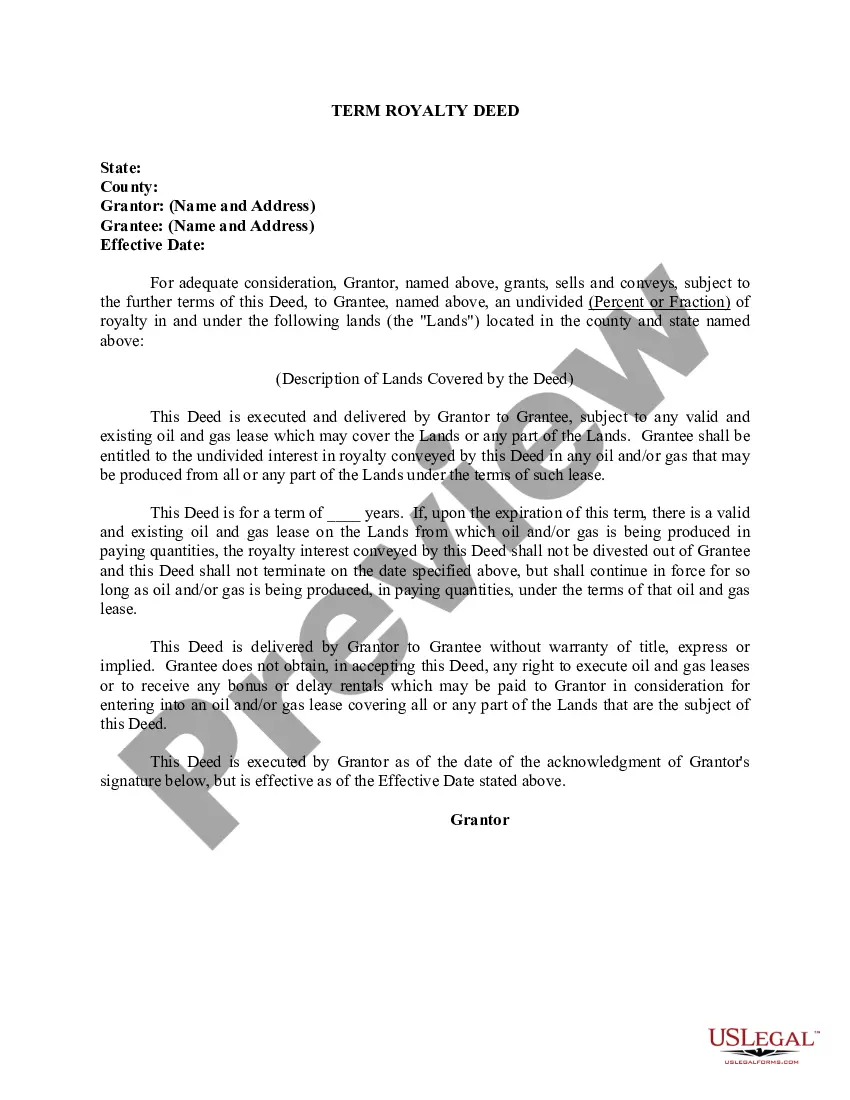
This form conveys a royalty interest for a specified term of years. If there is production at the end of that term, or the lands are subject to an oil and gas lease, the interest will continue to be owned by the grantee until production ceases.

It’s a good idea to consult a lawyer to understand what you're getting into and to ensure everything is above board.
Generally, once a Royalty Deed is signed, it lasts for a long time, but some conditions might allow it to be terminated or modified, depending on the agreement.
Yes, there can be risks, such as potential impacts on the land and environment from resource extraction, and disputes about the terms of the deed.
These deeds are usually used by landowners who want to profit from natural resources without selling their land outright.
Essentially, when you sign a Royalty Deed, you're allowing others to access the resources on your property, but you still own the land itself.
A Royalty Deed is a legal document that transfers rights to extract minerals, like oil or gas, from a piece of land while keeping the land ownership intact.