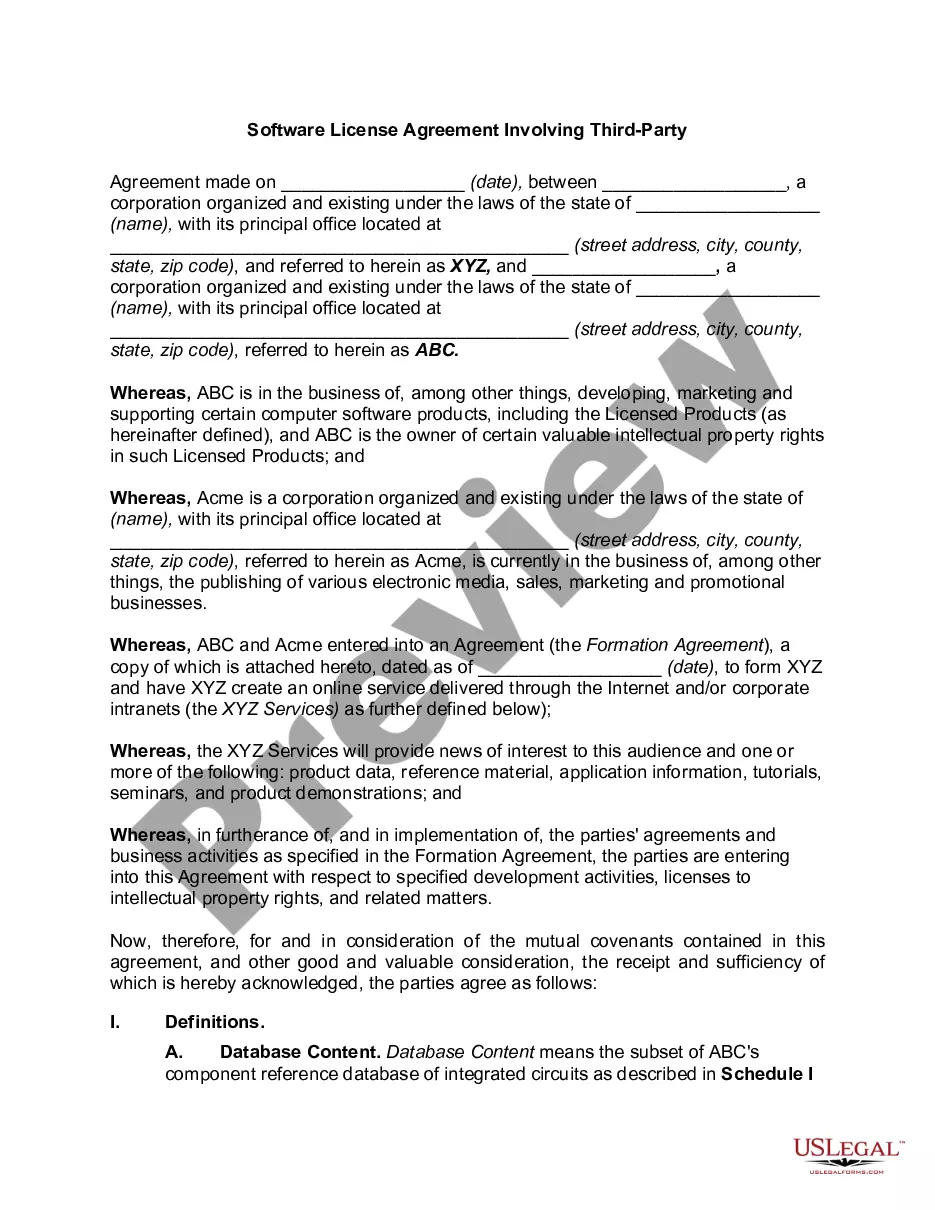
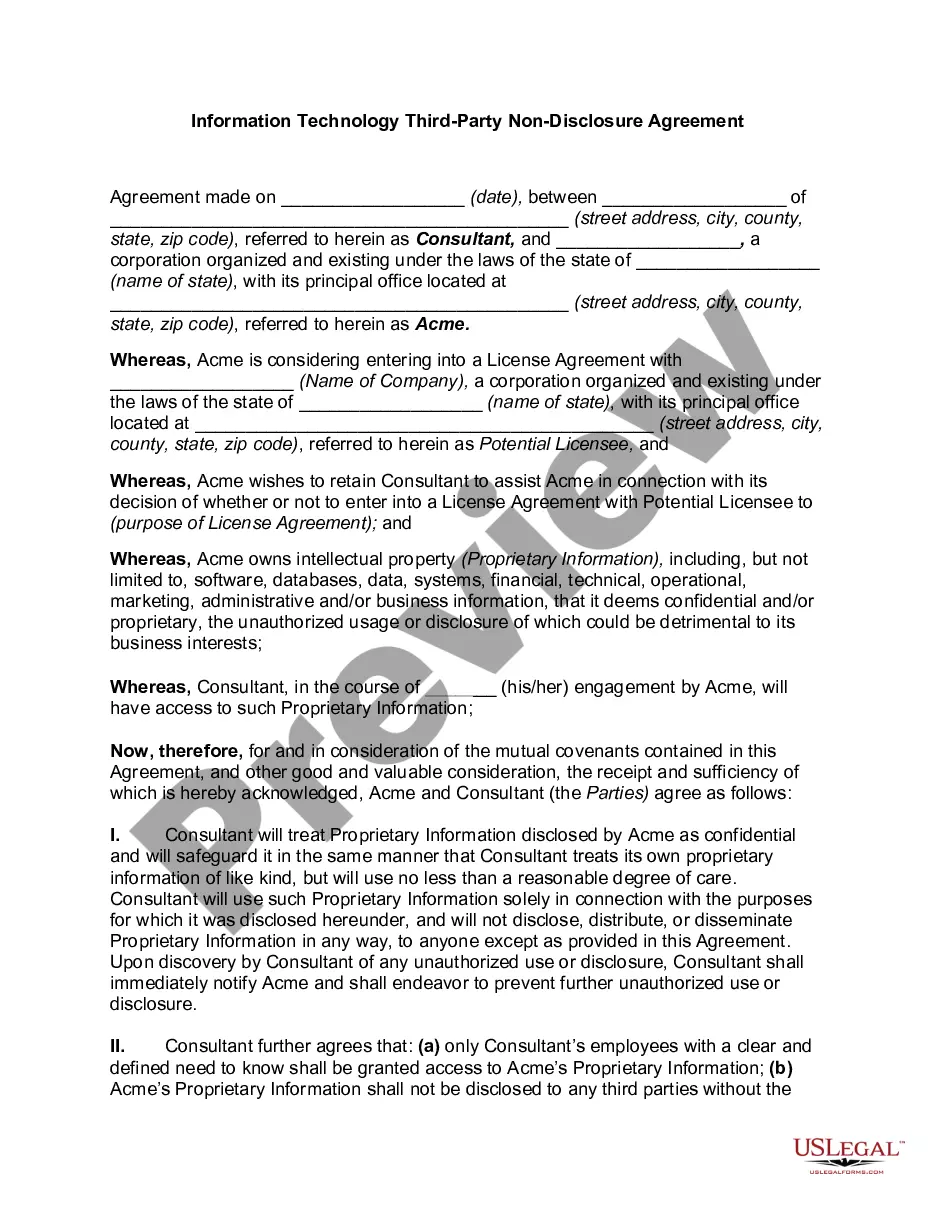
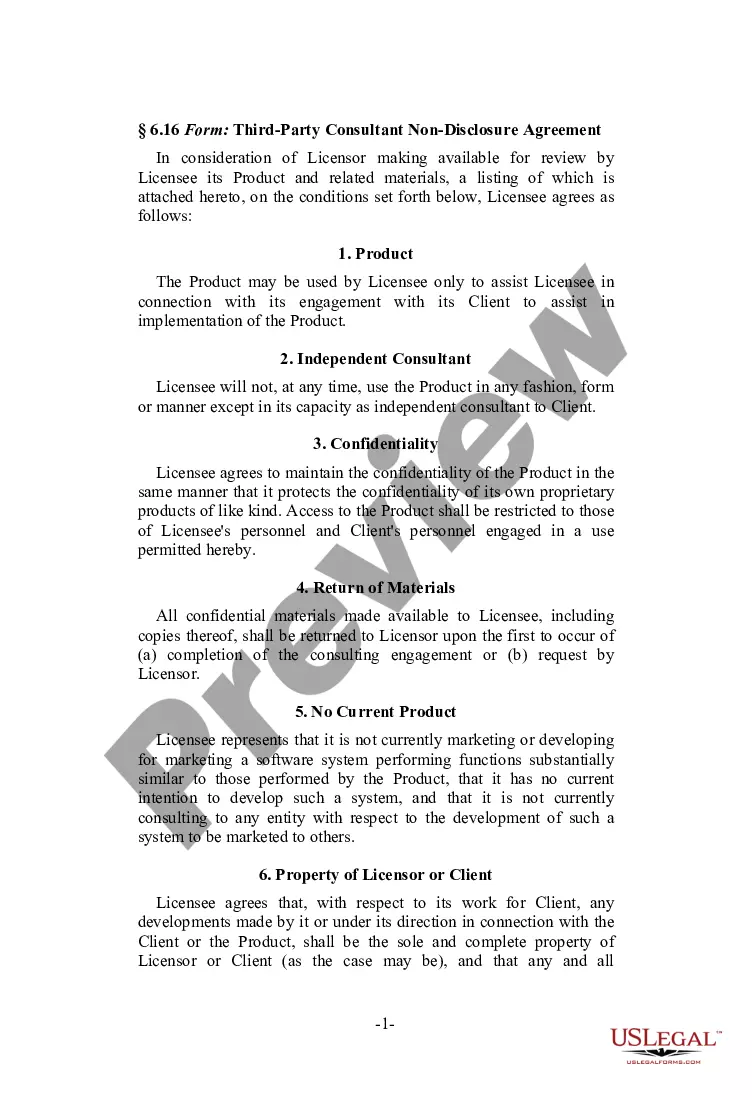
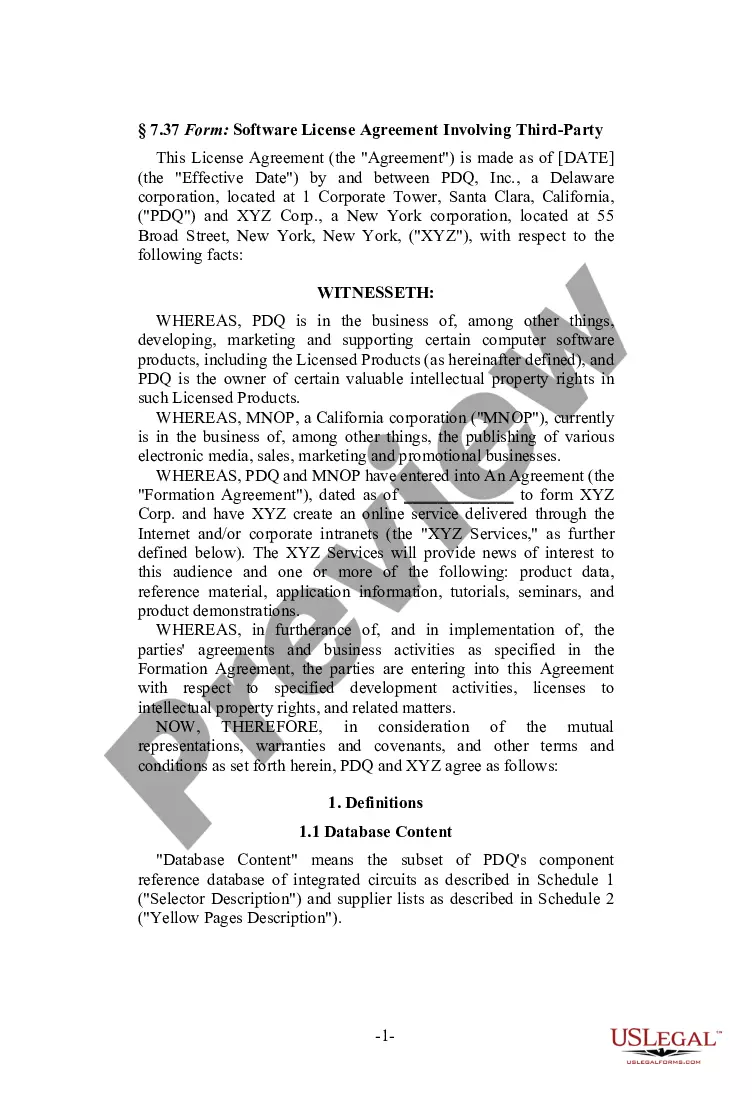
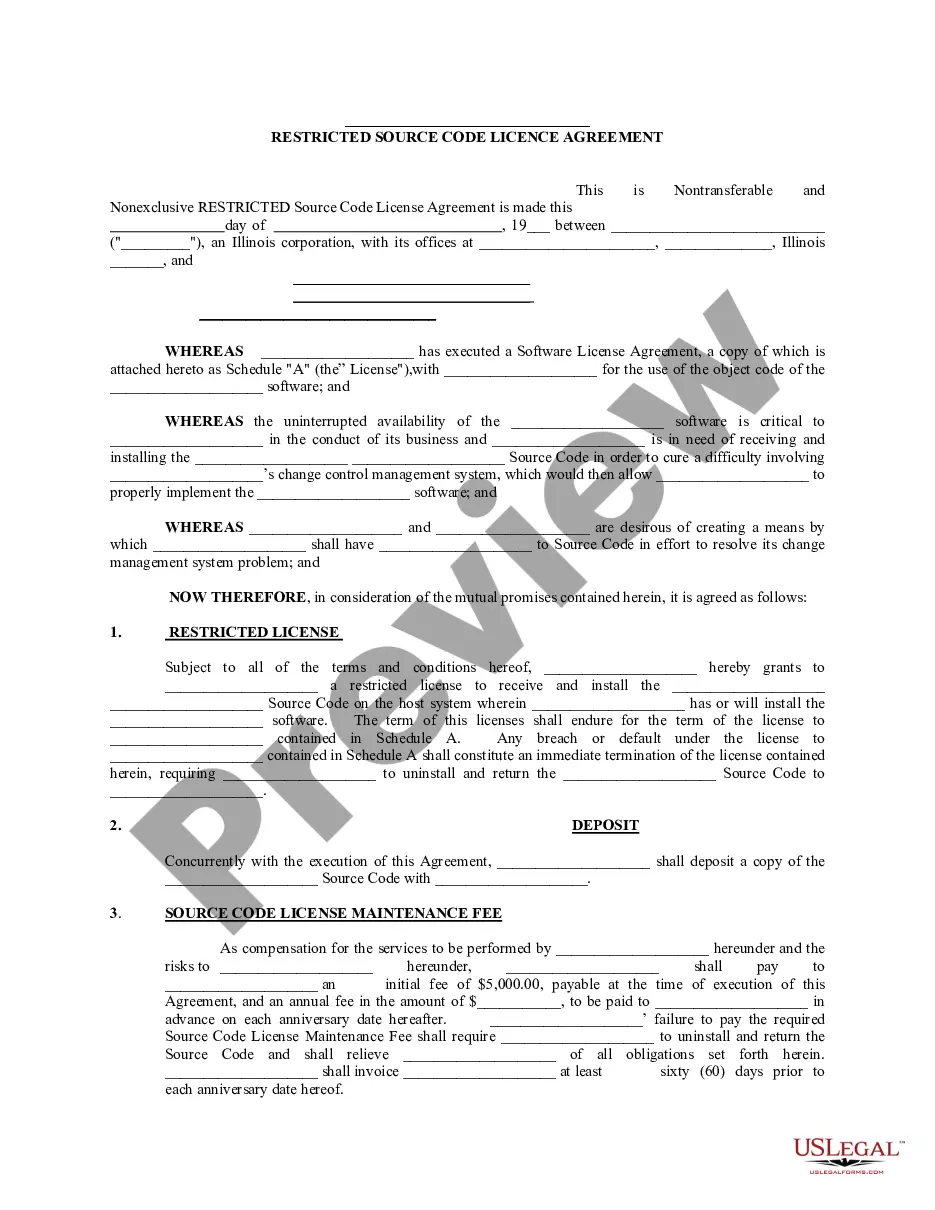
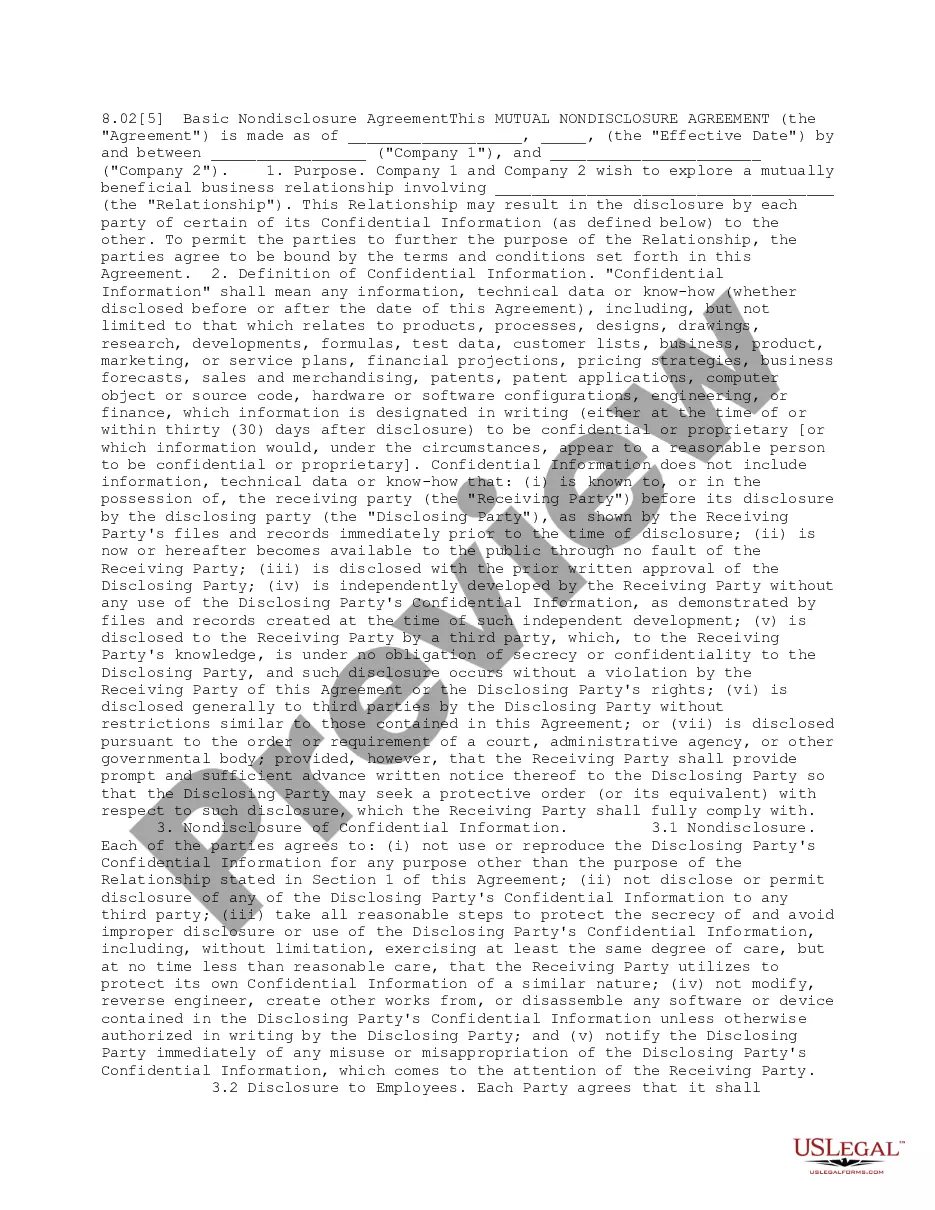
This form is a Third- Party Source Code Non-Disclosure Agreement. The licensee acknowledges and agrees that the proprietary information and all other items licensed under the contract and all copies constitute valuable trade secrets of the developer and title to the information remains in the developer. Also, all applicable copyrights, trade secrets, patents and other intellectual and property rights in the proprietary information are to remain in the developer.
While it's not a strict requirement, having a lawyer look it over can save you headaches down the line. They can spot any issues that you might miss, kind of like having a second pair of eyes!
Absolutely! You can tailor it to fit your needs. Just remember to keep the essential parts intact, or you might be cutting corners.
If someone breaks the NDA, you can take legal action against them. It’s your way of saying, 'Hey, that’s not cool!' and ensuring your rights are protected.
Most agreements specify a duration for how long the confidentiality should last—often a few years. It’s like keeping a secret for a set amount of time!
Anyone who might gain access to your source code—like developers or business partners—should sign one. Better safe than sorry, right?
Using an NDA protects your intellectual property. It's like putting a 'No Trespassing' sign on your code, making sure that only people you trust can peek at it.
It's a legal contract that prevents third parties from disclosing or using your source code without permission. Think of it as keeping your trade secrets under lock and key!