Bexar Texas Uniform Residential Loan Application
Description




How to fill out Uniform Residential Loan Application?
Drafting legal documentation can be challenging. Moreover, if you opt to hire an attorney to create a business contract, paperwork for ownership transfer, premarital agreement, divorce forms, or the Bexar Uniform Residential Loan Application, it could be quite costly.
So what is the most effective method to conserve both time and funds while producing valid documents that fully adhere to your state and local statutes and regulations.
Review the form description and utilize the Preview option, if available, to ensure it is the template you require. Don’t be concerned if the form doesn’t meet your needs – search for the appropriate one in the header. Click Buy Now when you discover the desired template and select the most fitting subscription. Log In or create an account to acquire your subscription. Process payment with a credit card or through PayPal. Choose the file format for your Bexar Uniform Residential Loan Application and download it. Once completed, you can print it and fill it out on paper or upload the template to an online editor for quicker and more efficient completion. US Legal Forms allows you to utilize all previously acquired documents multiple times – you can find your templates in the My documents tab in your account. Give it a shot now!
- US Legal Forms is a fantastic option, whether you're seeking templates for personal or commercial purposes.
- US Legal Forms boasts the largest online collection of state-specific legal documents, offering users the latest and professionally validated templates for any situation collected all in one location.
- Thus, if you require the most current version of the Bexar Uniform Residential Loan Application, you can conveniently locate it on our site.
- Acquiring the documents takes minimal time.
- Existing account holders should verify their subscription is active, Log In, and select the template by clicking the Download button.
- If you have not registered yet, here’s how to acquire the Bexar Uniform Residential Loan Application.
- Browse the page and confirm there is a template available for your region.
Form popularity
FAQ
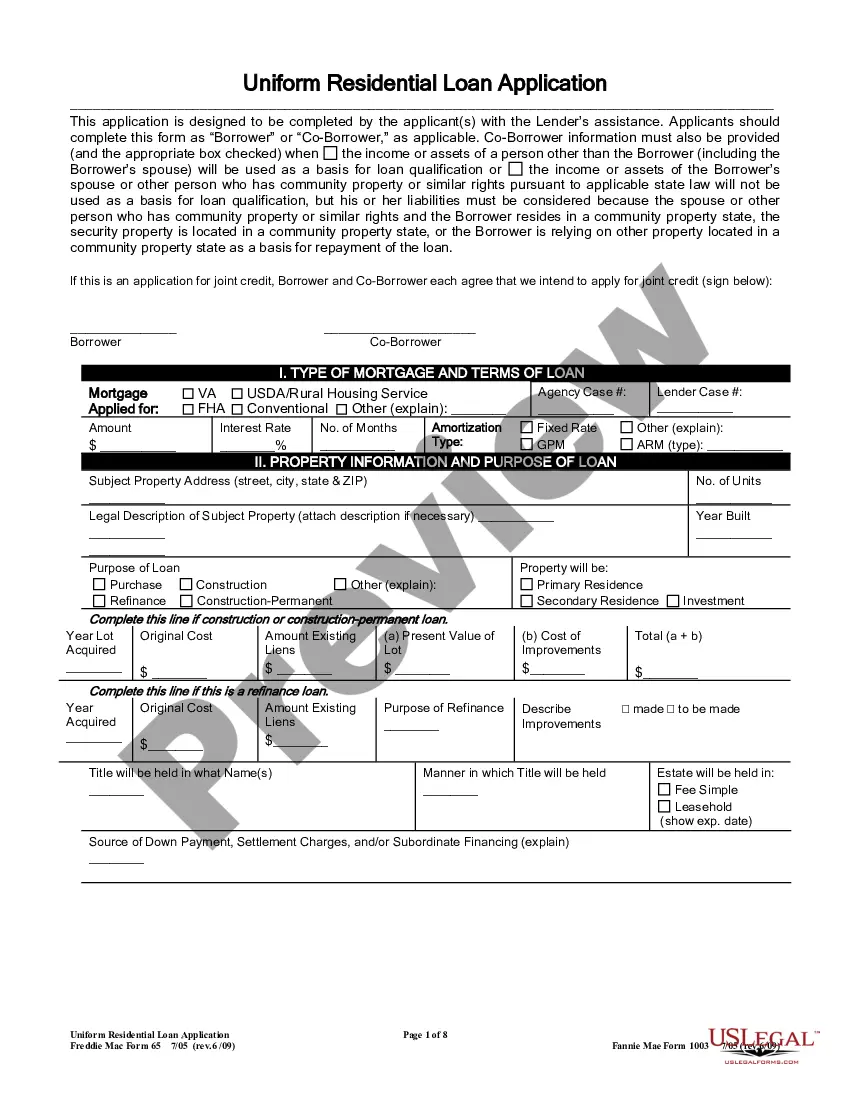
The 1003 mortgage application form was developed by Fannie Mae and first published in August 2016. Its Freddie Mac equivalent is Form 65. Both forms are based on the Uniform Loan Application Dataset and require the same information from consumers who are applying for residential mortgage loans.
Who Uses Form 1003? Most U.S. mortgage lenders use either Form 1003 or Form 65 for evaluating potential applicants. If you're applying for a purchase loan, refinance, or construction-to-permanent loan, you will likely use this form. You'll also use it for FHA, conventional, USDA, and VA loans.
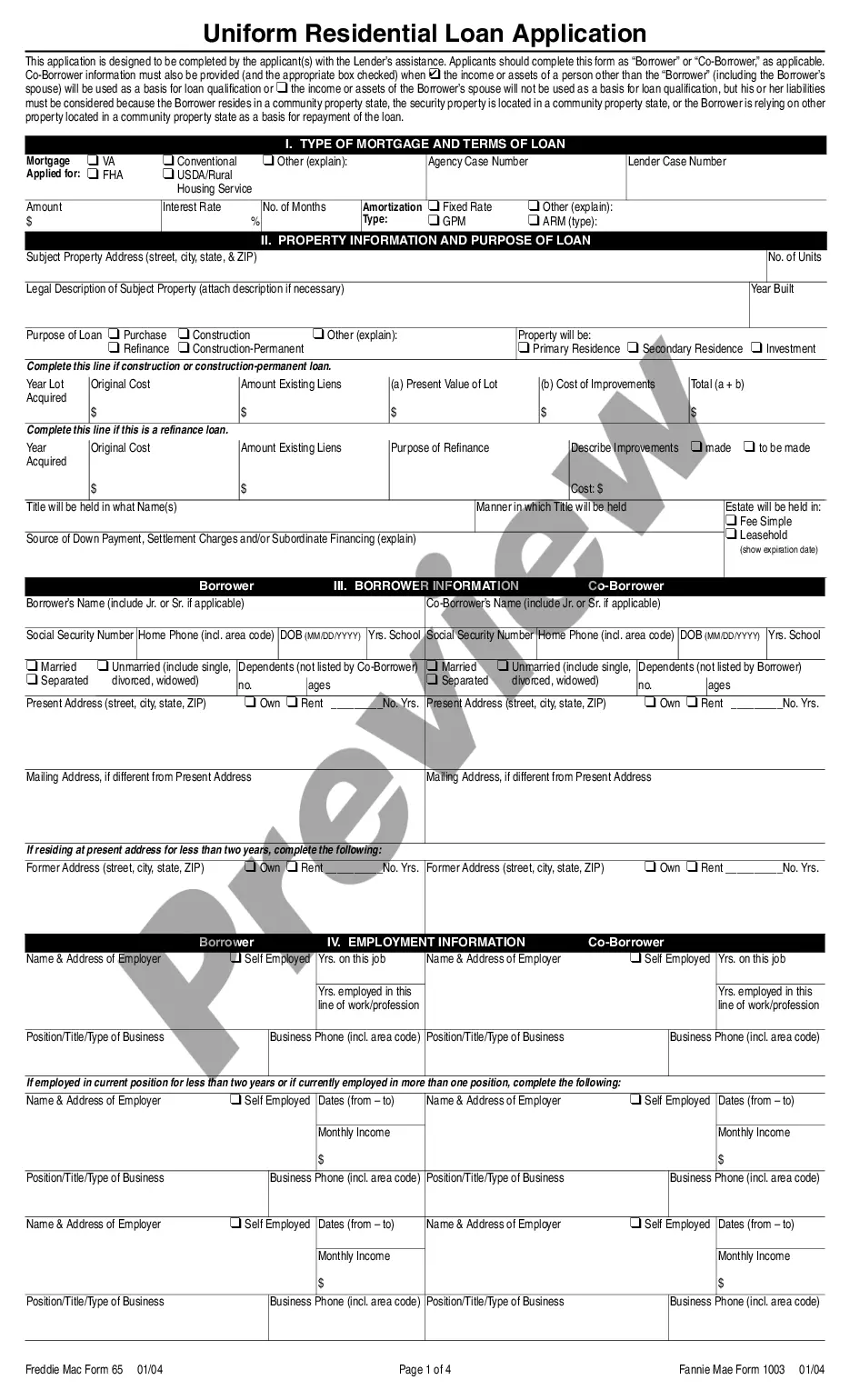
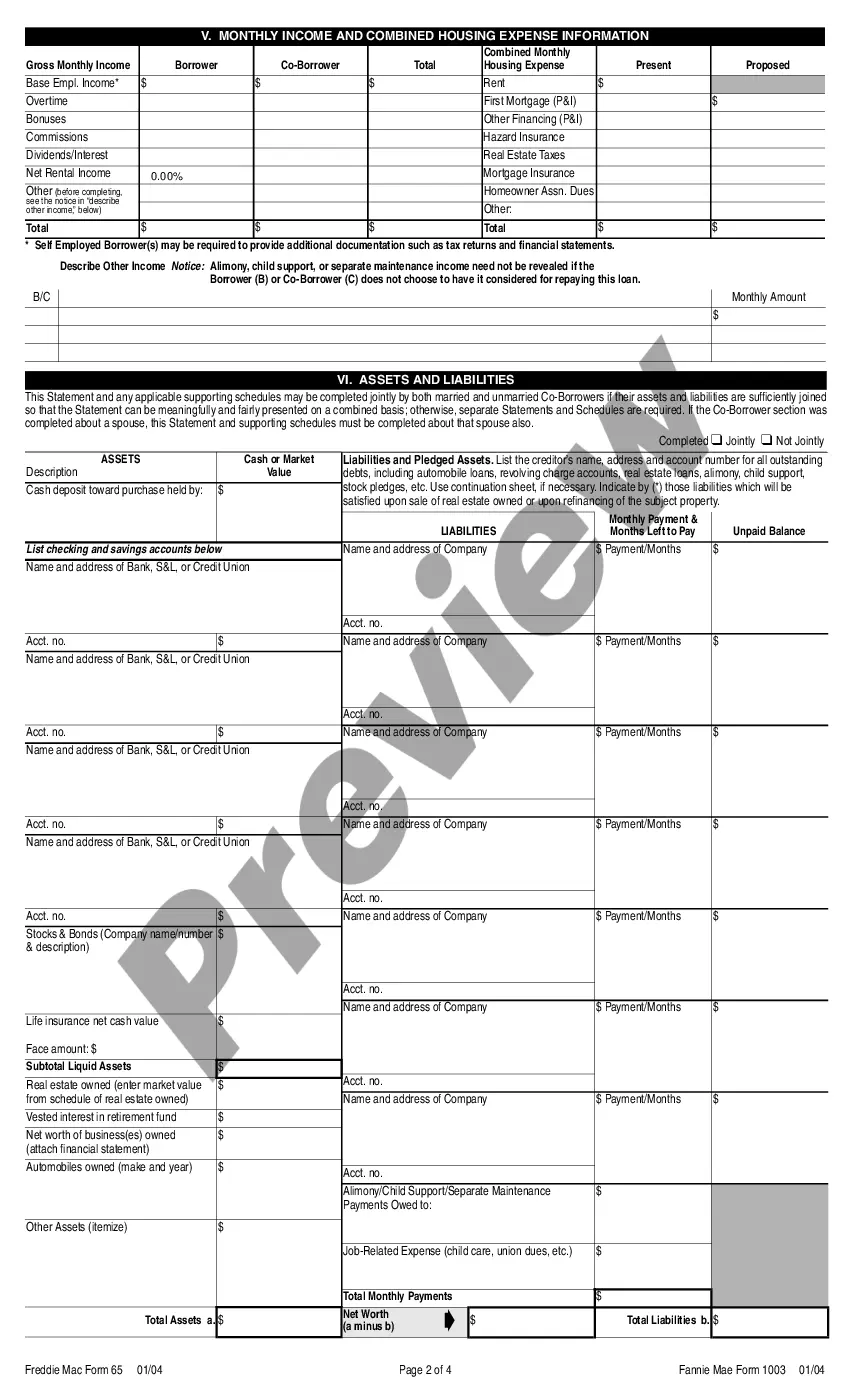
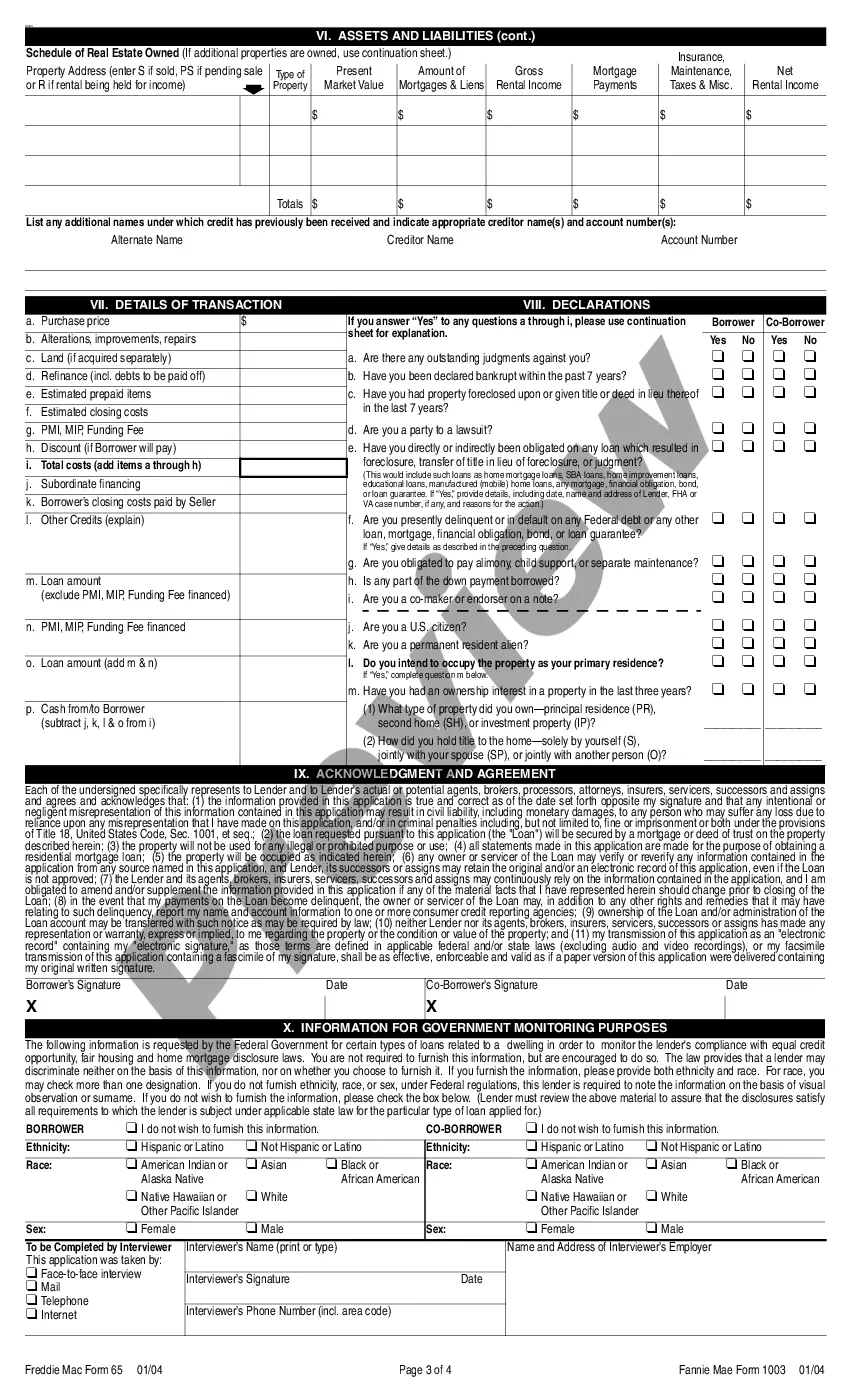
The 1003 loan application, or Uniform Residential Loan Application, is the standardized form most mortgage lenders in the U.S. use. The application asks questions about the borrower's employment, income, assets, and debts, as well as requiring information about the property.
The Uniform Residential Loan Application is used by lenders to determine your creditworthiness for a home loan. It's known within the mortgage industry as Fannie Mae Form 1003, and borrowers enter income, asset credit and other personal financial information into the redesigned form's nine sections.
The application is known as Fannie Mae Form 1003 or Freddie Mac Form 65. Fannie Mae and Freddie Mac are government-sponsored companies that buy and sell home loans, freeing money for lenders to extend more loans to homebuyers.
The 1003 Form is Fannie Mae's form number for the Uniform Residential Loan Application (URLA). Freddie Mac refers to this as Form 65. The URLA, 1003, and Form 65 are all the same forms and serve as a mortgage loan application.
The 1003 Loan Application Form Fannie Mae and Freddie Mac purchase mortgages from individual lenders and either hold the loans in their own portfolios or sell them to other entities as part of a mortgage-backed security (MBS).
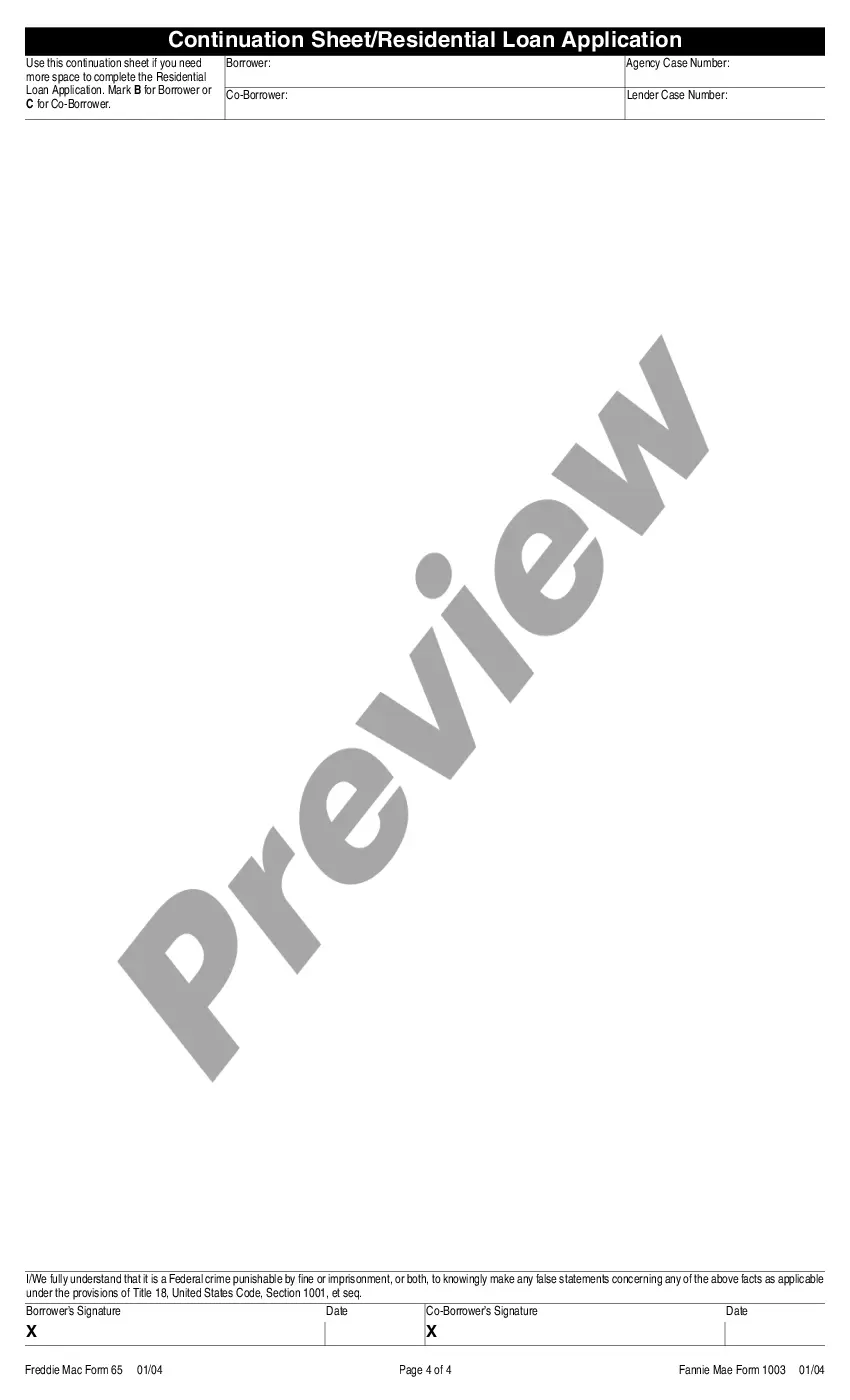
Documenting the Loan Application A complete, signed, and dated version of the final Form 1003 must always be included in the loan file. The final Form 1003 must reflect the income, assets, debts, and final loan terms used in the underwriting process.
The 1003 Form is Fannie Mae's form number for the Uniform Residential Loan Application (URLA). Freddie Mac refers to this as Form 65. The URLA, 1003, and Form 65 are all the same forms and serve as a mortgage loan application.
The Uniform Residential Loan Application is used by lenders to determine your creditworthiness for a home loan. It's known within the mortgage industry as Fannie Mae Form 1003, and borrowers enter income, asset credit and other personal financial information into the redesigned form's nine sections.