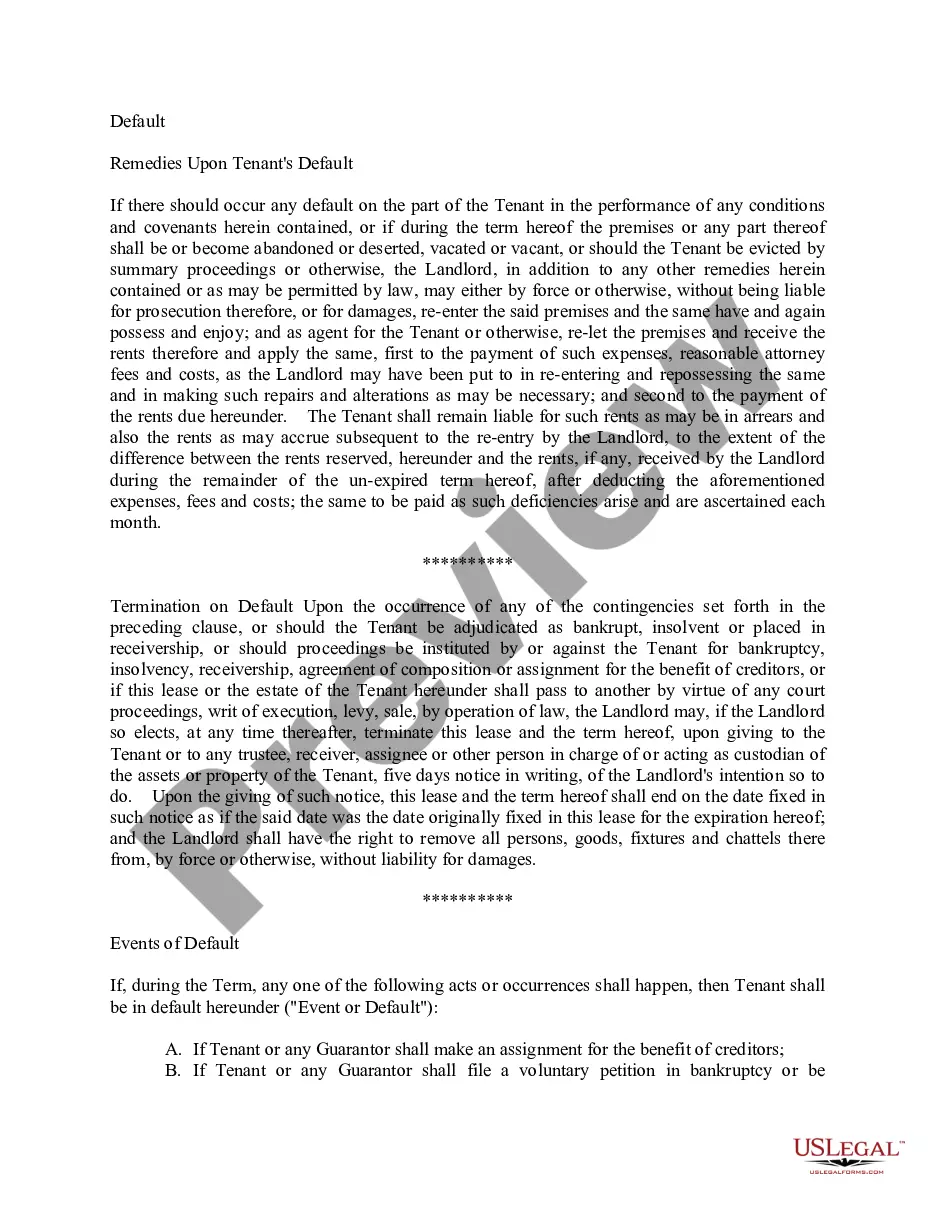
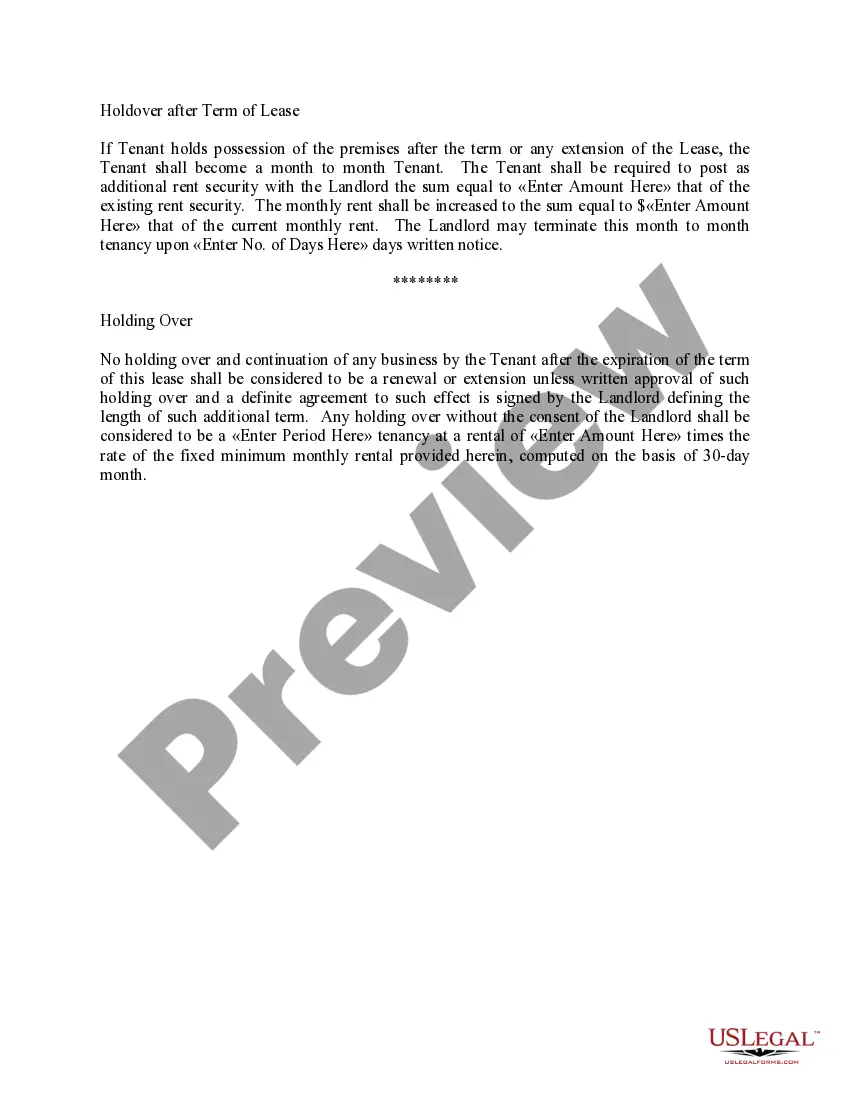
Example of clause regarding Holdover of property by Tenant. A hold-over clause in a commercial lease typically provides that if a tenant remains in possession of the leased premises after the expiration of the stated lease term, the tenant must pay rent to the landlord in an amount substantially in excess of the rental rate at the end of the term – often as high as 150 percent
Kansas City Missouri Holdover Clause Related Searches
kansas city form rd-108 instructions
kansas city rd-111
kcmo quick tax login
kansas city rd-108
kansas city rd-105
kcmo earnings tax
kansas city tax
kansas city income tax calculator
How to get kansas city without a car
kansas city airport pickup
Interesting Questions
Holdover clauses are common but not universal. It's a good idea to carefully read your lease to see if it includes this clause, as lease agreements can vary widely.
If you want to stay longer, it’s best to talk to your landlord. Open up a dialogue about extending your lease or negotiating a new one before your current one runs out.
That depends on the lease agreement. Some holdover clauses allow you to stay for a month or more, while others might only give you a few days. You’ll want to check the details in your lease.
Yes, if there's a holdover clause that allows the landlord to end your stay quickly, they can choose to evict you. But they have to follow the law and can’t just put you out on the street.
If you don't sign a holdover clause, you might still be considered a tenant by default. However, it could lead to misunderstandings about whether you can stay or if the landlord can ask you to leave on short notice.
It's important because it helps avoid confusion. It sets clear rules on what happens if you decide to stick around after your lease is up. This way, everyone knows what to expect.
A holdover clause is a part of your lease that talks about what happens when you stay in the rental after the lease ends. It outlines the rights and responsibilities of both the landlord and the tenant during that time.