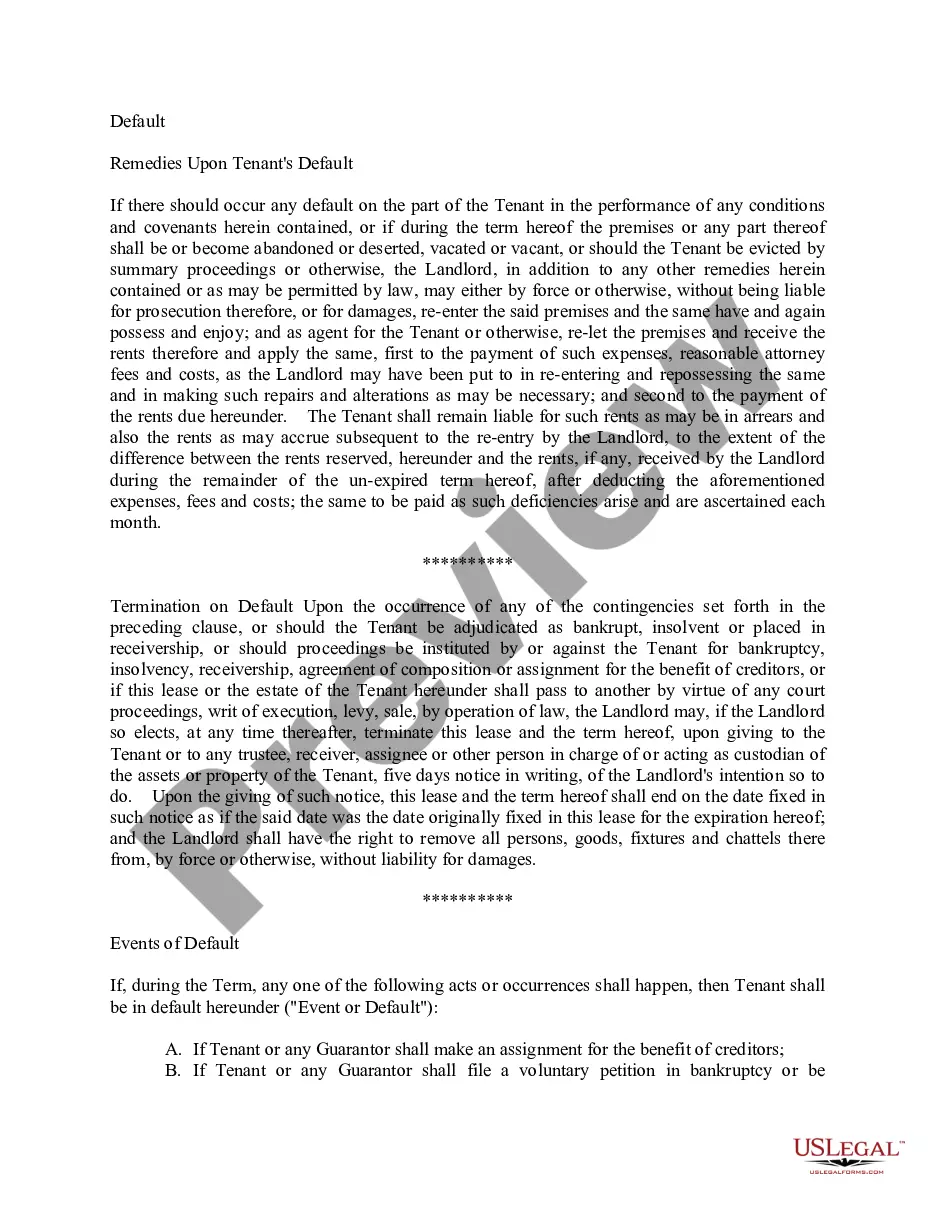
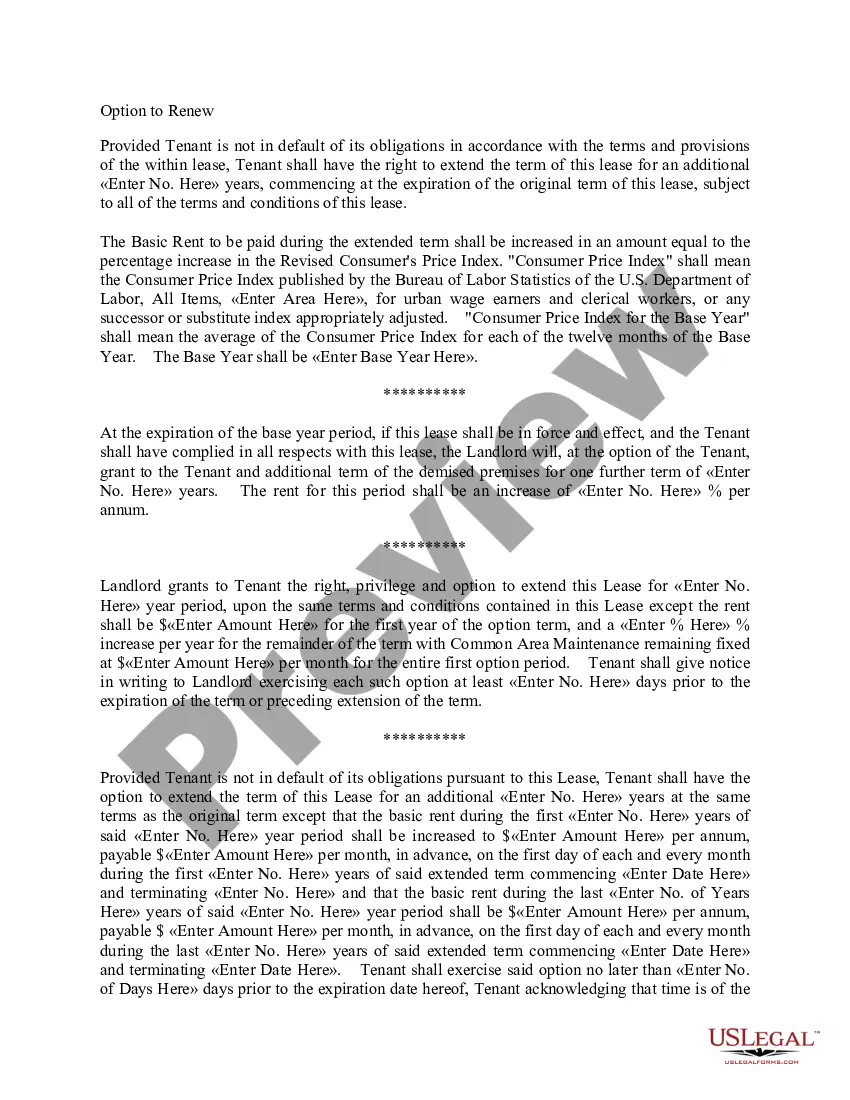
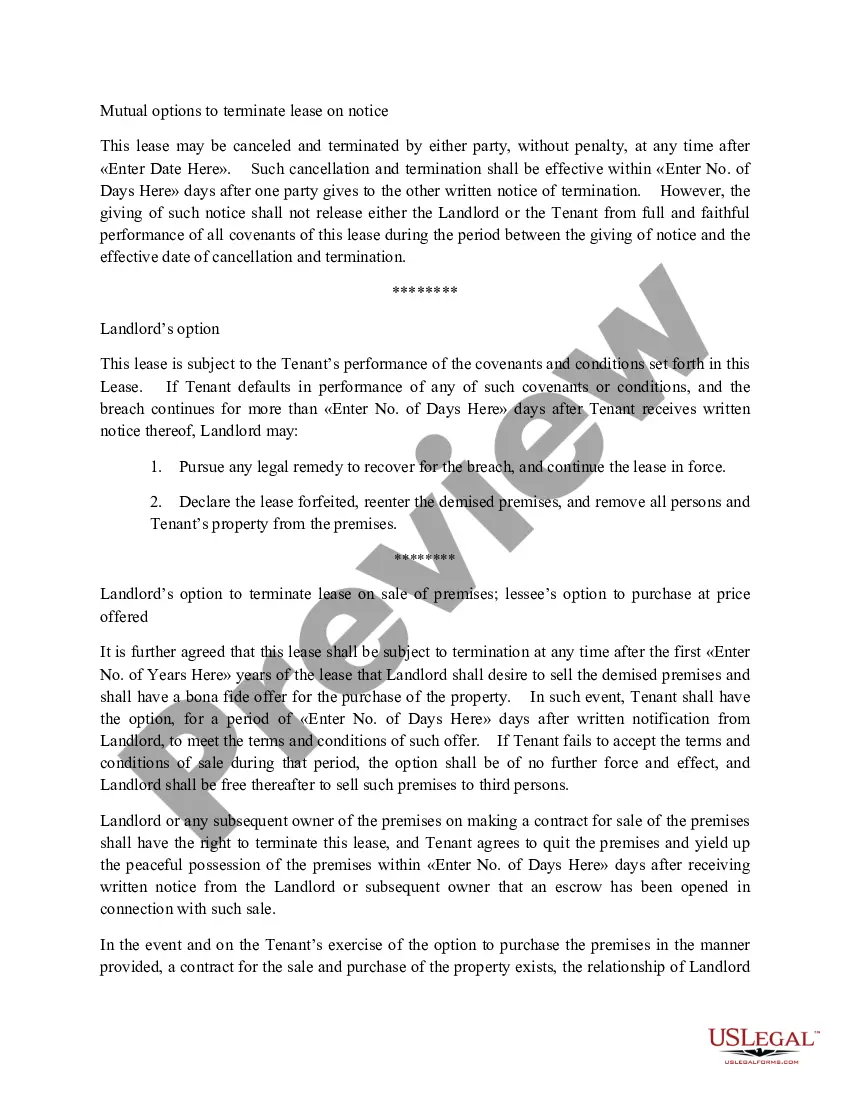
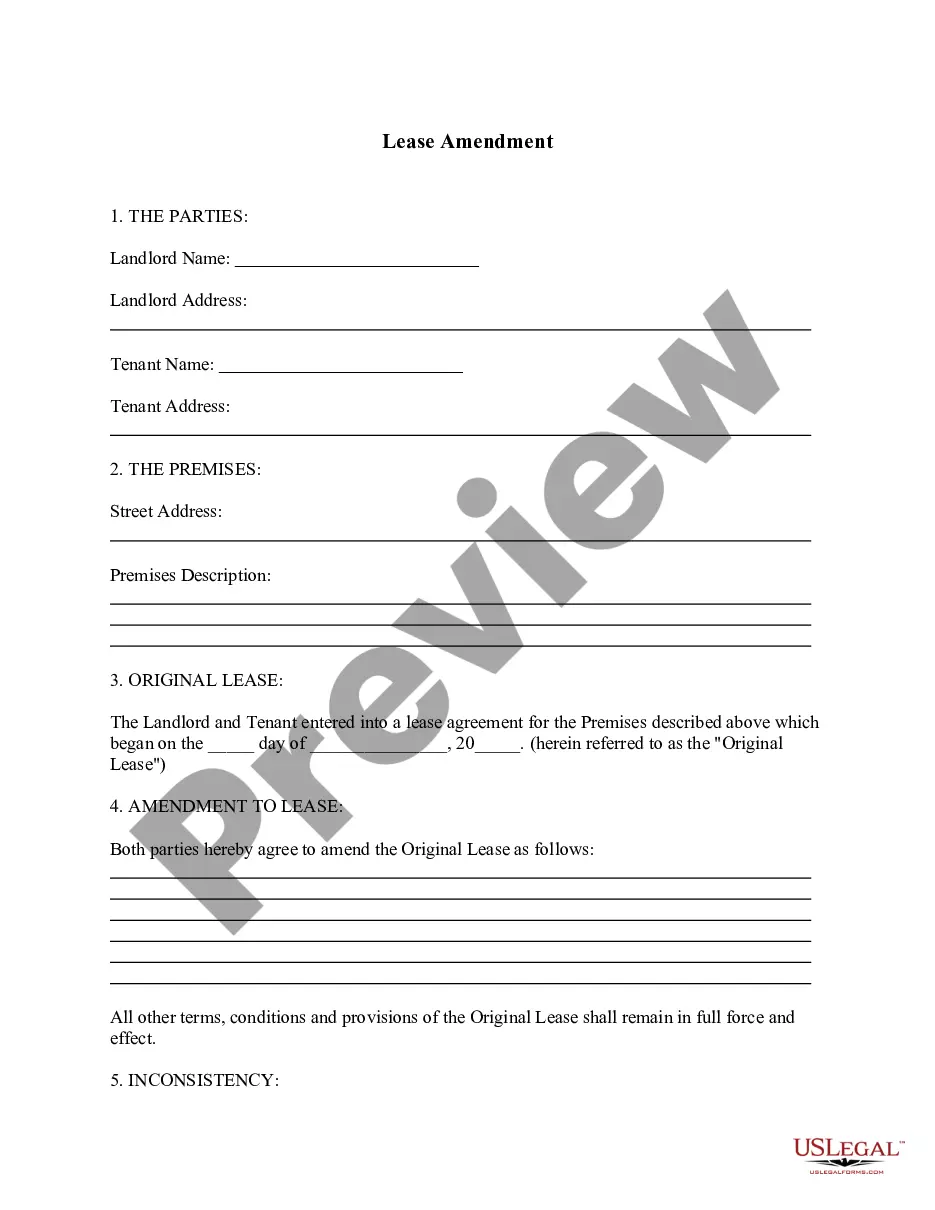
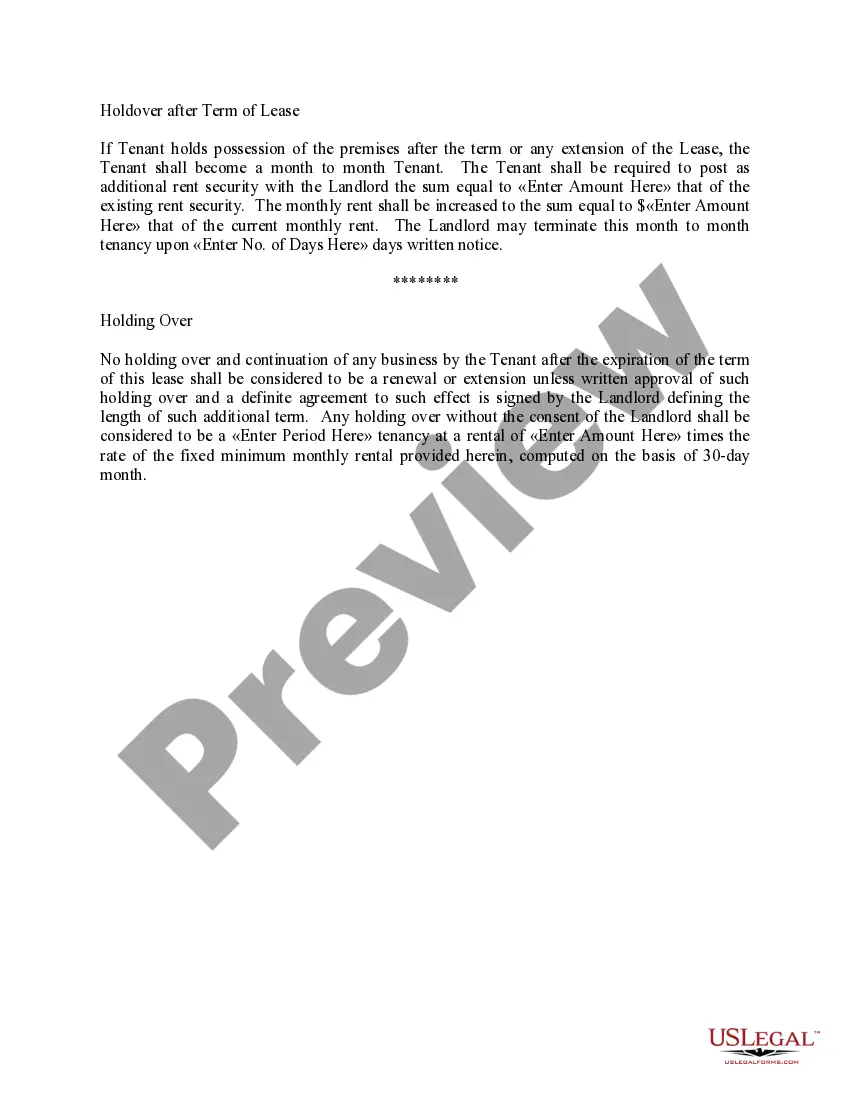
Example of clause regarding Holdover of property by Tenant. A hold-over clause in a commercial lease typically provides that if a tenant remains in possession of the leased premises after the expiration of the stated lease term, the tenant must pay rent to the landlord in an amount substantially in excess of the rental rate at the end of the term – often as high as 150 percent
If you get a notice, don't panic! Read it carefully and reach out to your landlord to understand what they expect from you. Better to sort it out now than face bigger problems later!
The best way to avoid holdover headaches is to communicate! Talk to your landlord before your lease is up. If you plan to move out, let them know your intentions so there are no surprises.
Yes, they can! If your lease is up and there's no agreement to stay longer, the landlord can ask you to leave. Think of it like a friendly nudge to find a new place to call home.
You definitely want to know about it because it could affect your living situation. If you stay past your lease, the landlord might have certain rights, and you might end up paying more. Better safe than sorry!
A holdover clause is basically a rule in your lease that talks about what happens if you stay on the property after your lease ends. It's like saying, 'Hey, if you stick around, here's what to expect.'