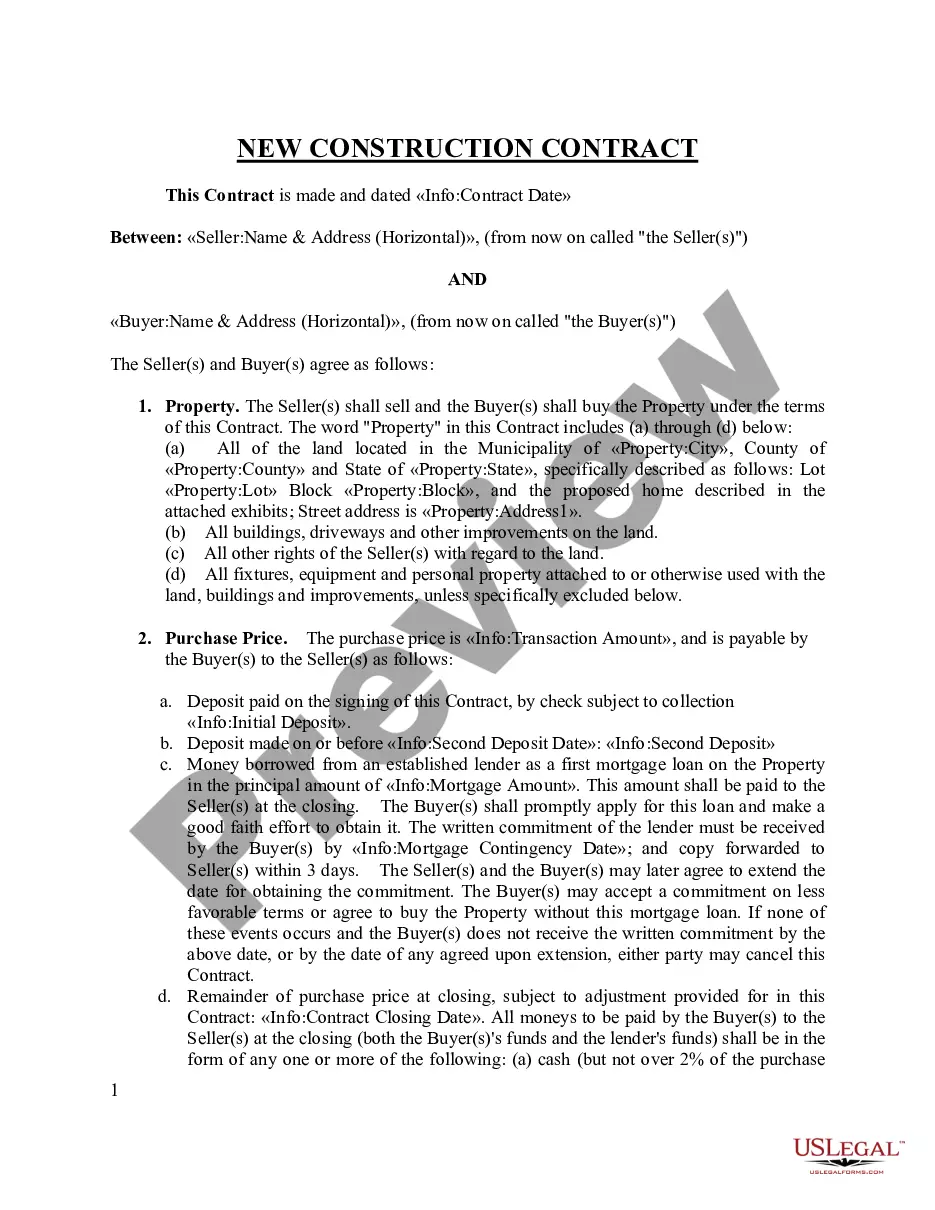
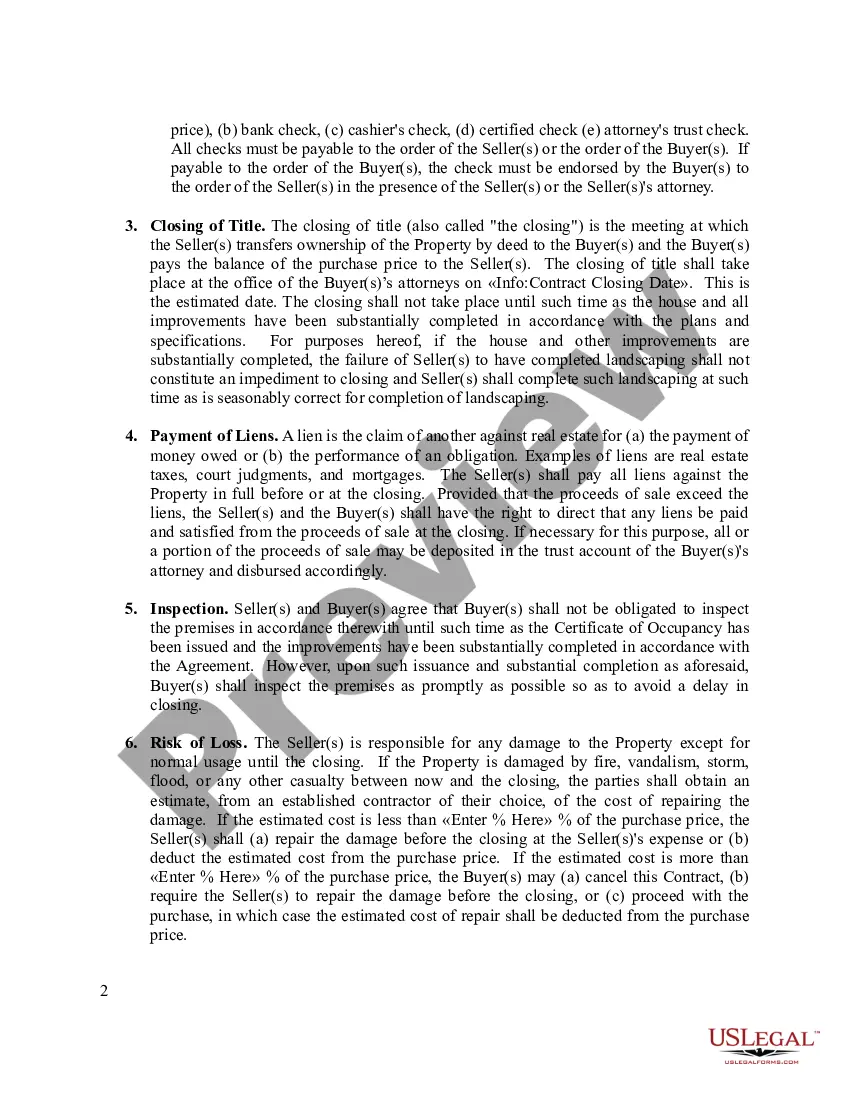
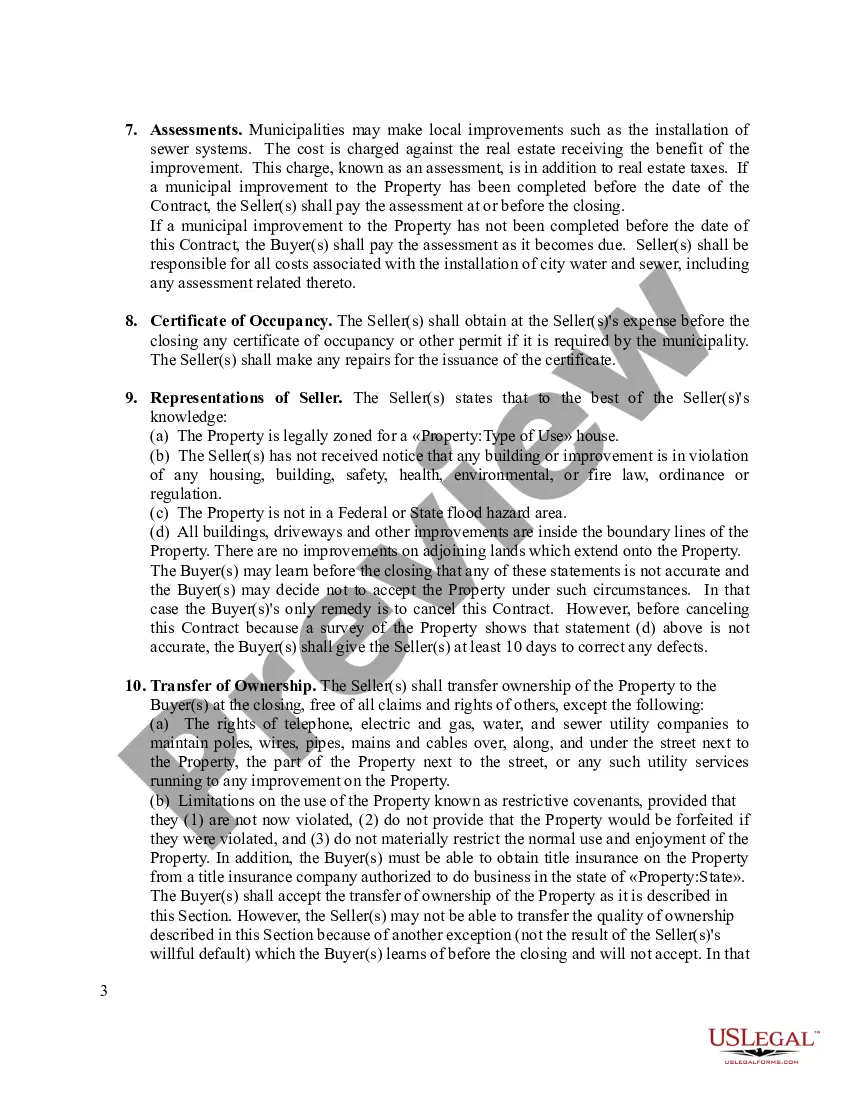
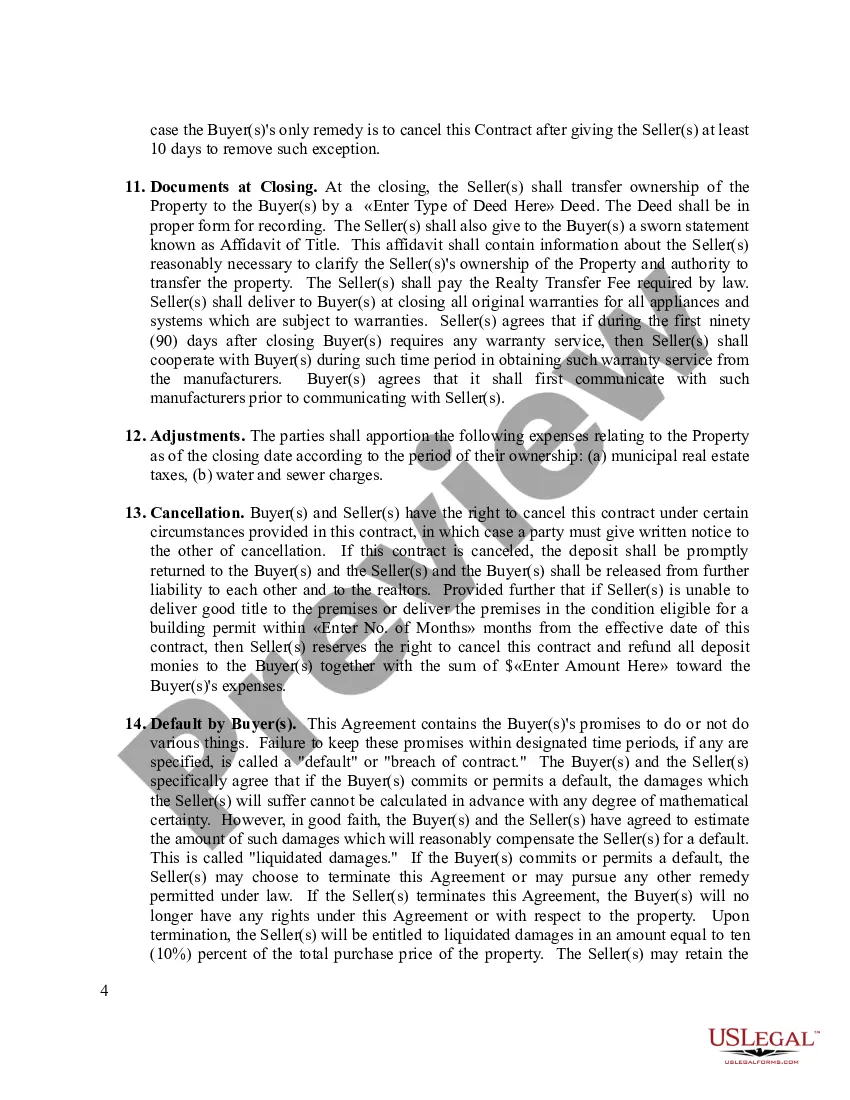
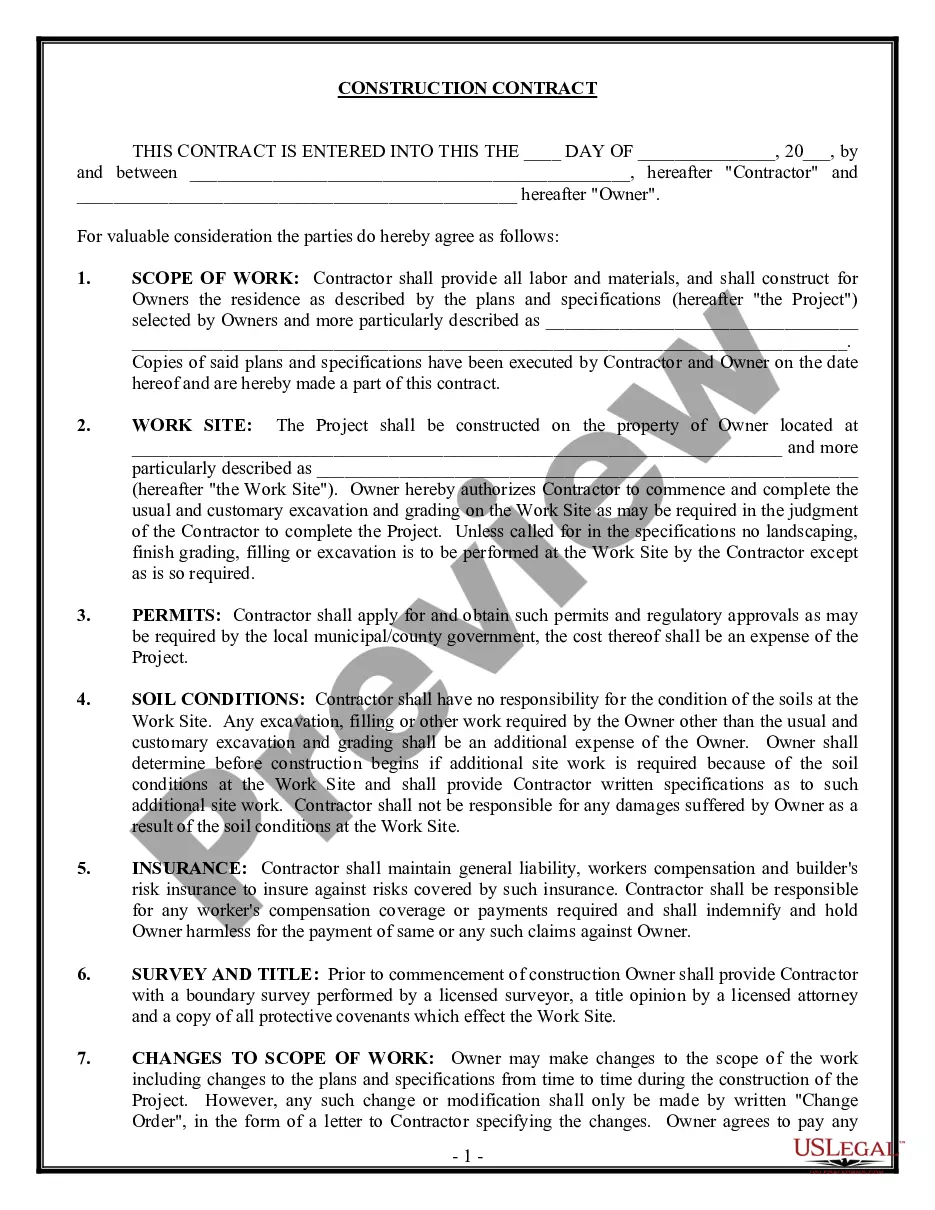
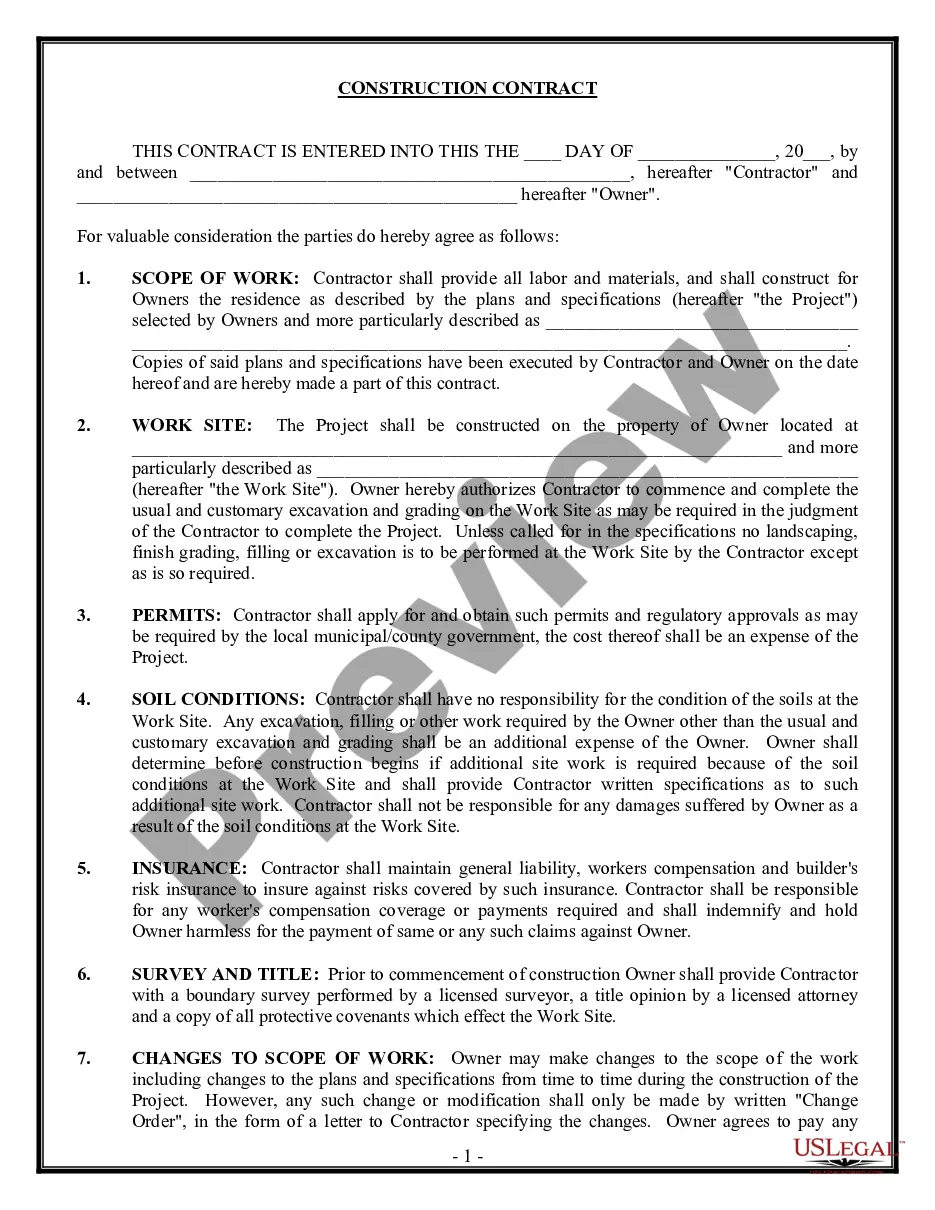
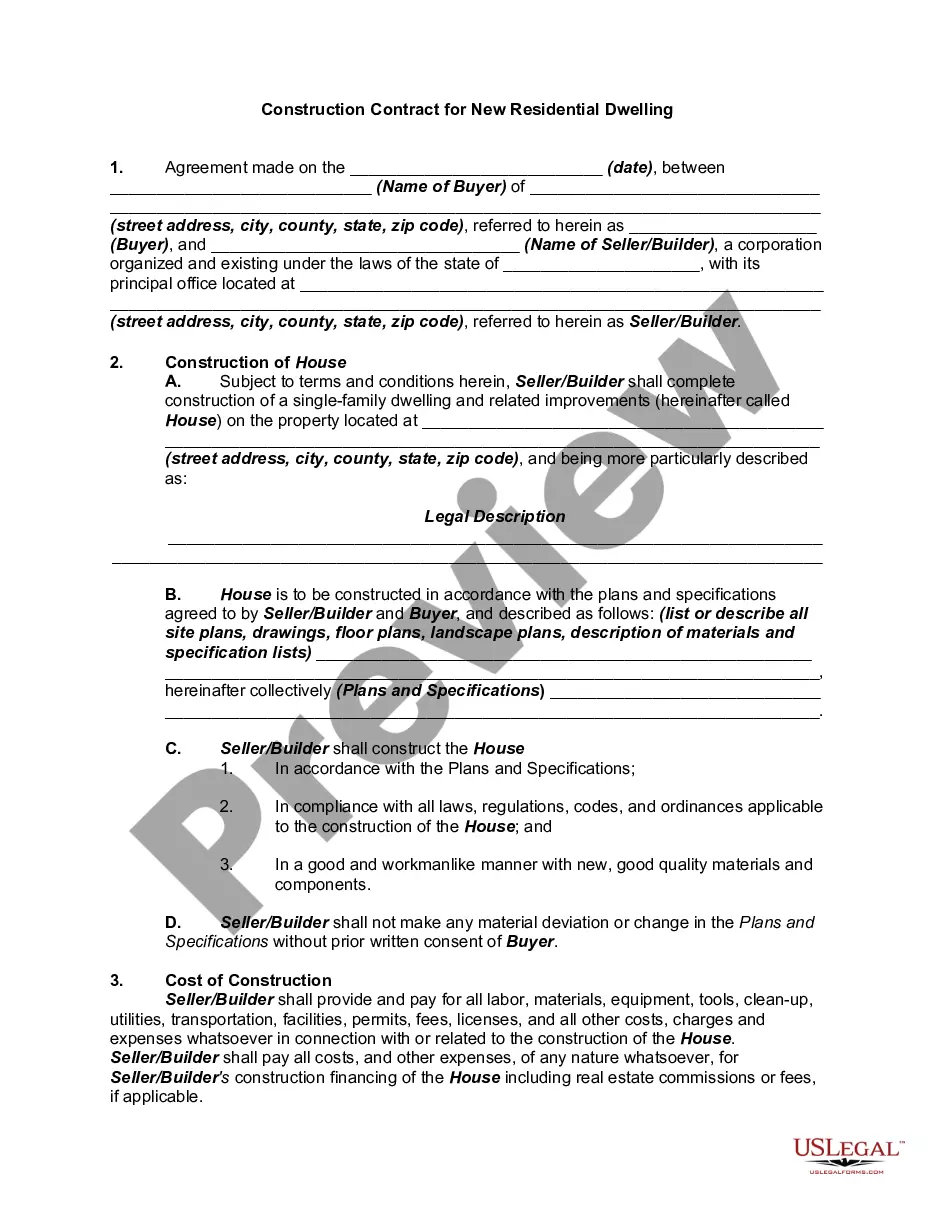
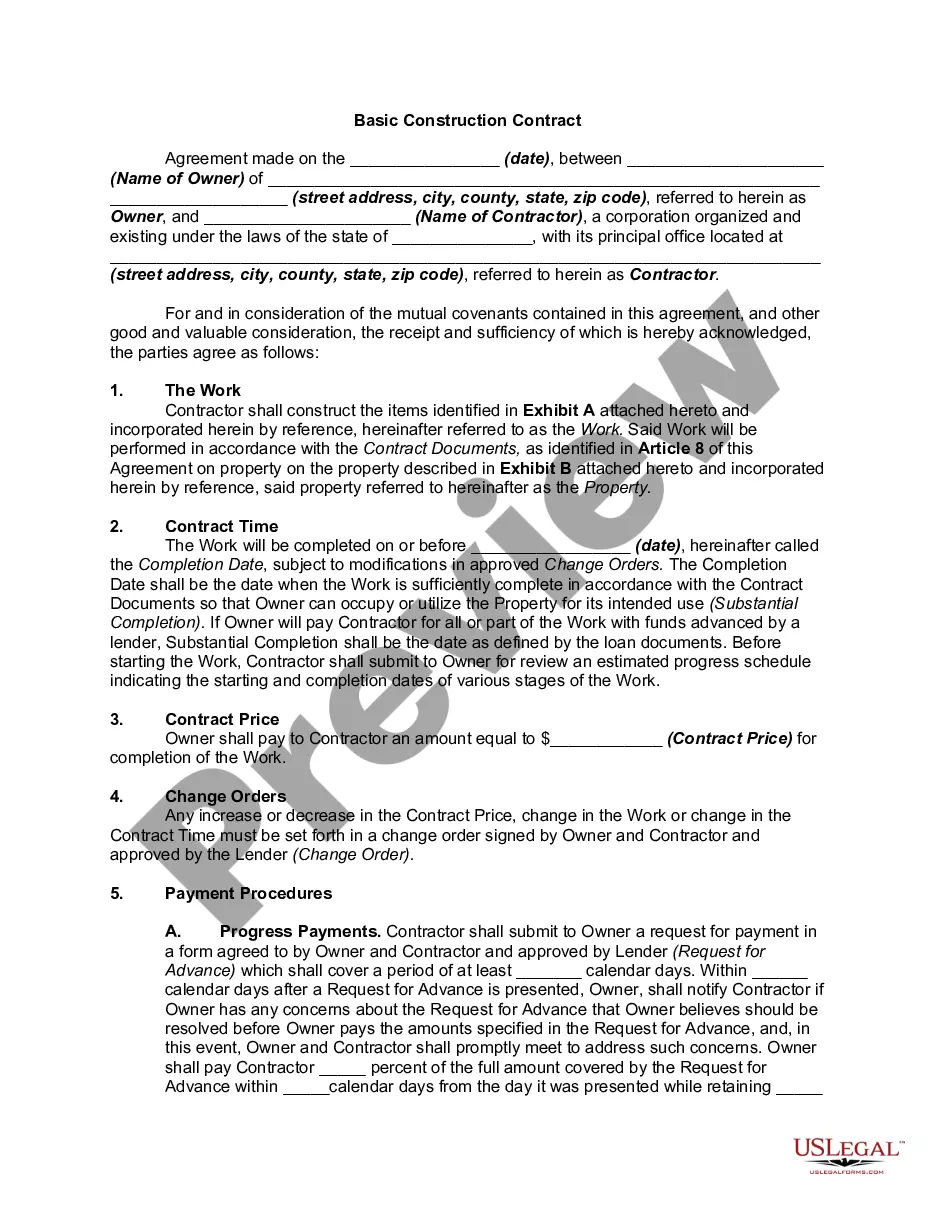
Atlanta Georgia New Construction Contract
Category:
State:
Multi-State
City:
Atlanta
Control #:
US-C-C-101-1
Format:
Word;
Rich Text
Instant download
Description
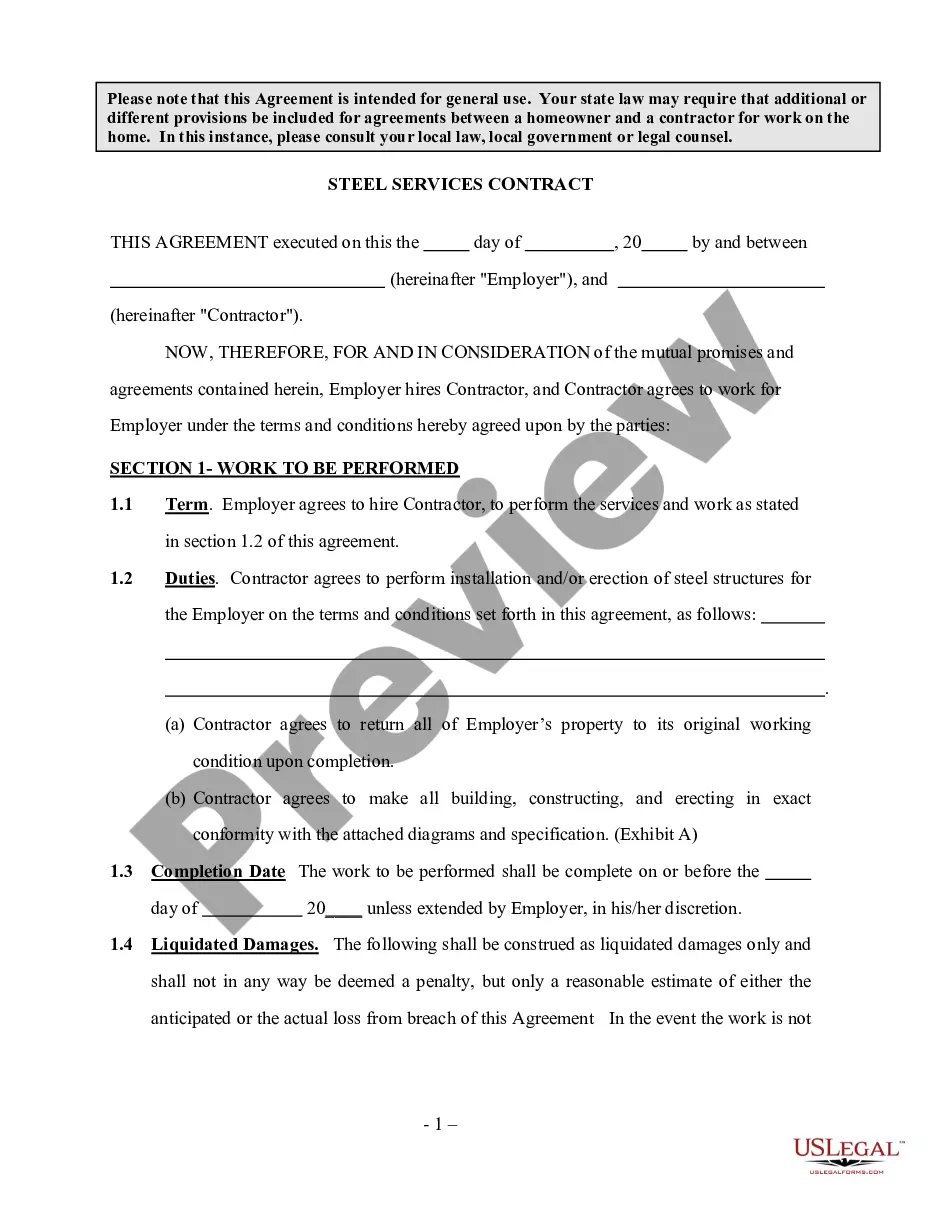
A building and construction contract must fulfill the same requirements as any other type of contract in regard to matters such as offer and acceptance, sufficiency of consideration, certainty, and the like. Such a contract generally provides not only for the construction of the project, but also for many matters that are incidental to the project. Thus, it may provide for the carrying of liability, workers' compensation, and fire insurance policies, designating which party is responsible for obtaining particular insurance. A building and construction contract will typically specify the duties, responsibilities, and liabilities of each of the parties, as well as those of any employed architect or engineer. The amount and method of compensation is, of course, an important part of such a contract.
Free preview