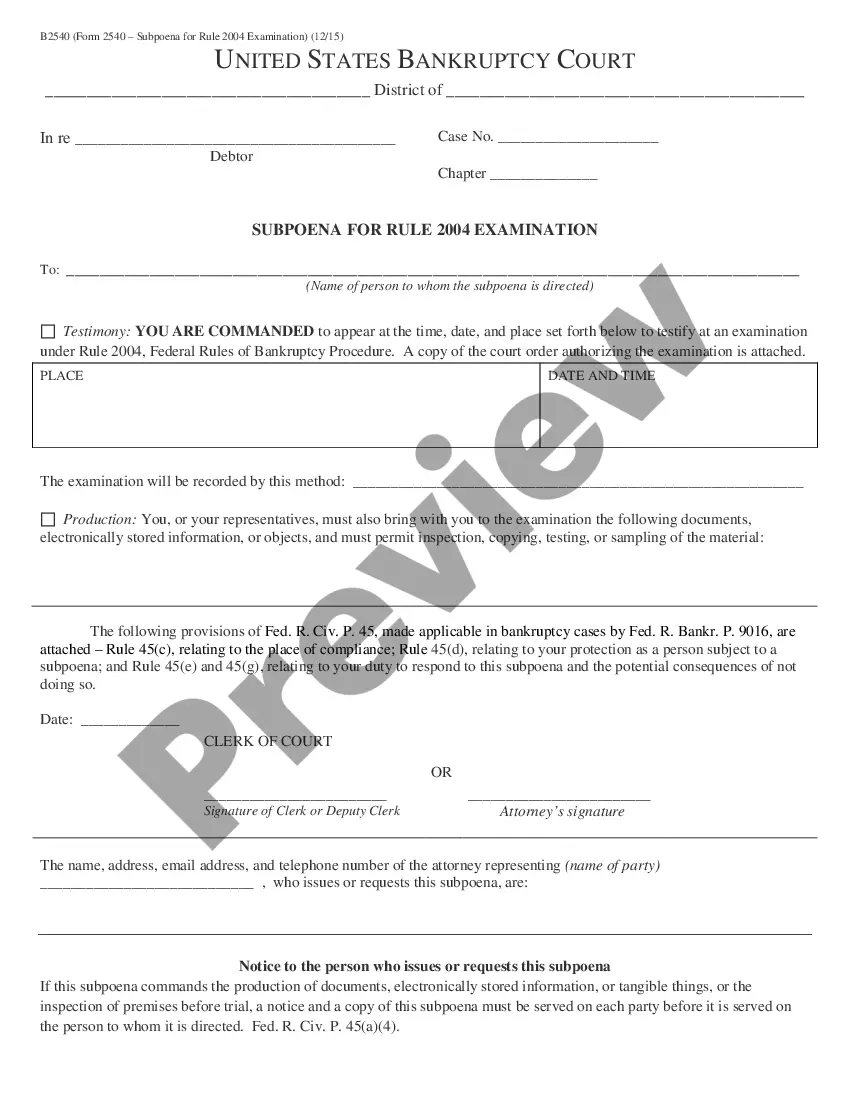
If a witness doesn't appear, the court can take action, which might include sanctions or other legal consequences for not complying with the examination order.
Generally, witnesses must answer questions unless they have a valid legal reason not to, like protecting their own rights or privilege.
Yes, it's a good idea for witnesses to gather any relevant documents and think about the questions they might be asked, so they come prepared to give clear answers.
During the examination, questions can range from financial records to personal transactions. Essentially, anything that sheds light on the financial situations in question.
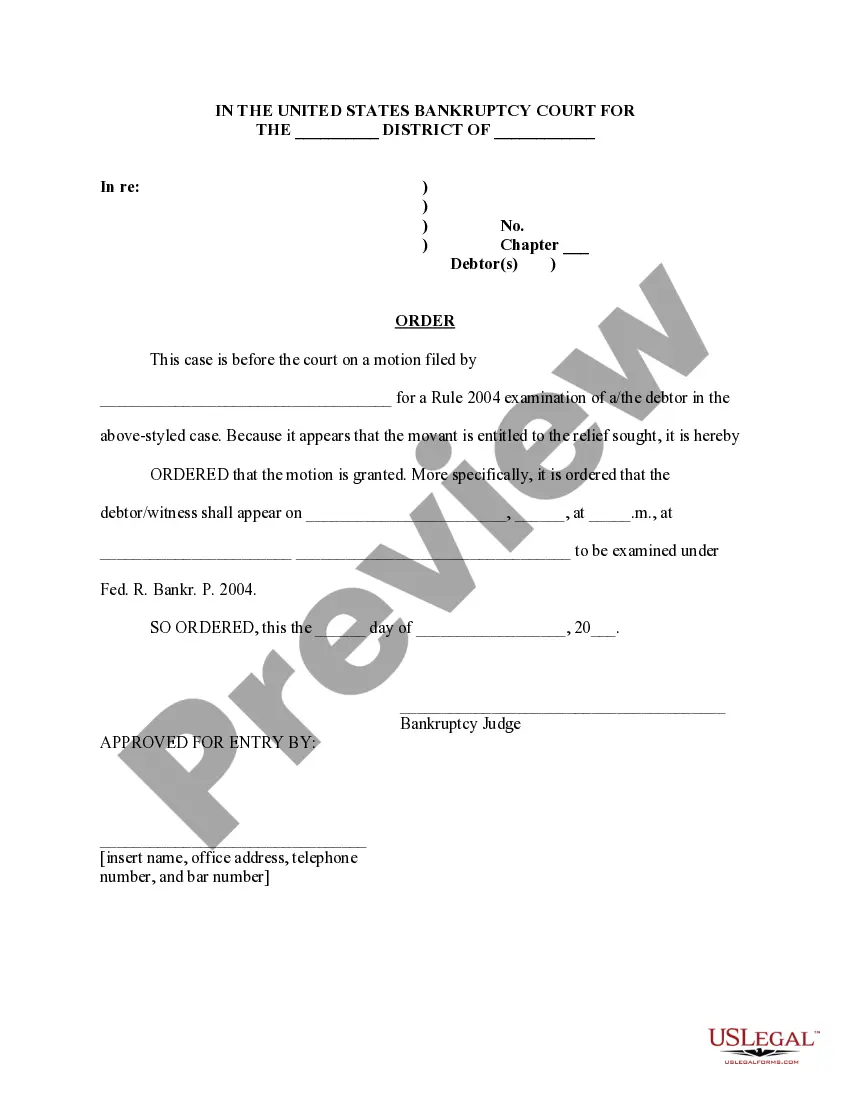
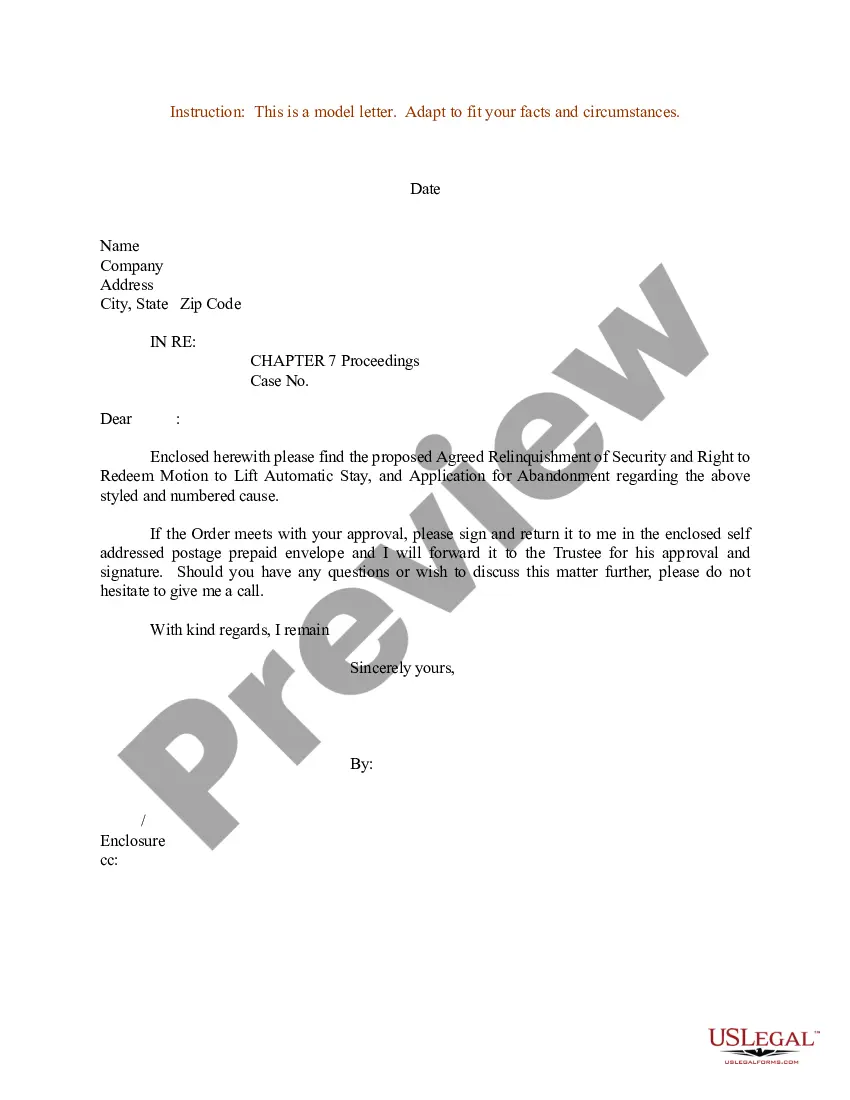
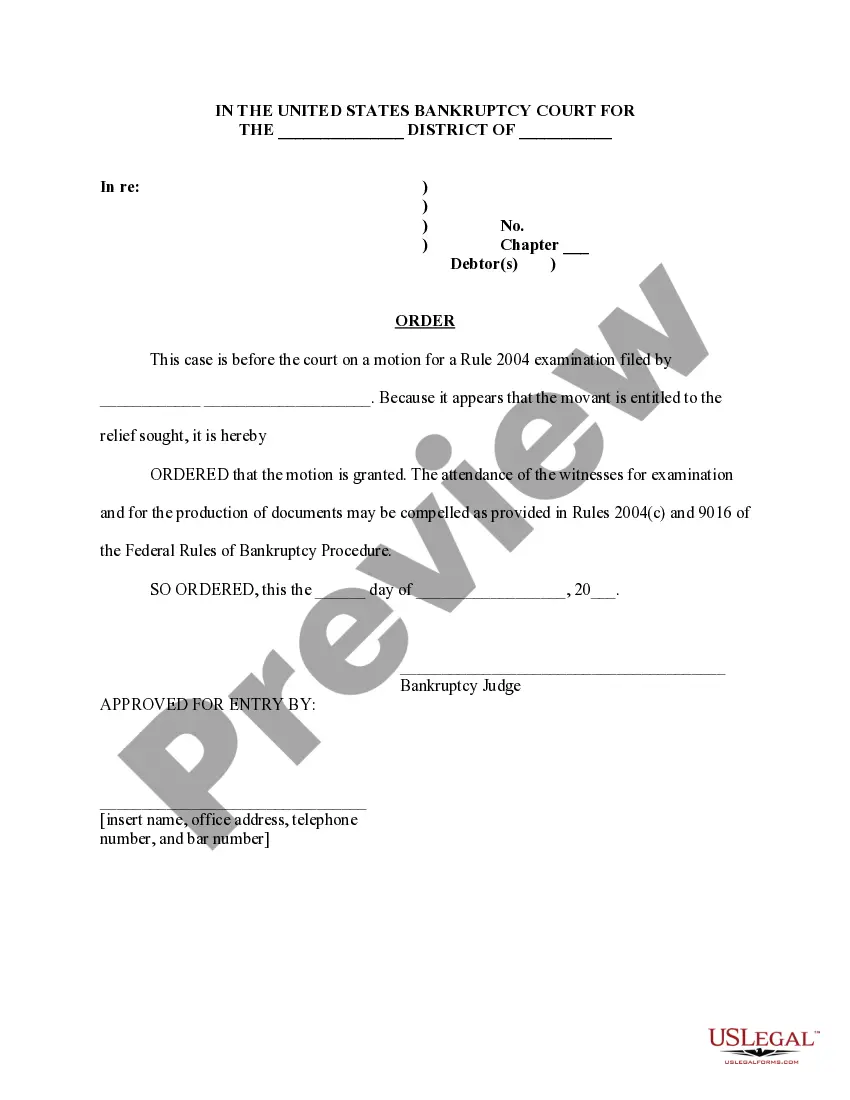
The court issues an order that grants permission for the examination to take place, ensuring everything is done by the book in a legal manner.
A nondebtor witness is someone who is not part of the bankruptcy case but has information relevant to it. It could be a friend, a business partner, or anyone who knows about the financial dealings.
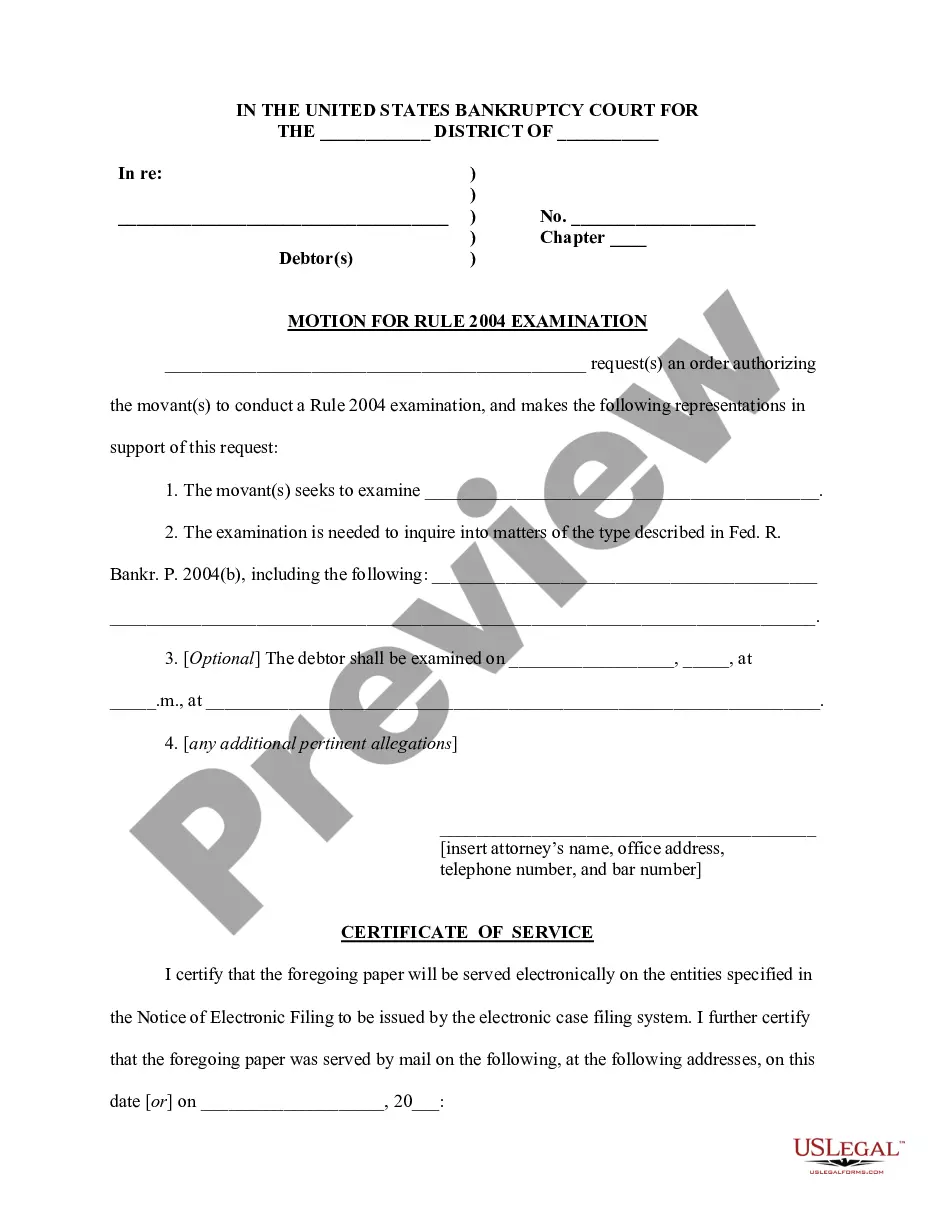
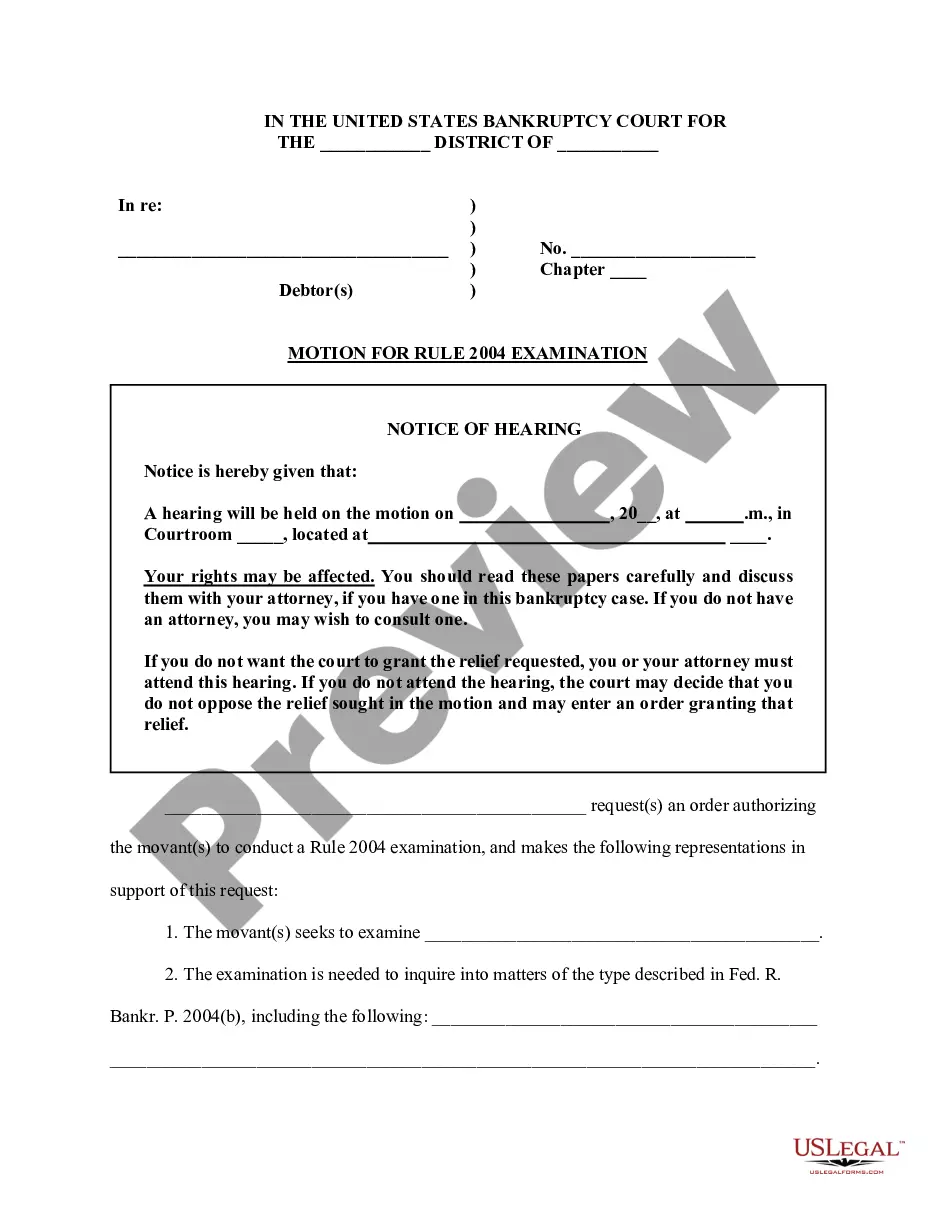
A Rule 2004 examination is a process where someone can ask questions under oath about financial matters. It's like a deep dive into someone's financial situation.