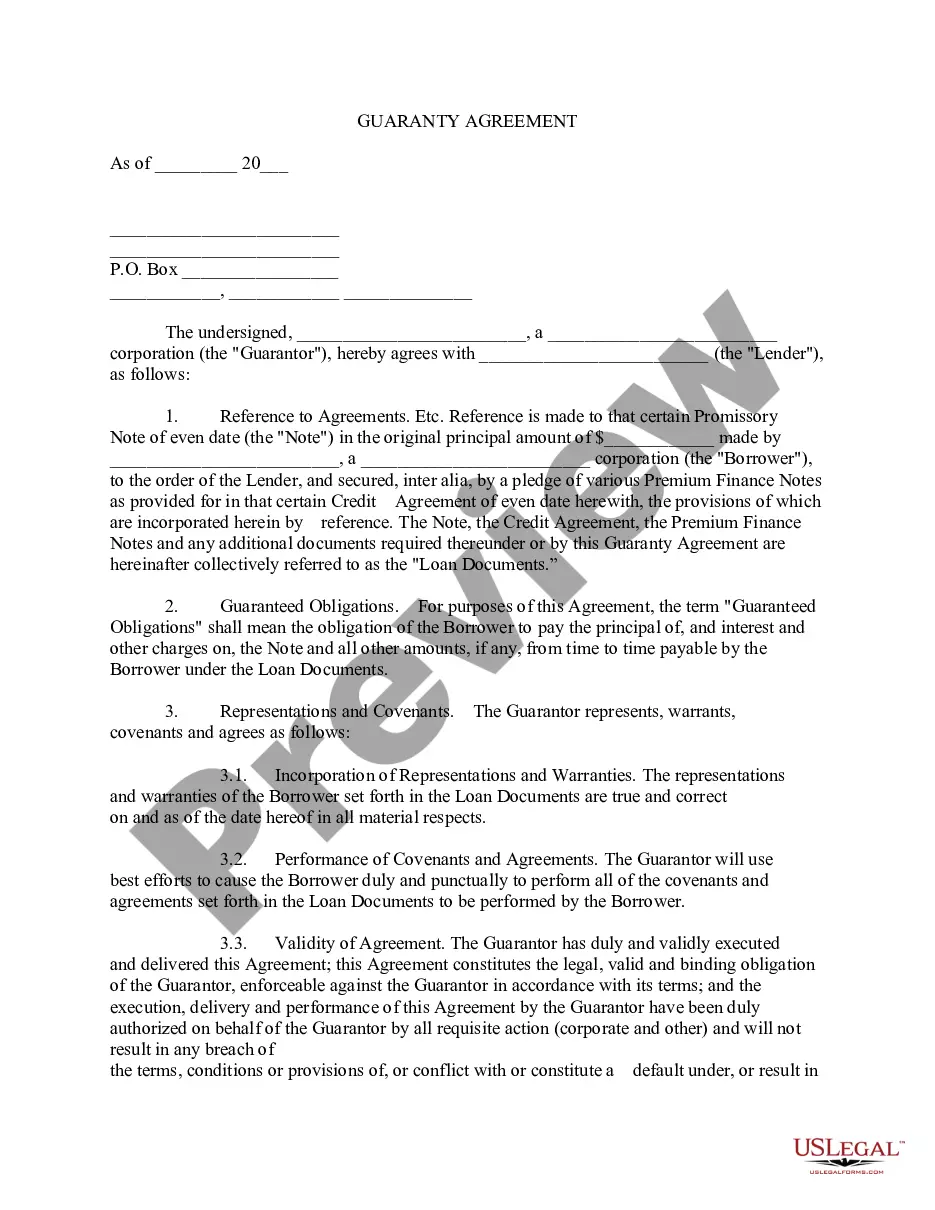
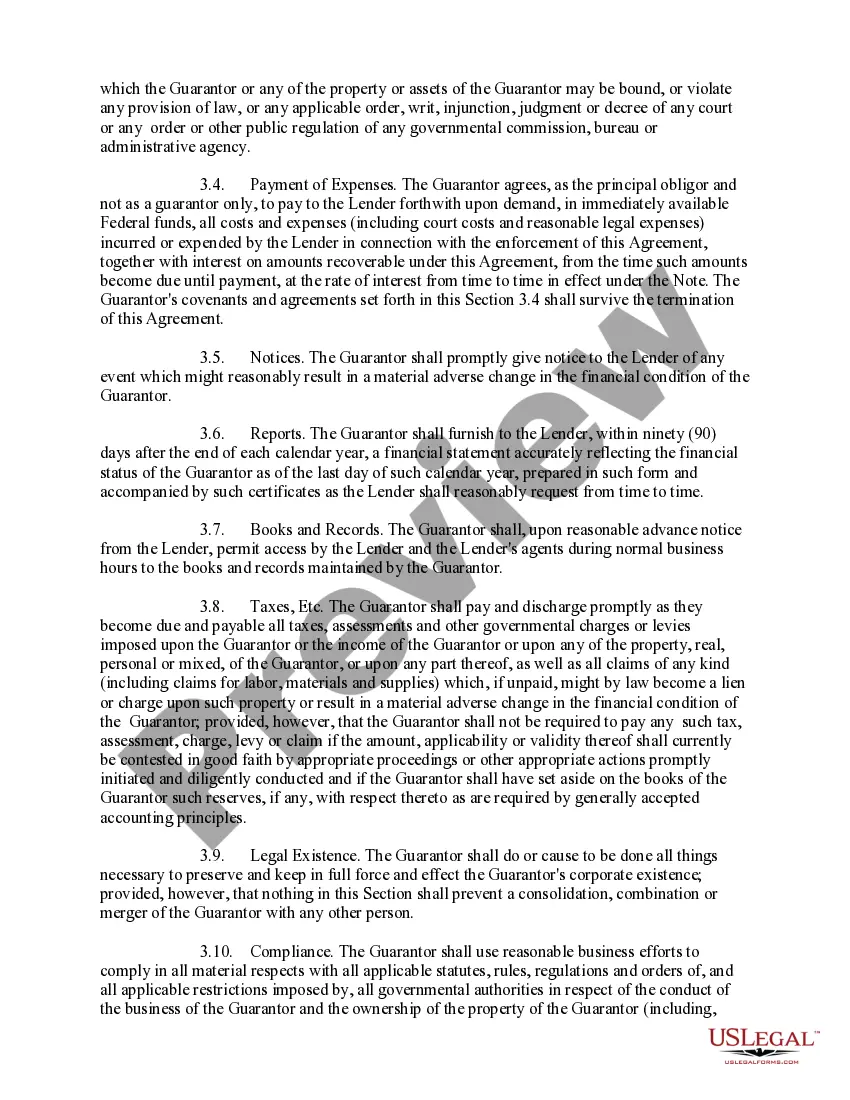
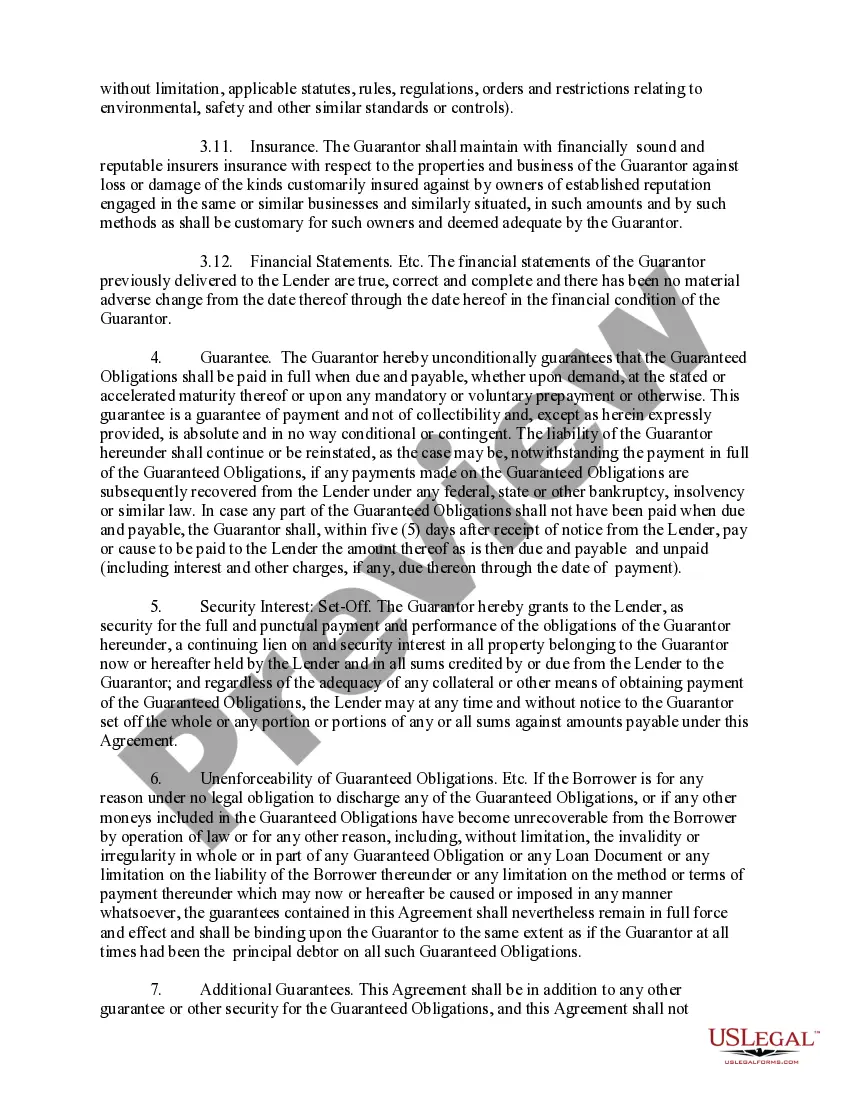
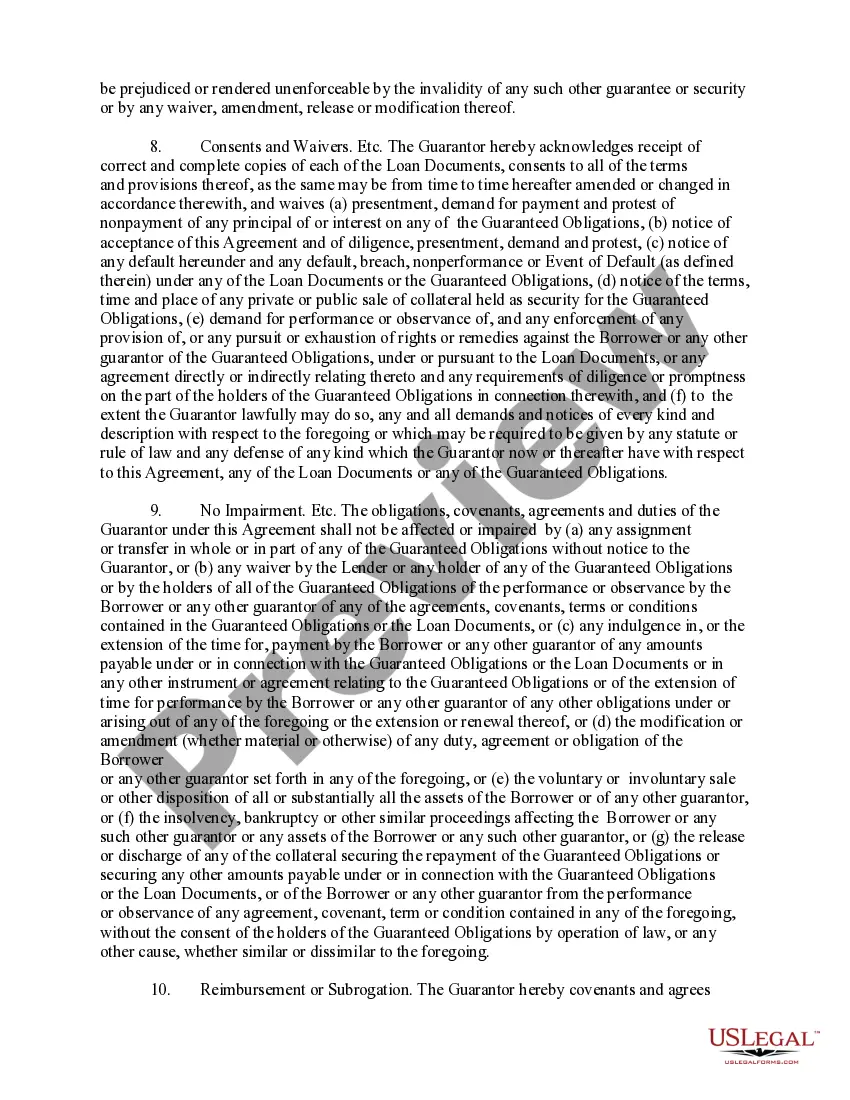
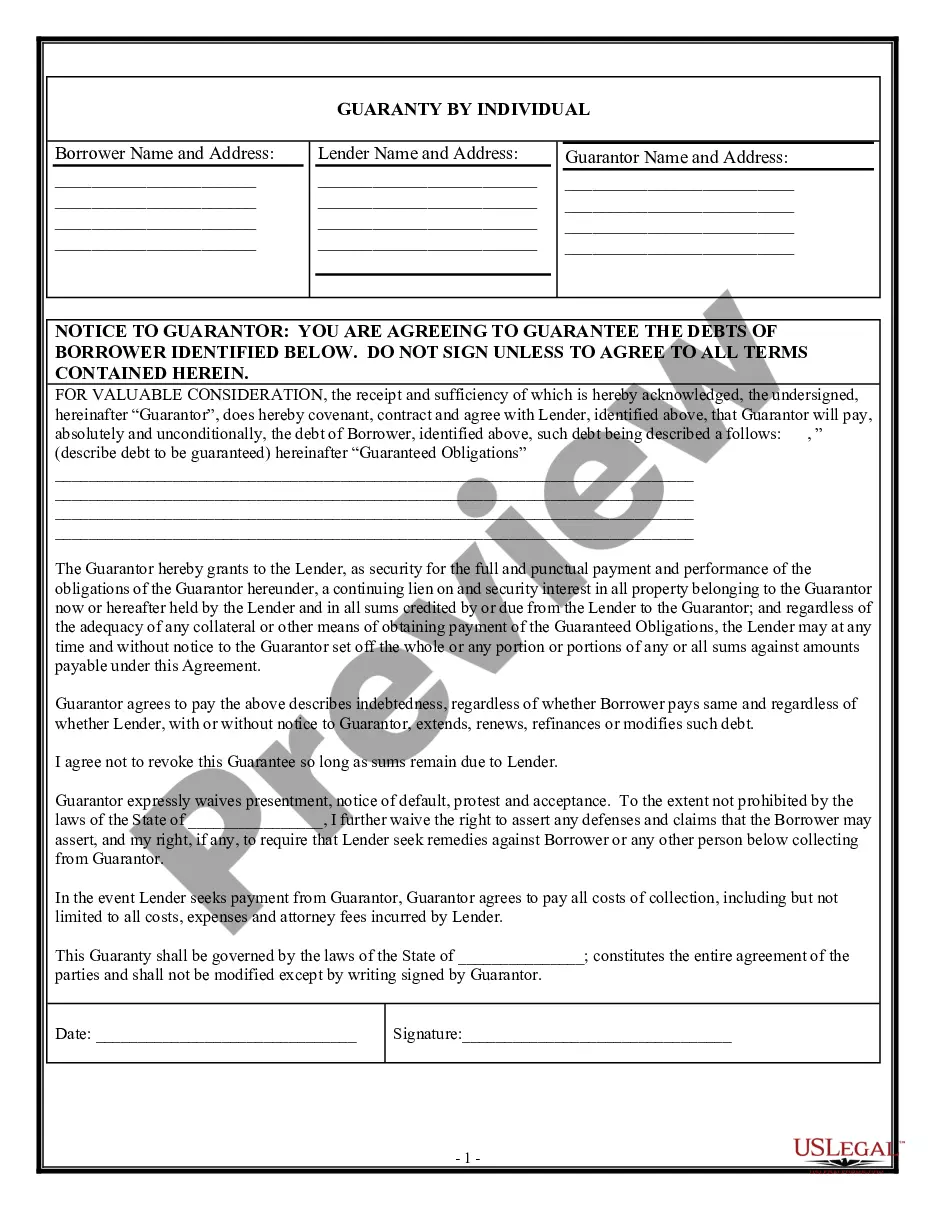
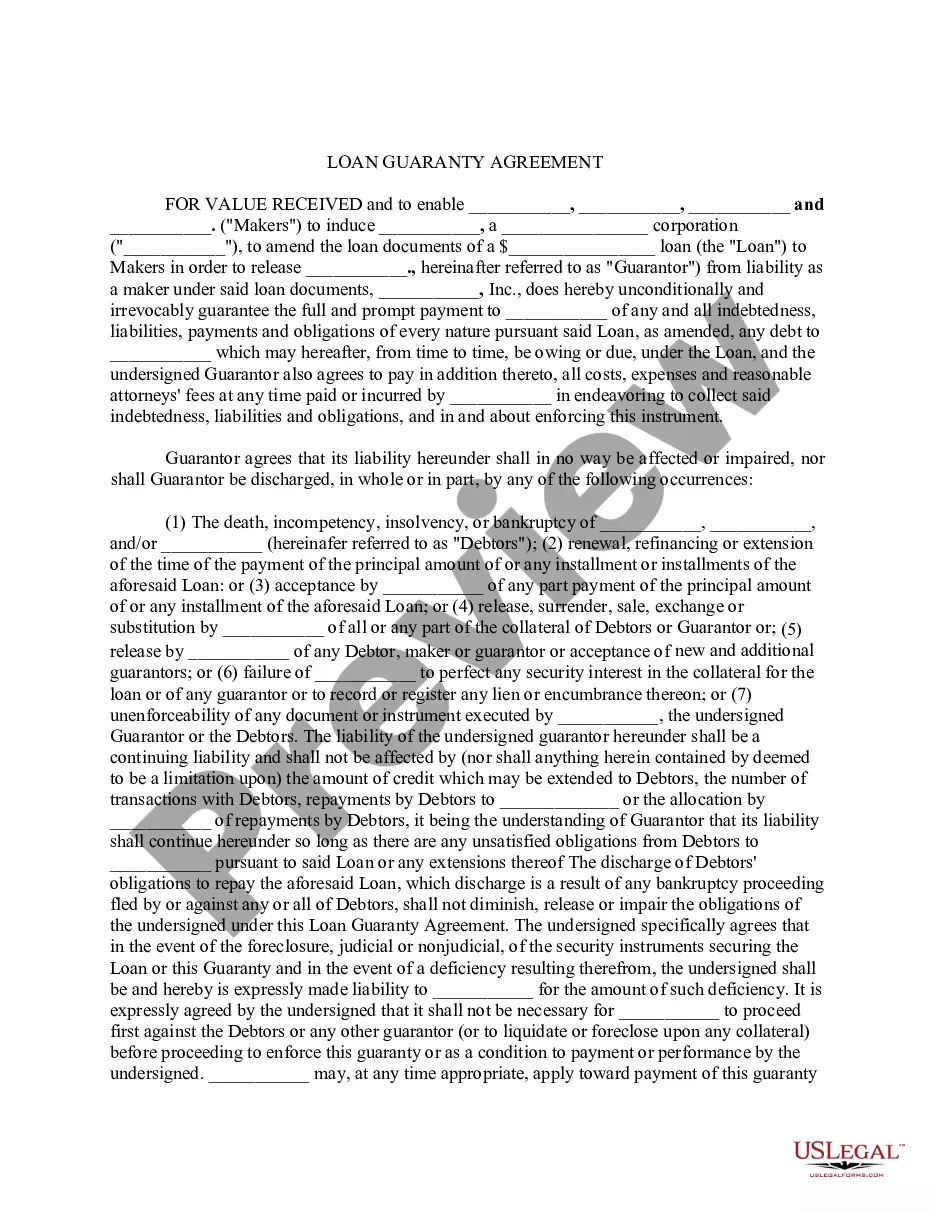
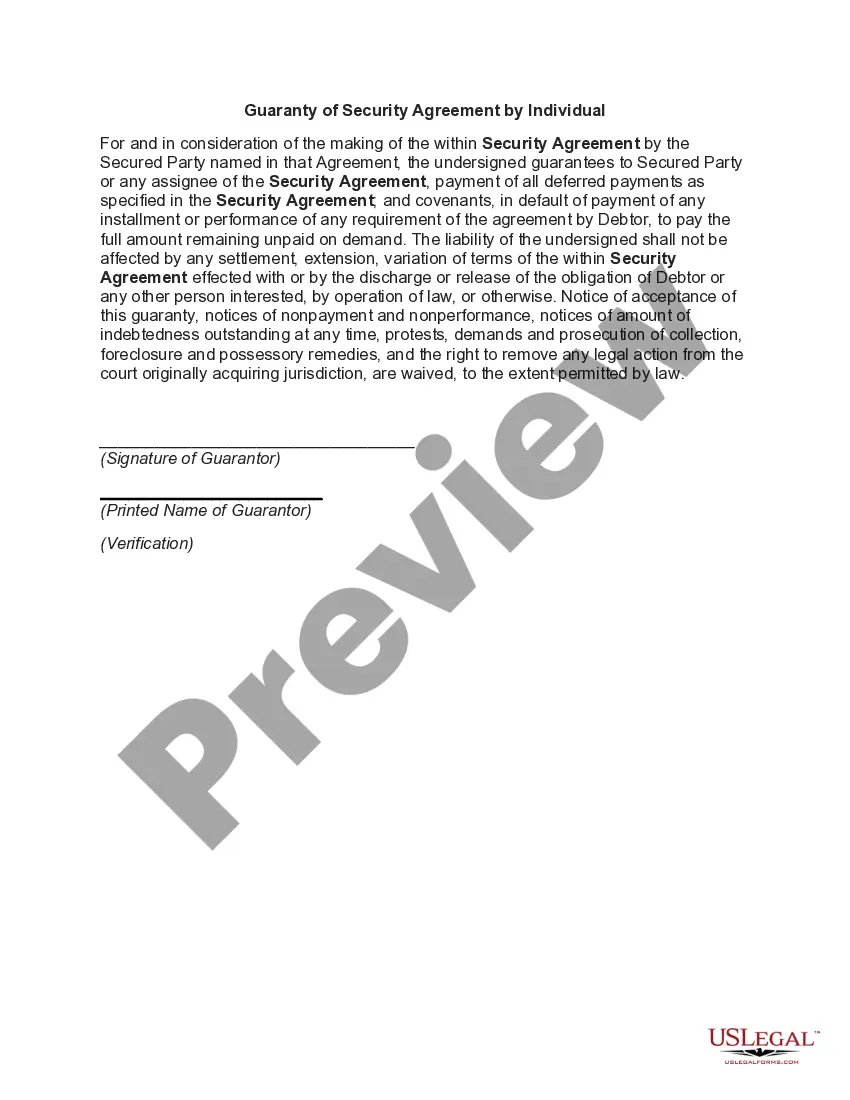
This form states that the guarantor agrees, as the principal obligor and not as a guarantor only, to pay to the lender upon demand, in immediately available federal funds, all costs and expenses, including court costs and reasonable legal expenses.
Being a guarantor can impact your credit if the borrower defaults. Lenders may see it as a risk because you're liable for the debt, so it’s good to keep an eye on how it could affect your own credit score.
Before signing, make sure to fully understand the terms. Check the borrower's financial situation and ensure you're comfortable with the risks. It's a big commitment, so don’t jump in without thinking it through!
In general, once you sign it, it's set in stone. Revoking or changing it usually requires agreement from all parties. So, think long and hard before putting pen to paper!
Absolutely! Once it's signed, it's a legally binding contract. This means all parties involved must stick to their promises, or there could be legal consequences.