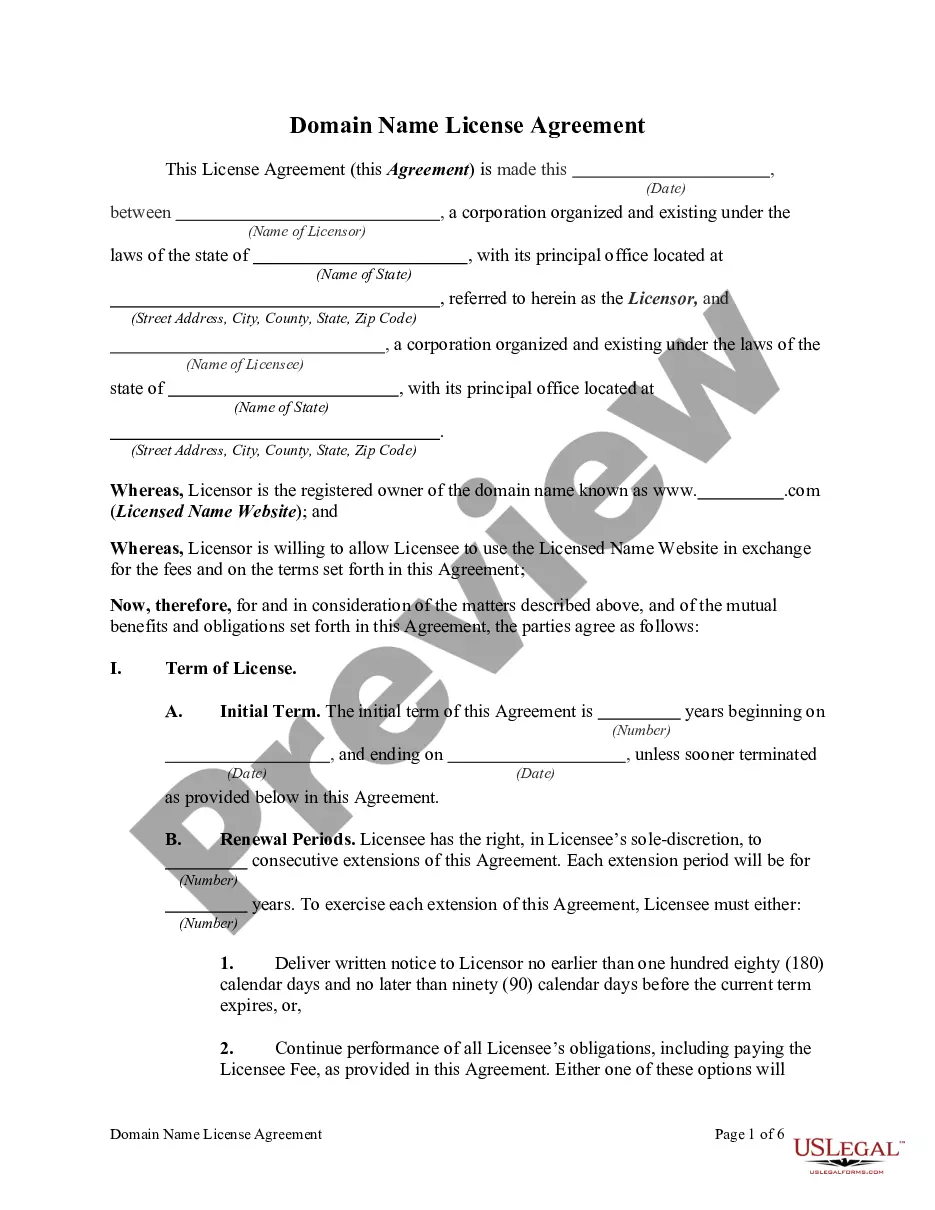
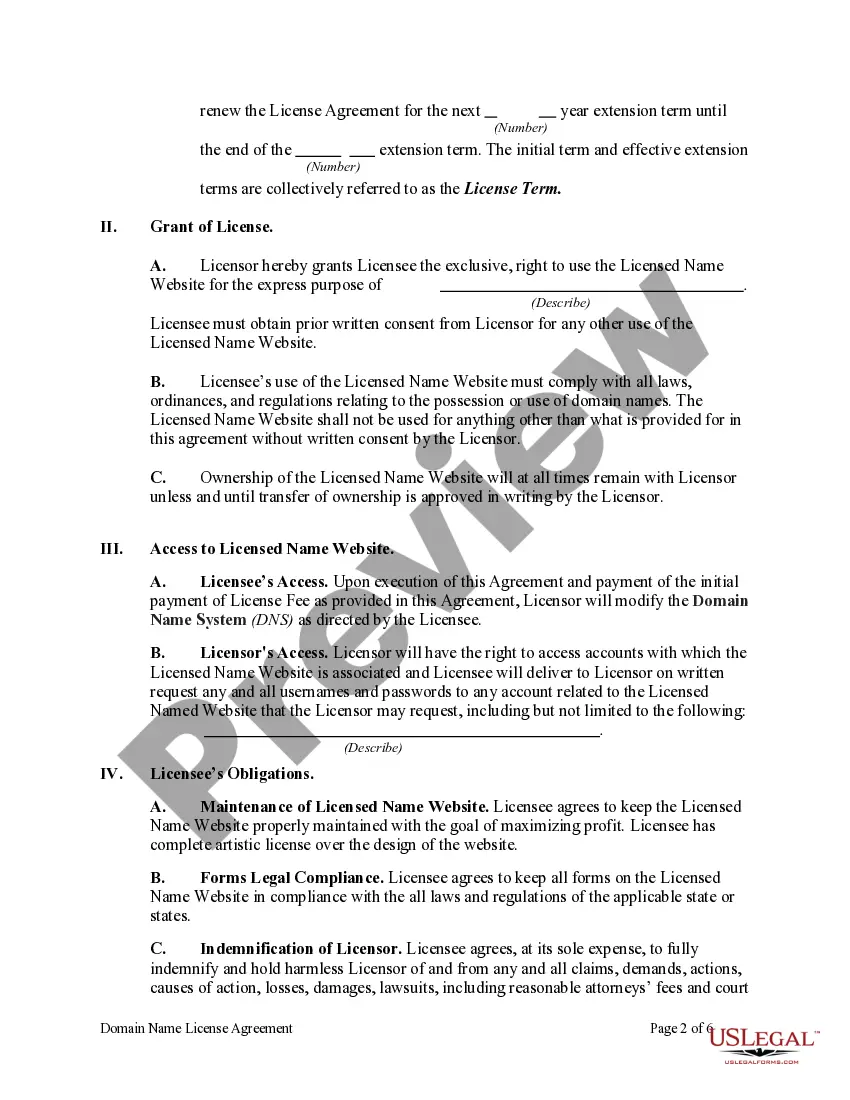
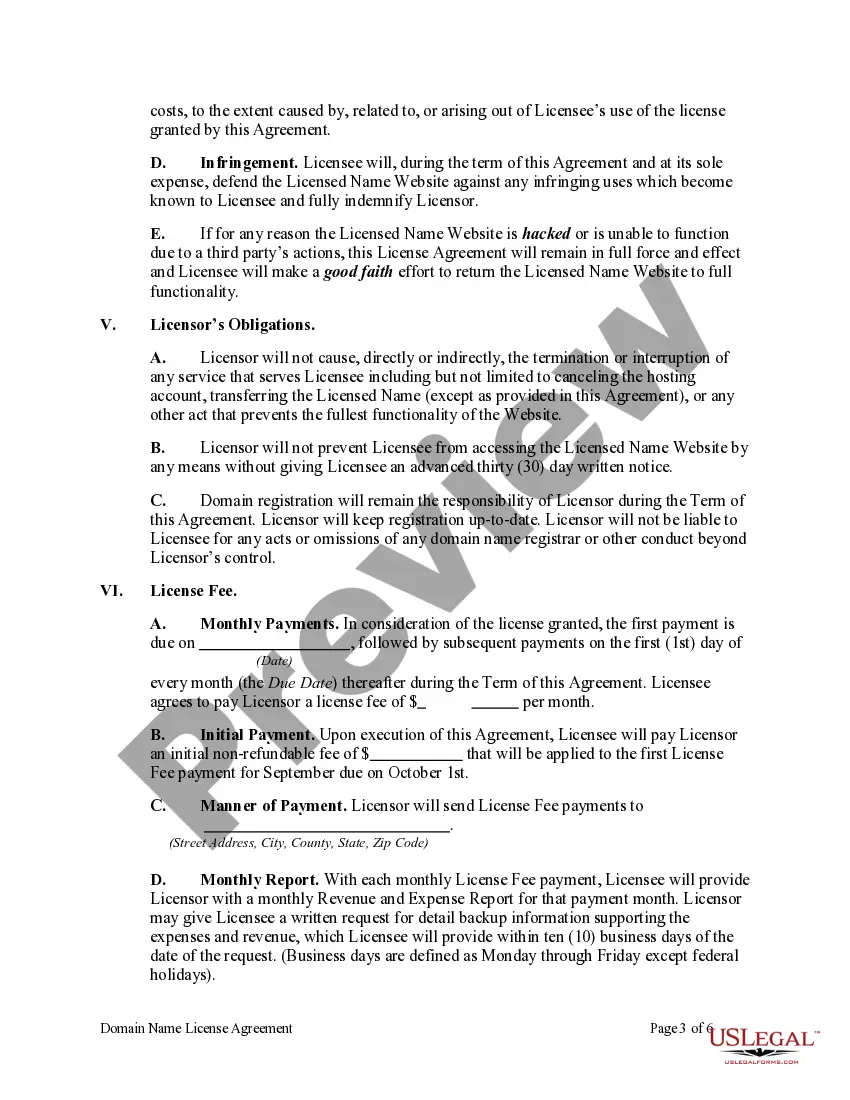
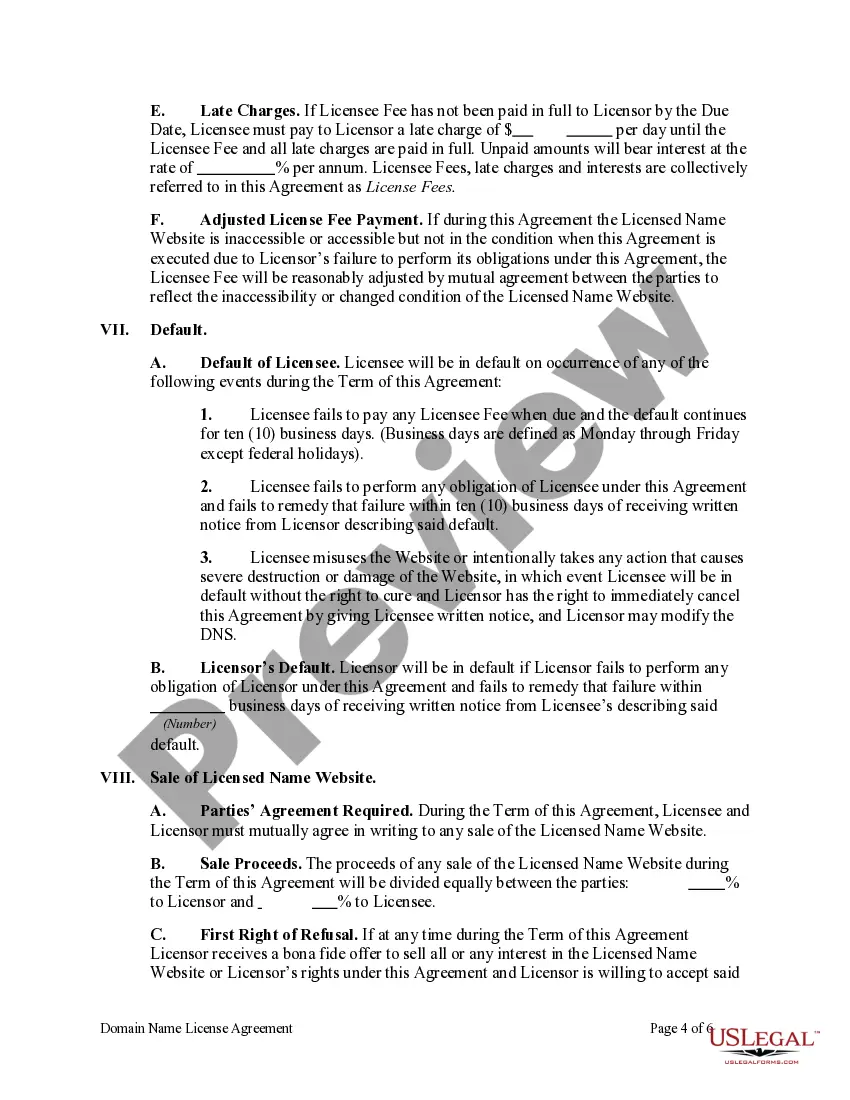
Franklin Ohio Domain Name License Agreement
Description
Get your form ready online
Our built-in tools help you complete, sign, share, and store your documents in one place.
Make edits, fill in missing information, and update formatting in US Legal Forms—just like you would in MS Word.
Download a copy, print it, send it by email, or mail it via USPS—whatever works best for your next step.
Sign and collect signatures with our SignNow integration. Send to multiple recipients, set reminders, and more. Go Premium to unlock E-Sign.
If this form requires notarization, complete it online through a secure video call—no need to meet a notary in person or wait for an appointment.
We protect your documents and personal data by following strict security and privacy standards.

Make edits, fill in missing information, and update formatting in US Legal Forms—just like you would in MS Word.

Download a copy, print it, send it by email, or mail it via USPS—whatever works best for your next step.

Sign and collect signatures with our SignNow integration. Send to multiple recipients, set reminders, and more. Go Premium to unlock E-Sign.

If this form requires notarization, complete it online through a secure video call—no need to meet a notary in person or wait for an appointment.

We protect your documents and personal data by following strict security and privacy standards.
Looking for another form?
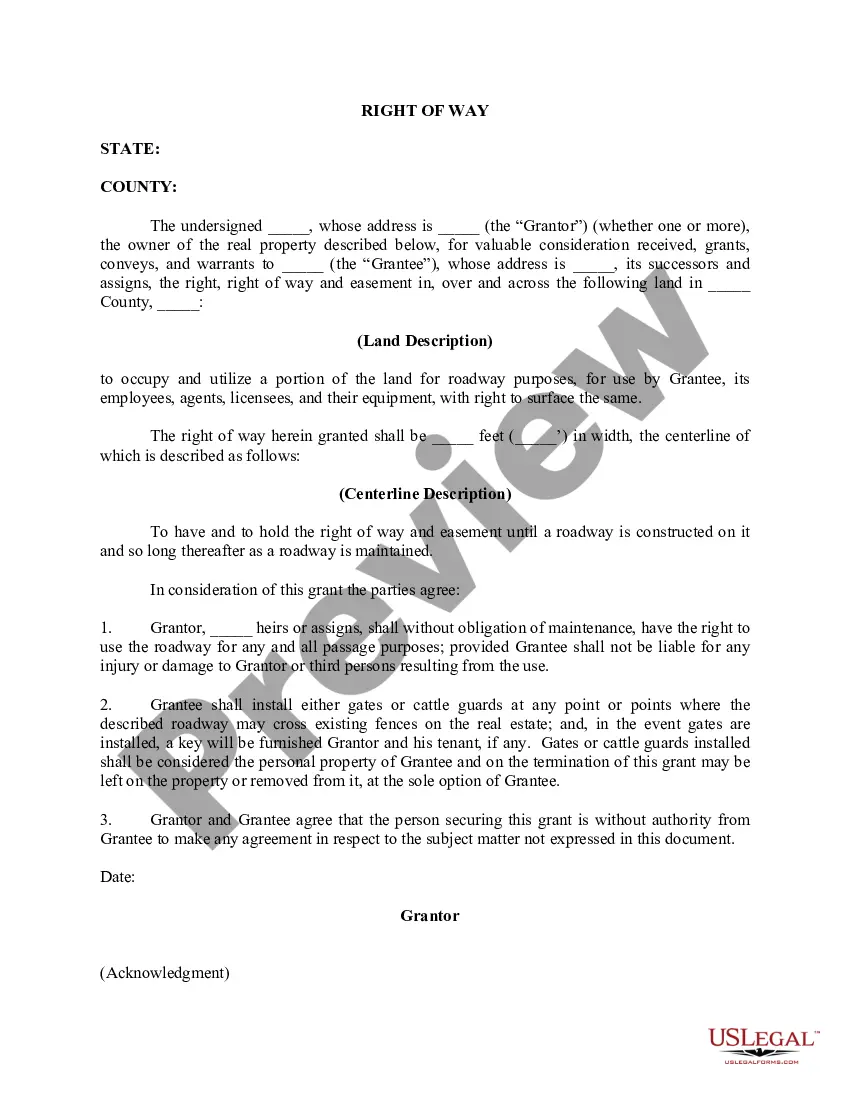
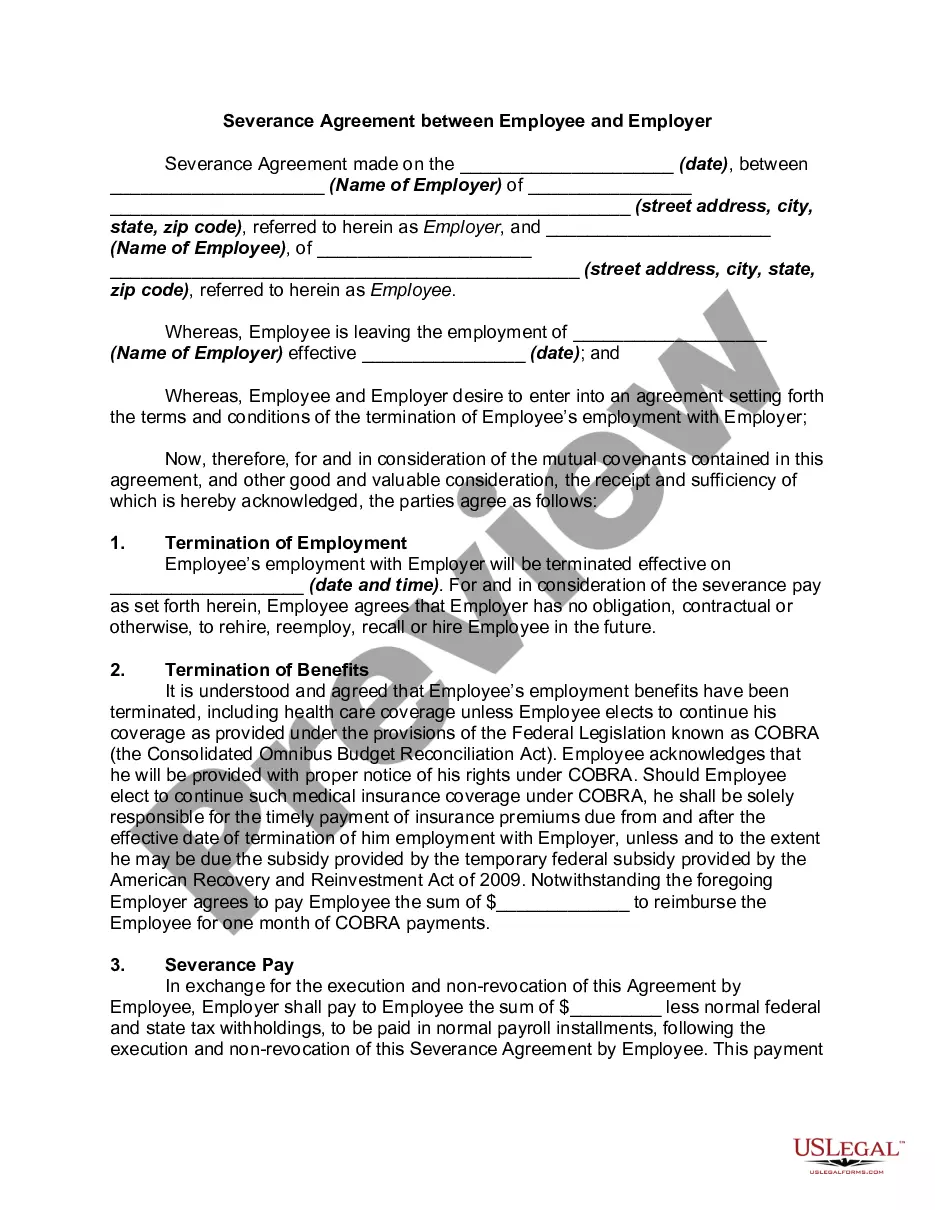
How to fill out Domain Name License Agreement?
Laws and rules in every sector vary across the nation.
If you’re not a legal expert, it’s simple to become confused by various standards when drafting legal documents.
To prevent costly legal support when preparing the Franklin Domain Name License Agreement, you require a validated template suitable for your area.
That’s the easiest and most cost-effective method to obtain up-to-date templates for any legal situations. Find them all in just a few clicks and maintain your documentation in order with the US Legal Forms!
- That’s when utilizing the US Legal Forms platform becomes highly beneficial.
- US Legal Forms is a reliable online repository trusted by millions, featuring over 85,000 state-specific legal documents.
- It’s a fantastic resource for professionals and individuals seeking DIY templates for various personal and business situations.
- All the forms can be reused multiple times: once you acquire a sample, it remains accessible in your profile for future reference.
- Therefore, if you have an account with an active subscription, you can simply Log In and re-download the Franklin Domain Name License Agreement from the My documents section.
- For first-time users, a few additional steps are needed to secure the Franklin Domain Name License Agreement.
- Review the page details to confirm you’ve found the right sample.
- Use the Preview feature or check the form description if it’s available.
Form popularity
FAQ
A license agreement is a business contract between two parties. The licensor (the seller of the license) owns the asset being licensed and the licensee (the buyer) pays for the right to use the license. The licensee pays the owner in exchange for the right to sell the product or use the technology.
Most licensing agreements will be valid only for a certain length of time. The agreement may have an option to renew the contract or have it modified at that time....Scope of the Agreement Exclusivity. Territory Rights. Guarantees of Sales.
The most commonly used licensing agreements will include trademarks, technology, and trade secrets. Many times, these agreements will include more than one form of intellectual property. Many agreements have some similarities, but there are some significant differences as well.
The steps for making a license agreement are as follows: Download a template for a licensing agreement. Choose your role as the licensor or licensee. Define the license(s) in the agreement. Decide whether the license is exclusive or not. Settle the matter of fees and payment schedule. Add a renewal date and rules.
Anyone can buy a domain name. To do so, you visit a domain name registrar, such as A2, GoDaddy, or Namecheap, key in the domain you want to buy, and pay a fee. You can't buy just any domain, of courseonly one that isn't already registered by another person or business and that bears a valid domain suffix.
Precisely identifying which intellectual property will be the subject of the license is necessary to ensure both parties are on the same page and not exceeding their rights. Scope of the Grant.Exclusivity.Territory.Term.Compensation.Termination.Conclusion.
While it's not possible to permanently buy a domain, there are leases for indefinite lengths. The reason for this lies in how domain registration works. Domains such as .com, . net and .
How to Register a Domain Name Find a domain name registrar. Search for your domain name. Finalize your domain name choice. Choose a domain name suffix, such as .com or . net. Purchase the domain name. Add Domain ID protection.
As a general rule, any well-drafted license agreement should address the following topics: Scope of the grant.Term and renewal.Performance standards and quotas.Payments to the licensor.Quality control, assurance and protection.Insurance and indemnification.Accounting, reports and audits.