Wayne Michigan Artist Licensing Agreement
Description
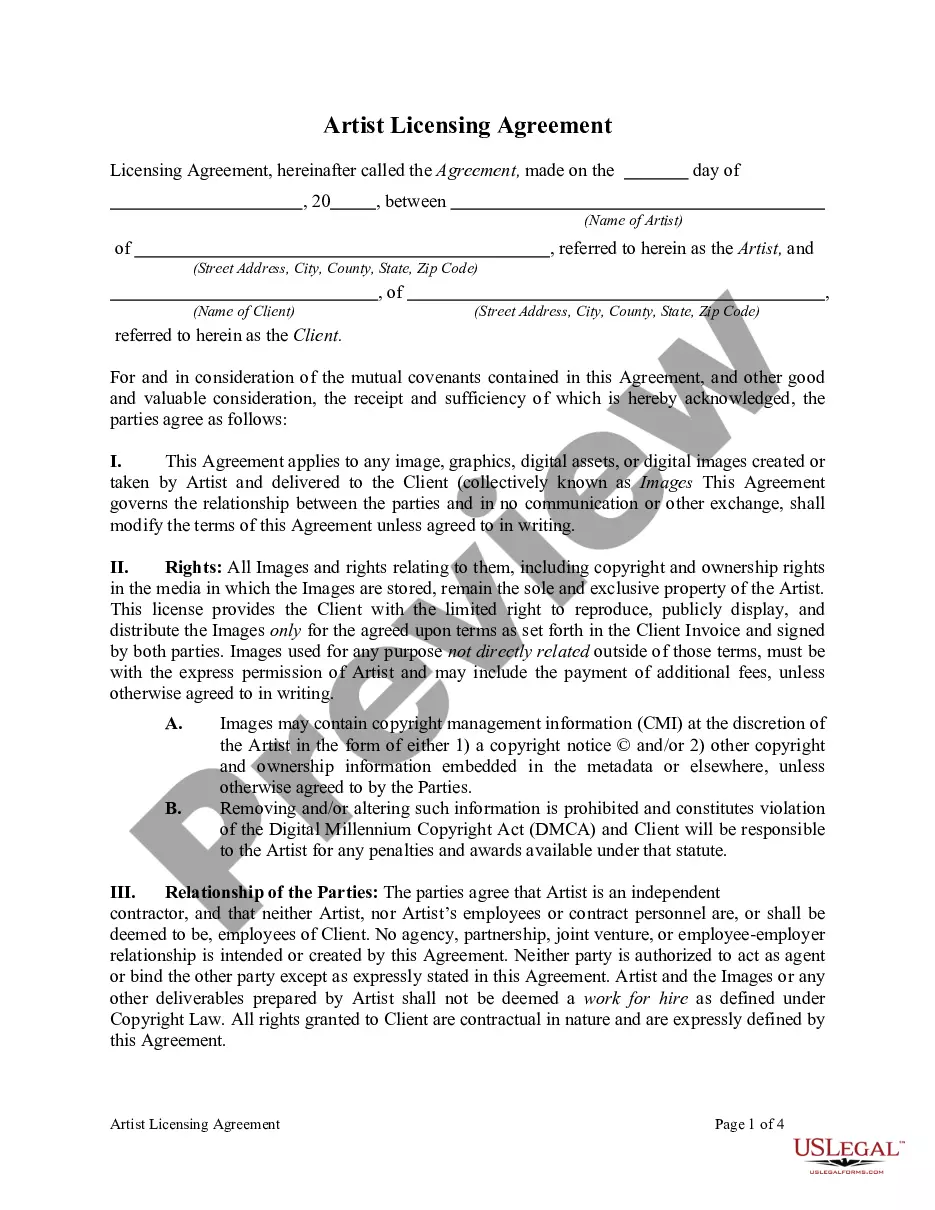
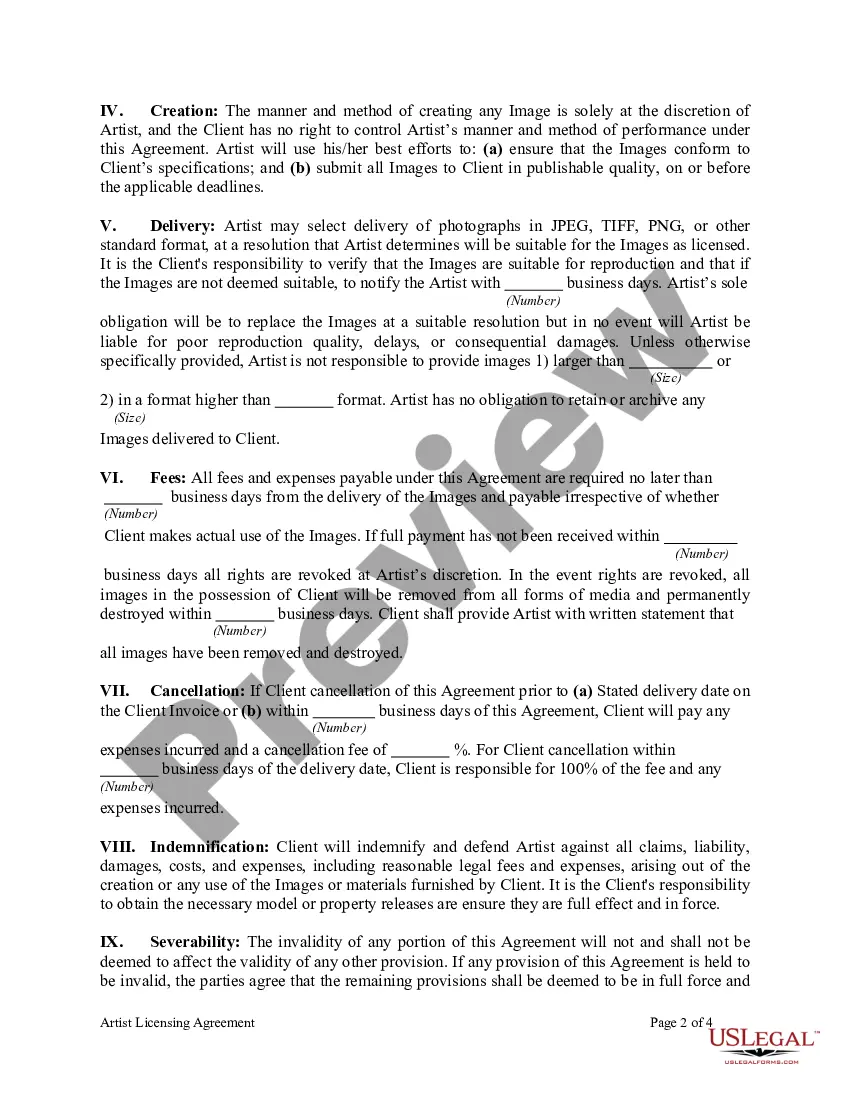
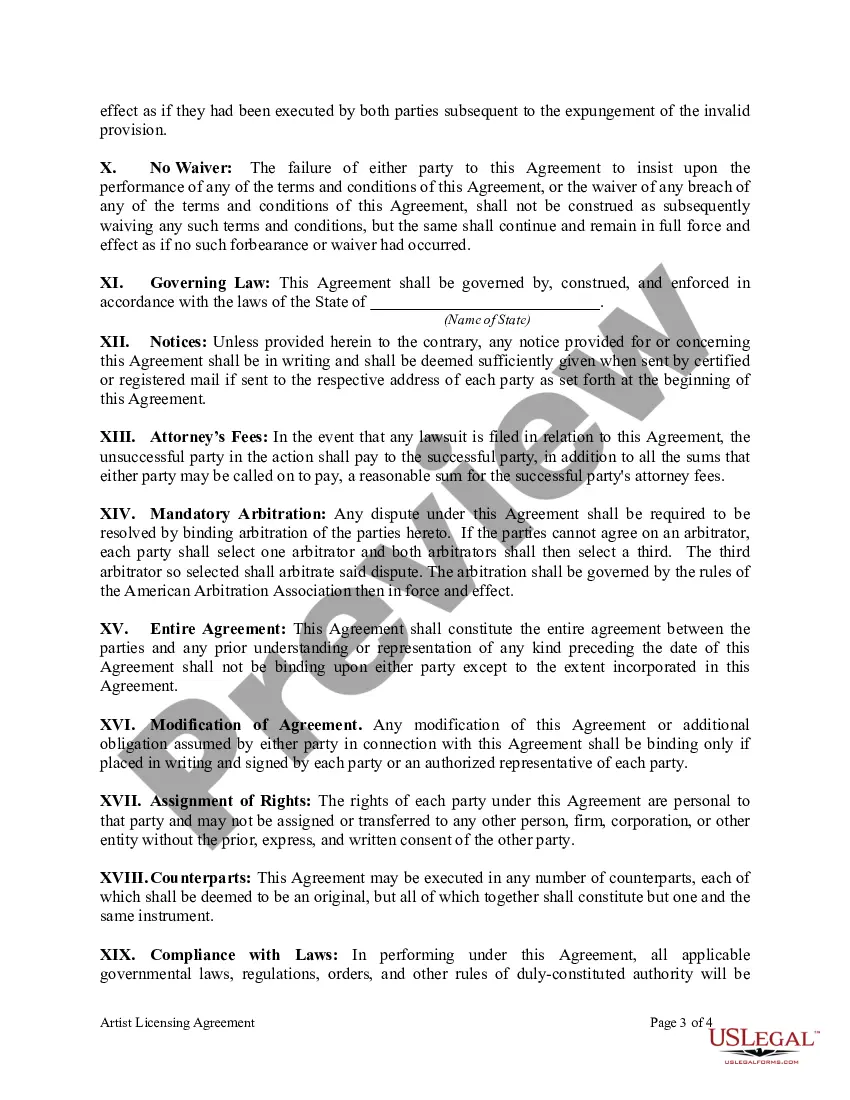



How to fill out Artist Licensing Agreement?
Generating documentation, such as the Wayne Artist Licensing Agreement, to manage your legal issues is a difficult and time-consuming endeavor.
Numerous circumstances necessitate the engagement of a lawyer, which also renders this task somewhat expensive.
Nonetheless, you can take charge of your legal matters and handle them independently.
The onboarding process for new clients is relatively straightforward! Here’s what you need to do before acquiring the Wayne Artist Licensing Agreement.
- US Legal Forms is here to assist.
- Our platform offers over 85,000 legal forms designed for various situations and life events.
- We ensure that every document complies with the laws of each state, so you don’t need to concern yourself with potential legal compliance issues.
- If you're already acquainted with our services and hold a subscription with US, you understand how easy it is to obtain the Wayne Artist Licensing Agreement template.
- Simply Log In to your account, download the template, and tailor it to your specifications.
- Have you misplaced your document? No need to fret. You can retrieve it in the My documents section of your account - whether on desktop or mobile.
Form popularity
FAQ
Generally, you do not need a specific license to be recognized as an artist. However, if your work involves certain activities, such as commercial art or operating a studio, obtaining necessary licenses can be important. The Wayne Michigan Artist Licensing Agreement outlines key regulations that can help you navigate the licensing landscape effectively.
There are no formal qualifications required to be an artist, but acquiring skills through practice and education can be beneficial. Many artists take courses in art, design, or a related field to refine their techniques. Furthermore, understanding legal aspects, such as the Wayne Michigan Artist Licensing Agreement, can empower you as you navigate your artistic career.
Getting recognized as an artist often requires building a portfolio that showcases your work. Participating in local exhibitions, seeking feedback from peers, and networking with other artists can significantly enhance your visibility. Additionally, understanding licensing agreements, like the Wayne Michigan Artist Licensing Agreement, can help protect your creations and establish your professional credibility.
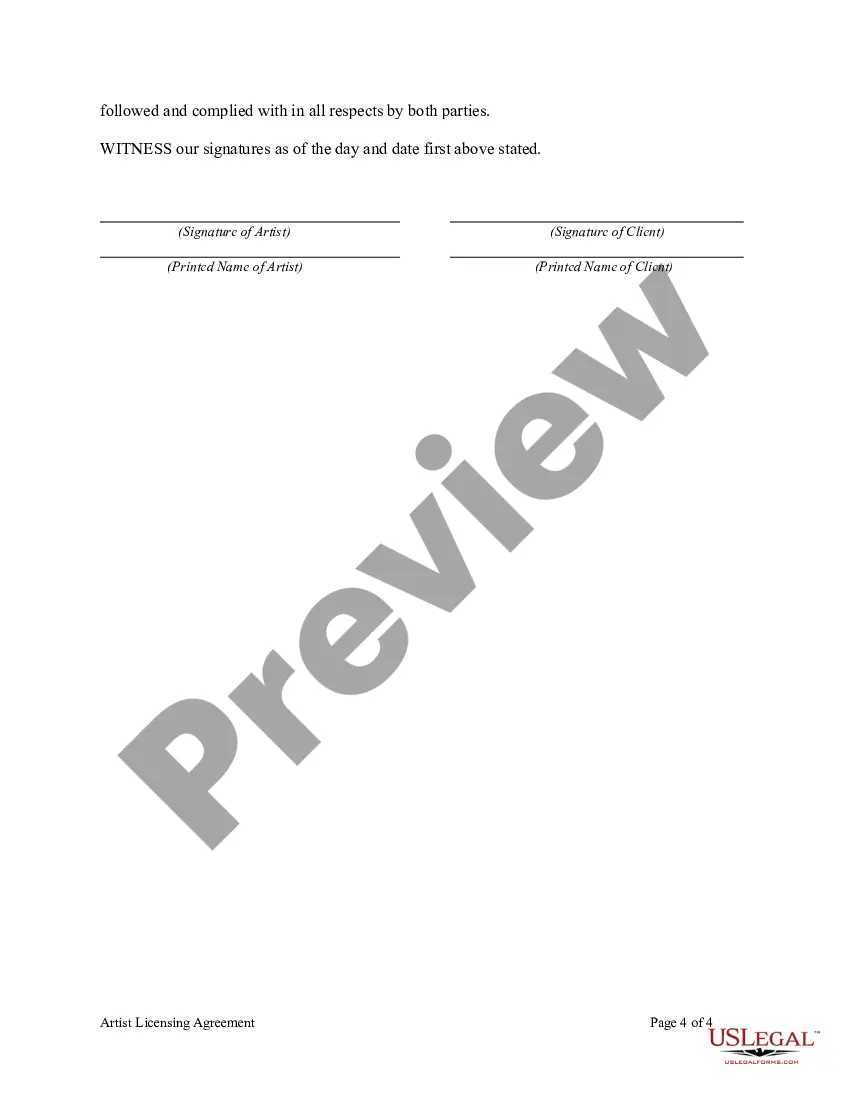
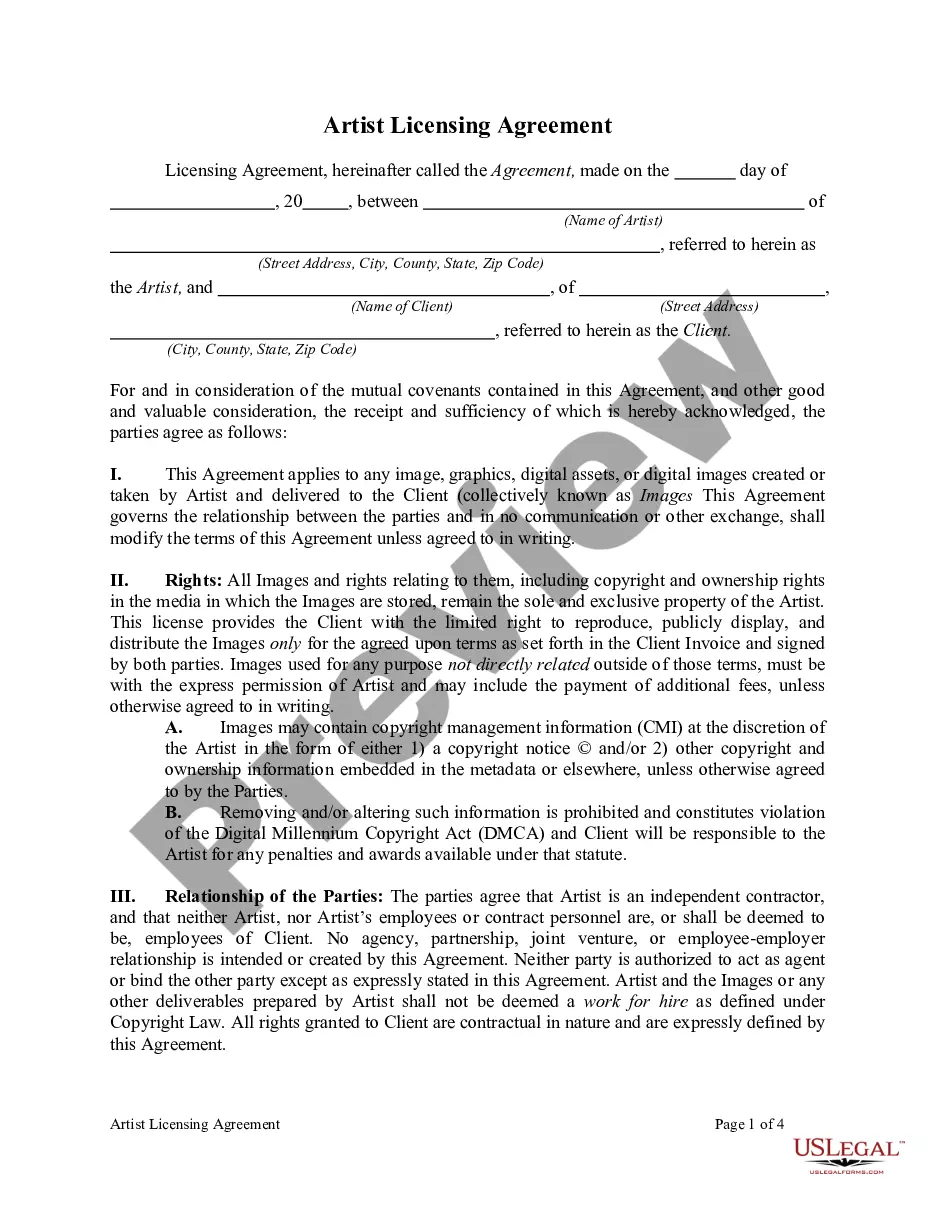
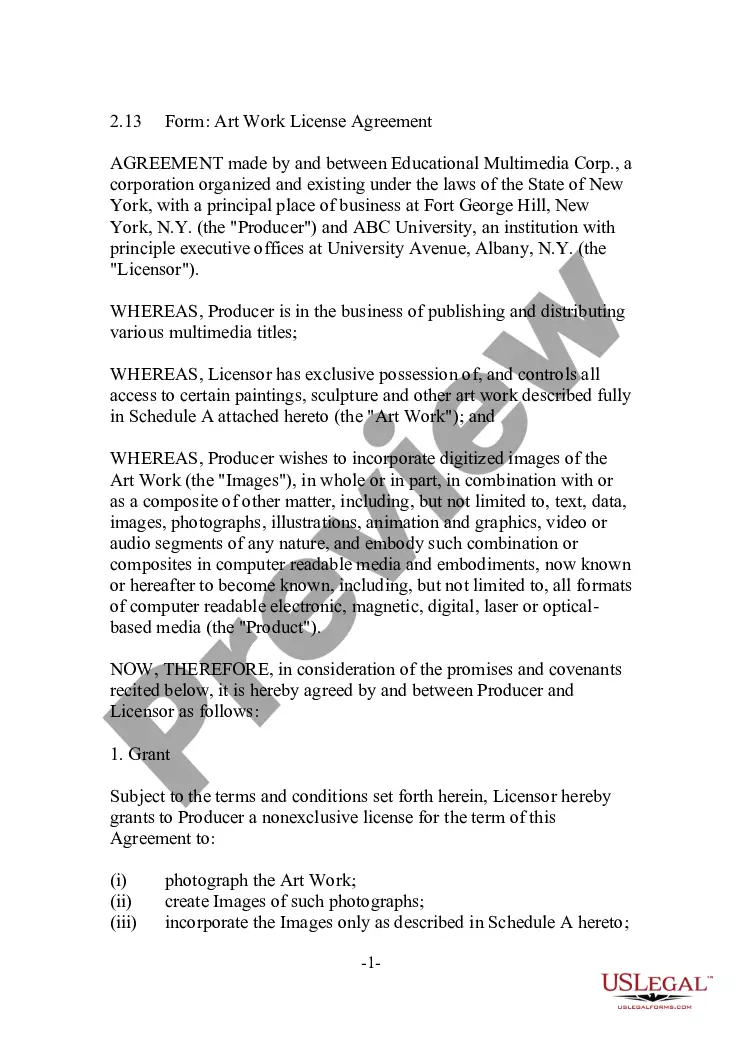
An artist licensing agreement allows an artist while retaining full copyright ownership of their work, to grant permission to another party to use their art.
An artist licensing agreement is an accord where an artist gives a client permission to use their artwork by allowing them to acquire a license for promotional purposes to bolster a product or service.
Practitioners and licensing executives often refer to three basic types of voluntary licenses: non-exclusive, sole, and exclusive. A non-exclusive licence allows the licensor to retain the right to use the licensed property and the right to grant additional licenses to third parties.
To help you get started, take a look at a few basic components to include in your contract so you can better protect your art business.Client Info.Project Info and Terms.Project Timeline.Costs and Payment Terms.Itemization.Artist's Rights.Cancellation Terms.Acceptance of Agreement.
Examples of common licensing agreements include: A sports team allowing another company to produce t-shirts with the team's logo. A movie company that allows another company to create a toy based on a character the movie company owns.
A Commission Contract lays out the terms and conditions for an artist creating a commissioned work. Commission Contracts generally specify project dates, payment schedules, notable project requirements or constraints, and build in check-in points between the artist and commissioner.
Art Licensing is usually a royalty range of 3-10%. Brand and character licensing can go as high as 15%. 2) Where it's sold determines the percentage as well. Mass markets (such as Target, K-Mart, Wal-Mart), start as low as 3-5%.