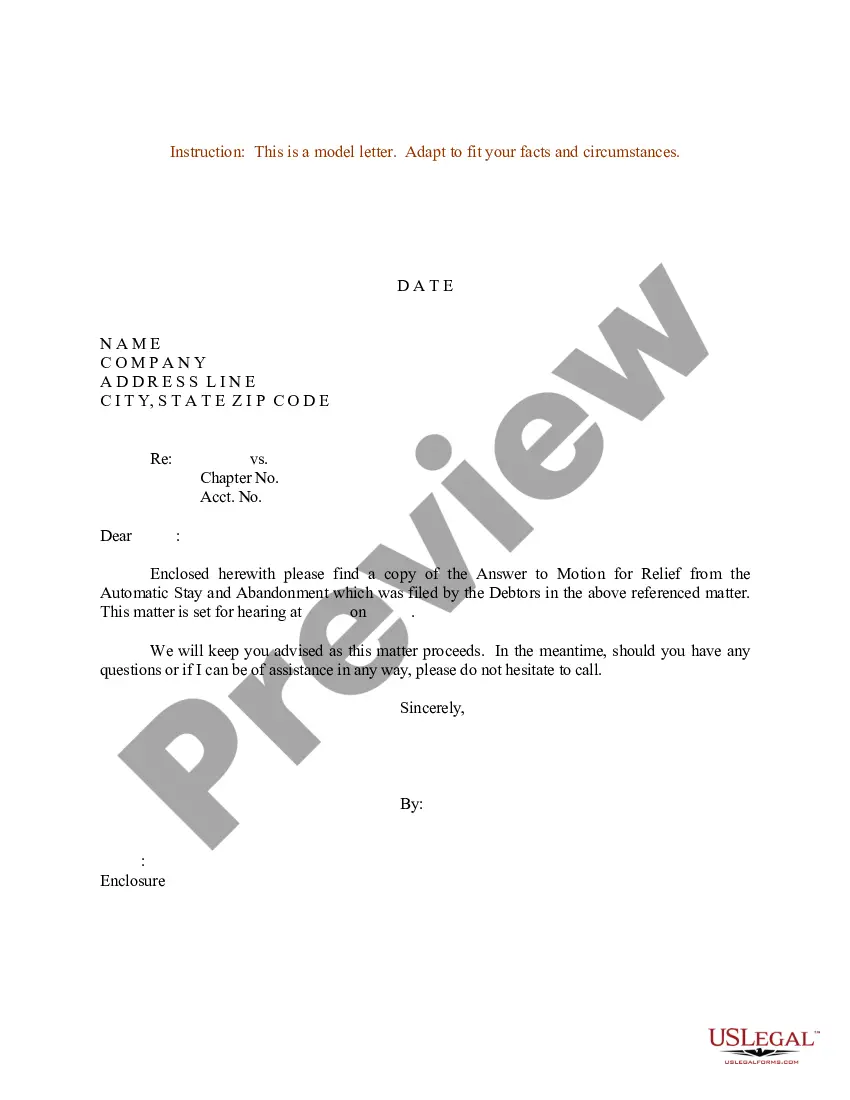
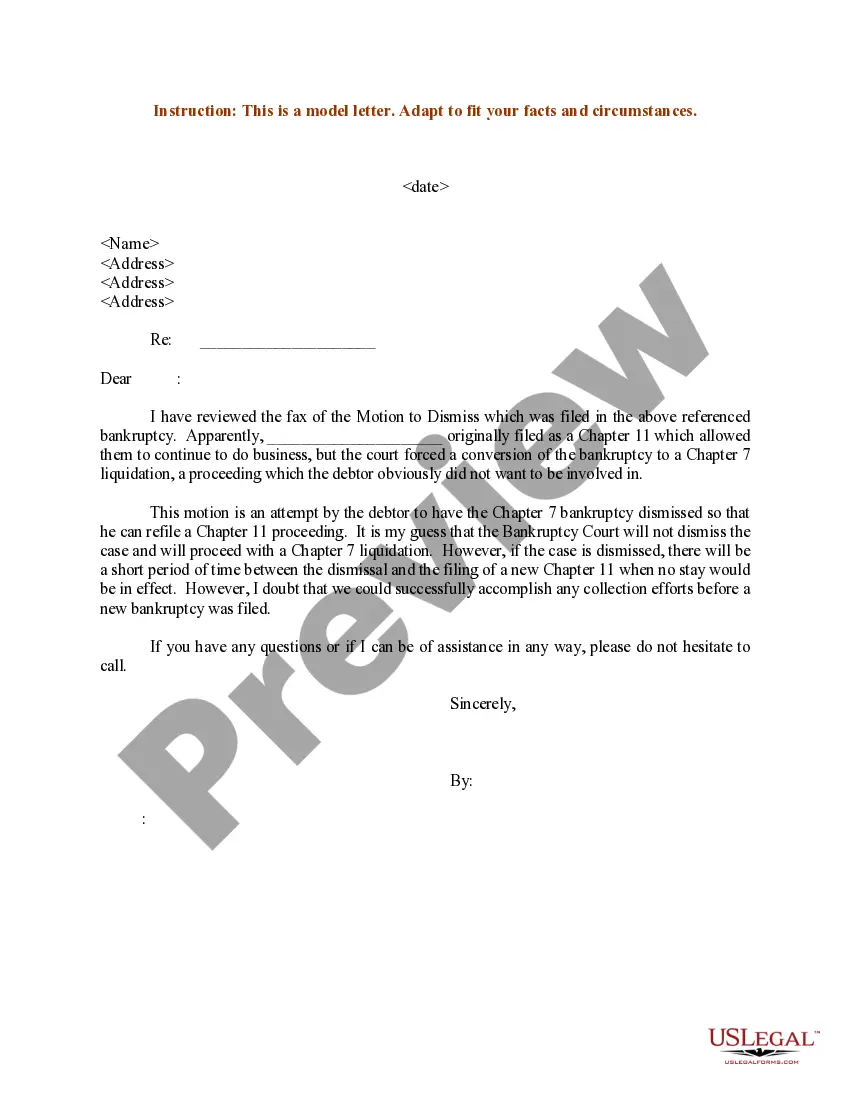
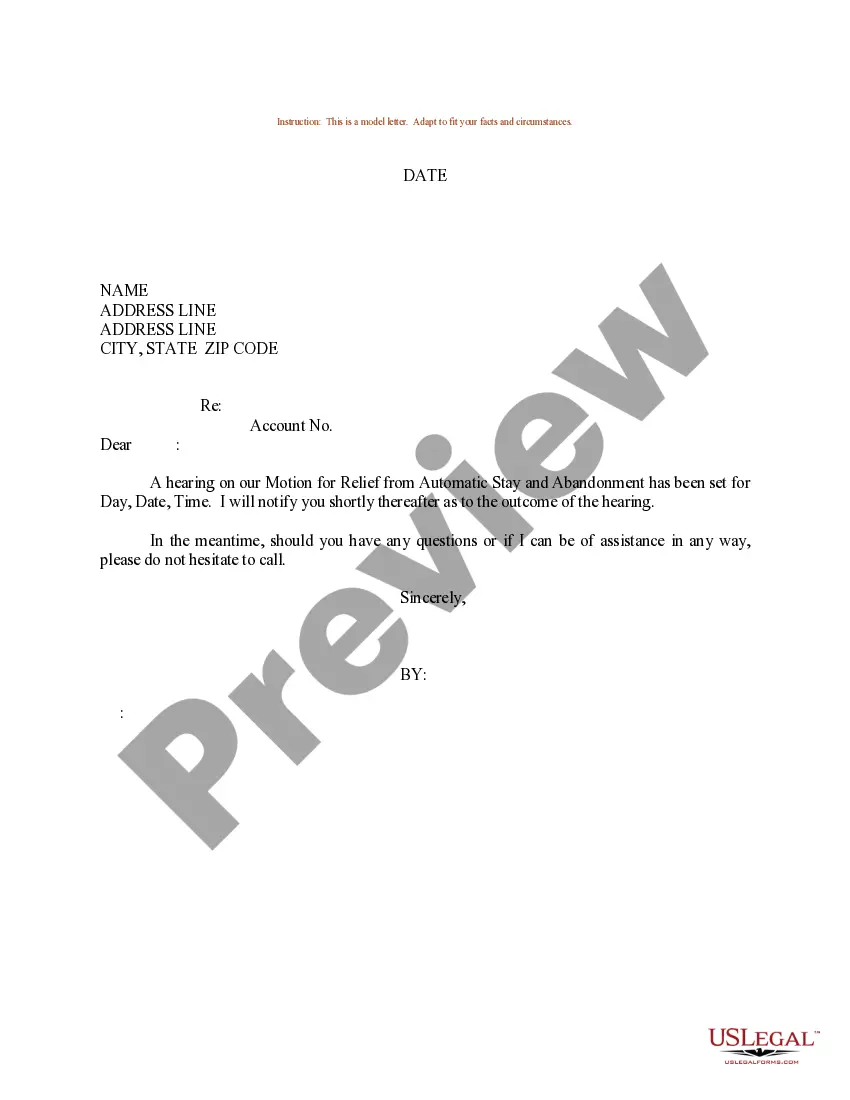
Alameda California Sample Letter regarding Answer to Motion for Relief from the Automatic Stay and Abandonment
Description
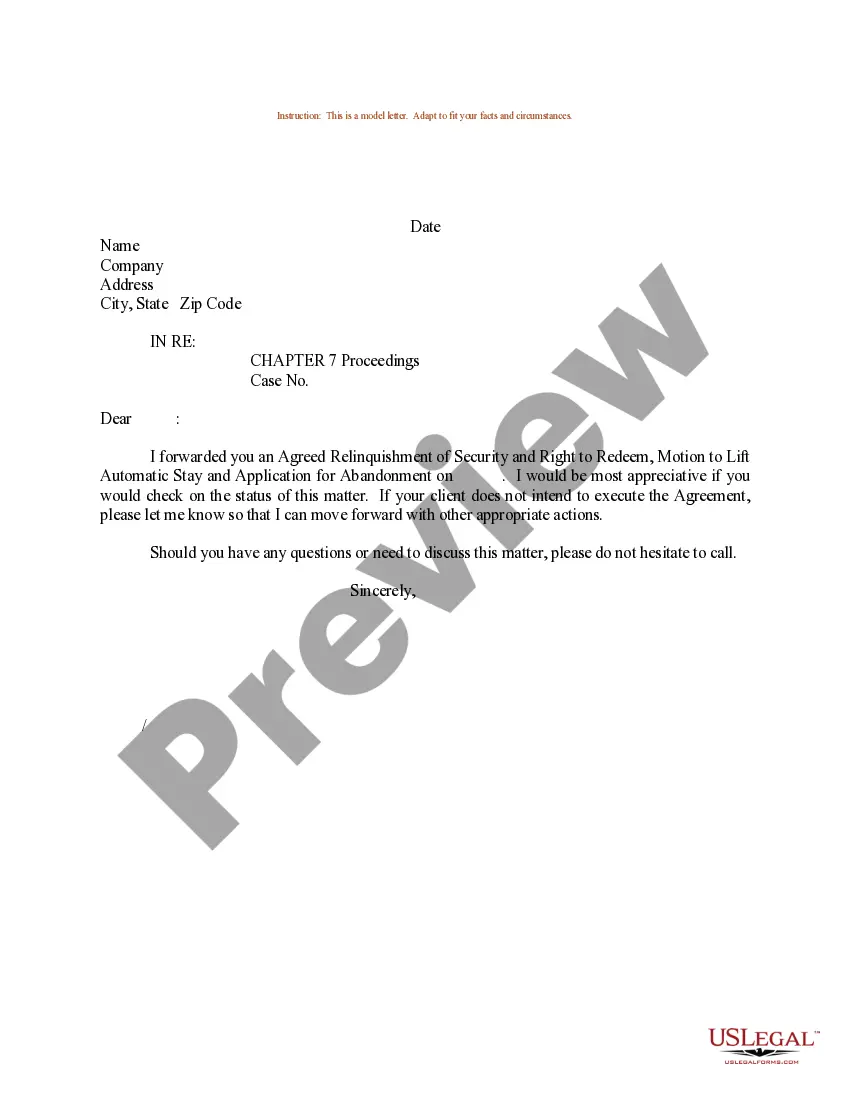
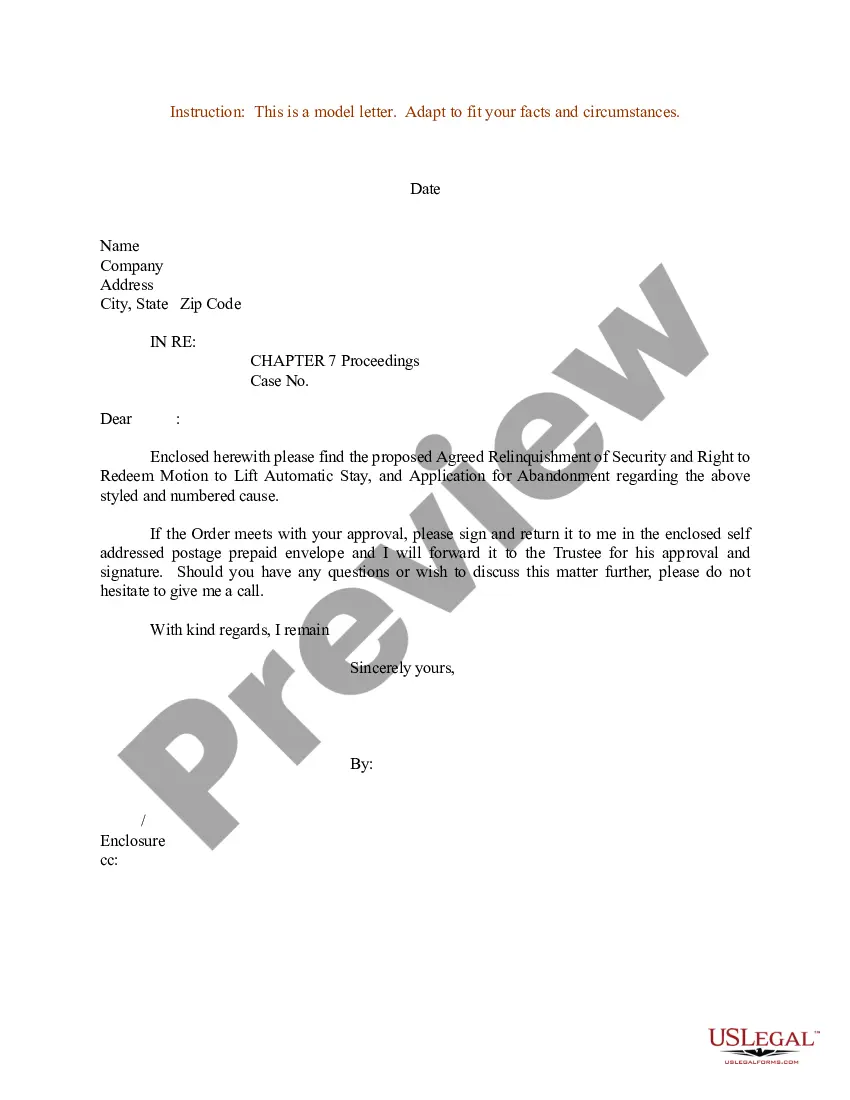
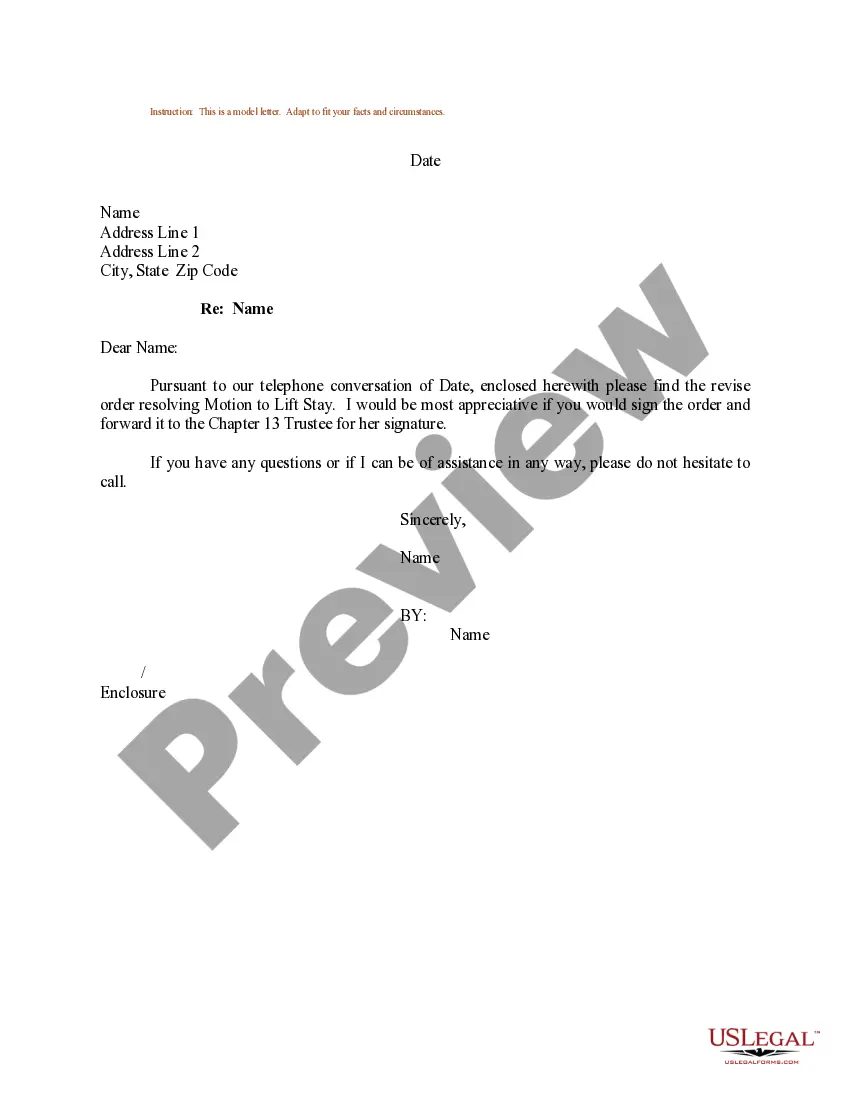
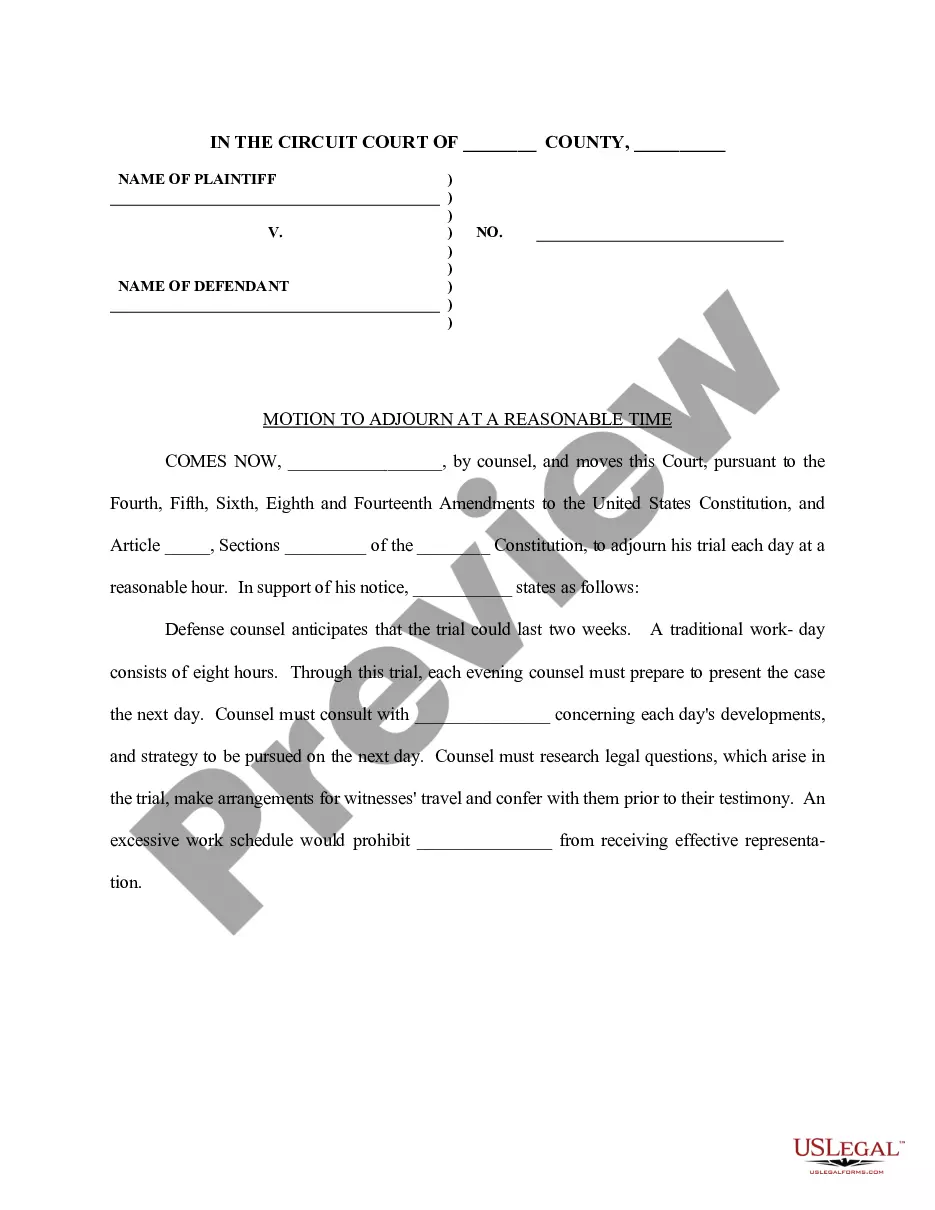

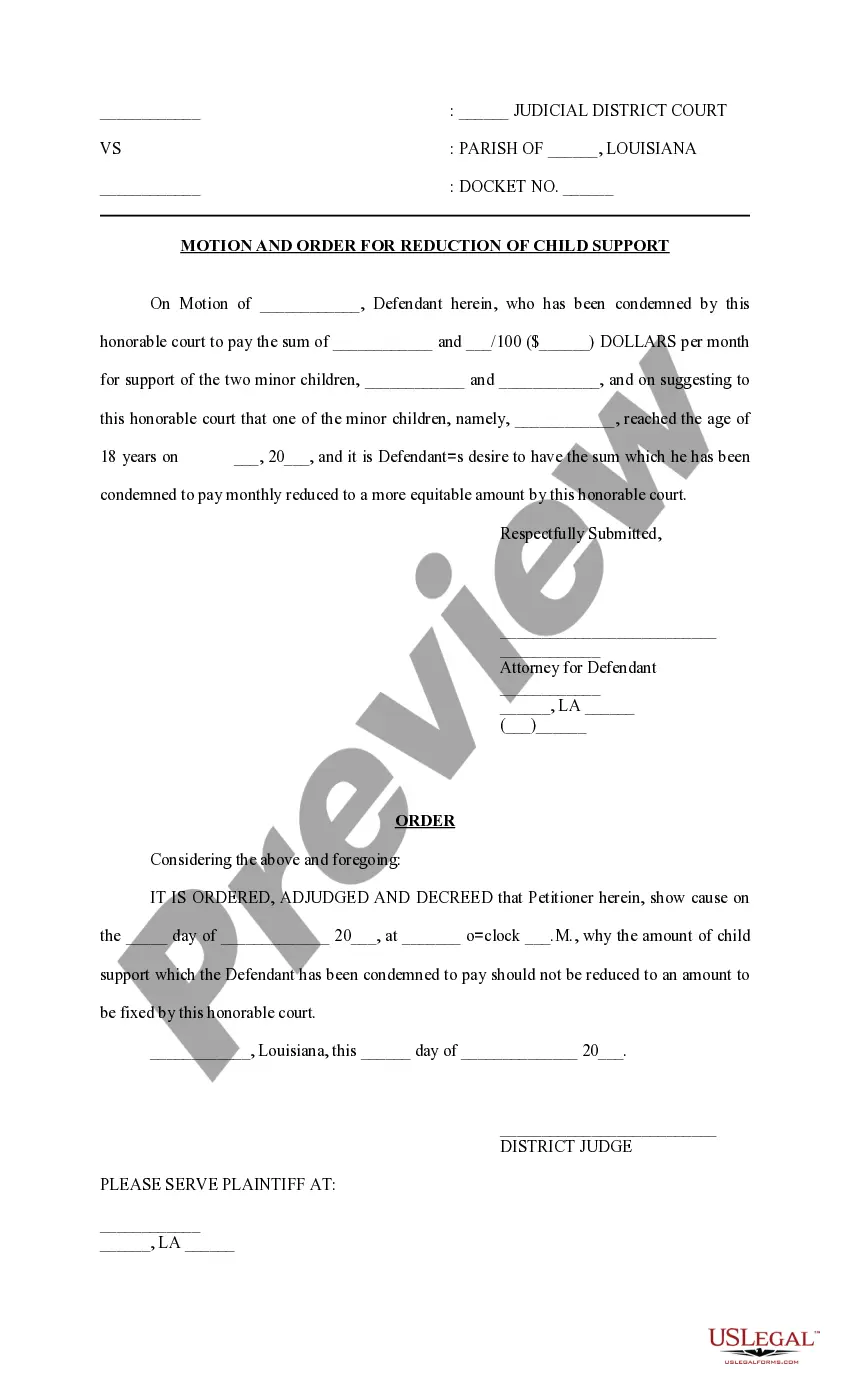


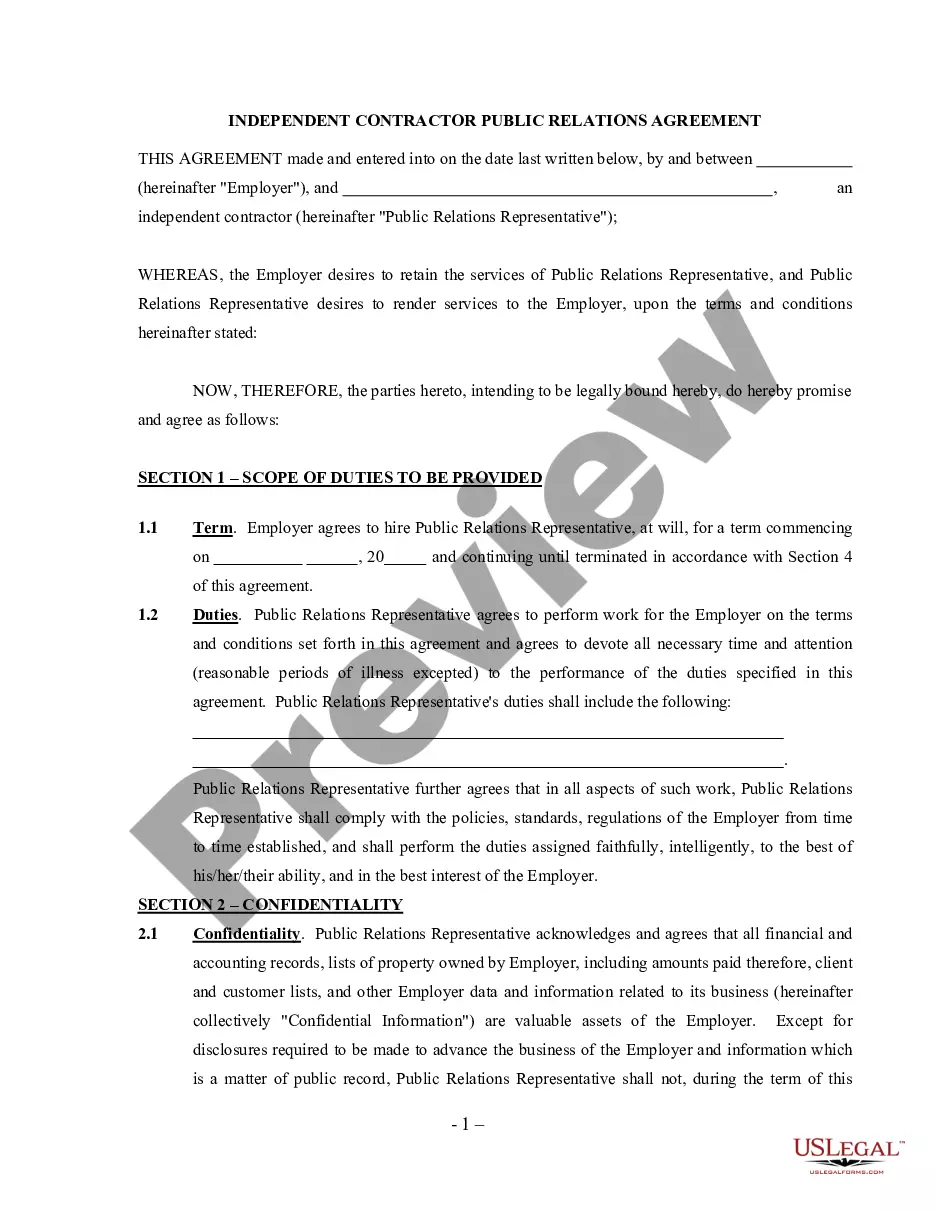


How to fill out Sample Letter Regarding Answer To Motion For Relief From The Automatic Stay And Abandonment?
Drafting legal documents is essential in the modern era.
However, there are times when you may not require professional assistance to formulate some of them from the ground up, such as the Alameda Sample Letter concerning Response to Motion for Relief from the Automatic Stay and Abandonment, using a service like US Legal Forms.
US Legal Forms boasts over 85,000 templates available across various categories, ranging from advance directives to property-related papers to separation documents. All forms are categorized according to their corresponding state, making the searching experience less cumbersome.
If you're an existing subscriber of US Legal Forms, you can access the relevant Alameda Sample Letter regarding Response to Motion for Relief from the Automatic Stay and Abandonment, Log In to your account, and download it.
Naturally, our website cannot wholly replace a legal expert. If you are faced with an exceptionally intricate scenario, we recommend consulting a lawyer to review your document before signing and submitting it. With over 25 years of experience in the industry, US Legal Forms has established itself as a trusted resource for diverse legal documents for countless customers. Join our community today and obtain your legally compliant documents with ease!
- Examine the document's preview and description (if present) to get a general understanding of what you will receive after acquiring the document.
- Confirm that the template you select is tailored to your state/county/region, as state regulations can influence the legitimacy of certain records.
- Review the related forms or initiate the search again to locate the appropriate file.
- Click Buy now and create your account. If you already possess an account, opt to Log In.
- Select the option, then the necessary payment method, and purchase the Alameda Sample Letter regarding Response to Motion for Relief from the Automatic Stay and Abandonment.
- Choose to store the form template in any compatible file format.
- Navigate to the My documents tab to re-download the document.
Form popularity
FAQ
Adequate Protection Compensates Secured Creditors for Postpetition Declines in the Value of Their Collateral. Derived from Fifth Amendment property protections under the due process clausecreditors cannot be deprived of their property without due process.
An automatic stay stops creditors from trying to collect debts from a debtor who has filed for bankruptcy until court proceedings are completed. Creditors, collection agencies, and others who violate the automatic stay can be sued by the debtor.
When relief from stay is granted, it does not remove the property from the bankruptcy estate or grant the creditor ownership of the property. It simply removes the stay and restores the parties to their state law rights. Creditors can then enforce those rights to the extent that the relief from stay order permits.
Usually, a creditor can get around the automatic stay by asking the bankruptcy court to remove ("lift") the stay. To avoid fines and penalties, the creditor must file a motion asking for permission to continue with collection efforts.
Order for relief refers to an actual court order determining that a debtor is subject to the control of the bankruptcy court. The Bankruptcy Code enables a debtor to obtain a discharge from all debts that arose before the date of the order for relief. A voluntary petition constitutes an order for relief.
To obtain relief, the creditor must file a motion to request relief, which is usually done soon after the debtor files for bankruptcy. If grounds are shown for why the creditor should be granted a relief from stay, then notice must be sent to the relevant parties.
As mentioned before, the automatic stay ends when the discharge is entered because it's no longer necessary. There is another way for the automatic stay to end automatically and without the need for the creditor to file a motion with the court.
How Long Does an Automatic Stay Last? The automatic stay remains in effect until your case is closed. But, of course, it isn't always that simple. For Chapter 7, it's often the case that a stay will last the 3-5 months the court case is open.
Motion for Relief from Stay and Abandonment is one filed under the Bankruptcy code for conditioning, modifying or dissolving the automatic stay imposed by § 362 of the Bankruptcy Code and for abandonment of property under § 554 of the Bankruptcy Code.