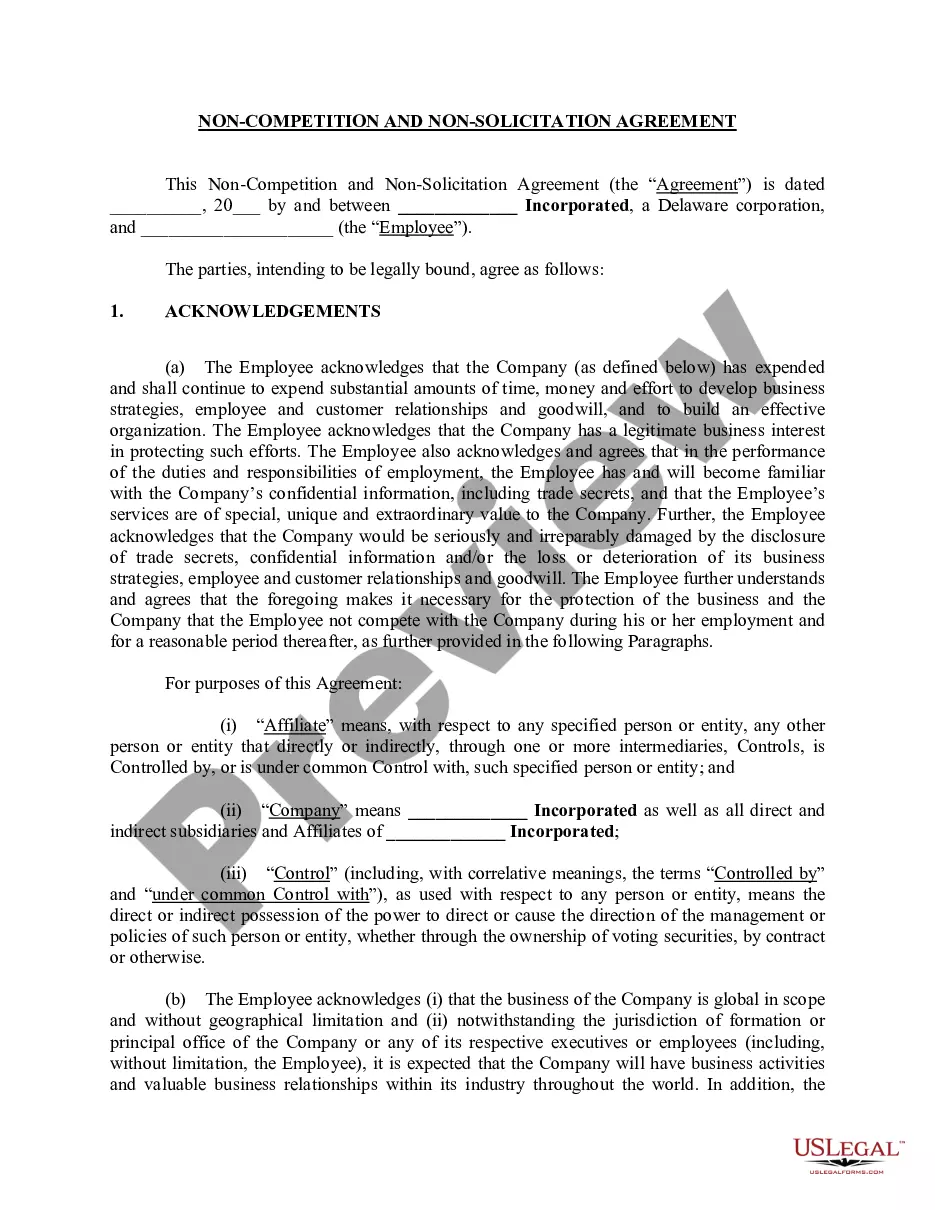
Before examining the reasonableness of a noncompetition agreement, courts first consider whether the agreement is ancillary, meaning connected and subordinate to another valid contract. If there is no such contract, the court will look to see if there was valid consideration to enforce such an agreement. If there is no adequate or independent consideration present, most courts will refuse to enforce such an agreement. This is to ensure that the noncompetition agreement is not an outright restraint on trade but, rather, the result of a bargained-for exchange that furthers legitimate commercial interests.
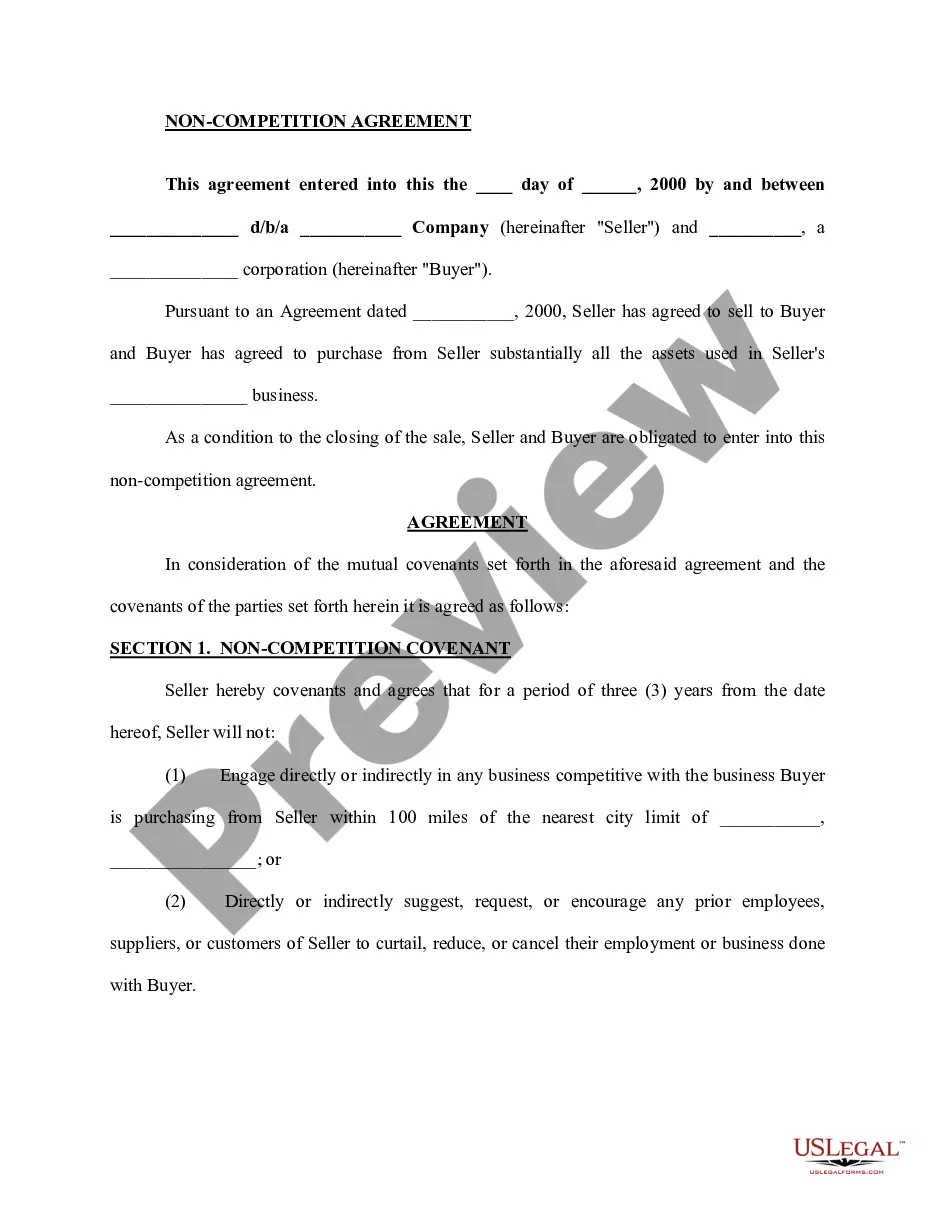
When a businessman sells his business, the purchaser may compete with him unless there is a valid restrictive covenant or covenant not to compete. The same is true when an employee leaves the employment of a company and begins soliciting customers of his former employer or competing with his employer in a similar way. When an ongoing business is sold, it is commonly stated in the sales contract that the seller shall not go into the same area or begin a similar business within a certain geographical area or for a certain period of time or both. Such an agreement can be valid and enforceable.
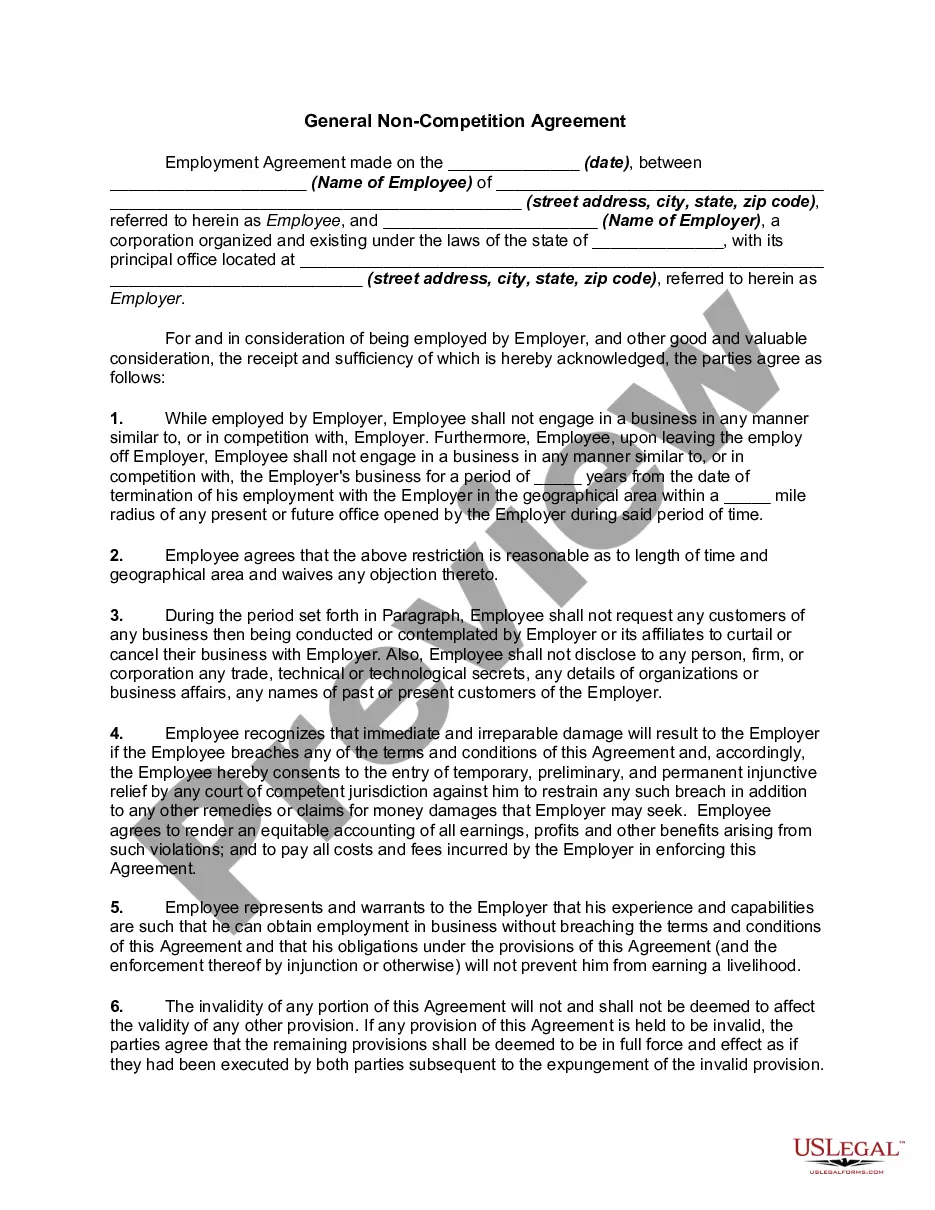
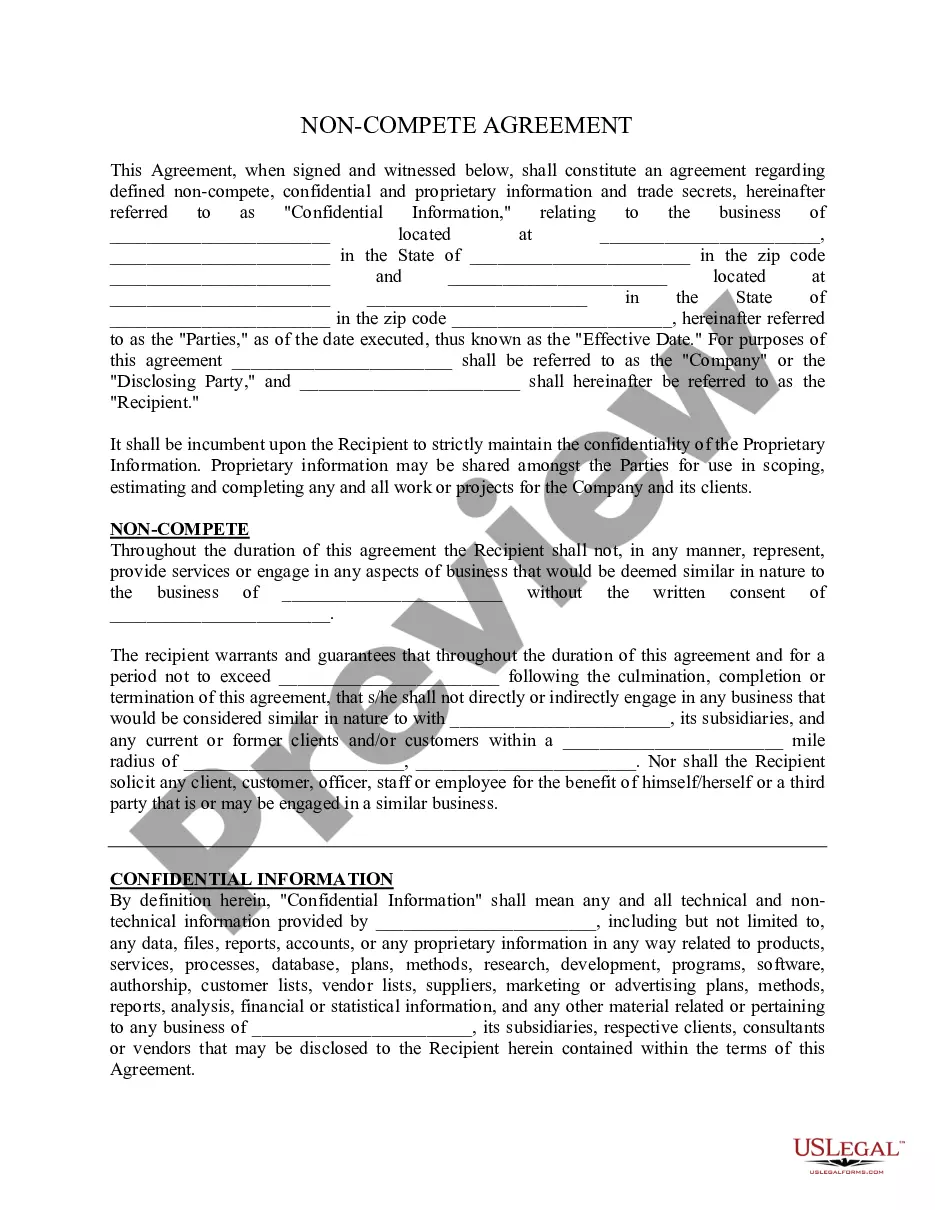
Restrictions to prevent competition by a former employee are held valid when they are reasonable and necessary to protect the interests of the employer. Courts will closely examine covenants not to compete signed by individuals in order to make sure that they are not unreasonable as to time or geographical area.
When a restriction of competition is invalid because it is too long or covers too great a geographical area, Courts will generally do one of two things. Some Courts will trim the restrictive covenant down to a period of time or geographical area that the Court deems reasonable. Other Courts will refuse to enforce the restrictive covenant at all and declare it void.
Caution: Statutory law in a few states completely prohibit covenants not to compete unless the covenant meets the state's statutory guidelines.