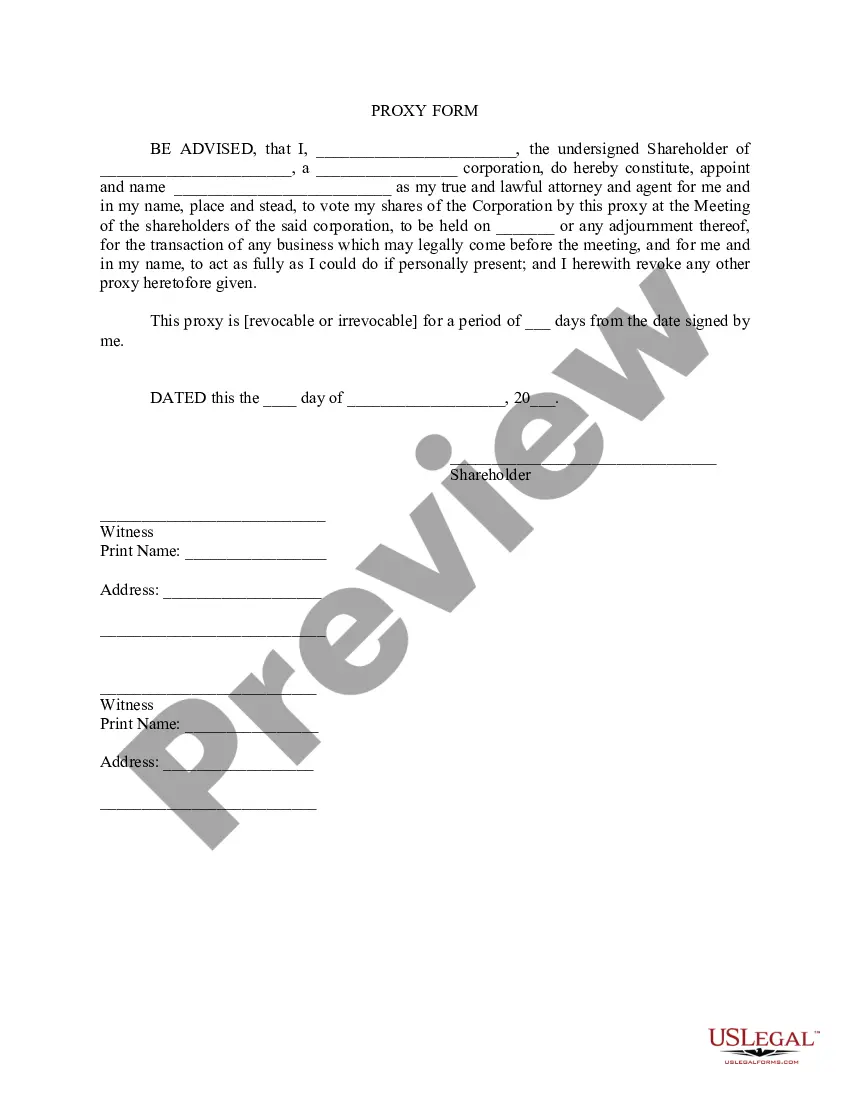
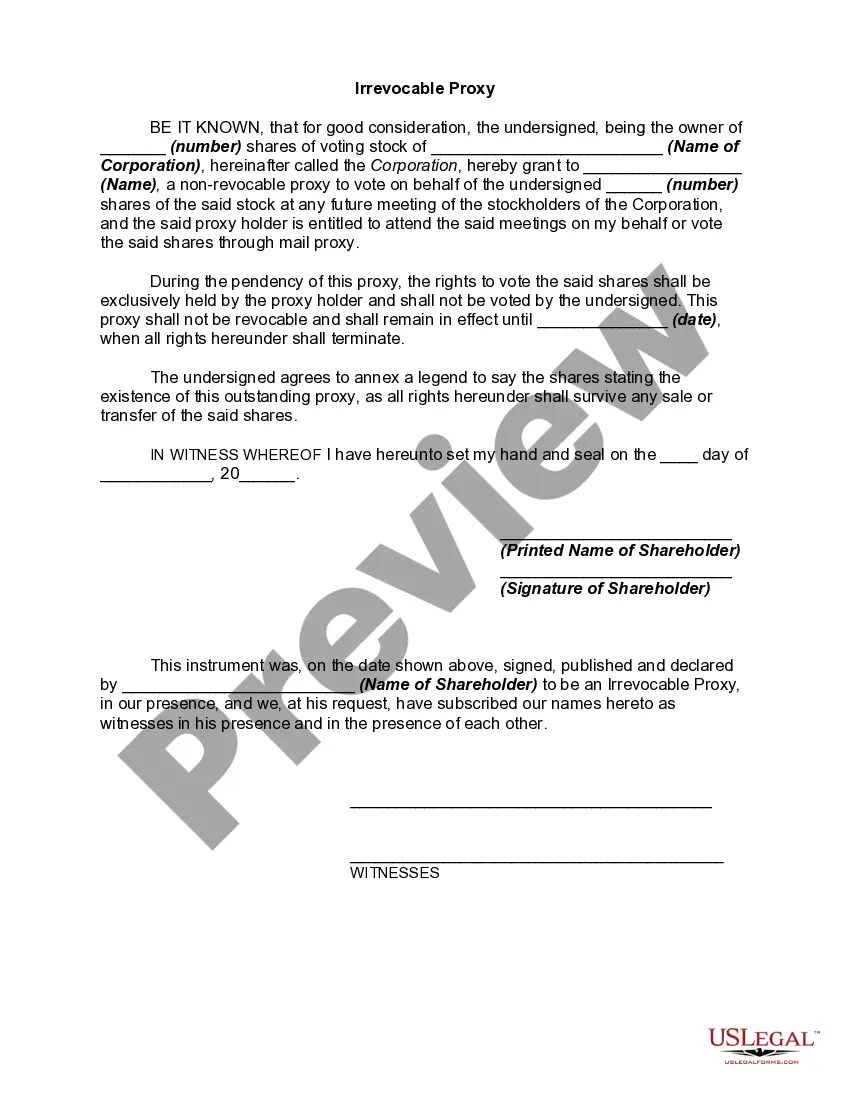
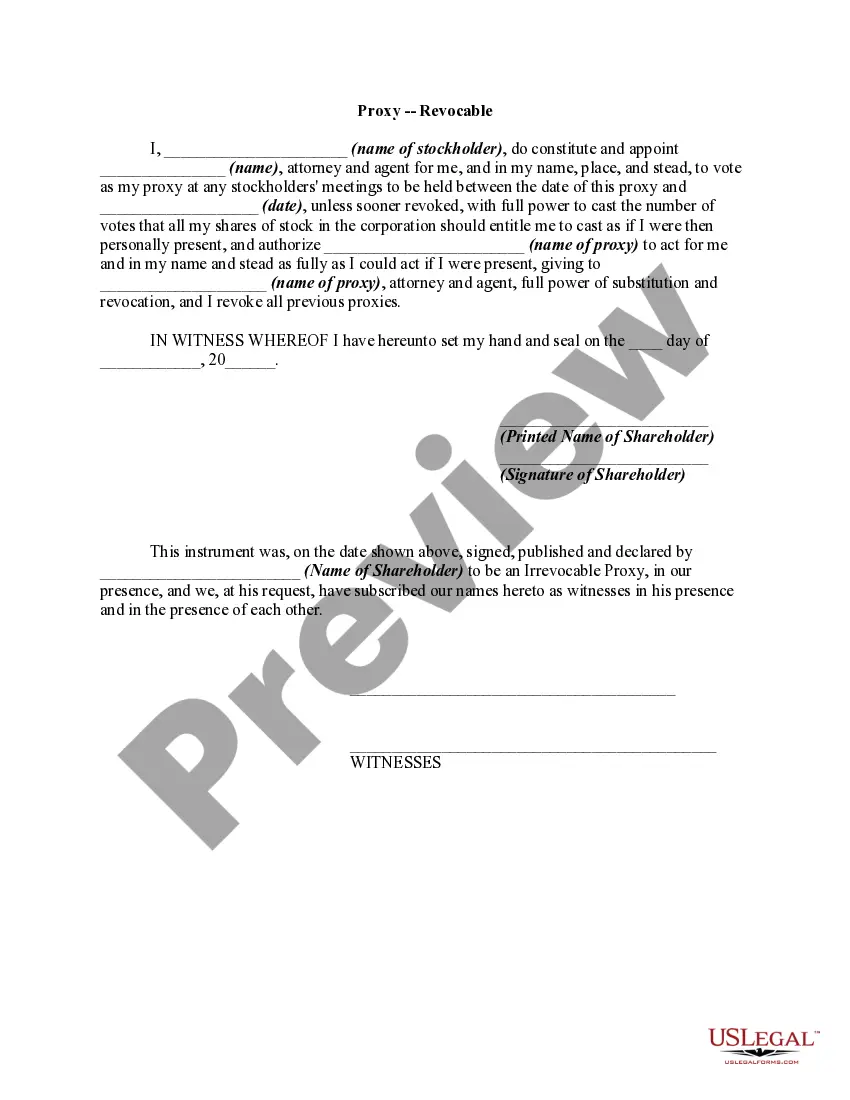
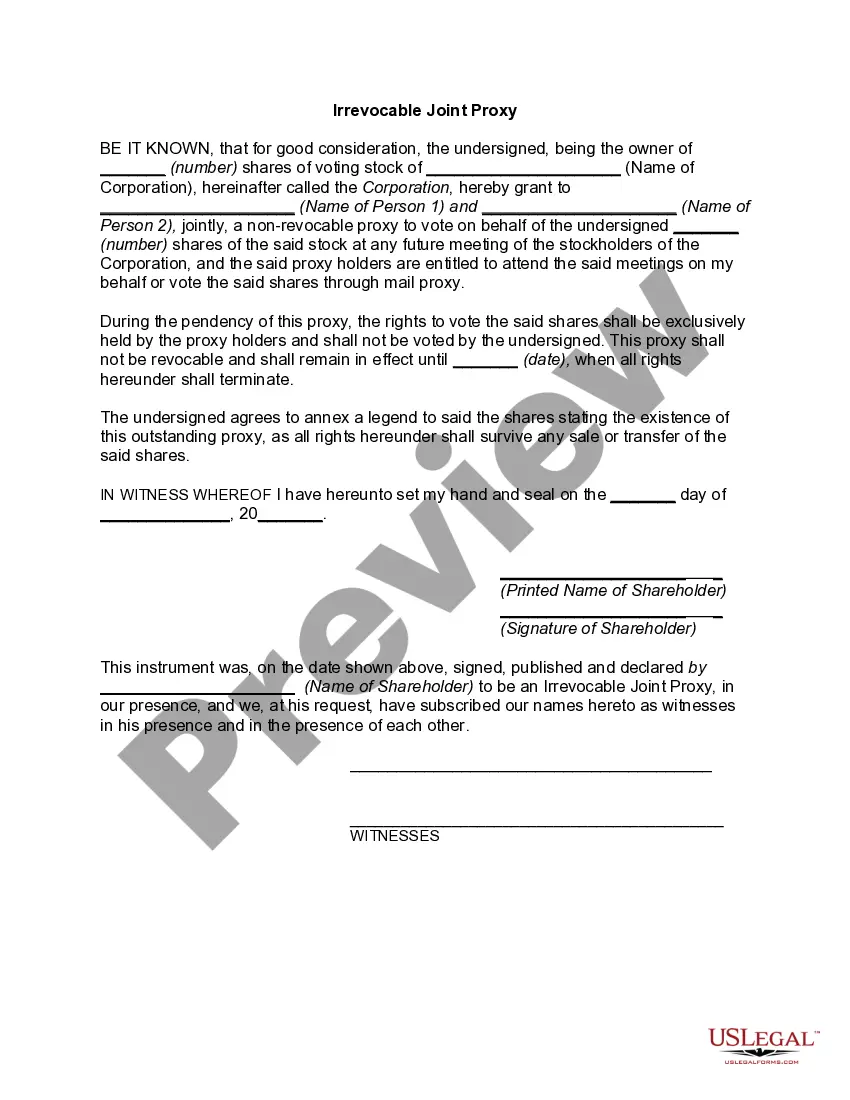
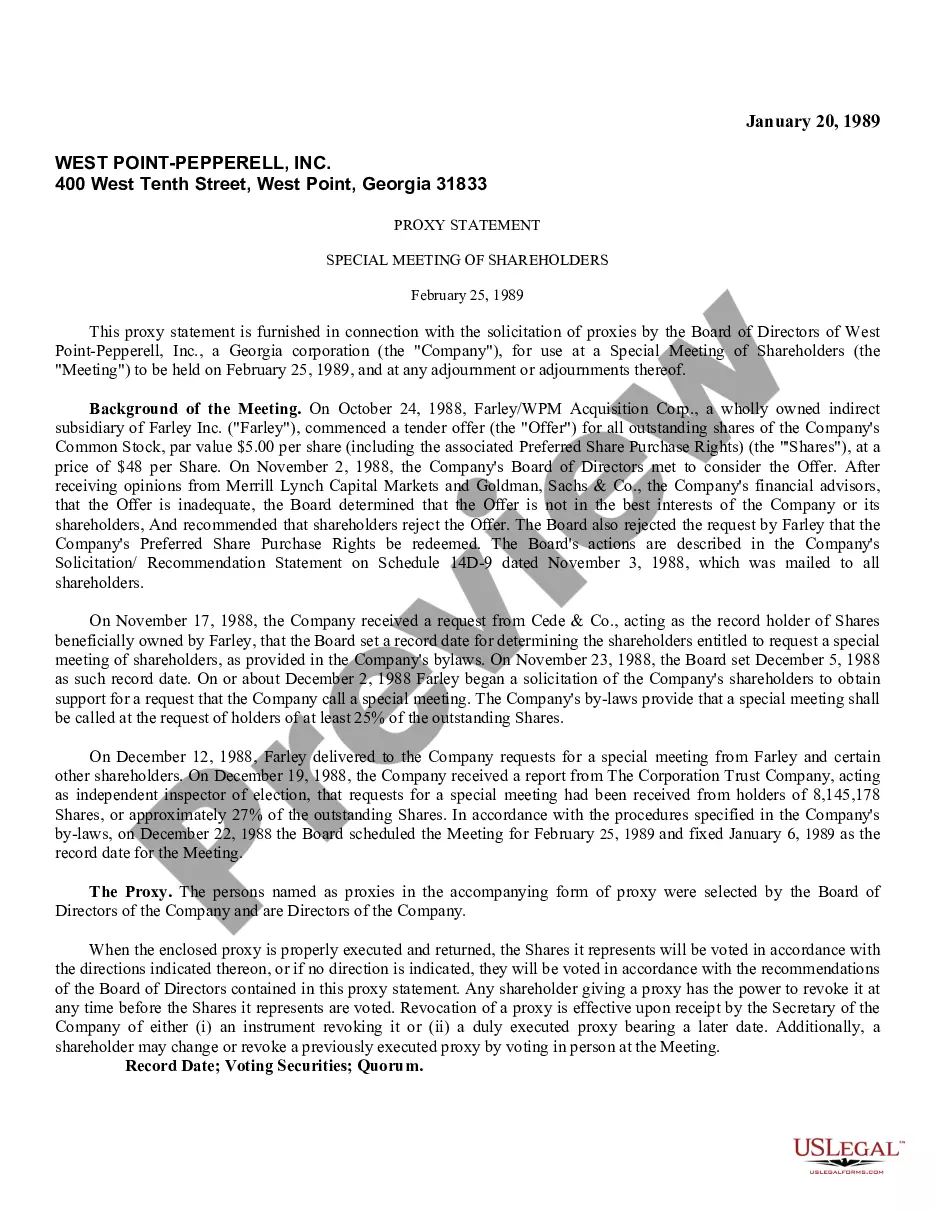
Proxy voting refers to the procedure of delegating the right to vote by one person to another. In proxy voting in the absence of a person his/her vote will be secured by some other person. A person so designated to cast the vote of another is called a "proxy" and the person who delegates the power is called a principal. A voter must have a trust in the proxy. Any person including the official of the chosen party can be appointed as the proxy.
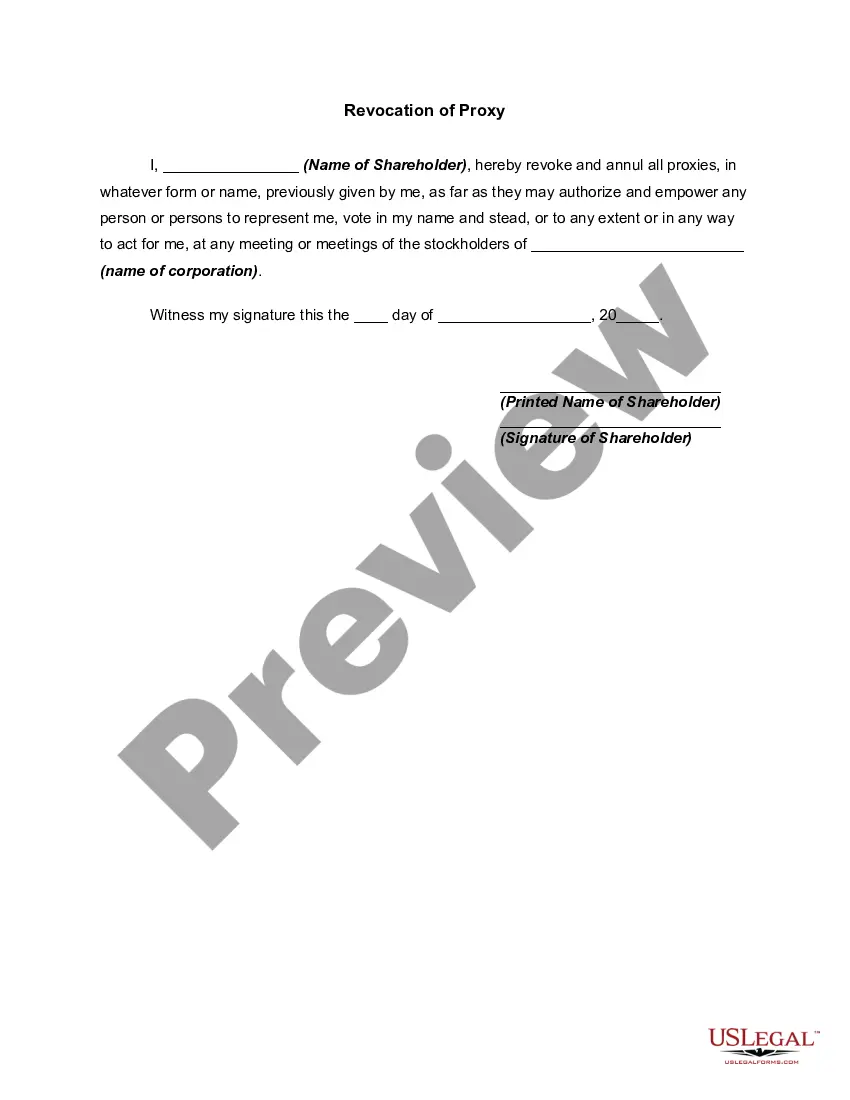
A proxy can also be revoked unless the terms of the proxy say otherwise.
Once you’ve successfully revoked a proxy, the person you appointed will no longer have the authority to make decisions for you. It's like closing the door; once it's shut, they can’t walk back in.
There isn’t a one-size-fits-all form, but it’s essential to include all the necessary details, such as your name, the person you’re revoking, and the date. Think of it as a recipe—make sure you have the right ingredients!
Although verbally revoking a proxy might feel good in the moment, it’s best to put it in writing. This creates a paper trail, showing that you've made it clear what your wishes are.
While you don’t necessarily need a lawyer, it can be helpful to consult one to make sure you’re dotting your i's and crossing your t's. It’s always good to have a second pair of eyes on important documents.
To revoke a proxy, you typically need to sign a written document stating that you are canceling the proxy. It’s like putting a nice little bow on your decision to take back control.
Only the person who granted the proxy can revoke it. So if you were the one who handed over your decision-making power, then the ball is in your court to take it back.
A Revocation of Proxy is basically a way for someone to cancel the authority they previously gave to another person to act on their behalf. It's like saying, 'I changed my mind, I don't want you to make decisions for me anymore.'
Trusted and secure by over 3 million people of the world’s leading companies