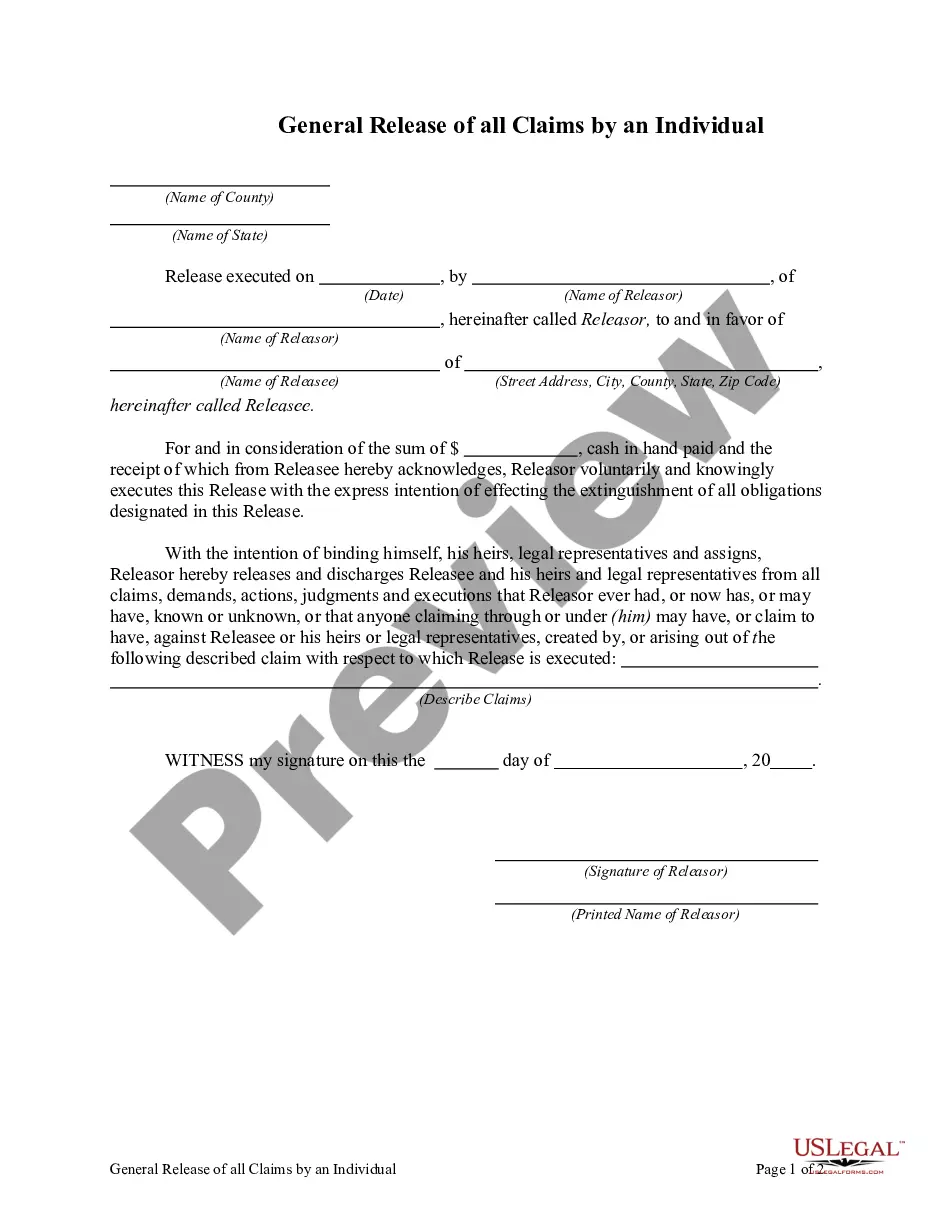
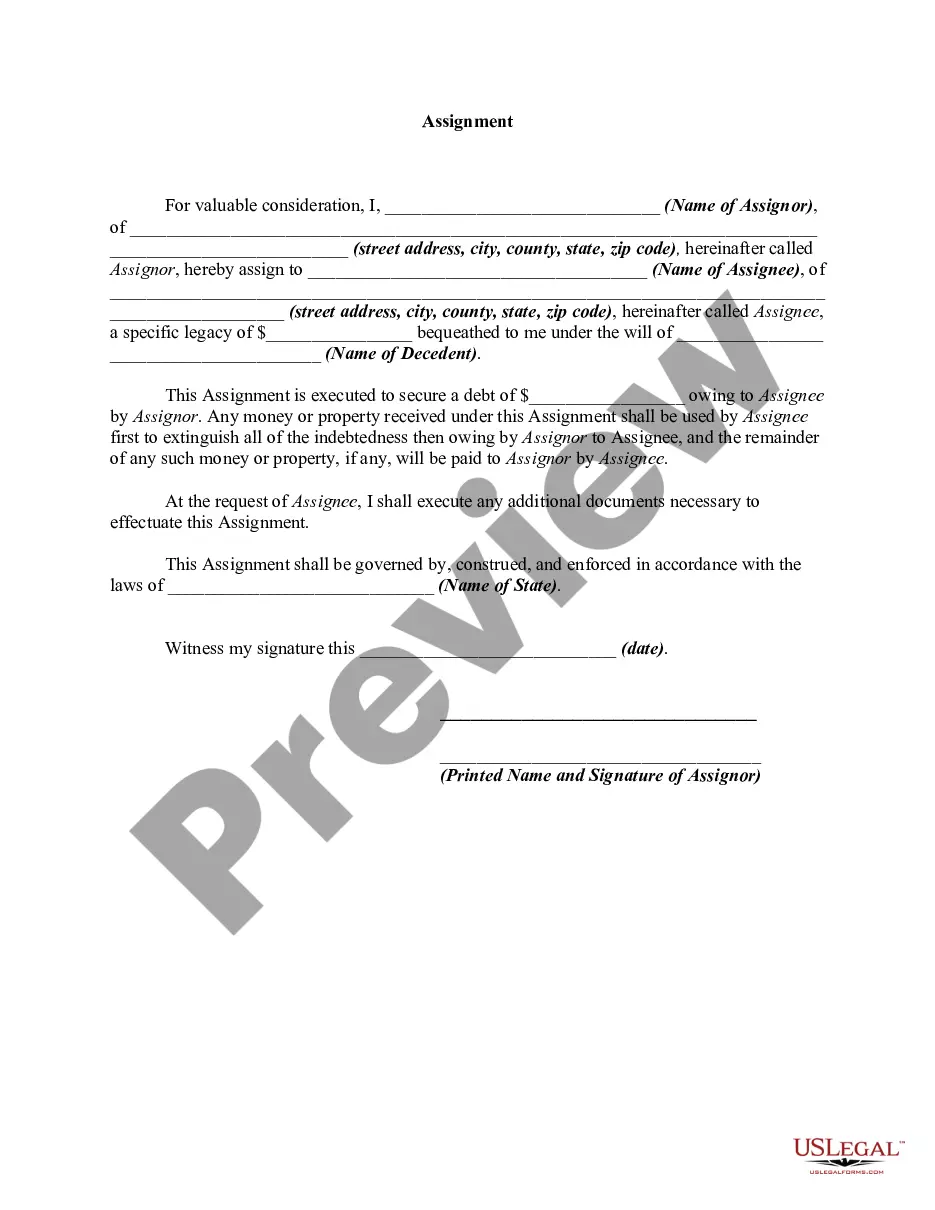
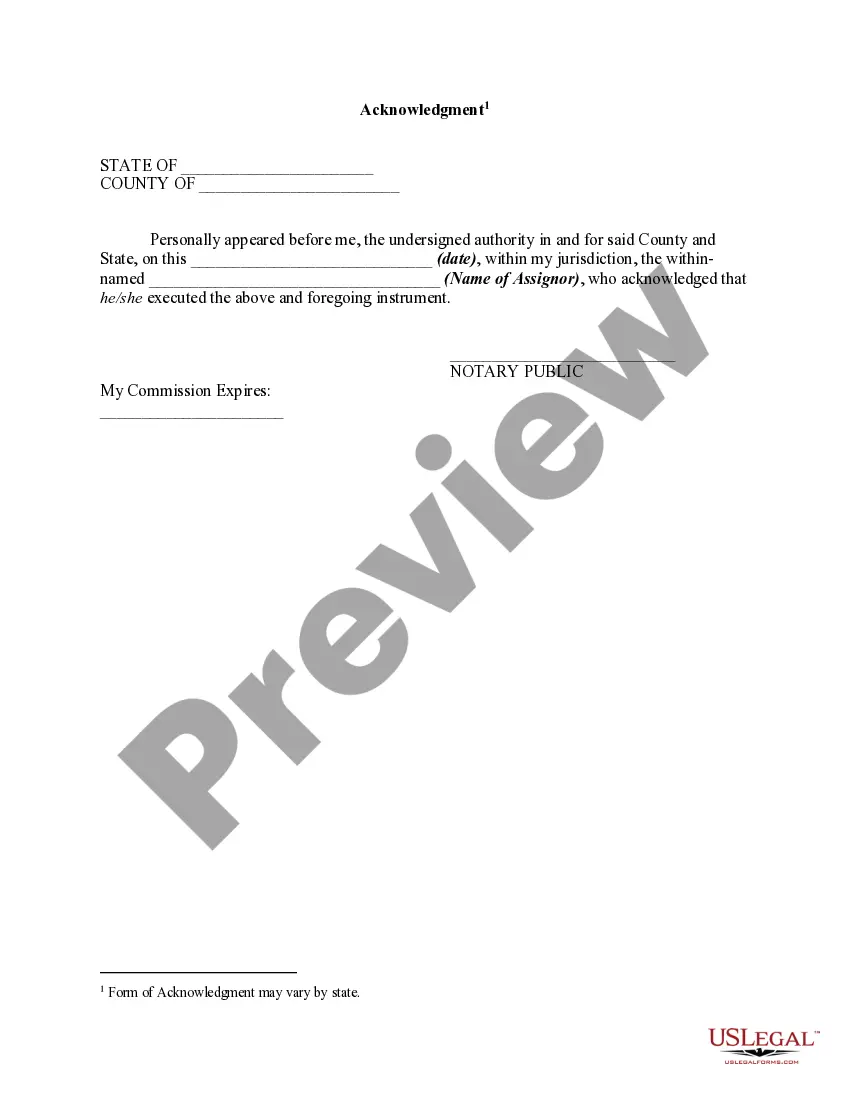
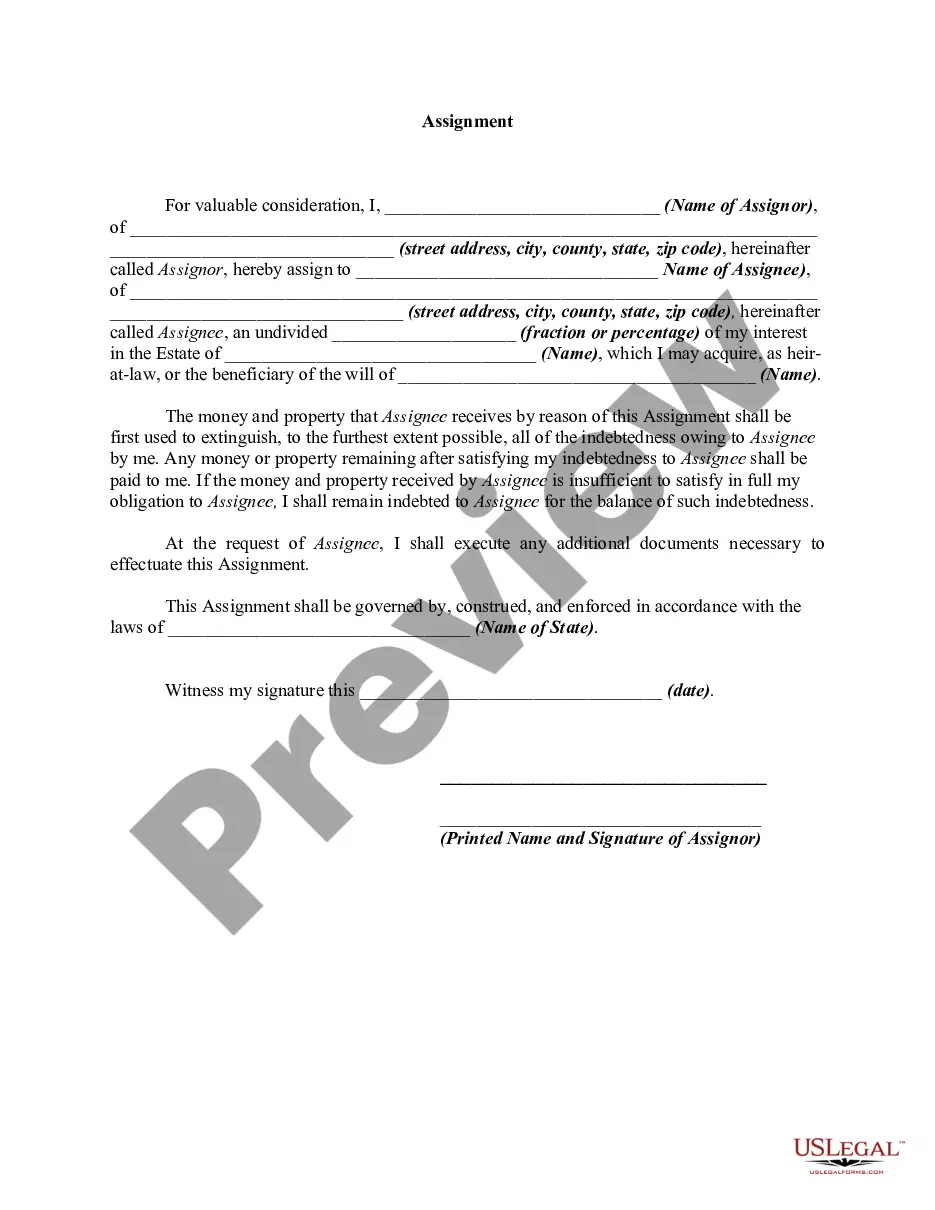
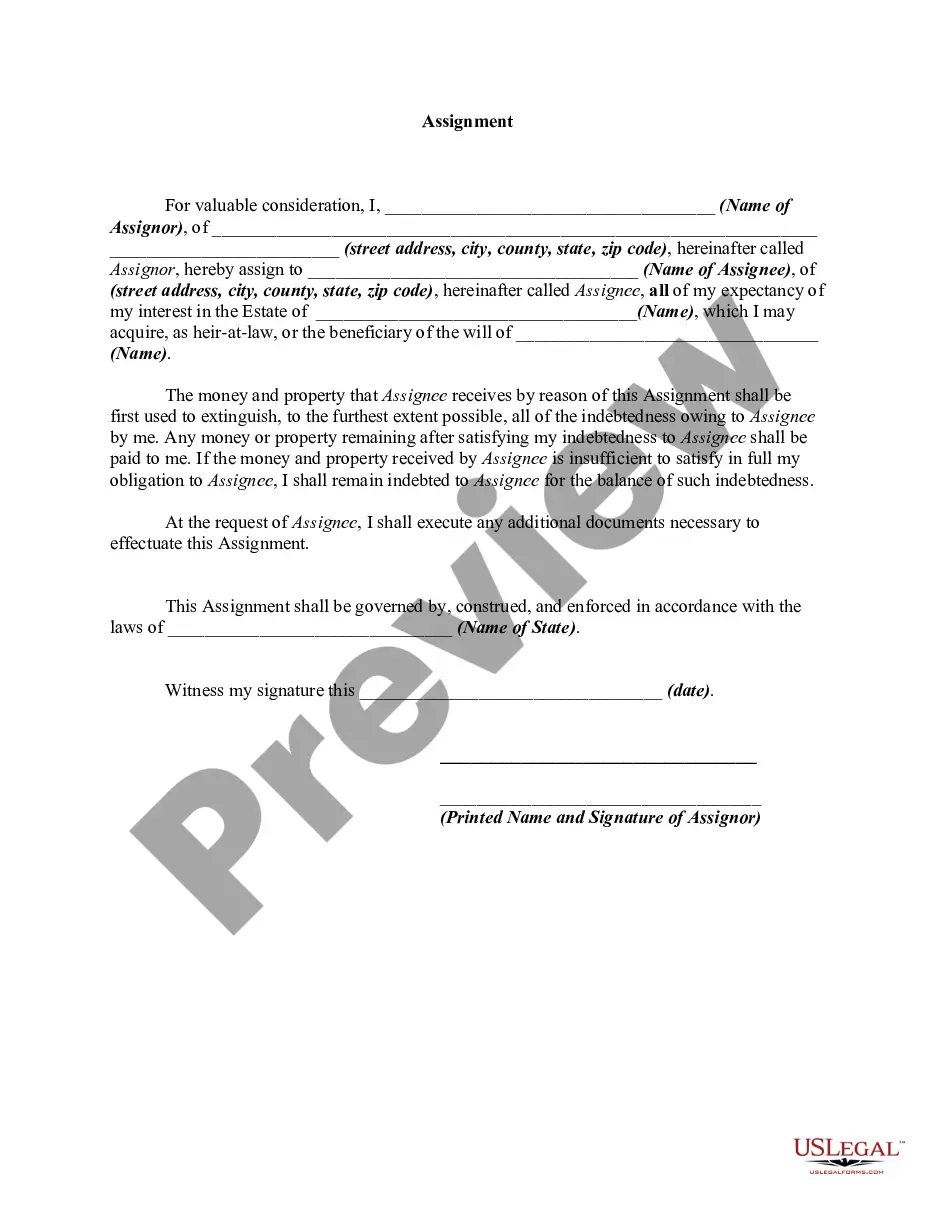
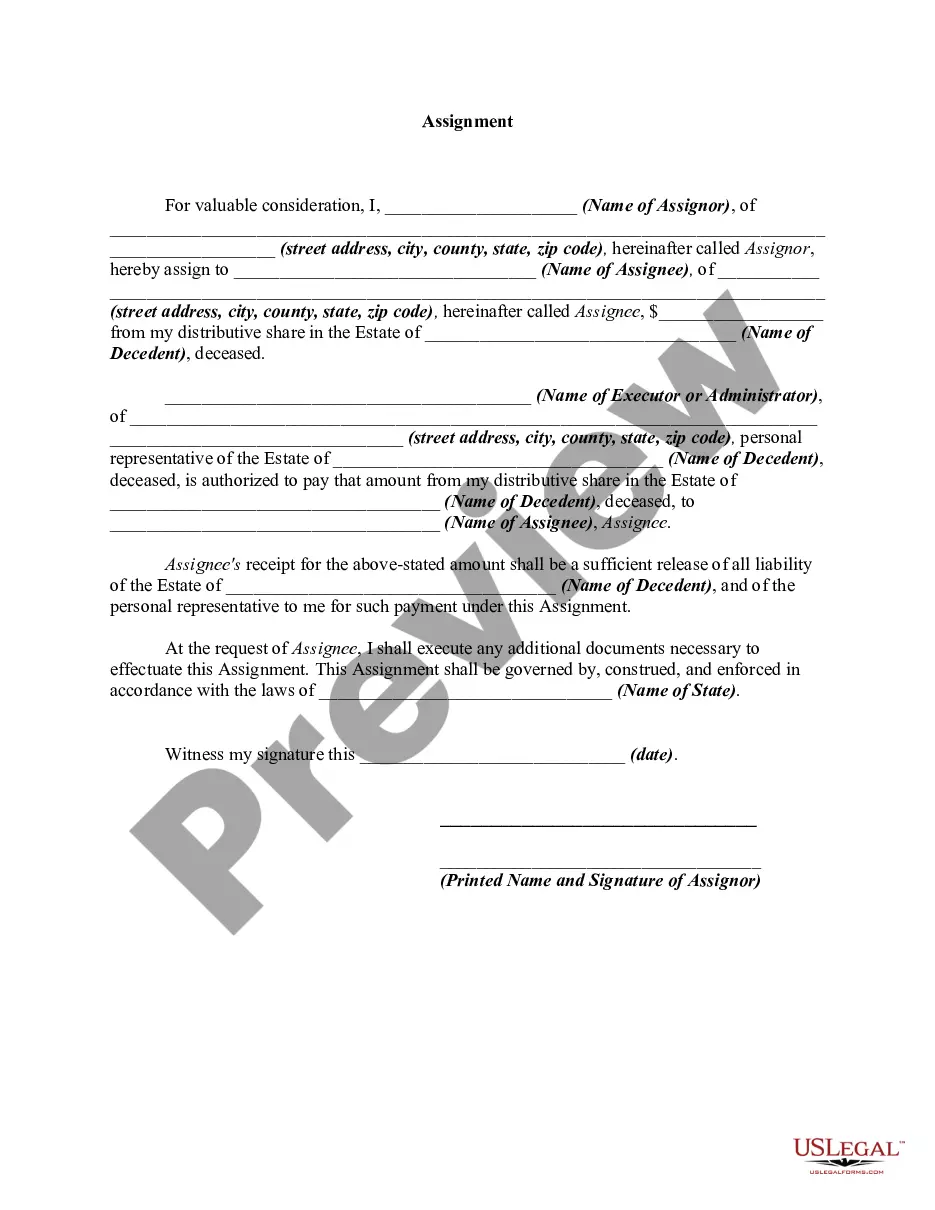
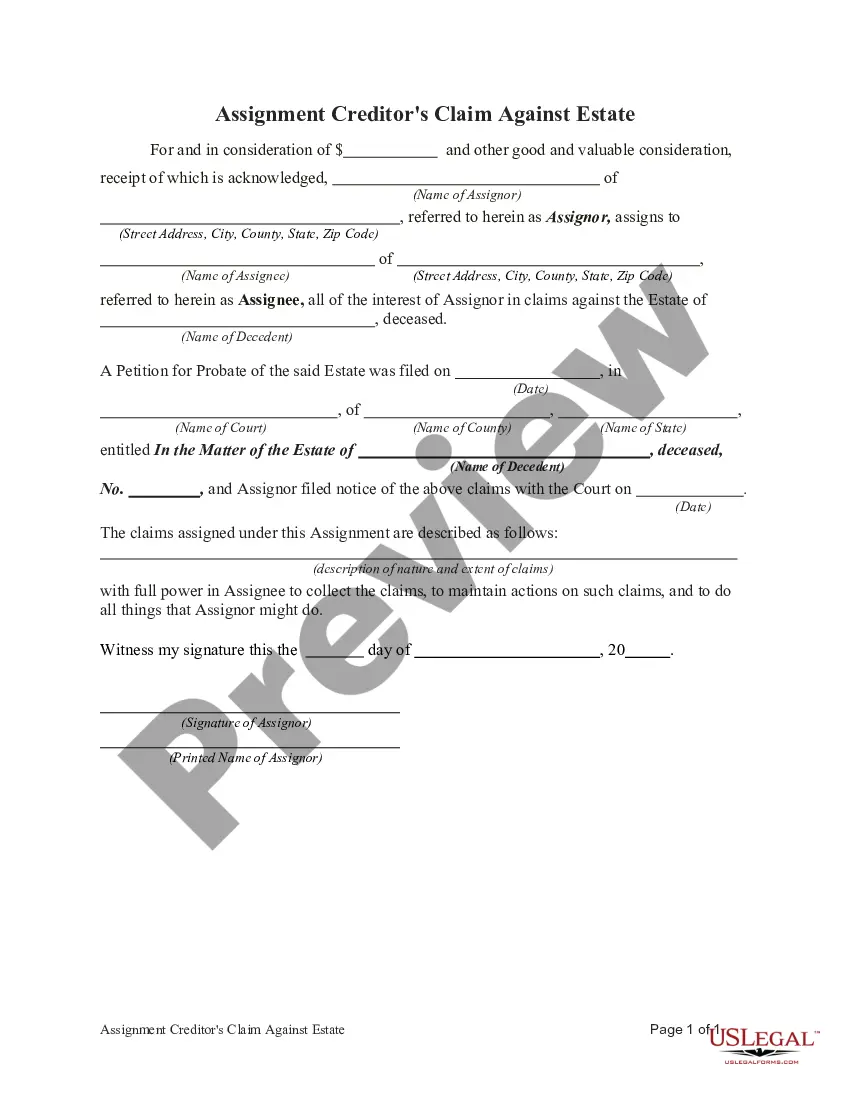
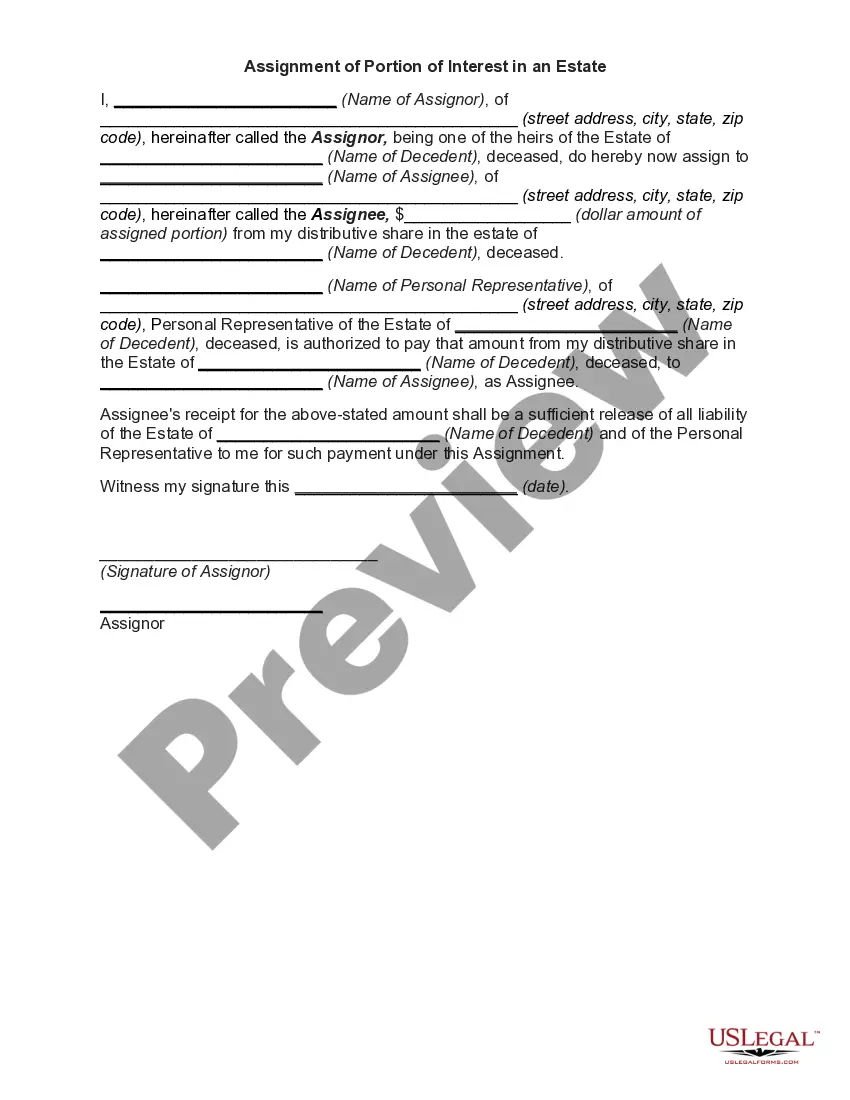
A Legacy is a gift of property or money under the terms of the will of a person who has died. This form is a generic example that may be referred to when preparing such a form for your particular state. It is for illustrative purposes only. Local laws should be consulted to determine any specific requirements for such a form in a particular jurisdiction.
Austin Texas Assignment of Legacy in Order to Pay Indebtedness
Category:
State:
Multi-State
City:
Austin
Control #:
US-01756BG
Format:
Word;
Rich Text
Instant download
Description
Free preview
Form popularity
FAQ
Creditors must file claims against an estate in Texas within four months of the probate process starting. Failing to do so could result in losing the right to collect from the estate. If you are involved in the Austin Texas Assignment of Legacy in Order to Pay Indebtedness, understanding these time limits can help you manage estate settlements and creditor relationships more effectively.
Creditors have a limited time to collect debts from an estate in Texas. They typically have four months from the date of the estate's probate to present their claims. If your focus is on the Austin Texas Assignment of Legacy in Order to Pay Indebtedness, keeping track of this timeframe is essential for effective estate administration and resolving creditor claims efficiently.
In Texas, due diligence for unclaimed property requires the holder to attempt to contact the owner before reporting the property to the state. This typically involves sending written notices to the last known address. If you are dealing with the Austin Texas Assignment of Legacy in Order to Pay Indebtedness, ensuring compliance with due diligence can aid in proper estate management and protect against potential claims.
Creditors in Texas generally have four months from the date of the estate's probate to file claims against it. However, if the estate is not probated, creditors may have up to four years to make their claims. Understanding the Austin Texas Assignment of Legacy in Order to Pay Indebtedness can help you manage these claims effectively and prioritize debt settlement.
In Texas, the time limit to settle an estate typically depends on whether it goes through probate. Generally, the estate should be settled within four years of the decedent's death. If you are navigating the Austin Texas Assignment of Legacy in Order to Pay Indebtedness, working with professionals can help you adhere to these timelines and ensure compliance with state laws.
To respond to a debt claim citation in Texas online, you need to file an answer with the court where the case is pending. You can often find forms and guidance on the court's website. If you are facing challenges, the US Legal Forms platform offers resources that can assist you in preparing an appropriate response, especially if you are looking into an Austin Texas Assignment of Legacy in Order to Pay Indebtedness. Timely filing your answer is crucial to protect your rights.
In Texas, debts typically become uncollectible after four years from the date of the last payment or written acknowledgment. This period is governed by the Texas statute of limitations. If you are dealing with debt and considering an Austin Texas Assignment of Legacy in Order to Pay Indebtedness, it’s essential to understand these timelines. Consulting with a legal expert can help you navigate your specific situation.
In Texas, the statute of limitations for most debts is four years. This means creditors have four years from the date of the last payment or acknowledgment of the debt to collect. After this period, the debt becomes uncollectible through legal means. Utilizing the Austin Texas Assignment of Legacy in Order to Pay Indebtedness can provide clarity on managing any lingering obligations after this timeframe.
In Texas, when your spouse passes away, you typically are not responsible for their credit card debt unless you were a co-signer or joint account holder. The estate of your deceased spouse is responsible for settling debts using the assets that remain. If the estate lacks sufficient assets, creditors may not collect on the debt. Understanding the Austin Texas Assignment of Legacy in Order to Pay Indebtedness can help you navigate these complexities.