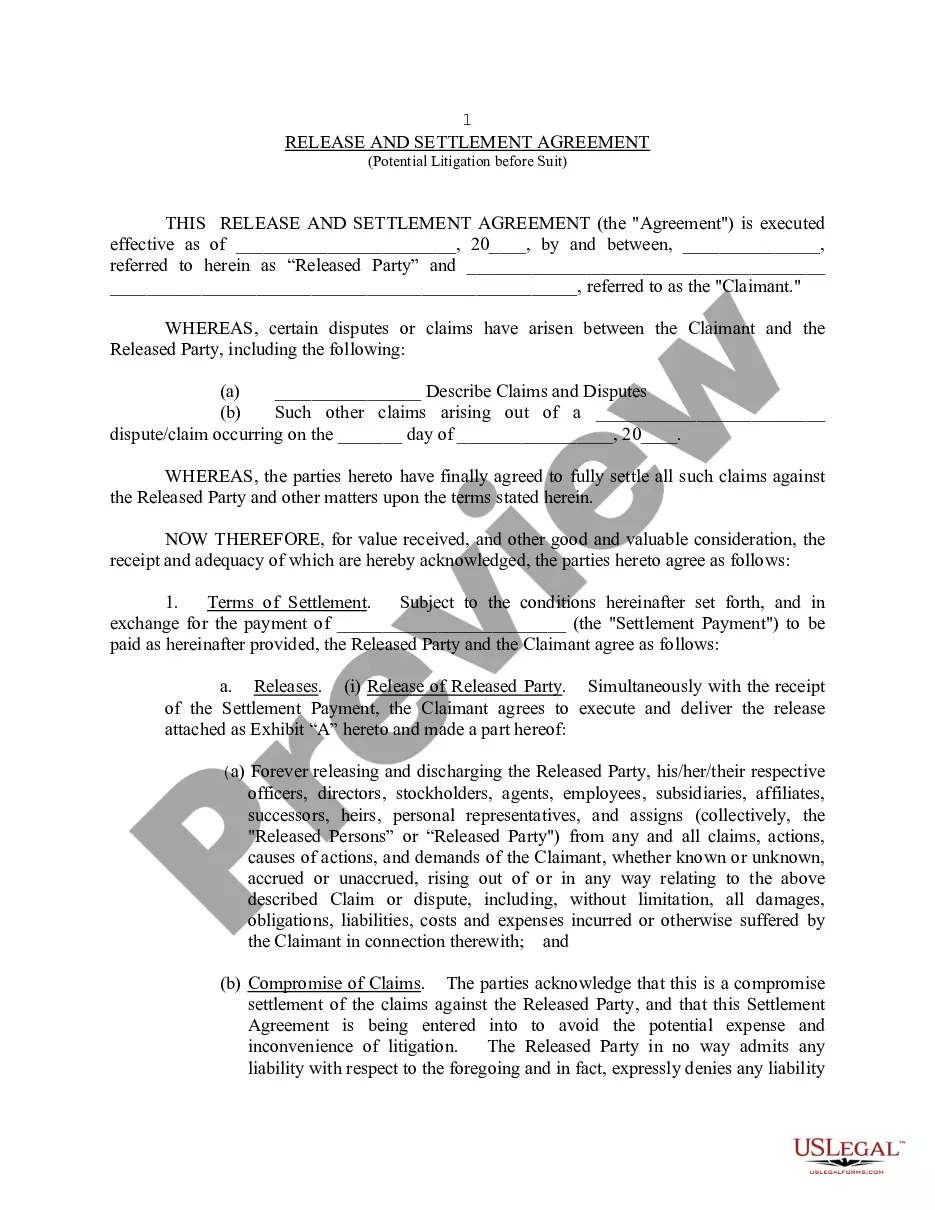
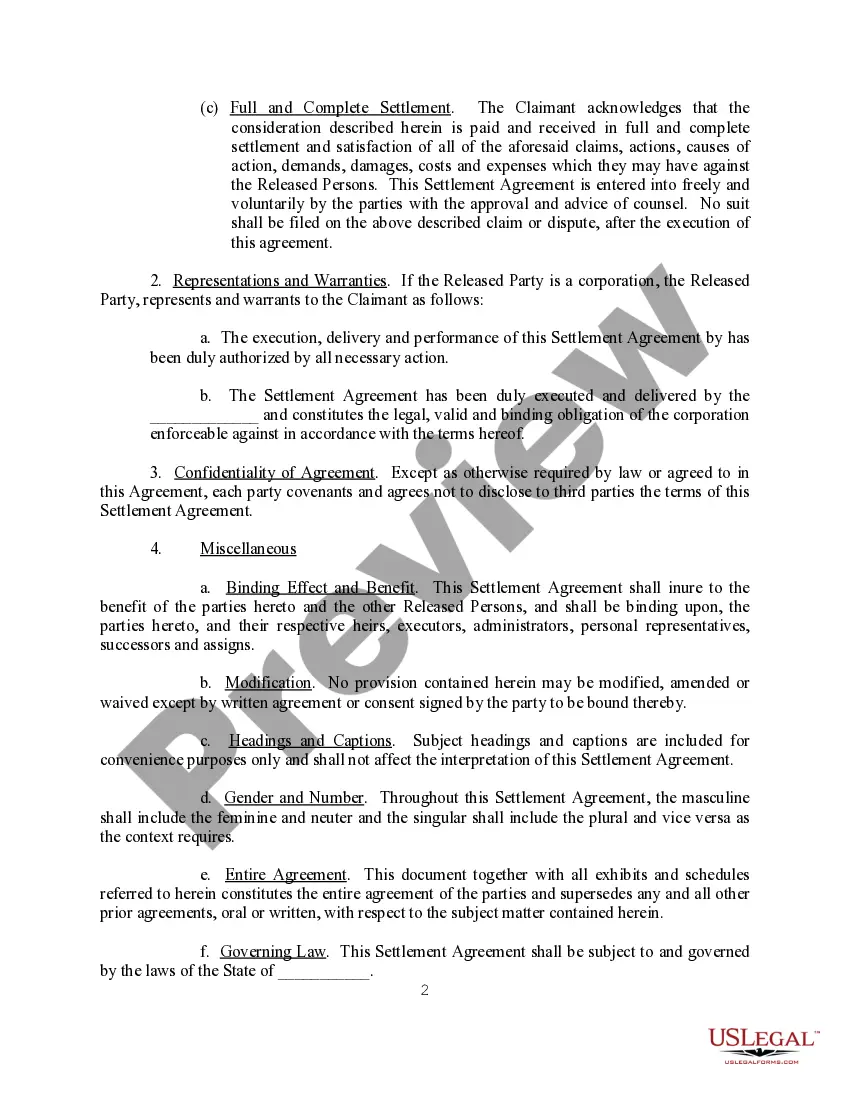
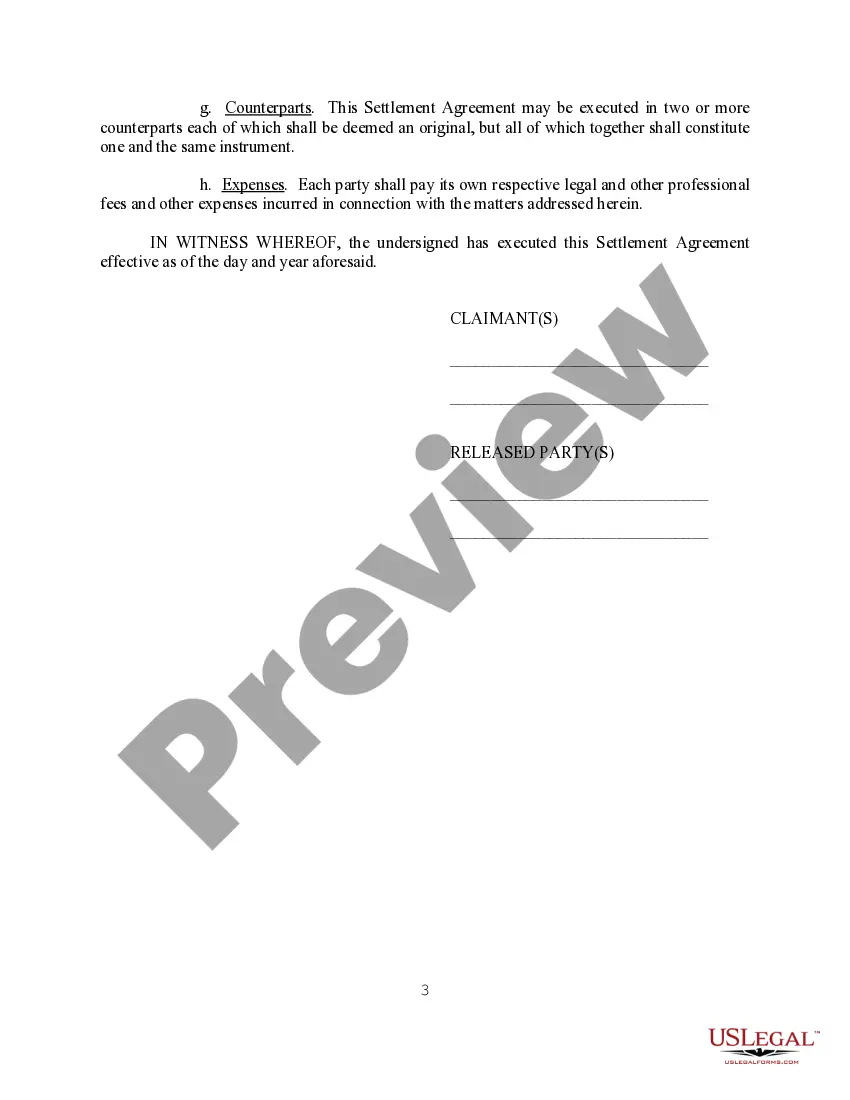
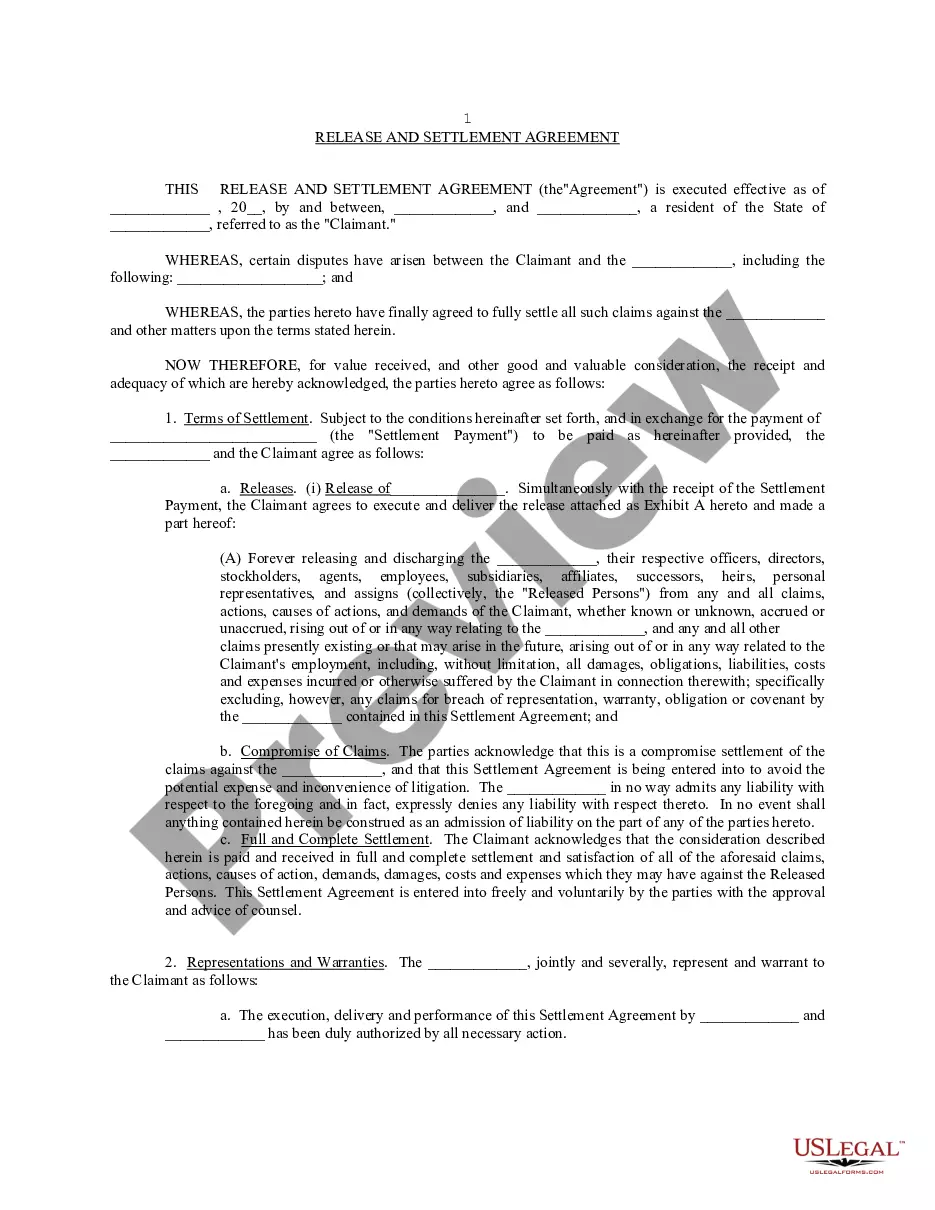
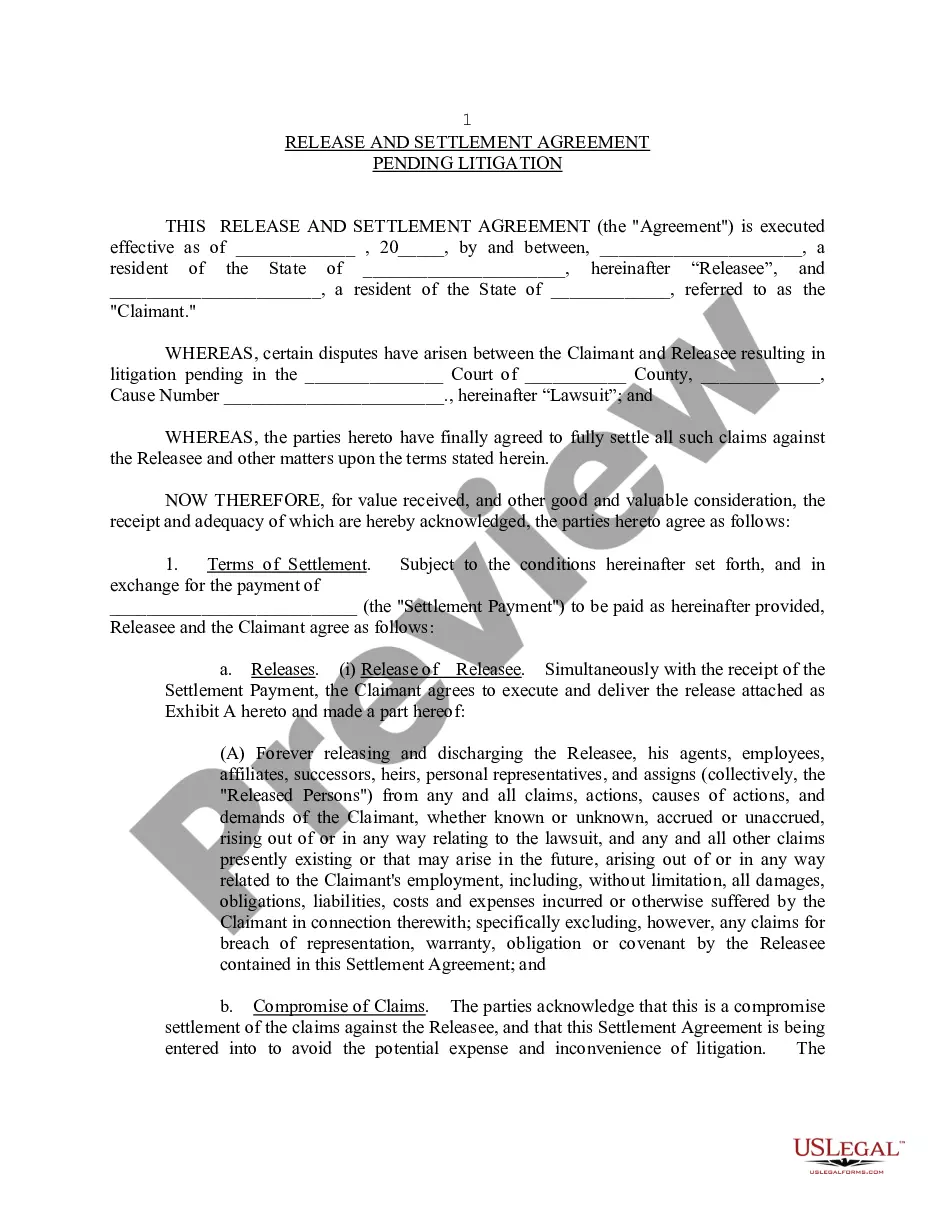
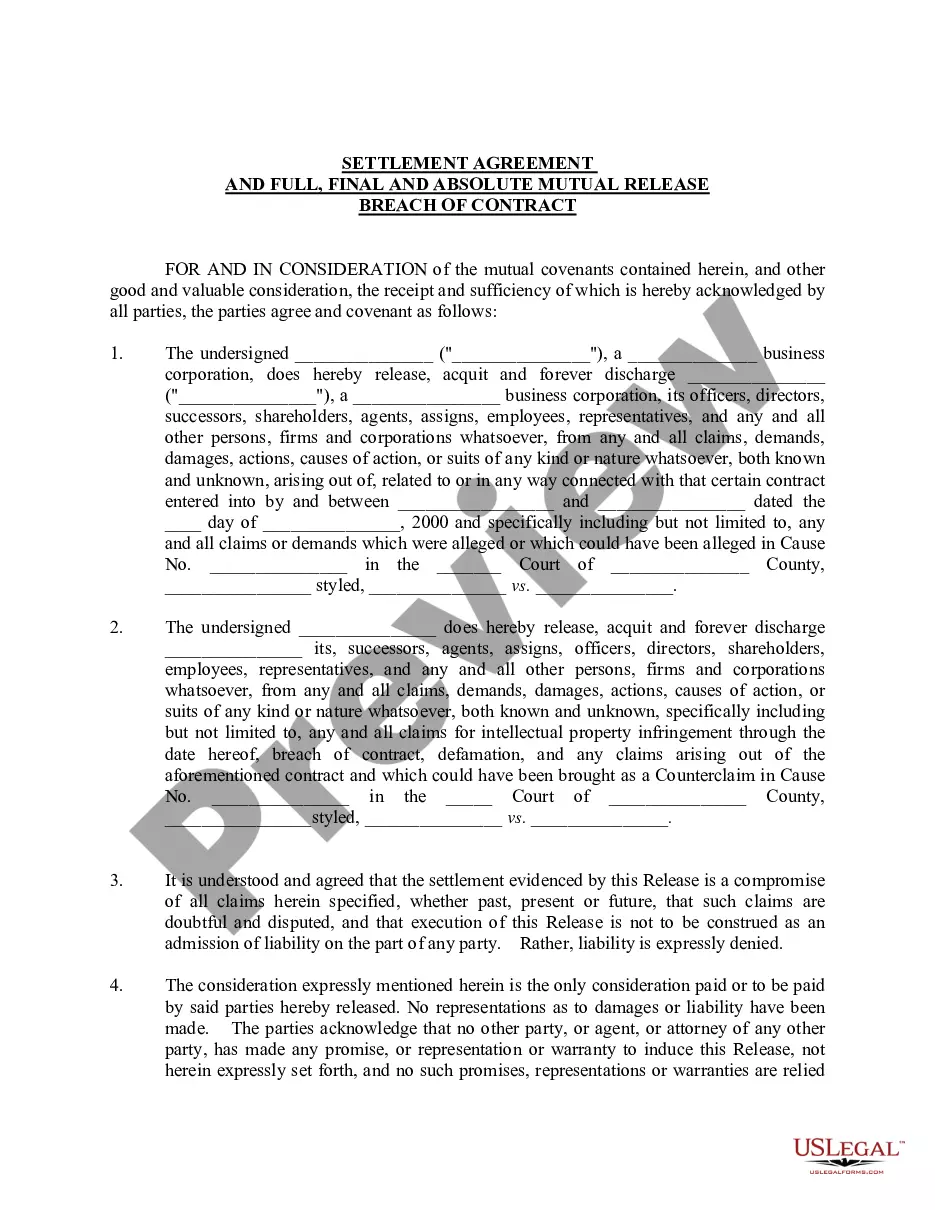
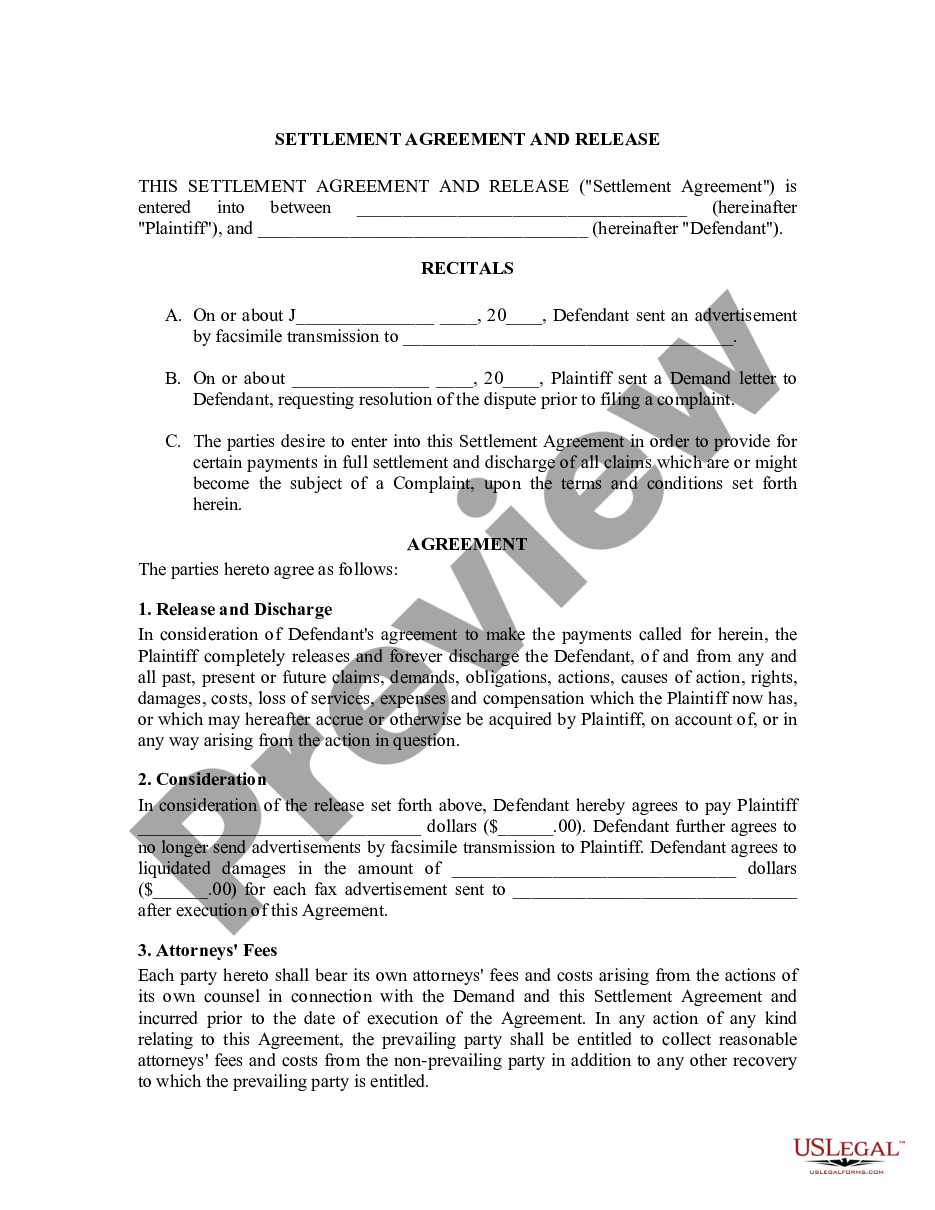
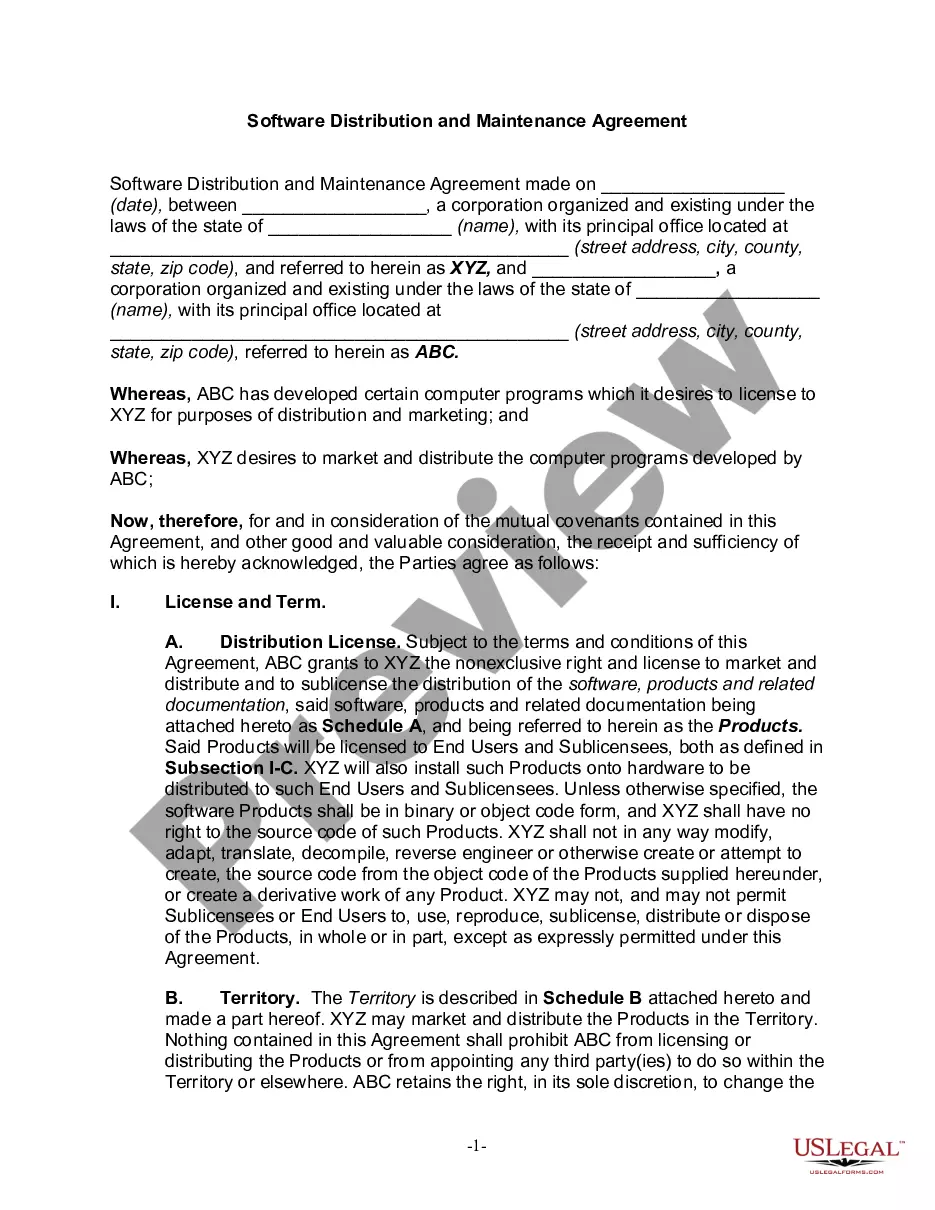
This form is a release and settlement agreement. The claimant forever releases and discharges the releasee from any and all claims and disputes rising out of the cause of action described in the form. The parties also acknowledge that the settlement agreement is a compromise of the claims against the released party.
Cincinnati Ohio Release and Settlement Agreement - Potential Litigation before Suit
Category:
State:
Multi-State
City:
Cincinnati
Control #:
US-01662
Format:
Word;
Rich Text
Instant download
Description
Free preview


Form popularity
FAQ
A 664.6 motion to enforce settlement is a legal action used to enforce a settlement agreement in California, which may also have relevance in Ohio under certain circumstances. This motion requests the court to compel compliance with the settlement terms if one party fails to uphold their end of the bargain. In relation to the Cincinnati Ohio Release and Settlement Agreement - Potential Litigation before Suit, understanding this concept can be crucial if disputes arise post-agreement. Legal guidance can help clarify the implications and options available.
The timeline for receiving a settlement check in Ohio can vary depending on several factors. Typically, once both parties sign a Cincinnati Ohio Release and Settlement Agreement - Potential Litigation before Suit, it may take a few weeks for the check to be processed and issued. Delays can occur due to additional paperwork or conditions in the agreement. Make sure to communicate with the involved parties to set expectations and timelines.
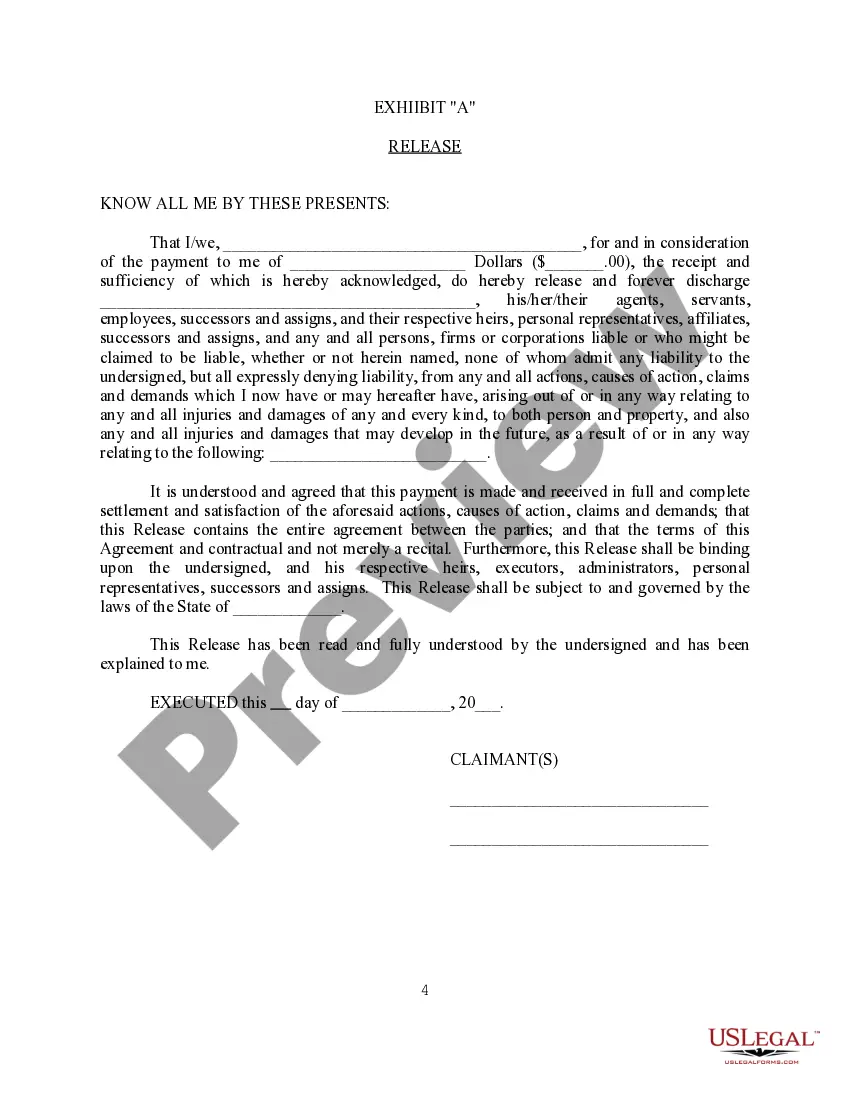
While a release and a settlement agreement are related, they are not the same. A settlement agreement details the terms of compensation and other obligations, while a release is a document where one party gives up the right to pursue further legal action regarding a claim. In a Cincinnati Ohio Release and Settlement Agreement - Potential Litigation before Suit, both documents work together to provide a clear resolution to the dispute. Understanding both can help you navigate the process more effectively.
After you agree to a settlement in a Cincinnati Ohio Release and Settlement Agreement - Potential Litigation before Suit, the next steps typically involve drafting the agreement and signing it. This document outlines the terms of the settlement and clarifies the obligations of all parties involved. Once signed, you may receive compensation as outlined in the agreement. It’s important to ensure you understand all terms to avoid future complications.
A settlement agreement and release is a legal document that outlines the terms under which parties resolve their disputes. In the context of a Cincinnati Ohio Release and Settlement Agreement - Potential Litigation before Suit, it typically includes the specifics of the settlement, the obligations of each party, and the claims being released. This document is essential as it formalizes the agreement, ensuring that all parties understand their rights and responsibilities moving forward.
Yes, settling before filing a lawsuit is possible and often beneficial. A Cincinnati Ohio Release and Settlement Agreement - Potential Litigation before Suit allows parties to resolve issues amicably, avoiding the costs and stresses of litigation. This early resolution can provide certainty and peace of mind, as both parties agree on terms that work for them before escalating the situation to court.
Yes, under a Cincinnati Ohio Release and Settlement Agreement - Potential Litigation before Suit, you can release future claims related to the current dispute. This means that once you sign the agreement, you typically cannot pursue those claims in the future. It is essential to understand the implications of this release, as it protects both parties from any future legal action regarding the settled matters.
While a settlement agreement and a release may seem similar, they serve distinct purposes. A settlement agreement resolves disputes and lays out the terms agreed upon by the parties, while a release formally relinquishes any claims related to those terms. In the context of the Cincinnati Ohio Release and Settlement Agreement - Potential Litigation before Suit, both documents play pivotal roles in protecting your interests throughout the legal process.
Filling out a release of claims requires careful attention to detail. Start by identifying the parties involved, including their addresses and roles. Then, clearly state the claims being released, ensuring you mention the specific circumstances encompassed by the Cincinnati Ohio Release and Settlement Agreement - Potential Litigation before Suit. Finally, both parties must sign and date the form to make it legally binding.