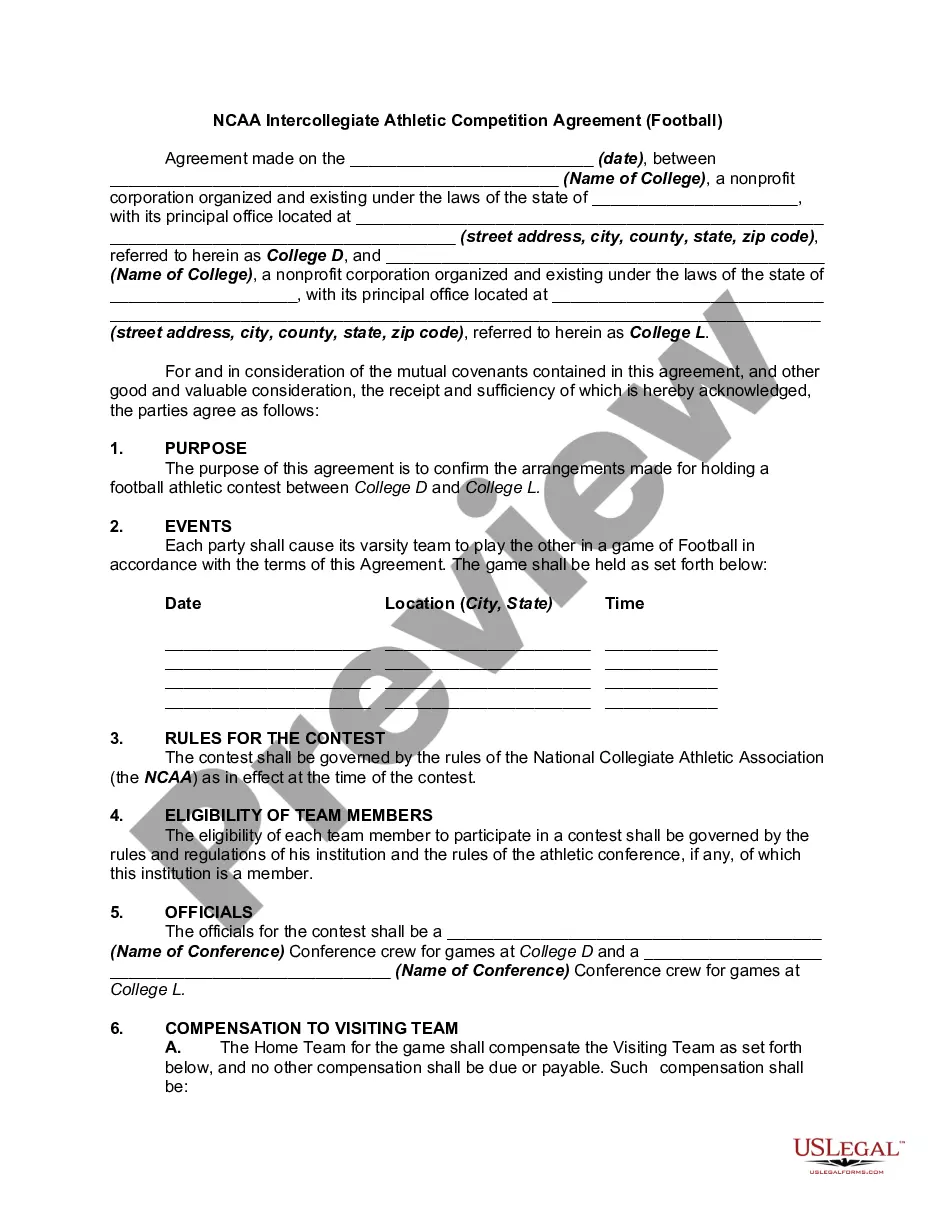
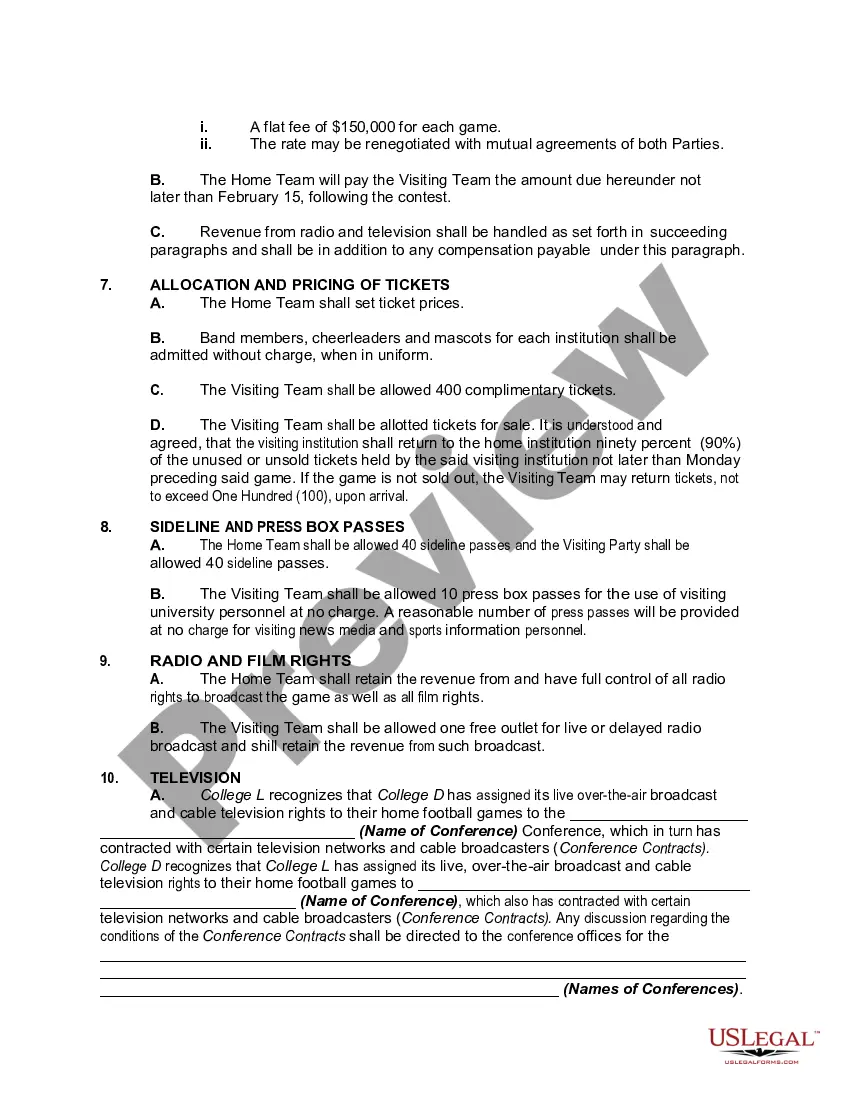
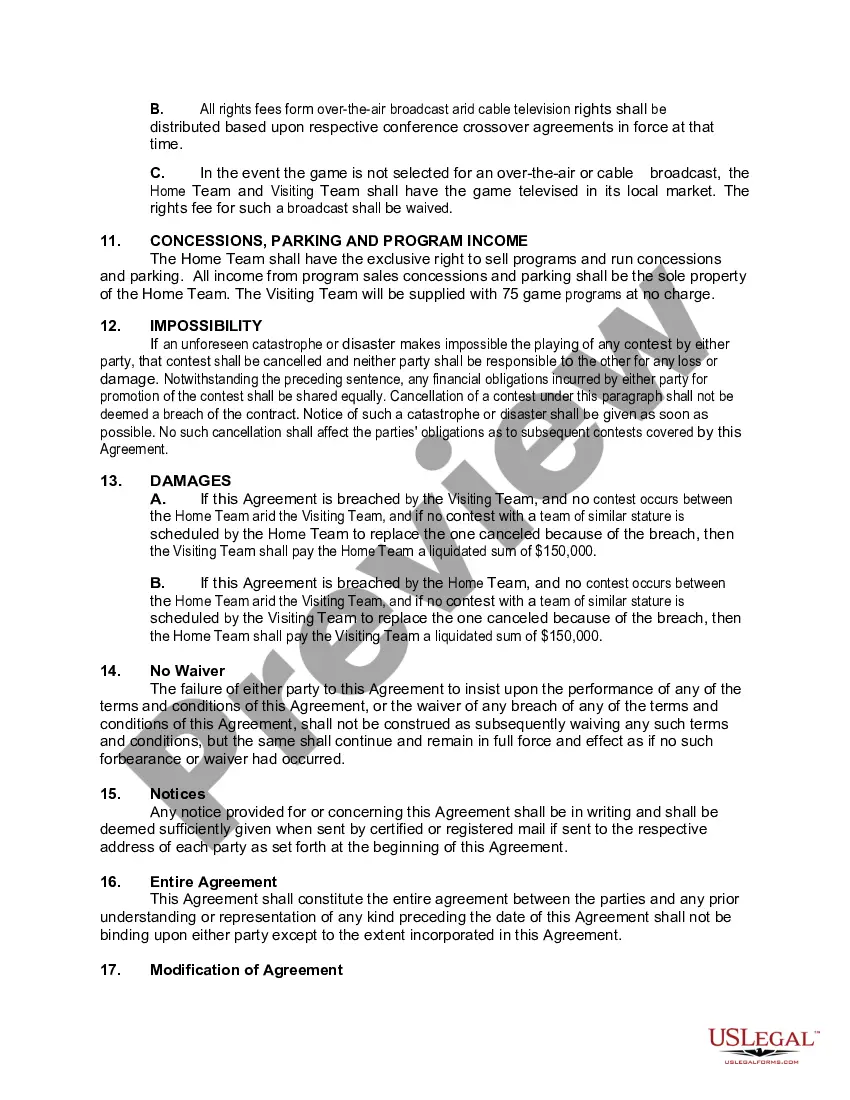
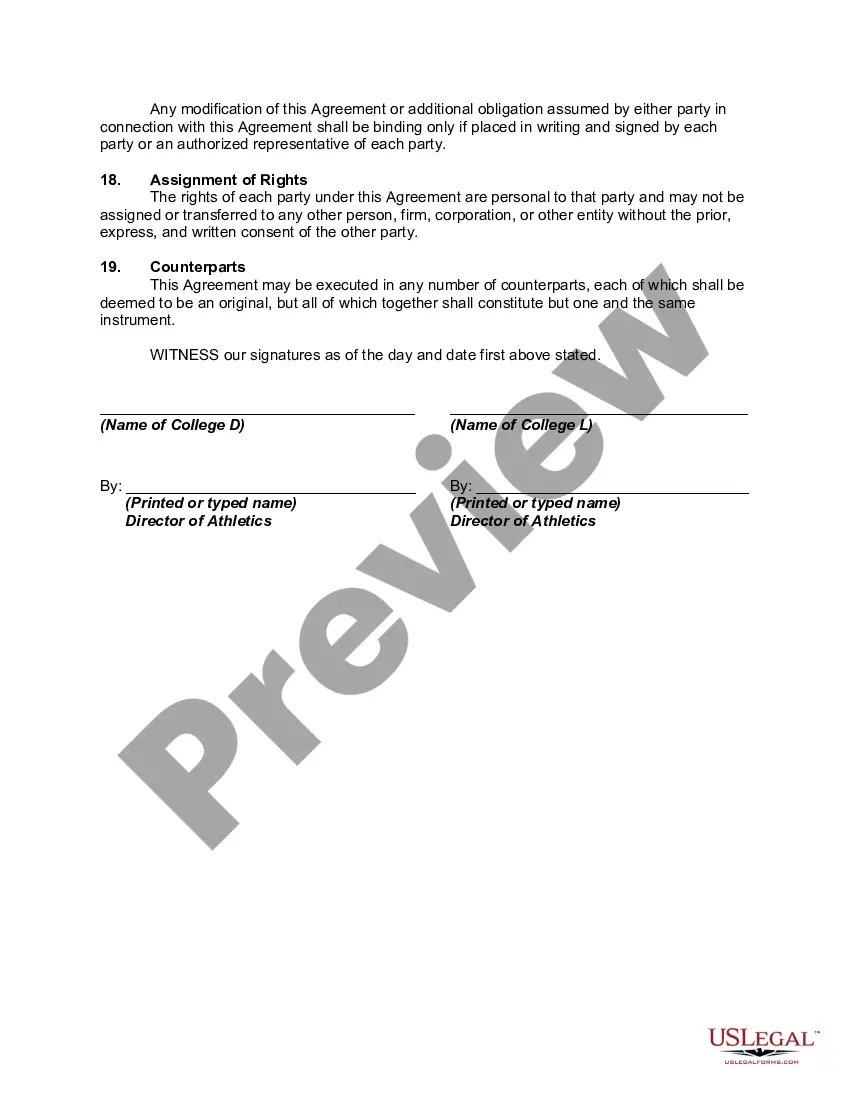
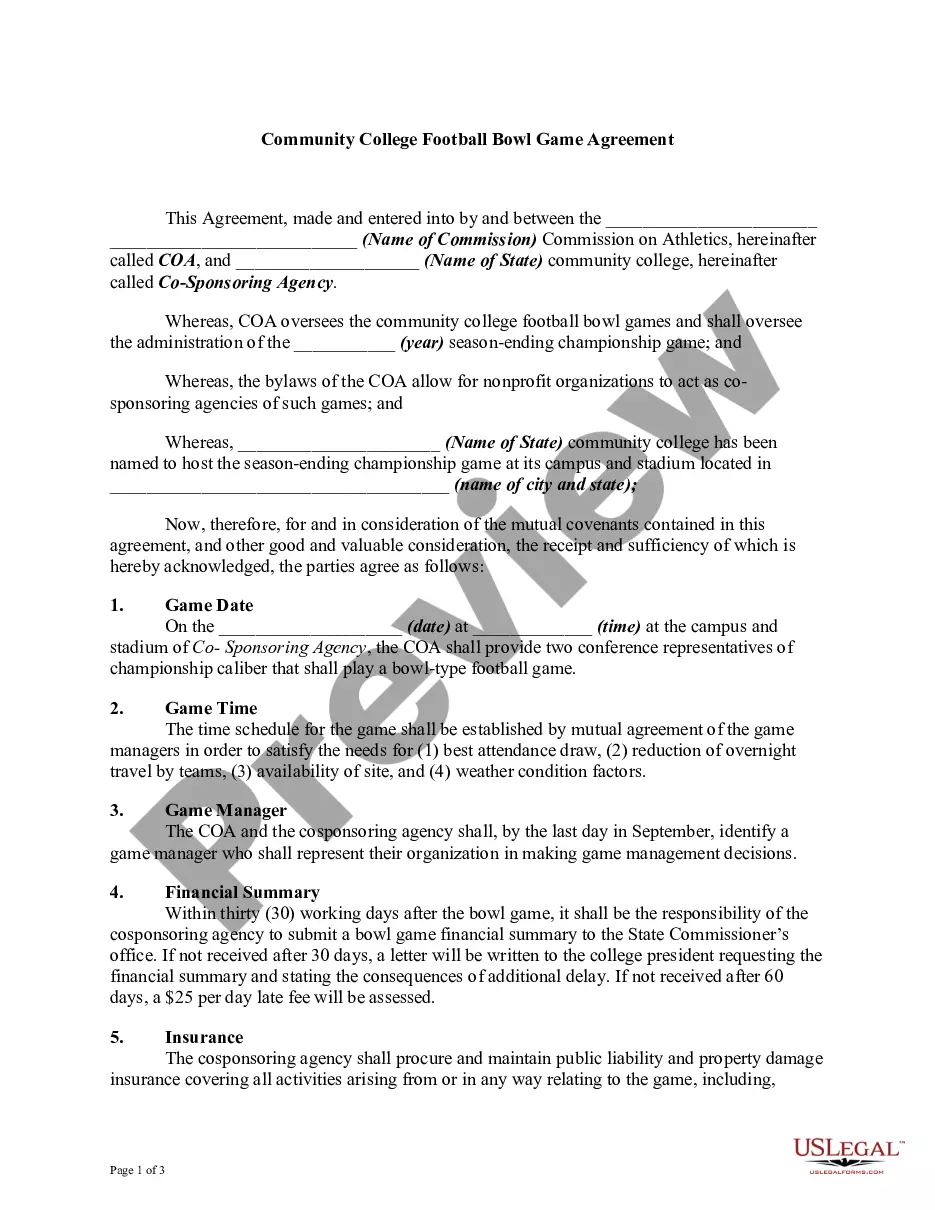
This form is a sample of an agreement between two NCAA Division I Colleges to play football games over a four year period.
Saint Paul Minnesota NCAA Intercollegiate Athletic Competition Agreement - Football
Category:
State:
Multi-State
City:
Saint Paul
Control #:
US-01634BG
Format:
Word;
Rich Text
Instant download
Description
Free preview



Form popularity
FAQ
Getting sponsored as a college athlete requires a proactive approach and a personal branding strategy. Athletic performance, social media presence, and networking play crucial roles in attracting sponsors. Understanding the regulations set forth in the Saint Paul Minnesota NCAA Intercollegiate Athletic Competition Agreement - Football is essential to ensure compliance while actively seeking sponsorship opportunities. Platforms like uslegalforms can help you navigate sponsorship contracts and agreements effectively, ensuring your interests are protected.
The 5 for 5 rule in college football allows players to participate in five seasons of competition within a five-year eligibility period, with the possibility of a redshirt year included. This provides athletes the flexibility to manage injuries and academic responsibilities while still maximizing their playing time. The Saint Paul Minnesota NCAA Intercollegiate Athletic Competition Agreement - Football reinforces these guidelines to promote fair competition across teams. This rule is vital for maintaining a level playing field among athletes in college sports.
The 5 in 5 rule refers to the requirement that an NCAA athlete must complete their five years of eligibility within a five-year period, which also includes any time spent as a redshirt. This rule encourages athletes to balance their academic pursuits with their athletic commitments in a structured time frame. The Saint Paul Minnesota NCAA Intercollegiate Athletic Competition Agreement - Football emphasizes the importance of adhering to these regulations. By understanding this rule, athletes can better plan their collegiate careers.
The 5 year rule for NCAA Division 1 essentially states that a student-athlete has five years to complete their college eligibility in sports. This time frame includes any redshirt years, ensuring that students don’t lose their chance to compete due to injury or other factors. This regulation is crucial to understanding the nuances of the Saint Paul Minnesota NCAA Intercollegiate Athletic Competition Agreement - Football and how it operates within collegiate athletics. It provides a structured pathway for athletes to pursue their academic and athletic goals.
Women’s college basketball transitioned to the 5 on 5 format in 1971. Before this change, various formats allowed different player numbers on the court, but the full team structure introduced a more dynamic and competitive game. This change aligns with the spirit of fairness and equality seen in the Saint Paul Minnesota NCAA Intercollegiate Athletic Competition Agreement - Football. Understanding these historical shifts can enhance your appreciation of college sports.
In recent years, Division 1 athletes have seen significant income opportunities through Name, Image, and Likeness (NIL) deals under the Saint Paul Minnesota NCAA Intercollegiate Athletic Competition Agreement - Football context. These players can earn anywhere from a few thousand to millions of dollars, depending on their marketability and sport. Many factors influence these amounts, including the athlete's performance and social media presence. For clarity about NIL agreements and potential earnings, exploring resources and platforms, such as uslegalforms, could provide valuable insights.
The NCAA's regulations surrounding the Saint Paul Minnesota NCAA Intercollegiate Athletic Competition Agreement - Football have raised concerns regarding competition laws. Many argue that by limiting athlete compensation and creating strict eligibility requirements, the NCAA has essentially restrained trade. These actions could be seen as violating the Sherman Act, as they may inhibit fair competition among student-athletes and schools alike. Seeking legal guidance could clarify these complex issues further.
The 4 2 4 rule is a guideline set by the NCAA that outlines how student-athletes can move between junior colleges and four-year institutions while preserving their eligibility for competition, as seen in the Saint Paul Minnesota NCAA Intercollegiate Athletic Competition Agreement - Football. Under this rule, a student can transfer from a junior college to a four-year program, which helps broaden their opportunities. Knowing the specifics of this rule is beneficial for athletes considering their educational paths.
The 40-60-80 rule refers to NCAA scholarship funding requirements that can impact your participation in sports, including those governed by the Saint Paul Minnesota NCAA Intercollegiate Athletic Competition Agreement - Football. This rule states that athletes must receive a minimum percentage of their scholarships to maintain their eligibility across different academic years. Understanding this rule is essential for student-athletes to ensure they meet the criteria set forth by NCAA regulations.
In most cases, students have a maximum of four years of eligibility to compete in NCAA sports, including under the guidelines of the Saint Paul Minnesota NCAA Intercollegiate Athletic Competition Agreement - Football. However, there are exceptions such as redshirting, which allows a student-athlete to extend their eligibility, potentially playing an extra year. It's crucial to consult with your athletic department to understand the rules that apply to your situation.