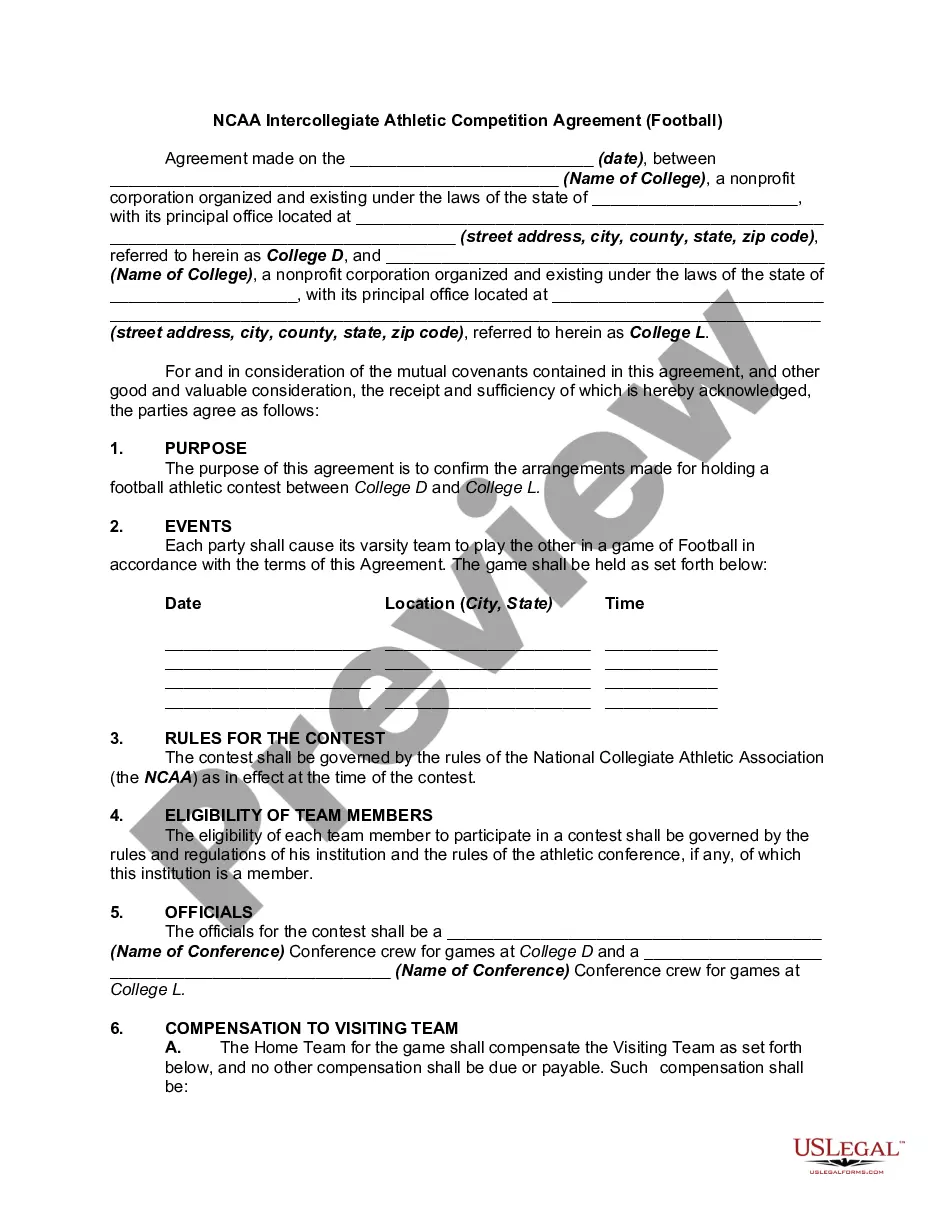
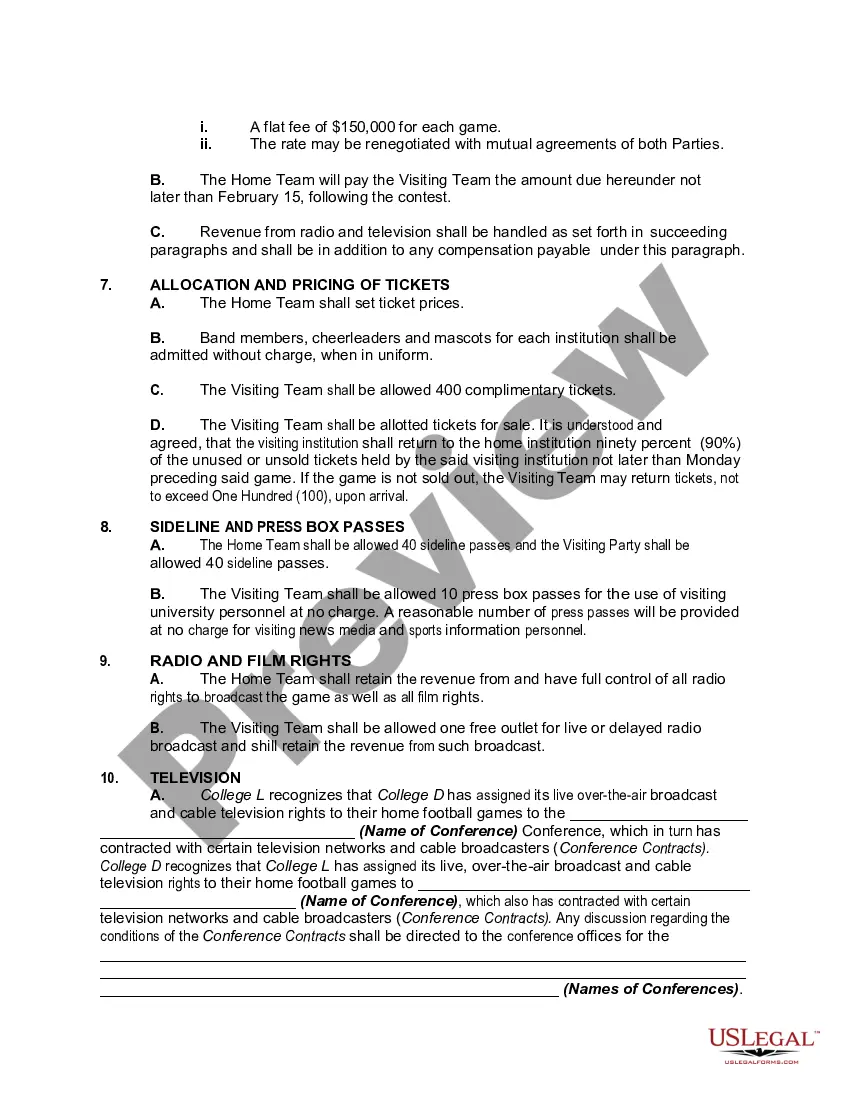
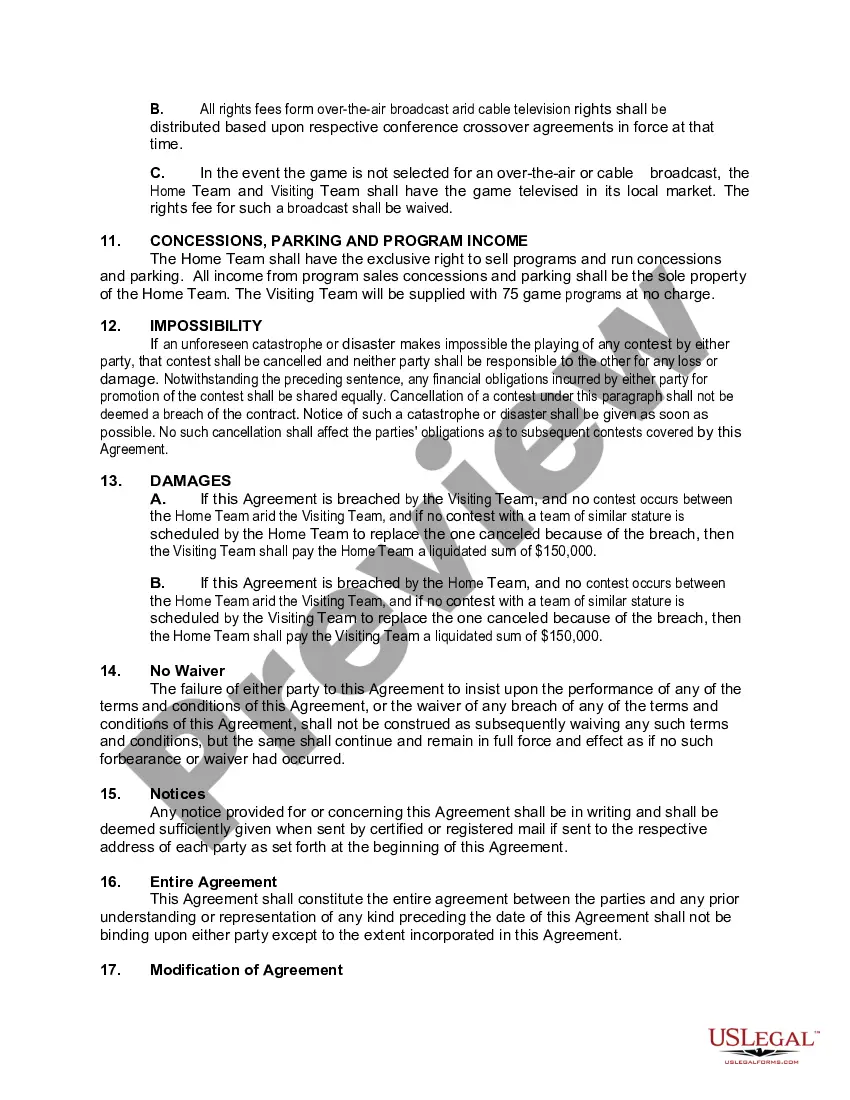
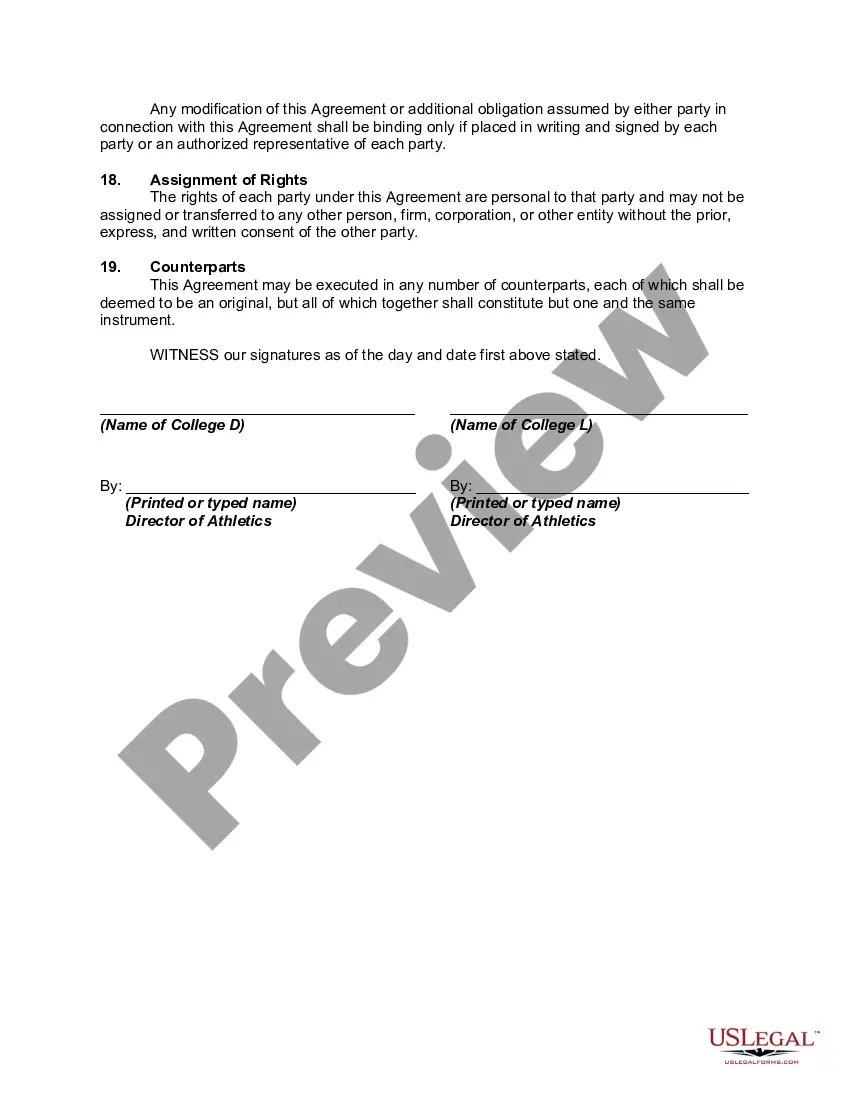
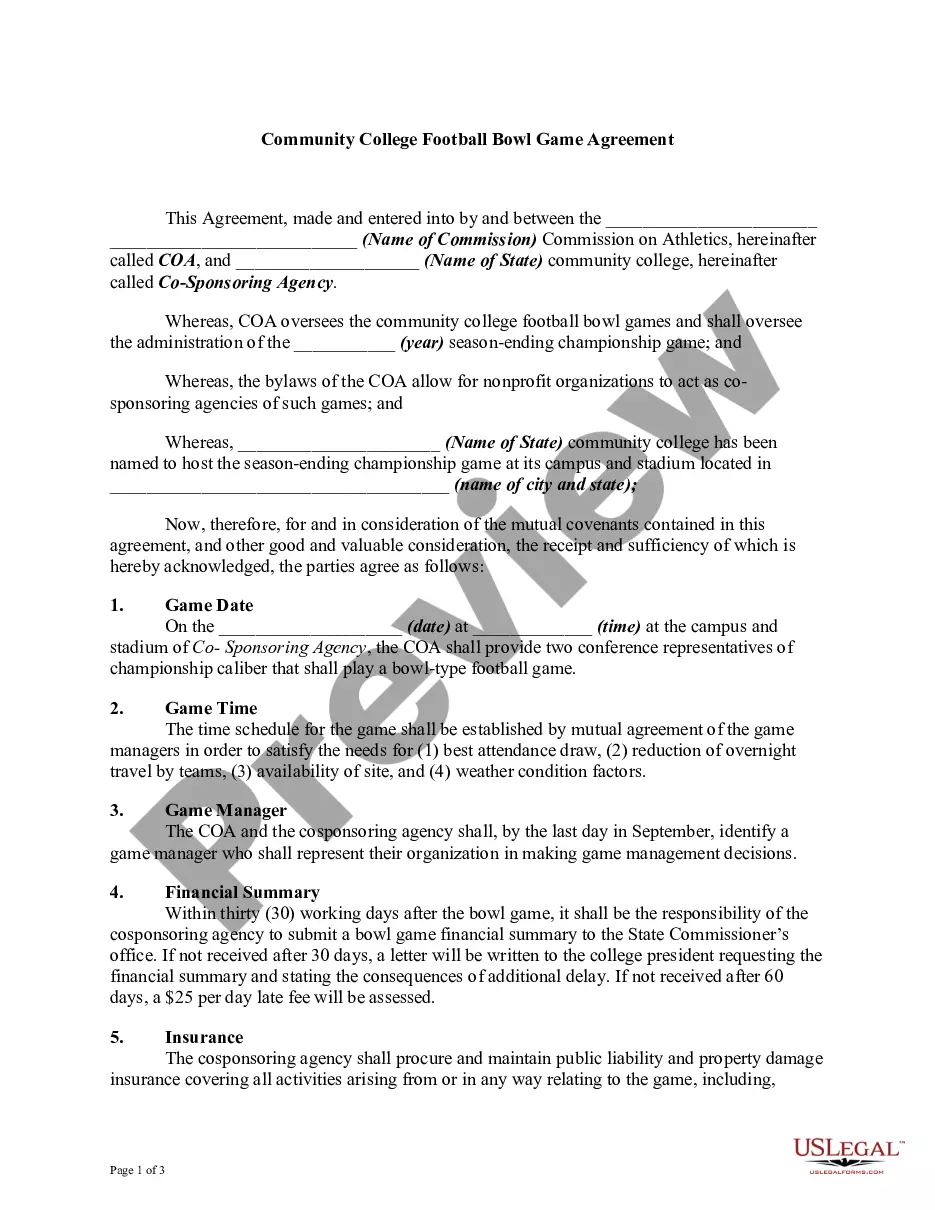
This form is a sample of an agreement between two NCAA Division I Colleges to play football games over a four year period.
Oklahoma City Oklahoma NCAA Intercollegiate Athletic Competition Agreement - Football
Category:
State:
Multi-State
City:
Oklahoma City
Control #:
US-01634BG
Format:
Word;
Rich Text
Instant download
Description
Free preview



Form popularity
FAQ
It's advisable to complete the NCAA Eligibility Center registration as early as possible in your high school career. Early action helps ensure you meet all necessary requirements and deadlines. As you prepare to participate in the Oklahoma City Oklahoma NCAA Intercollegiate Athletic Competition Agreement - Football, timely registration is key to a successful eligibility determination.
Finding your NCAA eligibility number is straightforward. Log into your account on the NCAA Eligibility Center's website and navigate to your profile. If you encounter any issues, their support team can guide you through the process. Remember, having your eligibility number is crucial when engaging with the Oklahoma City Oklahoma NCAA Intercollegiate Athletic Competition Agreement - Football.
To determine your NCAA eligibility number, start by accessing your personal account on the NCAA Eligibility Center's website. Ensure you have completed all necessary registration steps, submitting required documents. By following the prompts on their platform, you can quickly identify your eligibility status. This is essential in the context of the Oklahoma City Oklahoma NCAA Intercollegiate Athletic Competition Agreement - Football.
Yes, Oklahoma football is moving to the Southeastern Conference (SEC), marking a significant change in college athletics. This transition will have profound implications for the NCAA Intercollegiate Athletic Competition Agreement - Football in Oklahoma City. The SEC provides a larger platform and increased competition, and fans are eager to see how this move will enhance the football program's potential.
Diego Pavia's lawsuit against the NCAA focused on issues related to athlete compensation and unfair practices within the organization. His case aimed to shed light on the challenges faced by athletes under the current NCAA Intercollegiate Athletic Competition Agreement - Football in Oklahoma City. By taking legal action, he sought to advocate for equitable treatment and financial opportunities for all collegiate athletes.
Ed O'Bannon sued the NCAA for using his likeness in video games without compensation, challenging the rules that govern student-athlete compensation. His lawsuit pushed for change in the NCAA Intercollegiate Athletic Competition Agreement - Football, drawing attention to athletes' rights in Oklahoma City and beyond. O'Bannon's case has been influential in paving the way for future reforms in college sports.
Oklahoma and Georgia teamed up to sue the NCAA over television rights, arguing that the organization's restrictions on broadcasting limited their ability to earn revenue. This lawsuit set a precedent in Oklahoma City concerning the NCAA Intercollegiate Athletic Competition Agreement - Football, emphasizing the necessity for more effective regulations. The suit aimed to provide better financial opportunities for the schools involved.
Grant House sued the NCAA to challenge the organization's amateurism rules, believing they unfairly restricted athletes' rights. His case highlighted the need for reform in Oklahoma City, focusing on the NCAA Intercollegiate Athletic Competition Agreement - Football. By suing, he aimed to change the landscape for student-athletes, advocating for their rights to benefit from their name, image, and likeness.
Eligibility for NCAA football requires meeting specific academic and athletic standards set by the NCAA. Prospective student-athletes must complete required high school coursework, submit standardized test scores, and maintain a minimum GPA. Additionally, participation in the Oklahoma City Oklahoma NCAA Intercollegiate Athletic Competition Agreement - Football necessitates proper registration with the NCAA Eligibility Center to ensure compliance with NCAA regulations.
The distribution of the NCAA settlement will be determined based on a structured plan designed to support affected student-athletes. Eligible individuals will receive financial compensation directly related to their involvement in Oklahoma City Oklahoma NCAA Intercollegiate Athletic Competition Agreement - Football. Categories for distribution could include past benefits, future support, and specific programs aimed at enhancing athlete welfare.