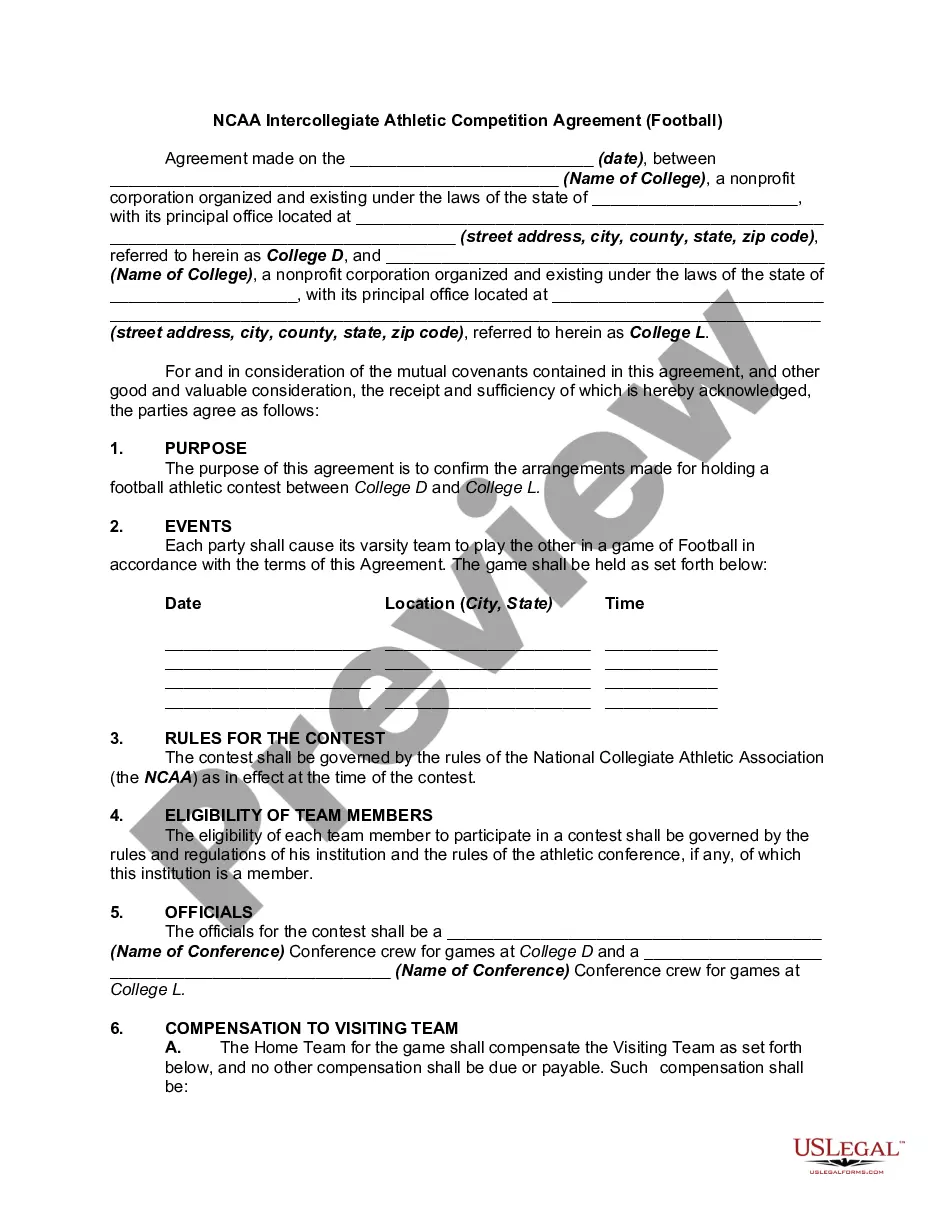
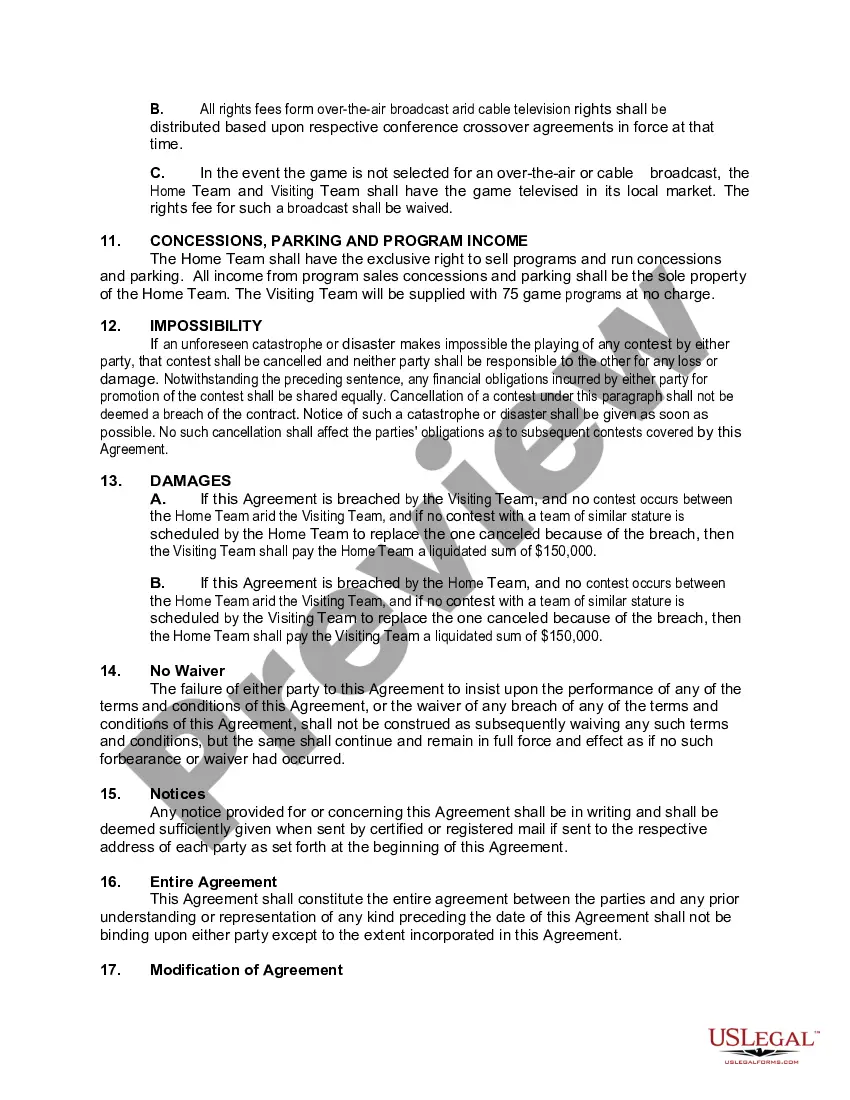
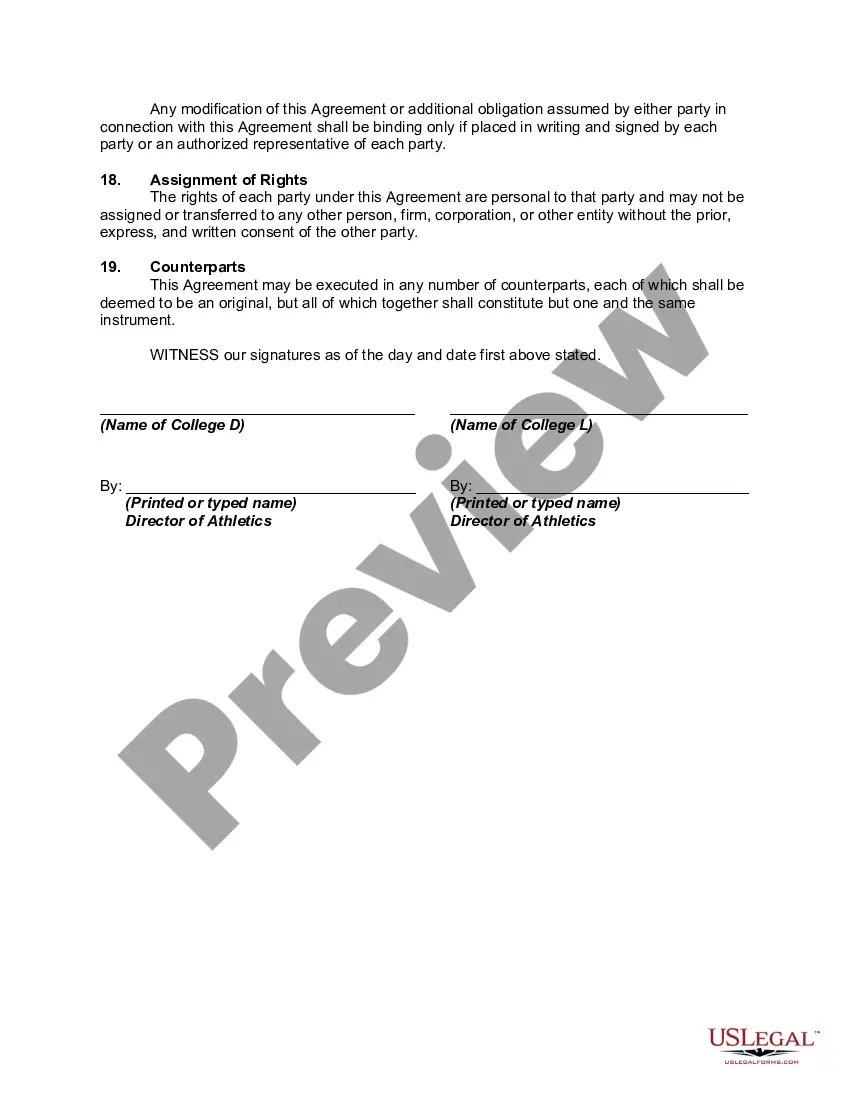
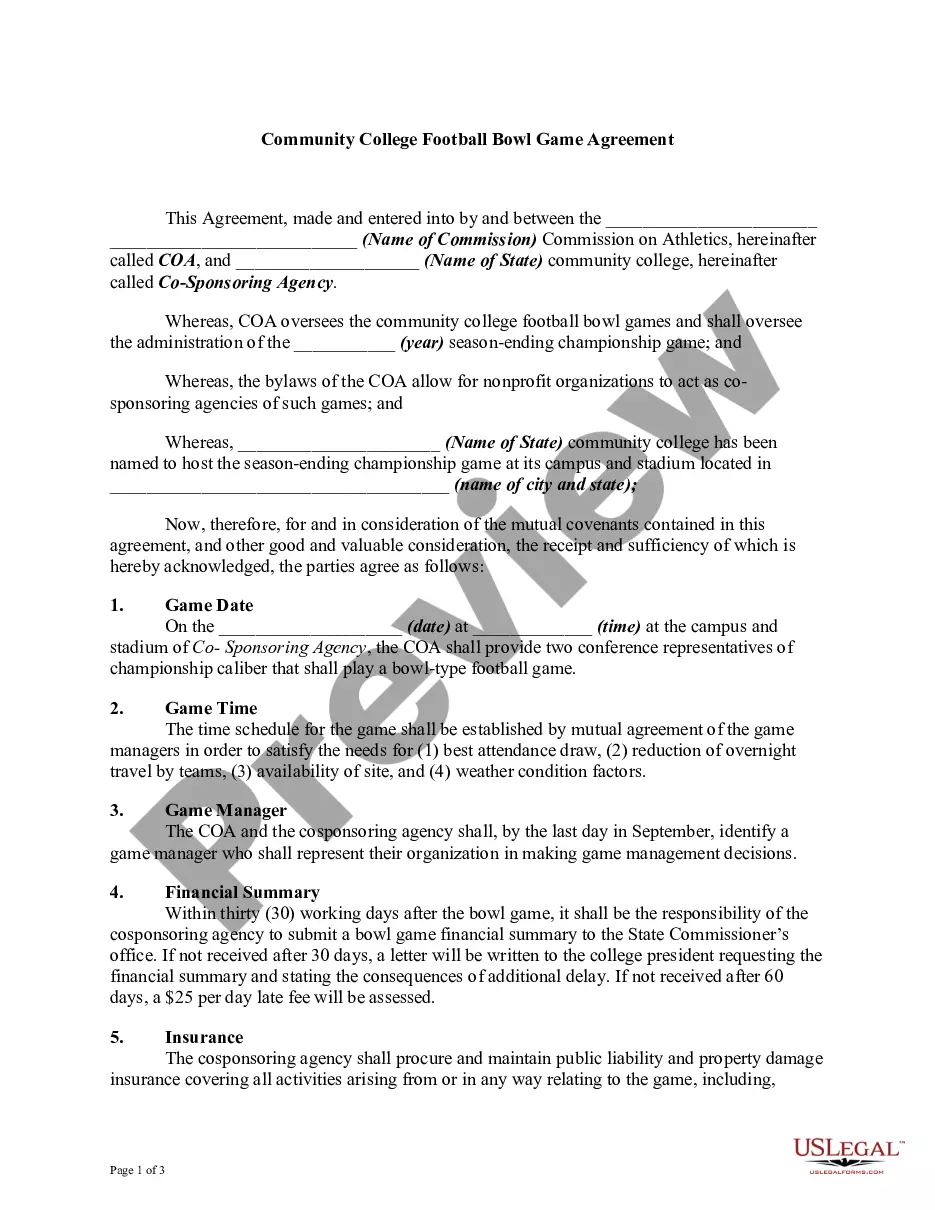
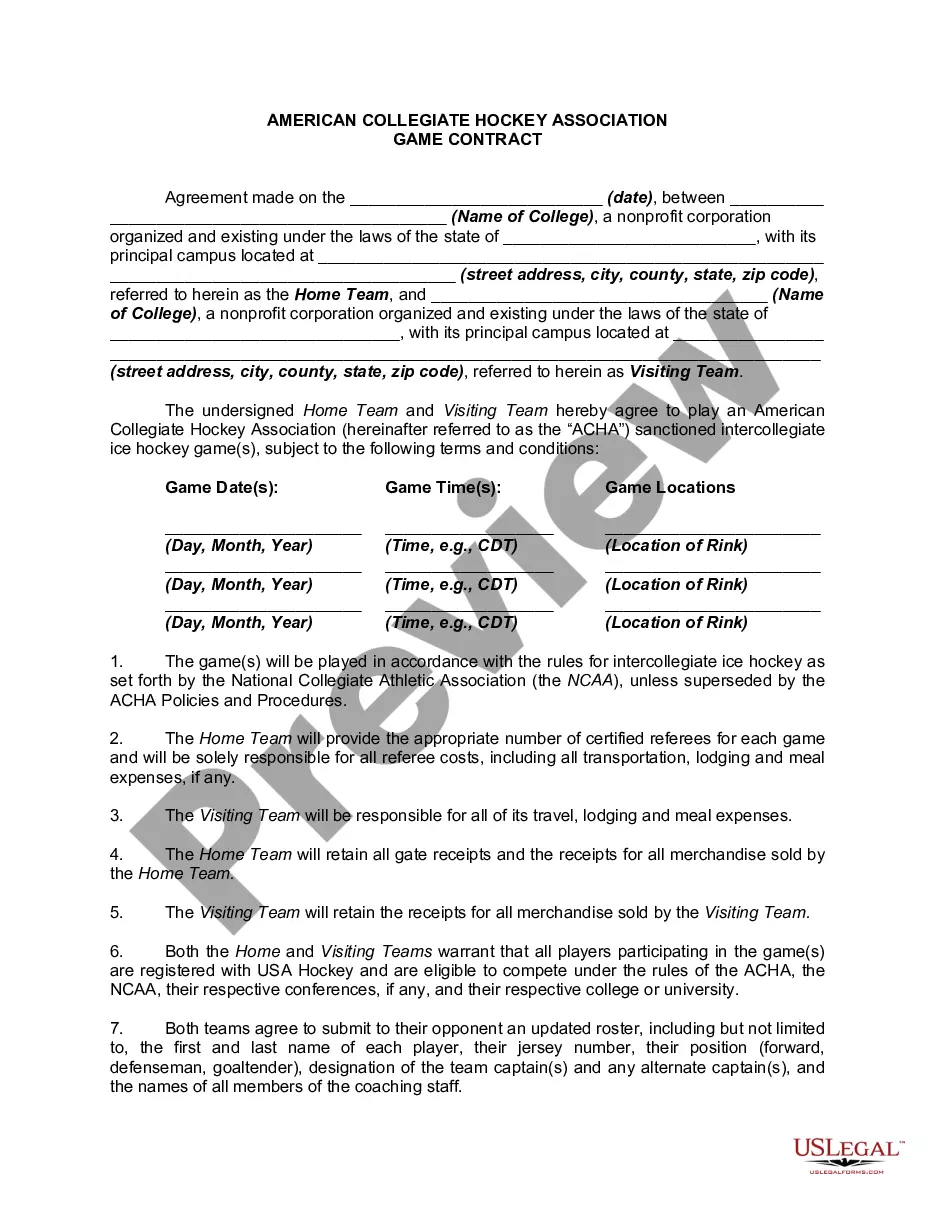
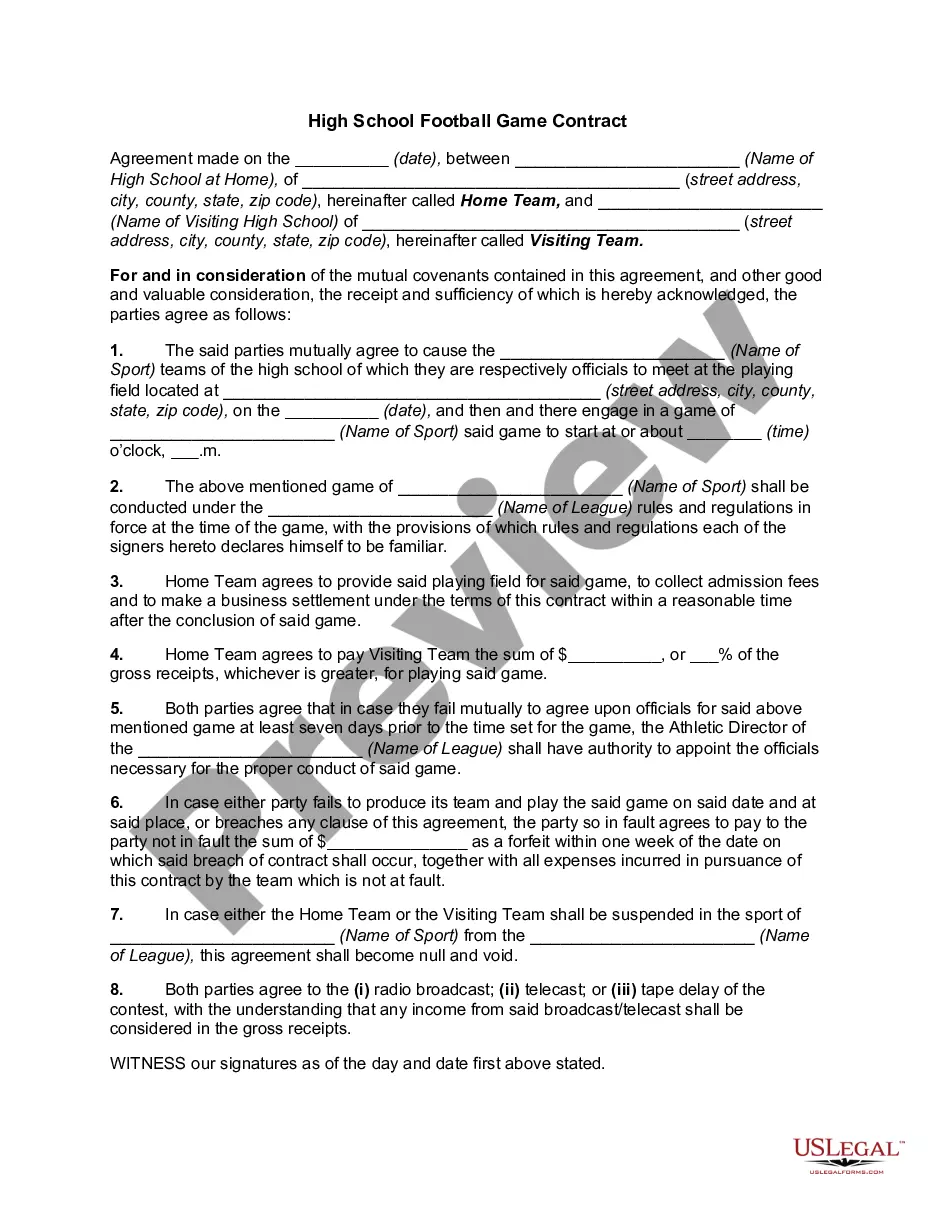
This form is a sample of an agreement between two NCAA Division I Colleges to play football games over a four year period.
Anchorage Alaska NCAA Intercollegiate Athletic Competition Agreement - Football
Category:
State:
Multi-State
City:
Anchorage
Control #:
US-01634BG
Format:
Word;
Rich Text
Instant download
Description
Free preview






Form popularity
FAQ
The 4-2-4 rule offers a flexible academic path for student-athletes. Under this rule, you can transfer from a four-year college to a two-year college for two years, then back to a four-year college for your remaining eligibility. This approach aligns with the principles of the Anchorage Alaska NCAA Intercollegiate Athletic Competition Agreement - Football, ensuring that athletes can pursue their academic and athletic goals seamlessly. Understanding this rule can help you navigate your college career successfully.
Yes, athletes can play college sports for five years, with a few conditions. This extended eligibility allows for injuries or other academic delays that may occur. It is crucial to understand how this relates to the Anchorage Alaska NCAA Intercollegiate Athletic Competition Agreement - Football. Having a clear understanding of your eligibility period can significantly enhance your college athletic experience.
The 40-60-80 rule refers to the percentage of games you must compete in during your college athletic career to maintain eligibility. Specifically, players need to participate in at least 40% of games in their first year, 60% in their second year, and 80% in subsequent years. This guideline ensures commitment to the team and adherence to the Anchorage Alaska NCAA Intercollegiate Athletic Competition Agreement - Football. Awareness of this rule can help you plan your athletic journey effectively.
To fill out the NCAA Eligibility Center, start by creating an account on the NCAA website. You will need to provide personal information, including your academic history and sports participation details. Be sure to submit your transcripts and standardized test scores to ensure compliance with the Anchorage Alaska NCAA Intercollegiate Athletic Competition Agreement - Football. Completing this process accurately is vital for your eligibility to play college sports.
The $2.8 billion House v. NCAA settlement represents a significant legal agreement aimed at reforming college athletics. It focuses on compensating athletes from various collegiate sports, including football, as specified in the Anchorage Alaska NCAA Intercollegiate Athletic Competition Agreement - Football. This settlement not only addresses past wrongs but also shapes the future of collegiate sports compensation structures.
The NCAA vs. House settlement could result in a substantial payout for eligible athletes, potentially reaching millions of dollars. These funds may be distributed based on the terms established, particularly under the Anchorage Alaska NCAA Intercollegiate Athletic Competition Agreement - Football. Such financial support hopes to address historical inequities and ensure that athletes receive fair compensation.
The House v. NCAA settlement could introduce significant changes to how collegiate athletics operate across the country. It may lead to increased support and compensation for athletes, especially under agreements like the Anchorage Alaska NCAA Intercollegiate Athletic Competition Agreement - Football. These outcomes aim to create a fairer playing field, ultimately benefiting all collegiate athletes.
As of now, there are no Division I colleges in Alaska. This limitation means that student-athletes do not have the chance to compete in Division I football, which raises questions about the effectiveness of the Anchorage Alaska NCAA Intercollegiate Athletic Competition Agreement - Football in expanding opportunities. However, local colleges provide various other sports programs and continue to nurture athletic talent in the region.
Yes, Alaska is currently the only state without a Division I college football team. This absence affects local athletes' opportunities to compete at higher levels, especially given the importance of programs like the Anchorage Alaska NCAA Intercollegiate Athletic Competition Agreement - Football. Efforts to promote collegiate athletics in the state could potentially change this landscape in the future.
The NCAA settlement directly impacts former athletes by providing them with potential compensation and recognition for their contributions. Under the terms of the Anchorage Alaska NCAA Intercollegiate Athletic Competition Agreement - Football, former athletes who played under NCAA rules may receive payouts for past violations. This shift acknowledges the financial and emotional burdens athletes faced, paving the way for future reforms in collegiate sports.