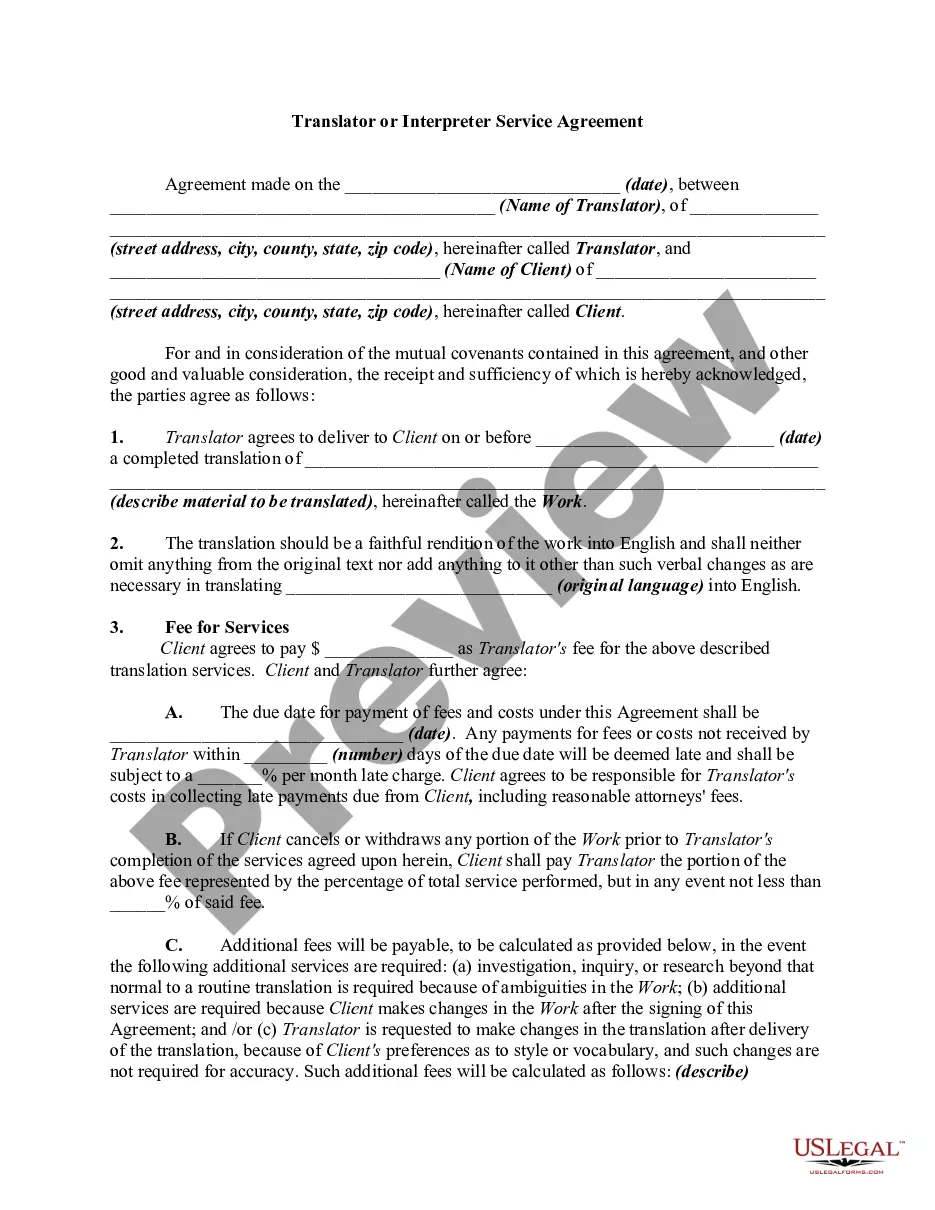
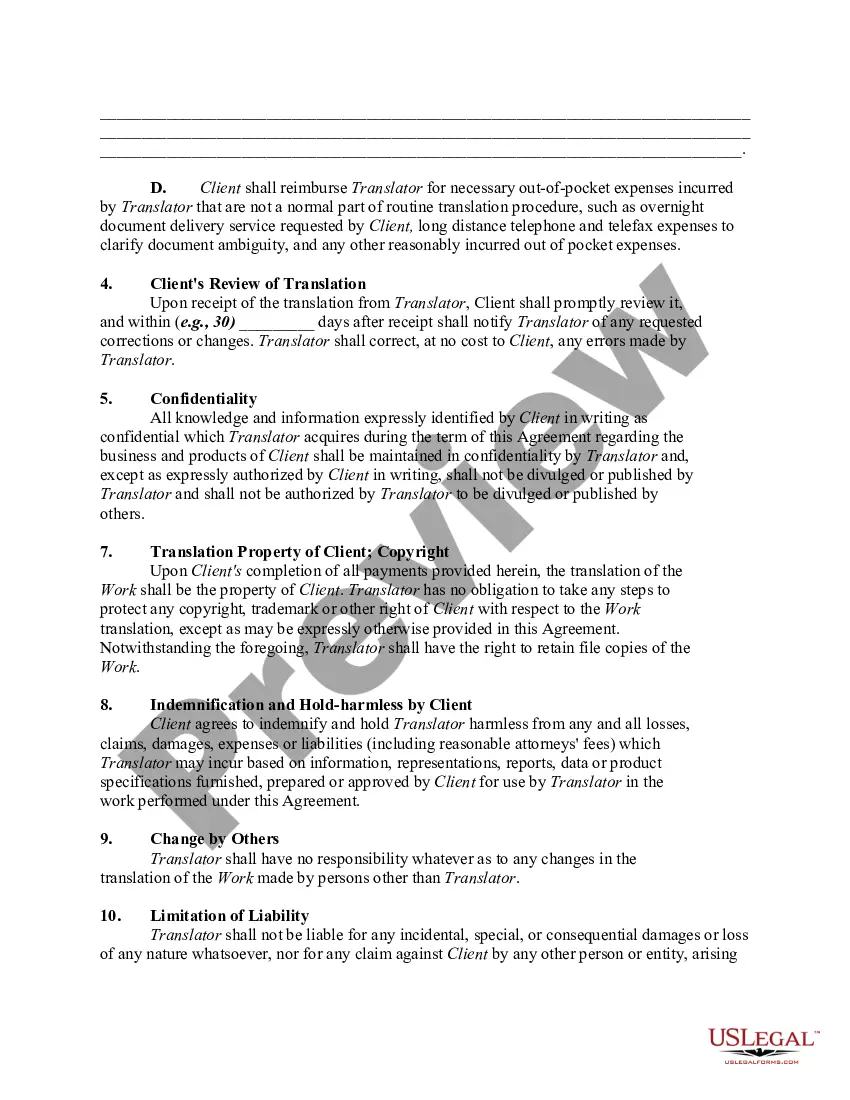
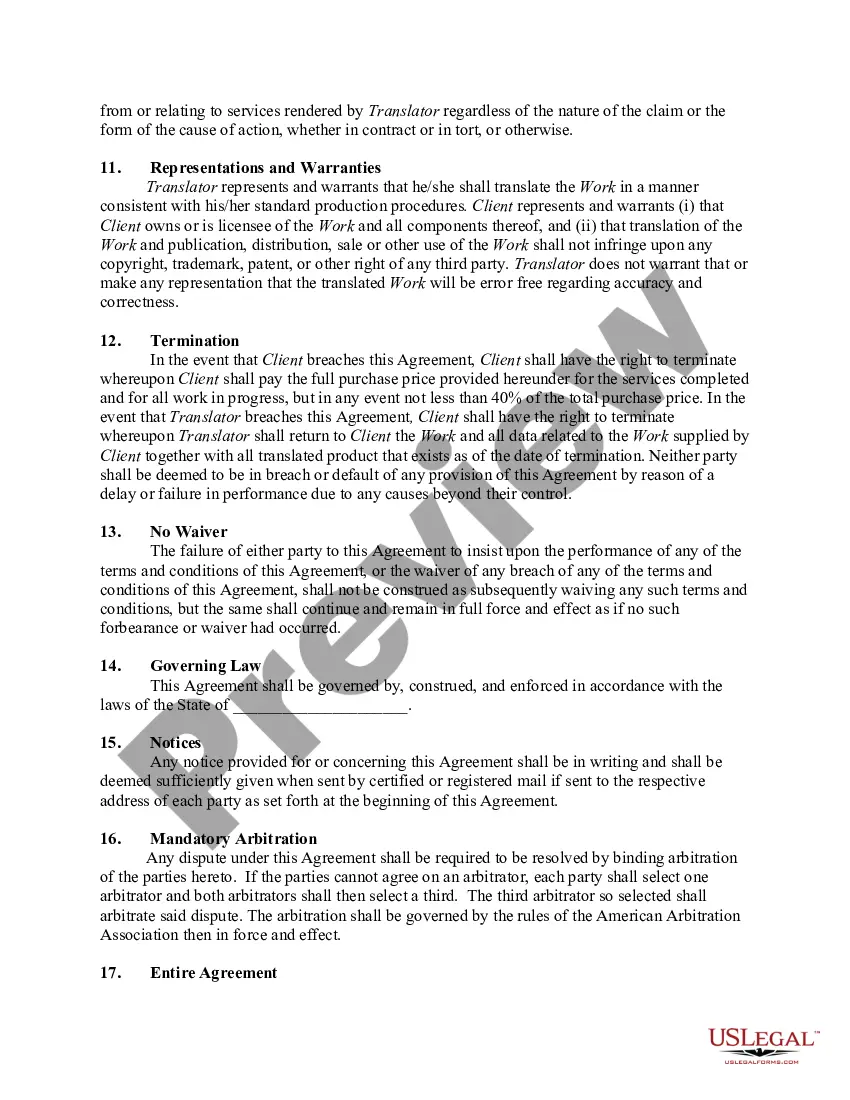
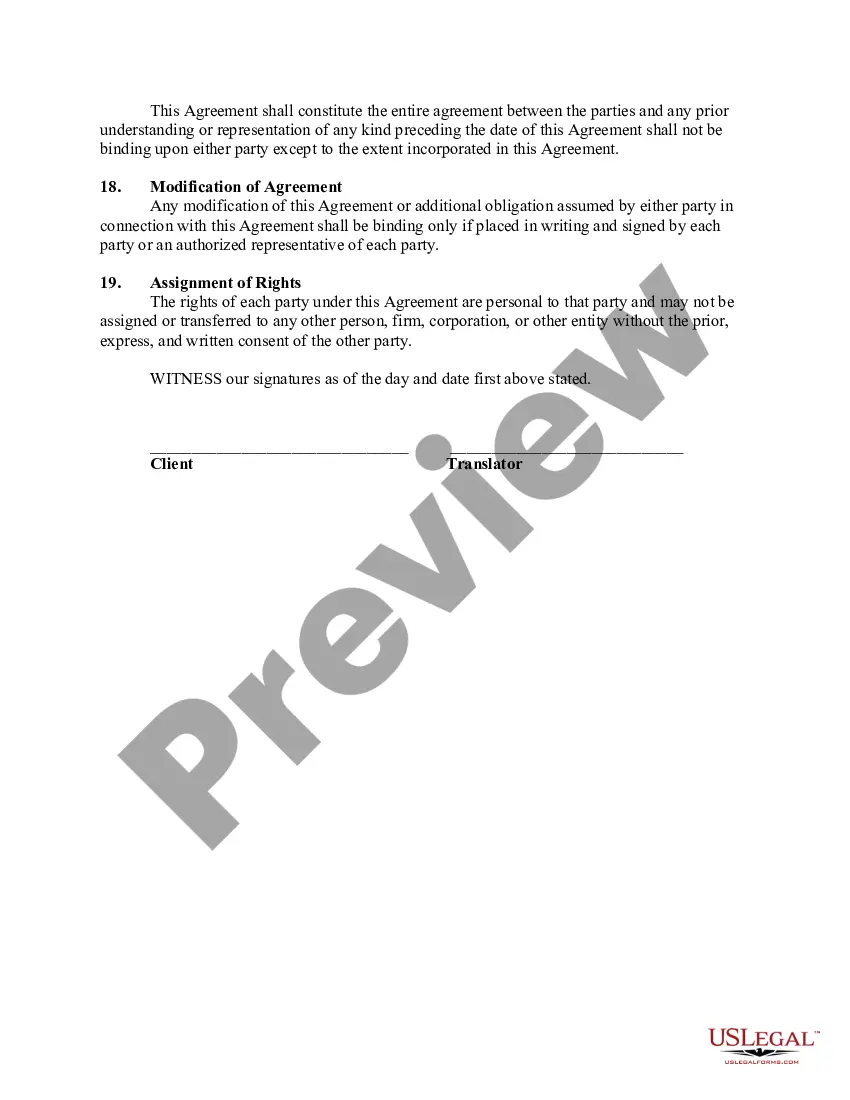
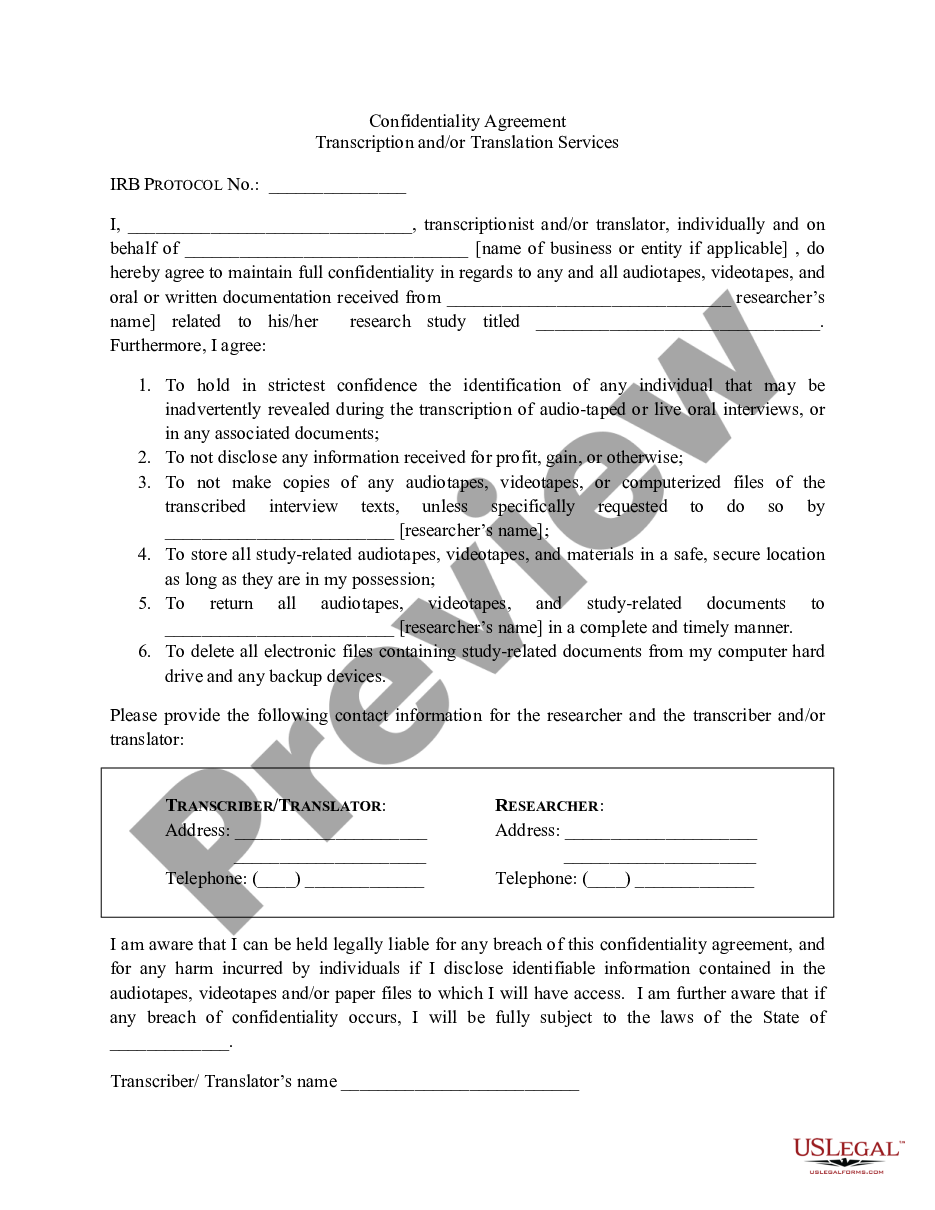
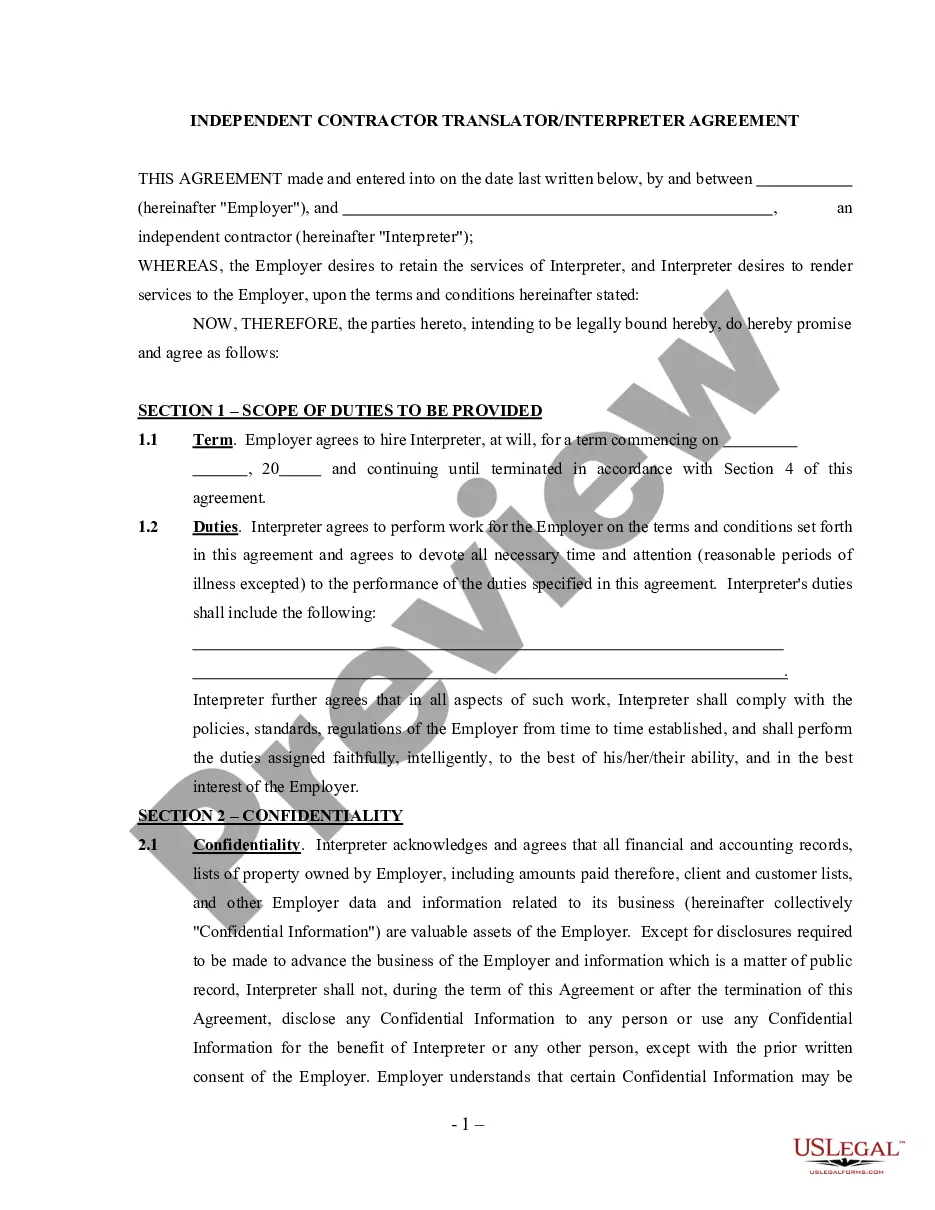
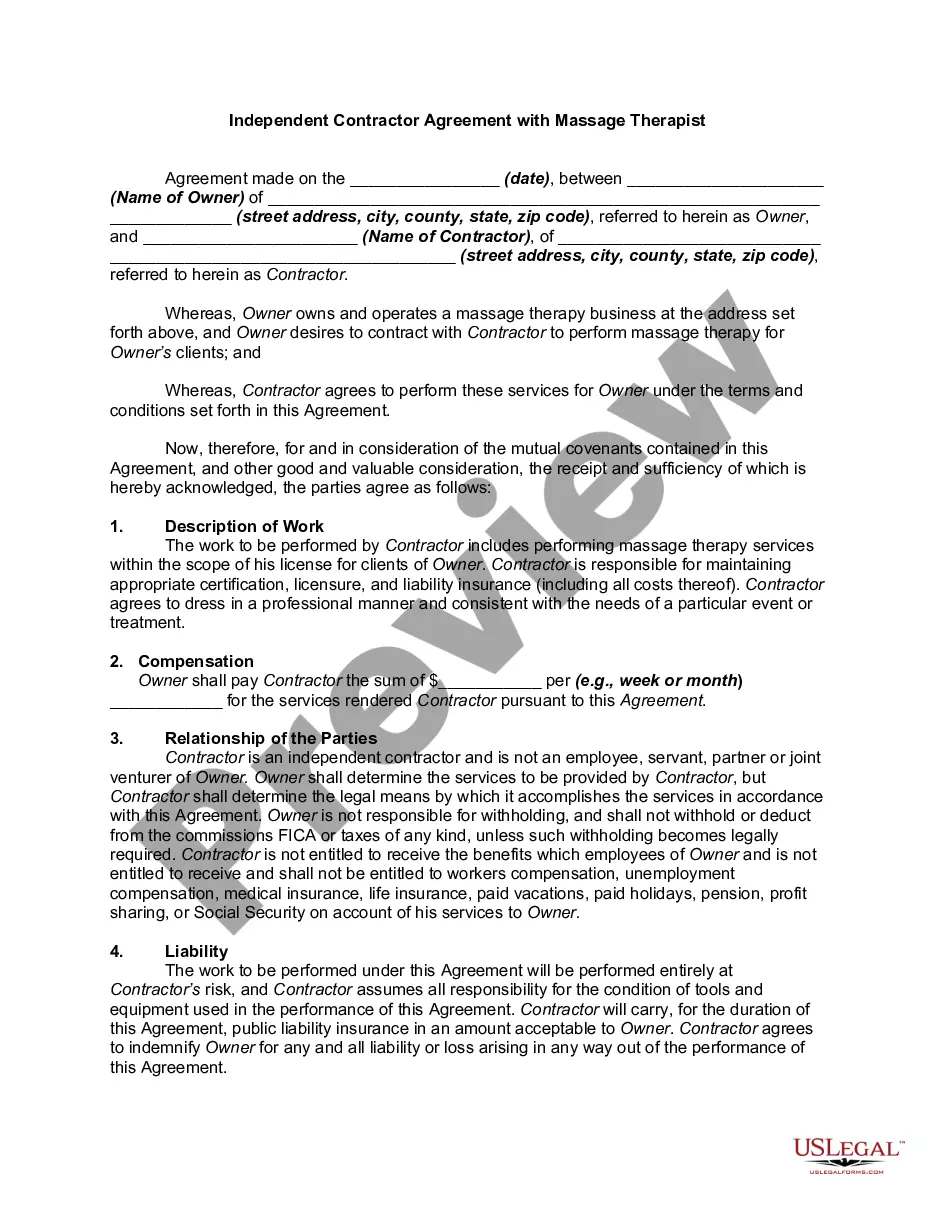
This form involves hiring an interpreter or translator as an independent contractor to perform interpreter or translating services as specified in the contract.
Austin Texas Translator or Interpreter Service Agreement
Category:
State:
Multi-State
City:
Austin
Control #:
US-01633BG
Format:
Word;
Rich Text
Instant download
Description
Free preview

Form popularity
FAQ
To become a certified interpreter in Texas, start by completing a formal education program in interpreting. After gaining relevant experience, you must apply for the certification exam and demonstrate your proficiency. It's essential to stay updated with compliance and best practices in the field. The Austin Texas Translator or Interpreter Service Agreement can guide you on the requirements and steps to certification.
To become an interpreter, you typically need a strong command of at least two languages and an understanding of cultural nuances. Certification from a recognized institution can significantly bolster your qualifications. Additionally, practical experience through internships or volunteer work can enhance your resume. The Austin Texas Translator or Interpreter Service Agreement is a beneficial resource to understand the necessary credentials.
Billing for translation services involves a few key steps. First, you should determine your rate based on industry standards and your experience. It's important to provide clients with a detailed invoice that outlines your services and hours worked. By referencing the Austin Texas Translator or Interpreter Service Agreement, you can ensure your billing methods align with best practices in the field.
The time it takes to become an interpreter in Texas can vary widely, depending on your background and training. Typically, it can take several months to a few years to achieve the necessary skills and certification. Keeping a consistent study schedule will help accelerate your progress. Utilizing tools like the Austin Texas Translator or Interpreter Service Agreement can also enhance your learning experience.
To become a certified interpreter in Texas, you should start by completing the required education and training. This often includes language courses and interpreting practice. Once you have developed your skills, you can take the state certification exam. The Austin Texas Translator or Interpreter Service Agreement can provide you vital insights and resources to support this process.
Becoming a certified interpreter does require dedication and effort. You must learn the necessary language skills and cultural understanding. Moreover, you need to pass a certification exam which assesses your proficiency. With the right resources, such as the Austin Texas Translator or Interpreter Service Agreement, you can navigate this journey smoothly.
The time to translate 1000 words can vary depending on the complexity of the text and the translator's expertise. Generally, a skilled translator can complete this task in about 2 to 4 hours. With the Austin Texas Translator or Interpreter Service Agreement, you can set timelines that work for both you and your translator, ensuring a smooth workflow. For quick turnarounds, consider using USLegalForms to connect with experienced professionals who can meet your needs promptly.
You can certify your own translation for USCIS, but it is essential that you fully understand the requirements. The Austin Texas Translator or Interpreter Service Agreement allows you to provide a statement of certification, affirming that your translation is accurate and complete. However, many clients opt for certified professionals to avoid potential issues with USCIS. Utilize USLegalForms to find certified translators who can meet these requirements for you.
When billing for interpreter services through the Austin Texas Translator or Interpreter Service Agreement, clarity is key. You should outline your rates, whether hourly or per session, and specify any additional costs for travel or materials. Additionally, itemizing invoices can foster transparency, ensuring clients understand what they are being charged for. Consider using our platform, USLegalForms, which offers customizable billing templates to simplify the process.