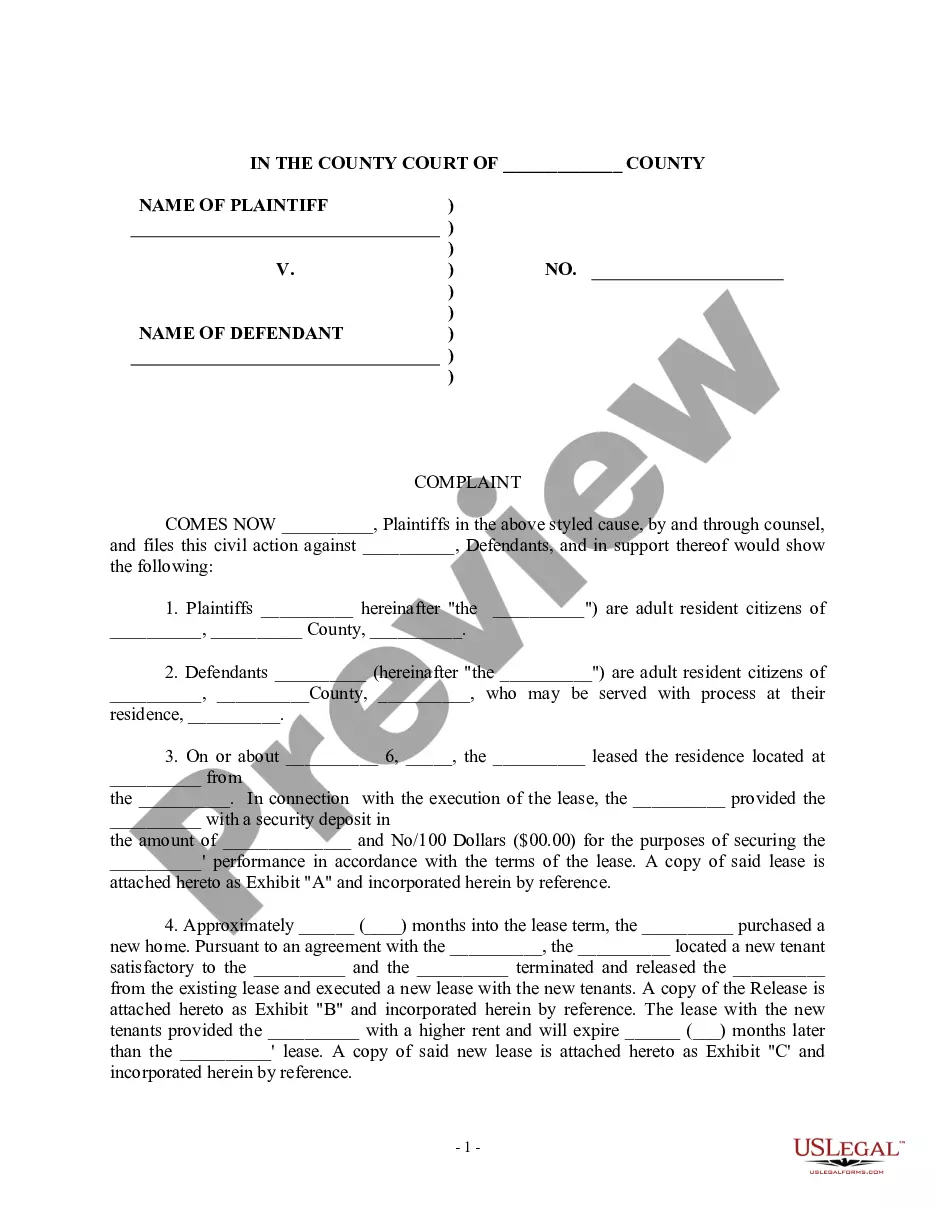
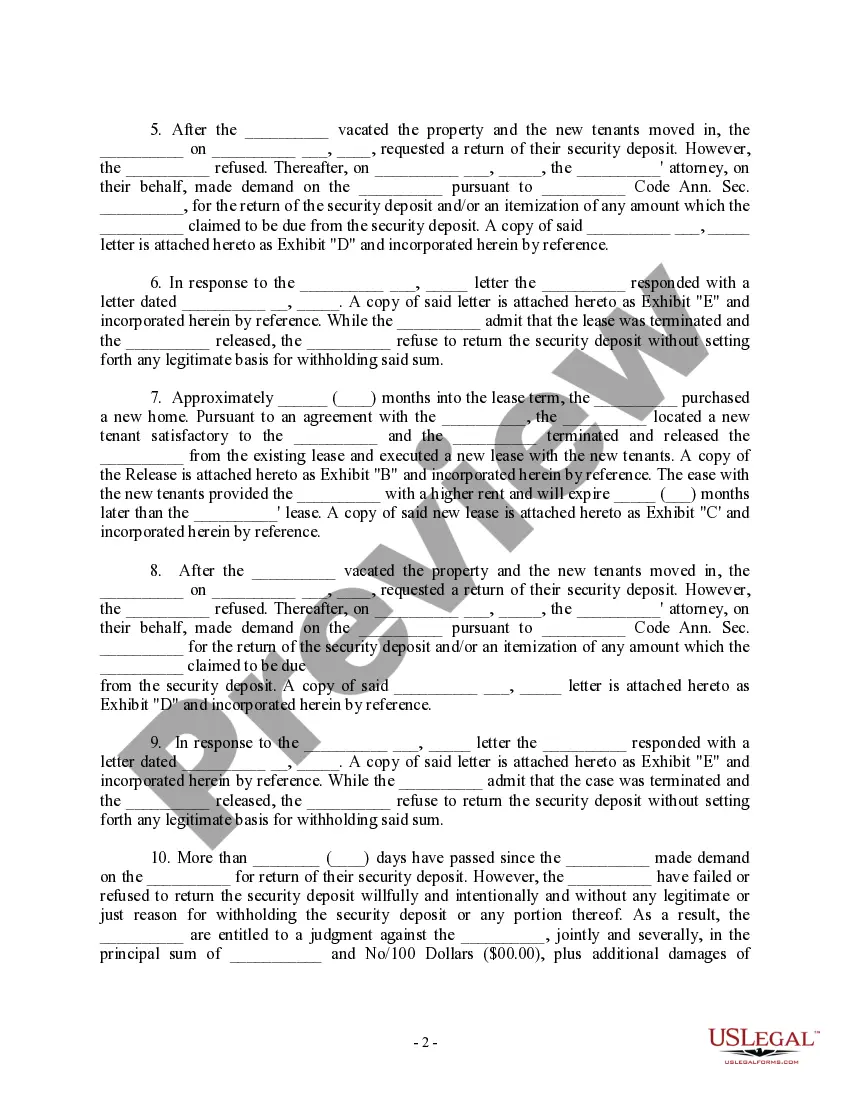
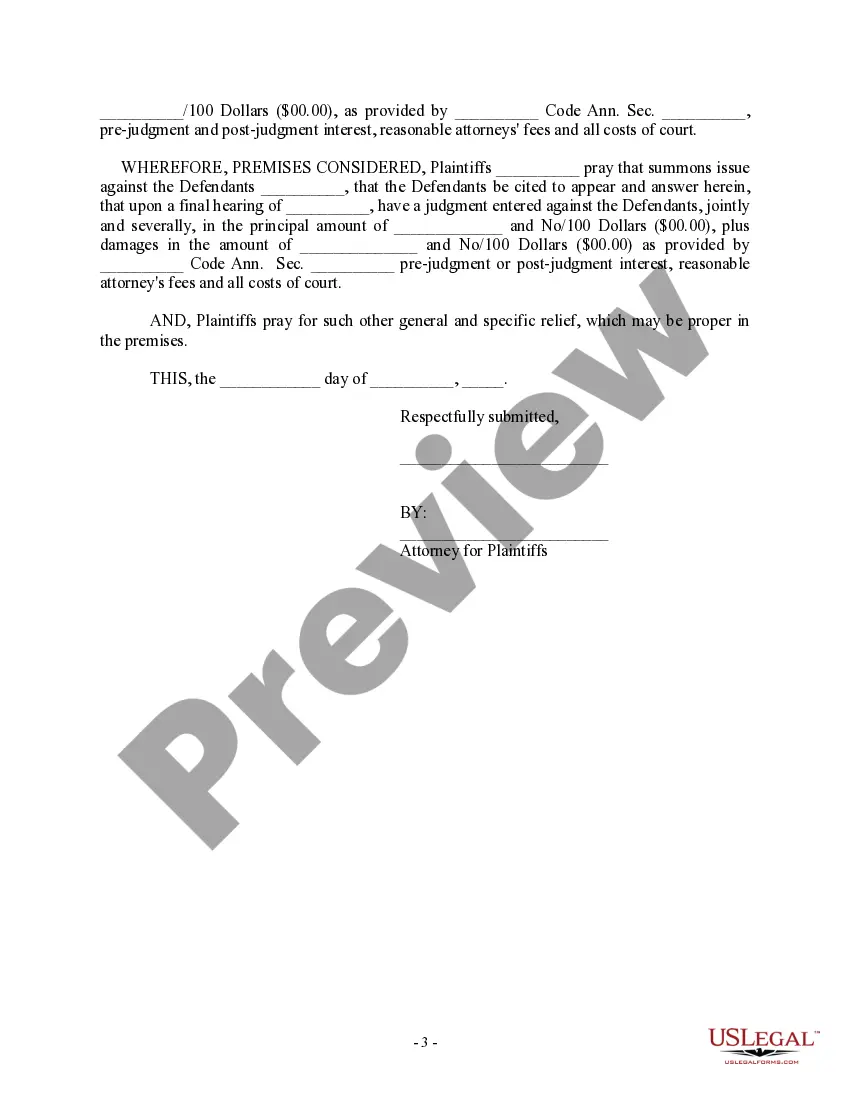
Hillsborough Florida Complaint - Lessor Failure to Return Security Deposit
Description
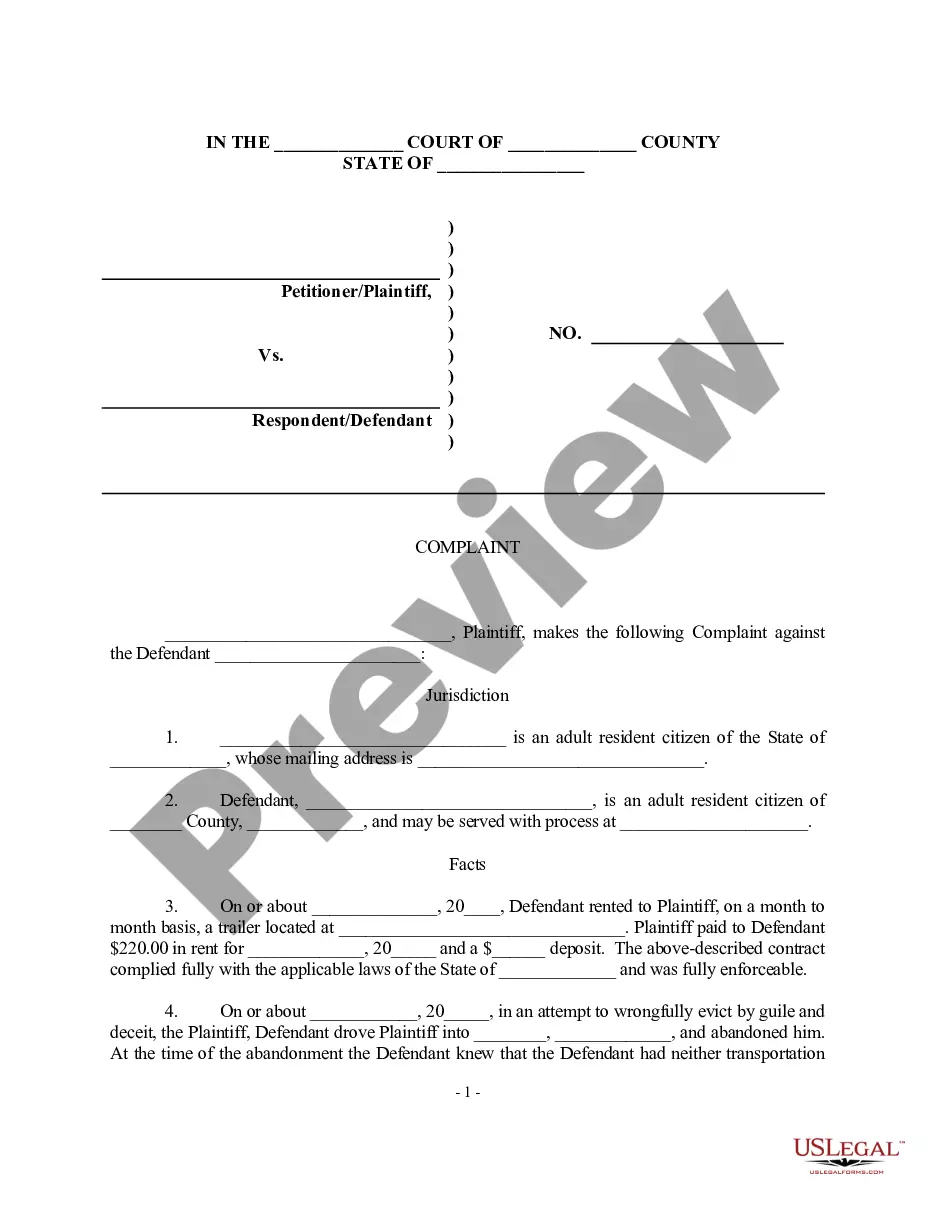
Get your form ready online
Our built-in tools help you complete, sign, share, and store your documents in one place.
Make edits, fill in missing information, and update formatting in US Legal Forms—just like you would in MS Word.
Download a copy, print it, send it by email, or mail it via USPS—whatever works best for your next step.
Sign and collect signatures with our SignNow integration. Send to multiple recipients, set reminders, and more. Go Premium to unlock E-Sign.
If this form requires notarization, complete it online through a secure video call—no need to meet a notary in person or wait for an appointment.
We protect your documents and personal data by following strict security and privacy standards.

Make edits, fill in missing information, and update formatting in US Legal Forms—just like you would in MS Word.

Download a copy, print it, send it by email, or mail it via USPS—whatever works best for your next step.

Sign and collect signatures with our SignNow integration. Send to multiple recipients, set reminders, and more. Go Premium to unlock E-Sign.

If this form requires notarization, complete it online through a secure video call—no need to meet a notary in person or wait for an appointment.

We protect your documents and personal data by following strict security and privacy standards.
Looking for another form?

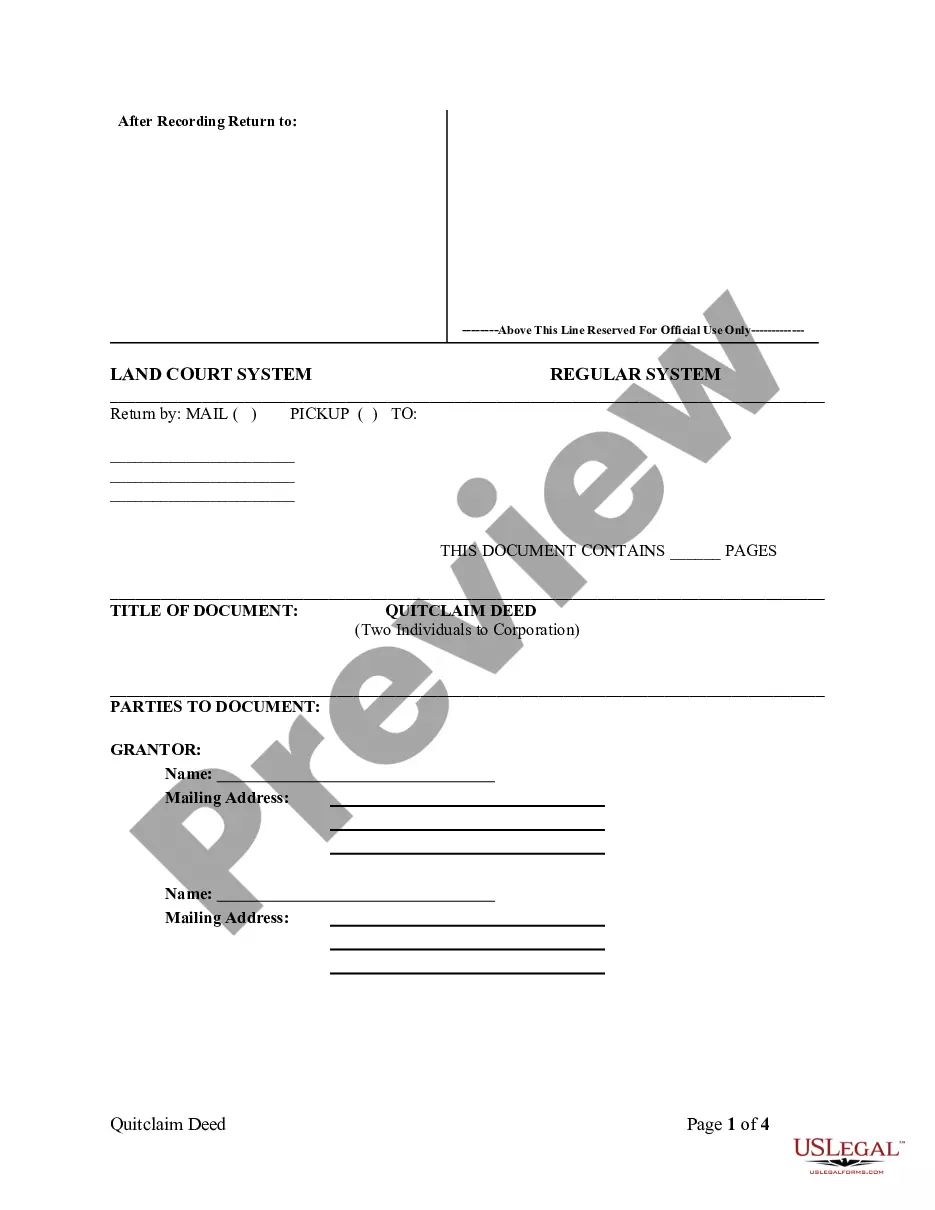



How to fill out Complaint - Lessor Failure To Return Security Deposit?
A document process consistently accompanies any legal action you undertake.
Launching a business, submitting or accepting a job proposal, transferring ownership, and numerous other life circumstances require you to prepare formal paperwork that varies from state to state.
That's the reason having it all gathered in one location is tremendously advantageous.
US Legal Forms is the most comprehensive online repository of current federal and state-specific legal templates. Here, you can effortlessly find and obtain a document for any personal or business purpose utilized in your county, including the Hillsborough Complaint - Lessor Failure to Return Security Deposit.
Select an appropriate subscription plan, then Log In or create an account. Choose the preferred payment method (via credit card or PayPal) to move forward. Select a file format and download the Hillsborough Complaint - Lessor Failure to Return Security Deposit to your device. Utilize it as required: print it or complete it electronically, sign it, and send it where needed. This is the most straightforward and trustworthy method to acquire legal documents. All samples in our library are professionally drafted and verified for compliance with local laws and regulations. Prepare your documentation and manage your legal matters efficiently with the US Legal Forms!
- Finding templates on the platform is exceptionally straightforward.
- If you already possess a subscription to our service, Log In to your account, search for the template using the search box, and click Download to save it on your device.
- Afterward, the Hillsborough Complaint - Lessor Failure to Return Security Deposit will be accessible for further use in the My documents section of your profile.
- If you are using US Legal Forms for the first time, follow this straightforward guide to acquire the Hillsborough Complaint - Lessor Failure to Return Security Deposit.
- Ensure you have accessed the correct page with your localized form.
- Utilize the Preview mode (if available) and review the sample.
- Examine the description (if provided) to confirm the form meets your needs.
- Look for another document using the search feature in case the sample does not suit you.
- Click Buy Now once you find the necessary template.
Form popularity
FAQ
In Florida, if your landlord refuses to make necessary repairs, you should initially contact them directly and document your communication. If the landlord continues to ignore your request, consider contacting your local housing authority or the Florida Department of Business and Professional Regulation. These agencies can assist with Hillsborough Florida Complaint - Lessor Failure to Return Security Deposit or other related grievances.
Under Florida law, a landlord must return the tenant's security deposit within 15 to 60 days after the tenant has surrendered the rental property to the landlord (that is, returned the keys and vacated the property), depending on whether the tenant disputes any deductions taken out of the security deposit.
Florida's Security Deposit Law requires a landlord to return the security deposit to the tenant within 15 to 60 days after the tenant moves out of the rental unit. If a landlord plans to return all of the security deposit, then it must be done within fifteen days after the lease has been terminated.
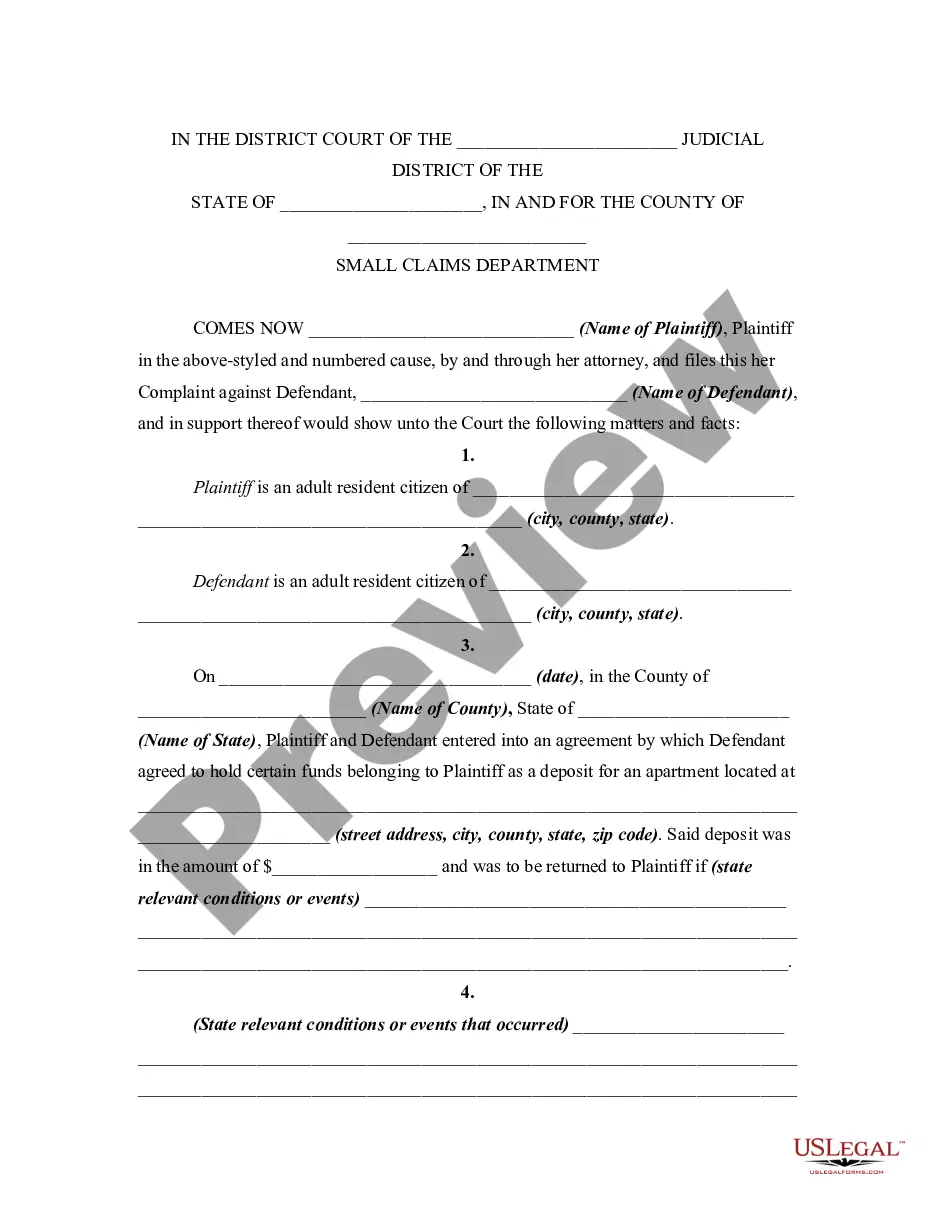
To sue for a security deposit in the amount of $5,000 or less, the tenant would file a lawsuit against the landlord in Small Claims Court. JALA has a separate pamphlet about Small Claims Court and information about a free Small Claims Court clinic that is offered once each month.
If the landlord intends to make a claim against the security deposit, the landlord has 30 days to send a written notice by certified mail to the tenant's last known address. The notice must state the landlord's intention to impose a claim on the security deposit, the amount of the claim, and the reason for the claim.
If after 30 days the landlord does not return your deposit or send you a letter stating why all or part of your deposit won't be returned, you can sue him or her for the return of the entire deposit.
IF THE LANDLORD FAILS TO TIMELY MAIL YOU NOTICE, THE LANDLORD MUST RETURN THE DEPOSIT BUT MAY LATER FILE A LAWSUIT AGAINST YOU FOR DAMAGES. IF YOU FAIL TO TIMELY OBJECT TO A CLAIM, THE LANDLORD MAY COLLECT FROM THE DEPOSIT, BUT YOU MAY LATER FILE A LAWSUIT CLAIMING A REFUND.
You may send legal notice to your landlord seeking the security deposit back, provided you have returned the rented area in good condition. The next step is to file a complaint in RDC.
Under Florida law, a landlord must return the tenant's security deposit within 15 to 60 days after the tenant has surrendered the rental property to the landlord (that is, returned the keys and vacated the property), depending on whether the tenant disputes any deductions taken out of the security deposit.
Under Florida law, the tenant must receive notice in advance that the landlord wishes to go into their leased premises and the only exception here is if there is an emergency situation (e.g., fire). You can sue a landlord who fails to respect your privacy and quiet enjoyment of your home.