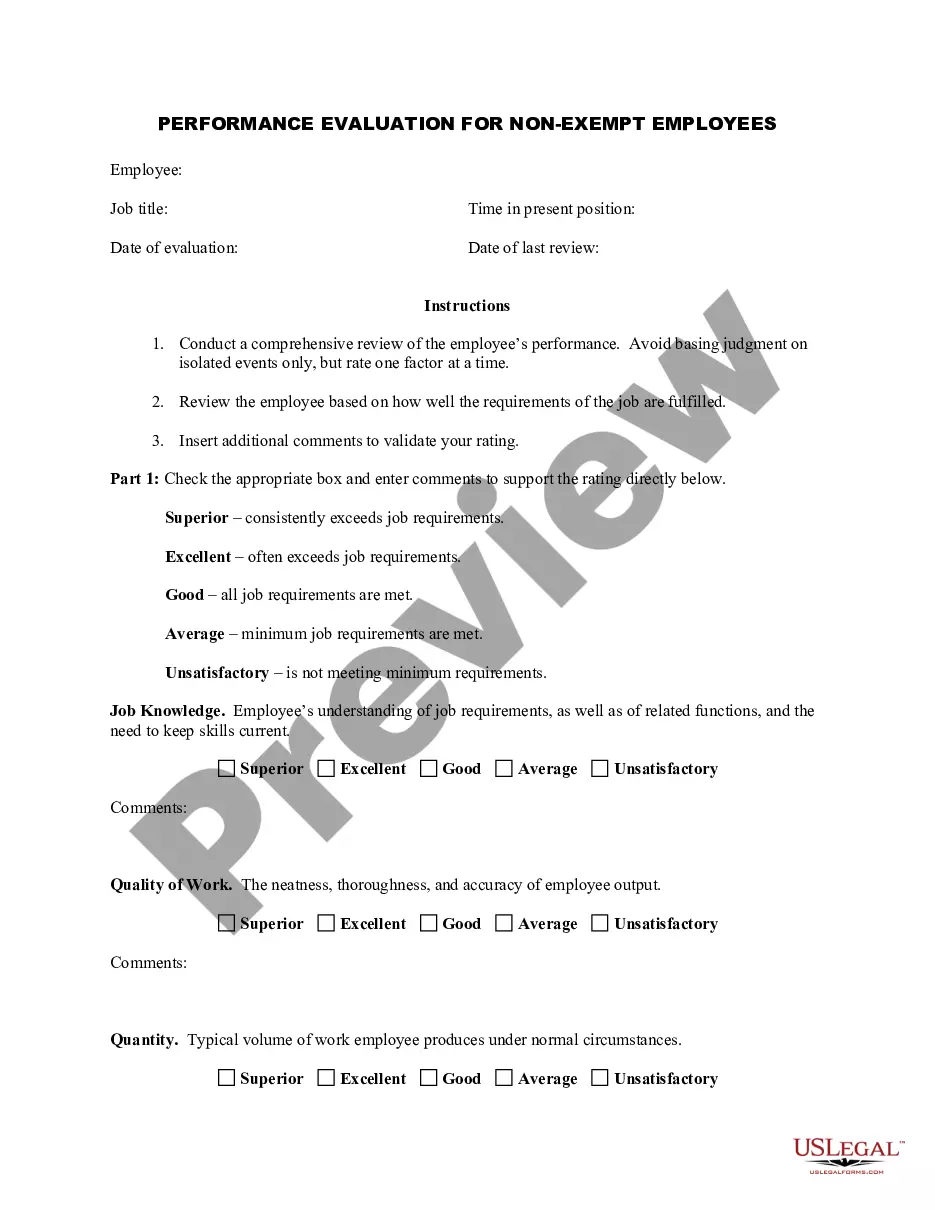
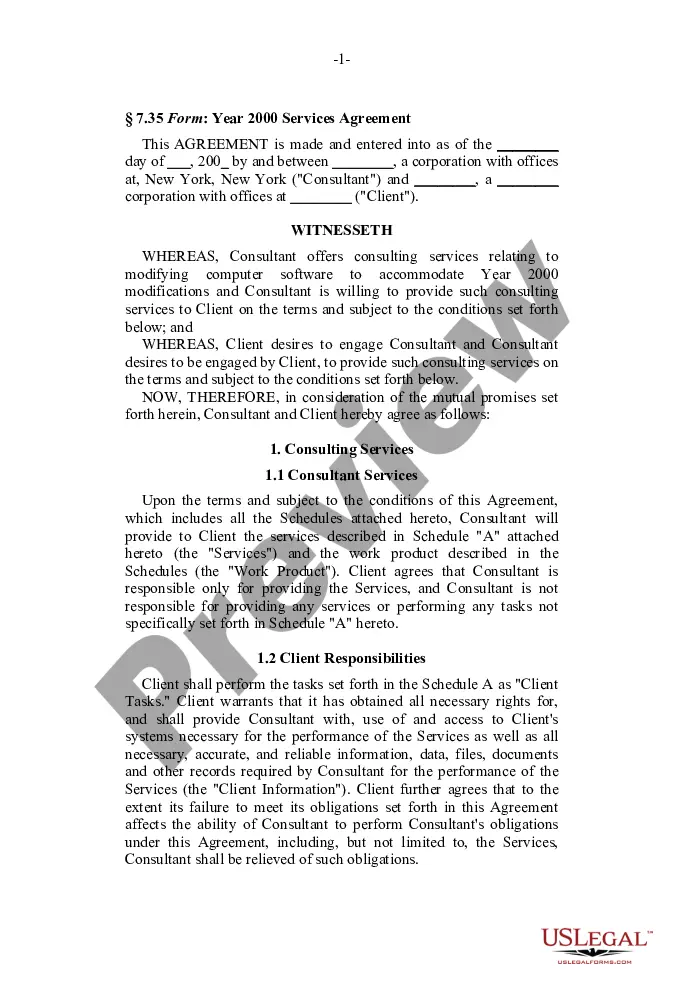
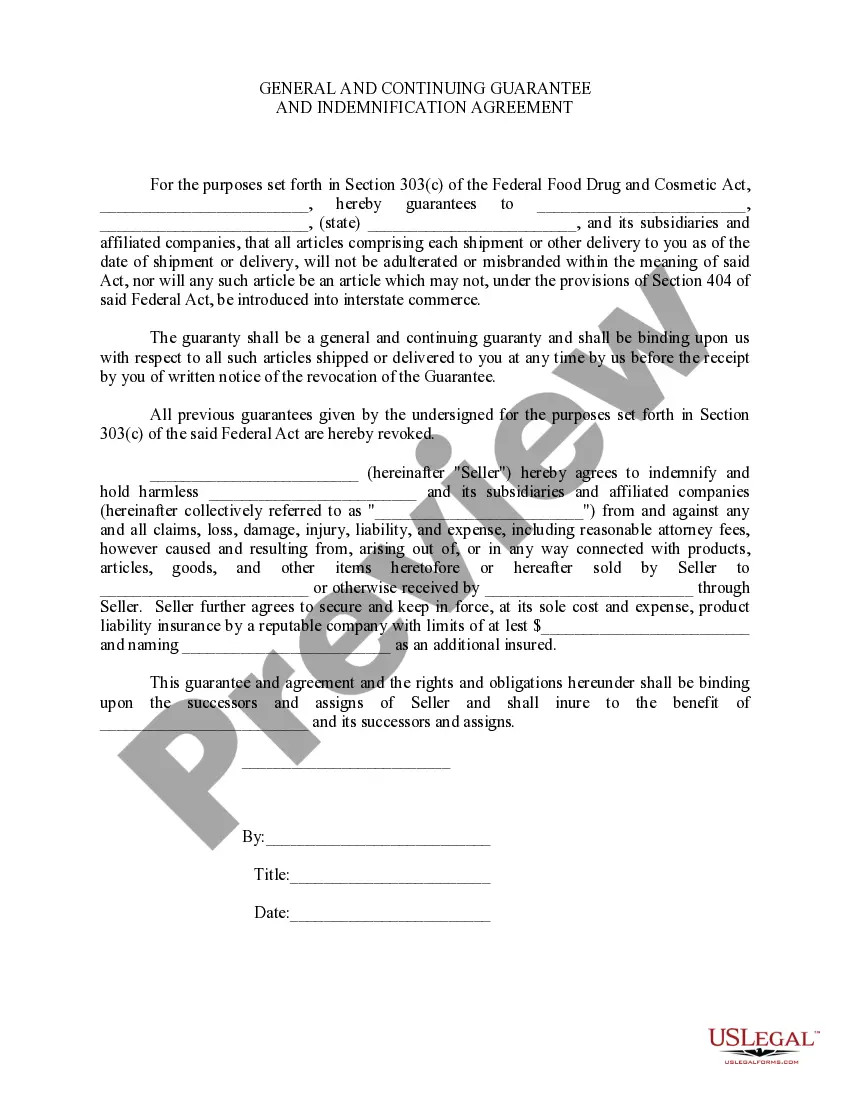
This form states that the guaranty shall be a general and continuing guaranty and shall be binding with respect to all such articles shipped or delivered at any time before the receipt of written notice of the revocation of the guarantee.
Irvine California General and Continuing Guaranty and Indemnification Agreement
Category:
State:
Multi-State
City:
Irvine
Control #:
US-01617
Format:
Word;
Rich Text
Instant download
Description
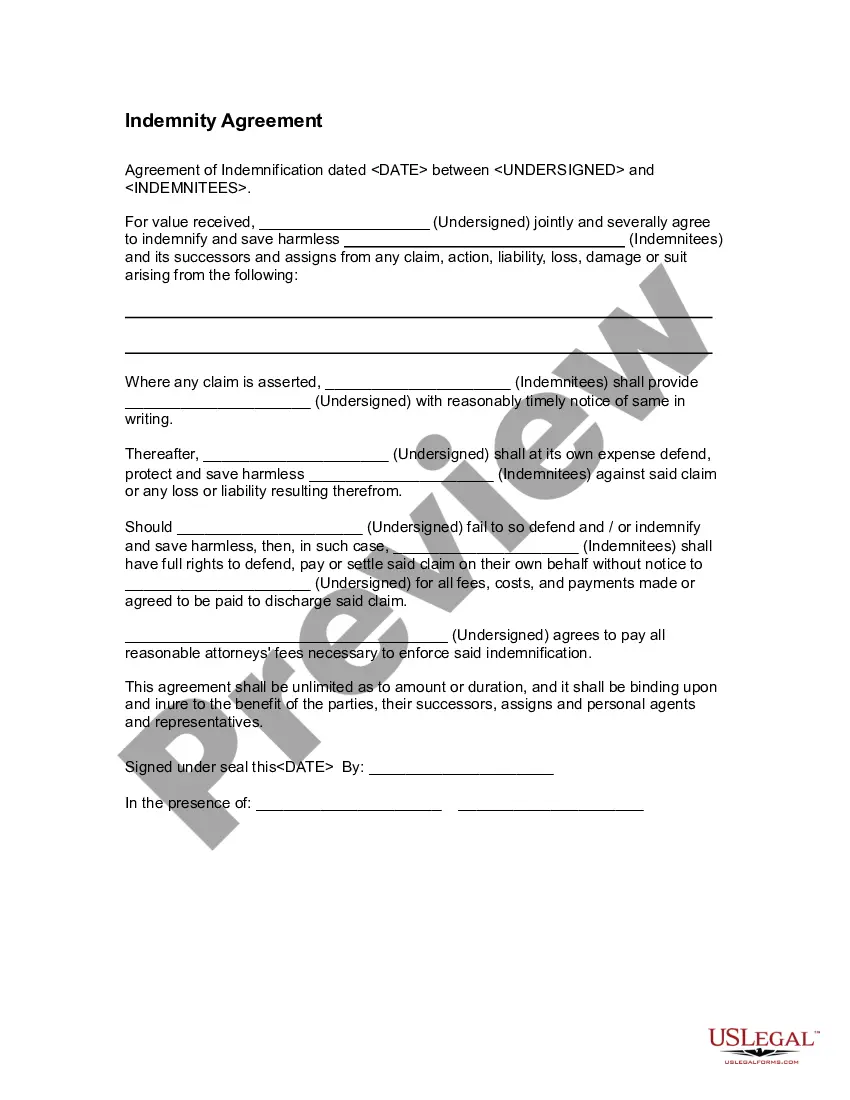



Form popularity
FAQ
Filling out an indemnification agreement involves clearly specifying the parties, the liabilities covered, and the circumstances that trigger indemnification. Start by identifying who will indemnify whom and the situations that apply. Next, ensure all parties understand their roles within the context of the Irvine California General and Continuing Guaranty and Indemnification Agreement. Utilizing a platform like uslegalforms makes it simple to create and customize these agreements to fit your needs seamlessly.
An indemnification clause typically states that one party will compensate another for losses incurred under specified circumstances. For instance, a business owner might include a clause in a contract that protects their interests in case of liabilities arising from negligence. The Irvine California General and Continuing Guaranty and Indemnification Agreement often incorporates such clauses, making it easier to navigate any potential disputes. This allows you to conduct your business confidently while keeping your interests secured.
Continuing guarantees can take various forms, including personal guarantees and corporate guarantees. For instance, an individual might sign a continuing guarantee to assure payment on behalf of their business. Such agreements often remain in effect until the creditor releases the guarantor or until specific conditions are met. The Irvine California General and Continuing Guaranty and Indemnification Agreement provides a robust framework for these guarantees, ensuring clarity and protection for all parties involved.
A continuing letter of guarantee is a written assurance that remains in effect for multiple transactions, providing ongoing support or coverage. Typically used in financial contexts, it ensures that obligations are met over time, much like an Irvine California General and Continuing Guaranty and Indemnification Agreement. This kind of document offers peace of mind to creditors and can improve business relationships by assuring that debts will be covered continuously. For easy drafting and templates, consider the tools available on the uLegalForms platform.
Indemnification involves compensating someone for losses or damages they incur, while a hold harmless clause protects one party from being held liable for damages claimed by another. In the context of an Irvine California General and Continuing Guaranty and Indemnification Agreement, both concepts can apply to ensure that parties are safeguarded against financial losses arising from third-party claims. Understanding these differences is crucial when drafting contracts to ensure clear responsibilities and protections are established.
A continuing guarantee is a commitment that remains in effect over multiple transactions or obligations. This means that if you enter into an Irvine California General and Continuing Guaranty and Indemnification Agreement, you ensure a party's debts are covered for future agreements, not just a single one. This type of guarantee often provides additional security for lenders or service providers, as it reinforces the obligation to meet future financial commitments. If you need help creating such agreements, consider using the uLegalForms platform.
An example of a continuing guarantee can be found in leasing agreements, where a parent company guarantees the leases of its subsidiaries over time. Within the framework of an Irvine California General and Continuing Guaranty and Indemnification Agreement, this means the parent company remains liable for the subsidiary's lease payments throughout the lease term, providing peace of mind to landlords and creditors.
A guarantee and indemnity agreement combines the commitments of guaranteeing debts and compensating for losses incurred due to defaults. In an Irvine California General and Continuing Guaranty and Indemnification Agreement, it ensures that both the guarantor and debtor understand their responsibilities, leading to more transparent transactions. This agreement also protects the interests of all parties involved, creating a more reliable business environment.
A continuing guarantee operates by allowing a guarantor to agree to cover future defaults by the debtor for a specified duration. In the case of an Irvine California General and Continuing Guaranty and Indemnification Agreement, the guarantor's commitment does not expire until the agreement is canceled or the obligations are fulfilled. This structure provides creditors with continuous protection against potential risks.
A specific guarantee covers a limited transaction or specific obligation, while a continuing guarantee includes multiple obligations over time. An Irvine California General and Continuing Guaranty and Indemnification Agreement typically falls under the category of continuing guarantees, as it addresses ongoing responsibilities rather than isolated instances. This broader scope makes the continuing guarantee more versatile for businesses with recurring needs.