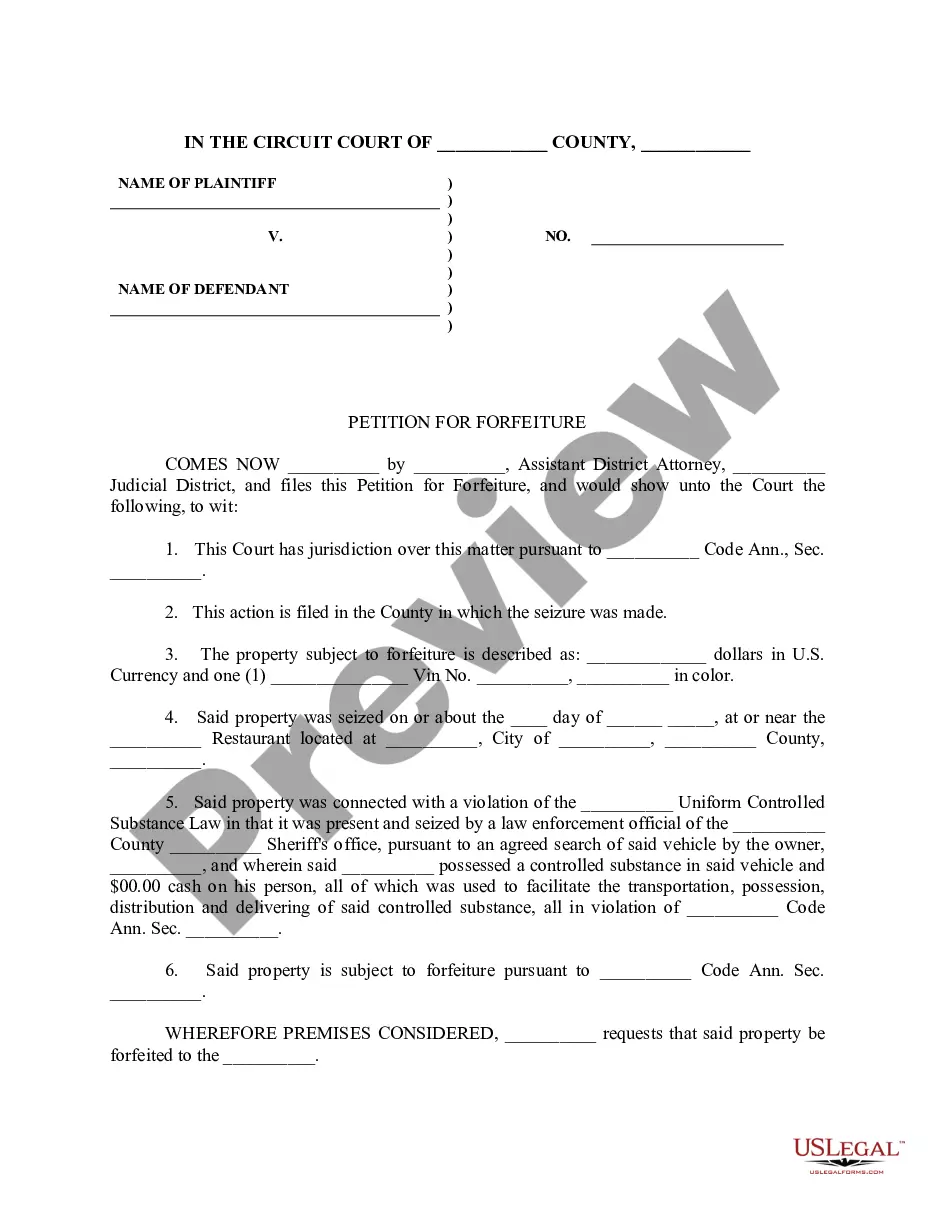
Tucson Arizona Petition for Forfeiture
Description








Form popularity
FAQ
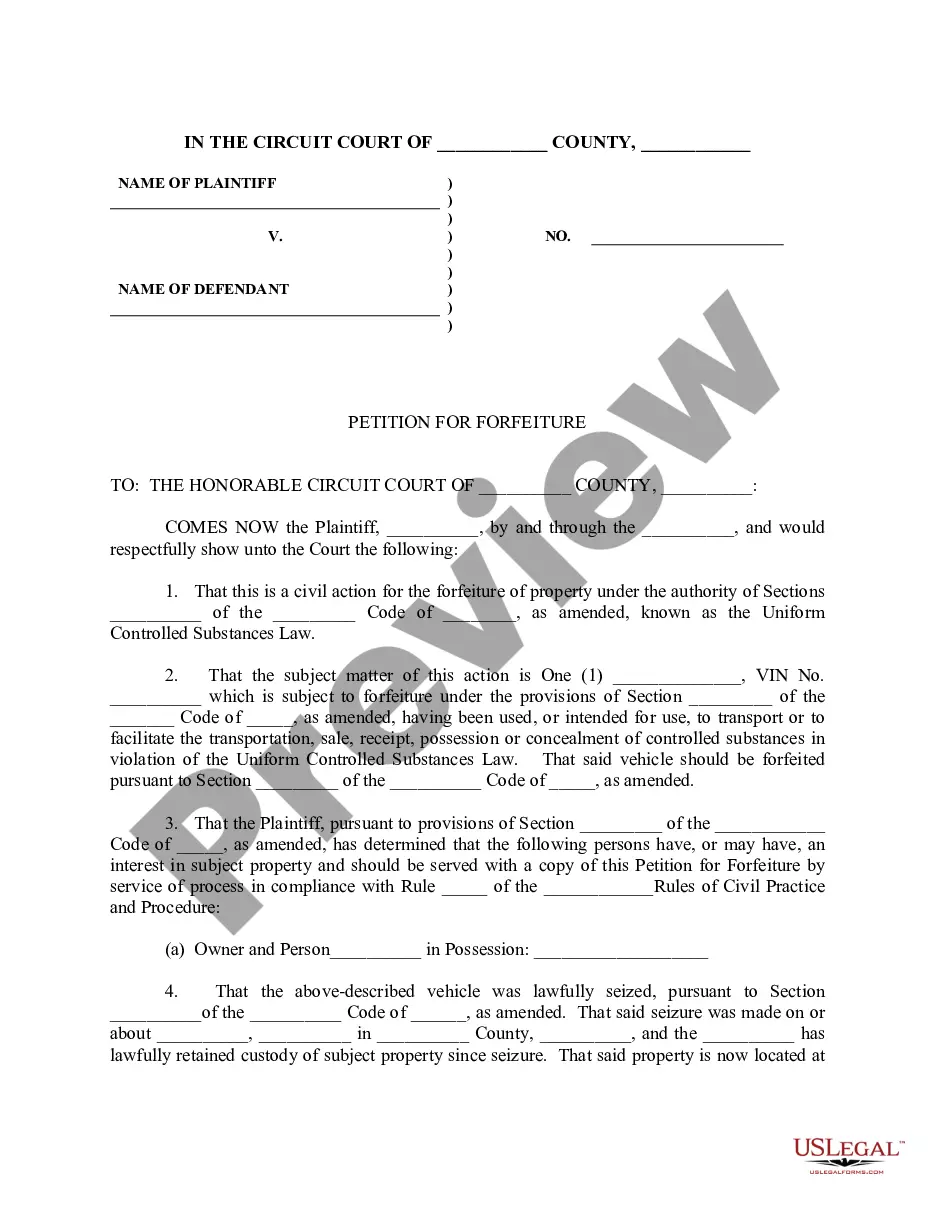
The forfeiture process begins when authorities identify property linked to a crime and file a legal action. The property owner is notified and given a chance to respond to the forfeiture claim. If you are navigating a Tucson Arizona Petition for Forfeiture, utilizing resources like USLegalForms can assist you in preparing the necessary documents and understanding the court procedures.
The process of forfeiting typically involves the government filing a petition to seize property, stating the reasons for the forfeiture. Once the petition is filed, property owners have the right to contest the seizure in court. For individuals dealing with a Tucson Arizona Petition for Forfeiture, understanding the legal timeline and your rights is crucial to mounting a successful defense.
In Minnesota, forfeiture law allows law enforcement to seize property believed to be involved in unlawful activities. The laws aim to deter crime by depriving offenders of their assets. If you reside in Arizona but have interests in Minnesota regarding a Tucson Arizona Petition for Forfeiture, seeking legal advice can clarify the differences in state laws.
An action for forfeiture is a legal proceeding where the government seeks to reclaim property that has been allegedly used in connection with illegal activities. This process allows authorities to take ownership of assets that they believe are linked to crimes. If you are facing a Tucson Arizona Petition for Forfeiture, it is essential to understand your rights and options in defending your property.
Forfeiture cases typically fall into three categories: administrative, civil, and criminal. Administrative forfeiture is handled by government agencies without a court case, civil forfeiture involves court proceedings where property is seized based on its connection to crime, and criminal forfeiture occurs after a conviction. Understanding these categories helps you navigate the Tucson Arizona Petition for Forfeiture process and determine the right course of action. Utilizing resources like USLegalForms can guide you through these types.
Any person with a legal interest in the seized property can file a petition under forfeiture proceedings. This includes owners, lienholders, or anyone who can demonstrate a legitimate claim to the item or funds in question. In Tucson, Arizona, filing a petition allows you to advocate for the return of your property. The Tucson Arizona Petition for Forfeiture provides a structured way to present your case.
There are two primary types of forfeiture proceedings: civil forfeiture and criminal forfeiture. Civil forfeiture occurs when the government seizes property believed to be involved in a crime, while criminal forfeiture is tied to a criminal conviction. Both proceedings can impact your rights to the property involved, making it essential to understand your options. The Tucson Arizona Petition for Forfeiture helps you contest these actions effectively.
A Petition for remission or mitigation of forfeiture is a formal request to the government to return property that has been seized. In Tucson, Arizona, this process allows individuals to explain why the forfeiture should be reconsidered. The petition typically includes evidence to support your claim, demonstrating that you have a rightful interest in the property. Understanding and navigating the Tucson Arizona Petition for Forfeiture can be complex, so seeking help from platforms like USLegalForms can simplify your experience.