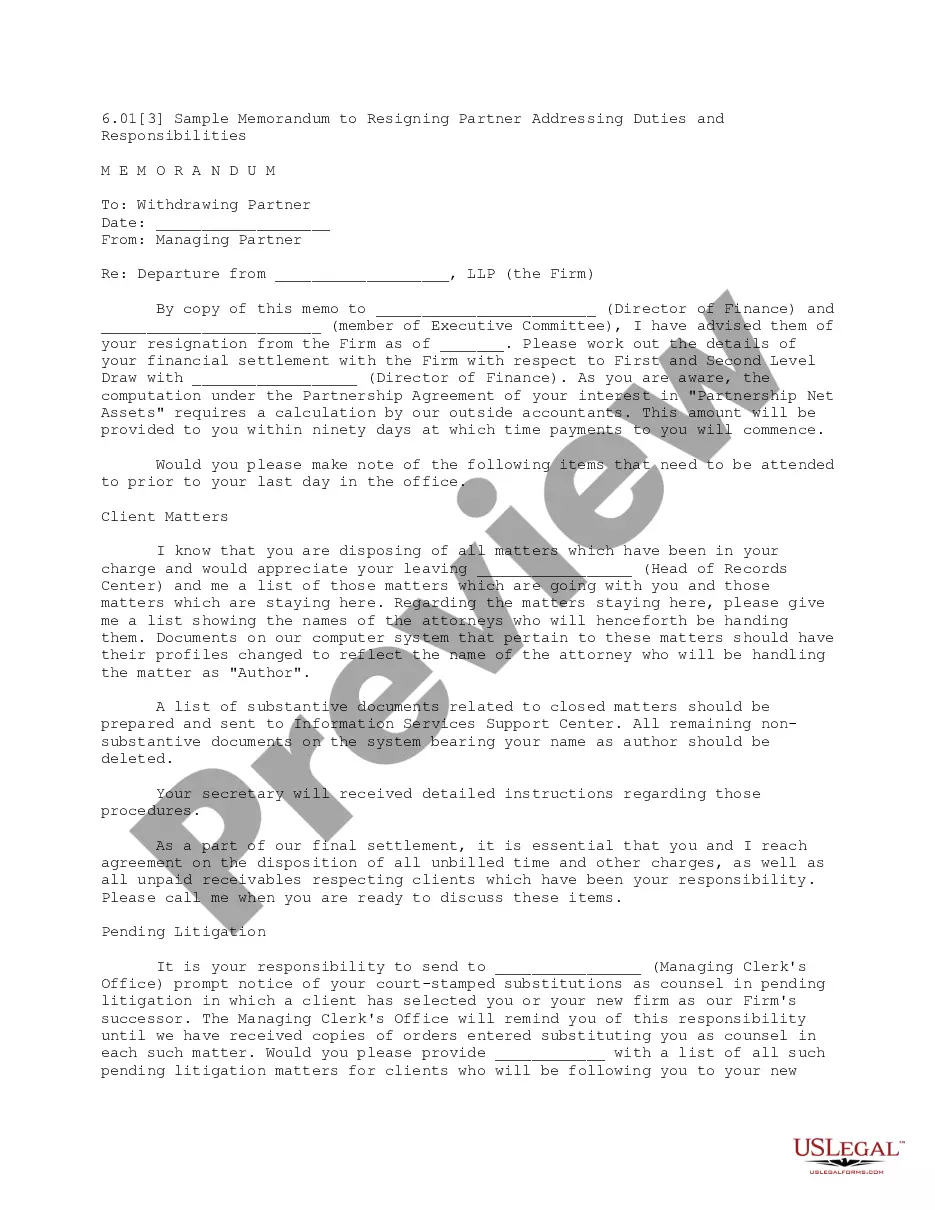
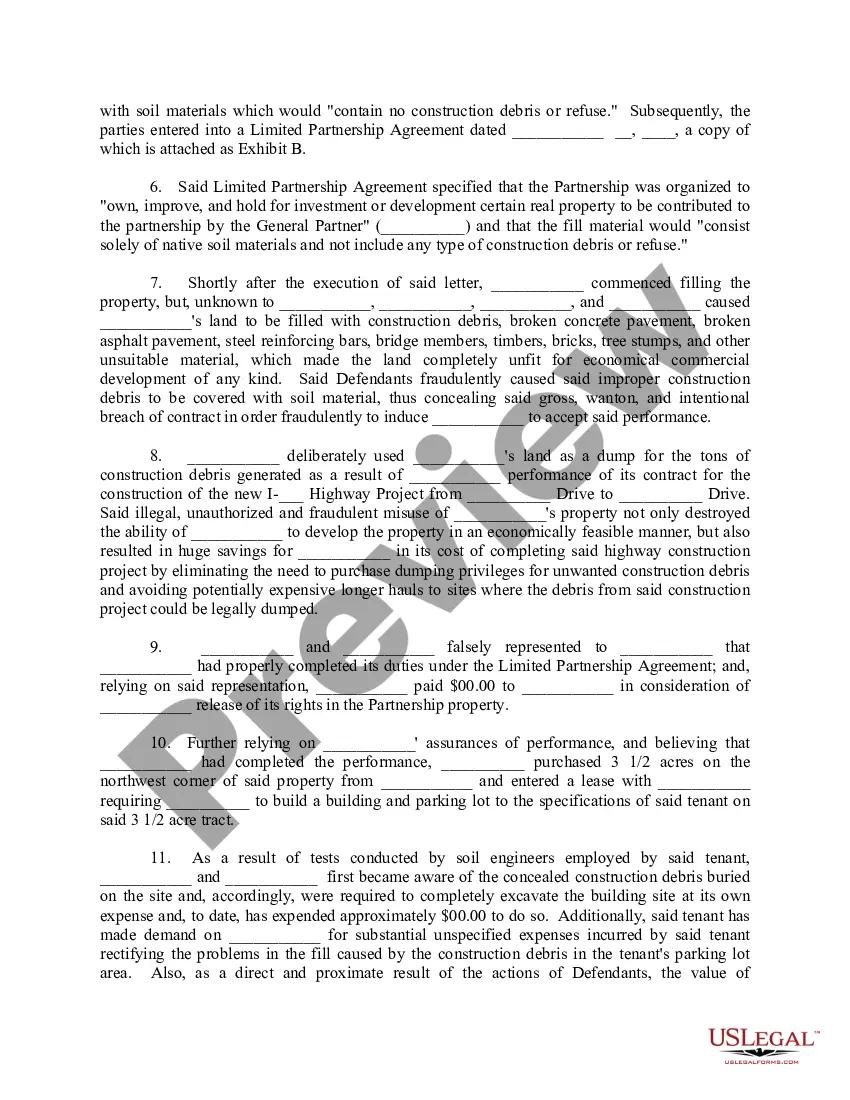
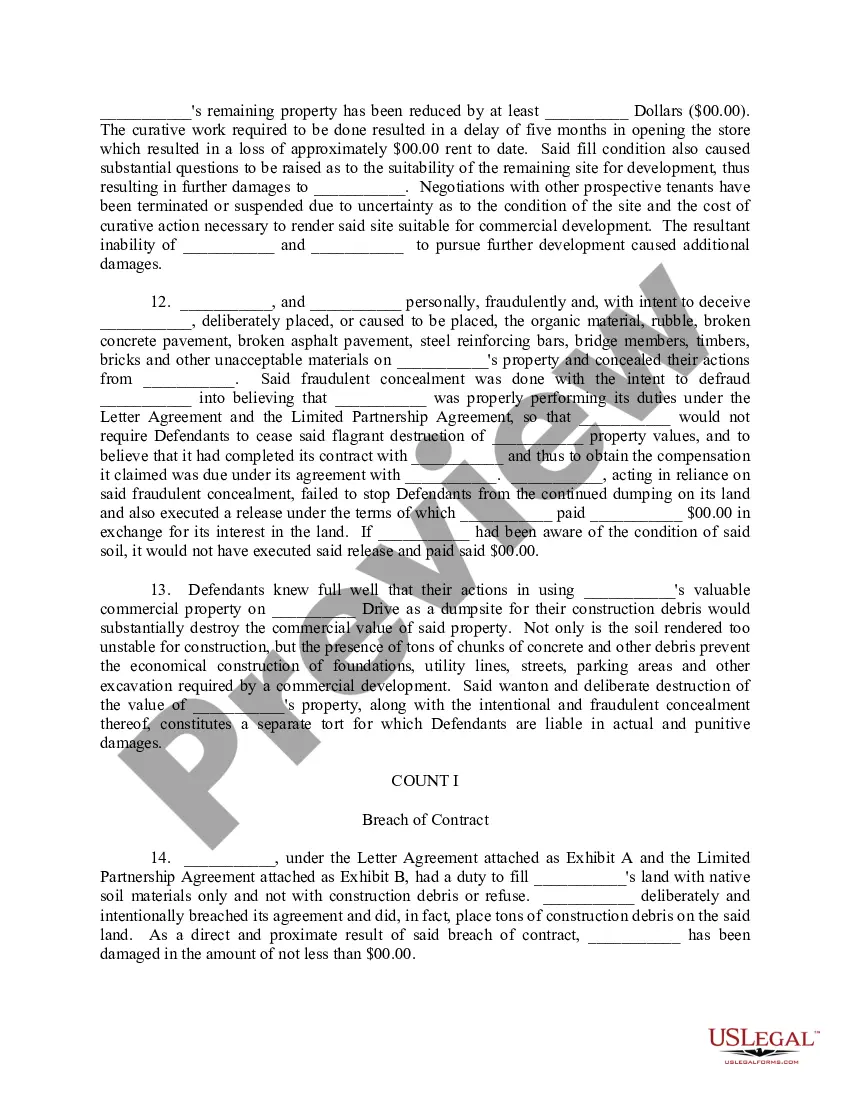
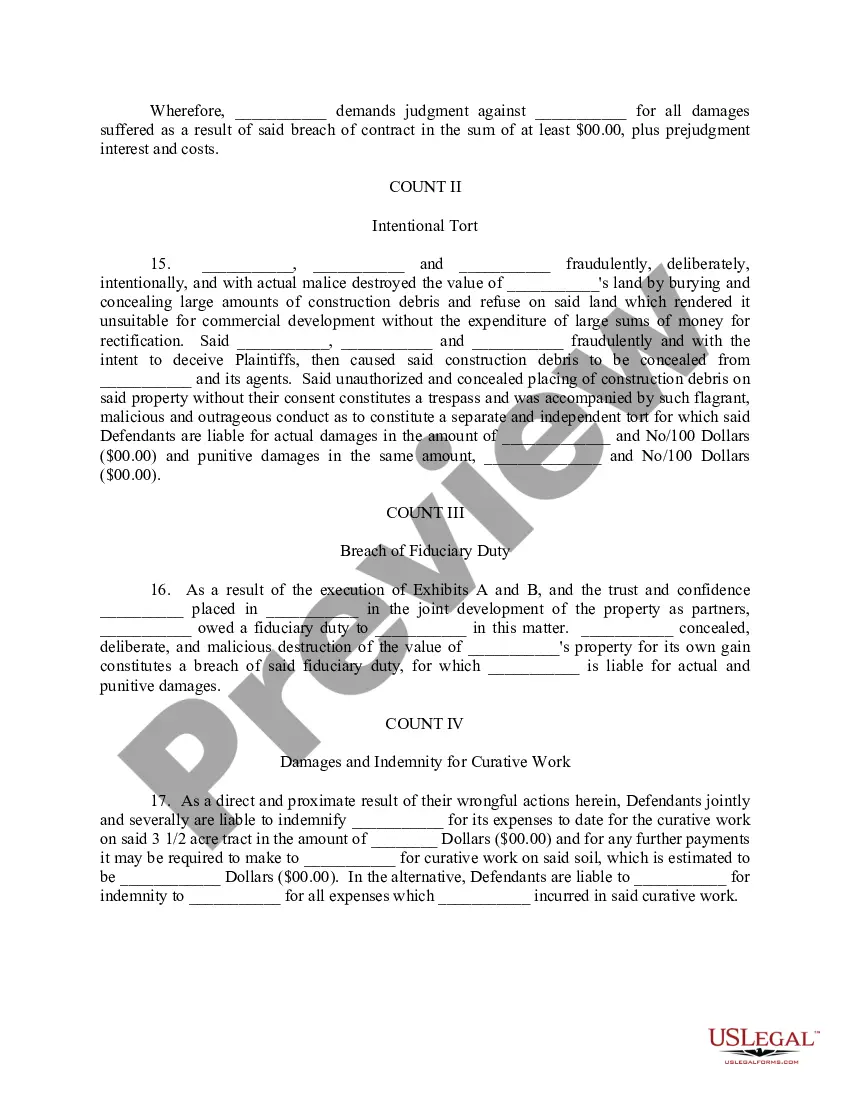
Boston Massachusetts Sample Complaint - Joint venture between owner and contractor - Defective fill materials used by Contractor to fill property for ownership interest
Description




Form popularity
FAQ
Yes, a homeowner can file a lien against a contractor to protect their financial interests. If a contractor fails to meet the terms agreed upon, such as using defective fill materials in a project, the homeowner may pursue this legal remedy. Additionally, filing a lien can serve as a powerful tool for homeowners seeking recourse for damages related to a Boston Massachusetts Sample Complaint - Joint venture between owner and contractor - Defective fill materials used by Contractor to fill property for ownership interest. For a smooth process, consider using US Legal Forms, which provides easy access to the necessary forms and guidance for filing a lien correctly.
After job completion, a contractor can be held liable for defects for varying lengths of time based on state law and the specific terms of the contract, commonly ranging from six months to several years. This period includes time to file complaints about issues, particularly those related to defective fill materials used in construction, as discussed in a Boston Massachusetts Sample Complaint - joint venture between owner and contractor - Defective fill materials used by Contractor to fill property for ownership interest. Understanding these timelines is crucial for property owners, ensuring they can act promptly if problems arise. If any concerns develop, consider reaching out for expert legal assistance.
Contractors are usually liable for latent defects for a period ranging from six years to ten years, depending on applicable state statutes. Latent defects are those not immediately identifiable, which can include issues stemming from defective fill materials used during construction. When facing challenges like those outlined in a Boston Massachusetts Sample Complaint - joint venture between owner and contractor - Defective fill materials used by Contractor to fill property for ownership interest, it’s beneficial to understand your rights regarding latent defects. Knowing the length of this liability assists property owners in taking timely action.
The 24-month rule generally refers to the idea that contractors maintain liability for defects for up to two years after project completion, particularly for latent defects that are not immediately visible. This timeframe helps ensure that any underlying issues, which might be uncovered after the initial inspection, can still be addressed. Thus, if you’re dealing with situations similar to those described in a Boston Massachusetts Sample Complaint - Joint venture between owner and contractor - Defective fill materials used by Contractor to fill property for ownership interest, it's helpful to know that you can still pursue liability claims within this period. Being informed about this timing empowers property owners in their negotiations and decisions.
A contractor's liability typically extends throughout the life of the project plus an additional defect liability period, which can vary by state, but often lasts up to two years. During this time, contractors are responsible for rectifying any issues that arise from their work, including those arising from defective fill materials. If you find yourself dealing with concerns similar to those presented in a Boston Massachusetts Sample Complaint - joint venture between owner and contractor - Defective fill materials used by Contractor to fill property for ownership interest, consider consulting legal expertise for guidance. This timeframe is essential for protecting property interests.
Several factors can void a contractor's contract, including a failure to meet project specifications, failure to obtain necessary permits, or breaches of local building codes. For instance, if a contractor uses defective fill materials, as noted in a Boston Massachusetts Sample Complaint - Joint venture between owner and contractor - Defective fill materials used by Contractor to fill property for ownership interest, this could lead to contract voidance. It's critical for contractors to adhere to industry standards to maintain their contract's validity. Property owners should also ensure clear communication and documentation to prevent misunderstandings.
The defect liability period refers to the timeframe during which a contractor is responsible for fixing any defects that appear after the completion of a project. Typically, this period lasts for a specific duration, often ranging from six months to two years, depending on the contract terms. It offers property owners peace of mind as it ensures that any issues arising from defective fill materials, such as those highlighted in a Boston Massachusetts Sample Complaint - Joint venture between owner and contractor - Defective fill materials used by Contractor to fill property for ownership interest, will be addressed by the contractor. Understanding this timeframe is crucial for both parties involved in the construction process.
When addressing a contractor about unsatisfactory work, it is important to be clear and concise. Begin by documenting the specific issues related to the defective fill materials used by the contractor to fill your property. Mention how these problems impact your ownership interest and reference the Boston Massachusetts Sample Complaint for context. Be sure to suggest a resolution, and let them know that you expect them to take corrective action to resolve the situation.
If you feel ripped off by a contractor, take immediate action by gathering all documentation related to your agreement. Contact the contractor to discuss your concerns, and if that does not bring resolution, file a formal complaint with state agencies. Seeking legal counsel may also be beneficial, especially in cases reminiscent of the Boston Massachusetts Sample Complaint - Joint venture between owner and contractor - Defective fill materials used by Contractor to fill property for ownership interest. Platforms like uslegalforms can assist you in understanding your rights.
To sue a contractor for shoddy work, first gather all evidence, including contracts, photographs, and correspondence. Consult with a legal professional to understand your options and prepare your case. Consider using templates from platforms like uslegalforms to streamline the process. Many disputes resemble cases in the Boston Massachusetts Sample Complaint - Joint venture between owner and contractor - Defective fill materials used by Contractor to fill property for ownership interest, and a clear approach can lead to resolution.