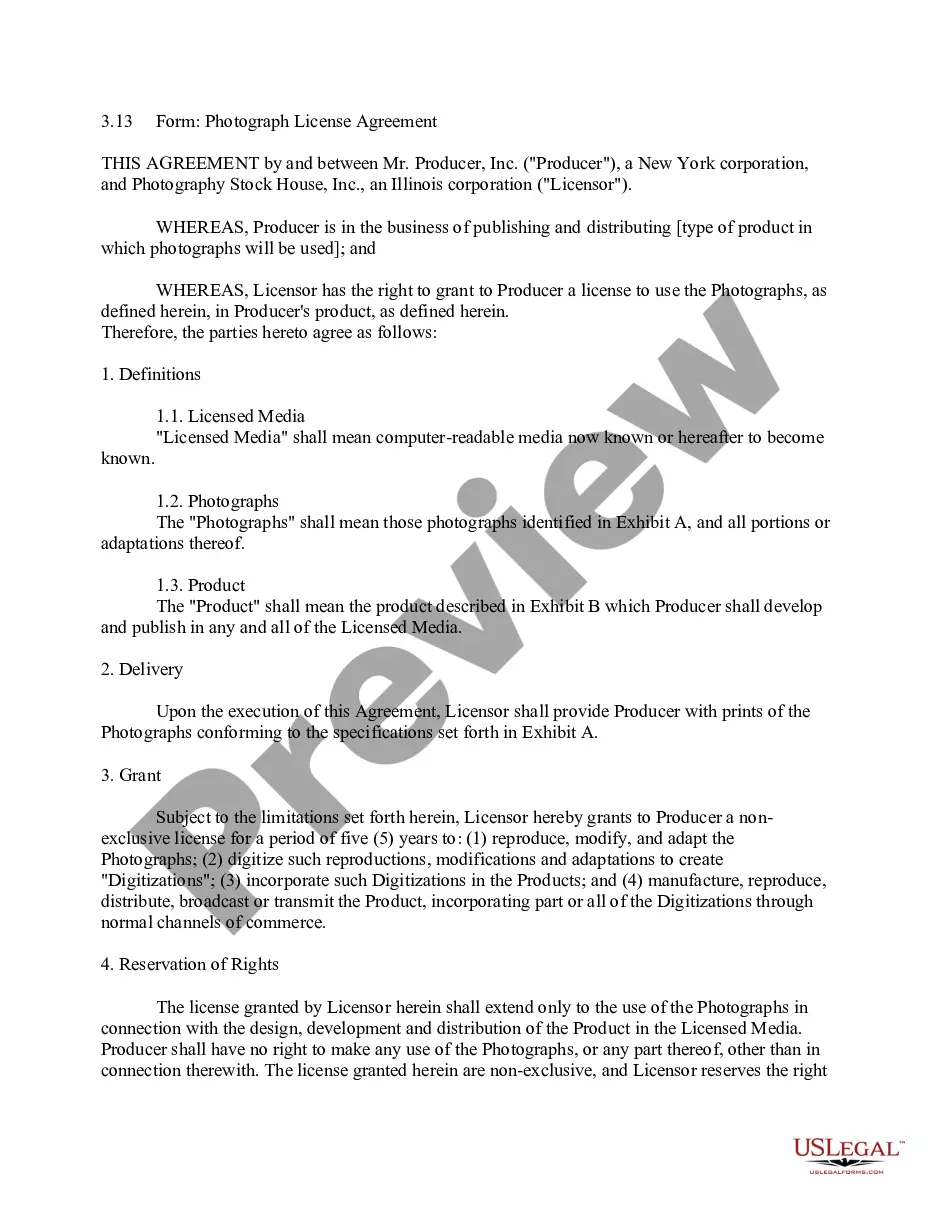
Stockton California Requests for Production of Documents and Things
Description


Form popularity
FAQ
The request for production rule in California stipulates that parties may request the production of documents relevant to their case during the discovery phase. This rule promotes transparency and helps both parties prepare for trial effectively. Understanding this rule is essential for anyone involved in legal proceedings in Stockton, California, as it greatly impacts the success of your case.
When it comes to requests for production of documents in California, the standard limit is 35 requests. This ensures the discovery process remains efficient and manageable for both sides. For those in Stockton, California, being aware of this limit can help you strategize your approach to document requests, ensuring you cover all necessary information without overwhelming the other party.
The limit for Requests for Production (RFP) in California is usually set at 35 requests. This includes all sub-parts, so it is important to be clear and concise in your questioning. If more than 35 requests are needed, you may have to present your case to the judge for approval, emphasizing the necessity of such requests to support your position.
Yes, there are limitations on the number of Requests for Production a party can make in California. Specifically, you can typically make up to 35 requests without needing approval from the court. However, if your case requires more requests, you can seek leave from the court, ensuring you have the necessary documentation for a successful outcome.
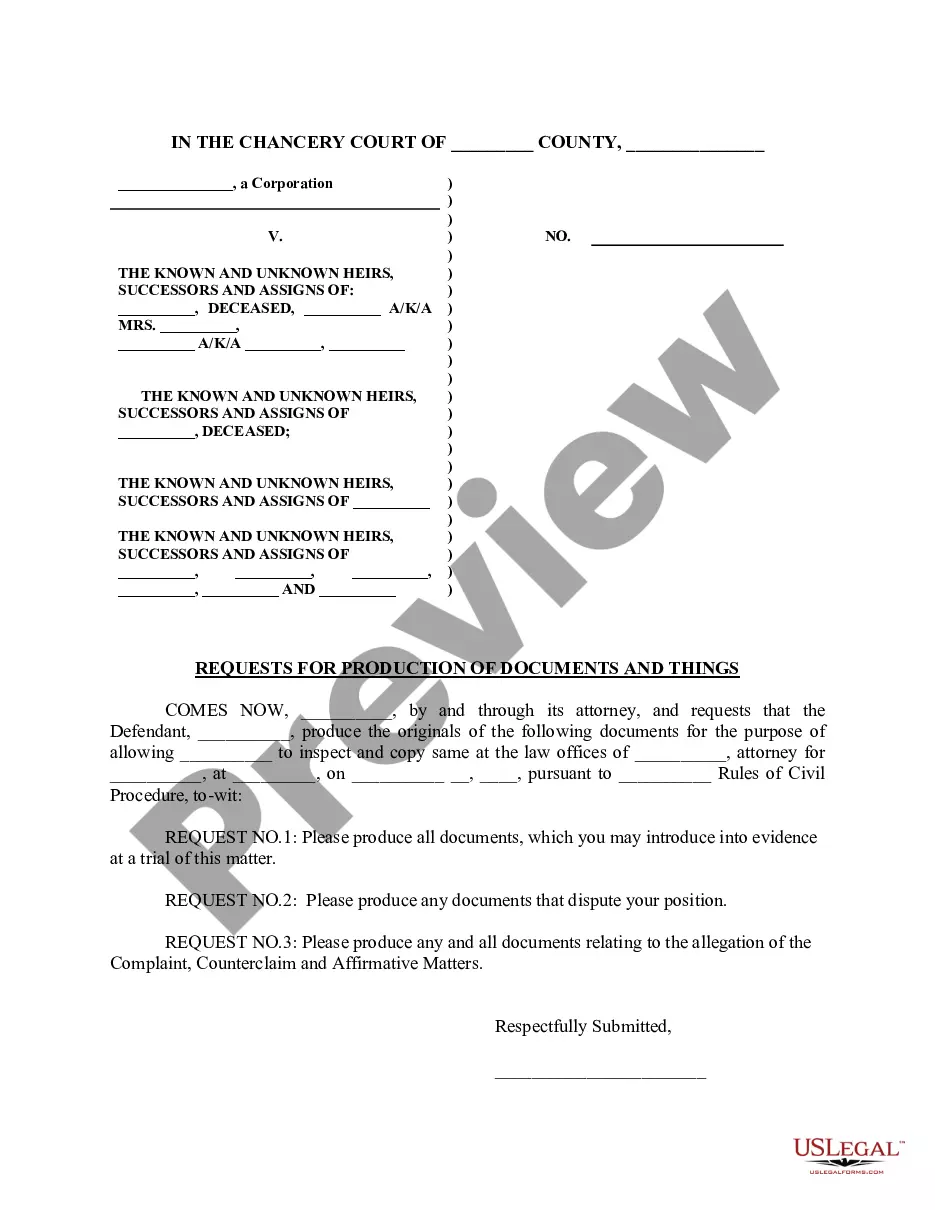
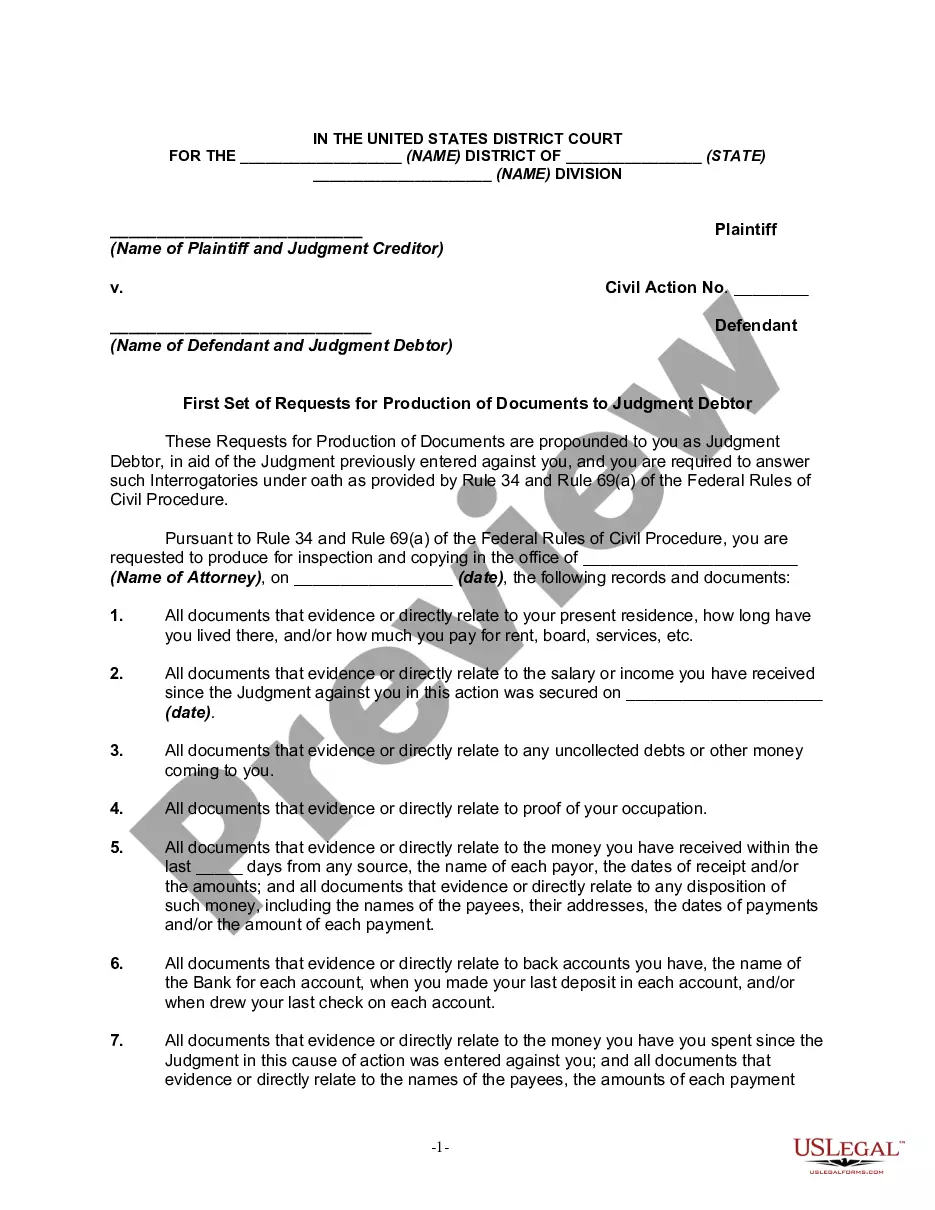
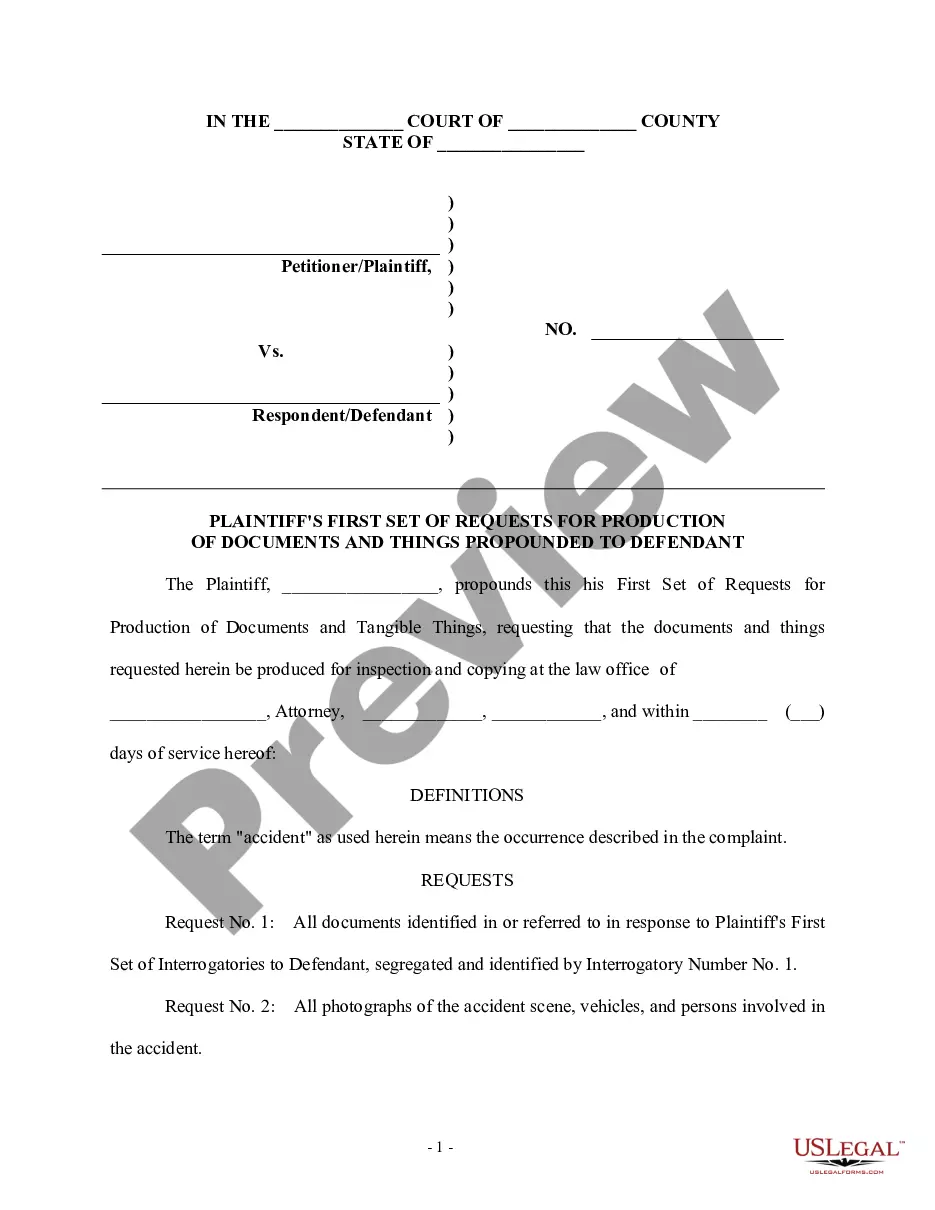
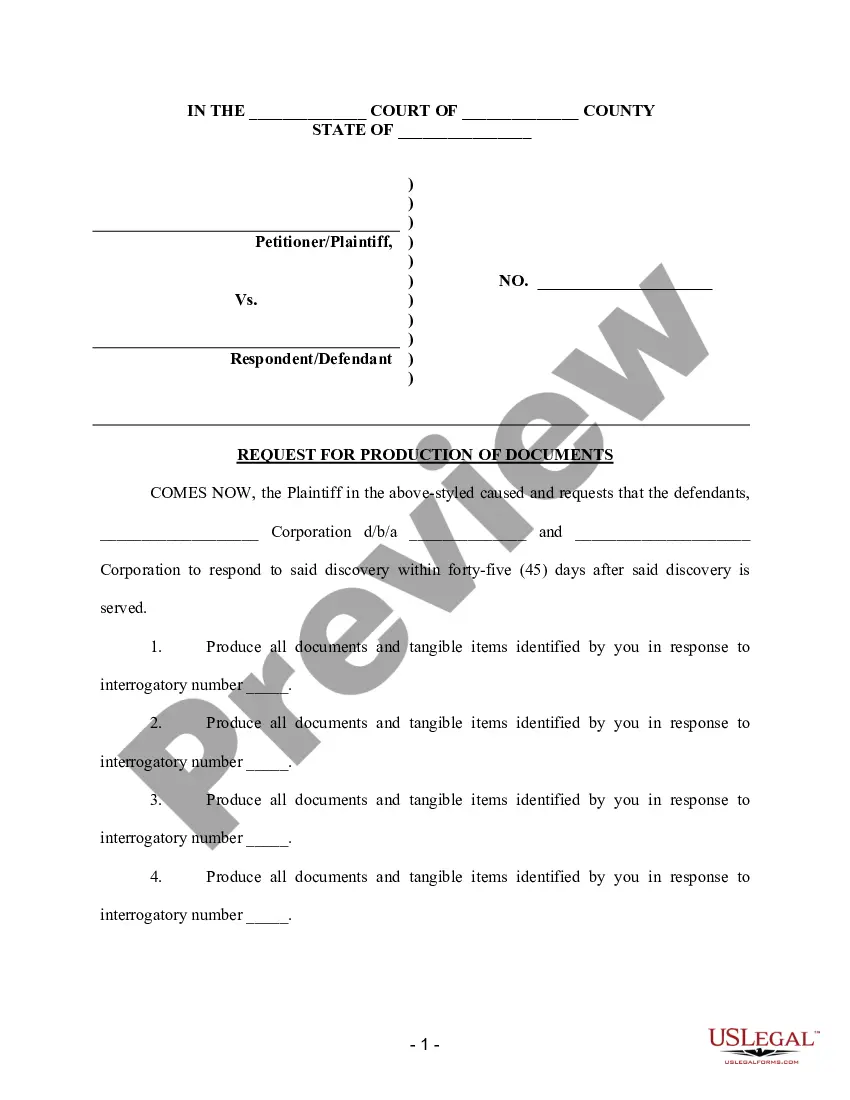
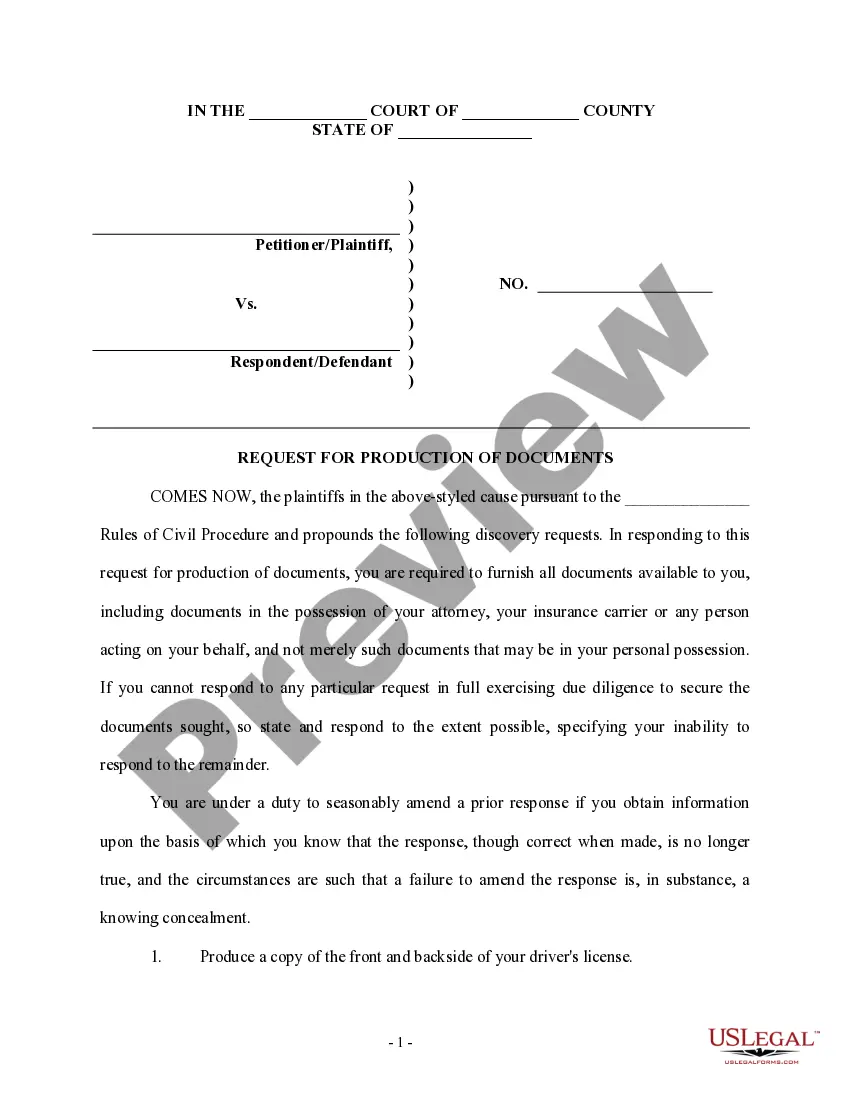
A Request for Production in California is a formal request made during the discovery phase of litigation, demanding the other party provide documents related to the case. This process allows both parties to gather essential evidence and clarify facts. In Stockton, California, Requests for Production of Documents and Things play a vital role in settling disputes by promoting transparency.
When a party receives a Request for Production of Documents, they must respond in writing, indicating which documents they will produce, and specify if any documents are not available. It is essential to address the request within the time frame outlined by California law. By managing these requests carefully, you can ensure compliance and avoid potential sanctions in Stockton, California.
The legal order for producing requested documents is known as a Request for Production of Documents. This request compels a party to provide specific documents relevant to a case. In Stockton, California, Requests for Production of Documents and Things are a crucial part of the discovery process, ensuring that all relevant evidence is available to both parties involved in litigation.
To respond to a request for production of documents, first acknowledge the request in writing. Provide the requested documents if available, or explain why certain documents might not be accessible. If you are unsure about your obligations, consider seeking support from a platform that specializes in Stockton California Requests for Production of Documents and Things, ensuring that your response meets all requirements and deadlines.
When writing a request for production, start by clearly stating your request and identifying the documents needed. Be specific but concise, focusing on relevant and material documents. Ensure to follow the legal format required in your jurisdiction, especially if dealing with Stockton California Requests for Production of Documents and Things. This clarity will help facilitate a smooth exchange of information.
Responding to a request for information involves clearly understanding what is being asked. Gather the necessary information and respond within any deadlines provided. For comprehensive guidance, consider using resources that specialize in Stockton California Requests for Production of Documents and Things. This helps ensure your response is thorough and compliant with legal standards.