Cook Illinois Security Deposit Agreement
Description
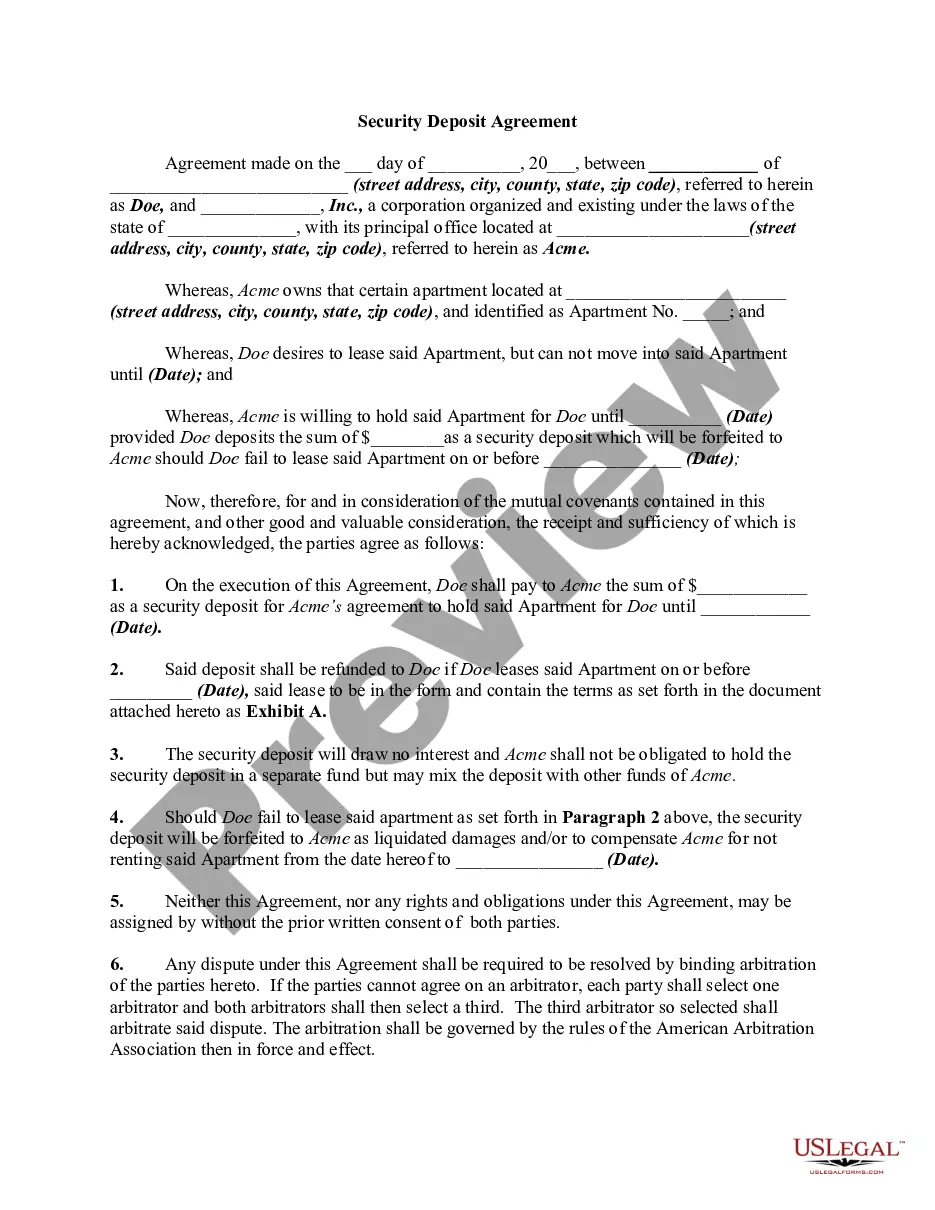
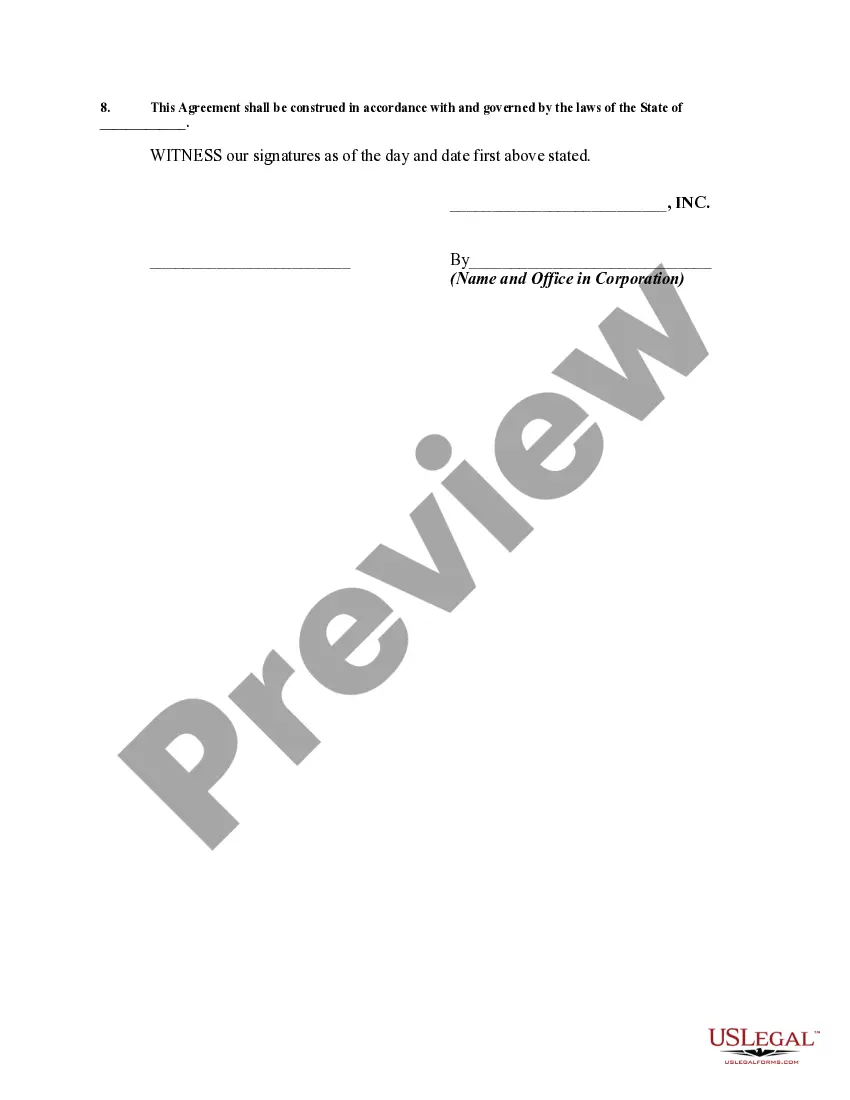
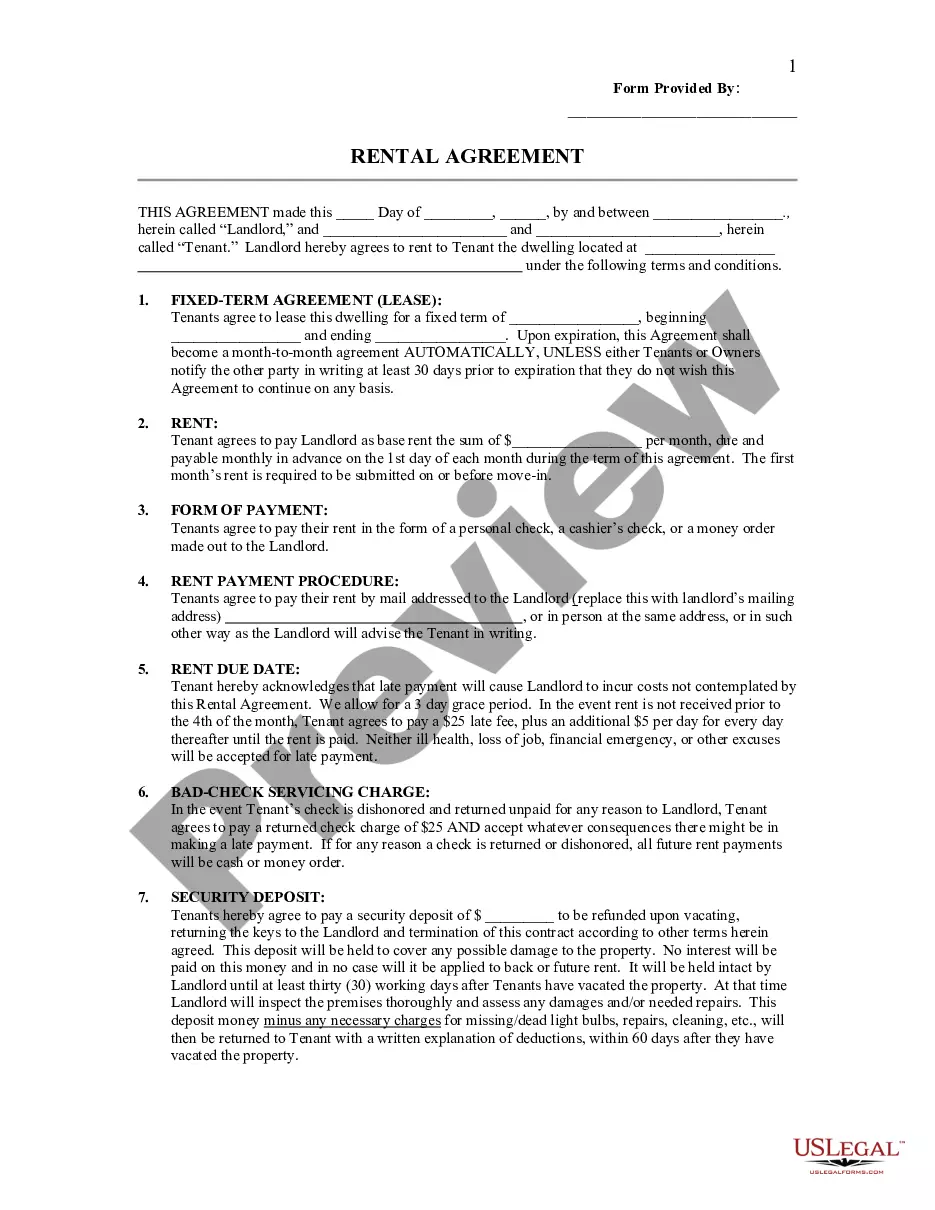
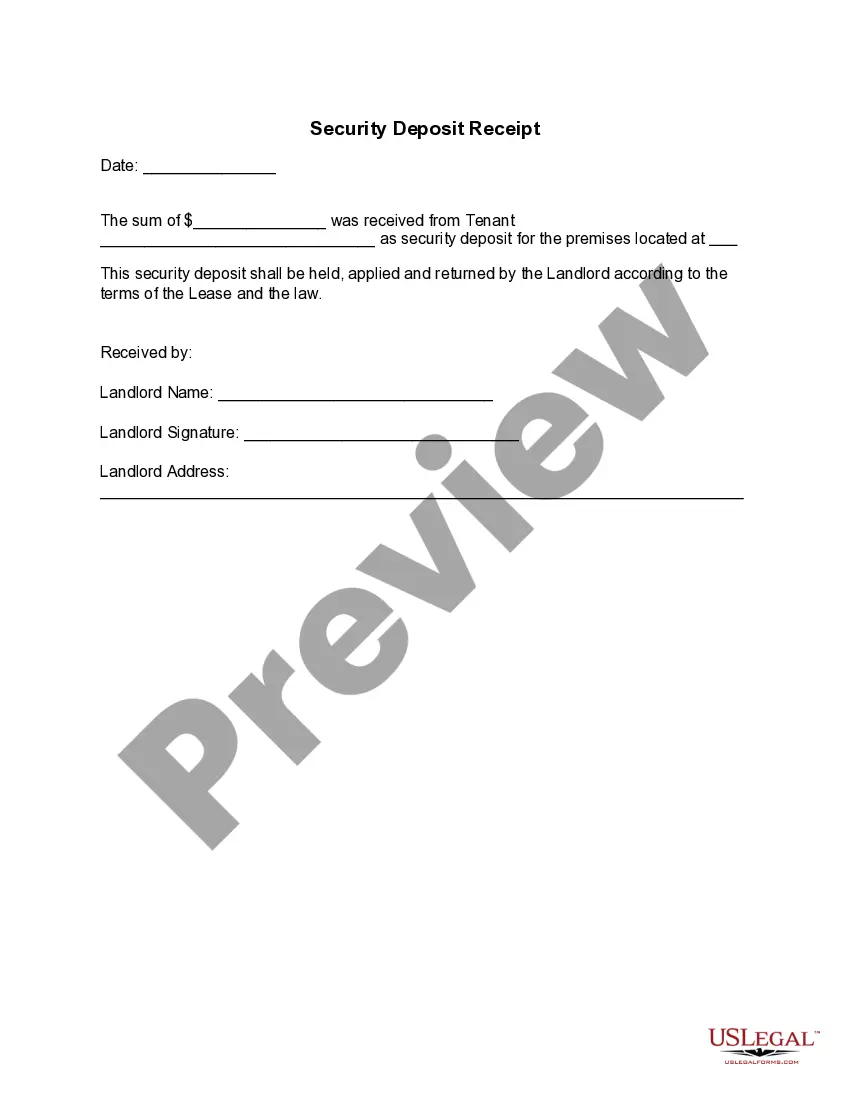
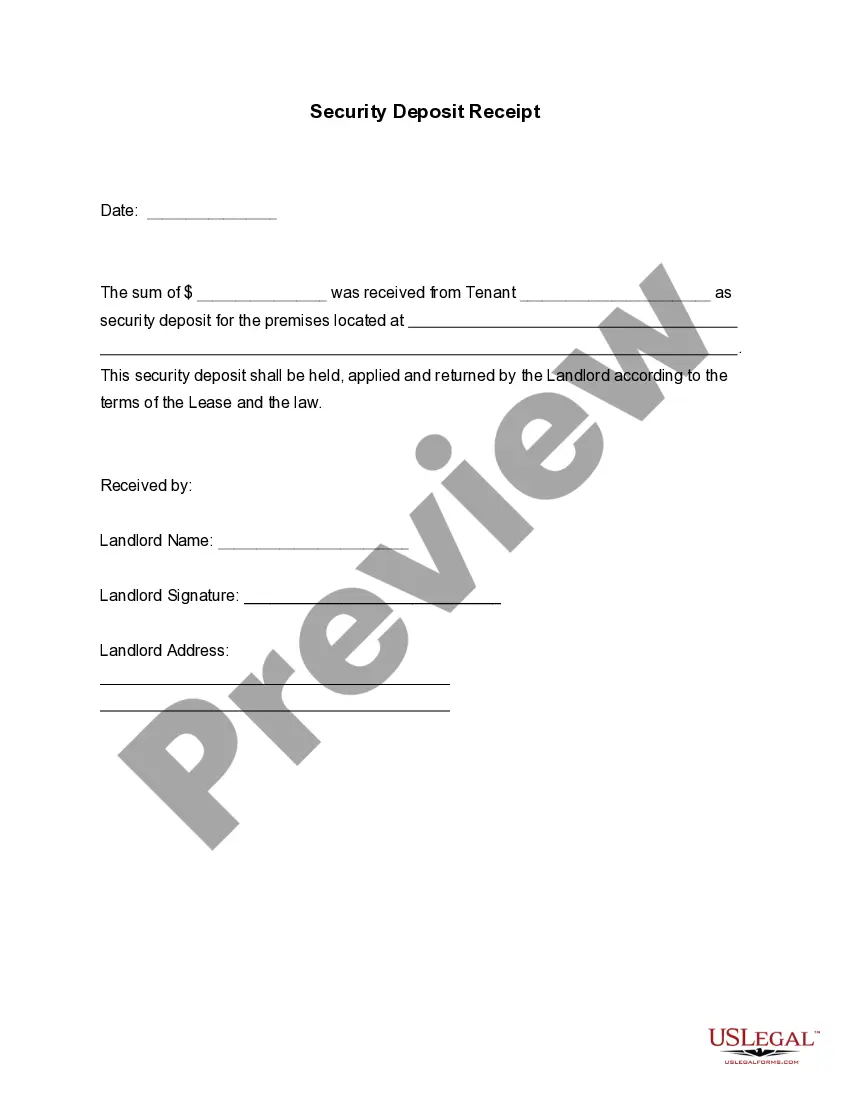
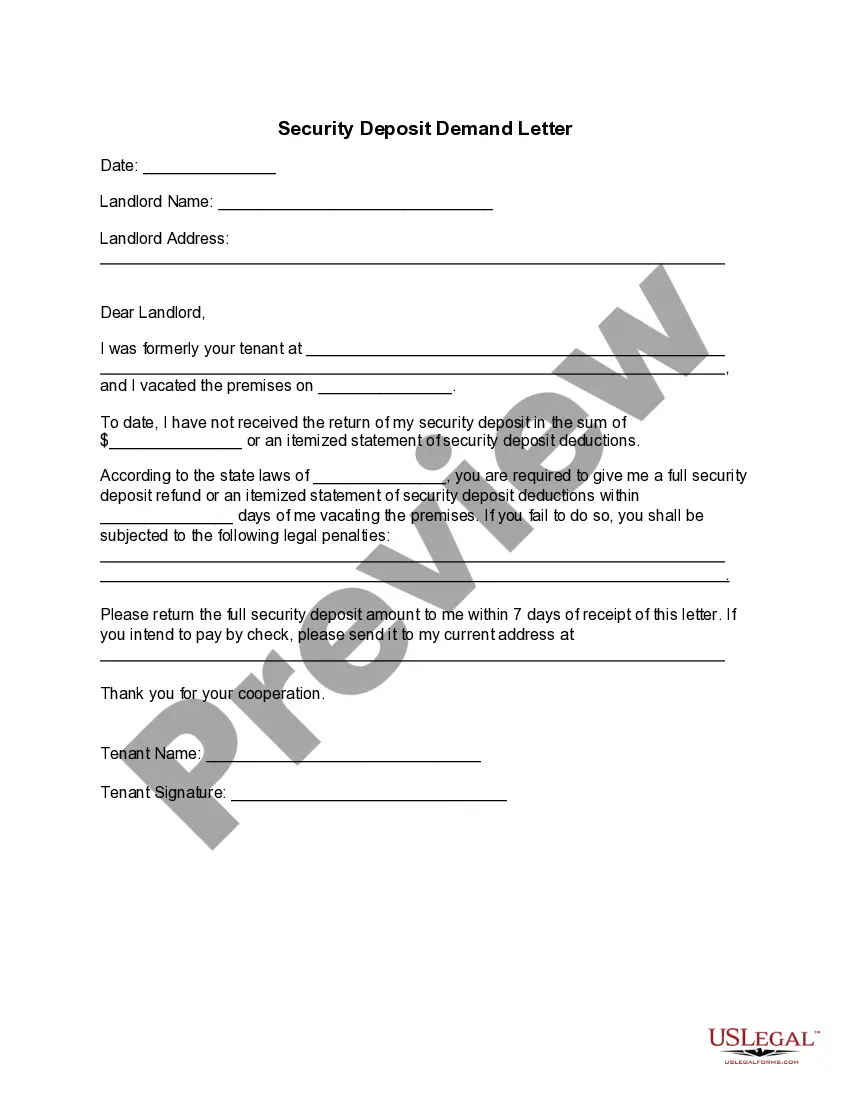
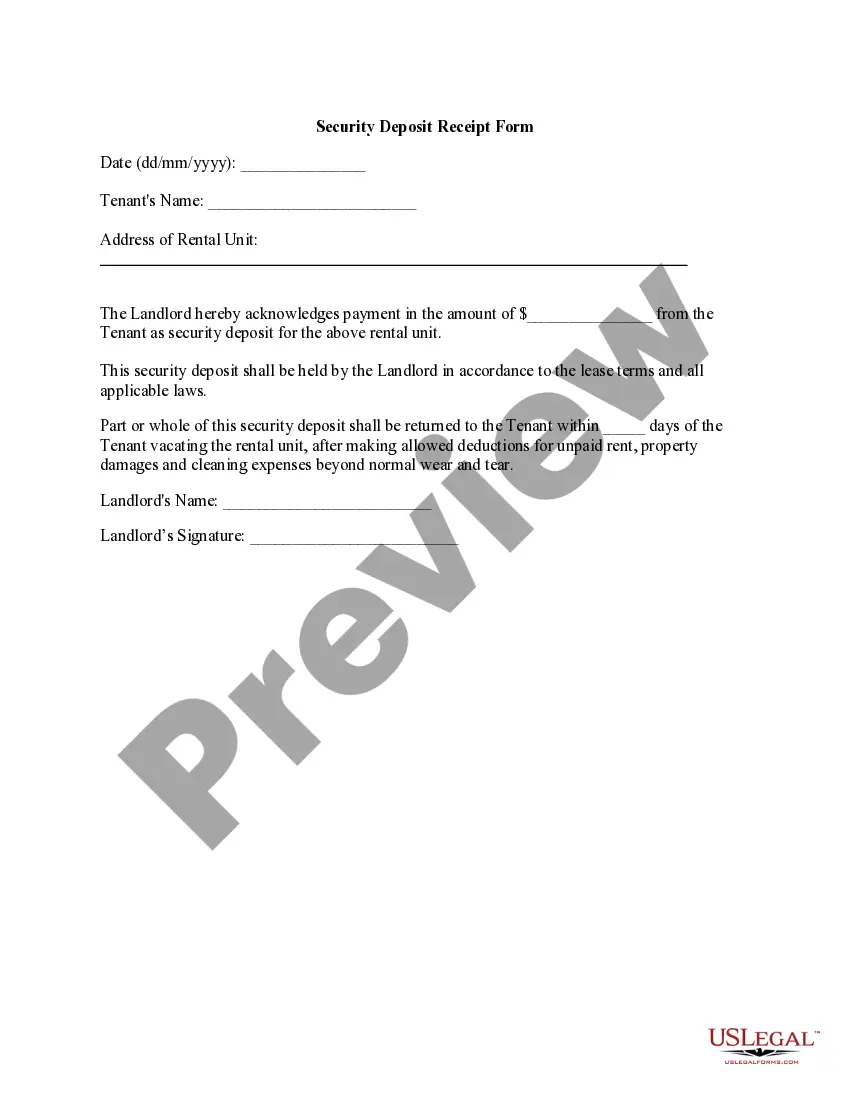


How to fill out Security Deposit Agreement?
Compiling documents for professional or personal needs is always a significant obligation.
When formulating a contract, a public service inquiry, or a power of attorney, it's crucial to regard all federal and state statutes of the respective region.
Nevertheless, small municipalities and even towns possess legislative rules that must also be taken into account.
Join the platform and swiftly acquire validated legal templates for any situation with just a few clicks!
- All these elements render it demanding and lengthy to produce a Cook Security Deposit Agreement without expert help.
- It is feasible to avoid squandering funds on attorneys crafting your paperwork and generate a legally binding Cook Security Deposit Agreement independently, utilizing the US Legal Forms online repository.
- It is the largest virtual compilation of state-specific legal documents that are professionally endorsed, ensuring their legitimacy when you choose a sample for your county.
- Prior registered users just need to Log In to their accounts to retrieve the required form.
- If you do not yet have a subscription, adhere to the step-by-step instructions below to obtain the Cook Security Deposit Agreement.
- Browse through the webpage you've opened and confirm if it holds the document you need.
- To accomplish this, utilize the form description and preview if these features are accessible.
Form popularity
FAQ
Yes, landlords in Illinois must provide receipts for any deductions made from a security deposit. This requirement helps tenants understand the reasons behind deductions and protects their rights. When using a Cook Illinois Security Deposit Agreement, landlords can clearly outline this process, ensuring compliance and building a positive relationship with tenants. Providing receipts is not just a legal obligation; it fosters goodwill and trust.
Yes, Illinois law requires that security deposits be held in a separate account. This regulation ensures that tenants' funds are protected while landlords manage their properties. For anyone using a Cook Illinois Security Deposit Agreement, understanding this requirement is essential for compliance. Keeping security deposits in a separate account promotes transparency and trust between landlords and tenants.
The new security deposit law in Illinois, which may have been implemented recently, focuses on increasing tenant protections, including more stringent rules for landlords on the return of security deposits. Additionally, it enhances transparency regarding deductions. Staying informed on these updates through the Cook Illinois Security Deposit Agreement will benefit all tenants.
In Illinois, security deposit laws protect tenants by outlining how landlords must handle deposits, including the return timeframe and acceptable deductions. If a landlord violates these laws, they may be liable for damages. Knowing these laws will help you effectively engage with the Cook Illinois Security Deposit Agreement.
Landlords in Illinois may deduct amounts for unpaid rent, damages beyond normal wear and tear, and any agreed-upon charges in the lease. They must provide an itemized list of deductions when returning any remaining balance. This is crucial to understand when navigating your Cook Illinois Security Deposit Agreement.
In Cook County, the law requires landlords to give tenants a written receipt for security deposits. The law also outlines specific timelines for returning deposits and the conditions under which deductions may be made. Familiarizing yourself with the Cook Illinois Security Deposit Agreement will provide clarity on these obligations.
In Chicago, landlords must return your security deposit within 45 days of the lease termination or when you move out, whichever comes first. If a landlord fails to return the deposit on time, you may be entitled to damages. Understanding the Cook Illinois Security Deposit Agreement can help you know your rights in these situations.
In Illinois, the law surrounding security deposits is governed by the Cook Illinois Security Deposit Agreement. Landlords must provide written notice when they collect a security deposit, and they must return any leftover funds within 45 days after the lease ends, provided there are no damages. If a landlord doesn’t adhere to these rules, tenants can seek legal recourse. Using a standardized Cook Illinois Security Deposit Agreement can help both tenants and landlords understand their rights and responsibilities.
The hardship program in Illinois supports residents facing financial struggles by offering various forms of assistance. This may include funds to cover rent, utilities, and other essential expenses. Tenants can benefit significantly from understanding how the Cook Illinois Security Deposit Agreement interacts with these programs. For guidance on applying, turn to local agencies or platforms like US Legal Forms for clarity and support.
The $5000 rent grant in Illinois is a financial aid program designed to assist tenants in paying their rent. This initiative helps residents facing financial hardship, ensuring they can secure stable housing. Eligibility often depends on various factors, including income and current living conditions. Stay informed about the application process by checking government resources or discussing it with your landlord, especially within the context of a Cook Illinois Security Deposit Agreement.