Anchorage Alaska Guide for Protecting Deceased Persons from Identity Theft
Description
Form popularity
FAQ
If you suspect that someone is stealing from a deceased person, start by gathering evidence of the theft and contact local authorities. Reporting the incident can help protect the deceased's assets and prevent further losses. Additionally, leveraging resources like the Anchorage Alaska Guide for Protecting Deceased Persons from Identity Theft can help you understand your rights and the legal options available to you. Consider using uslegalforms for legal documents and forms that may assist in addressing these concerns effectively.
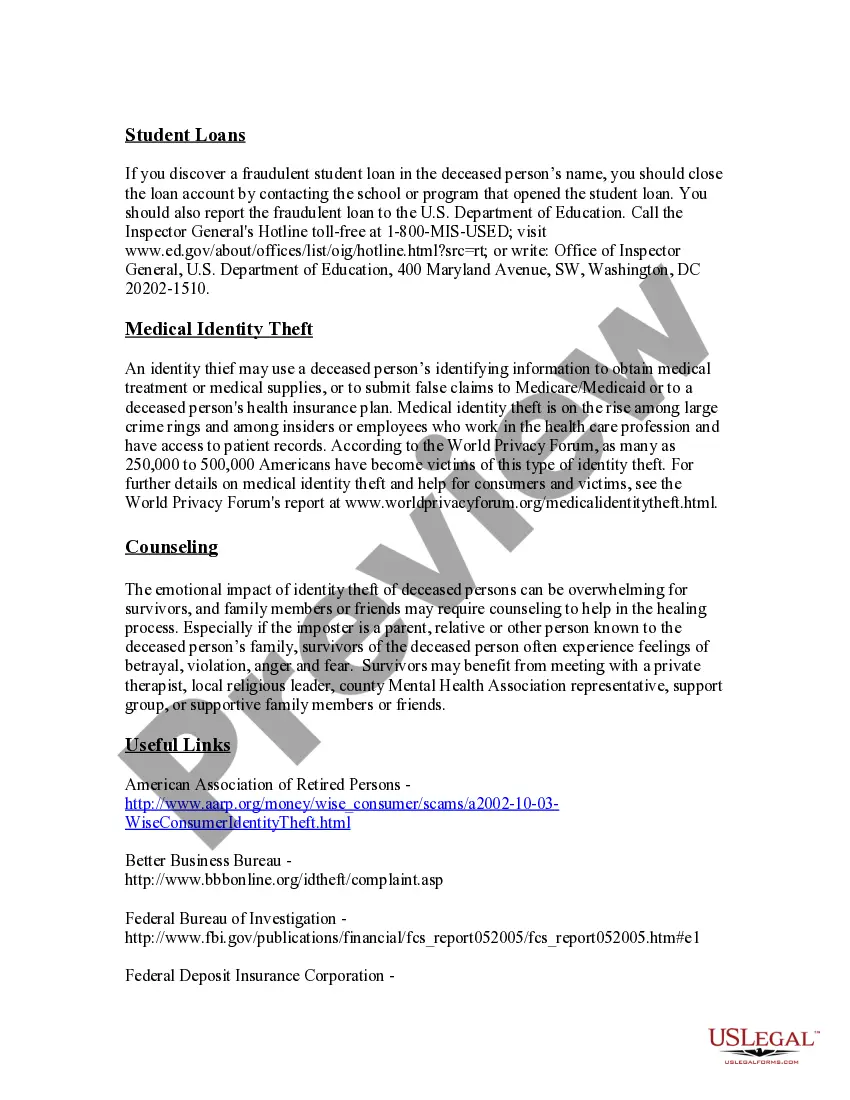
When someone steals the identity of a deceased person, they may open new accounts, rack up debt, or commit fraud using the deceased's information. This can lead to complications for the family, including financial loss and emotional distress. It is crucial to act quickly to mitigate these issues. The Anchorage Alaska Guide for Protecting Deceased Persons from Identity Theft outlines essential steps to safeguard against these threats.
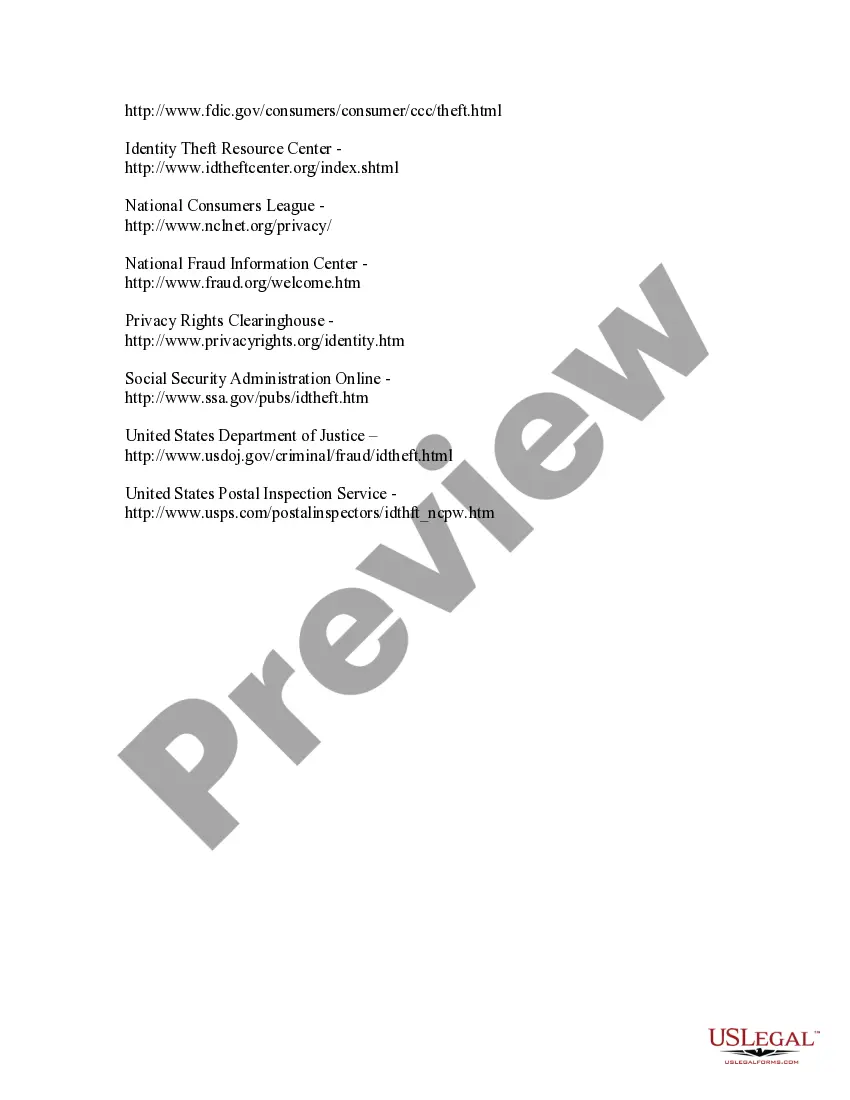
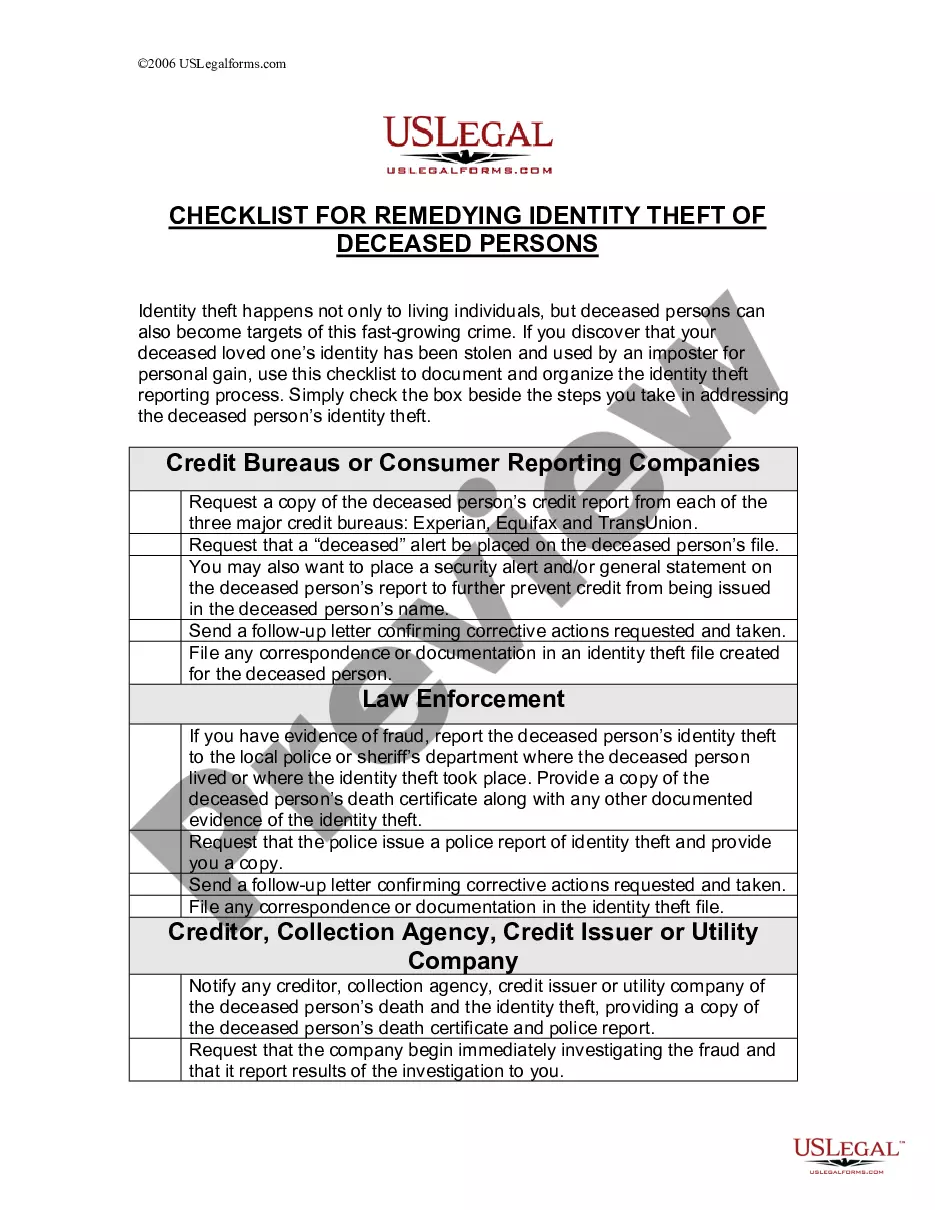
To report identity theft of a deceased person, first collect necessary documents such as the death certificate and any fraudulent accounts. You should contact the Federal Trade Commission (FTC) to report the theft. Additionally, consider filing a report with local law enforcement in Anchorage, Alaska, and the credit bureaus. Utilizing the Anchorage Alaska Guide for Protecting Deceased Persons from Identity Theft can provide further insights and steps to ensure proper measures are taken.
To prevent identity theft of a deceased person, start by notifying credit bureaus about the death. This action can help freeze the deceased's credit report, preventing new accounts from being opened in their name. Additionally, consider placing a fraud alert on their credit file to further protect against unauthorized use. For a comprehensive approach, refer to the Anchorage Alaska Guide for Protecting Deceased Persons from Identity Theft, which provides additional resources and steps to safeguard sensitive information.
A dead person's Social Security number can be used for various fraudulent activities, such as accessing benefits, opening new credit accounts, or committing other forms of identity theft. Once a person passes away, their Social Security number should be secured to prevent misuse. To minimize risks, it is vital to take swift action. For more comprehensive protection strategies, refer to the Anchorage Alaska Guide for Protecting Deceased Persons from Identity Theft.
To effectively protect a deceased person from identity theft, begin by notifying various institutions such as banks and credit bureaus. It is also wise to monitor their financial accounts for unusual activity. Furthermore, consider registering the deceased's information with identity theft protection services. The Anchorage Alaska Guide for Protecting Deceased Persons from Identity Theft will help you navigate these crucial steps.
To report identity theft of a deceased person online, start by contacting the Federal Trade Commission (FTC) through their website, where they guide you through the reporting process. You will need to provide details about the deceased and any fraudulent activity detected. Additionally, keep documentation of your report for future reference. The Anchorage Alaska Guide for Protecting Deceased Persons from Identity Theft offers a step-by-step process for this situation.
Preventing identity theft for a deceased person involves several important steps. First, ensure you cancel any credit cards and close bank accounts in the deceased's name. Next, notify credit reporting agencies to flag the account to prevent new credit from being opened. To learn more about these protective measures, you can consult the Anchorage Alaska Guide for Protecting Deceased Persons from Identity Theft.
The Alaska Personal Information Protection Act is a law designed to protect personal information from unauthorized access and misuse. It requires businesses to implement reasonable safeguards for personal data, including that of deceased individuals. This act is essential for anyone looking to secure the privacy of their loved ones after they pass away. For detailed guidance, refer to the Anchorage Alaska Guide for Protecting Deceased Persons from Identity Theft.
Yes, it is important to protect a deceased person's social security number. Identity thieves can misuse this information to open accounts and commit fraud. The 'Anchorage Alaska Guide for Protecting Deceased Persons from Identity Theft' outlines practical steps to secure this sensitive information. By taking proactive measures, you can help ensure that your loved one's identity remains safe even after their passing.