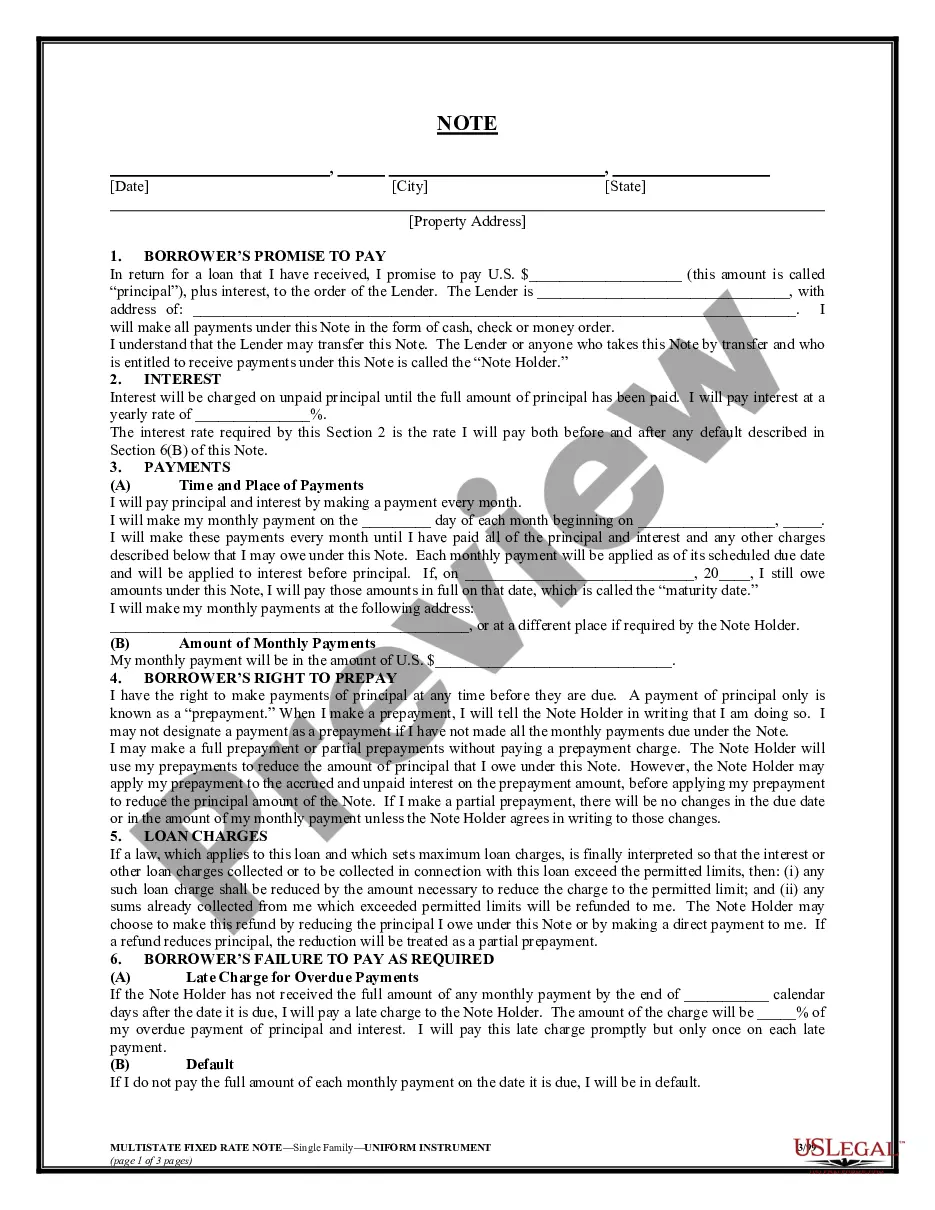
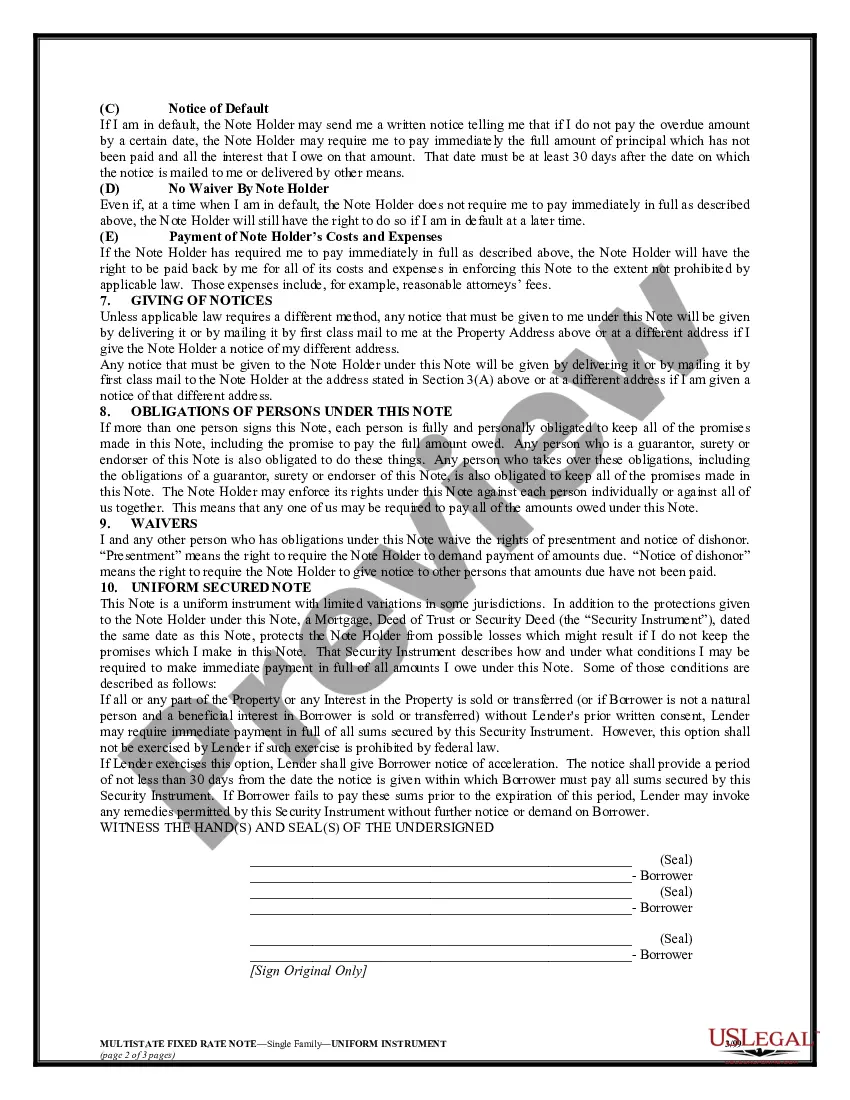
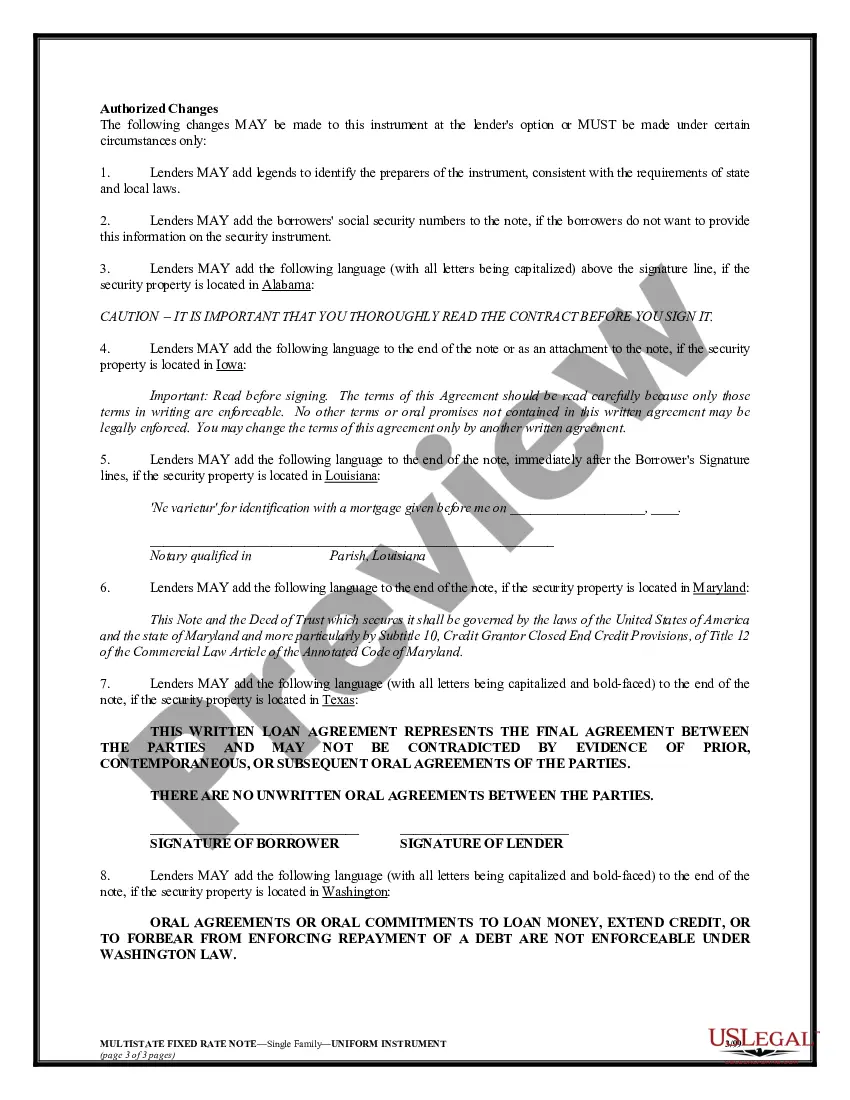
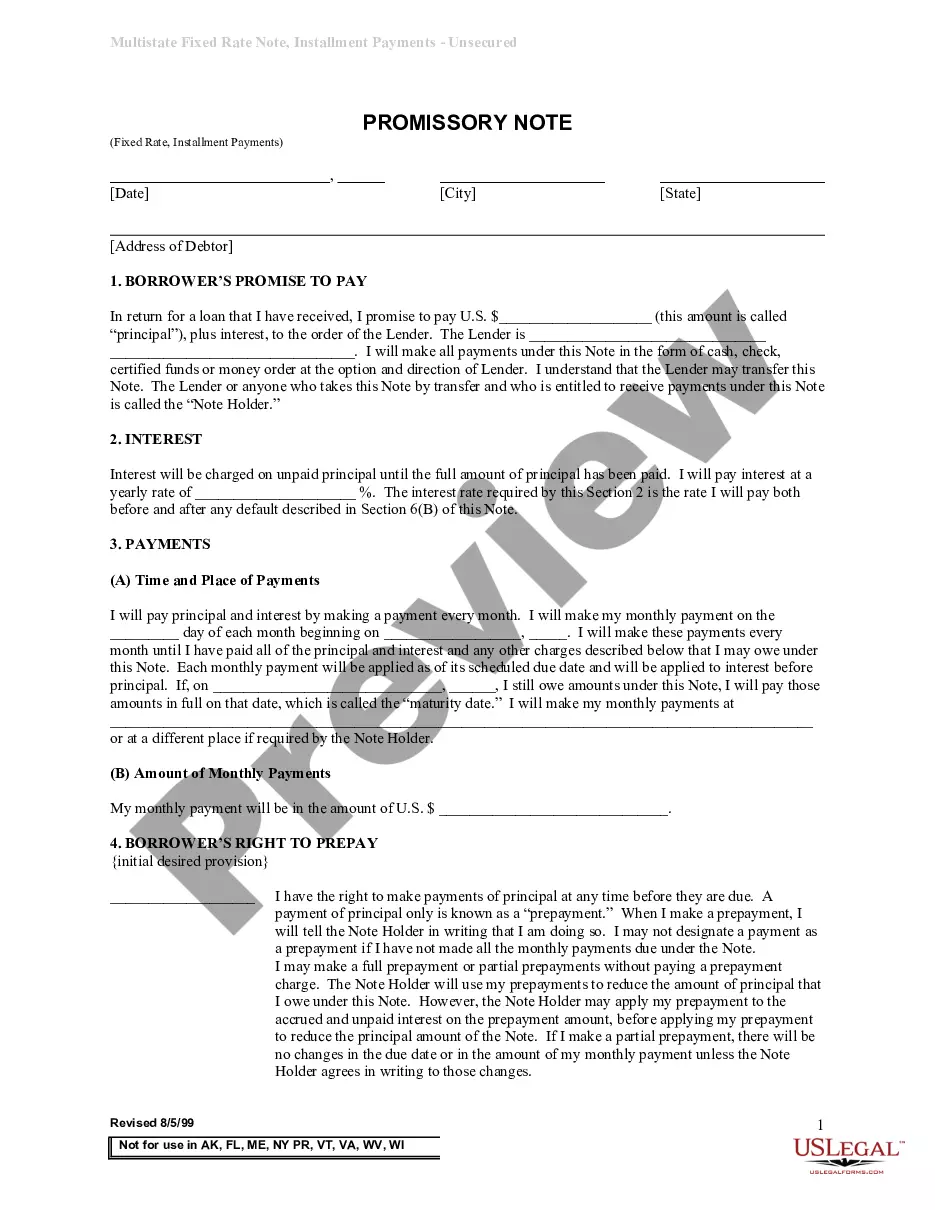
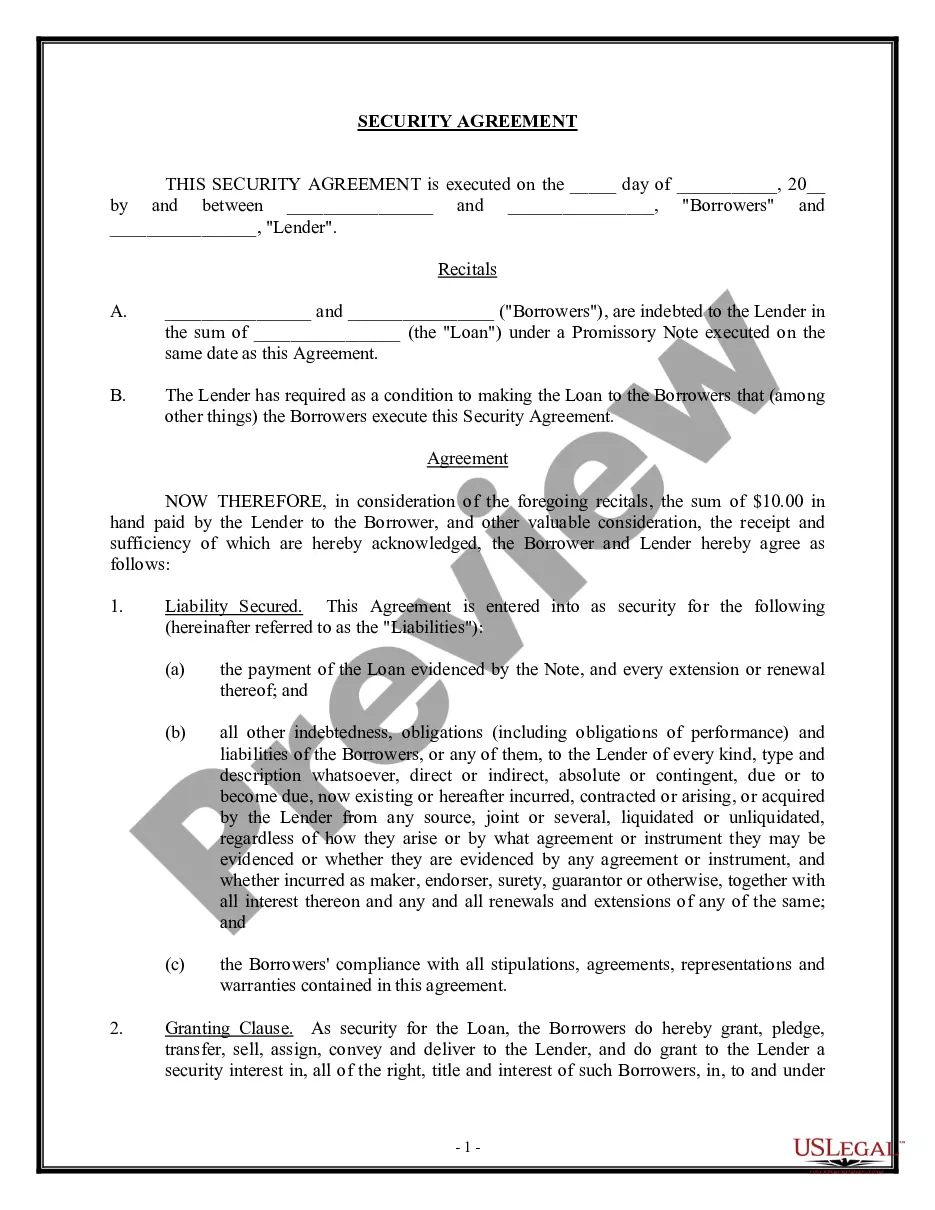
This form is a secured Promissory Note. The borrower promises to make all payments on the loan, with interest, to the lender. The form also provides that the maker has the right to make full or partial prepayments without paying prepayment charges.
Fulton Georgia Multistate Promissory Note - Secured
State:
Multi-State
Category:
County:
Fulton
Control #:
US-00601-A
Format:
Word;
Rich Text
97 downloads
Description
Free preview
Get your form ready online
Our built-in tools help you complete, sign, share, and store your documents in one place.
Built-in online Word editor
Make edits, fill in missing information, and update formatting in US Legal Forms—just like you would in MS Word.
Export easily
Download a copy, print it, send it by email, or mail it via USPS—whatever works best for your next step.
E-sign your document
Sign and collect signatures with our SignNow integration. Send to multiple recipients, set reminders, and more. Go Premium to unlock E-Sign.
Notarize online 24/7
If this form requires notarization, complete it online through a secure video call—no need to meet a notary in person or wait for an appointment.
Store your document securely
We protect your documents and personal data by following strict security and privacy standards.

Make edits, fill in missing information, and update formatting in US Legal Forms—just like you would in MS Word.

Download a copy, print it, send it by email, or mail it via USPS—whatever works best for your next step.

Sign and collect signatures with our SignNow integration. Send to multiple recipients, set reminders, and more. Go Premium to unlock E-Sign.

If this form requires notarization, complete it online through a secure video call—no need to meet a notary in person or wait for an appointment.

We protect your documents and personal data by following strict security and privacy standards.
Looking for another form?
How to fill out Multistate Promissory Note - Secured?
A documentation procedure consistently accompanies every legal action you undertake.
Establishing a business, applying for or accepting an employment proposal, transferring ownership, and various other life events necessitate that you prepare official documentation that differs from state to state.
This is why having everything gathered in a single location is so advantageous.
US Legal Forms is the largest online repository of current federal and state-specific legal templates.
Read the description (if present) to confirm the form meets your needs.
- On this site, you can quickly locate and download a document for any personal or business purpose relevant to your area, including the Fulton Multistate Promissory Note - Secured.
- Finding templates on the site is exceedingly straightforward.
- If you already hold a subscription to our library, Log In to your account, locate the sample via the search field, and click Download to save it to your device.
- Subsequently, the Fulton Multistate Promissory Note - Secured will be accessible for continued use in the My documents section of your profile.
- If you are accessing US Legal Forms for the first time, follow this brief guideline to obtain the Fulton Multistate Promissory Note - Secured.
- Ensure you have navigated to the correct page with your local form.
- Utilize the Preview mode (if available) and scroll through the template.
Form popularity
FAQ
The property that secures a note is called collateral, which can be either real estate or personal property. A promissory note secured by collateral will need a second document. If the collateral is real property, there will be either a mortgage or a deed of trust.
Unlike a deed of trust or mortgage, the promissory note is typically not recorded in the county land records (except in a few states like Florida). Instead, the lender holds on to this document until the amount borrowed is repaid.
BORROWER'S PROMISE TO PAY.INTEREST.PAYMENTS.BORROWER'S RIGHT TO PREPAY.LOAN CHARGES.BORROWER'S FAILURE TO PAY AS REQUIRED.GIVING OF NOTICES.OBLIGATIONS OF PERSONS UNDER THIS NOTE.More items...
Generally, promissory notes do not need to be notarized. Typically, legally enforceable promissory notes must be signed by individuals and contain unconditional promises to pay specific amounts of money. Generally, they also state due dates for payment and an agreed-upon interest rate.
Unlike a mortgage, the promissory note isn't recorded in the county land records. The lender holds the promissory note while the loan is outstanding. When the loan is paid off, the note is marked as "paid in full" and returned to the borrower.
How to Enforce a Promissory NoteTypes of Property that can be used as collateral.Speak to them in person.Draft a Demand / Notice Letter.Write and send a Follow Up Letter.Enlisting a Professional Collection Agency.Filing a petition or complaint in court.Selling the Promissory Note.Final Tips.More items...?
Promissory notes are typically recorded as public documents and accessible shortly after the closing. The trustee maintains the original deed until the loan is satisfied.
A promissory note can be secured with a pledge of collateral, which is something of value that can be seized if a borrower defaults.
A promissory note can become invalid if it excludes A) the total sum of money the borrower owes the lender (aka the amount of the note) or B) the number of payments due and the date each increment is due.