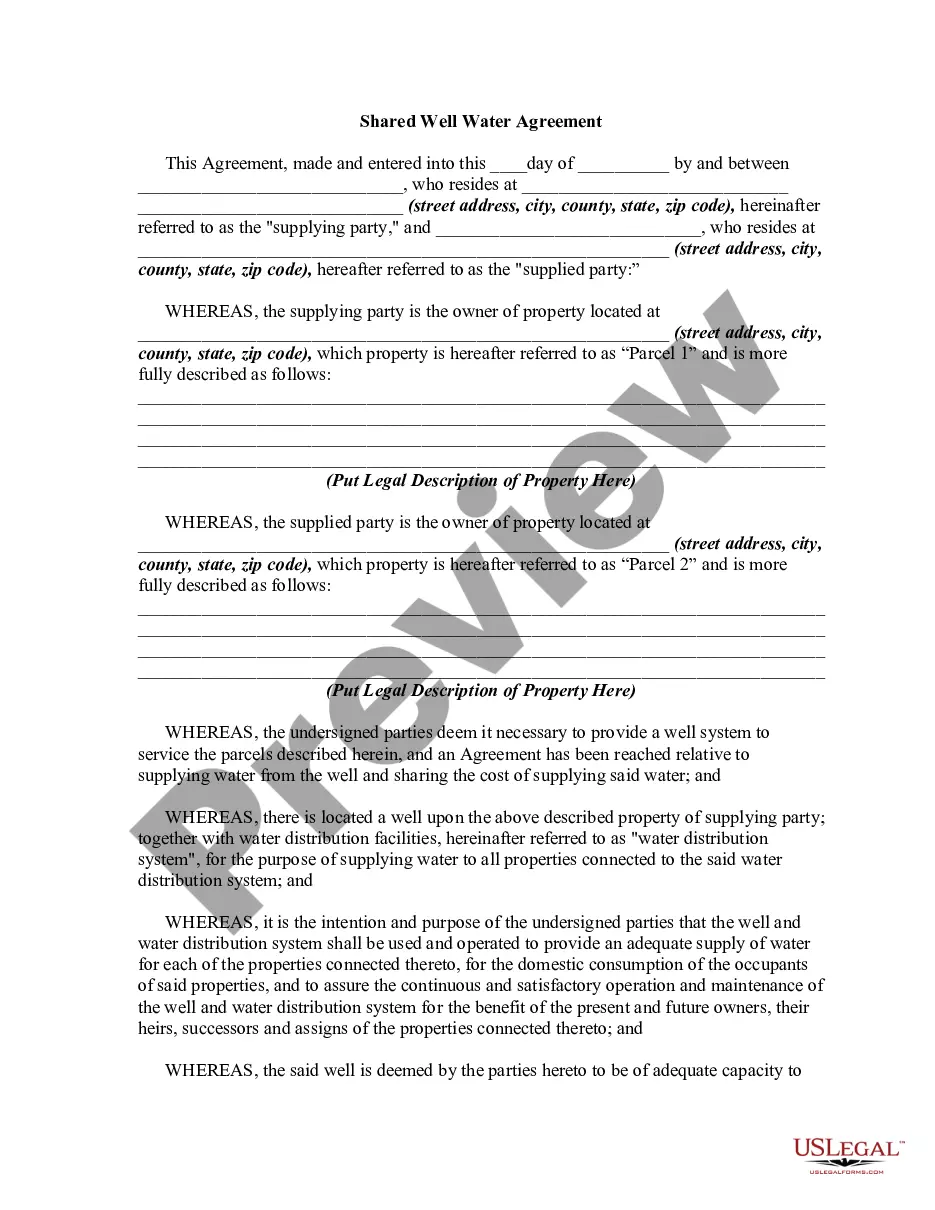
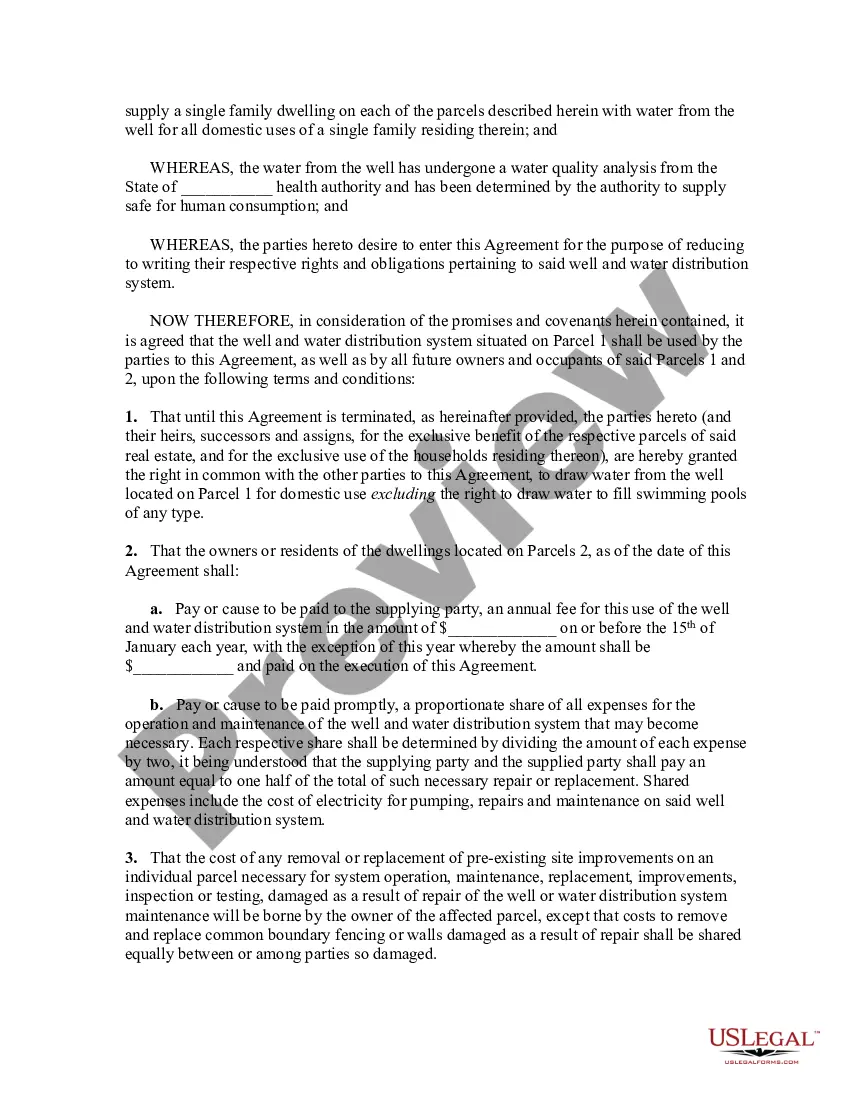
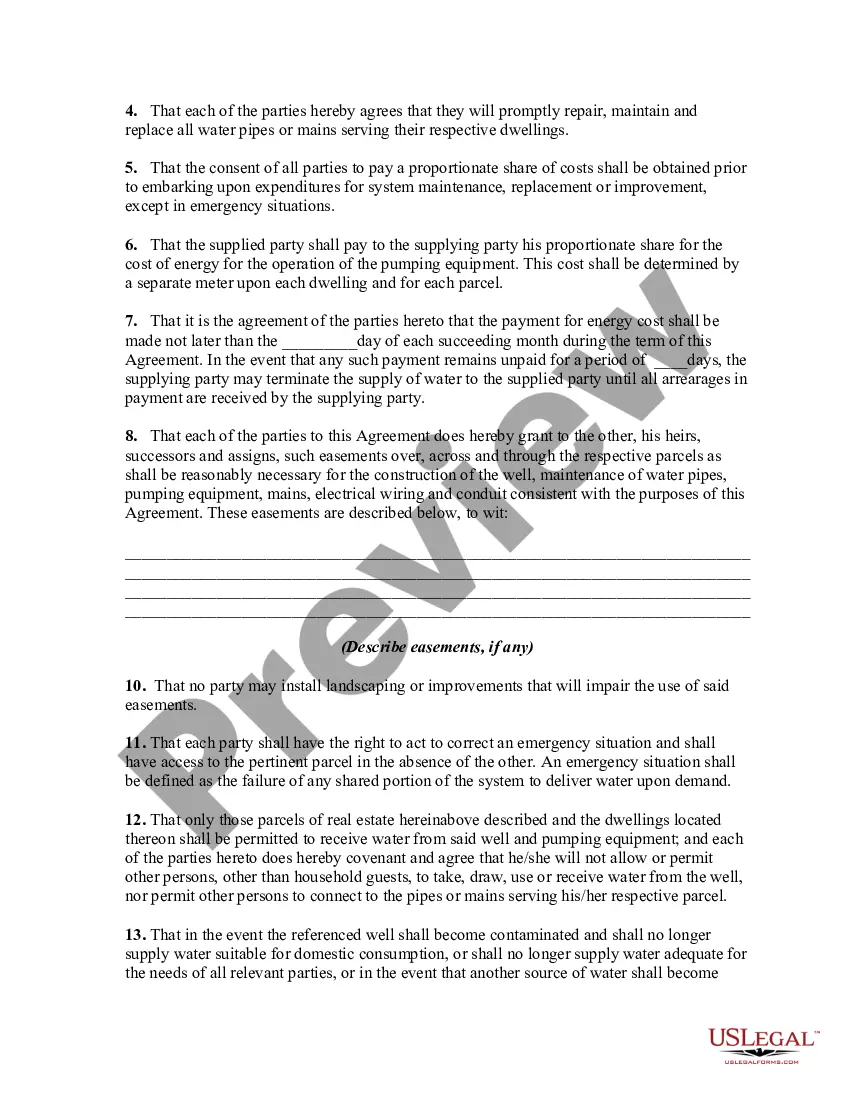
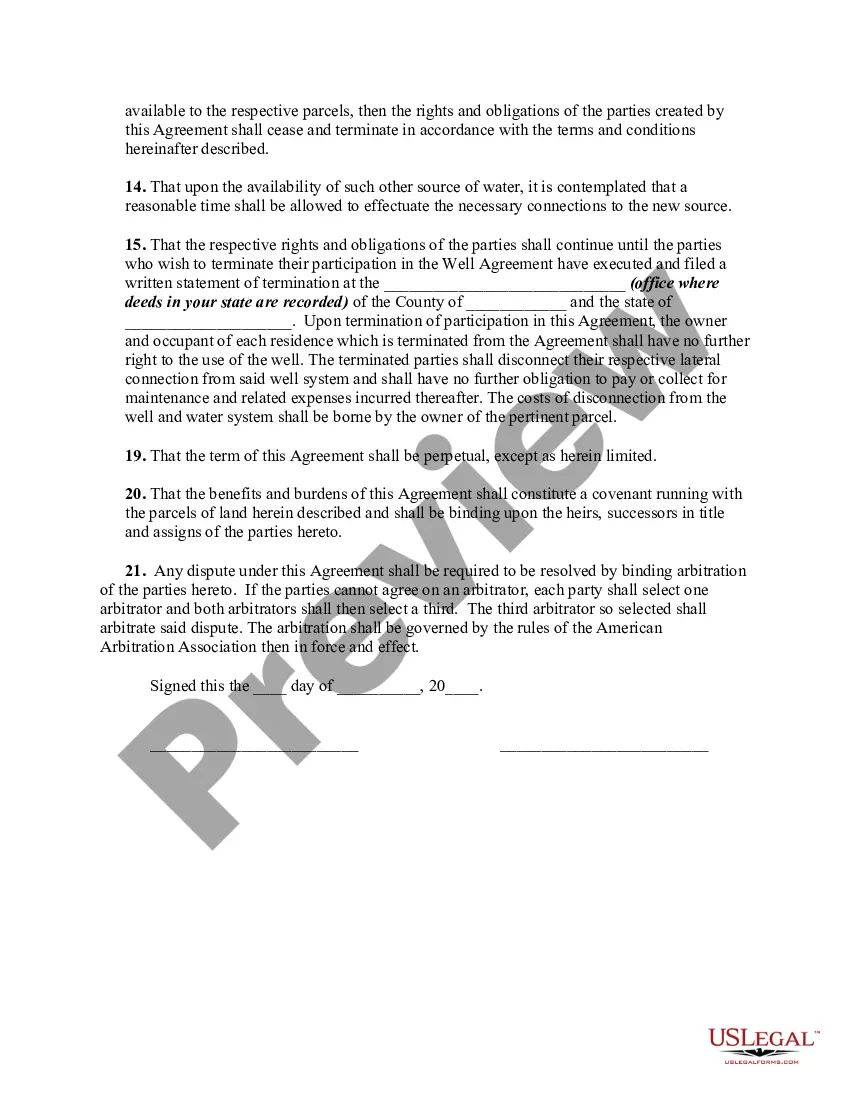
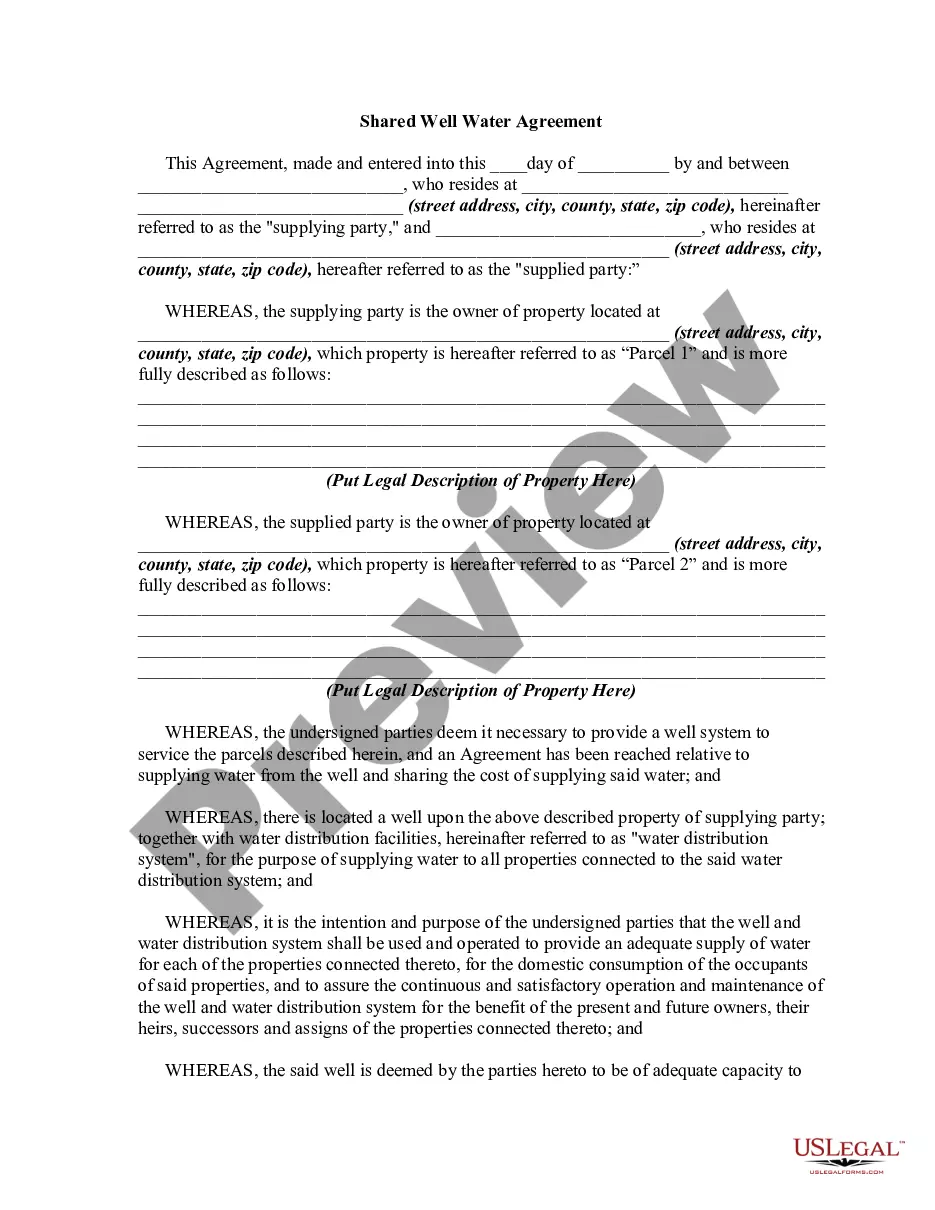
Maricopa Arizona Shared Well Water Agreement

Description
Get your form ready online
Our built-in tools help you complete, sign, share, and store your documents in one place.
Make edits, fill in missing information, and update formatting in US Legal Forms—just like you would in MS Word.
Download a copy, print it, send it by email, or mail it via USPS—whatever works best for your next step.
Sign and collect signatures with our SignNow integration. Send to multiple recipients, set reminders, and more. Go Premium to unlock E-Sign.
If this form requires notarization, complete it online through a secure video call—no need to meet a notary in person or wait for an appointment.
We protect your documents and personal data by following strict security and privacy standards.

Make edits, fill in missing information, and update formatting in US Legal Forms—just like you would in MS Word.

Download a copy, print it, send it by email, or mail it via USPS—whatever works best for your next step.

Sign and collect signatures with our SignNow integration. Send to multiple recipients, set reminders, and more. Go Premium to unlock E-Sign.

If this form requires notarization, complete it online through a secure video call—no need to meet a notary in person or wait for an appointment.

We protect your documents and personal data by following strict security and privacy standards.
Looking for another form?

How to fill out Shared Well Water Agreement?
Laws and rules in various fields differ across the nation.
If you're not a lawyer, it's simple to become confused by a range of standards regarding the creation of legal documents.
To prevent costly legal fees when drafting the Maricopa Shared Well Water Agreement, you require a validated template suitable for your locality.
This is the most straightforward and economical method to acquire current templates for any legal situations. Discover them all with a few clicks and maintain your documentation orderly with US Legal Forms!
- Examine the content on the page to ensure you have located the correct sample.
- Use the Preview feature or read the form description if it's accessible.
- Search for another document if there are discrepancies with any of your conditions.
- Press the Buy Now button to acquire the document when the appropriate one is found.
- Select one of the subscription plans and log in or create a new account.
- Decide how you want to pay for your subscription (using a credit card or PayPal).
- Choose the format in which you want to store the document and click Download.
- Complete and sign the document on paper after printing it or do everything electronically.
Form popularity
FAQ
Since Arizona classifies most shared wells as exempt wells, which means they are unregulated by the state, homeowners on shared wells are responsible for the management of their water supply. Shared well agreements are appropriate to serve up to 14 service connections or up to 24 residents in an area.
Well share agreements are private contracts executed by private parties to govern the manner in which a well provides water to multiple properties. While Arizona water law governs how a well is to be drilled and located, it does not govern the operation or management of a well share agreement.
The Cons of A Shared Well Any time we share a resource we are limiting the Control of the resource. Additionally, each well has a maximum flow of water it can yield, and if the flow rate may not be high enough to meet all the parties' intended uses such as domestic water use as well as irrigation.
Well share agreements are private contracts executed by private parties to govern the manner in which a well provides water to multiple properties. While Arizona water law governs how a well is to be drilled and located, it does not govern the operation or management of a well share agreement.
Wellcare® information on Sharing a Well o must be capable of providing at least three gallons per minute for existing wells and five gallons per minute for new construction over a continuous four-hour period.
By definition, a shared well is a well that services more than one home whether its for residential or irrigation purposes. They can service up to two or more homes, and if there were more than four, then it would be classified as a community well.
Proper well design addressing current and future costs can save owners money. The design of a water well should reflect a consideration of its cost during the entire life of the well, typically from 25 to more than 100 years.