Dallas Texas Plaintiff's Original Petition
Description
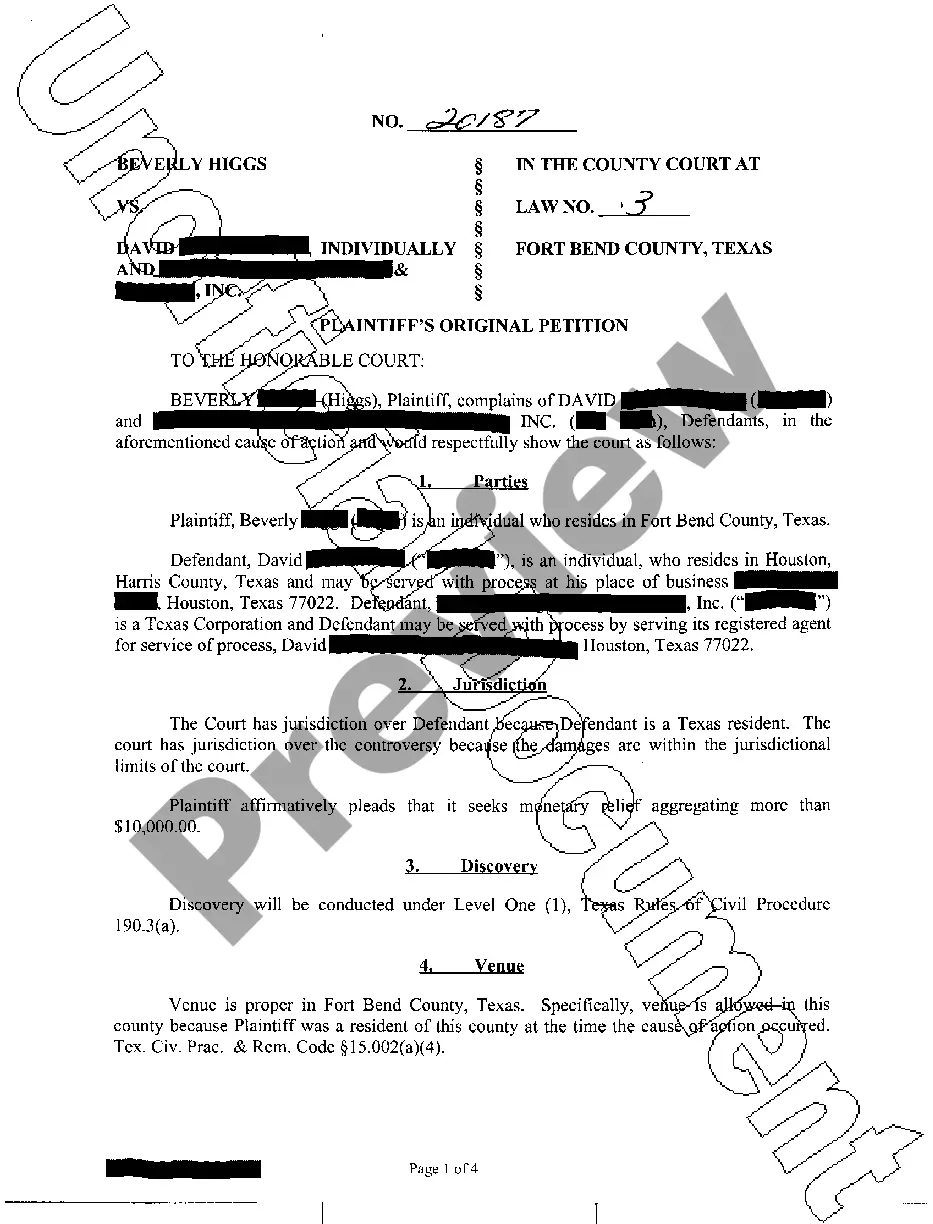

How to fill out Texas Plaintiff's Original Petition?
If you are looking for a legitimate form template, it’s challenging to pick a superior service than the US Legal Forms website – arguably the most comprehensive collections online.
Here you can discover a multitude of document samples for business and personal uses categorized by type and location, or keywords.
With our top-notch search capability, obtaining the latest Dallas Texas Plaintiff's Original Petition is as straightforward as 1-2-3.
Obtain the template. Select the format and save it to your device.
Make modifications. Complete, review, print, and sign the received Dallas Texas Plaintiff's Original Petition.
- If you are already familiar with our system and possess a registered account, simply Log In to your profile and select the Download option.
- If you are utilizing US Legal Forms for the first time, just adhere to the instructions outlined below.
- Ensure you have selected the sample you need. Examine its description and use the Preview option to review its content. If it doesn’t fulfill your requirements, apply the Search function at the top of the screen to locate the suitable document.
- Confirm your choice. Click the Buy now button. Next, choose the desired pricing plan and provide information to create an account.
- Complete the purchase. Use your credit card or PayPal account to conclude the registration process.
Form popularity
FAQ
File Suit. To start your lawsuit, you'll prepare a form called a Petition. Give this form to the Clerk of the Court (filing). The person who files the Petition is called the Plaintiff. (See Texas Rules of Civil Procedure Rule 22.)
A response and brief to an opposed motion must be filed within 21 days from the date the motion is filed. Time for Reply Briefs. Unless otherwise directed by the presiding judge, a party who has filed an opposed motion may file a reply brief within 14 days from the date the response is filed.
Counting from the day you were served, you have 20 days plus the following Monday, at 10 a.m. to file an answer. If you do not file an answer by the deadline, the Plaintiff can ask the court to enter a default judgment against you.
A motion is a request to a court for a desired ruling. It is either in writing or oral. A petition is a formal application in writing made to a court or other official body requesting judicial action of some character. Now, if one is wanting to appeal a judgment, one must file a notice of appeal.
In legal terminology, a petition is made to the court by a petitioner against a respondent, while a complaint is filed by a plaintiff against a defendant. A petition asks the court to provide a court order, while a complaint seeks damages or to force the defendant to start or stop doing something.
(k) ?Original petition? means a petition whereby any proceeding other than a suit. or appeal or proceedings in execution of a decree or order, is instituted in a. court; (l) ?Proceeding? includes all documents presented to or filed in court by any. party or commissioner or other officer of court, other than documents.
In most cases, counting from the day you were served, you have 20 days plus until the following Monday, at 10 a.m. to file your Answer. Count all the calendar days including weekends and holidays. However, in some kind of cases, the Answer deadline is shorter than 20 days.
Civil cases are commenced by the filing of a Statement of Claim or a Summons - depending on the type of case. The Statement of Claim or Summons explains which court the claim is being commenced in, the parties to the case and details about the claim. There are fees for lodging a Statement of Claim or a Summons.
When a petition is filed, the plaintiff and defendant are given the opportunity to settle the case privately or use an alternative dispute resolution (ADR) process rather than going to trial. The court may also provide a summary judgment. If the case goes to trial, the judge will ultimately issue a verdict.
Texas Rule of Civil Procedure 99(b) instructs, ?The citation shall direct the defendant to file a written answer to the plaintiff's petition on or before a.m. on the Monday next after the expiration of twenty days after the date of service thereof.?