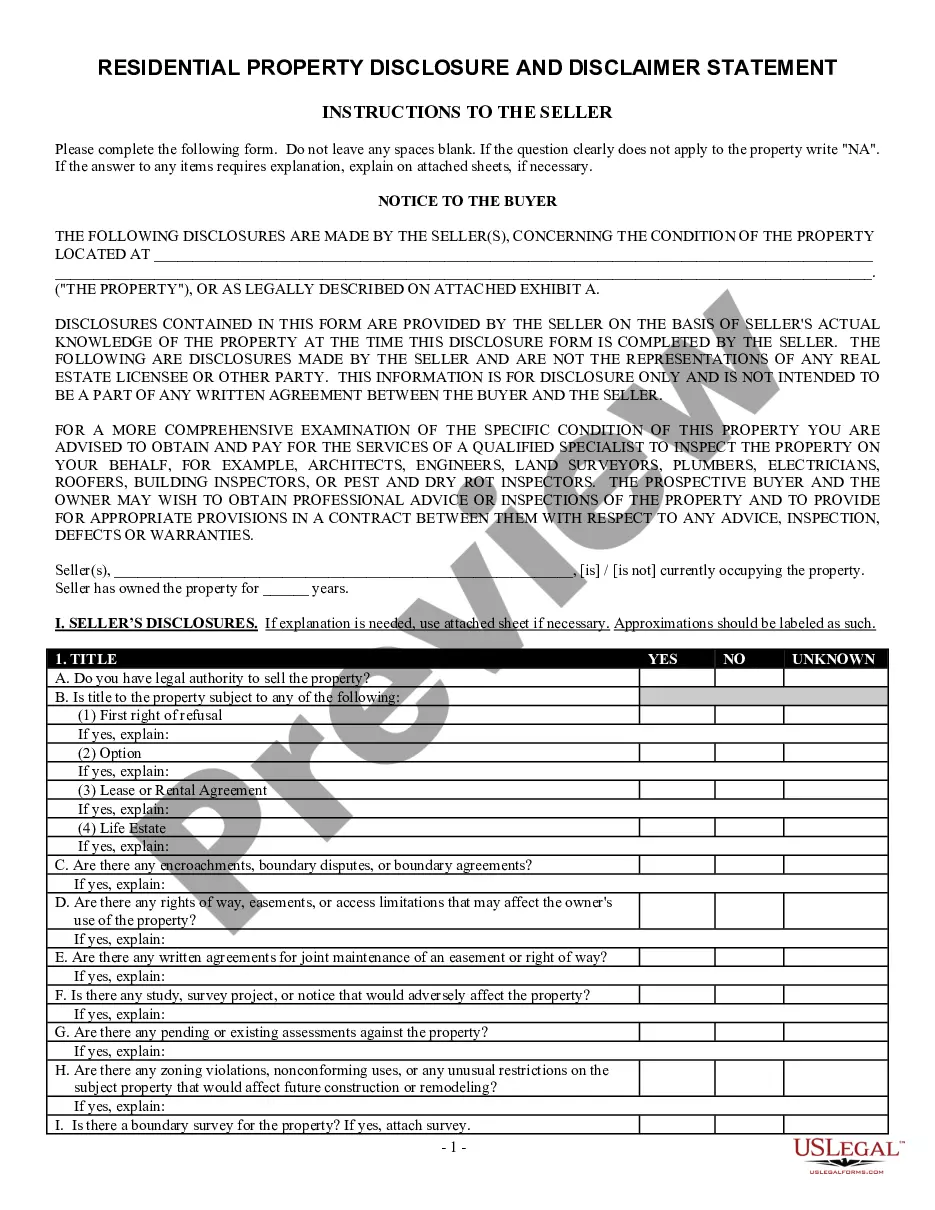
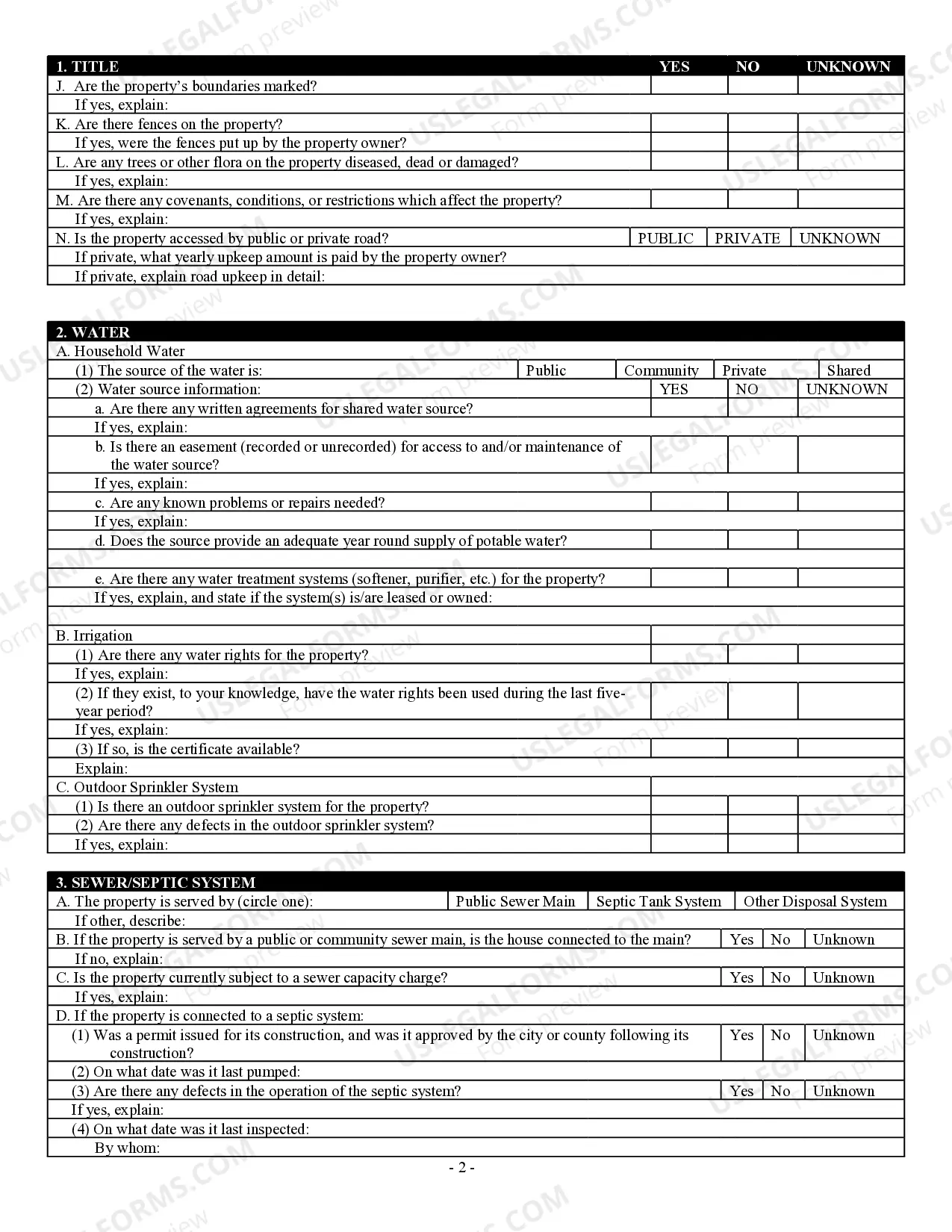
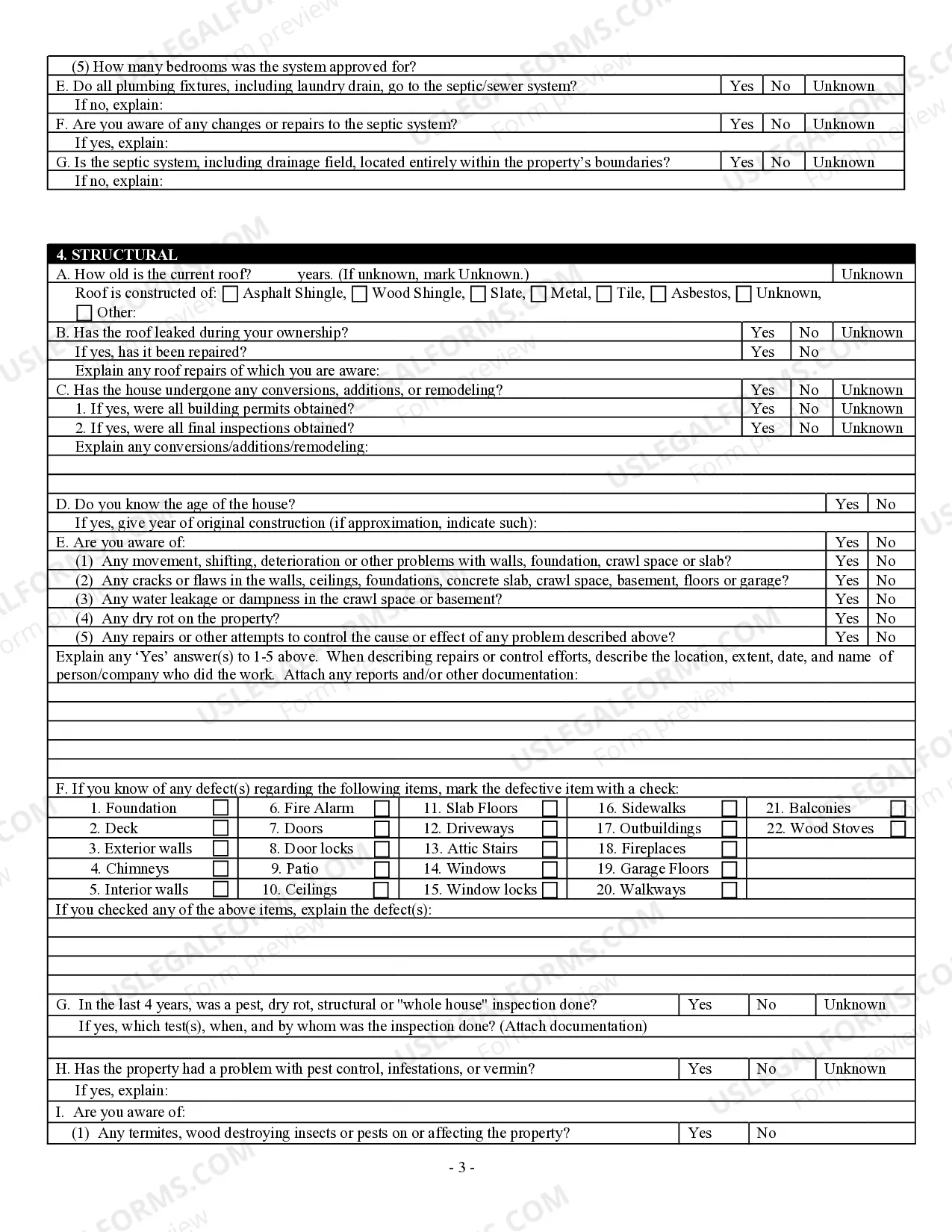
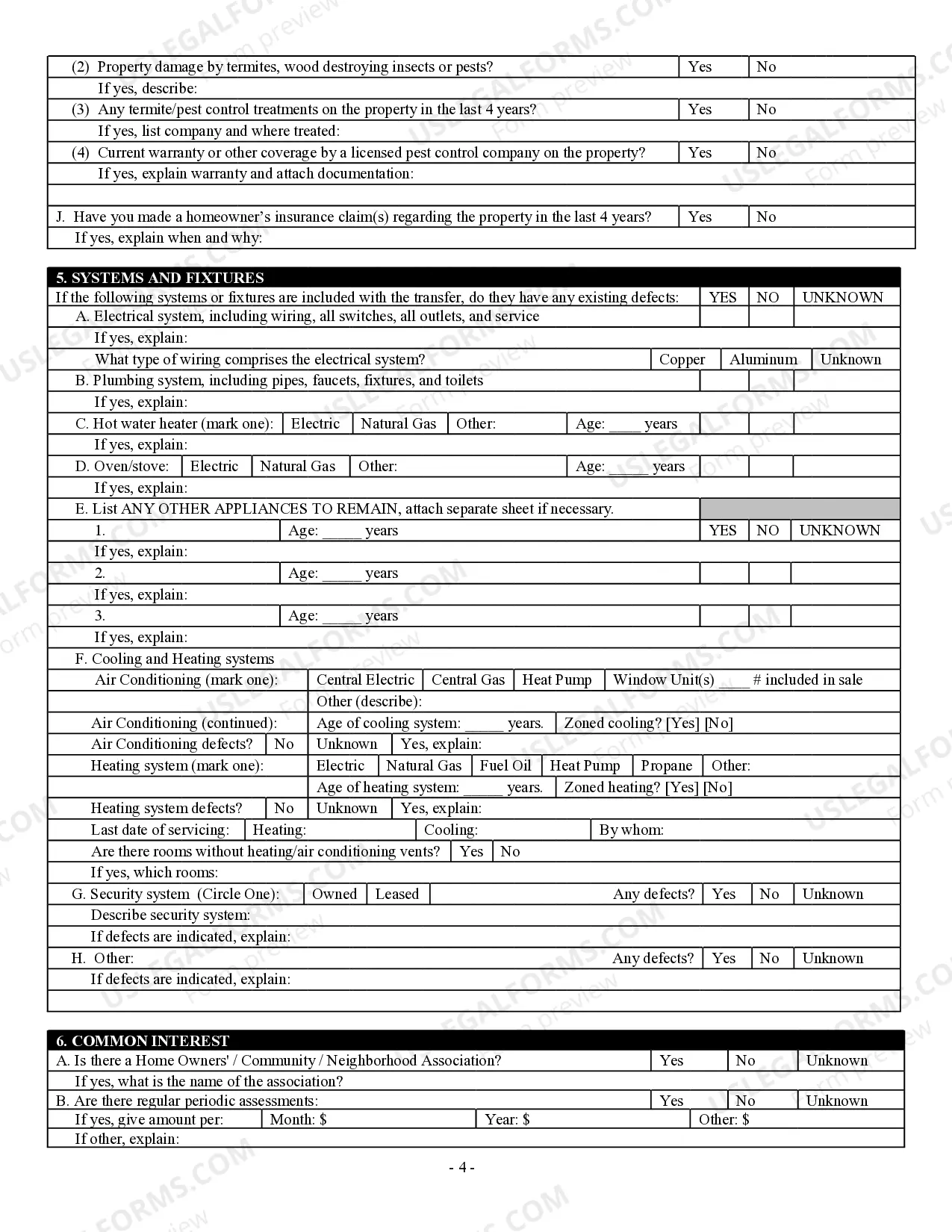
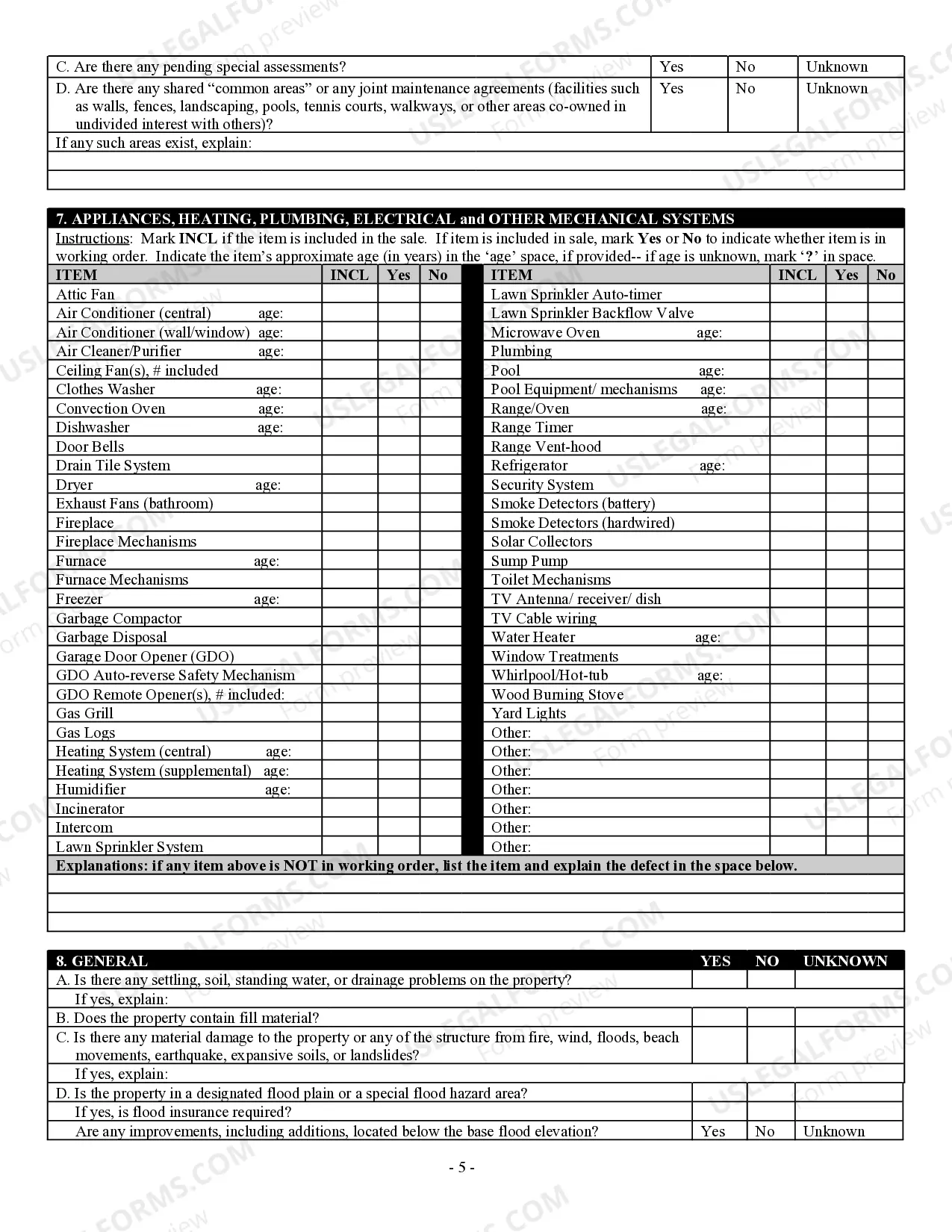
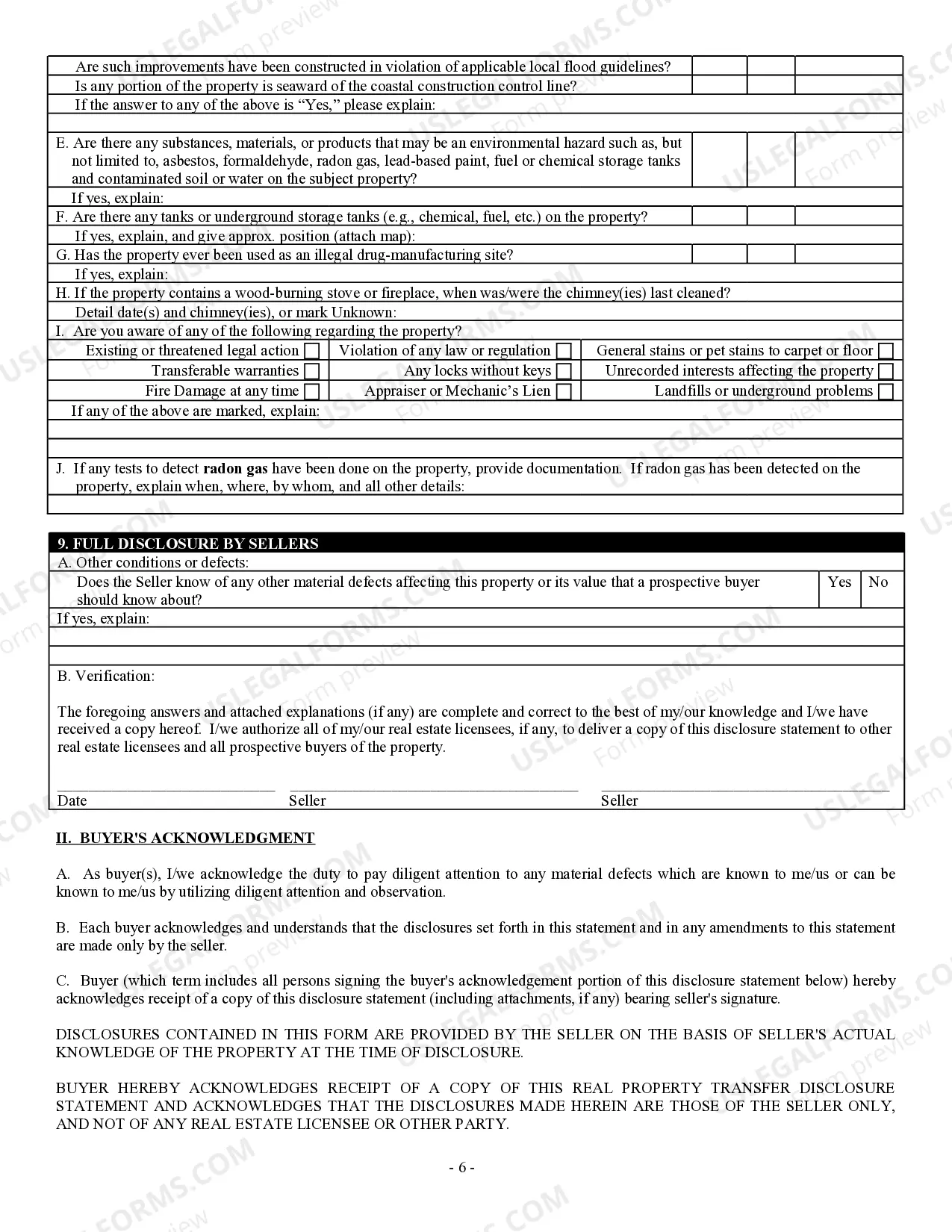
This form is a Seller's Disclosure Statement for use in a residential sales transaction in Florida. This disclosure statement concerns the condition of property and is completed by the Seller.
Jacksonville Florida Residential Real Estate Sales Disclosure Statement
State:
FloridaPlease select your state
Select state
Category:
City:
Jacksonville
Control #:
FL-37014
Format:
Word;
Rich Text
64 downloads
Description
Free preview
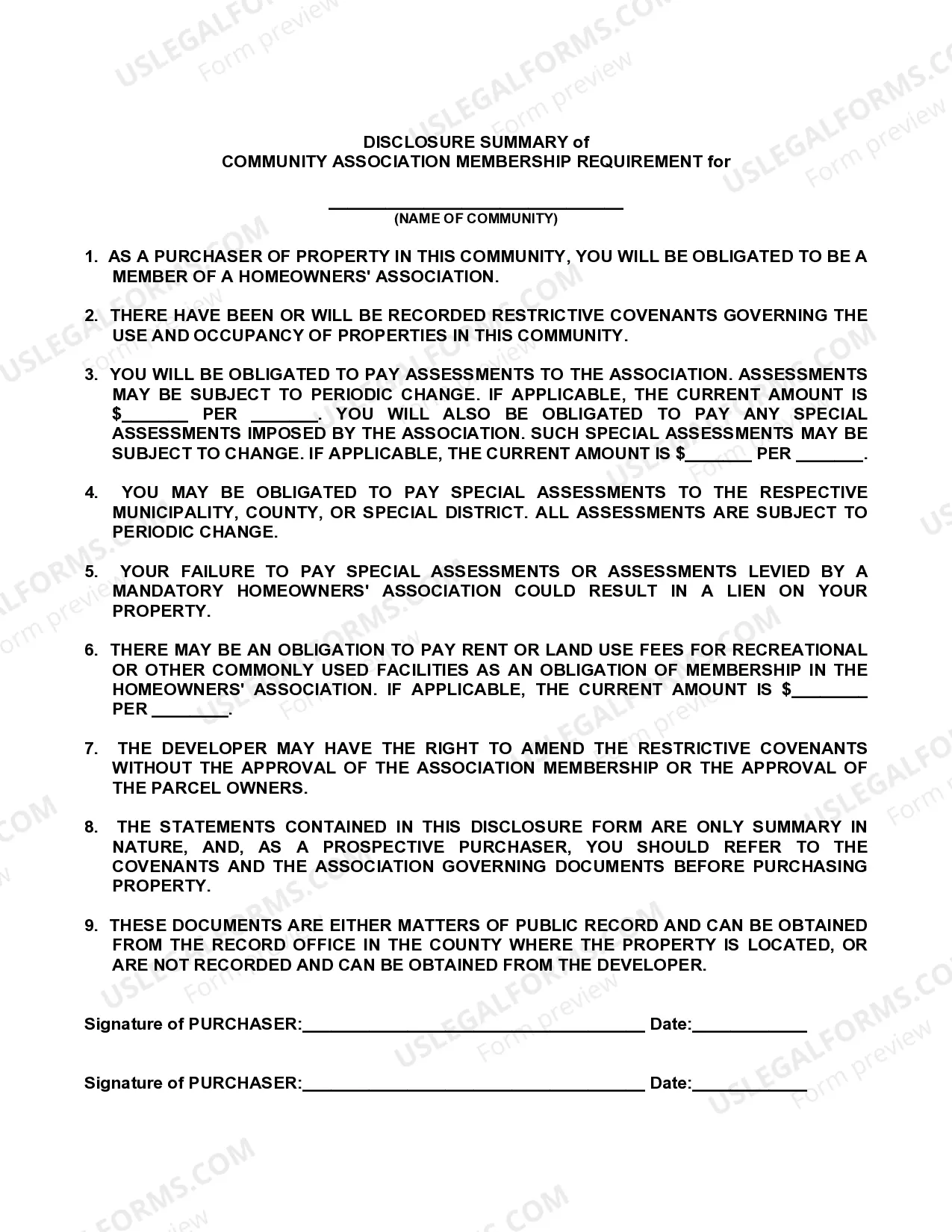
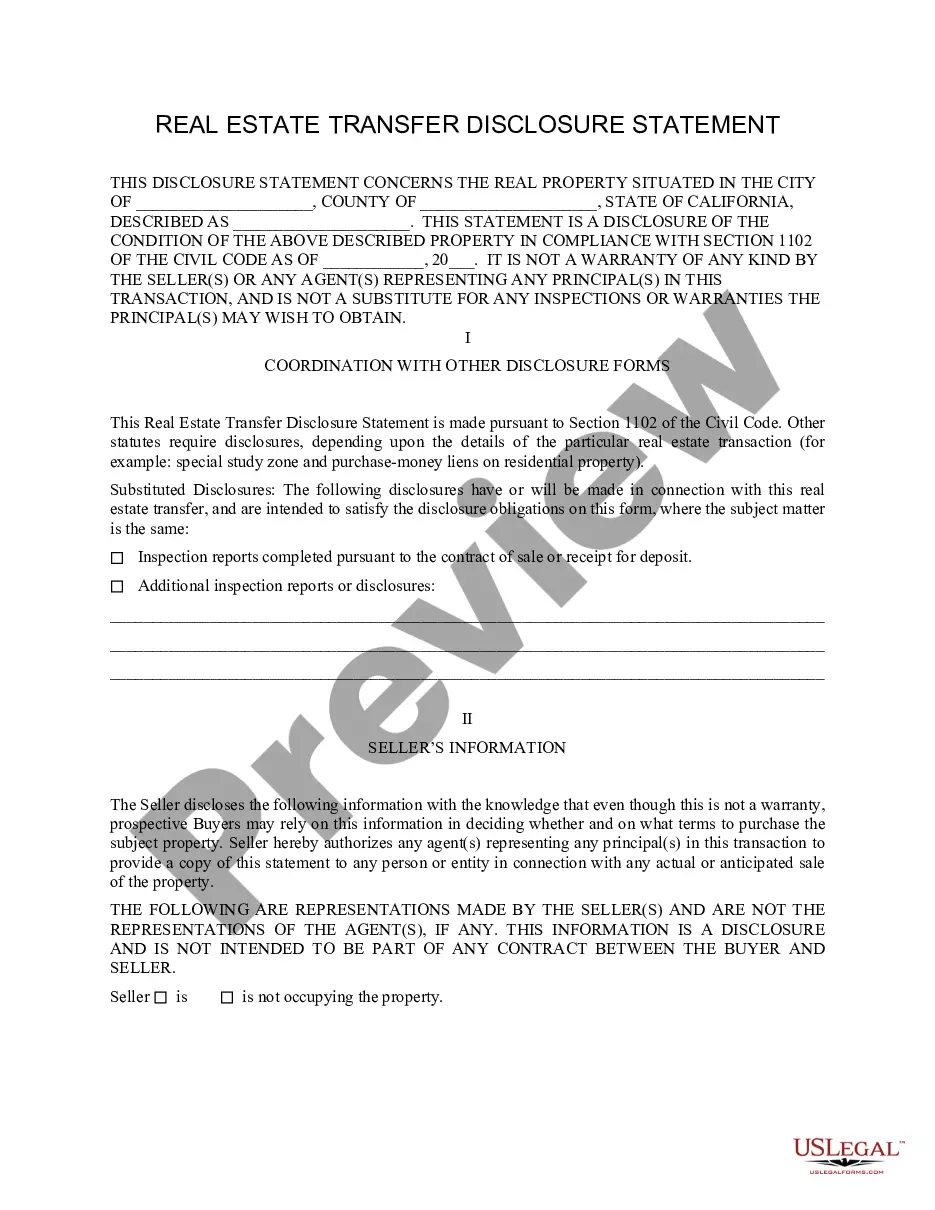
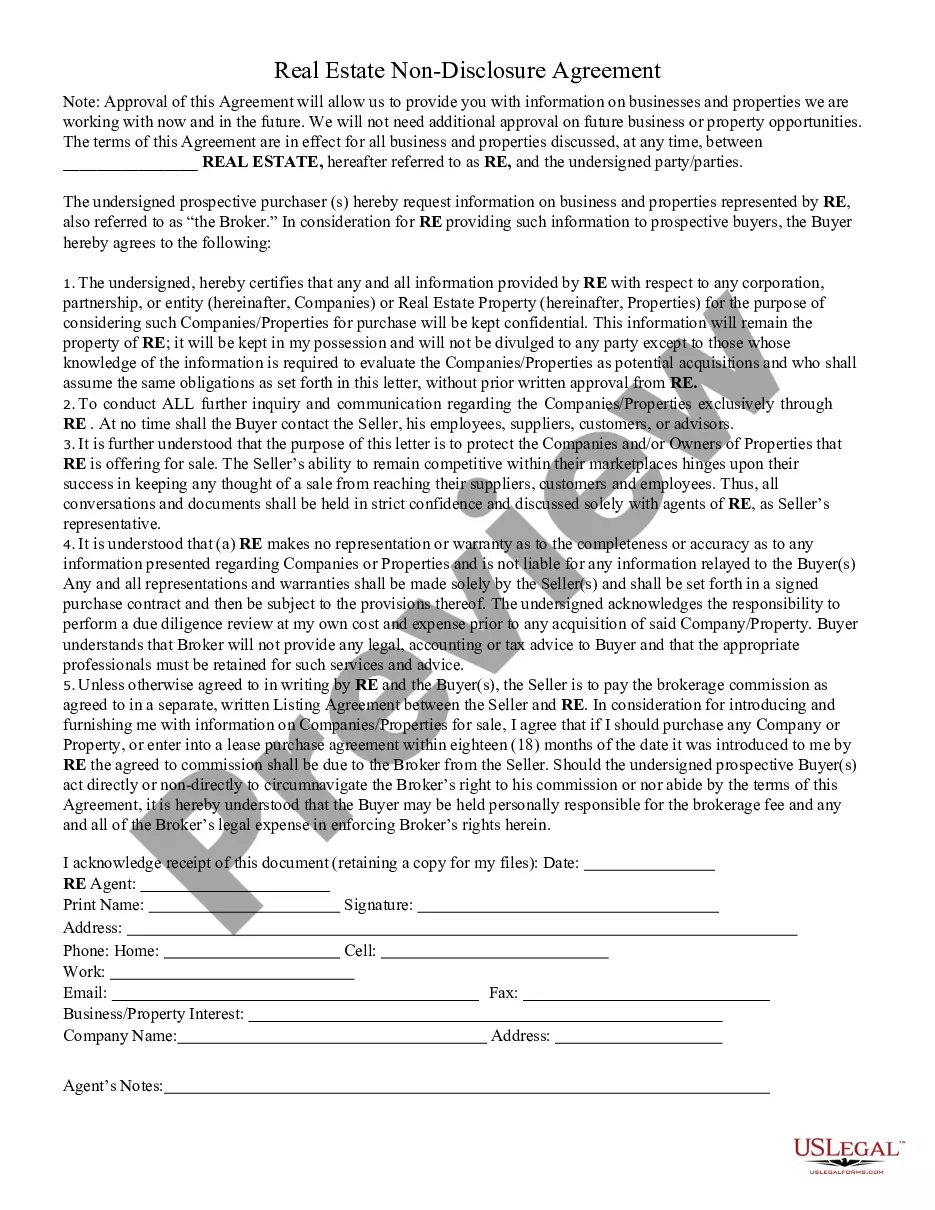
Get your form ready online
Our built-in tools help you complete, sign, share, and store your documents in one place.
Built-in online Word editor
Make edits, fill in missing information, and update formatting in US Legal Forms—just like you would in MS Word.
Export easily
Download a copy, print it, send it by email, or mail it via USPS—whatever works best for your next step.
E-sign your document
Sign and collect signatures with our SignNow integration. Send to multiple recipients, set reminders, and more. Go Premium to unlock E-Sign.
Notarize online 24/7
If this form requires notarization, complete it online through a secure video call—no need to meet a notary in person or wait for an appointment.
Store your document securely
We protect your documents and personal data by following strict security and privacy standards.

Make edits, fill in missing information, and update formatting in US Legal Forms—just like you would in MS Word.

Download a copy, print it, send it by email, or mail it via USPS—whatever works best for your next step.

Sign and collect signatures with our SignNow integration. Send to multiple recipients, set reminders, and more. Go Premium to unlock E-Sign.

If this form requires notarization, complete it online through a secure video call—no need to meet a notary in person or wait for an appointment.

We protect your documents and personal data by following strict security and privacy standards.
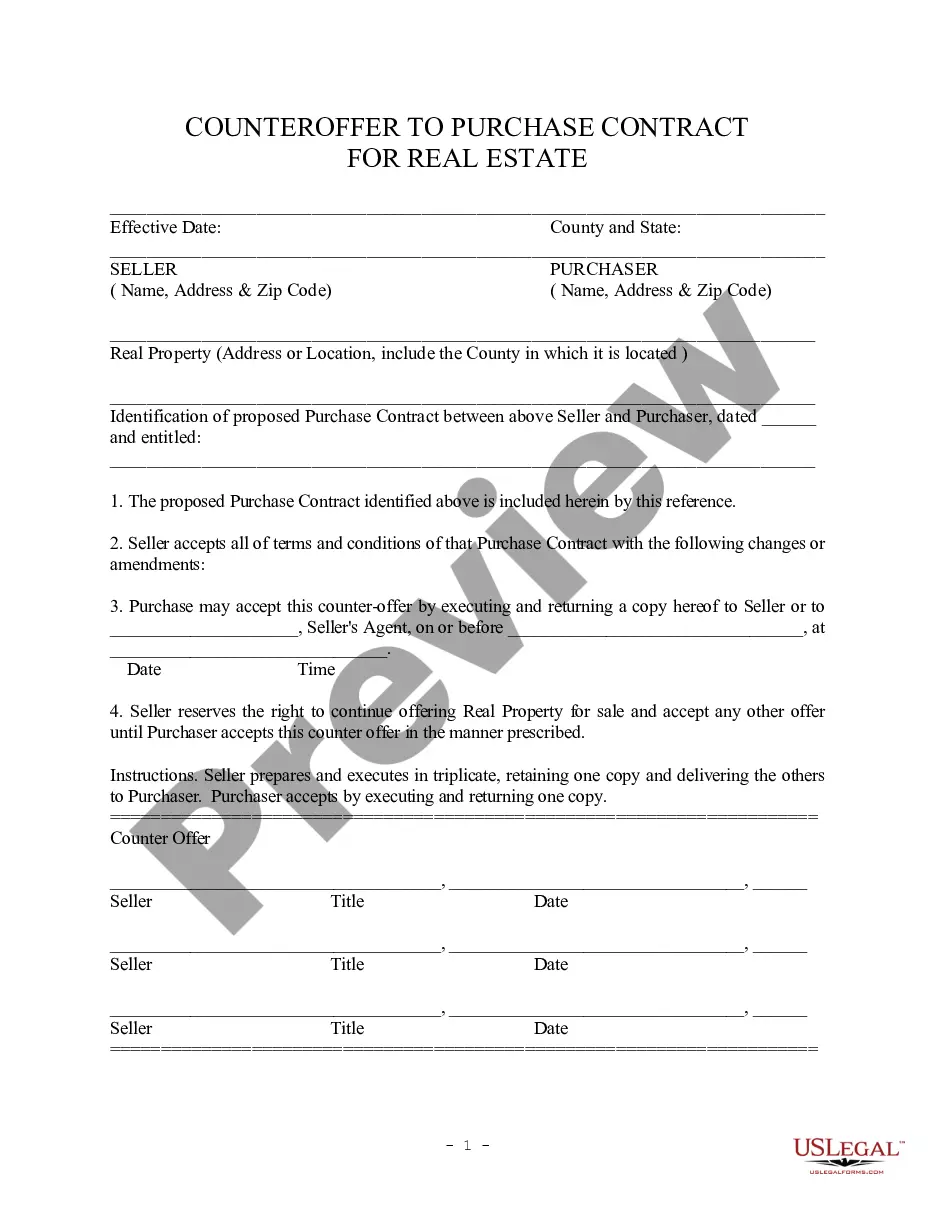
Looking for another form?
How to fill out Florida Residential Real Estate Sales Disclosure Statement?
Irrespective of social or professional standing, completing legal paperwork is a regrettable obligation in the contemporary world.
Frequently, it’s nearly unfeasible for an individual lacking any legal expertise to draft such documents from the ground up, primarily due to the intricate terminology and legal nuances they entail.
This is where US Legal Forms steps in to assist.
Confirm that the document you have selected is appropriate for your location as the regulations of one state or county do not apply to another.
Examine the paper and review a brief summary (if available) of situations for which the document can be utilized.
- Our platform offers an extensive assortment of more than 85,000 pre-prepared state-specific forms applicable for nearly any legal situation.
- US Legal Forms also acts as an excellent aid for associates or legal advisors seeking to conserve time by utilizing our DIY documents.
- Whether you require the Jacksonville Florida Residential Real Estate Sales Disclosure Statement or any other documentation that is valid in your jurisdiction, with US Legal Forms, everything is within reach.
- Here’s how to acquire the Jacksonville Florida Residential Real Estate Sales Disclosure Statement in just minutes using our dependable service.
- If you are a current client, you can proceed and Log In to your account to access the correct form.
- However, if you are not acquainted with our system, make sure to follow these steps before obtaining the Jacksonville Florida Residential Real Estate Sales Disclosure Statement.
Form popularity
FAQ
The second part of Article 4 clarifies that if you're a Realtor selling personal property or property in which you have an ownership in, you must also disclose it in writing before the signing of any contract.
Florida case law provides that, with some exceptions, a home seller must disclose any facts or conditions about the property that have a substantial impact on its value or desirability and that others cannot easily see for themselves. This originally came from the court case of Johnson v. Davis, 480 So. 2d 625 (Fla.
While a seller's property disclosure form is not required under Florida law, Florida law does require seller's and their realtors to disclose any significant property defects that may not be easily visible to the buyer. Buyers still have the responsibility to have the property inspected.
In Florida a seller of residential property is obligated to disclose to a buyer all facts known to a seller that materially and adversely affect the value of the Property being sold which are not readily observable by a buyer.
Notice to Seller: Florida law1 requires a Seller of a home to disclose to the Buyer all known facts that materially affect the value of the property being sold and that are not readily observable or known by the Buyer. This disclosure form is designed to help you comply with the law.
Florida law requires sellers to disclose any issues they know about that materially affect the value of a home or property. This requirement applies even if the buyer does not ask whether the seller knows about defects.
Florida law requires sellers to disclose any issues they know about that materially affect the value of a home or property. This requirement applies even if the buyer does not ask whether the seller knows about defects.
Florida case law provides that, with some exceptions, a home seller must disclose any facts or conditions about the property that have a substantial impact on its value or desirability and that others cannot easily see for themselves. This originally came from the court case of Johnson v. Davis, 480 So.
A seller must disclose any facts or conditions they know about that materially affect the value of the property. This means that they have to tell a buyer about any issue that would reduce the value of the property or make the property less desirable. Problems with the title to the home or property.