Downey California Mechanics' Lien (Claim of Lien)
Description
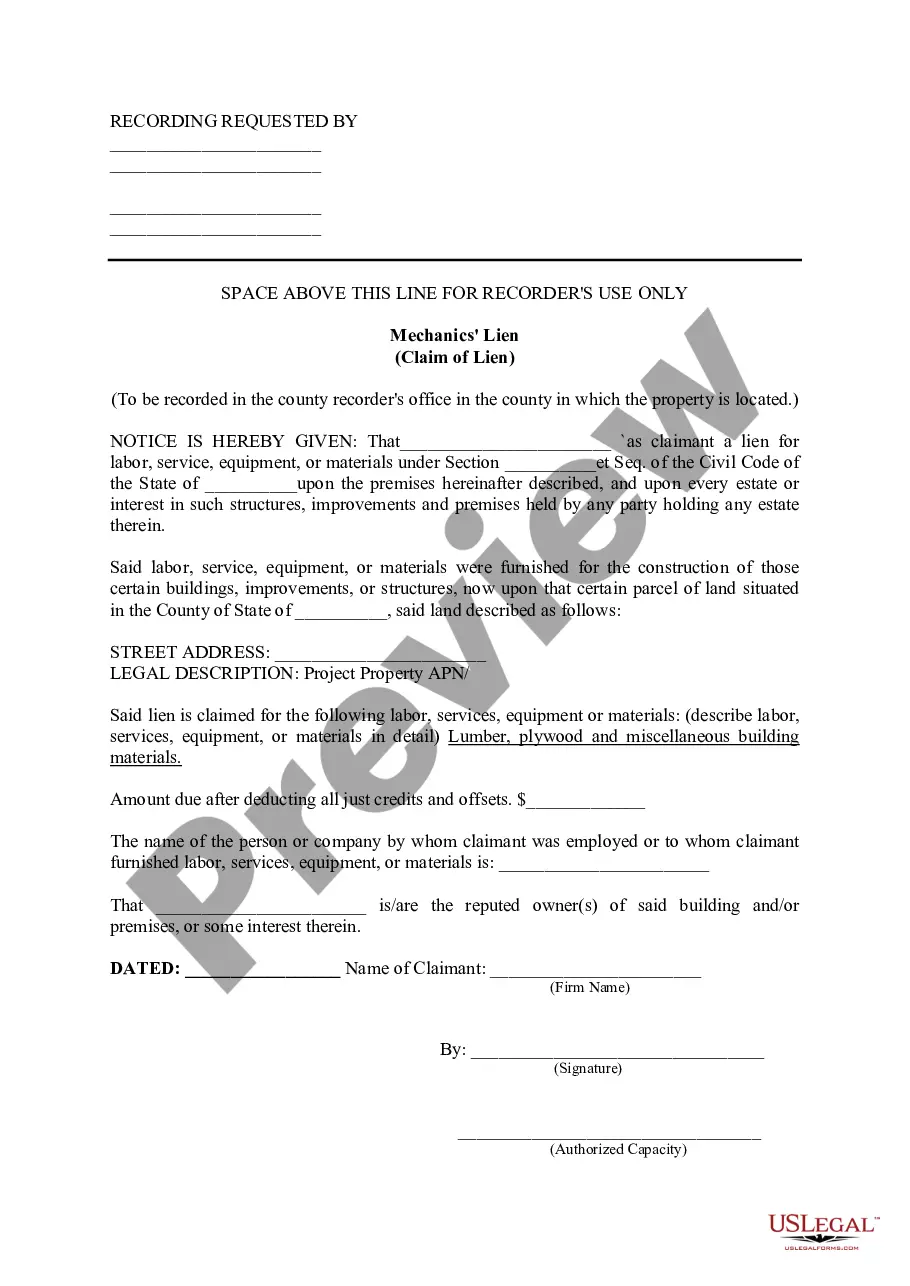
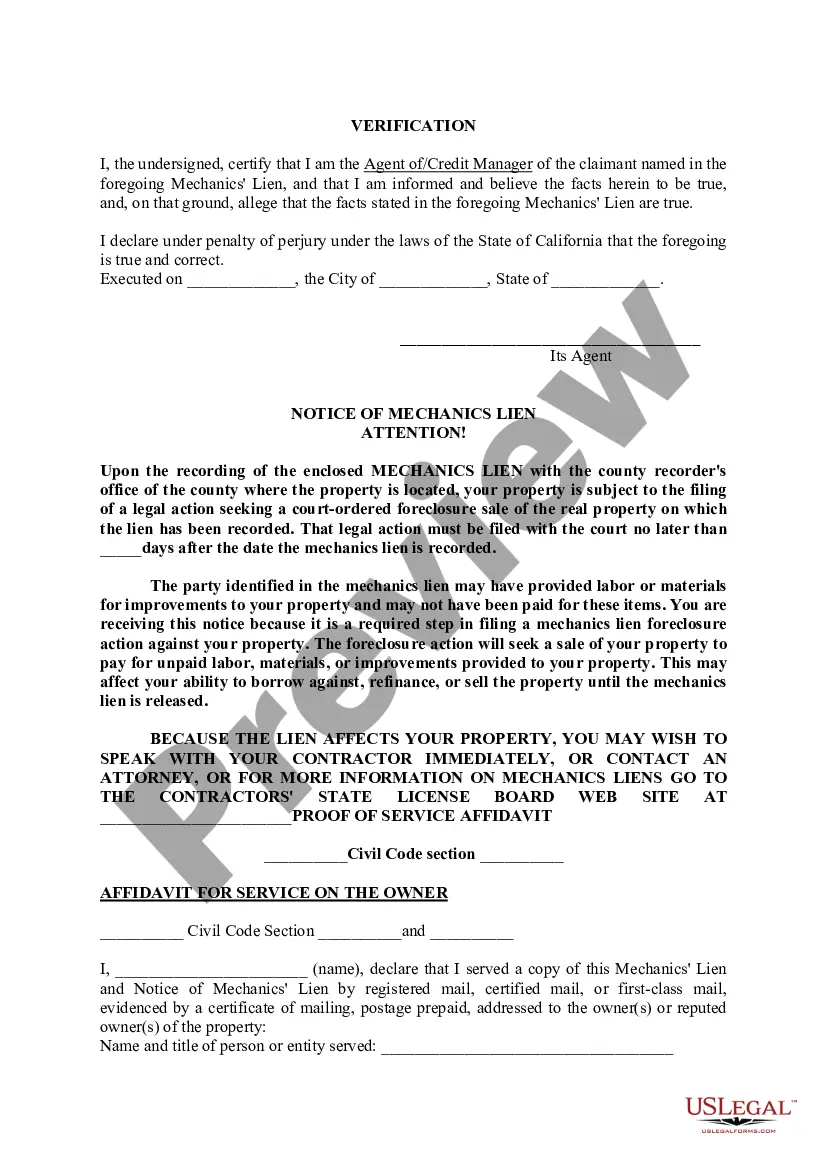
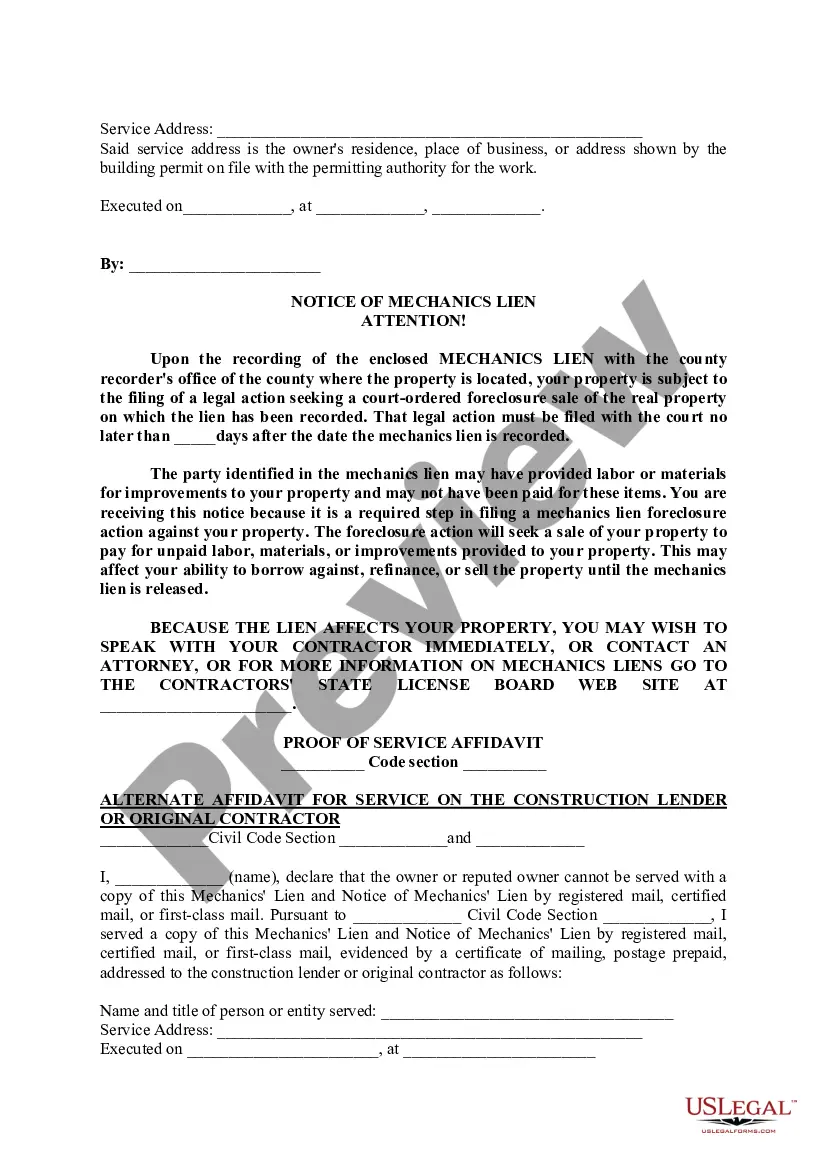

Get your form ready online
Our built-in tools help you complete, sign, share, and store your documents in one place.
Make edits, fill in missing information, and update formatting in US Legal Forms—just like you would in MS Word.
Download a copy, print it, send it by email, or mail it via USPS—whatever works best for your next step.
Sign and collect signatures with our SignNow integration. Send to multiple recipients, set reminders, and more. Go Premium to unlock E-Sign.
If this form requires notarization, complete it online through a secure video call—no need to meet a notary in person or wait for an appointment.
We protect your documents and personal data by following strict security and privacy standards.

Make edits, fill in missing information, and update formatting in US Legal Forms—just like you would in MS Word.

Download a copy, print it, send it by email, or mail it via USPS—whatever works best for your next step.

Sign and collect signatures with our SignNow integration. Send to multiple recipients, set reminders, and more. Go Premium to unlock E-Sign.

If this form requires notarization, complete it online through a secure video call—no need to meet a notary in person or wait for an appointment.

We protect your documents and personal data by following strict security and privacy standards.
Looking for another form?

How to fill out California Mechanics' Lien (Claim Of Lien)?
If you are looking for a suitable form template, it’s hard to find a better destination than the US Legal Forms website – likely the largest collections on the internet.
Here you can obtain numerous form samples for corporate and personal uses categorized by types and regions, or keywords.
Utilizing our high-quality search feature, finding the latest Downey California Mechanics’ Lien (Claim of Lien) is as simple as 1-2-3.
Complete the purchase. Use your credit card or PayPal account to finalize the registration process.
Obtain the form. Choose the format and save it to your device. Edit. Complete, modify, print, and sign the downloaded Downey California Mechanics’ Lien (Claim of Lien).
- Furthermore, the validity of every document is confirmed by a team of experienced attorneys who routinely review the templates on our site and update them according to the latest state and county regulations.
- If you are already familiar with our system and possess a registered account, all you need to do to acquire the Downey California Mechanics’ Lien (Claim of Lien) is to Log In to your profile and click the Download button.
- If this is your first time using US Legal Forms, simply refer to the instructions below.
- Ensure you have located the form you need. Review its description and utilize the Preview option (if available) to view its contents. If it doesn’t satisfy your requirements, use the Search field at the top of the page to find the necessary record.
- Confirm your choice. Select the Buy now button. After that, choose your desired subscription plan and provide details to register for an account.
Form popularity
FAQ
Generally speaking, you need to file your California mechanics lien in the county recorder's office in the county where the property being liened is located.
The mechanics' lien is a right that California gives to workers and suppliers to record a lien to ensure payment. This lien may be recorded where the property owner has paid the contractor in full and the contractor then fails to pay the subcontractors, suppliers, or laborers.
The homeowner may petition the courts under Civil Code Section 8480 in California to remove the mechanic's lien when it is not timely issued or recorded. A lawsuit is usually necessary to file it against the owner by the contractor or subcontractor.
A lien expires 10 years from the date of recording or filing, unless we extend it. If we extend the lien, we will send a new Notice of State Tax Lien and record or file it with the county recorder or California Secretary of State.
Once a mechanic's lien is recorded, it attaches to your title and must be removed. As previously mentioned, if you recorded a Notice of Completion, a prime contractor has 60 days to record a lien while a subcontractor or materials supplier has 30 days to record a lien.
To remove a lien you have to pay the judgment and get the judgment creditor to complete a notarized Acknowledgment of Satisfaction of Judgment (EJ-100). Either party can eFile the form to the court. Then the judgment creditor or you have to record a certified copy of this form in the county where the property is.
Filing and Serving the Mechanics Lien According to California mechanics lien law, you have 90 days from the last day you performed work or provided goods on the project to file your mechanics lien.
In California, subcontractors and suppliers must serve a preliminary notice in order to preserve their right to file a mechanics lien in the future. This ?Preliminary 20-day Notice?, as it's commonly called, must be served on the owner, general contractor and, if applicable to the project, the construction lender.
To enforce the lien, the contractor must file a lawsuit within 90 days from the date of recording the lien. If this deadline is passed, the contractor may not be able to enforce the lien and may be required to remove the lien.