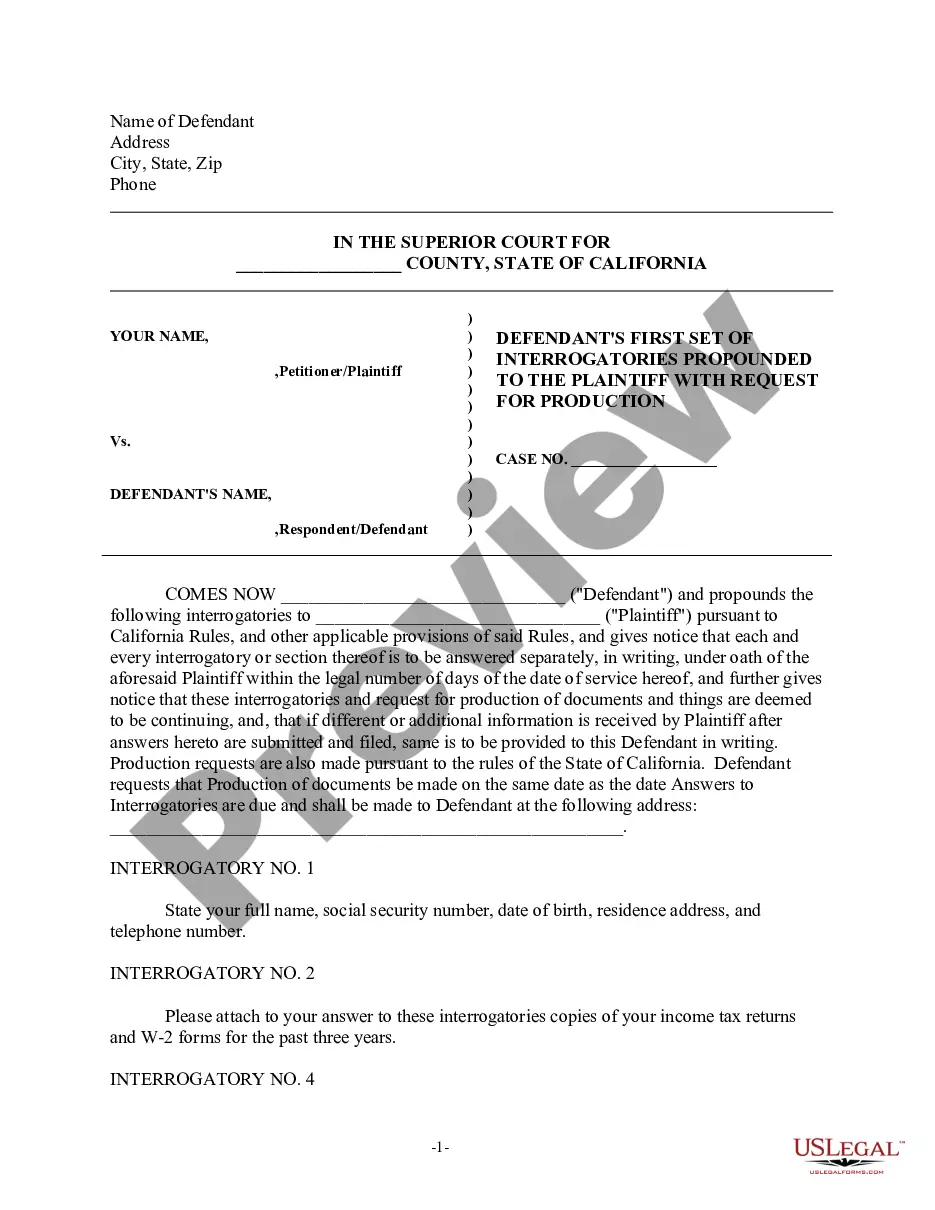
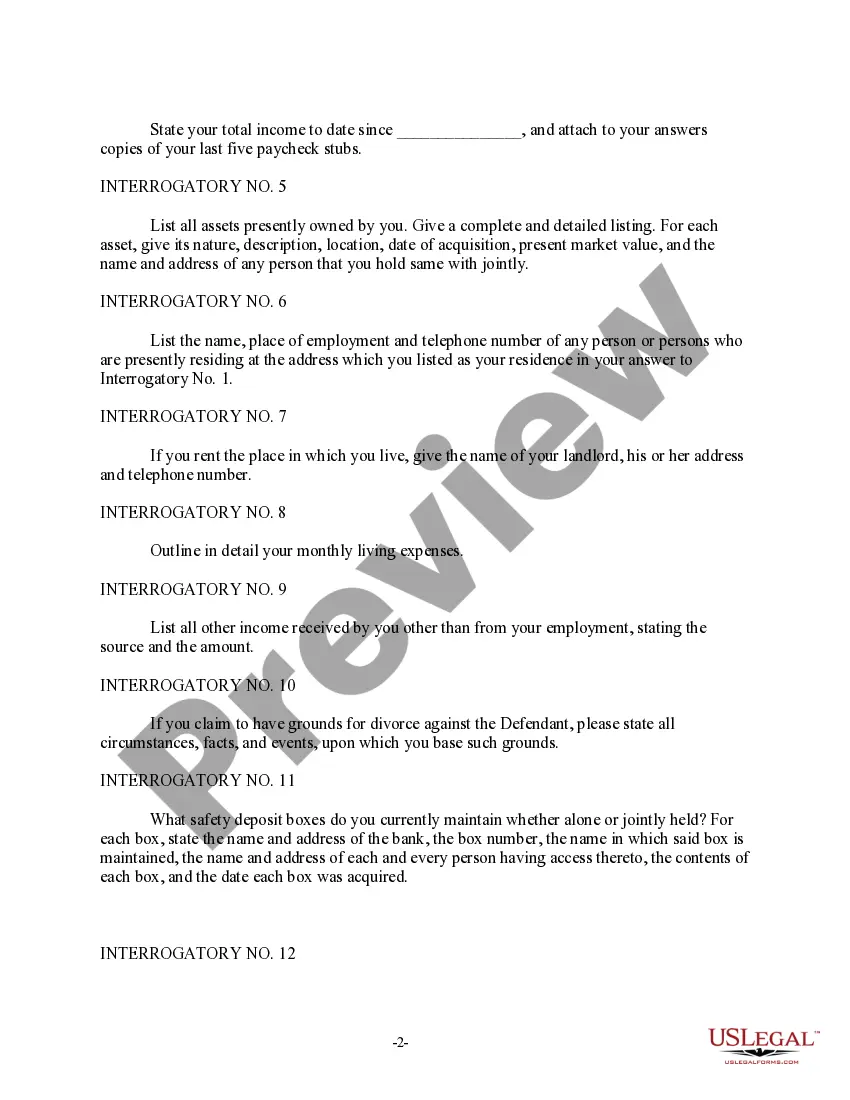
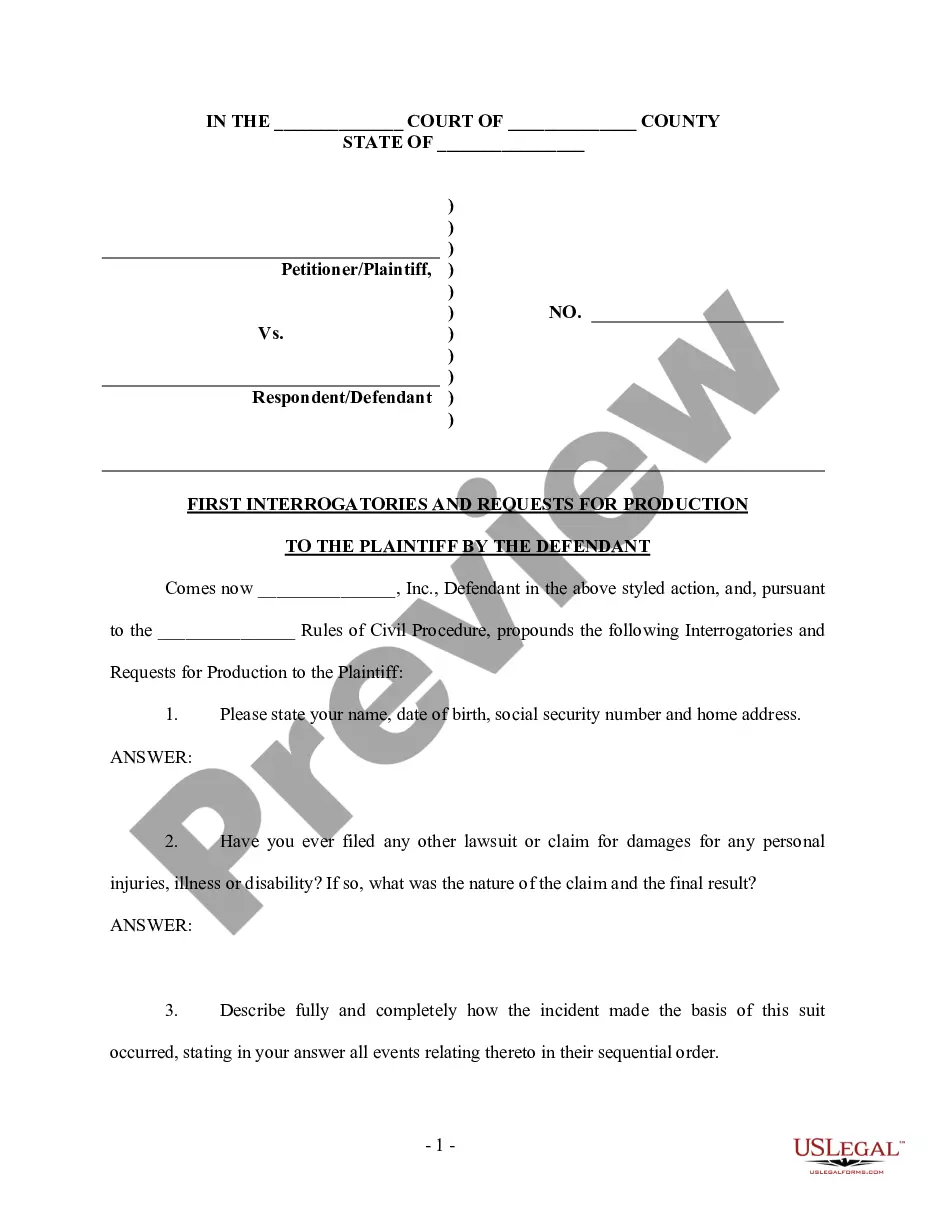
This Discovery Interrogatories from Defendant to Plaintiff with Production Requests is a sample of interrogatories for the Defendant in a Divorce action to ask the Plaintiff. It also includes request for production of documents. You should only use this form as a guide and delete questions not relevant to your case, as well as add questions you or your client wants to ask the Plaintiff based upon the facts of your case. It also includes the separate Notice of Filing of Discovery to be filed with the Court Clerk.
El Monte California Discovery Interrogatories from Defendant to Plaintiff with Production Requests
State:
California
City:
El Monte
Control #:
CA-021A-D
Format:
Word;
Rich Text
Instant download
Description
Free preview
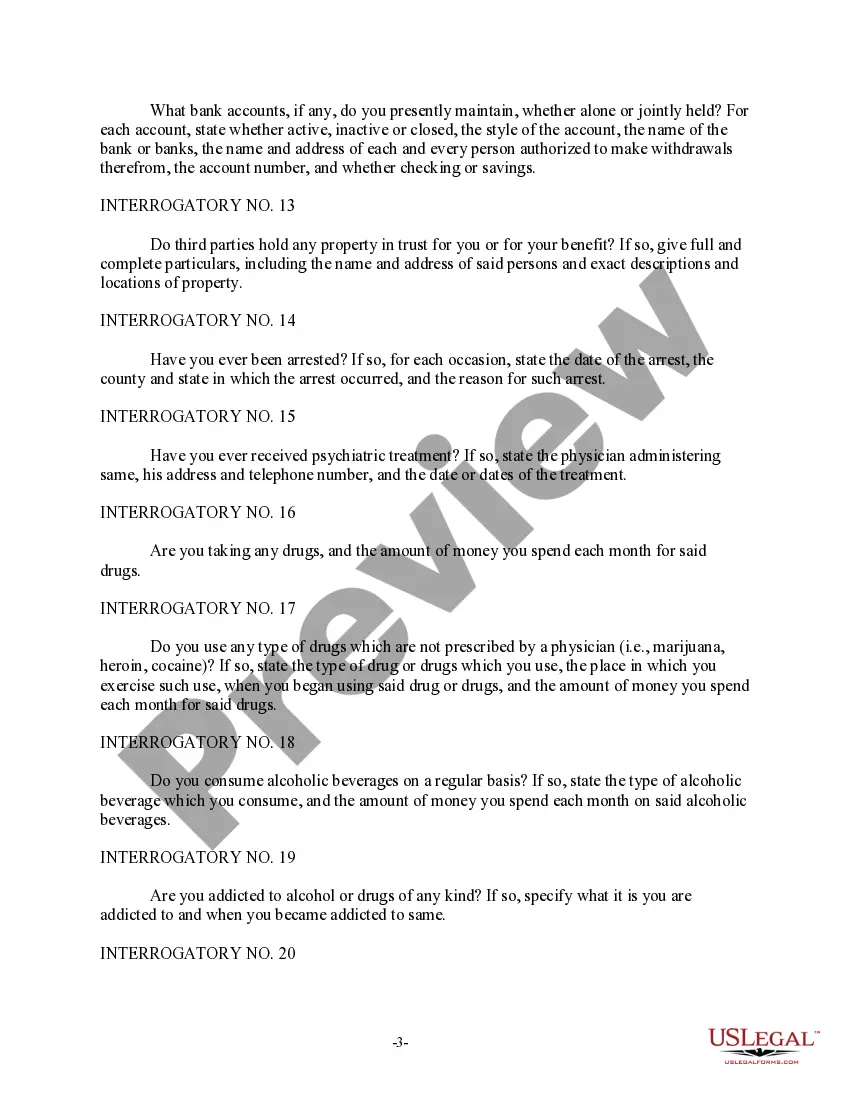
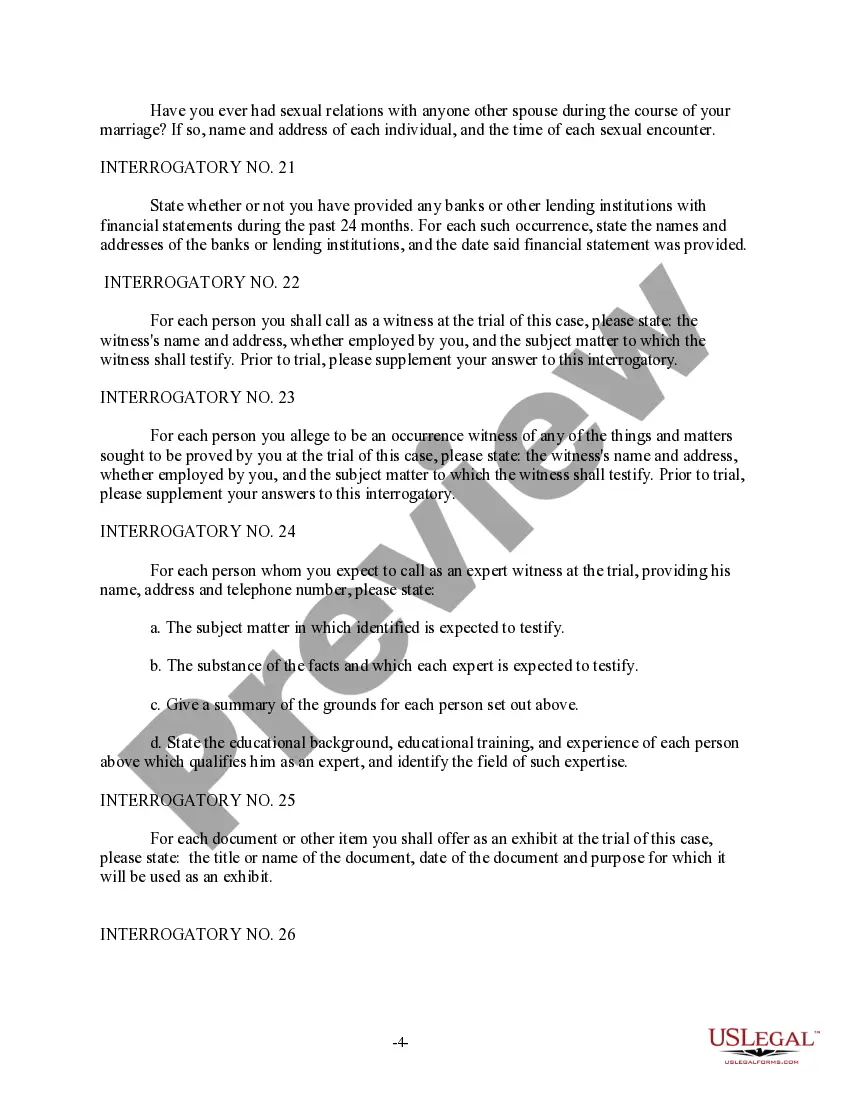
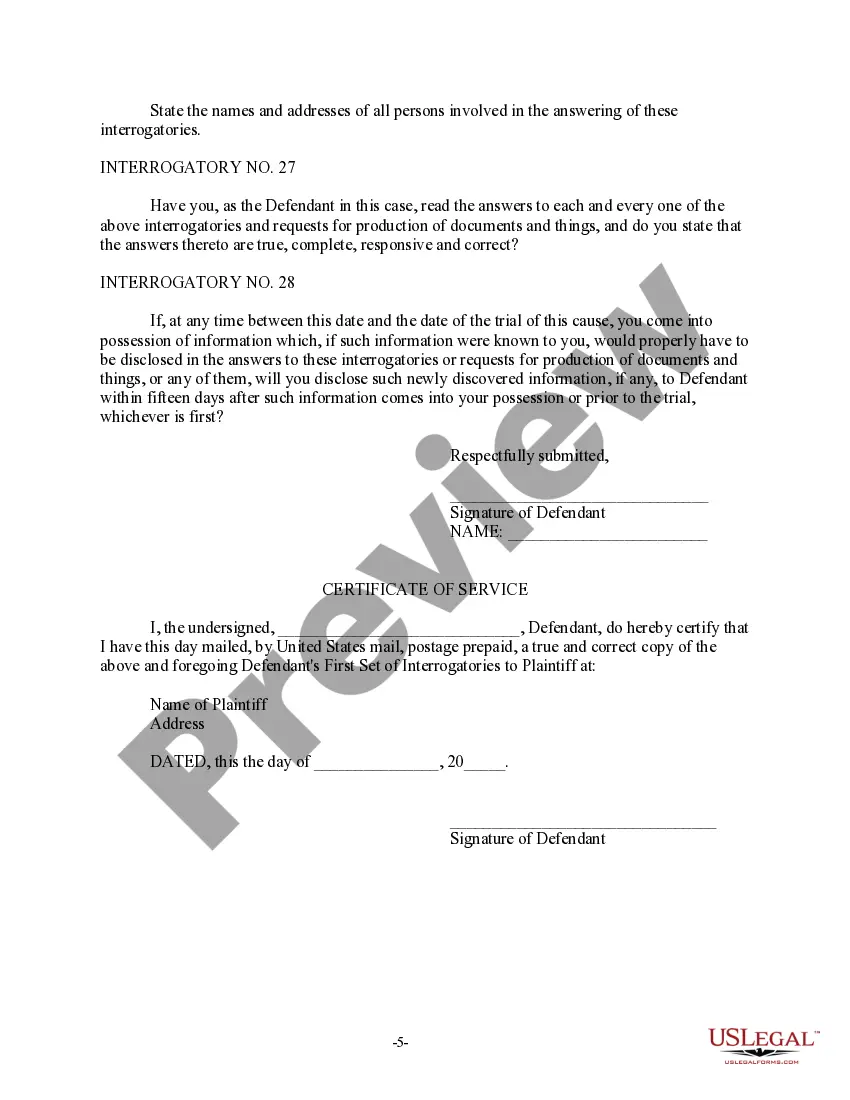
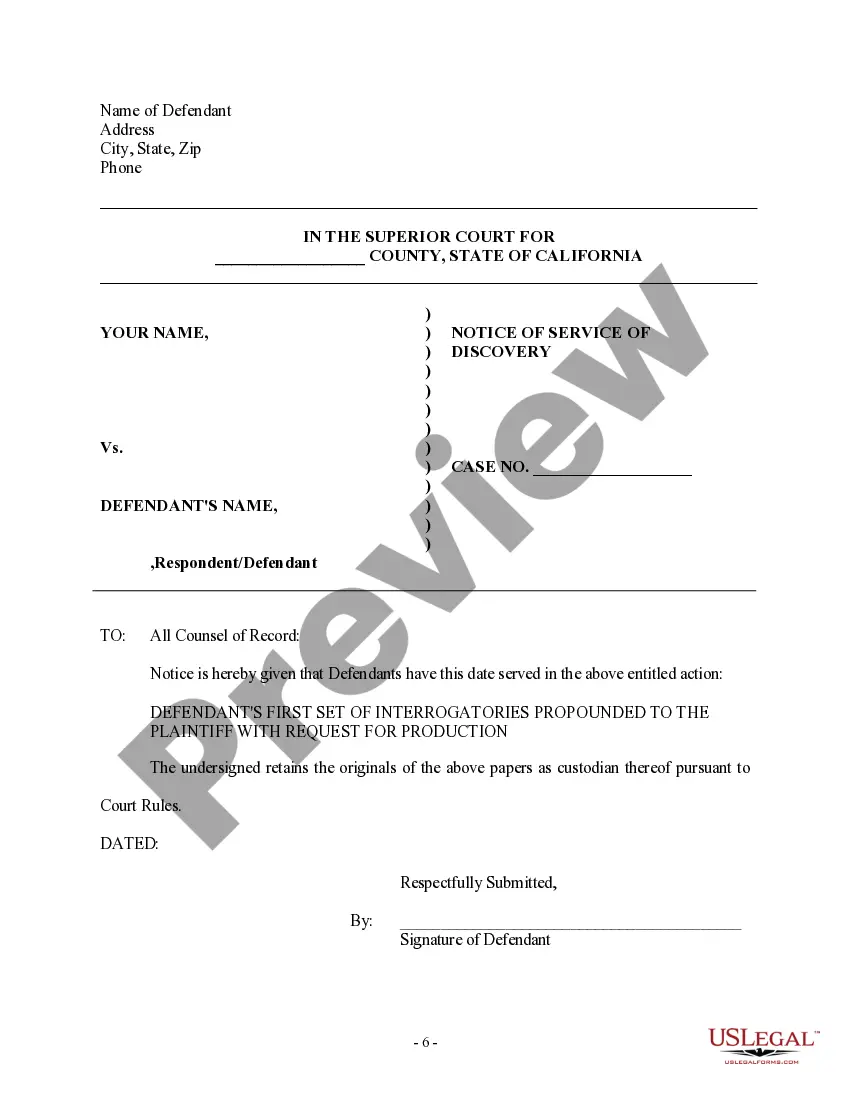
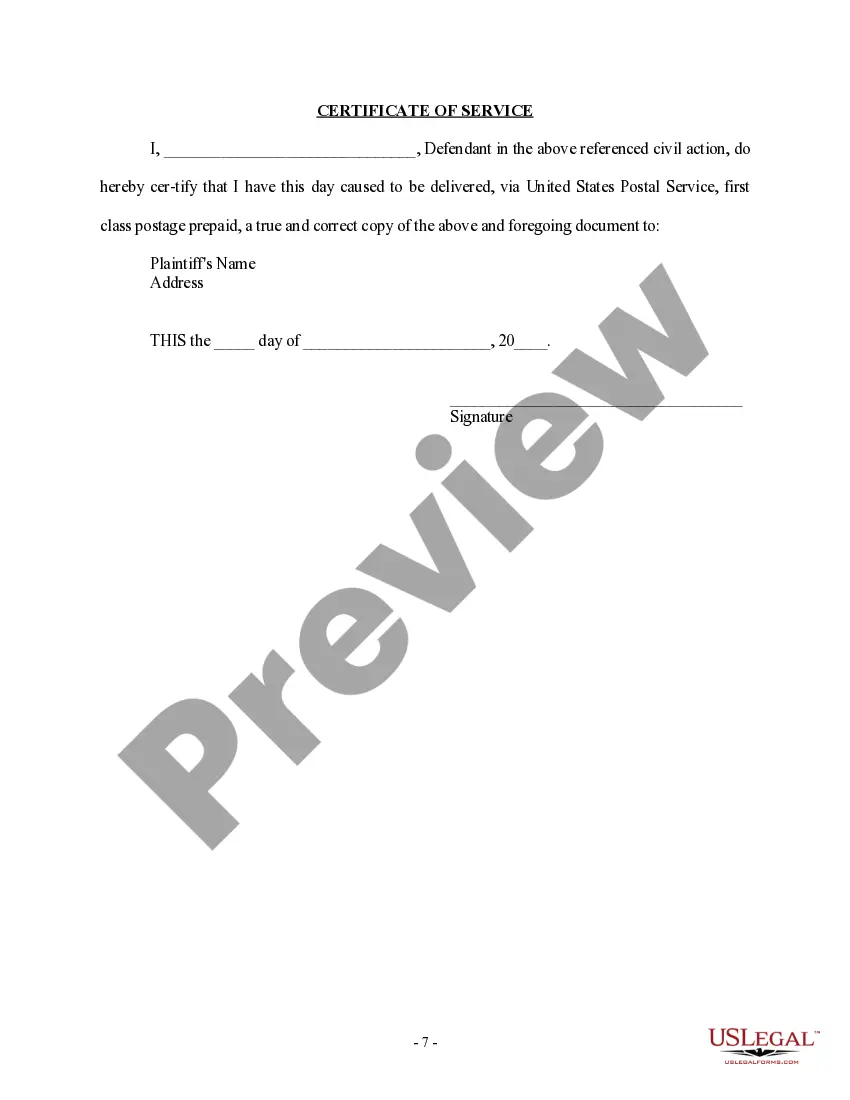
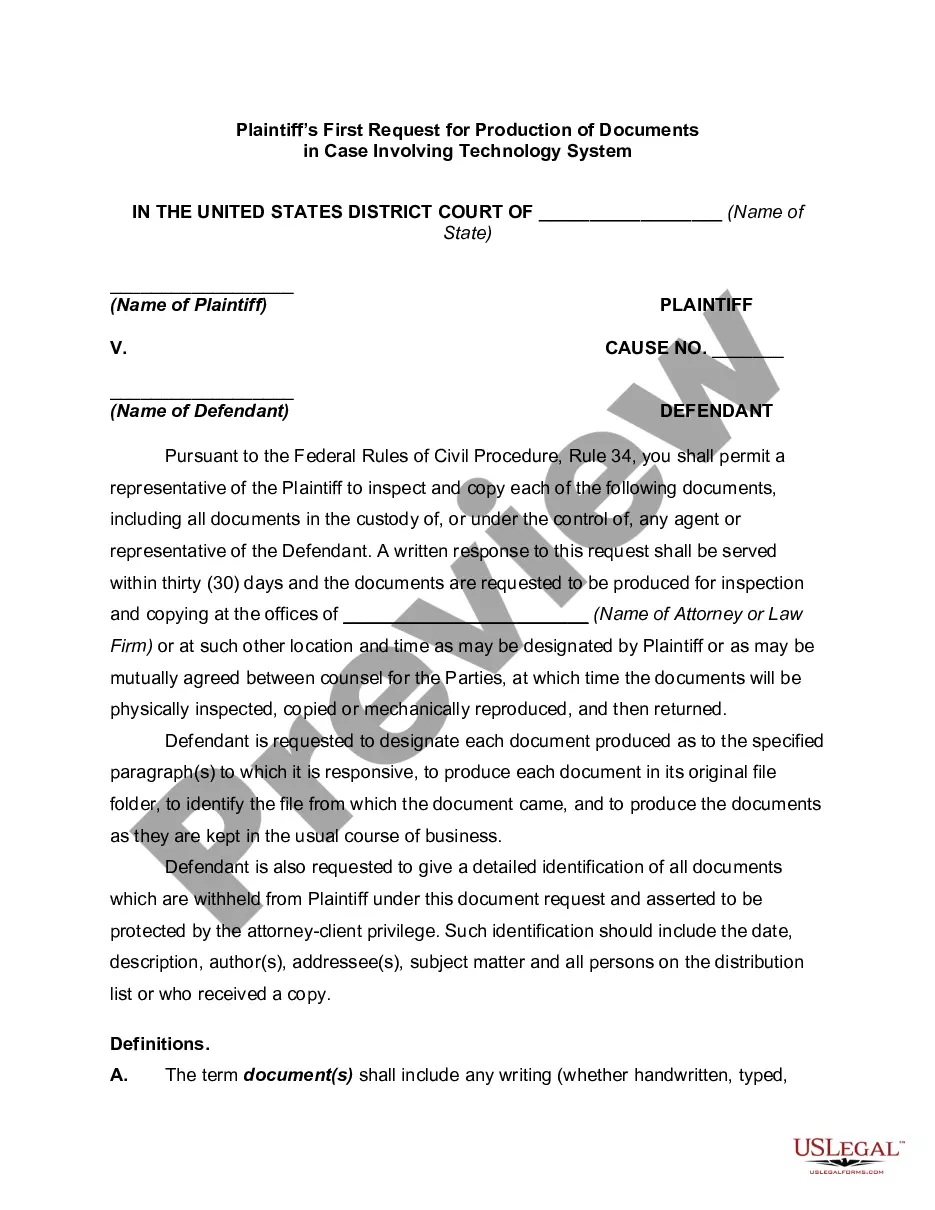
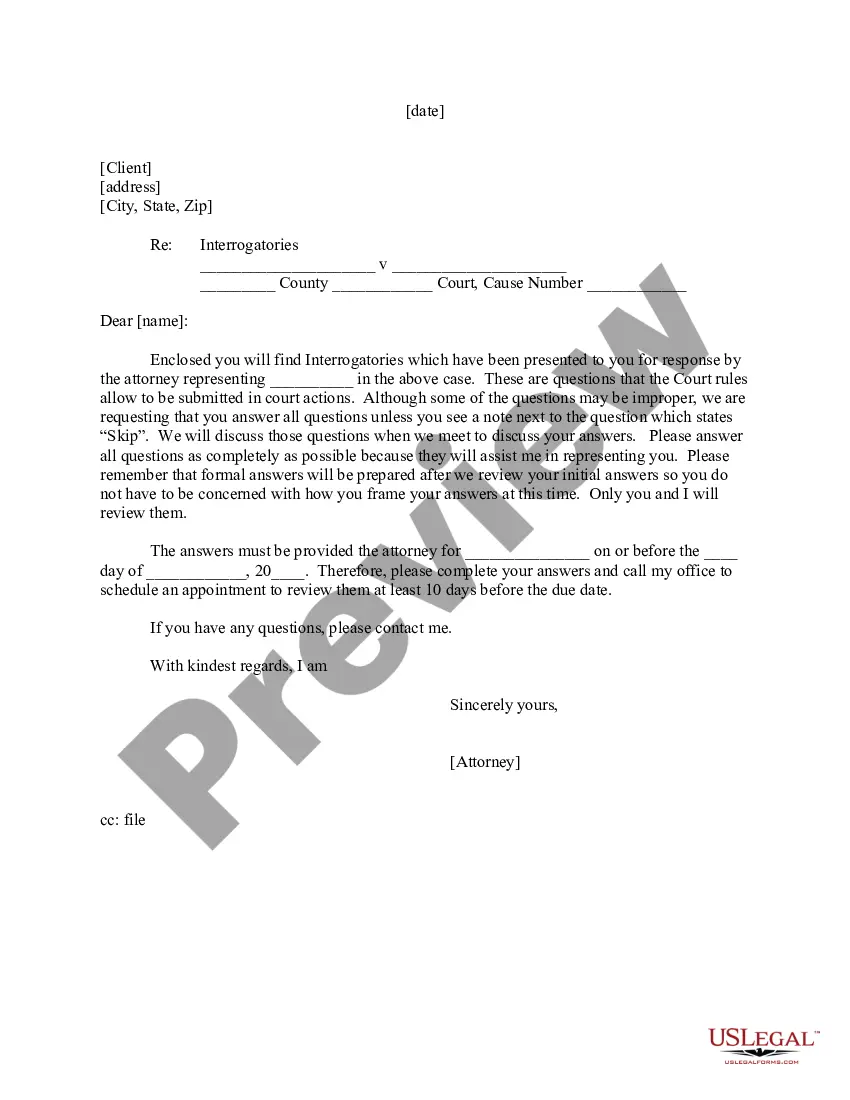
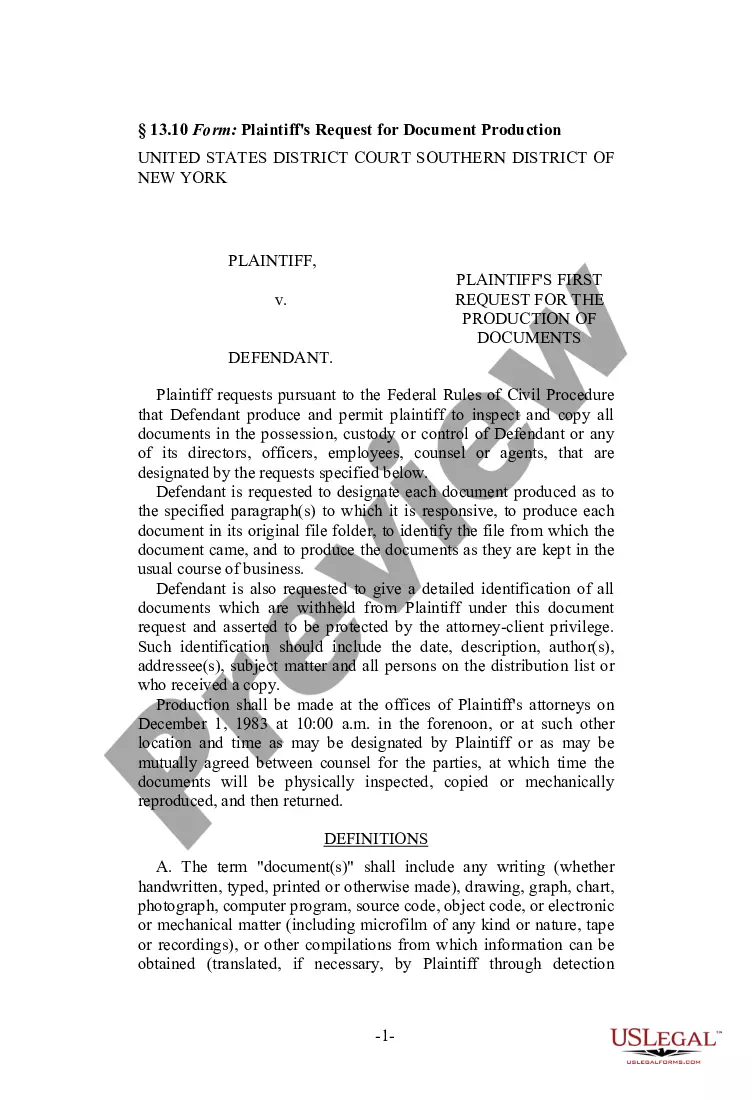



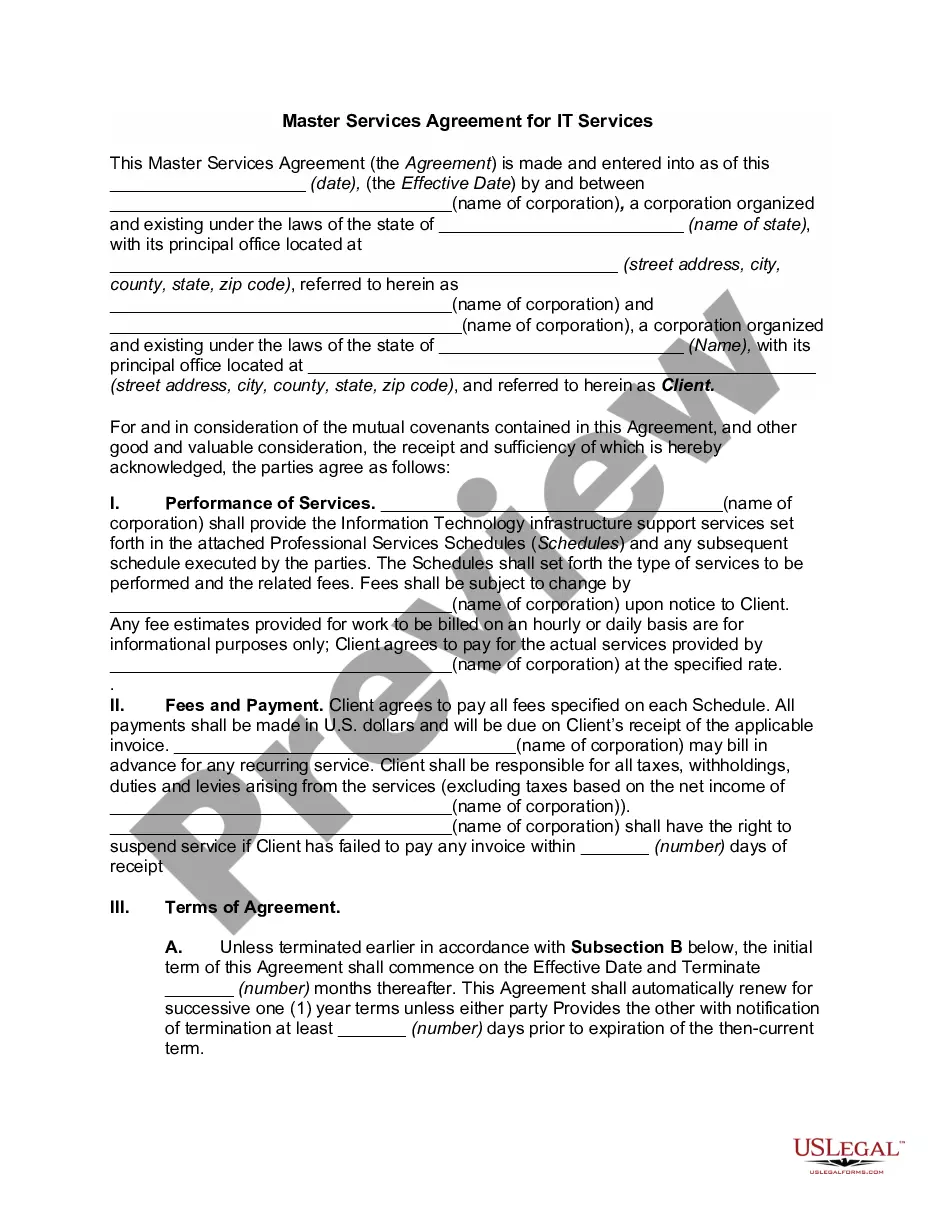

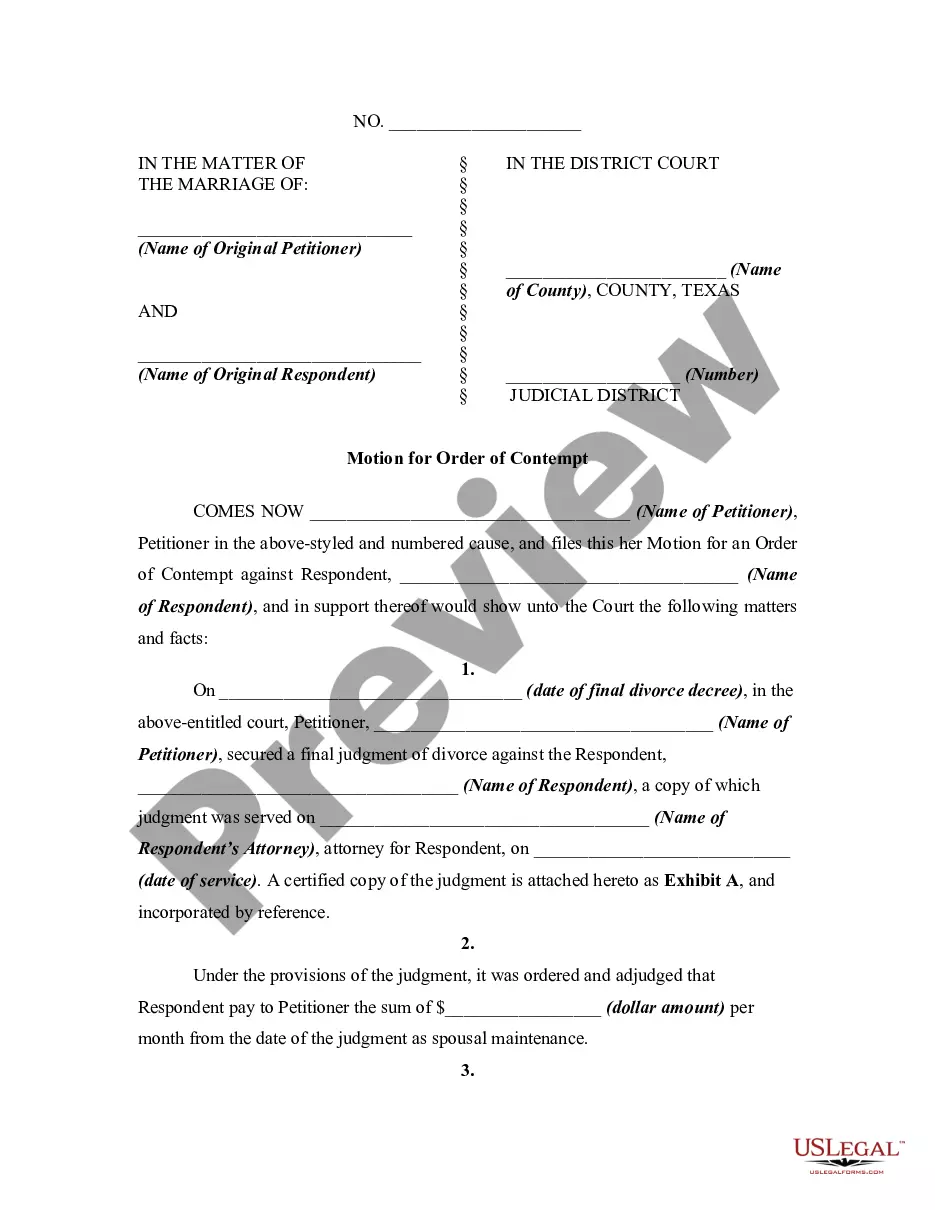
How to fill out California Discovery Interrogatories From Defendant To Plaintiff With Production Requests?
If you are searching for an authentic document, it’s incredibly difficult to select a superior service than the US Legal Forms site – likely the most extensive collections on the web.
With this repository, you can acquire a vast array of document samples for corporate and personal use by categories and locations, or keywords.
With our sophisticated search functionality, locating the latest El Monte California Discovery Interrogatories from Defendant to Plaintiff with Production Requests is as straightforward as 1-2-3.
Complete the payment. Use your credit card or PayPal account to finalize the registration process.
Obtain the form. Select the format and save it to your device.
- Furthermore, the pertinence of each document is authenticated by a team of experienced lawyers who consistently examine the templates on our platform and update them in line with the most current state and county regulations.
- If you are already familiar with our service and have an active account, all you need to do to obtain the El Monte California Discovery Interrogatories from Defendant to Plaintiff with Production Requests is to Log In to your user account and click the Download button.
- If you are using US Legal Forms for the first time, simply refer to the instructions outlined below.
- Ensure you have located the sample you need. Review its description and utilize the Preview feature to examine its content. If it doesn’t satisfy your criteria, make use of the Search bar located near the top of the webpage to find the suitable document.
- Validate your selection. Click the Buy now button. Subsequently, choose your desired subscription plan and enter your details to register for an account.
Form popularity
FAQ
A Request for Production to a plaintiff is a formal request for specific documents or items that are relevant to the case. This request aims to gather evidence that supports the defendant's position, allowing for a thorough examination of the facts. In the context of El Monte California Discovery Interrogatories from Defendant to Plaintiff with Production Requests, utilizing Requests for Production can significantly impact the case's trajectory. Platforms like uslegalforms can assist in managing these requests efficiently.
Requests for Admission are not the same as interrogatories, though they both fall under the discovery umbrella. Requests for Admission require a party to admit or deny specific statements, providing clarity on particular facts. Conversely, interrogatories require detailed written responses to direct questions. When navigating El Monte California Discovery Interrogatories from Defendant to Plaintiff with Production Requests, recognizing these differences can be beneficial for your legal strategy.
Interrogatories and Requests for Production differ primarily in their format and focus. Interrogatories consist of questions that seek detailed responses from the other party, while Requests for Production ask for physical documents or evidence. Both are essential tools in El Monte California Discovery Interrogatories from Defendant to Plaintiff with Production Requests, helping to clarify the case and prepare for trial effectively. Utilizing both can strengthen your position in a legal dispute.
Interrogatories and Requests for Admission (RFA) serve different purposes in the discovery phase. Interrogatories involve written questions that one party sends to another to gather information, while RFAs are statements the other party must admit or deny. Understanding this distinction is critical when preparing your strategy in El Monte California Discovery Interrogatories from Defendant to Plaintiff with Production Requests. Each plays a unique role in revealing the facts of the case.
Yes, a Request for Production is a key component of the discovery process in El Monte, California. This legal tool allows a defendant to request specific documents or tangible items from the plaintiff. These requests ensure that both parties share crucial information that may influence the outcome of the case. Engaging with discovery tools such as Requests for Production is essential for a fair trial.
To write a request for production of documents, clearly outline the specific documents you seek from the opposing party. Your request should be precise and unambiguous to ensure compliance with your needs. Focus on relevance to the case and include a time frame for the documents requested. Using the resources on the US Legal Forms platform can assist you in crafting effective El Monte California Discovery Interrogatories from Defendant to Plaintiff with Production Requests.
Interrogatories are formal questions that one party sends to another during the discovery phase of litigation, requiring written answers. In contrast, a request for production involves asking the other party to provide specific documents relevant to the case. Understanding these nuances can help you navigate the legal process more effectively. Referencing El Monte California Discovery Interrogatories from Defendant to Plaintiff with Production Requests can clarify how these elements intertwine.
When answering interrogatories and preparing responses to requests for production, take the time to review all questions and document requests. Each response should be clear, direct, and supported by the necessary documentation. Maintaining organization throughout your responses improves clarity in your case. Use the tools provided by US Legal Forms to navigate El Monte California Discovery Interrogatories from Defendant to Plaintiff with Production Requests more efficiently.
Responding to an interrogatories request involves carefully drafting answers to each question posed by the opposing party. Use clear and precise language, ensuring that your answers are accurate and supported by relevant facts. Avoid speculation; instead, if necessary, indicate the extent of your knowledge. Resources available on the US Legal Forms platform can help you understand El Monte California Discovery Interrogatories from Defendant to Plaintiff with Production Requests better.
If you encounter an interrogatory with which you are unfamiliar, it is essential to be honest in your response. You may indicate that you do not have sufficient information to provide an answer. Additionally, consider consulting with your attorney for guidance. Properly addressing such situations ensures compliance with El Monte California Discovery Interrogatories from Defendant to Plaintiff with Production Requests.