New Hampshire Living Will (Healthcare Directive)
Living Will (Healthcare Directive) documents help express healthcare wishes. Attorney-drafted templates are quick and straightforward to complete.

Living Will & Healthcare Directive Package
PopularSix forms for end-of-life medical planning - healthcare POA, living will directive, organ donation, and a revocation form for each.
Similar documents: key differences
- Living Will vs. Advance Directive — a Living Will is a type of Advance Directive focused on healthcare preferences.
- Health Care Proxy vs. Durable Power of Attorney for Health Care — both appoint someone for decisions, but the latter often includes broader powers.
- Advance Healthcare Directive vs. Medical Directive — interchangeable terms in many states, both express healthcare wishes.
- Health Care Declaration vs. Medical Treatment Directive — similar concepts for documenting treatment preferences, may vary by state.
Search for more forms
Types of Living wills forms
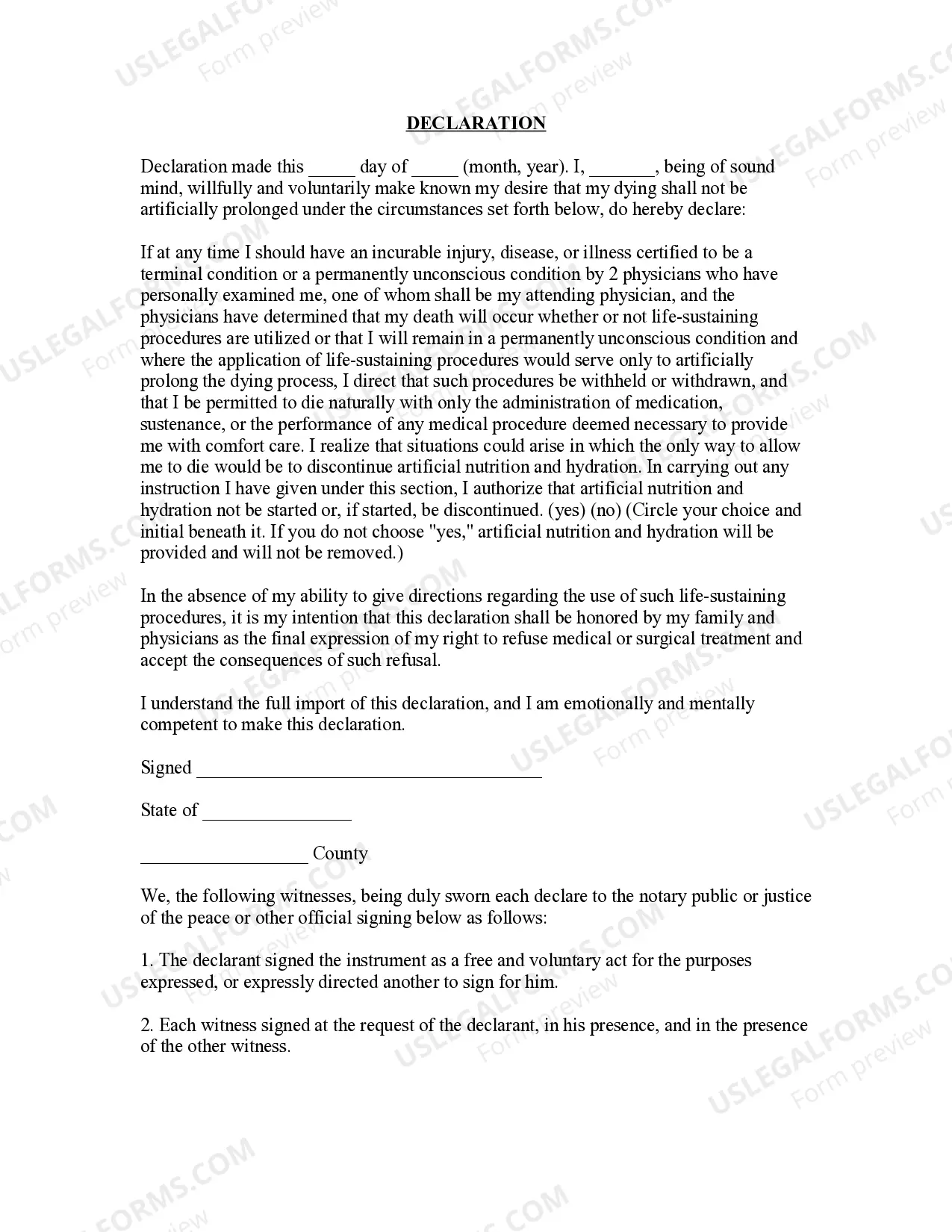
Living Will Declaration
Ensure your medical wishes are respected when facing a terminal condition by appointing someone to make healthcare decisions on your behalf.
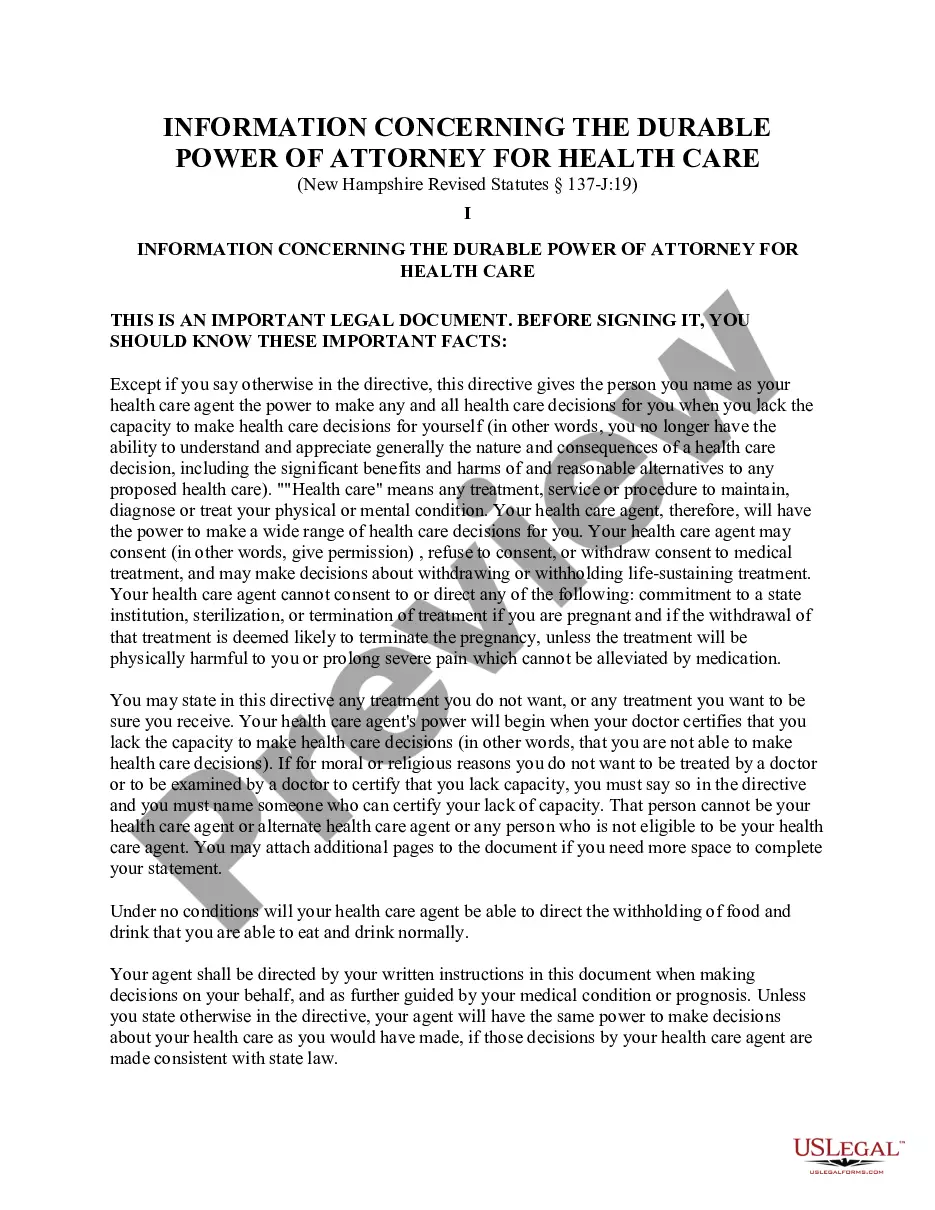
Durable POA Health Care
Establish authority for a trusted person to make health care decisions on your behalf when you are unable to do so.
Durable POA for Health Care and Living Will
Designate a trusted agent to make health care decisions on your behalf when you are unable to do so, ensuring your wishes are followed.
Revised Uniform Anatomical Gift Act Donation
Designate your wishes for organ donation and ensure legal compliance through proper witnessing requirements.
Revocation of Anatomical Gift
Revoking an anatomical gift is crucial when changing your wishes regarding organ donation, ensuring your latest intentions are honored.
Revocation of Durable POA for Health Care
Easily cancel a previously made health care decision authorization when your preferences change or your circumstances alter.
Common New Hampshire Living Will (Healthcare Directive) documents
- Living Will — specifies healthcare preferences for end-of-life care.
- Advance Healthcare Directive — combines health care preferences and a health care proxy.
- Health Care Proxy — appoints someone to make medical decisions on your behalf.
- Durable Power of Attorney for Health Care — designates an agent for health-related decisions.
- Do Not Resuscitate (DNR) Order — instructs not to perform CPR in certain situations.
Complete New Hampshire Living Will (Healthcare Directive) packages
Bundle every form you need for a complete situation — not just one document.

 7 forms
New Hampshire Life Documents Planning Package, including Will, Power of Attorney and Living Will
Organize your legal affairs and secure peace of mind with essential documents for emergencies and later life stages, all in one package.
- New Hampshire Durable Power of Attorney Health Care
- New Hampshire General Durable Power of Attorney for Property and Finances or Financial Effective Immediately
- New Hampshire Durable Power of Attorney for Health Care and Living Will - Statutory
- New Hampshire Estate Planning Questionnaire and Worksheets
- Sample Letter for Request for Free Credit Report Allowed by Federal Law
- Personal Planning Information and Document Inventory Worksheets - A Legal Life Document
- Estate Planning Questionnaire
FAQs
Not necessarily; a will can suffice, but a trust offers added benefits.
Your healthcare decisions may default to state laws, which might not reflect your wishes.
Review your plan every few years or after major life changes.
Beneficiary designations typically override will instructions for certain assets.
Yes, you can designate separate individuals for financial and healthcare matters.
Key legal points
- Living Wills clarify your healthcare preferences in specific situations.
- Advance Directives can include multiple documents for comprehensive planning.
- Health Care Proxies allow someone to make decisions on your behalf.
- Documents may require witnesses or notarization in some cases.
- Regularly reviewing your directives ensures they reflect current wishes.
How to get started
Begin your journey in just a few steps.
- Find a template or package that fits your situation.
- Review the description, preview, and signing requirements.
- Get full access with a subscription.
- Complete it in the online editor.
- Export or send: download, email, USPS mail, notarize online, or send for e-signature (Premium).
Practical tip
Decide who to name as your health care proxy carefully; this person will make critical decisions.